You hit the gym, load the bar, and by set four your legs feel like concrete. Your arms stop pumping. Your breathing gets shallow. You want more stamina, and you’ve seen both L-arginine and L-citrulline marketed as the fix. But which one actually moves the needle on your workout performance?
As a strength and conditioning coach, I’ve watched guys stack pre-workout tubs full of amino acids, hoping for that extra edge. The truth is simpler than the supplement aisle makes it look. Both L-arginine and L-citrulline feed into the same pathway—nitric oxide production, which drives blood flow to working muscles. But they get there differently, and one does a noticeably better job.
This comparison breaks down the science, the dosing, the cost, and the practical gym experience so you can pick the right amino acid for your training goals without wasting money on a bottle that does nothing.
Quick Answer: For most men looking to boost workout stamina, L-citrulline (6–8 g) outperforms L-arginine (6–12 g) because it raises plasma arginine levels higher with fewer GI side effects. L-citrulline is the better everyday pre-workout choice. L-arginine still has a role for men who want a cheaper option or who are already getting arginine from food and need a small supplemental top-up. Neither replaces sleep, progressive overload, or proper fueling.
Side-by-Side Comparison: L-Arginine vs L-Citrulline
| Factor | L-Arginine | L-Citrulline |
| Primary mechanism | Direct substrate for nitric oxide (NO) via eNOS | Converted to arginine in the kidneys (citrulline-arginine pathway), then to NO |
| Oral bioavailability | Low (~1–2% reaches systemic circulation at typical doses) due to first-pass gut/liver metabolism | Higher effective delivery; 6–8 g citrulline raises plasma arginine more than 6–12 g arginine |
| Effective pre-workout dose | 6–12 g (split doses often needed) | 6–8 g (single dose) |
| Time to peak effect | 30–60 min | 60–90 min |
| GI tolerance | Nausea, cramping common above 6 g | Generally well tolerated at 6–8 g |
| Evidence for exercise performance | Mixed; some studies show modest NO increase, limited performance gain | Multiple studies show improved time-to-exhaustion, reduced perceived exertion, less muscle soreness |
| Cost per serving (typical) | 0.50–1.00 | 0.75–1.50 |
| Best for | Budget option, men already eating arginine-rich foods | Men who want a clean, effective pre-workout stamina boost |
| Form available | Free amino acid powder, capsules | Free amino acid powder, citrulline malate (2:1 ratio with malic acid) |

Key Differences That Matter at the Gym
How Each Amino Acid Reaches Your Bloodstream
Here’s the core issue. L-arginine is the direct building block for nitric oxide. Your endothelial cells (the inner lining of blood vessels) use an enzyme called eNOS (endothelial nitric oxide synthase) to convert arginine into NO, which relaxes smooth muscle and widens blood vessels. More NO means more blood, more oxygen, more fuel to working muscles. That’s the “pump” and the stamina you’re after.
The problem? When you swallow L-arginine, a large portion gets broken down by enzymes in your gut wall and liver before it ever reaches your bloodstream. Research on the citrulline-arginine pathway shows that oral arginine has limited systemic bioavailability, meaning most of what you take never makes it to your muscles .
L-citrulline sidesteps this. It’s absorbed in the small intestine, travels to the kidneys, and is converted into arginine there, bypassing the gut-liver first-pass hit. The net result: a single 6–8 g dose of L-citrulline produces a higher and more sustained rise in plasma arginine than 6–12 g of L-arginine .
Dosing and Tolerance
L-Arginine:
- Typical pre-workout dose: 6–12 g, 30–60 minutes before training.
- Many men report stomach cramping, nausea, or loose stools at doses above 6 g.
- Splitting the dose (e.g., 4 g with breakfast, 4 g pre-workout) can reduce GI upset but adds complexity.
L-Citrulline:
- Typical pre-workout dose: 6–8 g, 60–90 minutes before training.
- GI side effects are uncommon at this range.
- Citrulline malate (a 2:1 blend of citrulline and malic acid) at 8 g delivers about 6.4 g of pure citrulline plus malic acid, which some research links to reduced muscle fatigue during repeated bouts of exercise .
Coach’s Tip: If you’re new to either supplement, start at the lower end (4 g citrulline or 4 g arginine) for the first three to four sessions. Note how your stomach feels and how your blood pressure reads if you track it. Then work up to the full dose. Consistency beats a single heroic dose.
Impact on Blood Flow and the “Pump”
Both amino acids ultimately increase NO, so both can enhance blood flow. But the magnitude and duration differ.
- L-Arginine produces a quicker but shorter NO spike. You may feel a mild warmth in your extremities within 30 minutes, but the effect can fade by the end of a 45-minute session.
- L-Citrulline produces a slower ramp-up (you won’t feel much at 30 minutes) but sustains elevated arginine and NO levels for a longer window—often 2–3 hours. For a 60–90 minute strength or hypertrophy session, that sustained window is more useful.
In practical gym terms: with L-citrulline, the muscle pump in your chest during bench press or in your quads during squats tends to feel fuller and last longer through later sets. With L-arginine, the pump may be noticeable early but tapers off.
Evidence for Workout Stamina and Endurance
The research landscape is not a slam-dunk for either, but it tilts toward citrulline.
- A systematic review of amino acid supplementation and exercise performance found that L-citrulline (and citrulline malate) showed consistent small-to-moderate improvements in time-to-exhaustion during cycling and rowing protocols, with reduced ratings of perceived exertion .
- L-arginine studies are more mixed. Some show a modest increase in brachial artery blood flow, but translation to improved 1RM or endurance performance is inconsistent, partly because of the bioavailability issue and partly because the doses used in trials varied widely .
- The American College of Sports Medicine (ACSM) position stands that no single supplement replaces progressive training, adequate caloric intake, and sleep for improving aerobic capacity or muscular endurance (ACSM, 2021).
Neither amino acid is a performance enhancer in the way a training program is. They are supporting tools that may help you feel a bit fresher on set five than set one.

Cardiovascular and Blood Pressure Considerations
Both amino acids can modestly lower systolic blood pressure by promoting vasodilation. If you take antihypertensive medication (ACE inhibitors, ARBs, calcium-channel blockers, diuretics), adding 6–12 g of arginine or 6–8 g of citrulline could compound the blood-pressure-lowering effect.
Talk to your doctor before starting either supplement if you take blood pressure medication, have a history of hypotension, or are recovering from a cardiac event. This is not a “just try it” situation.
Common Mistake: Taking L-arginine on an empty stomach right before a fasted morning workout. This is the fastest way to get nausea and a drop in blood pressure that makes you feel lightheaded on the treadmill. If you must train fasted, take citrulline 90 minutes out and have a small banana or a few almonds 20 minutes before you start.
When to Choose L-Arginine
L-arginine still has a place. Consider it if:
- Budget is tight. A 200 g tub of L-arginine powder often costs less than an equivalent citrulline malate tub. If you’re a college lifter or a home-gym owner on a fixed monthly supplement budget, arginine gets you into the NO pathway at a lower per-serving cost.
- You already eat arginine-rich foods. Watermelon, pumpkin seeds, spinach, and lean turkey are decent dietary sources of arginine. A 4–6 g supplemental top-up can nudge plasma levels without the GI issues of 12 g.
- You want a quick, short-window effect. If your session is 25–30 minutes (a focused upper-body pump day, for example), the shorter NO spike from arginine may be sufficient.
- You’re pairing it with a structured training plan. The supplement is a minor variable. If your programming, sleep, and nutrition are dialed in, the difference between arginine and citrulline is small.
Dosing for L-arginine: 6 g, 30–45 minutes pre-workout. If you tolerate it well and want a stronger effect, go to 8 g. Split into 4 g + 4 g if your stomach is sensitive.
When to Choose L-Citrulline
L-citrulline is the default recommendation for most men in my programming. Consider it if:
- You train 45–90 minutes (full-body, upper/lower splits, or a mixed strength-and-conditioning session). The sustained NO window matches the length of your workout.
- You want fewer GI side effects. At 6–8 g, citrulline is gentler on the stomach than 12 g of arginine.
- You’re doing repeated-bout work. Circuit training, EMOM (every minute on the minute) blocks, or a rowing erg session where you’re chasing a 20-minute distance. The malic acid in citrulline malate may help buffer fatigue between bouts .
- You prefer a single, simple dose. One scoop, 90 minutes out, done. No splitting, no timing two doses.
- You want the best evidence-to-effect ratio. The body of research on citrulline and exercise performance is broader and more consistent than for arginine.
Dosing for L-citrulline: 6–8 g (pure citrulline or citrulline malate), 60–90 minutes pre-workout. Take with a small amount of food if you’re sensitive.
Can You Take L-Arginine and L-Citrulline Together?
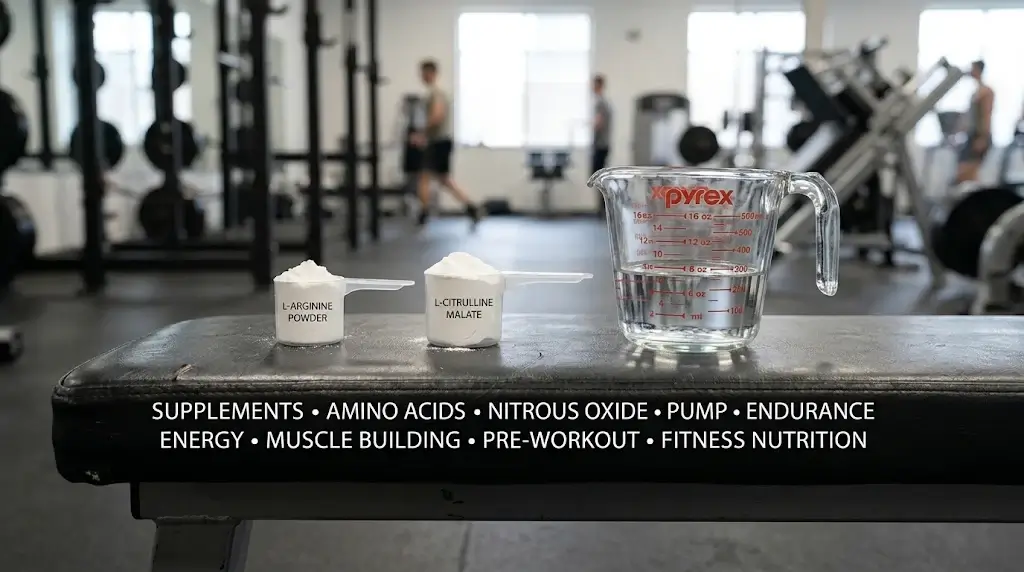
Short answer: you can, but you probably don’t need to.
The citrulline-arginine pathway means citrulline is already converting to arginine in your kidneys. Adding free arginine on top of a 6–8 g citrulline dose doesn’t meaningfully raise plasma levels further in most studies . You’d just be paying for extra powder and increasing your risk of GI upset.
If you want a “stack,” a more practical approach is:
- Pre-workout: 6–8 g L-citrulline (or citrulline malate), 90 min out.
- Daily (any time): 2–4 g L-arginine with a meal, if you want a small top-up for general circulation.
- Food: Include watermelon, nuts, or lean poultry in your regular diet for natural arginine.
This layered approach keeps you in the effective range without overloading any single pathway.
Cost Comparison
| Item | Typical Price Range | Cost Per Serving (at effective dose) |
| L-Arginine powder (200 g tub) | 15–25 | ~0.50–0.85 (6 g) |
| L-Citrulline powder (200 g tub) | 20–35 | ~0.75–1.25 (6 g) |
| Citrulline malate 2:1 (200 g tub) | 22–40 | ~0.90–1.50 (8 g) |
| L-Arginine capsules (60 caps, 500 mg each) | 12–20 | ~1.00–1.67 (6 g = 12 caps) |
| L-Citrulline capsules (60 caps, 500 mg each) | 15–25 | ~1.25–2.08 (6 g = 12 caps) |
Prices are general market ranges. Check current listings.
Powder is the most cost-effective form for both. Capsules are convenient but add up quickly at 6–8 g doses.
Practical Pre-Workout Protocol
Here’s how I’d program this for a male client training 4 days a week (upper/lower split):
Day: Lower Body (Squat, Deadlift, Lunges, RDLs)
- 90 min pre: 7 g L-citrulline malate in water
- 30 min pre: 20 g fast carbs (banana + honey) if training fasted
- Workout: 5×5 back squat (225–315 lb / 102–143 kg), 4×6 Romanian deadlift, 3×12 walking lunges
- 90-min session, 2–3 min rest on compound lifts
Day: Upper Body (Bench, Row, Overhead Press, Pull-ups)
- 90 min pre: 7 g L-citrulline malate in water
- Workout: 4×6 bench press (185–245 lb / 84–111 kg), 4×8 barbell row, 3×10 overhead press, 3×AMRAP pull-ups
- 75-min session
Rest days: No supplement needed. Focus on sleep (7–9 hours) and 0.7–1 g protein per lb of body weight.
Progression: Increase load by 2.5–5 lb (1–2.5 kg) on compounds every 1–2 weeks. The amino acid supports the feeling of stamina; the actual stamina gain comes from progressive overload and recovery.
Coach’s Tip: Track your “set 5 feel.” After two weeks on citrulline, note whether your last working set on squats or bench press feels less gassed than before. That subjective check is more telling than any single blood test you could do at home.
Safety Notes and Who Should Be Cautious
- Blood pressure medication: As noted, both amino acids can lower BP. If you take antihypertensives, get clearance from your doctor first.
- Herpes simplex: L-arginine can promote viral replication of HSV-1 and HSV-2. Men with a history of oral or genital herpes outbreaks should avoid high-dose arginine (and use citrulline cautiously, since it converts to arginine).
- Post-surgical or post-cardiac-event: Reduced blood pressure from vasodilation can be a risk. Wait until your physician clears you for exercise and supplementation.
- Pregnancy / breastfeeding: Not applicable for this male-focused article, but if a partner is in that situation, general advice is to avoid high-dose amino acid supplements without medical guidance.
- Kidney or liver conditions: Because citrulline is metabolized in the kidneys and arginine in the liver, men with chronic kidney disease or hepatic impairment should consult a physician before supplementing.
If you have any of the above conditions, check with a doctor or sports-medicine specialist before adding L-arginine or L-citrulline to your routine.
L-Arginine vs L-Citrulline: FAQ
Which is better for workout stamina: L-arginine or L-citrulline?
For most men, L-citrulline (6–8 g) is the better choice. It raises plasma arginine more effectively than L-arginine at equivalent or lower doses, with fewer stomach issues. The sustained NO window also matches a typical 60–90 minute training session better.
How much L-citrulline should a man take before a workout?
Aim for 6–8 g of pure L-citrulline or citrulline malate, taken 60–90 minutes before training. Start at 4 g to check tolerance, then increase. Take it with a small snack if you’re sensitive to empty-stomach dosing.
Does L-arginine actually improve blood flow during exercise?
It can modestly increase nitric oxide and brachial artery blood flow, but the effect is smaller and shorter-lived than with L-citrulline because of poor oral bioavailability. Translation to measurable performance gains (1RM, time-to-exhaustion) is inconsistent across studies.
Can you take L-citrulline and L-arginine together?
You can, but the added benefit is minimal because citrulline already converts to arginine in the kidneys. Stacking both mostly increases cost and GI risk. If you want a daily arginine top-up, 2–4 g with a meal is reasonable alongside a pre-workout citrulline dose.
Is L-citrulline safer than L-arginine for daily use?
At 6–8 g, L-citrulline is generally well tolerated with fewer GI complaints. L-arginine above 6 g is more likely to cause nausea or cramping. Both are safe for healthy men at recommended doses, but either can interact with blood pressure medication.
How long does L-citrulline take to work for exercise?
Peak plasma arginine levels occur roughly 60–90 minutes after ingestion. The vasodilatory and “pump” effects build gradually and can last 2–3 hours. Don’t expect an immediate buzz like caffeine; the benefit is a smoother, sustained blood-flow increase through your session.
The Bottom Line: Pick Citrulline, Train Hard, Sleep Well
If you walk into a supplement store and ask me, “Coach, which one do I grab for my workouts?” I’ll point you to the L-citrulline (or citrulline malate) tub every time. The citrulline-arginine pathway gives you better bioavailability, a cleaner GI profile, and a sustained NO window that lines up with how long you actually train. L-arginine is a fine budget option or a small daily top-up, but as a pre-workout stamina tool, it’s the underdog.
That said, no amino acid—neither L-arginine nor L-citrulline—replaces the fundamentals. Progressive overload in your squat, deadlift, and bench press. 7–9 hours of sleep. 0.7–1 g of protein per pound of body weight. Hydration. These are the levers that actually build stamina. The supplement is a 5–10% nudge, not a 50% transformation.
Start with 6 g of L-citrulline 90 minutes before your next hard session. Track how set five feels compared to set one. Give it three to four weeks of consistent use before deciding if it’s worth keeping in your rotation. And if you’re on blood pressure medication or have a cardiac history, run it past your doctor first.
This article is for general information and is not a substitute for advice from a doctor or physical therapist.