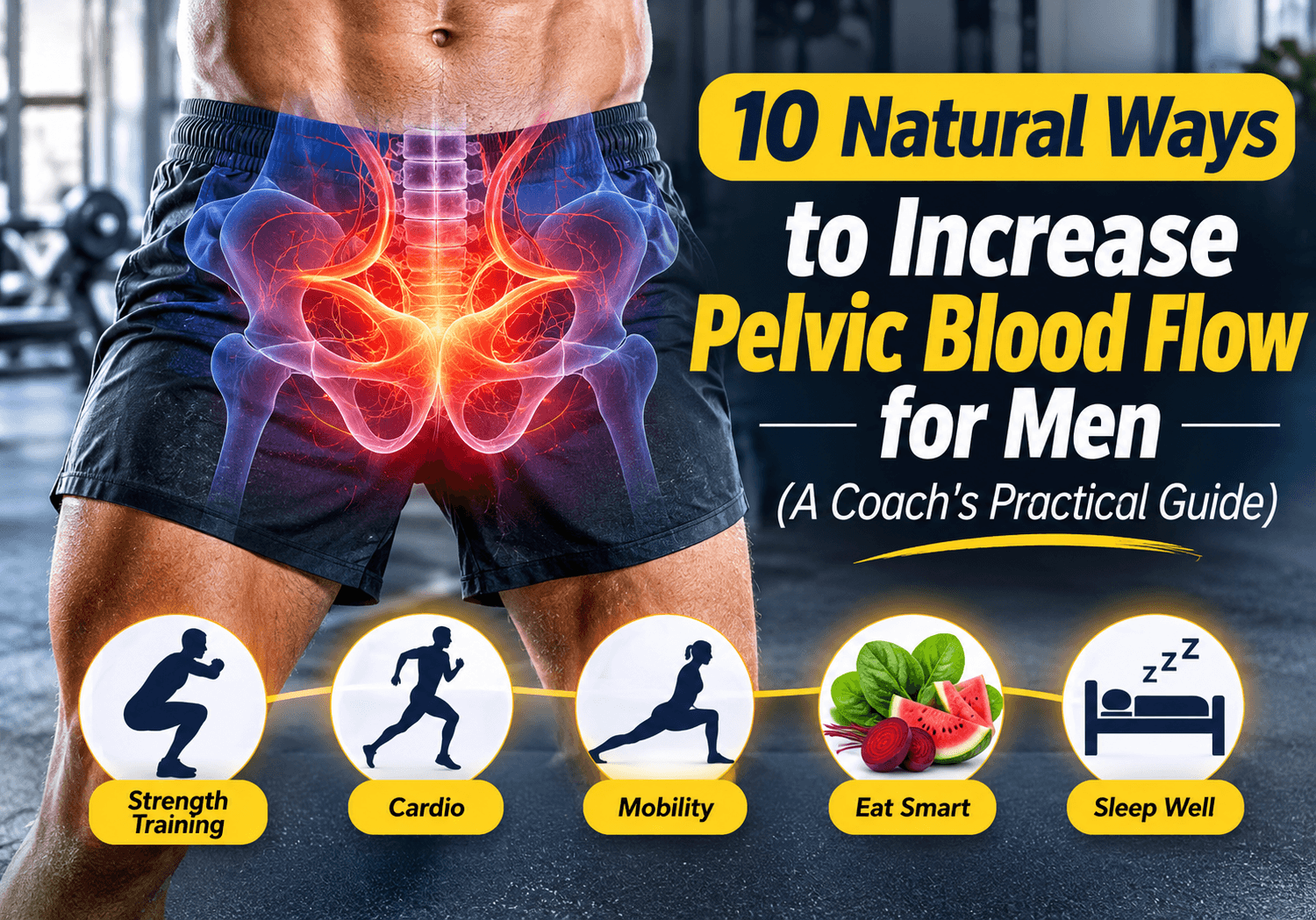
Poor circulation in the pelvic region doesn’t just affect your sex life. It can signal wider vascular issues, reduce your energy during workouts, and make recovery slower. The good news: you don’t need pills or procedures to improve it. The natural ways to increase pelvic blood flow for men come down to three levers you control every day—movement, nutrition, and recovery.
As a strength and conditioning coach, I’ve programmed lower-body and pelvic floor work for hundreds of men in their 30s through 60s. The exercises below are the same ones I assign in the gym, the same stretches I cue during warm-ups, and the same lifestyle habits I recommend off the floor. No fluff, no magic supplements. Just practical, repeatable moves that get blood moving where it needs to go.
Quick Answer: The most effective natural ways to increase pelvic blood flow for men include daily kegel (pelvic floor) exercises, compound lower-body lifts like squats and deadlifts, 150+ minutes of weekly cardio, hip and adductor stretches, a nitric-oxide–friendly diet, adequate sleep, and stress management. Start with 10 kegels and 3 squats per day; build from there.
Why Pelvic Blood Flow Matters (and What Happens When It Slows Down)
The pelvic region receives blood through the internal pudendal artery and branches of the internal iliac artery. Healthy endothelial cells lining those vessels release nitric oxide, a molecule that tells blood vessels to relax and widen. When that process works well, blood fills the pelvic and genital tissues efficiently.
As men age, or when sedentary habits, poor diet, smoking, or chronic stress take their toll, endothelial function can decline. The vessels don’t dilate as readily. Blood flow to the pelvic floor, glutes, and deeper core muscles drops. You may notice reduced stamina, a feeling of heaviness or tightness in the lower body, or changes in sexual function.
Research published in the Journal of Sexual Medicine links regular pelvic floor muscle training to improved vascular responses in the pelvic region, suggesting that strengthening the muscles around the pelvic bones supports the vessels running through them [VERIFY]. The CDC recommends at least 150 minutes of moderate aerobic activity plus two days of muscle-strengthening work each week to maintain overall cardiovascular and vascular health (CDC Physical Activity Guidelines).
The exercises and habits below target that vascular network directly.
The 10 Natural Ways to Increase Pelvic Blood Flow for Men
1. Kegel (Pelvic Floor) Exercises
This is the single most targeted move. The pelvic floor—a hammock of muscles (pubococcygeus, iliococcygeus, ischiococcygeus) stretching from the pubic bone to the tailbone—compresses and releases the very vessels that supply the pelvic region. Contracting and relaxing those muscles acts like a pump.
How to do it:
- Sit or lie down. Identify the muscles you’d use to stop urine mid-stream (do this once to find the right muscles; don’t make it a habit during urination).
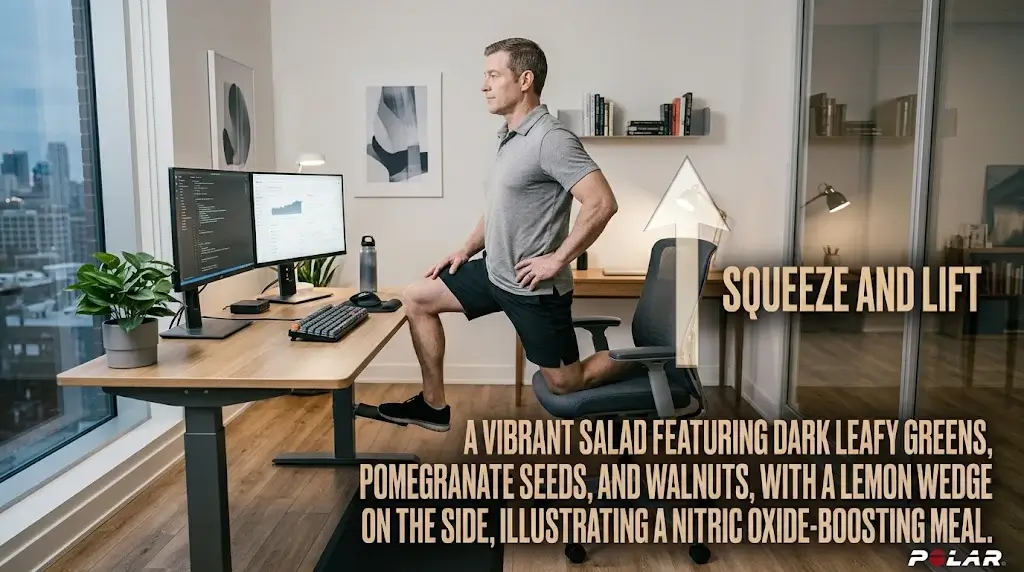
- Contract those muscles. Squeeze and lift upward, as if pulling a marble up through the pelvic canal.
- Hold for 5 seconds. Relax for 5 seconds.
- That’s one rep.
Prescription: 3 sets of 10 reps, twice daily (morning and evening). Rest 2–3 seconds between reps.
Easier version: Do 5-second holds while lying on your back with knees bent. Gravity is working with you.
Harder version: While standing, perform a single-leg squat to 90 degrees and hold the kegel contraction at the bottom for 5 seconds. This combines deep core and pelvic floor engagement.
Coach’s Tip: Most men overwork the glutes and abs but never train the pelvic floor. Ten minutes a day of kegels is the highest-return “exercise” for pelvic circulation. Set a phone alarm for 9 a.m. and 8 p.m. so it becomes automatic.
2. Barbell or Goblet Squats
Squats are the king of lower-body blood flow. As you descend, the hips and knees flex, compressing the deep pelvic and thigh vasculature. As you drive up, the glutes, quads, and adductors contract, pumping blood back through the region. The pelvic floor co-contracts to stabilize the trunk, adding a direct vascular stimulus.
How to do it (goblet squat – beginner-friendly):
- Hold a dumbbell or kettlebell (start with 25–35 lb / 11–16 kg) at chest height.
- Feet shoulder-width, toes pointed slightly out (about 15–20 degrees).
- Brace your core. Hinge at the hips and bend knees to lower until thighs are parallel to the floor (or just below).
- Drive through the mid-foot and heels to stand. Keep the chest tall.
Prescription by goal:
| Goal | Sets | Reps | Rest | Weight guidance |
| Strength | 4 | 5–6 | 90 s | 60–70% of 1RM |
| Hypertrophy | 3 | 10–12 | 60 s | 70–80% of 1RM |
| Endurance / circulation | 2 | 15–20 | 30 s | 40–50% of 1RM or bodyweight |
Progression: Move from goblet → barbell back squat → front squat. Add a 3-second pause at the bottom to increase time under tension and pelvic floor engagement.
3. Glute Bridges (and Single-Leg Progressions)
The gluteus maximus and the deep pelvic stabilizers work together during a bridge. Lying on your back and driving the hips up squeezes the pelvic region from below, encouraging venous return and arterial inflow.
How to do it:
- Lie on your back, knees bent, feet flat, heels about hip-width apart.
- Drive through your heels to lift your hips until your body forms a straight line from shoulders to knees.
- Squeeze the glutes hard at the top for 2 seconds. Engage the pelvic floor (a gentle kegel) at the top.
- Lower with control (2–3 seconds).
Prescription: 3 sets of 12–15 reps, 60 s rest.
Easier version: Perform the bridge with both feet on an elevated surface (a 6-inch / 15 cm step) to reduce the range of motion.
Harder version: Single-leg glute bridge. Lift one foot off the floor. Hold 3 seconds at the top. Add a 10-lb (4.5-kg) plate on the hips for load.
4. 150+ Minutes of Weekly Cardio
Aerobic exercise is the most studied way to improve endothelial function and nitric oxide production across the entire vascular system, including the pelvic arteries. The WHO and CDC both recommend at least 150 minutes of moderate-intensity aerobic activity (brisk walking, cycling, swimming) or 75 minutes of vigorous activity per week (WHO Physical Activity Guidelines).
Practical split for a busy man:
- 30-minute brisk walk (3.5–4 mph / 5.6–6.4 km/h) × 5 days, or
- 25-minute cycling session × 3 days + 20-minute swim × 2 days
The key is consistency, not intensity. A steady pace that raises your heart rate to about 60–75% of your max (you can talk but not sing) is the sweet spot for vascular adaptation.
If you want a structured approach to building daily energy and stamina alongside your cardio, check out this guide on increasing energy and stamina naturally.
5. Hip Flexor and Adductor Stretches
Tight hip flexors (iliopsoas) and adductors pull the pelvis into an anterior tilt, compressing the pelvic vasculature and restricting the range of motion needed for full blood flow. Regular stretching restores neutral pelvic alignment and opens the space for vessels to dilate.
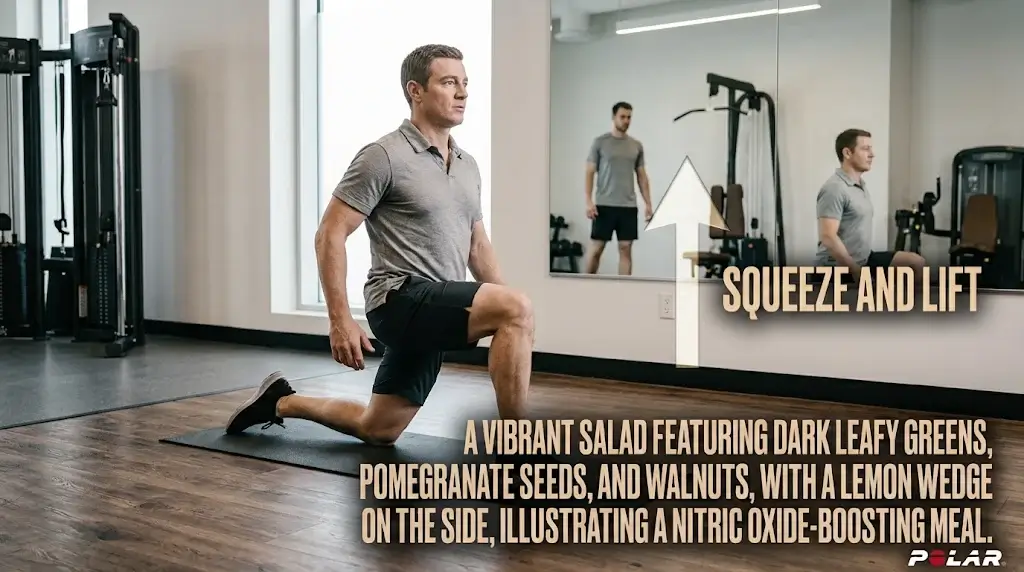
Hip flexor stretch (half-kneeling):
- Kneel on one knee, the other foot flat in front, hip-width.
- Tuck your pelvis (posterior tilt) and gently push your hips forward.
- Hold 30–45 seconds. Feel the stretch in the front of the hip and lower abdomen.
- Switch sides.
Adductor (butterfly) stretch:
- Sit on the floor. Soles of feet together, knees dropped to the sides.
- Hinge forward from the hips, keeping the spine long.
- Hold 30–45 seconds. Breathe deeply.
Do both stretches after your warm-up or at the end of a workout. 2 rounds per side.
6. Romanian Deadlifts and Hinge Patterns
The Romanian deadlift (RDL) loads the posterior chain—hamstrings, glutes, erectors—while the hips travel through a large range. The pelvic floor must brace isometrically to protect the lumbar spine, creating a sustained contraction that pumps blood through the deep pelvic vessels.
How to do it:
- Hold a barbell or dumbbells (start with 45–65 lb / 20–30 kg per hand) at your sides.
- Soft knees, push hips back, lower the bar along your thighs to just below the knee.
- Keep a flat back. You should feel a deep stretch in the hamstrings.
- Drive hips forward and squeeze glutes to stand.
Prescription: 3 sets of 8–12 reps, 90 s rest.
Easier version: Single-leg RDL holding a light dumbbell (10–15 lb / 4.5–7 kg). Focus on balance and hamstring stretch.
Harder version: Add a 3-second pause at the bottom (bar below the knee). Or perform a deficit RDL from a 2-inch (5 cm) plate to increase range.
7. Pigeon Pose and Deep Hip Openers (Yoga-Based)
Pigeon pose (eka pada rajakapotasana) opens the hip rotators, piriformis, and deep adductors. The sustained, deep stretch increases local blood flow by temporarily reducing muscle tone and allowing vessels to dilate. It also activates the parasympathetic nervous system, which supports vasodilation.
How to do it:
- From a tabletop, bring your right shin in front of you, angled 45 degrees. Extend the left leg behind you.
- Sink your hips toward the floor. Hinge forward from the hips.
- Hold 45–90 seconds, breathing slowly (4 counts in, 6 counts out).
- Switch sides.
Pair it with a supine butterfly stretch (30 seconds) and a child’s pose (30 seconds) for a 3-minute pelvic-opening sequence. Do this 3–4 times per week, ideally after a warm-up or as a cool-down.
8. Eat for Nitric Oxide
Nitric oxide is the primary vasodilator in the pelvic and systemic vasculature. Your body produces it from the amino acid L-arginine and L-citrulline, and its production is supported by nitrates (from leafy greens and beets), vitamin C, and healthy fats.
Daily targets that support NO production:
- L-citrulline–rich foods: Watermelon (1–2 cups / 150–300 g of flesh)
- Nitrate-rich vegetables: Spinach, arugula, beetroot (1 medium beet or ½ cup shredded)
- Healthy fats: Extra-virgin olive oil, avocados, fatty fish (salmon, sardines) 2–3×/week
- Vitamin C: Bell peppers, citrus, strawberries (supports NO synthase)
- Limit: Excess sodium, processed meats, and trans fats, which impair endothelial function
You don’t need a supplement to get these benefits, though some men add L-citrulline (3–6 g) or L-arginine (2–3 g) as a convenience. If you’re exploring that route, this evidence-based breakdown of L-arginine and blood flow covers the dosing research in detail.
9. Prioritize Sleep and Manage Stress
Chronic stress elevates cortisol and sympathetic (fight-or-flight) tone, which constricts blood vessels and diverts blood away from the pelvic region. Poor sleep compounds the problem: the Harvard T.H. Chan School of Public Health notes that sleeping fewer than 6 hours per night is associated with higher cardiovascular risk markers and impaired vascular function (Harvard Health).
Practical steps:
- Aim for 7–9 hours of sleep in a cool, dark room.
- Do 5–10 minutes of box breathing (4 in, 4 hold, 4 out, 4 hold) before bed to shift the nervous system toward parasympathetic dominance.
- Take a 10–15 minute walk after lunch to lower midday cortisol.
- Limit alcohol to no more than 2 standard drinks on any given day; heavy drinking impairs endothelial function.
If you’re noticing that stress or poor sleep is affecting your overall drive and energy, this article on how stress and poor sleep lower male libido walks through the hormonal chain in plain language.
10. Move More During the Day (NEAT and Micro-Breaks)
Sitting for 8+ hours compresses the pelvic vasculature and reduces calf-muscle pump activity, which helps return venous blood from the lower body. Non-exercise activity thermogenesis (NEAT)—walking, standing, taking stairs—keeps blood moving between structured workouts.
Simple rules:
- Stand or walk for 5 minutes every hour you sit.
- Take a 10–15 minute walk (about 0.5 miles / 0.8 km) after each meal.
- Use a standing desk for at least 1–2 hours per day.
- Park farther from the entrance. Take the stairs.
These small moves add up to 2,000–3,000 extra steps per day and keep the pelvic and lower-body circulation active without a dedicated gym session.
Sample Weekly Routine
Here’s how I’d stack the 10 strategies into a realistic week for a man with a desk job and 3 gym sessions:
| Day | Focus | Details |
| Mon | Lower-body strength | Goblet squats 4×10, RDLs 3×10, single-leg glute bridges 3×12/side. Finish with 5 min pigeon + butterfly stretch. |
| Tue | Cardio + mobility | 30-min brisk walk or cycle. 10 min hip flexor + adductor stretch. 2×10 kegels (AM/PM). |
| Wed | Full-body + core | Barbell squats 4×6, RDLs 3×12, 2×15 bodyweight squats (circulation). Box breathing 5 min. Kegels ×2. |
| Thu | Active recovery | 20-min swim or easy bike. 10-min yoga flow (pigeon, child’s pose, butterfly). Kegels ×2. |
| Fri | Lower-body + glutes | Front squats 3×8, single-leg RDLs 3×10/side, glute bridges 3×15. Stretch 5 min. Kegels ×2. |
| Sat | Longer cardio | 45–60 min hike, cycle, or swim. Walk 15 min after lunch. Kegels ×2. |
| Sun | Rest + routine | 10-min walk. Evening box breathing. Kegels ×2. |
Progression: Add 5% more load to squats and RDLs every 2 weeks. Increase cardio duration by 5 minutes every 3 weeks. Add one single-leg variation per month.
Common Mistake: Doing kegels while holding your breath or bearing down (Valsalva). This spikes intra-abdominal pressure and can actually reduce pelvic blood flow. Breathe normally. The contraction should feel like a gentle “lift,” not a grunt.
Who Should Be Careful
- Prostate conditions or recent pelvic surgery: Get clearance from a urologist or pelvic floor physical therapist before starting kegel or heavy lower-body training.
- Hernia (inguinal or hiatal): Avoid heavy Valsalva during squats and deadlifts. Use lighter loads and breathe out on exertion.
- Uncontrolled hypertension: Check with your doctor before starting resistance training or high-intensity cardio.
- Pain in the pelvic region, lower back, or groin: Stop the movement that reproduces pain and see a physical therapist.
If any of these apply to you, a short session with a pelvic floor physical therapist can make sure you’re contracting the right muscles and not compensating with the glutes or abs.
How to Track Progress
You won’t “feel” blood flow in week one. Here’s what to look for over 4–8 weeks:
- Week 1–2: You can identify and isolate the pelvic floor contraction without gripping the glutes or abs.
- Week 3–4: Squats and RDLs feel smoother; less lower-back tightness. Resting heart rate drops 2–5 bpm.
- Week 5–8: More sustained energy during and after workouts. Less end-of-day heaviness in the legs and pelvis. Improved sleep quality.
Take a baseline: note your resting heart rate, how long you can hold a kegel (aim for 10 seconds by week 4), and your subjective energy level (1–10) each Sunday.
FAQ
How long does it take to see results from pelvic floor exercises?
Most men notice a stronger, more controlled contraction within 2–3 weeks of daily kegels. Vascular and functional improvements in the pelvic region typically build over 6–8 weeks of consistent training combined with cardio and mobility work.
Do squats actually help with blood flow to the pelvic area?
Yes. The deep hip and knee flexion during a squat compresses and then releases the pelvic and thigh vasculature, acting as a muscle pump. The pelvic floor also co-contracts to stabilize the spine, adding a direct stimulus. Regular squatting supports overall lower-body circulation.
Are kegels effective for men over 40?
Absolutely. Pelvic floor muscle strength tends to decline with age, and research in the Journal of Sexual Medicine links targeted pelvic floor training to improved vascular and functional outcomes in older men. Starting at 40 or 50 is well within the window for meaningful gains [VERIFY].
Can walking alone improve pelvic circulation?
Walking is the most accessible form of cardio and does improve overall endothelial function and nitric oxide availability. For the pelvic region specifically, pair walking with 2–3 lower-body strength sessions and daily kegels for the best combined effect.
Do hip stretches help with erectile function?
Hip and adductor stretches improve pelvic alignment and reduce muscular compression on the pelvic vasculature. While a stretch alone won’t “fix” erectile issues, restoring neutral pelvic position and local blood flow is a supportive step, especially when combined with cardio and a healthy diet.
What’s the best single exercise for male pelvic blood flow?
If you could only do one, the kegel is the most targeted. But the highest-return combination is daily kegels plus 3 lower-body strength days (squats, RDLs, bridges) plus 150 minutes of weekly cardio. That trio addresses the pelvic floor, the large muscle pumps, and the vascular system.
Conclusion
The natural ways to increase pelvic blood flow for men aren’t complicated, but they do require consistency. Ten minutes of kegels a day, three lower-body sessions a week, 150 minutes of cardio, a handful of stretches, a plate of leafy greens, and seven hours of sleep—those are the non-negotiables. You don’t need a supplement stack or a clinic visit to get started. You need a plan, a calendar, and the discipline to show up.
Start this week. Pick two or three of the ten strategies above, build them into your routine, and give it six weeks before you judge the results. Your pelvic floor, your arteries, and your long-term vascular health will thank you.