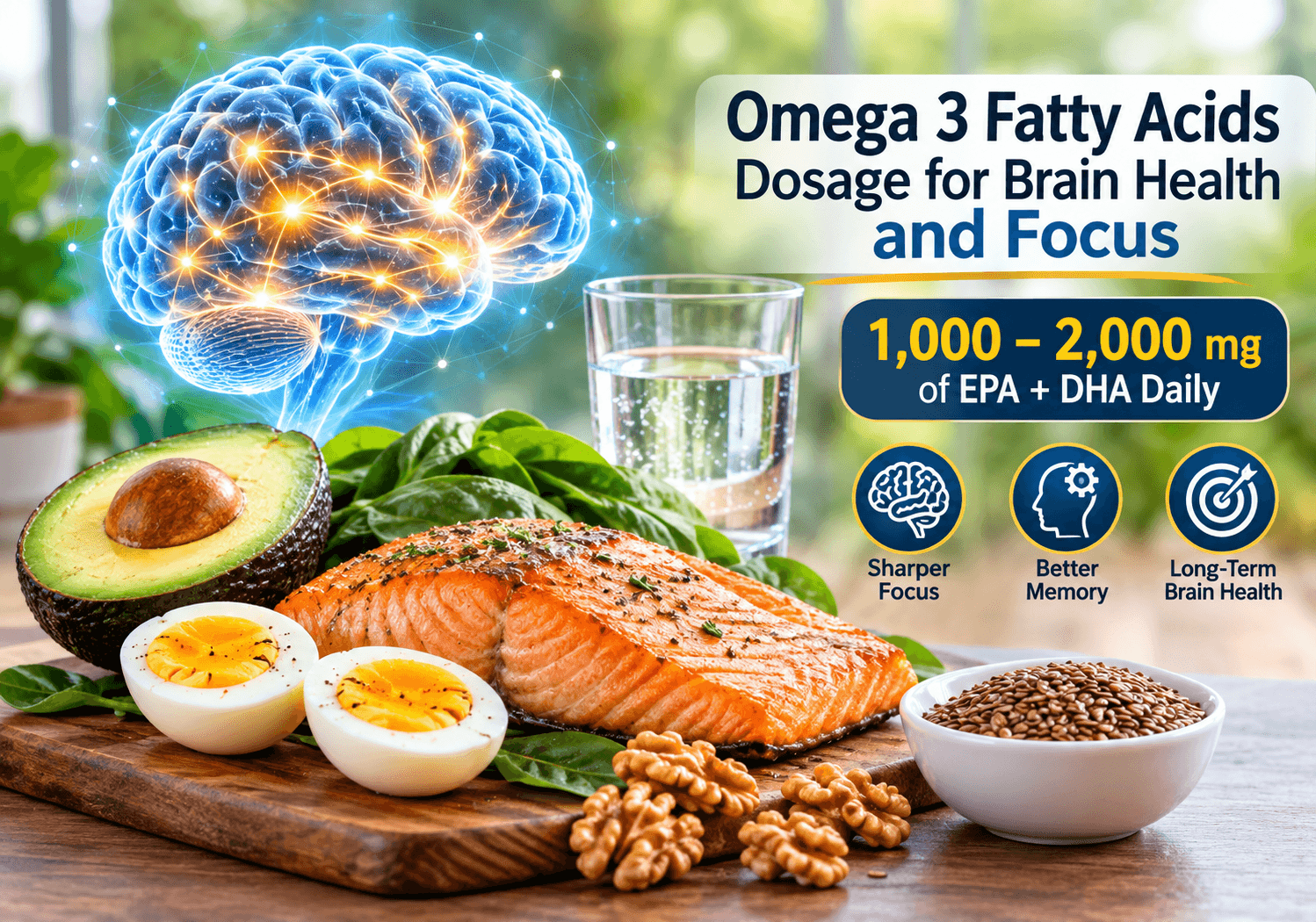
If you have ever caught yourself staring at a computer screen unable to lock into your work, or struggling to remember key details during a high-stakes task, you know how frustrating poor mental clarity can be. While physical training builds strong muscles, your brain requires specific nutritional support to maintain sharp executive function and long-term vitality. Understanding the proper omega 3 fatty acids dosage for brain health and focus is one of the most reliable strategies to sharpen concentration and support long-term cognitive resilience.
Quick Answer Box
To support cognitive performance, working memory, and mental clarity, aim for a daily intake of 1,000 to 2,000 mg of combined EPA and DHA, with a higher concentration of EPA (a 2:1 or 3:1 ratio) specifically targeting daily focus and mood regulation. Always opt for high-purity triglyceride-form supplements, take them alongside a fat-containing meal to maximize absorption, and allow 8 to 12 weeks of consistent daily supplementation for optimal brain tissue accumulation.
Why Omega 3 Fatty Acids Matter for Your Brain
Your brain is composed of roughly 60% fat, making its structural integrity heavily dependent on the types of fatty acids you consume. Essential fatty acids—specifically eicosapentaenoic acid (EPA) and docosahexaenoic acid (DHA)—serve as the foundational building blocks for cell membranes throughout the central nervous system.
DHA concentrates in the phospholipid bilayer of brain cell membranes, ensuring proper fluid dynamics that allow signals to transmit smoothly between neurons. Meanwhile, EPA plays an indispensable role in managing neuroinflammation and promoting healthy cerebral blood flow.
When your daily intake of these essential fats is deficient, signal transmission slows down, leading to subtle cognitive friction often experienced as mental fatigue or poor concentration.

Research shows that maintaining adequate tissue levels of omega 3s directly supports cognitive function and overall health. By optimizing your membrane fluidity, these fatty acids facilitate efficient neurotransmitter release—particularly dopamine and acetylcholine, which govern attention, working memory, and motor control.
Breakdown of Key Omega 3 Fatty Acids
Not all omega 3s behave identically in the body. Understanding the distinct roles of EPA, DHA, and ALA allows you to target your daily supplementation precisely for cognitive gains.
| Fatty Acid | Primary Sources | Core Function in Brain Health | Recommended Target |
| DHA (Docosahexaenoic Acid) | Cold-water fatty fish, algal oil | Structural membrane integrity, synaptic plasticity, BDNF support | 300–800 mg/day |
| EPA (Eicosapentaenoic Acid) | Wild salmon, sardines, mackerel, krill oil | Neuroinflammation management, cellular signaling, focus/mood | 500–1,200 mg/day |
| ALA (Alpha-Linolenic Acid) | Flaxseed, chia seeds, walnuts | Basic energy production; very low conversion to active EPA/DHA | 1.1–1.6 g/day (general health) |
Docosahexaenoic Acid (DHA)
DHA is the predominant structural omega 3 fat in the human prefrontal cortex and hippocampus—the regions responsible for decision-making, focus, and memory retention. It supports synaptic plasticity, which is your brain’s capacity to build new neural pathways when learning new skills or movement patterns.
Studies confirm that higher neuronal DHA levels stimulate the production of BDNF?, encouraging long-term cognitive vitality.
Eicosapentaenoic Acid (EPA)
While present in lower structural amounts in brain tissue than DHA, EPA acts as a primary regulator of brain inflammation. It inhibits pro-inflammatory cytokines that can otherwise impair nerve transmission and cause systemic fatigue.
If your goal is immediate mental clarity, sustained focus, and emotional stability during intense mental work, choosing a formula higher in EPA often yields noticeable benefits.
Alpha-Linolenic Acid (ALA)
Found primarily in plant foods like walnuts and chia seeds, ALA is a short-chain omega 3. While beneficial for basic cardiovascular health, human conversion of ALA into active EPA and DHA is remarkably inefficient—typically under 5% for EPA and less than 1% for DHA.
Relying solely on plant-based ALA is rarely sufficient for targeted brain health optimization.

Determining Your Daily Omega 3 Fatty Acids Dosage for Brain Health and Focus
Establishing the ideal omega 3 fatty acids dosage for brain health and focus depends on your current diet, activity level, and specific cognitive demands.
Clinical evidence indicates that a starting daily target of 1,000 mg of combined EPA and DHA provides a solid baseline for healthy adults looking to optimize concentration. For individuals facing heavy cognitive stress or looking to combat mild age-related focus issues, increasing daily intake up to 2,000 mg per day is often recommended by clinical researchers.
Higher doses ensure that your cellular membranes are fully saturated with active fatty acids, allowing neurotransmitter receptors to function at peak efficiency.
Choosing the Right Ratio: EPA vs. DHA for Focus
A common mistake is assuming any fish oil bottle off the pharmacy shelf will deliver the same cognitive kick. The ratio between EPA and DHA inside the capsule significantly impacts how your body and brain respond.
The Case for High-EPA Formulas for Focus
If your primary concern is daily task focus, working memory, and staying sharp under pressure, prioritize a supplement that features a higher ratio of EPA to DHA (such as a 2:1 or 3:1 ratio). Research evaluating executive performance suggests that EPA’s anti-inflammatory properties improve blood delivery to active brain structures during demanding tasks.
The Case for High-DHA Formulas for Memory Structure
For long-term neuroprotection, structural support, or during pregnancy and early adulthood, high-DHA formulations shine. DHA is essential for maintaining the actual physical structure of brain cells as you age.
Food Sources vs. High-Purity Supplements
Meeting your daily target through whole foods is always ideal, but achieving high therapeutic levels of EPA and DHA strictly through diet can be challenging.Eating fatty fish two to three times per week easily covers baseline nutritional needs. However, if you are targeting precise cognitive benefits, relying on concentrated supplements ensures consistent daily intake without the risk of heavy metal exposure (such as mercury) often linked to large predator fish like tuna or swordfish.
Coach’s Tip: Check the Supplement Facts panel on the back of your bottle, not just the front label. A capsule claiming “1,000 mg Fish Oil” may only deliver 300 mg of active EPA and DHA combined, with the remaining 700 mg consisting of non-essential filler fats. Always calculate your dose based strictly on the combined EPA + DHA value.
Maximizing Bioavailability and Absorption
How you take your omega 3 supplement dictates how efficiently your digestive tract processes and utilizes the active compounds.

1. Form Matters: Triglyceride vs. Ethyl Ester
Omega 3 supplements generally come in two forms:
- Triglyceride (rTG) Form: The natural state of fatty acids in fish. Re-esterified triglyceride forms are absorbed up to 70% better by the human body compared to synthetic alternatives.
- Ethyl Ester (EE) Form: A synthetic processing form that is cheaper to manufacture but significantly harder for the liver and pancreas to break down effectively without dietary fat.
2. Always Pair with Dietary Fats
Omega 3 fatty acids are lipid-soluble nutrients. Taking your supplement on an empty stomach alongside a glass of water leads to minimal bile secretion, significantly reducing absorption.
Pairing your capsule with healthy fats like whole eggs, nuts, olive oil, or avocado stimulates pancreatic lipase enzymes, optimizing bioavailability and preventing stomach discomfort.
For optimal metabolic processing, explore how nutrients support normal energy metabolism alongside your daily healthy fat intake.
Timing and Consistency: How Long Does It Take to Work?
Unlike caffeine or pharmaceutical stimulants, omega 3 fatty acids do not act as an immediate acute stimulant. You will not take a capsule and feel a sudden surge of focus 30 minutes later.It takes between 8 to 12 weeks of unbroken daily intake for supplemental EPA and DHA to fully integrate into cellular phospholipid layers within the central nervous system. Consistency is far more crucial than taking massive, sporadic doses.
Maintaining clear mental energy while dieting also requires stable lifestyle habits. You can read more about strategies to improve daily energy naturally without relying solely on high-dose stimulants.
Who Should Be Careful: Safety and Potential Side Effects
While supplemental fish oil is widely recognized as safe by regulatory bodies globally, higher doses require intelligent oversight.
Common Mistake: Taking high doses of fish oil on an empty stomach right before an intense workout. This frequently triggers acid reflux, an unpleasant fishy taste, and mild stomach upset. Always consume your daily dose with your largest whole-food meal.
Potential Interactions and Precautions
- Blood Thinning Effects: Doses of combined EPA/DHA exceeding 3,000 mg per day may exert mild anti-platelet activity. If you take prescription blood thinners or have an upcoming surgical procedure, consult your physician.
- Gastrointestinal Distress: Nausea, loose stools, or indigestion can occur if doses are escalated too rapidly.
- Oxidized Supplements: Rancid fish oil generates free radicals that counteract cognitive gains. If your softgels smell strongly of rotten fish or stick together in the bottle, discard them immediately.
How Omega 3 Fits Into a Total Cognitive Performance Routine
Nutritional support is one part of a comprehensive performance picture. Combine your baseline omega 3 fatty acids dosage for brain health and focus with solid lifestyle fundamentals to maximize cognitive gains.
Prioritize Sleep Hygiene: Deep sleep is necessary for the brain’s glymphatic system to clear metabolic waste products. Discover how sleep affects metabolism and cognitive resilience over time.
- Control Systemic Stress: Chronic elevation of cortisol damages hippocampal neurons, directly opposing the positive effects of DHA. Consider how adaptogens help manage stress and focus under high workload conditions.
- Engage in Daily Physical Activity: Physical exercise increases cerebral blood flow, accelerating the delivery of circulating EPA and DHA to brain tissues.
Frequently Asked Questions
How much omega 3 should I take daily for brain health?
For overall brain health, executive function, and focus, aim for a target dose of 1,000 to 2,000 mg of combined EPA and DHA daily. Higher concentrations of EPA are typically preferred when targeting active daily concentration and mood regulation.
What is the ideal EPA to DHA ratio for mental focus?
A 2:1 or 3:1 EPA-to-DHA ratio is considered optimal for supporting mental focus and mitigating neuroinflammation. While DHA supports long-term structural health, EPA plays a vital role in real-time cognitive clarity and cellular signaling.
Can I get enough omega 3 for focus from plant foods like flaxseeds?
Plant foods contain ALA, which the body converts to active EPA and DHA very inefficiently (often less than 5%). To reliably achieve cognitive benefits, rely on direct sources of EPA and DHA like fatty fish or algal oil supplements.
How long does it take for omega 3 supplements to improve focus?
It typically takes 8 to 12 weeks of continuous daily supplementation to saturate cell membranes in the brain and observe measurable improvements in focus, working memory, and reduced mental fatigue.
Are high-dose omega 3 supplements safe for daily use?
Daily doses up to 3,000 mg of combined EPA and DHA are generally recognized as safe for healthy adults by health authorities. Doses higher than this should be monitored by a healthcare provider due to potential blood-thinning effects.
Should I take omega 3 in the morning or at night?
Timing during the day matters less than consistency and pairing the supplement with food. Take your dose alongside a meal that contains healthy fats to optimize absorption and prevent gastrointestinal discomfort.
Conclusion
Finding the right omega 3 fatty acids dosage for brain health and focus is a powerful, science-backed way to support your daily cognitive performance and protect long-term mental sharpness. Aiming for a reliable daily intake of 1,000 to 2,000 mg of combined EPA and DHA—with a preference for high-EPA, natural triglyceride formulations—provides your brain with the exact essential fats required for membrane fluidity, efficient neuronal communication, and structural protection. Pair your supplement routine with a whole-food diet, quality sleep, and regular exercise to maintain peak mental clarity throughout your life.