Finding the right balance between energy and focus can be a challenge for busy professionals, students, and fitness enthusiasts. Many people rely on coffee or pre-workout supplements to get through the day, only to experience jitters, anxiety, or a sudden energy crash. The solution lies in a specific, evidence-based combination: the l-theanine and caffeine ratio for sustained mental clarity. By pairing these two compounds, you can unlock sharp, calm focus without the nervous side effects of stimulants alone.
As a strength and conditioning coach, I see clients struggle with mid-workout brain fog or post-lunch slumps. They often reach for more caffeine, which only makes the problem worse. Understanding how to stack L-theanine with caffeine changes the game. This guide breaks down the science, the exact dosing strategies, and practical ways to apply this stack to your daily routine and training.
Quick Answer
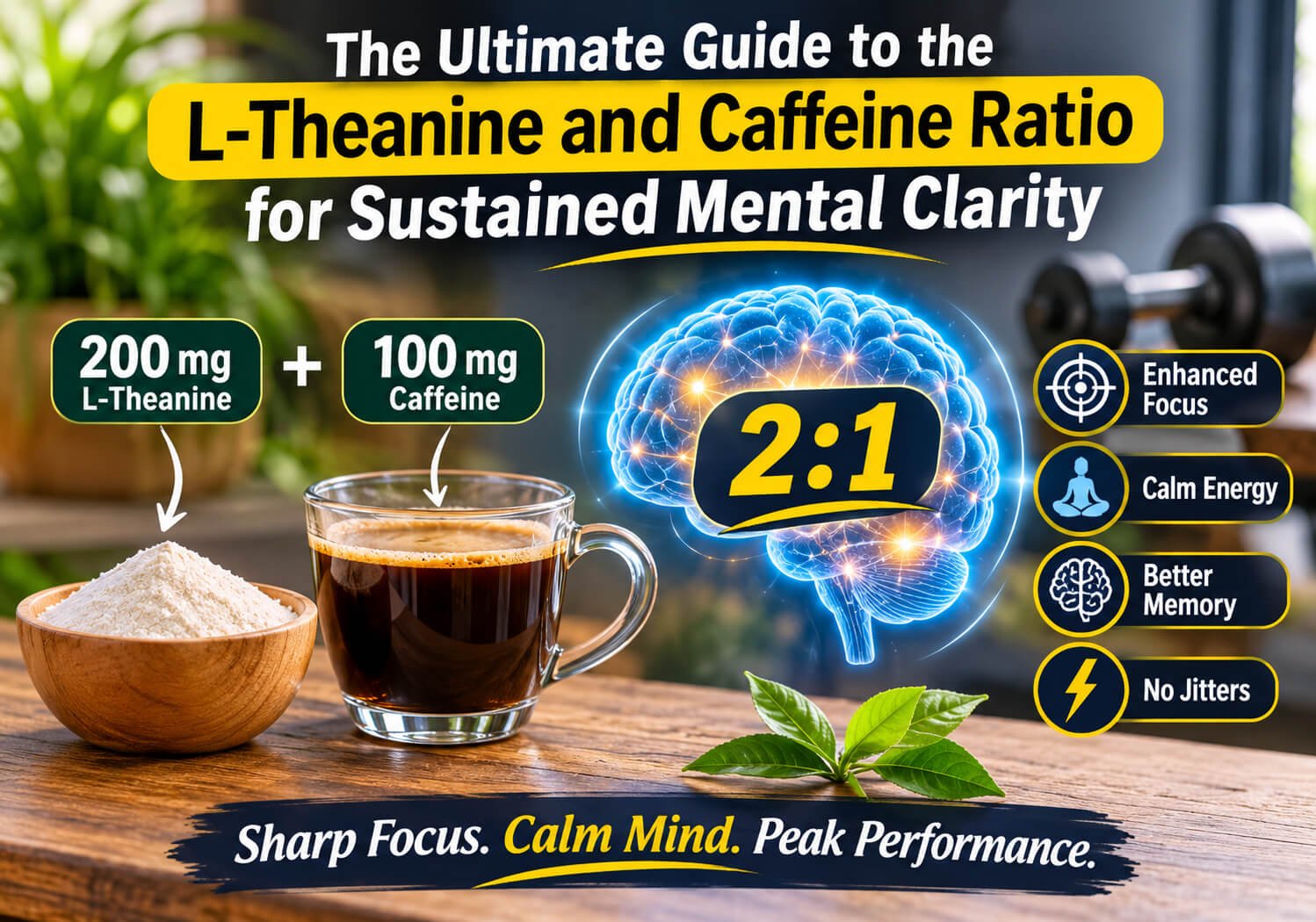
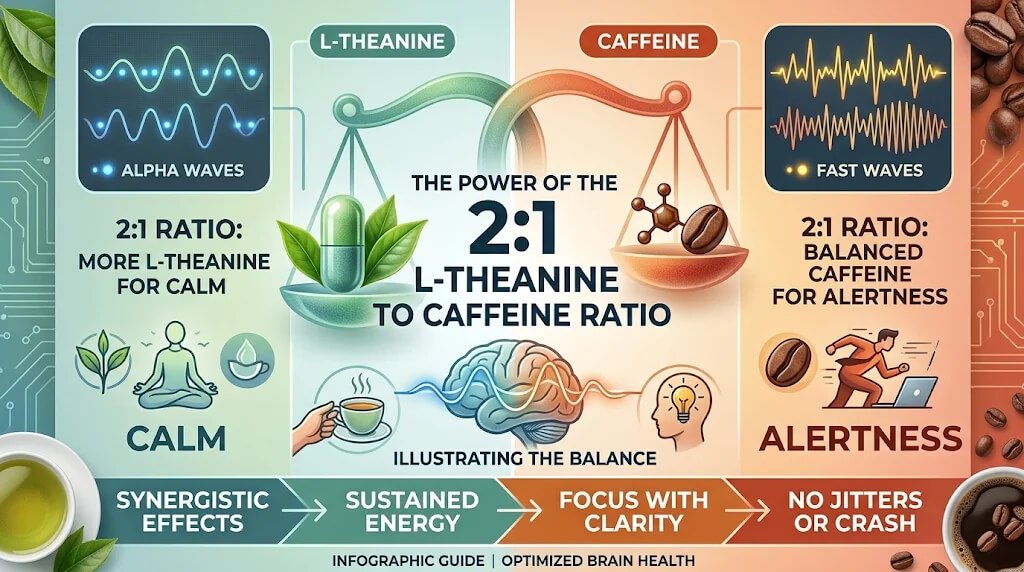
The optimal l-theanine and caffeine ratio for sustained mental clarity is typically 2:1. This means taking 200 mg of L-theanine for every 100 mg of caffeine. This specific ratio promotes alpha brain wave activity, which reduces caffeine-induced jitters and anxiety while enhancing attention, reaction time, and working memory.
What the Research Says: How This Stack Works
To understand why this combination is so effective, we must look at how each compound interacts with your central nervous system. They do not just cancel each other out; they work synergistically to improve cognitive performance.
How Caffeine Works in the Brain
Caffeine is a well-known psychostimulant. Its primary mechanism of action is blocking adenosine receptors in the brain. Adenosine is a neurotransmitter that promotes sleepiness and relaxation. By blocking these receptors, caffeine prevents you from feeling tired and triggers the release of other neurotransmitters like dopamine and norepinephrine. This leads to increased alertness and energy. However, in high doses, this same mechanism can cause overstimulation, elevated heart rate, and anxiety. According to a review published by the National Center for Biotechnology Information (NCBI), while caffeine improves vigilance, it can also increase subjective feelings of anxiety in sensitive individuals.
How L-Theanine Modulates the Nervous System
L-theanine is a naturally occurring amino acid found primarily in green tea (Camellia sinensis). Unlike caffeine, it does not act as a stimulant. Instead, it crosses the blood-brain barrier and influences several neurotransmitter systems. Research shows that L-theanine increases the production of gamma-aminobutyric acid (GABA), a neurotransmitter that promotes relaxation and reduces neuronal excitability. Furthermore, a study in the journal Biological Psychology demonstrated that L-theanine significantly increases alpha brain wave activity. Alpha waves are associated with a state of “wakeful relaxation,” similar to the mental state achieved during meditation.
The Synergistic Effect on Cognitive Performance
When you combine these two, magic happens. L-theanine smooths out the sharp, jittery edges of caffeine. It does not sedate you or cancel out the alertness caffeine provides. Instead, it filters out the background noise of anxiety. A landmark study published in Nutritional Neuroscience found that the combination of L-theanine and caffeine significantly improved speed and accuracy on cognitively demanding tasks, while also reducing susceptibility to distracting information. This synergistic effect is exactly why the l-theanine and caffeine ratio for sustained mental clarity is so highly recommended by sports nutritionists and cognitive researchers alike.

Breakdown of Common Ratios
Not everyone responds to supplements the same way. Your ideal dose depends on your body weight, caffeine tolerance, and the specific task at hand. Below is a practical chart to help you choose the right starting point.
| Ratio (L-Theanine : Caffeine) | Typical Dose | Best For | Expected Effects |
| 1:1 | 100 mg L-theanine : 100 mg caffeine | Caffeine-sensitive individuals, light afternoon tasks | Mild focus boost, minimal stimulation, very low risk of jitters. |
| 2:1 | 200 mg L-theanine : 100 mg caffeine | The Gold Standard for most adults, deep work, studying | Smooth, sustained mental clarity, enhanced working memory, zero jitters. |
| 3:1 | 300 mg L-theanine : 100 mg caffeine | High-anxiety individuals, evening wind-down (with low caffeine) | Strong relaxation response, may slightly blunt the energizing effect of caffeine. |
| 1:2 | 100 mg L-theanine : 200 mg caffeine | High-tolerance athletes, heavy pre-workout needs | Strong physical energy, mild jitter reduction, but still carries a crash risk. |
Note: For a 150 lb (68 kg) individual, a 2:1 ratio (200 mg L-theanine to 100 mg caffeine) is generally the safest and most effective starting point. Always adjust based on your personal tolerance.

How to Apply It: Practical Steps and Routines
Knowing the science is only half the battle. As a coach, I want you to know exactly how to implement this into your daily life and training regimen. Here is a step-by-step guide to mastering your stack.
Step 1: Choose Your Caffeine Source
You can get 100 mg of caffeine from about one 8-ounce cup of brewed coffee, two shots of espresso, or a standardized caffeine pill. If you prefer a natural route, matcha green tea naturally contains both caffeine and L-theanine, though the ratio is usually closer to 1:1 or 1:2, meaning you may need to add supplemental L-theanine to reach the ideal 2:1 balance.
Step 2: Time Your Dose Correctly
Caffeine peaks in the bloodstream about 30 to 60 minutes after ingestion. L-theanine absorbs slightly faster, peaking around 30 to 45 minutes. To ensure they hit your system simultaneously, take your L-theanine supplement about 15 to 20 minutes before your caffeine source.
Step 3: Start with a Regression
If you are new to nootropics, do not start with high doses. Begin with a regression: 50 mg of caffeine (half a cup of coffee) paired with 100 mg of L-theanine. Assess how you feel after 45 minutes. If you feel clear-headed and calm, you have found your baseline.
Step 4: Progress to the Standard Dose
Once you tolerate the regression well, progress to the standard 2:1 ratio: 100 mg of caffeine and 200 mg of L-theanine. This is the sweet spot for most people seeking enhanced cognitive flexibility and sustained attention during a 2- to 3-hour work block or gym session.
Coach’s Tip: Track your response. Keep a simple log of your dose, the time you took it, and your focus level on a scale of 1 to 10. This data will help you fine-tune your exact l-theanine and caffeine ratio for sustained mental clarity over time.
Common Mistake: Taking L-theanine too late in the day or pairing it with massive doses of caffeine (e.g., 400 mg) late in the afternoon. Even with L-theanine, high doses of caffeine will disrupt your sleep architecture, ruining your recovery and cognitive function the next day. Keep caffeine intake before 2:00 PM.
Sample Pre-Workout Routine for Mental Focus
Physical training requires intense mind-muscle connection. If your mind is scattered, your form suffers.
- 45 minutes pre-workout: Drink 16 ounces of water.
- 30 minutes pre-workout: Consume 200 mg of L-theanine.
- 20 minutes pre-workout: Consume 100–150 mg of caffeine (via coffee or pre-workout).
- During workout: Focus on controlled tempo (e.g., 2 seconds up, 2 seconds down). The stack will help you maintain this deliberate pacing without feeling rushed or anxious.
Safety Notes and Who Should Be Careful
While both caffeine and L-theanine are generally recognized as safe (GRAS) by the FDA, they are not suitable for everyone. Always prioritize safety and listen to your body.
- Pregnancy and Breastfeeding: Women who are pregnant or nursing should consult a healthcare provider before using caffeine or L-theanine supplements. Caffeine intake is typically limited to 200 mg per day during pregnancy.
- Blood Pressure Concerns: Caffeine can cause a temporary, acute spike in blood pressure. If you have hypertension, monitor your response carefully or opt for decaffeinated alternatives paired with L-theanine.
- Medication Interactions: L-theanine may theoretically interact with blood pressure medications or stimulants prescribed for ADHD. Caffeine can interact with certain antibiotics and bronchodilators.
- Gastrointestinal Sensitivity: Taking supplements on an empty stomach can cause mild nausea in some individuals. If this happens, take your stack with a small, protein-rich snack.
If you have any underlying medical conditions, it is always best to check with a doctor or physical therapist before starting any new supplement regimen.
Related Tips for Holistic Cognitive and Physical Performance
Supplements are tools, not magic bullets. To get the most out of your l-theanine and caffeine ratio for sustained mental clarity, you must support it with foundational lifestyle habits.
First, prioritize your sleep. No supplement can fully compensate for chronic sleep deprivation. If you are struggling with fatigue, you might want to explore ways to improve daily energy without caffeine by optimizing your sleep hygiene and circadian rhythm.
Second, be mindful of how you consume caffeine. Relying on high-sugar energy drinks or excessive coffee can lead to a rollercoaster of blood sugar spikes and crashes. Learning how to prevent caffeine energy crashes involves pairing your stimulants with adequate hydration and balanced macronutrients.
If you are in a calorie deficit for fat loss, mental fatigue is a common side effect. In these cases, adding L-tyrosine for energy support can be a highly effective strategy. L-tyrosine is a precursor to dopamine and norepinephrine, helping to maintain cognitive function when you are under metabolic stress.
For those who want to avoid stimulants altogether, there are supplements that support metabolism without stimulants that can provide a gentle, sustainable lift. Additionally, leveraging the natural compounds in tea can be beneficial; exploring green tea extract benefits can offer a milder, naturally balanced source of both caffeine and L-theanine.
Finally, remember that stress severely degrades cognitive performance. If you find yourself reaching for caffeine to cope with anxiety rather than genuine fatigue, consider looking into adaptogens for cortisol management. Managing your stress response will naturally improve your baseline focus, making your caffeine and L-theanine stack even more effective. When your mind is clear, it is also easier to focus on your nutrition, making it simpler to apply strategies for managing cravings naturally throughout the day.

Frequently Asked Questions (FAQ)
What is the best l-theanine and caffeine ratio for focus? The most widely researched and recommended ratio is 2:1. This means taking 200 mg of L-theanine for every 100 mg of caffeine. This specific balance maximizes cognitive benefits like improved reaction time and working memory while effectively neutralizing the jittery, anxious side effects of caffeine.
Does L-theanine cancel out the effects of caffeine? No, it does not cancel out caffeine. Instead, it modulates them. L-theanine promotes relaxation without sedation by increasing alpha brain waves and GABA activity. It smooths out the overstimulation caused by caffeine, resulting in a state of “calm focus” rather than eliminating the energy boost entirely.
How much L-theanine should I take with 200 mg of caffeine? If you are consuming 200 mg of caffeine (roughly two cups of coffee or a strong pre-workout), the ideal 2:1 ratio suggests taking 400 mg of L-theanine. However, if you are sensitive to stimulants, you can start with a 1:1 ratio (200 mg of L-theanine) and adjust based on how your body responds.
Can L-theanine and caffeine improve workout focus? Yes. This stack is highly effective for pre-workout use. It enhances mind-muscle connection, improves reaction time, and delays the perception of mental fatigue during strenuous exercise. It allows you to train with high intensity without the nervous anxiety that high-stimulant pre-workouts often cause.
How long does it take for the L-theanine and caffeine stack to work? You will typically begin to feel the effects within 30 to 45 minutes of ingestion. Both compounds are rapidly absorbed in the gastrointestinal tract. The peak cognitive benefits usually last for about 3 to 4 hours, which aligns well with a standard deep-work session or gym workout.
Are there any side effects of the L-theanine and caffeine stack? Side effects are rare and generally mild when using the recommended 2:1 ratio. Some individuals may experience mild headaches, digestive discomfort, or dizziness, especially if taken on an empty stomach. Always start with a lower dose to assess your personal tolerance before increasing the amount.
Conclusion
Mastering your mental energy is just as important as training your muscles. The l-theanine and caffeine ratio for sustained mental clarity is one of the most reliable, evidence-based tools available for achieving sharp, jitter-free focus. By sticking to the golden 2:1 ratio—200 mg of L-theanine to 100 mg of caffeine—you can harness the alertness of caffeine while enjoying the calm, meditative focus provided by L-theanine.
Start with a lower dose to assess your tolerance, time your intake strategically, and pair this stack with good sleep and hydration. Whether you are crushing a heavy leg day, studying for a certification, or powering through a demanding work project, this simple nootropic stack will help you perform at your absolute best.