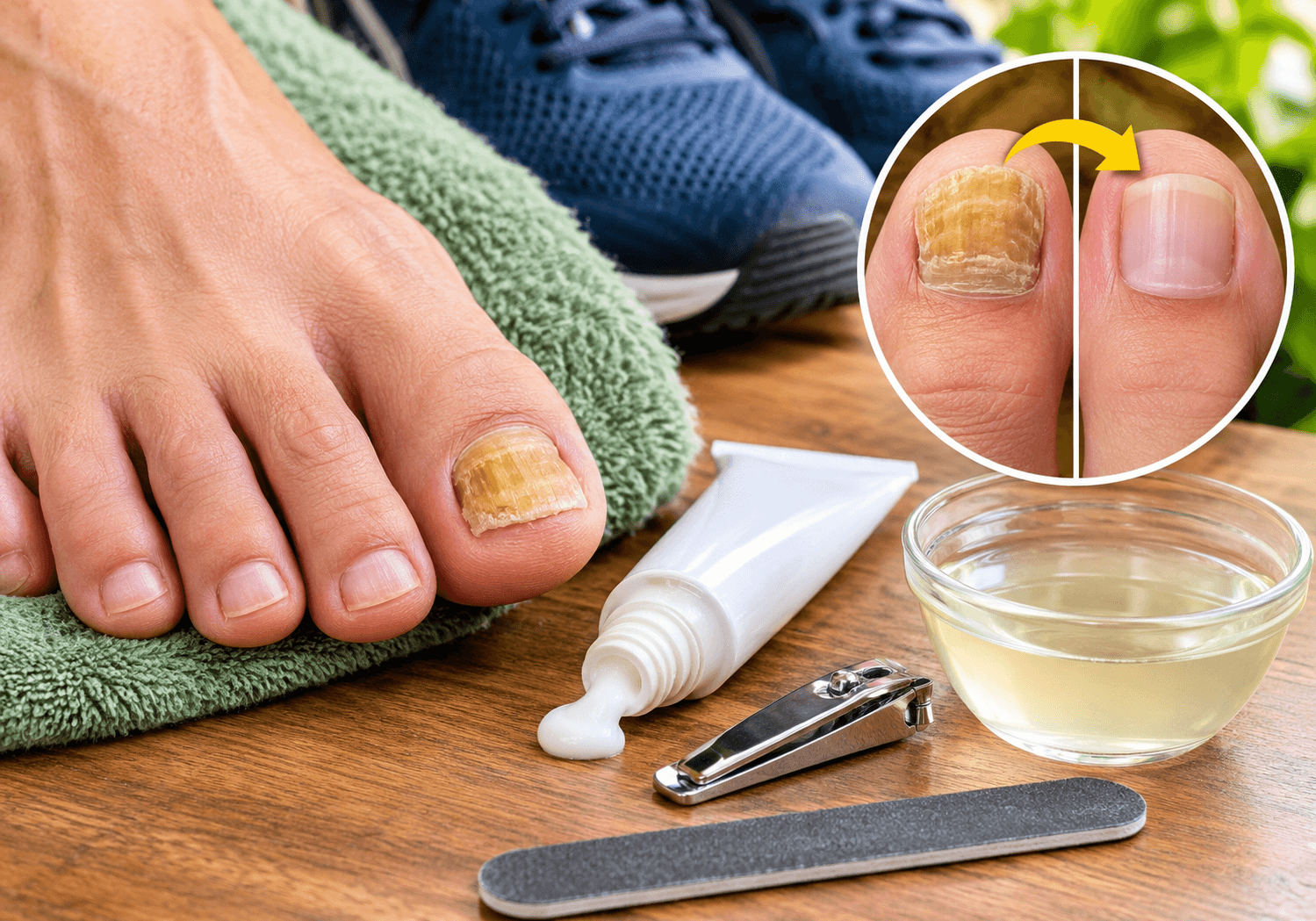
A thick, yellow toenail is easy to ignore until it snags your sock or presses against the front of your shoe. If you train in shared gyms, run in sweaty shoes, or swim at public pools, it can feel almost routine. Search online and you will find plenty of claims about toenail fungus treatment at home that actually works, from Vicks to vinegar. Most of them do not hold up well, but a few home steps genuinely help.
This guide covers what the research says, what is worth trying at home, and when you need a clinician. Check with your doctor or podiatrist before starting any treatment, especially if you have diabetes, poor circulation, or take regular medication.
Quick Answer: Home care alone rarely clears a fungal toenail. The best home plan confirms it is really fungus, thins the nail, uses a proven antifungal (often a prescription lacquer or pill), and fixes athlete’s foot and damp shoes. Vicks and tea tree oil have only small, limited studies behind them. Expect months, not weeks.
What Is Toenail Fungus, and Why Do Active People Get It?
Toenail fungus, known medically as onychomycosis, is an infection of the nail and the tissue around it. StatPearls, a medical reference hosted by the National Library of Medicine, reports that dermatophytes (skin-loving fungi) are found in about 90% of toenail cases. Molds and yeasts cause most of the remainder.
It is also common. The CDC estimates that around 14% of people have a fungal nail infection, and it is especially common in older adults. People with diabetes face a higher risk.
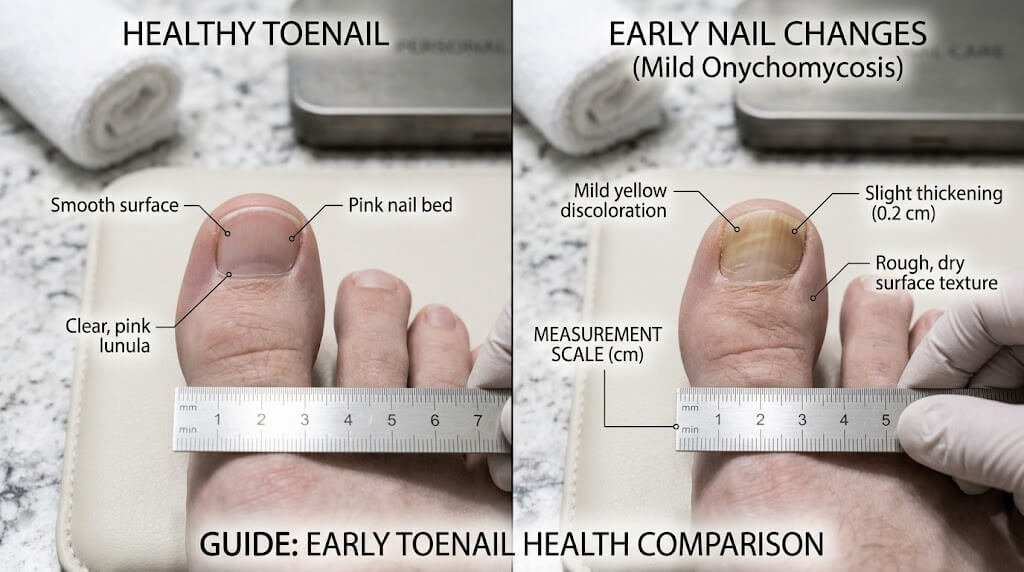
What does it look like? According to Mayo Clinic, infected nails may be thickened, discolored, brittle or crumbly, misshapen, separated from the nail bed, or smelly. Toenails are affected more often than fingernails.
Why Gym-Goers and Athletes Are Exposed
Fungus thrives in warm, damp places. Mayo Clinic says you can pick it up from the floor tile in a gym shower or from dark, sweaty shoes. Its risk list also includes heavily sweating feet, a past case of athlete’s foot, walking barefoot in damp public areas like pools and shower rooms, and minor skin or nail injuries.
That last item matters for runners and field-sport athletes. A big toe that bangs the front of a shoe on every downhill mile is a repeated minor injury. Shoes that trap sweat add the damp conditions fungus likes.
The Athlete’s Foot Connection
Mayo Clinic notes that athlete’s foot can spread into the nail, and a nail infection can spread back to the foot. The CDC adds that people with fungal toenail infections often have a fungal skin infection on the foot, especially between the toes. That is why a good plan treats the whole foot, not just one nail.
Step Zero: Make Sure It Is Fungus Before You Treat It
Not every thick or discolored nail is fungal. American Family Physician notes that fungi cause about 50% of nail abnormalities, so the list of look-alike problems is long. The same review says diagnostic testing is generally recommended before treatment, and that a KOH test, which checks a nail sample under a microscope, is the preferred method.
Why does this matter? If the real cause is an injury or another skin condition, antifungal products will not fix it, and you could lose months on the wrong plan. A quick visit with a primary care doctor, dermatologist, or podiatrist can save you a lot of time and money.
What Toenail Fungus Treatment at Home That Actually Works Can (and Cannot) Do
Here is the honest picture. A toenail grows slowly, and the fungus sits under and inside a hard nail plate. Creams, oils, and soaks struggle to reach it. Mayo Clinic says it can take months to see results, and repeat infections are common even when treatment goes well.
It also helps to know how researchers define success. They track two kinds of cure: a nail that looks normal again (clinical cure) and a lab test that finds no fungus (mycologic cure), as described in this American Family Physician review summary. A product can improve how a nail looks without clearing the infection, so always ask which kind of cure a claim is talking about.
Let’s go through the options people ask about most.
Over-the-Counter Athlete’s Foot Creams
Many people grab a drugstore antifungal cream first. These products are useful for athlete’s foot on the skin. They are not a nail treatment.
A StatPearls entry on clotrimazole states that topical clotrimazole is not effective for onychomycosis, and that fungal nail infections usually need an oral antifungal drug. Still, treating the skin between your toes matters, because that skin can reinfect the nail.
Vicks VapoRub
Vicks is the most popular home remedy, so let’s look at the data. A 2011 pilot study in the Journal of the American Board of Family Medicine followed 18 adults who applied it at least once daily for 48 weeks. Five (27.8%) had both a lab-confirmed and a visible cure, 10 (55.6%) had partial clearing, and 3 (16.7%) saw no change. All 18 said they were satisfied or very satisfied with how their nails looked.
Those numbers are interesting, but the study was tiny and had no placebo group. The authors themselves called it a pilot. Treat it as a reason for more research, not as proof.
If you and your clinician decide to try it, use a small amount as directed and stop if your skin gets irritated.
Tea Tree Oil
Tea tree oil is the other favorite. A 1994 randomized trial in the Journal of Family Practice compared 100% tea tree oil with 1% clotrimazole solution in 117 people with culture-proven toenail fungus. Both were applied twice daily for six months. The authors concluded that using a topical product along with debridement (professional trimming and cleaning of the nail) is a reasonable first step.
What the trial does not show is a reliable cure. Remember, clotrimazole is not considered effective for nails, so matching it is a low bar. [VERIFY: check the full text for the exact cure percentages before publishing any numbers.] Undiluted oil can also irritate skin in some people [VERIFY].

Vinegar, Baking Soda, Hydrogen Peroxide, and Mouthwash
Foot soaks are popular because they are cheap and feel productive. We could not find well-designed human trials showing that these soaks clear toenail fungus [VERIFY]. Soaking in plain water can make a nail easier to file, but a softer nail is not a dead fungus.
Use soaks as a prep step if you like them, and not as the treatment itself.
Prescription Nail Lacquers and Solutions
Medical topicals are the next step up. According to the American Family Physician rapid review, ciclopirox 8%, efinaconazole 10%, and tavaborole 5% are less effective than oral drugs but can treat mild to moderate infection, with fewer side effects and fewer drug interactions.
Cure rates are still modest. A published letter in American Family Physician pointed out that efinaconazole produced a complete cure in only about 15% to 18% of people after a year of daily use [VERIFY]. That compared with roughly 3.5% to 5.5% for the vehicle (placebo-type) solution. So these products help, but patience and realistic expectations are part of the deal.
Oral Terbinafine
If you want the best odds of clearing the nail, ask your doctor about oral terbinafine. The same rapid review says it is preferred over topical therapy because it works better and takes less time.
StatPearls lists treatment of up to 12 weeks for toenails. It also lists situations where the pill route makes sense, such as three or more nails involved, or heavy involvement of a nail thicker than two millimeters (about 0.08 inch). [VERIFY: confirm this URL opens the terbinafine StatPearls page.]
Terbinafine is not risk-free. The review summary mentioned earlier found it far more effective than placebo, but also noted an association with liver injury. The rapid review advises monitoring for drug interactions in people who take certain antidepressants, beta blockers, and some other medicines. That is exactly why it needs a prescription and a real conversation with your doctor.
Home Remedies vs. Medical Options at a Glance
| Option | What the research shows | Realistic expectation | Best for |
| Athlete’s foot cream on the nail | Not effective for nail infection | Treats skin only | Athlete’s foot between the toes |
| Vicks VapoRub | One 18-person pilot, no control group | Possible partial improvement; cure unproven | Mild cases, with your clinician’s OK |
| Tea tree oil | One 1994 trial against clotrimazole | Unproven as a cure; may irritate [VERIFY] | Mild cases, with your clinician’s OK |
| Vinegar, baking soda, peroxide, mouthwash | No strong trials found [VERIFY] | Nail may soften; fungus likely remains | Prep before filing only |
| Prescription lacquer or solution | Better than placebo, less effective than pills | Slow, with modest complete-cure rates | Mild to moderate infection |
| Oral terbinafine (prescription) | Preferred by clinicians for effectiveness | Up to 12 weeks of pills, then the nail grows out | Several nails, thick nails, or failed topicals |
A Practical Routine for Toenail Fungus Treatment at Home That Actually Works
Think of this like a training block. It is slow, it rewards consistency, and skipped days cost you. This routine follows what the sources support and is built around whatever plan your clinician gives you.
- Get a diagnosis. Book a visit for a KOH test or nail culture. Mention your shoes, gym habits, and any medications.
- Treat athlete’s foot. If the skin between your toes is itchy, red, or peeling, use an antifungal product on the skin. Mayo Clinic recommends treating athlete’s foot because it can lead to nail fungus.
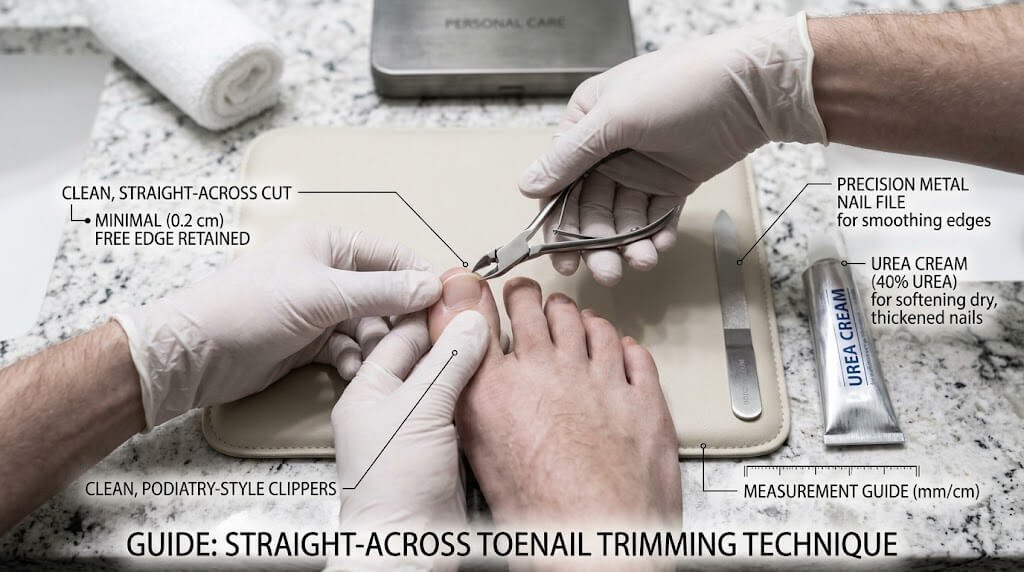
- Trim and file. Cut nails straight across, smooth the edges, and file down thickened areas. Disinfect your clippers after each use, as Mayo Clinic advises.
- Soften before thinning. Mayo Clinic suggests softening thick nails with a urea-containing cream before trimming or filing.
- Apply your chosen treatment. Use your prescription lacquer or the product your clinician approved, exactly as the label or prescription says, at the same time each day.
- Dry and protect. Dry your feet completely, including between the toes. Wear absorbent socks, change them during the day if they get damp, and choose breathable shoes.
- Track progress. Take a photo of the nail every four weeks in the same light. Slow change is hard to see day to day.
Easier version: Start with steps 1, 2, 6, and the sock habit. Add trimming, filing, and the treatment once those feel automatic.
Harder version: Add a weekly shoe and gear check, a photo log with dates, and a calendar reminder for your follow-up visit at the end of the treatment course.
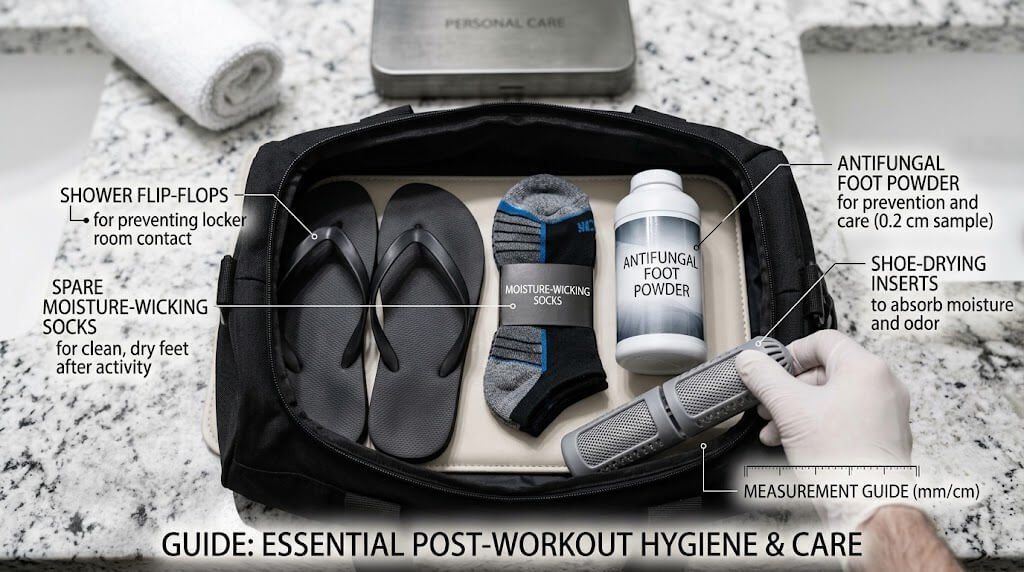
Coach’s Tip: Treat your shoes like gear that needs recovery. Rotate two pairs of trainers, pull out the insoles after every session, and let everything dry before the next workout. Mayo Clinic also suggests discarding old shoes or treating them with disinfectants or antifungal powder.
Common Mistake: Judging results too soon. Mayo Clinic says it can take months to see results, so a nail that looks unchanged after three weeks is normal, not a failure. Follow your clinician’s timeline instead of switching products every week.
Safety Notes: When Home Care Is Not Enough
See a clinician soon if you have diabetes, poor circulation, or a weakened immune system. Mayo Clinic warns that severe nail fungus can be painful and may lead to more serious infections in people with suppressed immunity or diabetes. Its list of reasons to be seen includes diabetes with suspected nail fungus, bleeding around the nails, swelling or pain around the nails, and difficulty walking.
A few more ground rules:
- Do not take or borrow oral antifungal pills without a prescription for you.
- Stop any product that causes burning, blistering, or a rash, and tell your clinician.
- Ask first if you are pregnant, breastfeeding, or take regular medication.
- If the nail is getting worse after several months of consistent care, go back for a re-check instead of adding more home remedies.
How to Keep Toenail Fungus From Coming Back
Recurrence is the sneaky part. The American Family Physician rapid review cites a relapse rate of about 25%, and says that avoiding barefoot walking in public places and disinfecting shoes and socks are thought to reduce it.
Here is a gym-bag checklist built from Mayo Clinic’s prevention advice:
- Wear footwear in pool areas and locker rooms.
- Keep nails trimmed and clean, and keep your feet dry.
- Wear absorbent socks, and change them during the day if needed.
- Choose shoes made of breathable materials.
- Discard old shoes, or treat them with disinfectant or antifungal powder.
- Disinfect nail tools, and pick a salon that sterilizes its tools for each customer.
- Consider skipping nail polish and artificial nails.
- Treat athlete’s foot promptly.
None of these steps is hard. The challenge is doing them every single week, even when your nails look fine. Consistency is what protects you here, the same way it does in the gym.
Frequently Asked Questions
Can toenail fungus go away on its own?
Sometimes the infection is mild enough that you may not need treatment, according to Mayo Clinic. But if it is painful or thickening, self-care and medication may help. Nail infections can also spread to the skin of the foot, so a quick check with a clinician is a smart move.
How long does toenail fungus treatment take?
Plan on months. Mayo Clinic says it can take months to see results, and StatPearls lists up to 12 weeks of oral terbinafine for toenails. Even after the nail looks better, repeat infections are common, so keep your prevention habits going afterward.
Does Vicks VapoRub work on toenail fungus?
The evidence is thin. In one 18-person pilot study, 5 people (27.8%) had a lab-confirmed and visible cure after 48 weeks, and 10 improved partly, but there was no control group. It may be worth discussing with your doctor, though it is not a proven cure.
Does tea tree oil kill toenail fungus?
A 1994 randomized trial tested 100% tea tree oil against 1% clotrimazole solution for six months in 117 people, but it did not establish tea tree oil as a reliable cure [VERIFY]. Check with your clinician before using it, and stop if your skin becomes irritated.
Can I go to the gym with toenail fungus?
Ask your clinician whether you need to change your routine. As a baseline, Mayo Clinic advises wearing footwear in pool areas and locker rooms, keeping nails trimmed and clean, and disinfecting nail tools. Fungus can live on damp floors, so protecting your feet protects your progress too.
Why does toenail fungus keep coming back?
Relapse is common. The American Family Physician rapid review cites a relapse rate of about 25%. Damp shoes and untreated athlete’s foot are known risk factors, while avoiding barefoot walking in public places and disinfecting shoes and socks are thought to lower the odds.
Conclusion: What to Do Next
The honest answer on toenail fungus treatment at home that actually works is that no single oil or ointment is a magic fix. What works is a system. Confirm the diagnosis, treat athlete’s foot, thin and trim the nail, use a proven antifungal, and keep your shoes and locker-room floors from reinfecting you.
Vicks and tea tree oil are popular, and the small studies on them are interesting, but they do not prove a cure. Prescription lacquers help with mild to moderate cases, and oral terbinafine gives the best odds for harder ones, with your doctor weighing the risks. Whatever you choose, give it months, not weeks.
Your next step is simple: book a nail test, set up your shoe rotation, and take your first photo today. Then check in with your clinician if the nail is painful, spreading, or not improving. Slow, steady work wins here, just like it does in training.