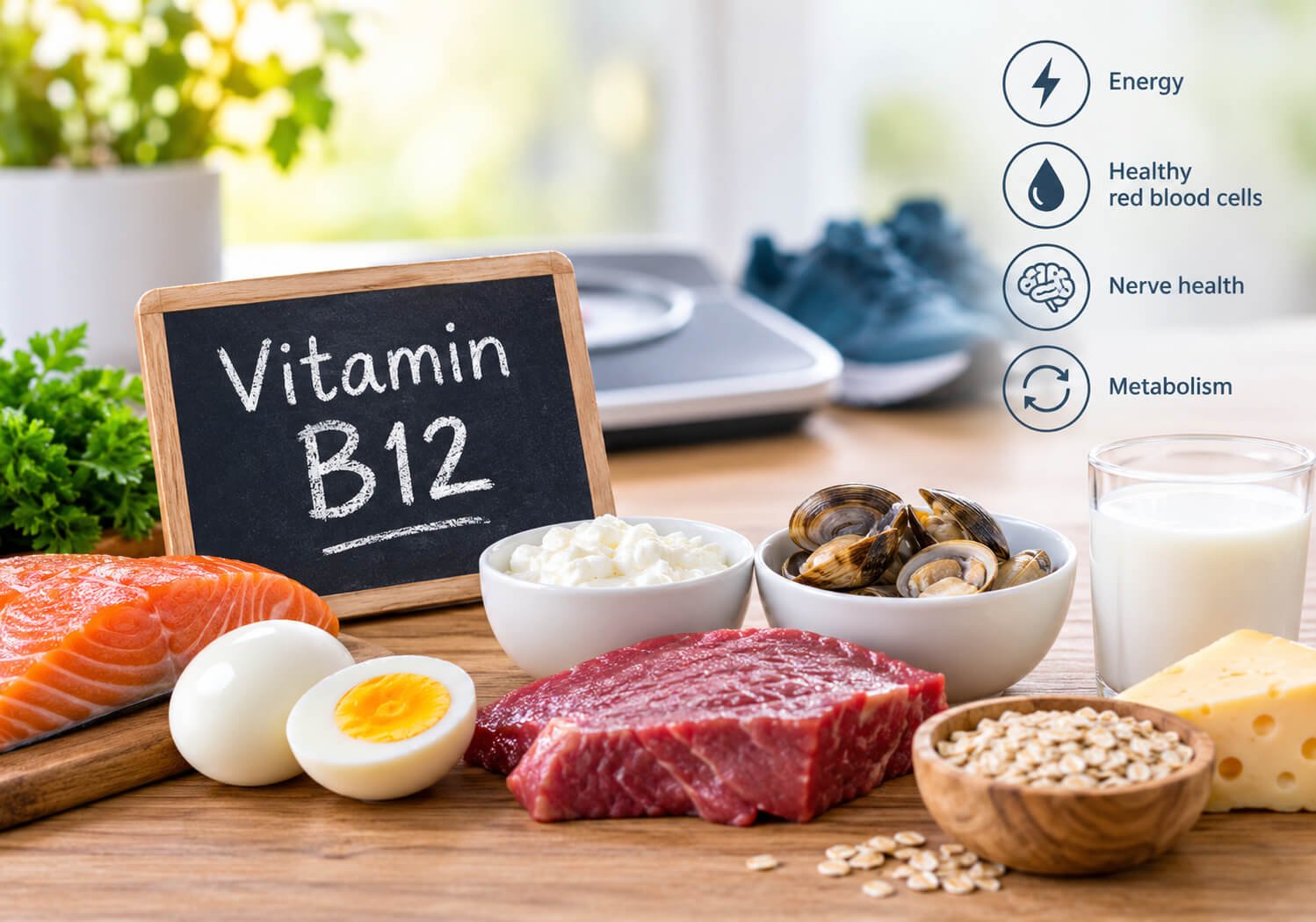
Introduction
Vitamin B12 is often promoted as a simple solution for low energy, tiredness, and difficulty losing weight. From vitamin injections at wellness clinics to high-dose supplements advertised online, many products promise to help people feel more energetic and support their weight-management goals. But does vitamin B12 help with weight loss or energy, or are these benefits overstated?
Vitamin B12 is an essential nutrient that supports healthy red blood cells, normal nerve function, DNA production, and important metabolic reactions. A deficiency can cause fatigue and weakness, and correcting that deficiency can help improve related symptoms. However, research has not established that extra B12 increases fat burning, boosts athletic performance, or produces meaningful weight loss in people who already get enough of the vitamin.
This article explores how vitamin B12 works, its connection to energy and metabolism, the signs of deficiency, and the differences between food sources, oral supplements, and injections. It also explains safe intake, possible side effects, and evidence-based approaches to losing weight without unnecessary fatigue.
Quick Answer: Does Vitamin B12 Help With Weight Loss or Energy?
Vitamin B12 supports normal energy metabolism, red blood cell production, and nerve health. Treating a confirmed deficiency may help improve deficiency-related fatigue and weakness. However, B12 is not a proven fat burner, and taking extra B12 has not been shown to meaningfully increase energy, exercise performance, or weight loss in people whose vitamin B12 levels are already adequate.
Table of Contents
- Does Vitamin B12 Help With Weight Loss or Energy?
- How Does Vitamin B12 Work in the Body?
- Signs and Symptoms of Vitamin B12 Deficiency
- Who Is at Risk of Vitamin B12 Deficiency?
- Best Food Sources of Vitamin B12
- Vitamin B12 Supplements: Types and Differences
- Vitamin B12 Dosage for Energy and Weight Loss
- Vitamin B12 Side Effects, Safety, and Precautions
- What Does the Research Say About B12 for Weight Loss?
- How to Lose Weight and Maintain Energy Without Relying on B12 Supplements
- Frequently Asked Questions
- Conclusion
- References and Sources
1. Does Vitamin B12 Help With Weight Loss or Energy?
Vitamin B12 is essential for normal energy metabolism, but its role is frequently misunderstood. The body needs B12 to carry out several important biochemical processes, including producing healthy red blood cells, maintaining nerve cells, and helping cells process certain nutrients. If your B12 levels are too low, your body may not perform these functions properly, potentially causing fatigue, weakness, and other symptoms. This is why correcting a deficiency can improve how a person feels. However, the benefits of treating a deficiency should not be confused with the effects of taking additional vitamin B12 when levels are already sufficient.
Does Vitamin B12 Give You More Energy?
Vitamin B12 does not provide calories like carbohydrates, protein, and fat. Instead, it helps the body carry out normal metabolic reactions. A person with a deficiency may feel unusually tired because of anemia, impaired cellular processes, or neurological effects. Treating the deficiency can help address these problems.
For someone who already has adequate B12, taking an extra supplement is unlikely to produce a noticeable energy boost. The Mayo Clinic’s guidance on B12 injections explains that there is no solid evidence that B12 injections improve energy or athletic endurance in people who do not have low levels.
Can Vitamin B12 Help You Lose Weight?
Vitamin B12 is not an established weight-loss treatment. Although it supports normal metabolism, research has not shown that extra B12 directly burns body fat or produces meaningful weight loss in people who are not deficient.
If a B12 deficiency contributes to tiredness, treating it may make everyday movement and exercise feel more manageable. Nevertheless, any improvement in activity does not guarantee weight loss. Changes in body weight depend on several factors, including overall food intake, physical activity, sleep, medications, genetics, and underlying health conditions.
Can Correcting a B12 Deficiency Help You Feel More Active?
Yes, when fatigue and weakness are caused by a genuine B12 deficiency, appropriate treatment can improve symptoms. The response depends on the severity and duration of the deficiency, its underlying cause, and the treatment used. Some symptoms may improve gradually, while neurological problems can take longer and may not completely resolve if treatment is delayed.
Persistent fatigue should not automatically be attributed to low B12. Iron deficiency, thyroid problems, sleep disorders, depression, infections, and other conditions can produce similar symptoms.
What Is the Connection Between Vitamin B12 and Metabolism?
Vitamin B12 acts as a cofactor in reactions needed for normal cellular function and the processing of certain nutrients. It is therefore essential to metabolism, but that does not mean B12 supplements increase calorie burning above normal levels.
The key distinction is simple: correcting a nutritional deficiency restores normal function; taking more of a nutrient than you need does not necessarily improve that function further. For most people interested in B12 supplements for weight loss, correcting a genuine deficiency may support general health, but sustainable dietary and activity changes remain the foundation of weight management.
2. How Does Vitamin B12 Work in the Body?
Vitamin B12, also known as cobalamin, is a water-soluble vitamin involved in several essential biological processes. It helps maintain healthy nerve cells, supports the development of red blood cells, and contributes to DNA synthesis. It also acts as a cofactor for enzymes involved in reactions that process certain nutrients. These functions help explain why a deficiency can affect multiple body systems, including the blood, nervous system, and energy-related processes. The National Institutes of Health Office of Dietary Supplements provides a detailed explanation of these functions and the evidence surrounding B12 status.
Vitamin B12 and Energy Metabolism
Your body obtains energy by breaking down and processing carbohydrates, fats, and proteins. Vitamin B12 participates in two important enzyme reactions that help maintain normal metabolism. One reaction is involved in converting methylmalonyl-CoA into succinyl-CoA, which connects certain nutrient breakdown pathways with cellular metabolism. Another supports the conversion of homocysteine into methionine, an amino acid needed for several biological processes.
These reactions are essential, but B12 is not a stimulant. It does not provide an immediate source of energy and should not be compared with caffeine or calorie-containing food. B12 supplements are most likely to make a noticeable difference when they correct an inadequate level.
Vitamin B12 and Red Blood Cell Production
Red blood cells carry oxygen from the lungs to tissues throughout the body. Vitamin B12 is necessary for normal DNA synthesis during red blood cell development. When B12 levels are too low, red blood cell production can become abnormal, resulting in megaloblastic anemia.
This condition involves unusually large, immature red blood cells that cannot function normally. Reduced oxygen delivery can contribute to fatigue, weakness, lightheadedness, and shortness of breath during physical activity. Correcting a confirmed deficiency helps address the underlying nutritional cause.
Vitamin B12 and the Nervous System
B12 is also needed for the development and maintenance of the myelin covering that helps nerve signals travel efficiently. When B12 deficiency persists, neurological problems can develop. These may include tingling, numbness, difficulty walking, balance problems, or changes in concentration and memory.
Neurological symptoms can occur even when obvious anemia is absent, so a normal-looking complexion or lack of severe tiredness does not always rule out a problem.
Does Vitamin B12 Increase Your Metabolic Rate?
There is no convincing evidence that B12 supplementation raises the resting metabolic rate in people who already have adequate levels. A person with an untreated deficiency may experience improvements in health and functioning after treatment, but that is different from accelerating metabolism beyond normal.
Claims that high-dose vitamin B12 automatically helps people burn more calories or lose weight faster overstate what established research shows.
3. Signs and Symptoms of Vitamin B12 Deficiency
Vitamin B12 deficiency can develop when a person does not consume enough of the nutrient or cannot absorb it properly. Symptoms vary considerably: some people experience noticeable fatigue or neurological problems, while others have mild symptoms or none that they readily recognize. Symptoms alone cannot confirm a deficiency because many other conditions can cause similar problems. A combination of medical history, examination, and appropriate blood tests is more useful than starting a supplement based only on feeling tired.
Common Physical Symptoms of Low B12
Possible signs of vitamin B12 deficiency include persistent tiredness, weakness, lightheadedness, pale skin, a sore or smooth tongue, and shortness of breath during exertion. Some people also experience reduced appetite, digestive symptoms, or irritability. When deficiency causes anemia, the reduced oxygen-carrying capacity of the blood may make everyday tasks feel more demanding.
These symptoms are not specific to B12 deficiency. Iron deficiency and other forms of anemia, thyroid disorders, inadequate food intake, and sleep problems can produce similar effects. People should avoid assuming that B12 is the cause without considering other explanations.
Neurological Symptoms Associated With B12 Deficiency
Long-standing deficiency can affect the nervous system. Possible symptoms include pins and needles, numbness in the hands or feet, balance difficulties, problems with coordination, and changes in memory or concentration. In more serious cases, untreated deficiency can cause lasting neurological damage.
These symptoms deserve particular attention because neurological problems may develop even without the classic signs of anemia. Early assessment matters when a person has unexplained numbness, progressive balance problems, or other changes in sensation and movement.
Can B12 Deficiency Cause Weight Loss or Changes in Appetite?
Some people with B12 deficiency may experience reduced appetite or unintended changes in weight. However, weight loss is not a dependable sign of low B12, and it should not be used to diagnose the condition. Unintentional weight loss can have many causes, including digestive disorders, thyroid disease, diabetes, infections, medication effects, and other medical conditions.
Likewise, B12 deficiency does not generally explain every case of difficulty losing weight. Taking supplements without identifying the underlying problem may delay appropriate care.
Can You Have Low B12 Without Obvious Symptoms?
Yes. Symptoms can be mild, develop slowly, or remain unrecognized for some time. Risk factors, including a vegan diet without reliable B12 sources, certain digestive conditions, and long-term use of some medications, may justify discussing testing with a healthcare professional.
The MedlinePlus overview of vitamin B12-deficiency anemia describes possible symptoms, causes, diagnostic tests, and treatment. A clinician may order a blood B12 test and, when appropriate, additional tests such as methylmalonic acid to help clarify an uncertain result.
4. Who Is at Risk of Vitamin B12 Deficiency?
Not everyone has the same risk of developing a vitamin B12 deficiency. Some people consume too little B12, while others eat B12-containing foods but cannot absorb enough of the vitamin. Knowing the main risk factors can help people decide whether to discuss testing or supplementation with a healthcare professional. This is particularly important because untreated deficiency can affect the blood and nervous system, and symptoms may not always be obvious early on.
People Following Vegetarian or Vegan Diets
Vitamin B12 occurs naturally mainly in animal-derived foods. Vegans who avoid meat, fish, eggs, and dairy need a reliable alternative, such as fortified foods or an appropriate supplement. Some vegetarians obtain B12 from dairy products and eggs, but intake may still be inadequate depending on their food choices.
Seaweed, mushrooms, fermented foods, and other unfortified plant foods should not be relied upon as dependable sources of active B12. Their content can be low, inconsistent, or present in forms that do not meet nutritional needs.
Adults Over Age 50
As people age, some experience reduced stomach acid production or other digestive changes that make it harder to release B12 naturally bound to food proteins. Fortified foods and supplements provide B12 in forms that do not require the same initial separation from food proteins.
Older adults do not automatically require high-dose supplements, but those with absorption difficulties or inadequate intake may benefit from professional advice.
People With Digestive or Absorption Disorders
Conditions such as celiac disease and Crohn’s disease can interfere with nutrient absorption. Pernicious anemia, an autoimmune condition affecting the production of intrinsic factor, can also prevent adequate B12 absorption. Some stomach or intestinal surgeries remove or alter areas needed for normal absorption.
In these situations, improving dietary intake alone may not be enough, and treatment may require higher-dose oral supplements or injections.
People Taking Certain Medications
Long-term metformin use may lower B12 levels in some people. Proton pump inhibitors and other acid-reducing medicines can also affect the absorption of B12 from food. The NICE guideline on diagnosing and managing B12 deficiency identifies these medicines among relevant risk factors.
People should not stop prescribed medication independently. Instead, they should discuss whether monitoring or B12 supplementation is appropriate.
People Who Have Undergone Weight-Loss Surgery
Procedures such as gastric bypass and sleeve gastrectomy can change digestion and nutrient absorption. People who have undergone these operations may need ongoing blood tests, nutritional monitoring, and supplements based on their surgical procedure and clinical plan.
Because bariatric surgery can increase the risk of several nutritional deficiencies, follow-up should address more than B12 alone.

5. Best Food Sources of Vitamin B12 for Energy and Overall Health
Food is an effective way for many people to meet their vitamin B12 requirements. The vitamin is found naturally in meat, seafood, eggs, and dairy products, while selected cereals, plant-based beverages, and nutritional yeast products contain added B12. Choosing a variety of suitable foods can help support normal red blood cell production, nerve function, and overall nutrition. However, consuming adequate B12 does not guarantee higher energy levels if fatigue is caused by something else.
Foods High in Vitamin B12
The following examples illustrate the amount of B12 found in selected servings, based on the NIH Office of Dietary Supplements. Actual amounts vary by product, portion size, preparation method, and fortification.
| Food category | Example serving | Approximate vitamin B12 |
| Seafood | Cooked clams, 3 ounces | 17 mcg |
| Seafood | Cooked salmon, 3 ounces | 2.6 mcg |
| Meat | Cooked beef, 3 ounces | 2.4 mcg |
| Dairy | Milk, 1 cup | 1.3 mcg |
| Dairy | Plain yogurt, 6 ounces | 1.0 mcg |
| Eggs | One large cooked egg | 0.5 mcg |
| Fortified food | Breakfast cereal, one serving | Depends on the label |
| Fortified nutritional yeast | About 1/4 cup | Approximately 8.3–24 mcg in selected products |
Sources: NIH Office of Dietary Supplements and MedlinePlus.
Can You Get Enough Vitamin B12 From Food?
Many people can meet their nutritional requirements through a varied diet containing reliable sources of B12. For example, a meal pattern that includes dairy, eggs, fish, poultry, or meat may supply adequate amounts over the course of the day.
However, food intake is only part of the picture. Someone with pernicious anemia or certain digestive conditions may struggle to absorb enough B12 even when their diet contains sufficient amounts. These individuals may need a medically supervised treatment plan.
What Are the Best Vegan Sources of Vitamin B12?
For vegans, reliable sources include B12-fortified breakfast cereals, fortified plant-based beverages, and fortified nutritional yeast. The amount varies significantly, so checking the nutrition label is important. Not every nutritional yeast product or plant-based beverage contains added B12.
An appropriate supplement is often a practical option when fortified foods cannot reliably meet requirements. Choosing one based on actual dietary intake and individual circumstances is more useful than taking an unnecessarily high dose.
How Much Vitamin B12 Do Adults Need Daily?
The recommended dietary allowance for most adults is 2.4 micrograms (mcg) per day. The recommendation rises to 2.6 mcg during pregnancy and 2.8 mcg during breastfeeding.
These values are nutritional requirements for healthy individuals, not treatment doses for diagnosed deficiencies. People with absorption problems may require a different regimen under clinical supervision.
6. Vitamin B12 Supplements: Types, Forms, and Differences
Vitamin B12 supplements are available as tablets, capsules, liquids, dissolvable products, sublingual preparations, and injections. The best option depends on why supplementation is needed, whether the body can absorb B12 normally, the dose required, and an individual’s medical circumstances. A larger number on the label does not automatically mean a product is better, and marketing claims about energy or fat burning should not replace evidence-based guidance.
Vitamin B12 Tablets and Capsules
Oral tablets and capsules are common options for people who need additional B12. They are convenient, widely available, and come in a range of strengths. Some contain amounts substantially higher than the daily nutritional requirement because only a fraction of a large oral dose may be absorbed.
For someone with inadequate dietary intake, an appropriate oral product may help meet nutritional needs. People with a medical condition that impairs absorption may still be able to respond to high-dose oral treatment, but the correct approach depends on the cause and severity of deficiency.
Methylcobalamin vs. Cyanocobalamin
Methylcobalamin and cyanocobalamin are two common forms of B12. Methylcobalamin is a biologically active form, while cyanocobalamin is converted into active forms by the body. Both can supply vitamin B12.
Current evidence does not establish methylcobalamin as universally superior for energy, weight loss, or general health. Cyanocobalamin is a well-studied form commonly used in supplements, while methylcobalamin is also widely available. The appropriate choice depends on product quality, availability, individual circumstances, and clinical advice rather than advertising alone.
Sublingual B12 vs. Regular Oral Supplements
Sublingual products dissolve under the tongue, while ordinary tablets are swallowed. Manufacturers sometimes claim that sublingual products are absorbed better, but there is not strong evidence that they are generally more effective than standard oral supplements for people who need B12.
Convenience and personal preference may influence which form someone uses. However, a sublingual product should not automatically be assumed to solve a serious absorption problem.
Vitamin B12 Injections for Energy and Weight Loss
Healthcare professionals may prescribe injections to treat B12 deficiency, particularly when absorption is impaired or a particular clinical situation calls for injections. Injections bypass the digestive absorption process and can be appropriate for certain patients.
However, B12 injections are not proven weight-loss treatments. The Mayo Clinic’s review states that there is no solid evidence that B12 shots help people lose weight, and they are unlikely to increase energy in people whose B12 levels are adequate.
How to Choose a Vitamin B12 Supplement
Look for a clearly stated form and amount of B12, transparent ingredient information, trustworthy manufacturing standards, and instructions appropriate to the intended use. Consider whether a supplement is actually necessary before purchasing it. If you have persistent symptoms, take medication that affects B12 status, or have a condition that impairs absorption, discuss the most suitable option with a qualified professional.
7. Vitamin B12 Dosage for Energy and Weight Loss
The appropriate B12 dosage depends on whether the goal is to meet normal nutritional needs or treat a confirmed deficiency. It is important to distinguish a recommended daily intake from the much larger amounts often sold in supplements. A high dose may be appropriate in some clinical circumstances, but it should not be interpreted as a shortcut to greater energy, faster metabolism, or more weight loss.
What Is the Recommended Daily Intake of B12?
For most adults, the recommended dietary allowance is 2.4 mcg daily. People can often obtain this amount from food, fortified products, or a combination of sources. Pregnancy and breastfeeding have slightly higher requirements.
A supplement label may list hundreds or thousands of micrograms per serving. This does not mean everyone needs that amount. Recommended intake and treatment dosage serve different purposes because absorption is limited and varies according to the dose and an individual’s health.
Are High-Dose B12 Supplements Better for Energy?
There is no reliable evidence that high-dose B12 supplements improve energy in people who already have adequate levels. High-dose products may be useful for certain people with diagnosed deficiency or absorption problems, but a larger dose is not automatically more effective.
People experiencing fatigue should consider whether they have a nutritional deficiency, inadequate sleep, an underlying medical condition, or another contributing factor rather than simply increasing supplement strength.
How Long Does B12 Supplementation Take to Work?
The timeline varies depending on how low the person’s levels are, the cause of deficiency, the treatment regimen, and the symptoms being treated. Some people notice improvement as treatment progresses, while correction of anemia and recovery from neurological symptoms can take longer.
There is no guaranteed number of days in which B12 supplementation will restore energy or produce weight loss. Clinical monitoring may be needed to confirm that a deficiency is improving.
Should You Take B12 Every Day?
Daily use may be appropriate for some supplements and dietary situations, whereas treatment regimens for deficiency can differ. A clinician may recommend daily oral supplementation, another schedule, or injections depending on the underlying cause and response to treatment.
Follow the instructions of the specific product or healthcare professional. If you have symptoms or a significant risk factor, seek assessment rather than assuming a standard over-the-counter dose will address the problem.
8. Vitamin B12 Side Effects, Safety, and Precautions
Vitamin B12 generally has a low risk of toxicity compared with many other nutrients. The US National Institutes of Health has not established a tolerable upper intake level because of its generally low potential for harm, even at high doses. Nevertheless, that does not mean every supplement is necessary or completely risk-free. Product ingredients, underlying medical conditions, and interactions with certain medicines remain important considerations.
Is Vitamin B12 Safe to Take Daily?
Daily B12 supplementation is generally well tolerated when used appropriately. It can be useful for people with low dietary intake or an established deficiency, but the need for long-term treatment depends on the underlying cause.
A person with a persistent absorption problem may need ongoing supplementation, while someone whose diet already supplies adequate B12 may have little reason to take an additional high-dose product. Appropriate use matters more than assuming everyone needs the same regimen.
Can High Doses of B12 Cause Side Effects?
B12 is generally considered safe, including at amounts above the daily requirement. However, some individuals experience adverse reactions, and rare allergic reactions can occur. Injectable preparations may produce local reactions or other treatment-related adverse effects.
Unnecessary high-dose supplementation can also add expense without offering additional benefits. When a product contains multiple ingredients, unwanted effects may arise from other components rather than B12 itself. Read labels carefully and seek medical advice if symptoms appear after starting a supplement.
Can B12 Interact With Medications?
Certain medications can affect B12 status. Metformin may lower B12 levels in some people, while proton pump inhibitors and H2-receptor antagonists can affect absorption from food. This is particularly relevant for people who use these medicines for long periods.
Discuss your medication list with a clinician or pharmacist before starting a supplement, particularly if you have a chronic condition or use several medicines. Do not stop metformin or acid-reducing treatment solely because of concerns about B12.
Can You Take B12 Without Testing First?
A person with a diet that reliably supplies adequate B12 may not need routine supplementation. However, testing is especially useful when symptoms and risk factors suggest a possible deficiency. A clinician may use a blood B12 measurement and additional tests when initial results are uncertain.
Taking supplements before testing can sometimes complicate interpretation of a person’s existing B12 status. If testing is planned because of suspected deficiency, ask the clinician whether to delay supplementation until the initial blood sample has been collected.
When Is Medical Attention Important?
Seek medical assessment for persistent unexplained fatigue, numbness, tingling, progressive balance problems, unusual weakness, or significant changes in memory or concentration. Urgent or rapidly worsening neurological symptoms should not be managed with supplements alone.
The NICE guideline on B12 deficiency emphasizes that symptoms vary and that the absence of anemia does not rule out deficiency. Early assessment can help identify the cause and reduce the risk of complications.
9. What Does the Research Say About B12 for Weight Loss?
Scientific evidence supports vitamin B12’s essential role in the body, but it does not establish B12 supplements as an effective standalone weight-loss intervention. This distinction matters because product advertisements often connect the vitamin’s role in metabolism with claims that it burns calories or melts fat. The fact that a nutrient is necessary for normal physiological function does not mean extra amounts create additional benefits when nutritional needs have already been met.
Does Clinical Evidence Support B12 for Fat Loss?
B12 deficiency can interfere with normal functioning and cause fatigue or weakness. Treating a genuine deficiency can help restore normal nutrient status and address related symptoms. However, there is no robust evidence that taking extra B12 directly causes meaningful fat loss in people who are not deficient.
Weight management depends on many interacting influences, including eating patterns, activity, sleep, genetics, medication use, and health conditions. Correcting a deficiency may support overall wellbeing, but it should not be presented as a substitute for strategies that address these factors.
Does B12 Improve Exercise Performance?
B12 is important for normal red blood cell production and nerve function, both of which contribute to healthy physical functioning. A deficiency can cause anemia or neurological symptoms that interfere with exercise.
However, research does not establish that B12 supplementation increases endurance or athletic performance in people who already have adequate levels. Athletes and active adults are better served by ensuring they meet their nutritional requirements, eating enough to support training, and maintaining appropriate sleep and recovery routines.
What Do Studies Say About B12 Injections for Weight Loss?
There is no solid scientific evidence that B12 injections are an effective weight-loss treatment. According to the Mayo Clinic, injections are used to prevent or treat B12 deficiency in appropriate circumstances, not because they have been shown to cause fat loss.
Claims that injections dramatically increase metabolism or guarantee weight loss should therefore be treated cautiously. A medically indicated injection can be valuable for deficiency, but its purpose is different from that of an obesity treatment.
Why Do Some People Report More Energy After Taking B12?
Some people may feel better after starting B12 because they were deficient. Others may change their diet, sleep more consistently, become more physically active, or experience normal fluctuations in energy during the same period. Expectations and the natural variation of symptoms can also influence personal impressions.
Testimonials cannot determine which factor caused an improvement. The most useful approach is to assess symptoms and relevant risk factors, identify a deficiency when present, and evaluate the response to appropriate treatment. This is more reliable than using consumer reviews or supplement marketing as evidence of a weight-loss effect.
10. How to Lose Weight and Maintain Energy Without Relying on B12 Supplements
Sustainable weight management requires an approach that supports both energy and nutritional adequacy. Severe calorie restriction, inadequate protein intake, poor sleep, and excessive exercise can leave people feeling exhausted and make a healthy routine difficult to maintain. A more balanced plan focuses on manageable changes, regular meals, physical activity, and medical assessment when fatigue persists. Supplements can help correct genuine nutritional gaps, but they cannot replace the habits and care needed to support long-term health.
Maintain a Sustainable Calorie Deficit
Weight loss generally requires a sustained energy deficit, meaning the body uses more energy than it receives from food and drink. However, excessively restricting calories may increase fatigue, worsen hunger, and make it harder to meet nutrient requirements.
Choose a manageable approach that fits your lifestyle and food preferences. Regular meals containing nutrient-dense foods are often easier to sustain than extreme diets. People with diabetes, a history of disordered eating, or other medical conditions may benefit from individualized guidance from a healthcare professional or registered dietitian.
Eat Enough Protein, Carbohydrates, and Healthy Fats
A balanced diet includes adequate protein, carbohydrate, and fat, along with vitamins, minerals, and fiber. Protein-rich foods can help support muscle maintenance and fullness during weight loss. Carbohydrates provide an important source of energy, while unsaturated fats from foods such as nuts, seeds, and fish contribute essential nutrients.
Include a variety of vegetables, fruit, legumes, whole grains, and appropriate protein sources. If you follow a vegetarian or vegan diet, make a deliberate plan for reliable B12 intake through fortified foods or supplementation.
Support Sleep, Hydration, and Exercise Recovery
Consistent sleep, sufficient fluids, and manageable exercise help support everyday functioning. Many adults benefit from aiming for at least seven hours of sleep each night, although individual requirements vary.
Start with activity you can maintain, such as walking or cycling, and gradually add strength training if appropriate. Rest and recovery are important parts of a sustainable routine. Exhaustion is not proof that a weight-loss plan is working, and exercise volume should not be increased at the expense of health.
Investigate Persistent Fatigue Rather Than Guessing at Deficiencies
If you remain tired despite eating adequately and getting sufficient rest, consult a healthcare professional. Depending on your symptoms and history, assessment may include B12 status, iron deficiency, thyroid function, blood glucose, sleep problems, medication effects, or other possible causes.
This is especially important when fatigue occurs with numbness, tingling, breathlessness, unexplained weight change, or changes in balance. Identifying the underlying cause is more helpful than taking multiple supplements without clear evidence that they are needed.
11. Frequently Asked Questions About Vitamin B12, Weight Loss, and Energy
Does vitamin B12 help with weight loss or energy?
B12 supports normal energy metabolism, red blood cell production, and nerve function. Correcting a confirmed deficiency may improve fatigue or weakness caused by the deficiency. However, taking additional B12 has not been shown to cause meaningful weight loss or boost energy in people who already have adequate levels.
Does vitamin B12 help you burn fat?
No convincing evidence shows that B12 directly burns body fat. Vitamin B12 is necessary for normal metabolism, but extra supplementation does not automatically increase calorie expenditure. Sustainable weight loss is more closely related to eating patterns, physical activity, sleep, and other individual health factors.
Can B12 supplements boost energy if you are not deficient?
B12 supplements are unlikely to provide a noticeable energy boost if your B12 status is already adequate. They may help when fatigue is caused by deficiency, but tiredness can also result from inadequate sleep, anemia due to other causes, thyroid conditions, and various medical problems.
Does vitamin B12 increase metabolism?
B12 participates in metabolic reactions that help the body process nutrients and maintain normal cellular function. However, research has not established that taking extra B12 raises the metabolic rate above normal levels in people who are not deficient.
Do B12 injections help you lose weight?
B12 injections can treat deficiency when prescribed appropriately, but there is no solid evidence that they cause weight loss. Their medical purpose is to correct inadequate B12, particularly in situations where injections are appropriate, rather than to provide a fat-burning effect.
What are the signs of vitamin B12 deficiency?
Possible symptoms include fatigue, weakness, lightheadedness, pale skin, shortness of breath with exertion, numbness, tingling, balance problems, and concentration difficulties. Symptoms vary, and some people may not notice obvious problems early on. Blood testing and clinical assessment help establish the diagnosis.
What is the best form of B12 for energy?
Cyanocobalamin and methylcobalamin are common forms. Neither has been established as universally superior for energy in people with adequate B12 levels. Choose an appropriate product based on nutritional needs, quality, availability, and advice from a healthcare professional.
How much vitamin B12 should adults take daily?
The recommended dietary allowance for most adults is 2.4 mcg daily. Pregnancy and breastfeeding have higher recommendations. People with confirmed deficiency or impaired absorption may need a different clinical treatment regimen, so the daily requirement should not be confused with a prescribed treatment dose.
Is methylcobalamin better than cyanocobalamin?
No strong evidence establishes that methylcobalamin is universally better than cyanocobalamin for weight loss, energy, or general health. Both can supply B12. Product quality, appropriate dosing, the cause of deficiency, and individual medical circumstances matter more than marketing claims about a particular form.
How long does it take for B12 supplements to work?
The timeline depends on how severe the deficiency is, the treatment used, the person’s ability to absorb B12, and the symptoms involved. Some people improve gradually, while anemia and neurological symptoms may take longer to recover. There is no guaranteed timeline for improved energy or weight loss.
Can low B12 cause fatigue and weakness?
Yes. B12 deficiency may cause anemia and interfere with normal bodily processes, contributing to tiredness and weakness. However, these symptoms have many other possible causes. Persistent fatigue should be assessed rather than automatically treated with a supplement.
Which foods are highest in vitamin B12?
Clams, certain other shellfish, beef liver, fish, meat, and some dairy foods are useful sources. Fortified nutritional yeast and fortified breakfast cereals can also provide substantial amounts. Exact values depend on serving size, preparation, and the specific product.
Can vegans get enough B12 from food?
Yes, vegans can obtain B12 from reliably fortified foods, but ordinary unfortified plant foods are not dependable sources. Depending on their eating pattern, a suitable B12 supplement may be the simplest way to meet nutritional needs consistently.
Is it safe to take vitamin B12 every day?
Daily supplementation is generally well tolerated when appropriate to the person’s needs. However, not everyone needs a supplement, and some medical conditions require a specific treatment plan. People taking medicines that may affect B12 status should discuss monitoring and supplementation with their clinician.
Can vitamin B12 help with exercise performance?
Correcting a deficiency may improve health problems that interfere with normal physical activity. However, there is no solid evidence that extra B12 improves endurance or athletic performance in people with adequate levels. Exercise performance also depends on training, nutrition, recovery, and overall health.
Should I take B12 if I feel tired while dieting?
Not automatically. Fatigue during dieting can result from excessive calorie restriction, inadequate sleep, dehydration, insufficient iron or other nutrients, and several medical conditions. A healthcare professional can help determine whether B12 testing or supplementation is appropriate.
Can metformin lower vitamin B12 levels?
Yes. Long-term metformin use may lower B12 levels in some people. If you use metformin and have fatigue, numbness, or other symptoms that could suggest deficiency, discuss testing with your healthcare professional. Do not stop prescribed metformin without medical guidance.
When should I get tested for a B12 deficiency?
Consider discussing testing when you have unexplained fatigue alongside relevant risk factors, such as a vegan diet without reliable B12 sources, digestive disease, previous gastrointestinal surgery, or long-term use of certain medicines. Numbness, tingling, balance problems, or unexplained blood-count changes also warrant assessment.
12. Conclusion — Does Vitamin B12 Help With Weight Loss or Energy?
Vitamin B12 is essential for normal energy metabolism, healthy red blood cells, DNA production, and proper nervous system function. When a deficiency is responsible for fatigue or weakness, appropriate treatment can help improve these symptoms and protect long-term health. However, current evidence does not establish vitamin B12 as a fat-burning supplement, a metabolism booster, or an effective standalone weight-loss treatment for people whose B12 levels are already adequate.
For anyone asking, “Does vitamin B12 help with weight loss or energy?” the most useful answer is that the benefits depend on nutritional status. Focus on reliable B12 food sources, including animal-derived foods or appropriately fortified products, and consider supplements when they address a genuine nutritional need. If persistent fatigue, weakness, numbness, or tingling occurs, seek medical assessment rather than relying on high-dose supplements or injections.
B12 supplements for weight loss are not a substitute for balanced nutrition, consistent activity, sufficient sleep, and evidence-based medical care. A healthcare professional can help determine whether testing, supplementation, or another approach is right for your circumstances.