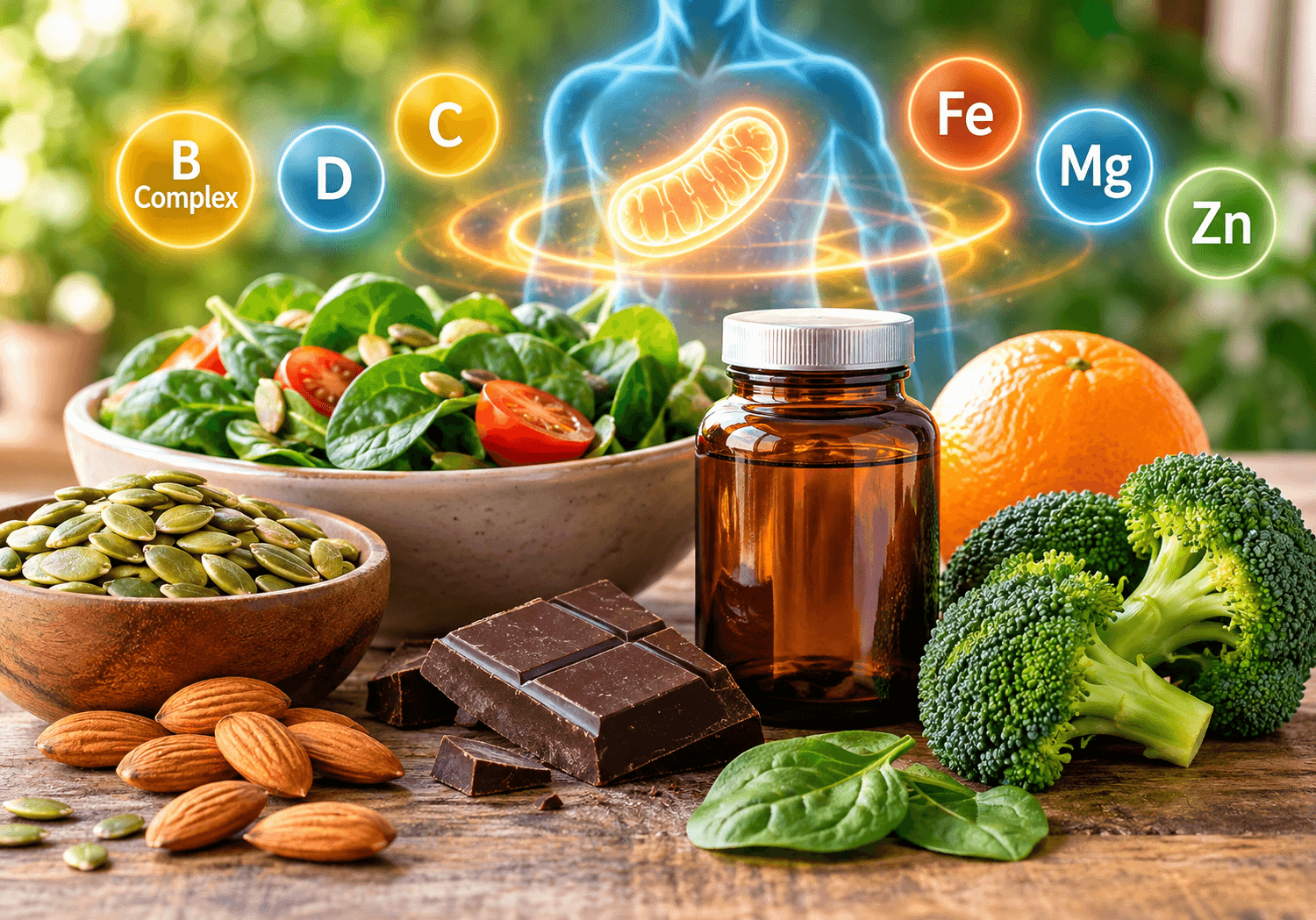
You hit the 3 p.m. wall. Your legs feel heavy on the stairs. Your brain goes foggy during a meeting. You blame the workout, the stress, or the short night of sleep. But before you reach for another coffee or a stimulant pill, look at your plate and your supplement drawer. A handful of specific vitamins for metabolism and energy act as the spark plugs in your cells. Without them, your mitochondria can’t turn food into usable ATP, and everything slows down.
As a strength and conditioning coach, I see this pattern constantly. Athletes and gym-goers who train hard but skip meals, eat the same few foods, or run low on key micronutrients hit a performance ceiling. The fix is usually not more caffeine. It’s filling the nutritional gaps so your metabolic machinery runs at full capacity.
This guide breaks down the 12 vitamins and minerals with the strongest evidence for supporting metabolic rate and daily energy. I’ll tell you what each one does in your cells, how much you need, where to get it from food, and when a supplement makes sense. No hype, no miracle claims—just the practical details you need to feel sharper and train harder.
Quick Answer: The most evidence-backed vitamins for metabolism and energy are the B-complex vitamins (B1, B2, B3, B5, B6, B7, B9, B12), vitamin D, vitamin C, iron, magnesium, and zinc. These nutrients act as coenzymes or cofactors in the TCA cycle and electron transport chain, the two main pathways your cells use to produce ATP. If you’re deficient in any of them, correcting the shortfall can restore normal energy levels and metabolic function. Talk to your doctor before starting any supplement.
Why Vitamins Matter for Your Metabolism
Your body produces roughly 70 million ATP molecules every second, according to Harvard Health. Every muscle contraction, every breath, every thought depends on that constant supply. Vitamins don’t provide calories themselves. Instead, they serve as coenzymes—molecular helpers that let enzymes do their jobs.
Think of it this way: your food is the fuel, your enzymes are the engine, and vitamins are the oil that keeps the engine running smoothly. Remove the oil, and the engine sputters even if the fuel tank is full.
The NIH Office of Dietary Supplements notes that most people in the U.S. get adequate B vitamins from a mixed diet. But strict dieters, older adults, people with malabsorption issues, and those who eat a very narrow range of foods can fall short. When levels dip, you don’t get a dramatic crash. You get a slow fade—less energy, slower recovery, a feeling that your metabolism has “slowed down.”
Understanding which nutrients to watch for helps you fix the problem at the source rather than masking it with stimulants. If you want a broader look at what drives your metabolic rate, check out factors affecting metabolism and body weight to see the full picture beyond vitamins alone.
The 12 Vitamins for Metabolism and Energy
1. Vitamin B1 (Thiamine)
What it does: Thiamine is converted in your body to thiamine pyrophosphate (TPP), a coenzyme essential for the TCA cycle. Specifically, TPP helps the enzyme pyruvate dehydrogenase convert pyruvate into acetyl-CoA—the gateway step that feeds the cycle. Without it, glucose can’t be fully broken down for energy.
Why it matters for energy: Low thiamine impairs both carbohydrate and fat metabolism. You may feel fatigued, irritable, and mentally foggy. Severe deficiency causes beriberi, but subclinical shortfalls are far more common and show up as low-grade tiredness.
RDA: 1.2 mg/day for men, 1.1 mg/day for women (NIH ODS).
Food sources: Pork, legumes, whole grains, sunflower seeds, fortified cereals, and nuts.
When to supplement: If you follow a very low-carb or highly processed diet, or if you drink alcohol regularly (alcohol interferes with thiamine absorption), a B-complex or standalone thiamine supplement may help.
2. Vitamin B2 (Riboflavin)
What it does: Riboflavin is a component of two coenzymes: flavin mononucleotide (FMN) and flavin adenine dinucleotide (FAD). These carry electrons in the electron transport chain, the final stage of cellular respiration where most ATP is produced.
Why it matters for energy: Without adequate FAD, the electron transport chain runs inefficiently. Your cells produce less ATP per molecule of fuel. You may notice reduced stamina during workouts and a general sense of low energy.
RDA: 1.3 mg/day for men, 1.1 mg/day for women (NIH ODS).
Food sources: Eggs, dairy (milk, yogurt, cheese), almonds, mushrooms, spinach, and fortified cereals.
When to supplement: Riboflavin deficiency is relatively rare in mixed diets but can show up in people who avoid dairy and eggs entirely. A B-complex supplement covers it easily.
3. Vitamin B3 (Niacin)
What it does: Niacin is the precursor to NAD+ and NADP+, two coenzymes that shuttle electrons throughout the TCA cycle and the electron transport chain. NAD+ is also critical for DNA repair and cell signaling.
Why it matters for energy: NAD+ levels decline with age, and research links lower NAD+ to reduced mitochondrial efficiency. In practical terms, your cells become less efficient at converting food into usable energy, which can show up as slower recovery and lower workout performance.
RDA: 16 mg NE/day for men, 14 mg NE/day for women (NIH ODS).
Food sources: Chicken, turkey, tuna, salmon, peanuts, mushrooms, and fortified grains.
When to supplement: High-dose niacin (500 mg+) is sometimes used for cholesterol, but that’s a different use case. For metabolic support, a standard B-complex providing 20–50 mg of niacin is sufficient. Avoid megadoses without medical supervision, as they can cause flushing and liver stress.
4. Vitamin B5 (Pantothenic Acid)
What it does: Pantothenic acid is a component of coenzyme A (CoA), which carries acetyl groups into the TCA cycle. It’s also involved in fatty acid synthesis and breakdown.
Why it matters for energy: CoA is the molecular “taxi” that moves fuel into the energy-producing cycle. Without enough CoA, both glucose and fat metabolism slow down. You may feel sluggish, especially during longer workouts where your body shifts to fat oxidation.
RDA: 5 mg/day for adults (NIH ODS).
Food sources: Almost all whole foods contain some pantothenic acid—meat, fish, eggs, avocado, sunflower seeds, and broccoli are good sources.
When to supplement: True pantothenic acid deficiency is extremely rare. A B-complex supplement is the easiest way to ensure you’re hitting the RDA, especially if your diet is repetitive.
5. Vitamin B6 (Pyridoxine)
What it does: B6 (as pyridoxal phosphate) is a coenzyme in over 100 enzymatic reactions, including amino acid metabolism, neurotransmitter synthesis (serotonin, dopamine, GABA), and heme (iron) production for red blood cells.
Why it matters for energy: If your body can’t efficiently process amino acids or make enough hemoglobin, oxygen delivery to your muscles drops. You feel winded faster, recover slower, and your brain feels “off.” B6 also supports the production of norepinephrine, a neurotransmitter tied to alertness and focus.
RDA: 1.3 mg/day for adults under 50, 1.7 mg for men and 1.5 mg for women over 50 (NIH ODS).
Food sources: Chickpeas, salmon, chicken breast, potatoes, bananas, and fortified cereals.
When to supplement: People on the metformin (a common diabetes medication) can develop B6 deficiency over time. Athletes who train in hot environments and lose significant amounts of sweat may also benefit from a B-complex.
Coach’s Tip: If you’re a gym regular who trains 4–5 days a week and eats a lot of lean protein, you’re cycling through B6 rapidly. A daily B-complex (look for one that provides 50–100% DV of each B vitamin) is one of the simplest, cheapest ways to keep your energy steady between sessions. I always suggest taking it with your first meal of the day so the nutrients are available when your metabolic rate peaks in the morning.
6. Vitamin B7 (Biotin)
What it does: Biotin is a coenzyme for carboxylase enzymes involved in fatty acid synthesis, gluconeogenesis (making glucose from non-carb sources), and amino acid metabolism.
Why it matters for energy: Biotin supports the pathways that let your body make glucose when you’re in a fasted or low-carb state. It also plays a role in how efficiently your cells use fat for fuel.
RDA: 30 µg/day for adults (NIH ODS).
Food sources: Egg yolks (raw egg white contains avidin, which blocks biotin absorption), nuts, sweet potatoes, and organ meats.
When to supplement: Biotin deficiency is very rare in healthy people. It’s most relevant for people with certain genetic enzyme disorders or those who eat large amounts of raw egg whites. You don’t need a high-dose biotin supplement for “hair and nails” to support your metabolism.
7. Vitamin B9 (Folate)
What it does: Folate (as tetrahydrofolate) is essential for one-carbon metabolism, DNA synthesis, and the regeneration of methionine from homocysteine.
Why it matters for energy: Folate supports the production of red blood cells and the proper function of the nervous system. Low folate can contribute to megaloblastic anemia, which reduces oxygen-carrying capacity and makes you feel persistently tired.
RDA: 400 µg DFE/day for adults (NIH ODS).
Food sources: Leafy greens (spinach, kale), lentils, asparagus, broccoli, and fortified grains.
When to supplement: If you’re pregnant, planning a pregnancy, or following a diet very low in leafy vegetables, a folate supplement is important. For general metabolic support, a B-complex covers it.
8. Vitamin B12 (Cobalamin)
What it does: B12 is a coenzyme for methionine synthase and methylmalonyl-CoA mutase. It’s critical for red blood cell formation, nerve function, and the metabolism of odd-chain fatty acids and certain amino acids.
Why it matters for energy: B12 deficiency is one of the most common causes of unexplained fatigue, especially in adults over 50 and in people who follow vegan or strict vegetarian diets. Low B12 impairs oxygen delivery and can cause a type of anemia that makes every workout feel harder.
RDA: 2.4 µg/day for adults (NIH ODS).
Food sources: Meat, fish, shellfish, eggs, and dairy. B12 is found almost exclusively in animal products.
When to supplement: If you eat little to no animal products, or if you’re over 50 (stomach acid production declines, reducing B12 absorption), a daily B12 supplement or periodic B12 injections are important. If you suspect a deficiency, get a blood test first.
Common Mistake: Taking a mega-dose of B12 (5,000 µg sublingual) because you “feel tired.” While B12 is water-soluble and excess is excreted, taking 2,000+ µg when your levels are normal won’t give you extra energy. It only helps if you’re actually low. A simple blood panel (B12, folate, iron, ferritin) tells you what you actually need. Don’t guess.
9. Vitamin C (Ascorbic Acid)
What it does: Vitamin C is a cofactor for prolyl hydroxylase and lysyl hydroxylase (collagen synthesis), dopamine beta-hydroxylase (converting dopamine to norepinephrine), and several iron-absorption enzymes. It’s also a potent antioxidant that protects mitochondria from oxidative damage during intense exercise.
Why it matters for energy: Vitamin C helps your body absorb non-heme iron (the type in plants), which is critical for hemoglobin. It also supports the adrenal glands in producing cortisol, a hormone that mobilizes energy during stress and exercise. Low vitamin C can contribute to fatigue and slow recovery.
RDA: 90 mg/day for men, 75 mg/day for women (NIH ODS).
Food sources: Oranges, strawberries, bell peppers, kiwi, broccoli, and tomatoes.
When to supplement: If your fruit and vegetable intake is below four servings a day, a 200–500 mg vitamin C supplement with breakfast can help. Athletes in heavy training blocks may benefit from slightly higher intakes, though evidence for performance enhancement is mixed.
10. Vitamin D (Cholecalciferol)
What it does: Vitamin D functions as a hormone. It regulates calcium and phosphorus absorption, modulates immune function, and influences muscle protein synthesis. Emerging research links adequate vitamin D status to improved mitochondrial function and reduced systemic inflammation.
Why it matters for energy: The Mayo Clinic notes that low vitamin D is associated with fatigue, muscle weakness, and bone pain. In a gym setting, I see clients who train consistently but report “no energy” and whose blood work reveals vitamin D levels below 30 ng/mL. Correcting the deficiency often lifts the fog within 6–8 weeks.
RDA: 600 IU/day for adults under 70, 800 IU/day for adults 70+ (NIH ODS). Many endocrinologists recommend 1,000–2,000 IU/day for those with insufficient levels.
Food sources: Fatty fish (salmon, mackerel, sardines), fortified milk, fortified orange juice, egg yolks, and sunlight (10–20 minutes of midday sun on arms and legs).
When to supplement: If you live above 37° latitude, work indoors, or don’t get regular sun exposure, a daily vitamin D3 supplement of 1,000–2,000 IU is a practical move. Get a 25-hydroxyvitamin D blood test to confirm your level before and after supplementing.
11. Iron
What it does: Iron is a core component of hemoglobin (oxygen transport in blood) and myoglobin (oxygen storage in muscle). It’s also part of cytochromes in the electron transport chain, the final stage of ATP production.
Why it matters for energy: Without enough iron, your blood carries less oxygen to working muscles. You get winded on the treadmill, your heart rate spikes earlier, and your recovery between sets drags. Iron-deficiency anemia is the most common nutritional deficiency worldwide, per the WHO.
RDA: 8 mg/day for men, 18 mg/day for premenopausal women (NIH ODS).
Food sources: Red meat, poultry, fish, lentils, spinach, tofu, and fortified cereals. Pair plant-based iron sources with vitamin C (e.g., squeeze lemon on spinach) to boost absorption.
When to supplement: Only supplement iron if a blood test confirms low ferritin or hemoglobin. Excess iron can be toxic and damage organs. If you’re a female athlete, a postpartum individual, or someone who donates blood regularly, ask your doctor for a ferritin check.
12. Magnesium
What it does: Magnesium is a cofactor in over 300 enzymatic reactions, including ATP synthesis and utilization. Every molecule of ATP in your body is bound to a magnesium ion. It also regulates over 1,000 proteins and plays a role in muscle contraction, nerve signaling, and sleep quality.
Why it matters for energy: Low magnesium impairs the very process of making and using ATP. It can also disrupt sleep, which compounds fatigue the next day. The Cleveland Clinic links magnesium deficiency to muscle cramps, fatigue, and irregular heartbeat.
RDA: 400–420 mg/day for men, 310–320 mg/day for women (NIH ODS).
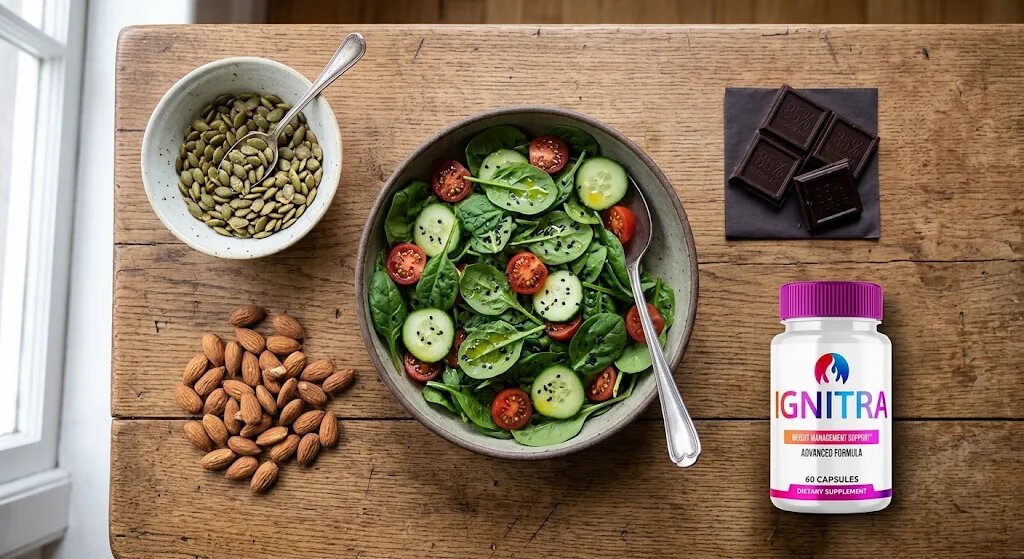
Food sources: Pumpkin seeds, almonds, dark chocolate (70%+), spinach, black beans, avocado, and whole grains.
When to supplement: Most adults don’t hit the RDA from food alone, especially if they eat a lot of processed food. A 200–400 mg magnesium glycinate or citrate supplement in the evening can support both energy metabolism and sleep quality.
How to Build a Daily Routine Around These Nutrients
You don’t need to buy 12 separate bottles. Here’s a practical, no-fuss approach:
- Eat a varied diet first. Three to four servings of vegetables, two servings of fruit, lean protein at each meal, and whole grains cover most B vitamins, vitamin C, and magnesium naturally.
- Add a quality B-complex. One daily capsule that provides 50–100% DV of B1 through B12 covers items 1–8 above. Take it with breakfast.
- Get your vitamin D checked. If your level is below 30 ng/mL, take 1,000–2,000 IU of D3 daily with a meal containing fat (avocado, eggs, nuts) for better absorption.
- Watch your iron and magnesium. If you’re a menstruating woman, a vegan, or an endurance athlete, get a blood panel (CBC, ferritin, magnesium) once a year. Supplement only what’s low.
- Don’t overdo it. Water-soluble B vitamins and vitamin C are excreted in excess, but fat-soluble vitamin D and minerals like iron and zinc can accumulate. More is not better.
Coach’s Tip: If you train in the morning, take your B-complex and vitamin D with breakfast. Save magnesium for the evening, 30–60 minutes before bed. This timing aligns with your circadian rhythm and supports both daytime energy and nighttime recovery. Avoid taking iron on an empty stomach if it upsets your GI tract—pair it with a small amount of food and a squeeze of citrus.
If you’re also working on how to increase metabolism naturally through resistance training and protein intake, making sure your vitamin status is solid gives your body the tools to actually use the fuel you’re providing.
Signs You Might Be Running Low
You don’t need a blood test to notice the early warning signs. If several of these apply to you consistently for more than two weeks, it’s worth getting checked:
- Persistent fatigue that sleep doesn’t fix
- Feeling winded on short walks or during light workouts
- Brain fog, difficulty concentrating
- Muscle cramps or twitches (magnesium, B6)
- Hair thinning, brittle nails (biotin, iron)
- Pale skin, cold hands and feet (iron, B12)
- Low mood or irritability (B6, B9, B12)
- Slow recovery between training sessions
These symptoms overlap with many conditions, so they’re not diagnostic. But they’re a signal to talk to your doctor about a basic metabolic panel, CBC, ferritin, B12, folate, and 25-hydroxyvitamin D.
Vitamins for Metabolism and Energy: What the Research Actually Supports
It’s important to separate what’s well-established from what’s marketed. Here’s the honest picture:
- B vitamins as coenzymes: The role of B1, B2, B3, B5, and B6 in the TCA cycle and electron transport chain is textbook biochemistry. Correcting a deficiency restores normal function. However, if your levels are already adequate, taking extra B vitamins does not further increase your metabolic rate. Your cells only need a set amount of coenzyme to run the cycle.
- Vitamin D and energy: The link between low vitamin D and fatigue is well-documented in clinical populations. Supplementing to replete levels (above 30 ng/mL) improves symptoms. Pushing levels to 60+ ng/mL has not shown additional metabolic benefit in healthy adults.
- Iron and oxygen delivery: Iron-deficiency anemia reduces VO2 max and exercise capacity. This is well-established in sports medicine. Supplementing iron in someone who is not deficient does not improve performance and can cause oxidative stress.
- Magnesium and ATP: Magnesium’s role in ATP binding is fundamental. Correcting a deficiency improves energy. But megadoses of magnesium (above 600 mg) cause GI distress without additional metabolic benefit.
The bottom line: vitamins for metabolism and energy work by fixing shortfalls. They are not performance enhancers on top of a sufficient diet. If you’re eating well, your metabolic machinery is already running at its genetic ceiling.
If you want to explore how to support metabolism naturally for weight management, the vitamin piece is one layer. Resistance training, adequate protein, and sleep are the other major layers.
Who Should Be Extra Cautious
- Pregnant or postpartum women: Folate, iron, and B12 needs increase. Talk to your OB or a registered dietitian before starting any supplement beyond a prenatal vitamin.
- People on medications: Metformin depletes B12. Blood pressure meds (diuretics) can lower magnesium. Certain antibiotics interact with iron. Always check with your pharmacist.
- Individuals with kidney disease: Excess minerals (iron, magnesium, zinc) can accumulate. Do not supplement without medical guidance.
- People with hemochromatosis: This genetic condition causes iron overload. Iron supplements can be dangerous.
- Anyone with a diagnosed medical condition: Check with your doctor before adding supplements to your routine.
This article is for general information and is not a substitute for advice from a doctor or physical therapist.
How to Pair Vitamins with Training for Best Results
Vitamins don’t work in a vacuum. They support the metabolic processes that training stimulates. Here’s how to think about it:
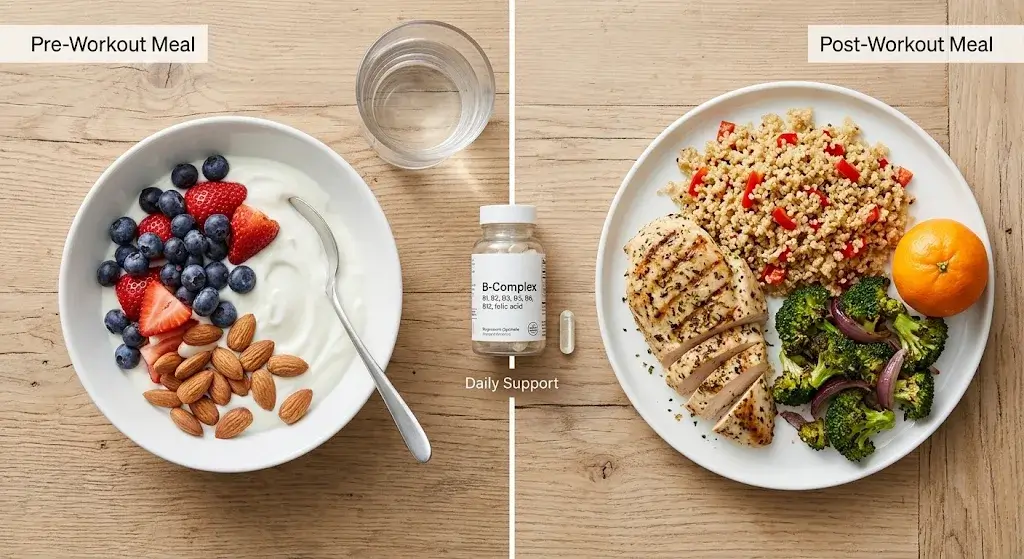
Before a workout (30–60 min):
- A small meal with protein and complex carbs (e.g., Greek yogurt with berries and a handful of almonds)
- Your B-complex and vitamin D if you take them in the morning
- Hydrate with water; add electrolytes if you train in heat
After a workout (within 2 hours):
- Protein (20–40 g) to support muscle repair
- Carbs to replenish glycogen
- Vitamin C-rich food (orange, kiwi) to support collagen synthesis and iron absorption
- Magnesium-rich food (banana, sweet potato, spinach)
Evening:
- Magnesium glycinate (200–400 mg) to support sleep and muscle relaxation
- A balanced dinner with lean protein, vegetables, and whole grains
This approach ensures your cells have the cofactors they need to recover, rebuild, and be ready for the next session. If you’re over 40 and noticing that recovery takes longer, how to increase metabolism naturally after 40 covers additional strategies beyond nutrition.
FAQ: Vitamins for Metabolism and Energy
Do B vitamins actually boost metabolism if I’m not deficient?
No. B vitamins act as coenzymes in metabolic pathways. Your cells need a set amount to run the TCA cycle and electron transport chain. If your levels are already adequate, taking extra B vitamins won’t increase your metabolic rate or give you more energy. They only help when you’re correcting a shortfall. Get a blood test if you suspect a deficiency.
What’s the best single vitamin to take for low energy?
It depends on what’s low. Vitamin D is the most common deficiency in adults who work indoors, and correcting it often lifts fatigue. B12 is critical for vegans and adults over 50. Iron is key for menstruating women. A B-complex plus vitamin D3 is a reasonable starting combo, but a blood panel is the only way to know what you actually need.
Can I get all these vitamins from food alone?
Yes, if you eat a varied diet with lean proteins, colorful vegetables, fruits, whole grains, and healthy fats. Most people in the U.S. get adequate B vitamins and vitamin C from food. Vitamin D and iron are the two most commonly short, especially in people with limited sun exposure or restricted diets.
How long does it take to feel better after starting a vitamin supplement?
For water-soluble B vitamins, you may notice a difference in energy within a few days to two weeks if you were deficient. Vitamin D repletion typically takes 6–8 weeks to show measurable improvement. Iron supplementation for anemia can take 4–8 weeks to normalize hemoglobin. Consistency matters—take them daily, not sporadically.
Should I take a multivitamin instead of individual vitamins?
A quality multivitamin can cover the basics (B-complex, vitamin D, some minerals) and is a convenient option. However, multivitamins often contain lower doses of individual nutrients. If you know you’re low in a specific vitamin (e.g., iron, B12, vitamin D), a targeted supplement at a therapeutic dose is more effective than a multivitamin’s standard serving.
Do “metabolism booster” vitamin supplements actually work?
Most “metabolism booster” products on the market are multivitamins with added stimulants (caffeine, green tea extract, capsaicin) marketed with exaggerated claims. The vitamin component does not “boost” metabolism beyond normal function. If you want to support your metabolic rate, focus on resistance training, adequate protein, sleep, and correcting any genuine vitamin deficiencies. For more on this, see do metabolism booster supplements really work.
The Bottom Line
Vitamins for metabolism and energy are not a shortcut. They are the maintenance your body needs to run the biochemical processes that turn food into movement, thought, and recovery. The B-complex vitamins keep the TCA cycle spinning. Vitamin D supports muscle function and reduces inflammation. Iron and magnesium ensure oxygen gets to your cells and ATP gets made.
Start with your food. Eat a wide variety of colorful vegetables, lean proteins, whole grains, and healthy fats. Get a basic blood panel once a year—CBC, ferritin, B12, folate, 25-hydroxyvitamin D, and magnesium. Fill the gaps with targeted supplements, not a drawer full of pills.
Pair that nutritional foundation with consistent resistance training, adequate protein, and seven to eight hours of sleep, and your metabolic engine will run the way it was designed to. You don’t need a magic capsule. You need the right fuel, the right cofactors, and the right stimulus.
If you’re looking for a broader framework, how to boost metabolic flexibility without crash dieting walks through the training and nutrition strategies that work alongside good vitamin status to keep your body burning fuel efficiently throughout the day.