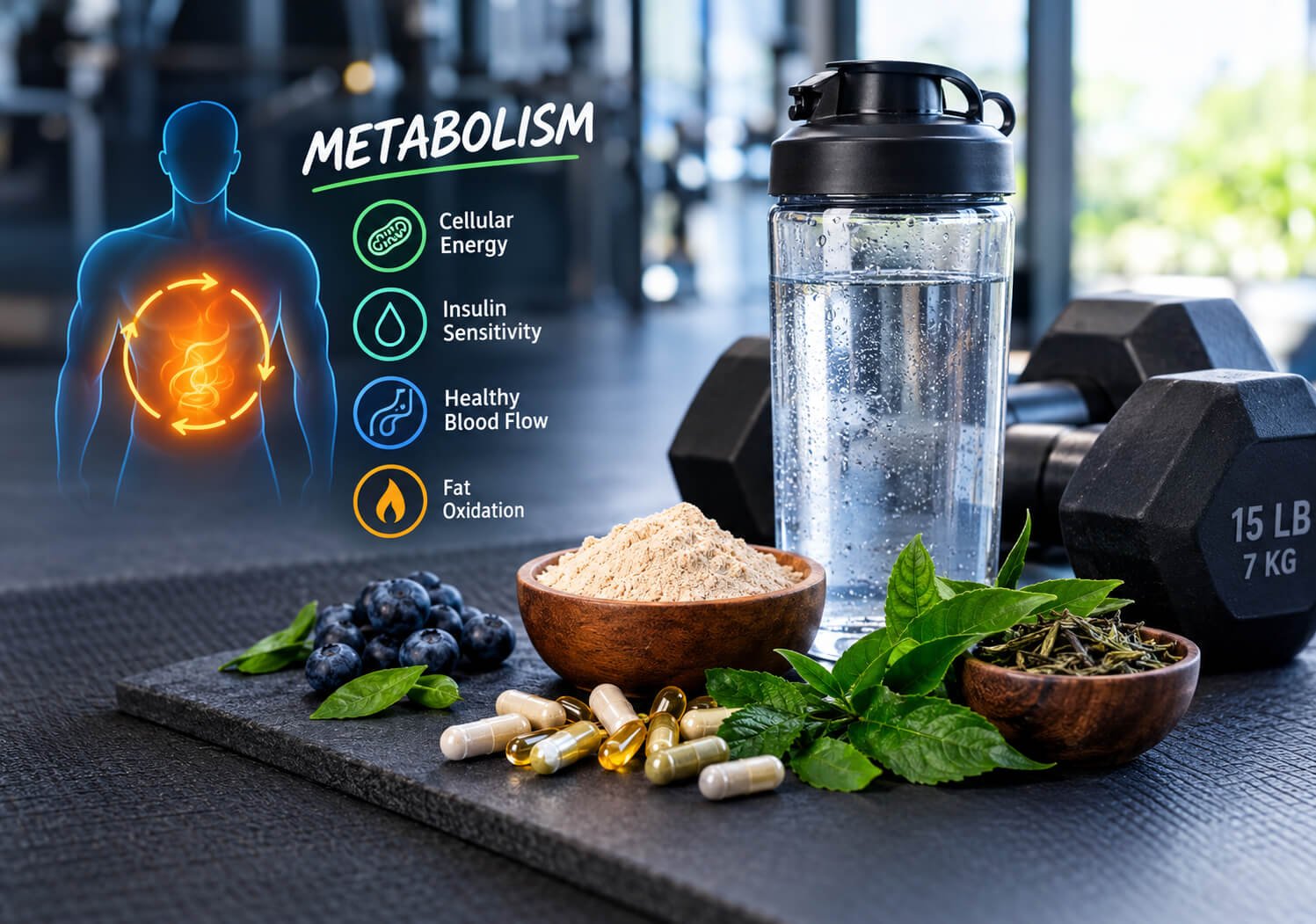
Many fitness enthusiasts and health-conscious individuals ask a critical question: which supplements support metabolism without stimulants? Relying on high-caffeine pills or synthetic thermogenics often leads to jitters, elevated heart rate, and disrupted sleep. As a certified strength and conditioning coach, I guide clients toward sustainable, cellular-level metabolic support. By leveraging specific amino acids, minerals, and herbal extracts, you can optimize your resting energy expenditure and improve nutrient partitioning. This evidence-based guide breaks down the most effective non-stimulant options, how they work, and how to integrate them safely into your daily routine.
Quick Answer
The best supplements that support metabolism without stimulants include L-carnitine, chromium picolinate, inositol, L-citrulline, and decaffeinated green tea extract (EGCG). These compounds enhance mitochondrial function, improve insulin sensitivity, and optimize blood flow without causing jitters, elevated heart rate, or sleep disruption.
Understanding Metabolism and Why Stimulants Aren’t the Only Answer
Metabolism is not a single switch you can flip; it is a complex network of chemical processes that convert food into energy. Your basal metabolic rate (BMR) accounts for roughly 60% to 75% of your total daily energy expenditure, representing the calories your body burns at rest to maintain vital functions like breathing, circulation, and cellular repair.
Stimulant-based metabolism boosters, such as high-dose caffeine, synephrine, or yohimbine, work by artificially stimulating the central nervous system. While they may temporarily increase heart rate and energy expenditure, they often lead to metabolic adaptation, adrenal fatigue, and compromised sleep quality. Poor sleep directly blunts metabolic rate and increases cravings, creating a counterproductive cycle. For women over 40, gym beginners, or anyone sensitive to caffeine, non-stimulant alternatives provide a safer, more sustainable path to metabolic health by targeting the underlying cellular machinery rather than masking fatigue with nervous system arousal.

Which Supplements Support Metabolism Without Stimulants? The Top Evidence-Based Choices
When evaluating natural metabolic support, we look for compounds that influence mitochondrial efficiency, substrate utilization, and hormonal balance. Below are the most thoroughly researched, stimulant-free options available.
1. L-Carnitine: The Fatty Acid Transporter
L-carnitine is an amino acid derivative that plays a pivotal role in energy production. Its primary function is to transport long-chain fatty acids into the mitochondria, the “powerhouses” of the cell, where they are oxidized to produce adenosine triphosphate (ATP). Without adequate L-carnitine, fatty acids cannot efficiently enter the mitochondria, limiting lipid oxidation.
Research indicates that L-carnitine supplementation, particularly when paired with regular physical activity, can enhance fat utilization during exercise. A comprehensive review published by the National Institutes of Health (NIH) notes that while oral bioavailability is relatively low (around 14% to 18%), consistent dosing of 1,000 to 2,000 mg per day can saturate muscle tissue over time, supporting improved metabolic flexibility.
Coach’s Tip: L-carnitine is not a magic fat burner. It works best when your body actually needs to burn fat for fuel. Take 1,000 to 2,000 mg of L-carnitine L-tartrate about 30 to 60 minutes before a moderate-intensity cardio session, such as a brisk 3-mile (5 km) walk or a steady-state cycling workout.
2. Chromium Picolinate: Supporting Glucose Metabolism
Chromium is an essential trace mineral that plays a direct role in macronutrient metabolism. If you are wondering does chromium picolinate support glucose metabolism, the scientific consensus points to yes. Chromium enhances the action of insulin, the hormone critical to the metabolism and storage of carbohydrate, fat, and protein in the body.
By improving insulin sensitivity, chromium picolinate helps shuttle glucose into muscle cells for energy rather than allowing it to circulate in the bloodstream or be stored as adipose tissue. The Office of Dietary Supplements states that typical supplemental doses range from 200 to 1,000 micrograms (mcg) per day. This is particularly beneficial for individuals with mild insulin resistance or those over 40 experiencing natural shifts in metabolic hormone regulation.
3. Inositol: Enhancing Insulin Sensitivity
Inositol, often referred to as vitamin B8 (though it is technically a sugar alcohol), acts as a secondary messenger in cellular signaling pathways, particularly those involving insulin. When insulin binds to a cell receptor, inositol helps transmit the signal inside the cell, prompting the uptake of glucose.
Extensive inositol and insulin sensitivity studies demonstrate that myo-inositol and D-chiro-inositol supplementation can significantly improve metabolic parameters, especially in populations with metabolic syndrome or polycystic ovary syndrome (PCOS). A typical effective dose is 2,000 to 4,000 mg per day, often split into two doses. By optimizing how your cells respond to insulin, inositol helps maintain stable blood sugar levels, reducing the metabolic crashes that lead to overeating and fat storage.
4. L-Citrulline and L-Arginine: Blood Flow and Nutrient Delivery
Adequate blood flow is a non-negotiable requirement for a healthy metabolism. Working muscles require a steady supply of oxygen and nutrients, and the removal of metabolic waste products like lactate is equally critical. Understanding how L-citrulline helps produce nitric oxide is key here. L-citrulline is converted in the kidneys to L-arginine, which then boosts nitric oxide (NO) production.
Many people debate L-arginine vs L-citrulline for blood flow, but research consistently shows that oral L-citrulline is more effective at raising plasma arginine levels than L-arginine itself, due to better intestinal absorption and avoidance of first-pass liver metabolism. Maintaining nitric oxide and healthy blood vessel function ensures that metabolic processes operate at peak efficiency. The nitric oxide benefits for men’s health and blood flow extend to everyone, supporting vascular health and exercise performance. A standard dose is 3,000 to 6,000 mg of L-citrulline (or citrulline malate) taken 45 minutes before exercise.
5. Decaffeinated Green Tea Extract (EGCG)
Green tea is famous for its metabolism-boosting properties, primarily due to a catechin called epigallocatechin gallate (EGCG). EGCG works by inhibiting the enzyme that breaks down norepinephrine, leading to a mild increase in thermogenesis and fat oxidation.
Crucially, you do not need the caffeine to get this benefit. Decaffeinated green tea extract provides the concentrated EGCG without the central nervous system stimulation. According to the NIH Office of Dietary Supplements, doses providing 250 to 500 mg of EGCG per day have been shown to support modest increases in energy expenditure. This makes it an ideal choice for evening use or for those who are highly sensitive to stimulants.
6. Capsaicin (from Chili Peppers)
Capsaicin is the active compound that gives chili peppers their heat. It supports metabolism by activating transient receptor potential vanilloid 1 (TRPV1) receptors, which can increase sympathetic nervous system activity and promote diet-induced thermogenesis without the use of traditional stimulants like caffeine.
Research published in the Journal of Nutrition indicates that regular consumption of capsaicinoids (around 2 to 6 mg per day) can slightly increase resting energy expenditure and promote fat oxidation. It can be consumed via dietary sources (like cayenne pepper) or in standardized, odorless capsule form to avoid gastrointestinal discomfort.
How to Apply These Supplements: A Practical Protocol
Knowing which compounds work is only half the battle; timing and context dictate their effectiveness. Supplements are meant to supplement a solid foundation of nutrition and movement, not replace them.
Sample Daily Supplement Schedule
| Time of Day | Supplement | Purpose |
| Morning (with breakfast) | Chromium Picolinate (200-400 mcg) + Inositol (2,000 mg) | Stabilize morning blood sugar and improve insulin sensitivity for the day’s meals. |
| Pre-Workout (45 mins prior) | L-Citrulline (3,000-6,000 mg) + Decaf Green Tea Extract (250 mg EGCG) | Maximize blood flow, nutrient delivery, and mild thermogenesis during training. |
| Post-Workout or Evening | L-Carnitine (1,000-2,000 mg) | Support mitochondrial fatty acid oxidation and recovery. |
Pairing Supplements with Exercise for Maximum Effect
To truly elevate your metabolic rate, you must pair these supplements with targeted physical activity. Skeletal muscle is the largest metabolic organ in the body. The more metabolically active tissue you have, the higher your resting energy expenditure.
Consider this foundational weekly routine:
- Strength Training (3 days/week): Perform compound movements like squats, deadlifts, and push-ups. Use a weight that challenges you, such as 15 lb (7 kg) to 25 lb (11 kg) dumbbells for beginners, progressing to heavier loads as form allows. Perform 3 sets of 8–12 repetitions, resting 60–90 seconds between sets. Proper form protects the human body anatomy and joint function while maximizing muscle recruitment.
- Low-Intensity Steady State (LISS) Cardio (2 days/week): A 30- to 45-minute brisk walk covering 2 to 3 miles (3.2 to 4.8 km). This is the ideal time to utilize L-carnitine, as the body relies heavily on fat oxidation during lower-intensity, longer-duration efforts.
- Daily Movement: Aim for 8,000 to 10,000 steps daily to maintain baseline non-exercise activity thermogenesis (NEAT).
Common Mistake
Taking metabolism-supporting supplements while remaining completely sedentary. L-carnitine and citrulline require the physiological demand of exercise to trigger the pathways they support. A pill cannot out-supplement a lack of movement.
Safety Notes and Who Should Be Careful
While non-stimulant supplements are generally well-tolerated, they are not without precautions. Always prioritize third-party tested products (look for NSF Certified for Sport or Informed-Choice seals) to ensure purity and accurate labeling.
- Kidney or Liver Conditions: Individuals with pre-existing renal or hepatic issues should consult a physician before using amino acids like L-carnitine or L-citrulline, as these require processing by the liver and kidneys.
- Blood Pressure Medications: Because L-citrulline and L-arginine promote vasodilation, they may interact with blood pressure-lowering medications, potentially causing hypotension. Understanding overall blood vessel health is important, and any vascular changes should be monitored by a professional.
- Pregnancy and Breastfeeding: There is insufficient safety data for high-dose inositol, chromium, or concentrated green tea extract during pregnancy. Avoid these unless explicitly directed by an obstetrician.
Coach’s Tip
Start with one new supplement at a time. Wait 7 to 10 days before introducing another. This allows you to monitor how your body reacts, identify any mild gastrointestinal discomfort, and determine what is actually working for your unique physiology.
Disclaimer: This article is for general information and is not a substitute for advice from a doctor or physical therapist. Always consult with a healthcare provider before starting any new supplement regimen, especially if you have a pre-existing medical condition or take prescription medications.
Frequently Asked Questions (FAQ)
1. What are the best non-stimulant supplements for metabolism?
The most evidence-backed non-stimulant options include L-carnitine, chromium picolinate, inositol, L-citrulline, and decaffeinated green tea extract (EGCG). These support cellular energy, insulin sensitivity, and blood flow without causing jitters.
2. Can you boost your metabolism without caffeine?
Yes. While caffeine temporarily increases energy expenditure, sustainable metabolic health is better supported by improving insulin sensitivity (via chromium or inositol) and enhancing mitochondrial fatty acid oxidation (via L-carnitine) through diet and exercise.
3. Does L-carnitine help burn fat without stimulants?
L-carnitine facilitates the transport of fatty acids into the mitochondria to be burned for energy. It does not contain stimulants, but it is most effective when paired with regular physical activity that creates a demand for fat oxidation.
4. How does chromium picolinate affect glucose metabolism?
Chromium picolinate enhances the action of insulin, helping to shuttle glucose from the bloodstream into muscle cells. This improves nutrient partitioning, stabilizes blood sugar, and reduces the likelihood of excess glucose being stored as fat.
5. Are there natural metabolism boosters for women over 40?
Yes. Women over 40 often experience shifts in insulin sensitivity and hormonal balance. Inositol and chromium picolinate are particularly beneficial for this demographic, as they directly support healthy insulin signaling and metabolic flexibility without stressing the adrenal glands.
6. What role does nitric oxide play in metabolic health?
Nitric oxide dilates blood vessels, improving circulation. This ensures that working muscles receive adequate oxygen and nutrients during exercise while efficiently clearing metabolic waste, thereby supporting higher training volumes and better overall metabolic function.
Conclusion
When asking which supplements support metabolism without stimulants, the answer lies in compounds that optimize your body’s natural cellular processes rather than artificially revving up your nervous system. L-carnitine, chromium picolinate, inositol, L-citrulline, and decaffeinated green tea extract offer powerful, research-backed ways to enhance mitochondrial function, improve insulin sensitivity, and promote healthy blood flow.
Remember, supplements are merely tools. Their true potential is unlocked when combined with consistent strength training, daily movement, and a nutrient-dense diet. By focusing on sustainable, stimulant-free strategies, you can build a resilient metabolism that serves you well for years to come.