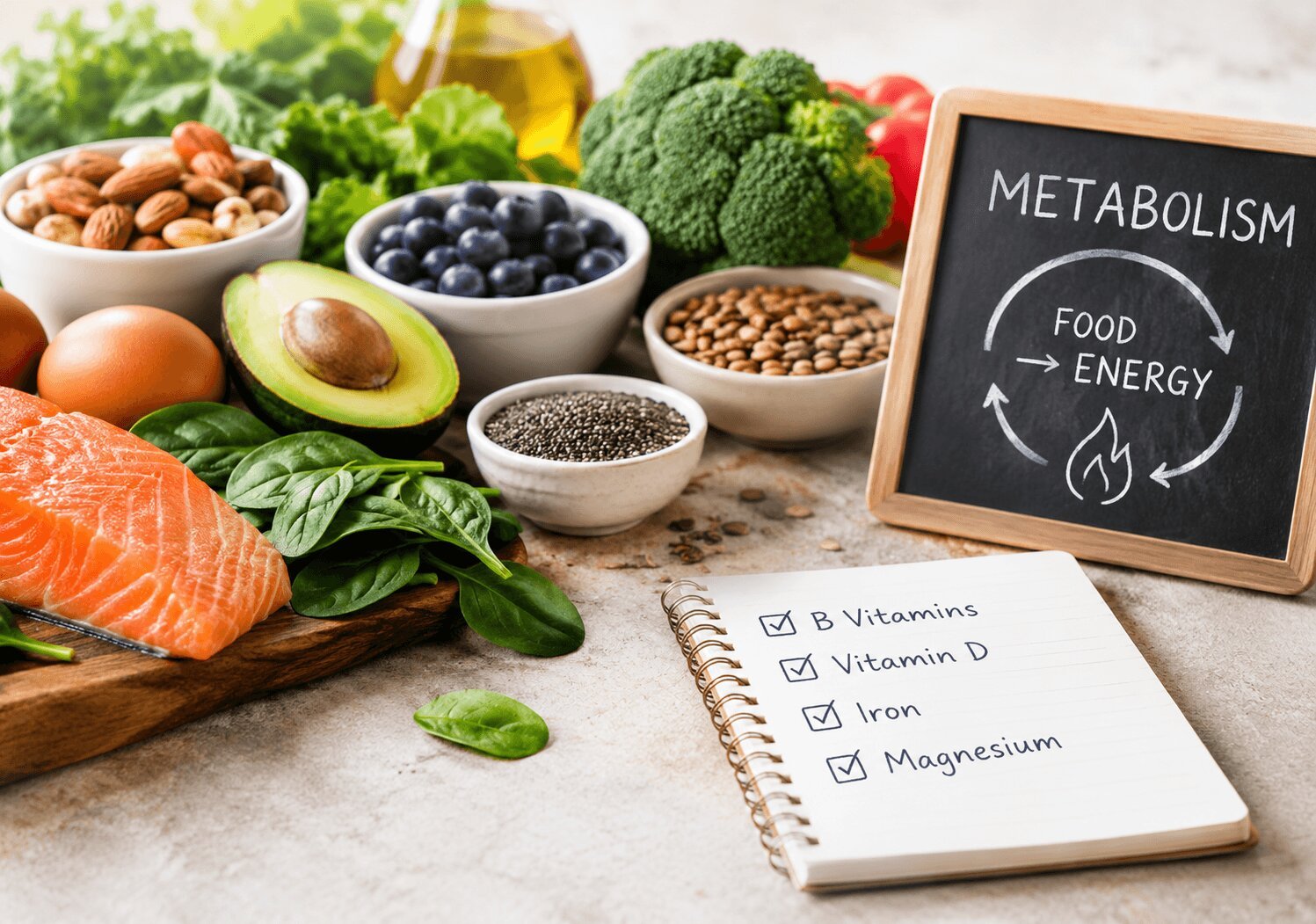
If you are feeling constantly fatigued, struggling to recover from workouts, and finding it harder to manage your weight, you might be asking: which vitamins support metabolism when you’re deficient? As a certified strength and conditioning coach, I see this scenario frequently, especially among gym beginners and women over 40. We often focus heavily on macronutrients like protein and carbohydrates, but micronutrients are the essential spark plugs that make the metabolic engine run.
Without adequate vitamins and minerals, your body cannot efficiently convert the food you eat into usable energy. This guide breaks down the exact science of metabolic vitamins, how to spot a deficiency, and how to apply this knowledge to your daily nutrition and training routine. If you want to learn more about foundational habits, you can also explore how to increase metabolism naturally through lifestyle changes.
Quick Answer
Yes, specific vitamins are absolutely essential for metabolic function. The B-complex vitamins (B1, B2, B3, B5, B6, B7, B9, B12), vitamin D, and minerals like iron and magnesium act as critical coenzymes. When you are deficient, your body struggles to convert food into ATP (cellular energy), which can slow your resting metabolic rate. Correcting these deficiencies through whole foods or targeted supplementation helps restore normal energy metabolism.
The Science: How Micronutrients Drive Your Metabolism
To understand which vitamins support metabolism when you’re deficient, we first need to look at how your body produces energy. Your metabolism is not a single switch; it is a complex network of chemical reactions. The primary goal of these reactions is to produce adenosine triphosphate (ATP), the energy currency of your cells.
This process happens inside the mitochondria, often called the “powerhouses” of your cells. However, mitochondria cannot do this work alone. They require helper molecules called coenzymes. Most B vitamins function primarily as these coenzymes. For example, without adequate thiamine (B1), your body cannot properly break down carbohydrates for fuel.
According to the Harvard T.H. Chan School of Public Health, vitamins do not contain calories or energy themselves. Instead, they facilitate the chemical reactions that release energy from the macronutrients you consume. When you are deficient in these key nutrients, the metabolic pathway bottlenecks. This can lead to a lower resting metabolic rate, persistent fatigue, and poor exercise performance.
Understanding which nutrients support normal energy metabolism is the first step in optimizing your health. Let us break down the specific vitamins and minerals you need to watch.
The Core List: Which Vitamins Support Metabolism When You’re Deficient?
Here is a detailed, evidence-based breakdown of the most critical metabolism-supporting vitamins and minerals, what happens when you lack them, and how to get them.
1. Vitamin B1 (Thiamine)
Thiamine is essential for converting carbohydrates into glucose, which your body uses for energy. It also plays a role in the conduction of nerve signals.
- Signs of Deficiency: Unexplained fatigue, muscle weakness, and irritability. Severe deficiency can lead to a condition called beriberi, though this is rare in developed nations.
- Top Food Sources: Pork chops, sunflower seeds, black beans, and fortified whole grains.
- Coach’s Application: If you eat a high-carbohydrate diet to fuel your workouts, your thiamine requirements increase. Ensure you are pairing your carb intake with thiamine-rich foods.
2. Vitamin B2 (Riboflavin)
Riboflavin is a key component of two major coenzymes (FAD and FMN) that are crucial for the electron transport chain, the final stage of ATP production.
- Signs of Deficiency: Sore throat, cracks at the corners of the mouth, and sensitivity to light.
- Top Food Sources: Eggs, lean beef, low-fat milk, and spinach.
- Coach’s Application: Athletes and active individuals have a slightly higher requirement for riboflavin due to increased energy turnover. A simple omelet with spinach is an excellent post-workout meal to replenish this nutrient.
3. Vitamin B3 (Niacin)
Niacin helps convert the food you eat into usable energy and is vital for DNA repair and cell signaling.
- Signs of Deficiency: Digestive issues, skin rashes, and in severe cases, a condition known as pellagra.
- Top Food Sources: Chicken breast, tuna, turkey, and peanuts.
- Coach’s Application: Because niacin is abundant in protein-rich foods, individuals eating adequate protein for muscle repair are usually well-covered for this vitamin.

4. Vitamin B5 (Pantothenic Acid)
Pantothenic acid is necessary for the synthesis of coenzyme A (CoA), which is required for the metabolism of fatty acids and carbohydrates.
- Signs of Deficiency: Numbness or burning in the hands and feet, headache, and fatigue. True deficiency is very rare.
- Top Food Sources: Shiitake mushrooms, avocados, and sweet potatoes.
- Coach’s Application: This vitamin is so widespread in foods that deficiency is uncommon. However, eating a diverse, colorful diet ensures you get enough to support lipid metabolism.
5. Vitamin B6 (Pyridoxine)
Vitamin B6 is involved in over 100 enzyme reactions, mostly concerned with protein metabolism. It is also crucial for the creation of neurotransmitters like serotonin and dopamine.
- Signs of Deficiency: Microcytic anemia, skin rashes, confusion, and a weakened immune system.
- Top Food Sources: Chickpeas, salmon, potatoes, and bananas.
- Coach’s Application: If you are increasing your protein intake to build muscle or lose weight, your need for vitamin B6 increases proportionally to help process those amino acids.

6. Vitamin B7 (Biotin)
Biotin is widely known for its role in hair and nail health, but its primary metabolic function is assisting enzymes in breaking down fats, carbs, and proteins.
- Signs of Deficiency: Thinning hair, scaly red rash around the eyes and mouth, and neurological symptoms.
- Top Food Sources: Cooked eggs (specifically the yolk), almonds, and cauliflower.
- Coach’s Application: Raw egg whites contain a protein called avidin, which binds to biotin and prevents its absorption. Always cook your eggs to protect your biotin levels.
7. Vitamin B9 (Folate)
Folate is essential for cell division and the formation of red blood cells, which carry oxygen to your working muscles.
- Signs of Deficiency: Fatigue, mouth sores, and gray hair.
- Top Food Sources: Dark leafy greens (like spinach and kale), lentils, and asparagus.
- Coach’s Application: Adequate oxygen delivery is vital for endurance. If you feel winded faster than usual during cardio, ensure your folate and iron levels are optimal.
8. Vitamin B12 (Cobalamin)
Vitamin B12 works closely with folate to make red blood cells and helps maintain the health of nerve cells. It is particularly important for women over 40 and those following plant-based diets.
- Signs of Deficiency: Megaloblastic anemia, profound fatigue, weakness, and tingling in the hands and feet.
- Top Food Sources: Clams, beef liver, trout, salmon, and fortified nutritional yeast.
- Coach’s Application: Because B12 is primarily found in animal products, vegan athletes should strongly consider a high-quality supplement or fortified foods to prevent metabolic slowdown and nerve issues.

9. Vitamin D
While technically a hormone, vitamin D is classified as a vitamin. Research increasingly links vitamin D deficiency to altered metabolic function and increased body fat storage.
- Signs of Deficiency: Bone pain, muscle weakness, and frequent illnesses.
- Top Food Sources: Fatty fish (salmon, mackerel), fortified dairy, and sunlight exposure.
- Coach’s Application: The NIH Office of Dietary Supplements notes that many adults are deficient, especially in winter months. Getting your levels checked via a simple blood test is a smart move for long-term metabolic health. Understanding what affects metabolism and body weight includes recognizing the hormonal role of vitamin D.
10. Iron (Mineral)
Iron is a core component of hemoglobin, the protein in red blood cells that transports oxygen from your lungs to the rest of your body, including your muscles.
- Signs of Deficiency: Extreme fatigue, pale skin, cold hands and feet, and poor workout recovery.
- Top Food Sources: Red meat, lentils, spinach, and pumpkin seeds.
- Coach’s Application: Women of childbearing age are at a higher risk for iron deficiency due to menstruation. Pairing plant-based iron sources with vitamin C (like squeezing lemon on spinach) significantly boosts absorption.
11. Magnesium (Mineral)
Magnesium is required for over 300 biochemical reactions in the body, including the stabilization of ATP. Without magnesium, ATP is biologically inactive.
- Signs of Deficiency: Muscle cramps, tremors, fatigue, and irregular heartbeats.
- Top Food Sources: Pumpkin seeds, almonds, black beans, and dark chocolate.
- Coach’s Application: Intense sweating during workouts depletes magnesium. Replenishing it is crucial for preventing muscle cramps and ensuring your metabolic pathways function smoothly.
Summary Table: Metabolism-Supporting Nutrients
| Nutrient | Primary Metabolic Role | Top Whole-Food Sources | Adult Daily Value (DV) |
| B1 (Thiamine) | Carbohydrate breakdown | Pork, sunflower seeds, black beans | 1.2 mg |
| B2 (Riboflavin) | Electron transport chain (ATP) | Eggs, lean beef, spinach | 1.3 mg |
| B3 (Niacin) | Cellular energy production | Chicken breast, tuna, peanuts | 16 mg |
| B6 (Pyridoxine) | Protein and amino acid metabolism | Chickpeas, salmon, potatoes | 1.7 mg |
| B12 (Cobalamin) | Red blood cell formation, nerve health | Clams, beef, fortified cereals | 2.4 mcg |
| Vitamin D | Hormonal regulation, bone/muscle health | Fatty fish, fortified milk, sunlight | 20 mcg (800 IU) |
| Iron | Oxygen transport to muscles | Red meat, lentils, spinach | 18 mg (women) / 8 mg (men) |
| Magnesium | ATP stabilization, muscle function | Pumpkin seeds, almonds, black beans | 420 mg (men) / 320 mg (women) |
How to Apply It: A Sample Metabolism-Boosting Routine
Knowing which vitamins support metabolism when you’re deficient is only half the battle. As a coach, my job is to help you apply this knowledge. Vitamins are the spark plugs, but physical movement is the engine. Resistance training builds muscle mass, and muscle tissue is metabolically active, meaning it burns more calories at rest than fat tissue.
Here is a practical, full-body metabolic resistance training routine designed to maximize energy expenditure while supporting your nutritional efforts. Perform this routine 2 to 3 times per week, with at least one rest day between sessions.
Arm circles (30 seconds forward, 30 seconds backward)
- Bodyweight squats (10 reps, slow and controlled)
- Cat-cow stretches (10 reps to mobilize the spine)
Main Circuit (Repeat 3 times):
1. Goblet Squat
- Sets: 3 | Reps: 10–12 | Rest: 60 seconds
- Weight Guidance: Start with a 25 lb (11 kg) to 35 lb (16 kg) kettlebell or dumbbell.
- Tempo: 3-1-1-0 (3 seconds down, 1 second pause at the bottom, 1 second up, 0 seconds pause at the top).
- Form Cues: Hold the weight close to your chest. Keep your chest proud and brace your core as if preparing for a light punch to the stomach. Push your knees outward as you descend.
- Regression: Perform a bodyweight box squat to a chair or bench set at knee height.
- Progression: Increase the weight to 45 lb (20 kg) or add a 1-second pulse at the bottom of the squat.
2. Dumbbell Romanian Deadlift (RDL)
- Sets: 3 | Reps: 10–12 | Rest: 60 seconds
- Weight Guidance: Two 20 lb (9 kg) to 30 lb (14 kg) dumbbells.
- Tempo: 3-1-1-0
- Form Cues: Keep a slight bend in your knees. Hinge at your hips, pushing your glutes backward as if trying to close a car door with your rear. Keep the dumbbells sliding down your thighs. You should feel a deep stretch in your hamstrings.
- Regression: Perform the movement without weights, focusing purely on the hip-hinge mechanics.
- Progression: Increase the weight to 40 lb (18 kg) dumbbells and add a 2-second isometric hold at the point of maximum hamstring stretch.
3. Incline Push-Up
- Sets: 3 | Reps: 8–12 | Rest: 60 seconds
- Equipment: A sturdy bench or elevated surface approximately 24 inches (60 cm) high.
- Form Cues: Place your hands slightly wider than shoulder-width apart. Keep your body in a straight line from your head to your heels. Lower your chest to the edge of the bench, then press back up powerfully.
- Regression: Perform the push-up with your hands elevated on a wall or kitchen counter to reduce the load.
- Progression: Perform standard floor push-ups or add a resistance band across your upper back.

Coach’s Tip: Time your nutrient intake to support this workout. Consume a meal rich in B vitamins and complex carbohydrates (like oatmeal with almonds and a boiled egg) about 90 minutes before training. This ensures your coenzymes are readily available to convert that food into ATP for your workout.
Common Mistake: Assuming that taking a massive multivitamin pill will compensate for a poor diet and lack of movement. Supplements are meant to supplement a solid foundation, not replace it. Furthermore, taking high doses of certain vitamins (like B6 or iron) without a diagnosed deficiency can lead to toxicity. Always prioritize food first.
Safety Notes and Contraindications
While getting vitamins from whole foods is exceptionally safe, supplementation requires caution. More is not always better.
- Hypervitaminosis Risk: Fat-soluble vitamins (like Vitamin D) and certain minerals (like iron) can accumulate in the body and become toxic if taken in excessive amounts over time. For example, the NIH warns that chronic high intake of Vitamin B6 (over 100 mg per day) can cause severe, sometimes irreversible, nerve damage.
- Medication Interactions: High doses of vitamin K can interfere with blood thinners like warfarin. Iron supplements can reduce the absorption of certain thyroid medications and antibiotics.
- Who Should Be Careful: Pregnant or postpartum women, individuals with kidney disease, and those with hemochromatosis (a condition causing iron overload) must consult a healthcare provider before starting any new supplement regimen.
If you are considering adding a supplement to your routine, it is wise to learn how to evaluate ingredients in weight management supplements to ensure you are choosing safe, third-party tested products.
Related Tips for Maximizing Your Metabolic Health
Correcting a vitamin deficiency is a powerful step, but it works best as part of a holistic strategy. Here are three evidence-based habits to pair with your optimized nutrition:
- Prioritize Protein at Every Meal: Protein has a high thermic effect of food (TEF), meaning your body burns more calories digesting it compared to fats or carbs. It also preserves lean muscle mass, which is the primary driver of your resting metabolic rate. Learn more about protein intake, metabolism, and weight loss.
- Protect Your Sleep: Do not underestimate recovery. Research clearly shows how sleep affects metabolism and weight management. Poor sleep elevates cortisol and disrupts hunger hormones, which can completely override the metabolic benefits of a perfect diet and supplement routine. Aim for 7 to 9 hours of quality sleep per night.
- Stay Consistent with Daily Movement: Non-exercise activity thermogenesis (NEAT)—the calories you burn from walking, standing, and daily chores—often accounts for more total daily energy expenditure than a structured gym session. Aim for 8,000 to 10,000 steps per day. For tailored advice, check out our guide on how to increase metabolism naturally after 40.
FAQ
What are the signs of a vitamin deficiency affecting metabolism? Common signs include persistent, unexplained fatigue, difficulty recovering from workouts, unexplained weight gain or difficulty losing weight, muscle weakness, and frequent colds. If you experience these, consult a doctor for a blood test to check your B-vitamin, iron, and vitamin D levels.
Can taking vitamins speed up a slow metabolism? Vitamins do not directly “speed up” metabolism like a stimulant. Instead, they remove the bottlenecks caused by a deficiency. If your metabolism is slow because you lack essential coenzymes, correcting that deficiency will help restore your metabolic rate to its normal, healthy baseline.
Which B vitamins are best for energy and weight loss? All eight B vitamins work synergistically, but B1 (thiamine), B2 (riboflavin), B3 (niacin), and B12 (cobalamin) are most directly involved in converting macronutrients into cellular energy (ATP). A high-quality B-complex supplement is often more effective than isolating just one.
How do I know if my metabolism is slow due to a deficiency? You cannot definitively know without medical testing. A simple comprehensive metabolic panel and specific vitamin tests (like serum ferritin for iron, 25-hydroxy vitamin D, and B12) ordered by your healthcare provider can identify if a deficiency is contributing to your symptoms.
What is the best time of day to take metabolism-supporting vitamins? Water-soluble vitamins (like the B-complex) are best taken in the morning or early afternoon with a meal. This provides your body with the coenzymes needed for daytime energy production and prevents potential sleep disruption. Fat-soluble vitamins (like Vitamin D) should also be taken with a meal containing dietary fat for optimal absorption.
Conclusion
So, which vitamins support metabolism when you’re deficient? The evidence is clear: the B-complex vitamins (B1, B2, B3, B5, B6, B7, B9, B12), alongside vitamin D, iron, and magnesium, are the indispensable coenzymes your body relies on to convert food into usable energy. When you are deficient in these nutrients, your metabolic engine sputters, leading to fatigue and stalled progress.
However, remember that supplements are just one piece of the puzzle. They work best when layered on top of a foundation of whole, nutrient-dense foods, consistent resistance training, and quality sleep. If you suspect a deficiency, do not guess. Work with a healthcare provider to get tested, and use this guide to build a diet and training plan that supports your body’s natural metabolic processes.