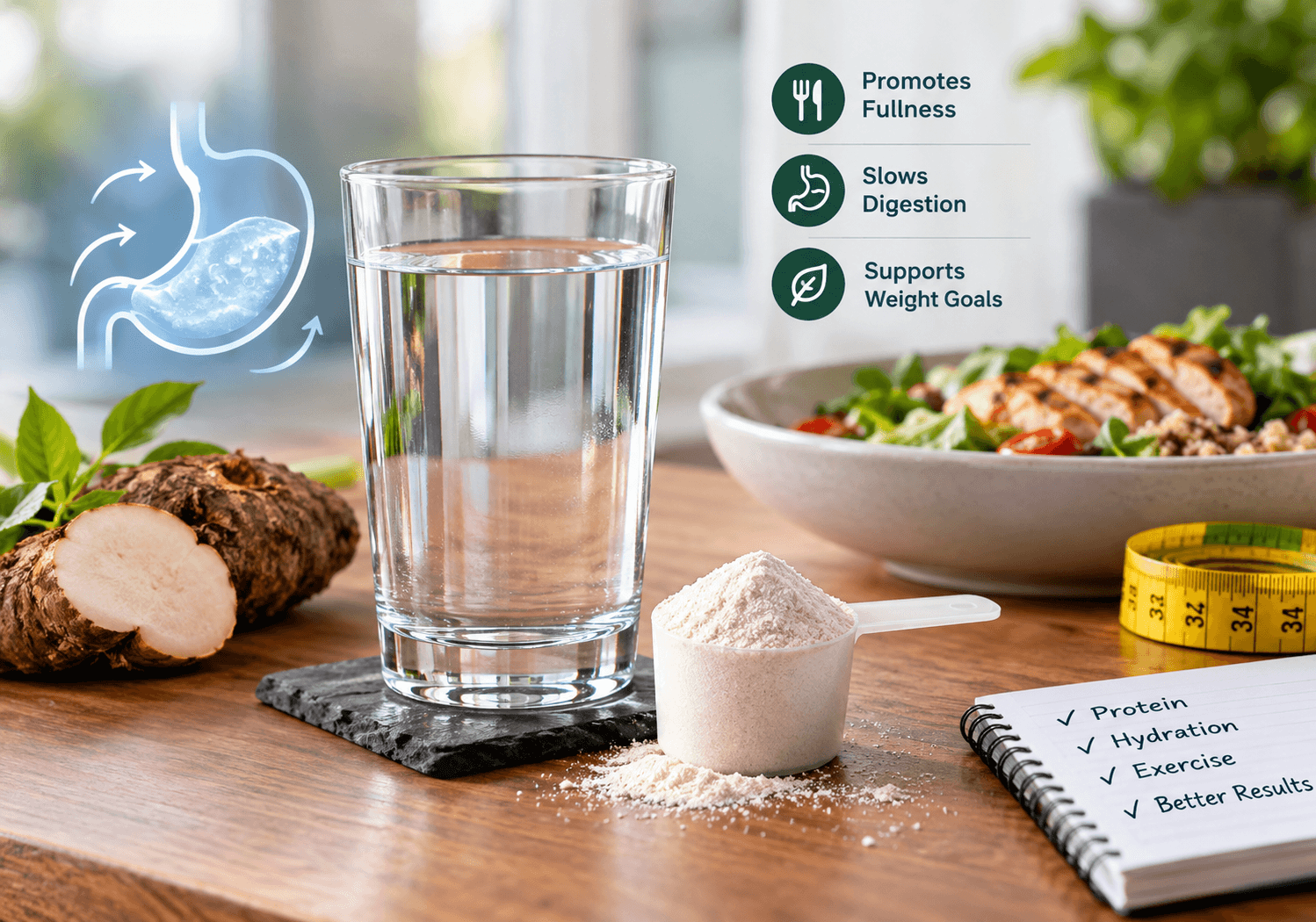
If you are trying to manage your body composition, you already know that hunger is often the biggest obstacle to your success. You might be wondering, does glucomannan help reduce hunger for weight loss? As a certified strength and conditioning coach, I hear this question constantly from clients who want a natural, science-backed way to stay full while maintaining a calorie deficit.
Glucomannan is a highly viscous, water-soluble dietary fiber extracted from the root of the konjac plant (Amorphophallus konjac). When mixed with water, it expands significantly in your stomach. This physical expansion promotes feelings of fullness and can help you eat less without feeling deprived. However, like any supplement, it is not a magic pill. It works best when paired with a structured nutrition plan and consistent physical activity.
In this comprehensive guide, we will break down exactly what the clinical research says about glucomannan. We will cover how to use it safely, the best dosing strategies, and practical coaching tips to help you reach your body composition goals without starving yourself.
Quick Answer
Yes, glucomannan can help reduce hunger for weight loss when used correctly. Research shows that taking 3 grams per day, split into three 1-gram doses with 1–2 glasses of water before meals, promotes satiety and supports modest weight loss as part of an energy-restricted diet. Always prioritize safety by drinking plenty of water to prevent choking hazards.
Detailed Explanation: What the Research Says
To understand if glucomannan actually works, we have to look at how it interacts with your digestive system on a physiological level. Glucomannan is unique because it has one of the highest molecular weights of any known dietary fiber
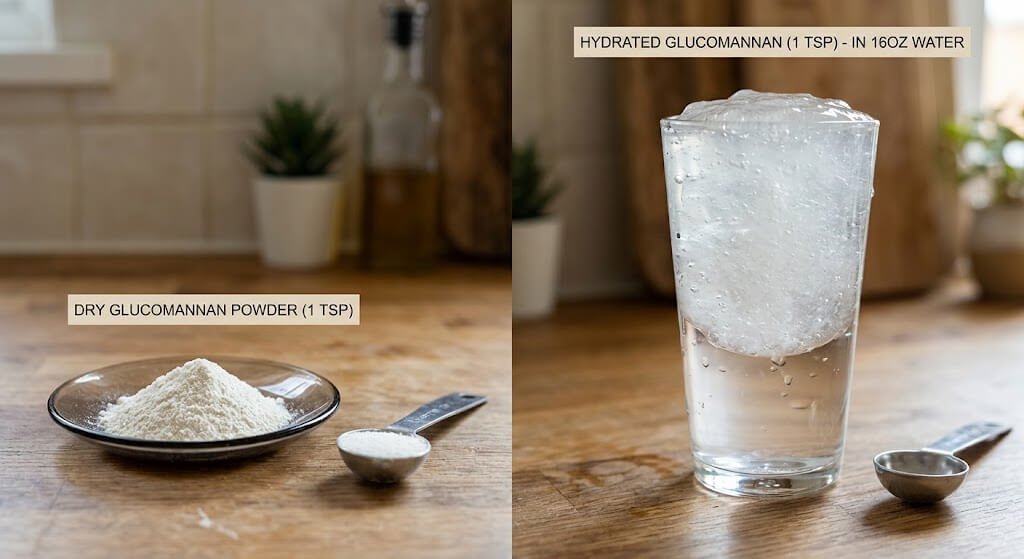
When it comes into contact with water, it absorbs up to 50 times its weight in liquid. This forms a thick, viscous gel in your stomach
This physical expansion does two important things in your body. First, it stretches the stomach walls. This activates mechanoreceptors that send mechanical signals via the vagus nerve to your brain, indicating that you are full. Second, it delays gastric emptying. This means food stays in your stomach longer, which blunts the spike in blood sugar after a meal. It also influences fullness hormones like cholecystokinin (CCK) while reducing the hunger hormone ghrelin
But what do the clinical trials actually show? A 2020 review of food supplements for weight management noted that multiple meta-analyses support the role of glucomannan in weight loss. This is specifically true when administered at doses of 2 to 4 grams per day
The researchers analyzed randomized controlled trials and found that participants taking glucomannan experienced statistically significant reductions in body weight compared to placebo groups, provided they were also following an energy-restricted diet.
Furthermore, a 2024 study highlighted that dietary supplementation with glucomannan, alongside other fibers like inulin and psyllium, effectively promotes weight loss and improves body composition in individuals with obesity
The study noted improvements not just in scale weight, but in body mass index (BMI) and inflammatory markers like C-reactive protein (CRP).
The European Food Safety Authority (EFSA) has approved a specific health claim for glucomannan. They state that a daily intake of 3 grams, given as three 1-gram doses with 1 to 2 glasses of water before meals, contributes to weight loss in the context of an energy-restricted diet
This official endorsement is based on a robust body of evidence showing consistent, albeit modest, weight loss benefits.
However, it is important to note the nuances. A 2013 systematic review found that while glucomannan was well tolerated, it did not significantly alter hunger or body composition on its own without a calorie deficit
This tells us that glucomannan is a powerful tool to support your diet, not a replacement for one. You still need to be in a caloric deficit to lose fat.
Comparison: Glucomannan vs. Other Soluble Fibers
Not all fibers are created equal. If you are exploring does soluble fiber help control appetite, it helps to see how glucomannan stacks up against other popular options. Each type of fiber has a unique mechanism of action in the gastrointestinal tract.
| Fiber Type | Source | Water Absorption | Primary Benefit | Best For |
| Glucomannan | Konjac root | Up to 50x weight | Extreme viscosity, high satiety | Strong appetite suppression before meals |
| Psyllium Husk | Plantago ovata seeds | Up to 20x weight | Regularity, moderate satiety | Daily digestive health and mild fullness |
| Inulin | Chicory root, garlic | Moderate | Prebiotic, gut microbiome support | Gut health and gentle blood sugar management |
| MCT Oil | Coconut or palm kernel | N/A (Fat) | Rapid ketone production, energy | Keto diets and quick satiety signals |
Glucomannan stands out for pure volume and hunger control. Because it forms such a thick gel, it is the most effective fiber for physically filling the stomach. However, it requires strict adherence to hydration protocols.
Psyllium Husk is a great alternative if your main goal is overall digestive regularity rather than aggressive appetite suppression. It is gentler on the stomach and highly effective for promoting healthy bowel movements. You can read more about how psyllium husk can help you feel full before meals.
Inulin is primarily a prebiotic fiber. It feeds the beneficial bacteria in your gut, which can indirectly support weight management by improving metabolic health. However, it is less effective than glucomannan at creating immediate physical fullness.
MCT Oil is not a fiber, but a type of fat. It is rapidly absorbed and converted into ketones, which can signal satiety to the brain. It is best suited for individuals following a ketogenic diet, whereas glucomannan is effective across all dietary patterns.
As a coach, I often recommend evaluating ingredients in weight management supplements to ensure you are getting a pure, effective product without unnecessary fillers or stimulants.
How to Apply It: Practical Steps and Dosage
Knowing the science is only half the battle. The real value comes from how you apply it in your daily routine. If you want to know how dietary fiber can help with appetite and weight management, proper dosing and timing are everything.
Standard Dosage Protocol
The evidence-based sweet spot is 3 grams per day, divided into three 1-gram doses. You should take each dose 15 to 30 minutes before your main meals (breakfast, lunch, and dinner). This timing allows the fiber to fully hydrate and expand before food enters the stomach.
Powder vs. Capsules: Which is Better?
- Powder: Mixes into a thick gel. It is often more cost-effective and allows for precise dosing. However, it requires immediate mixing and drinking to avoid clumping. It can also have a slightly earthy taste, though it is mostly flavorless.
- Capsules: More convenient for travel and work. You must take multiple capsules (usually 2 to 4) to reach the 1-gram dose. Crucially, you must drink a full glass of water with them to ensure they dissolve properly in the stomach and do not get stuck in the esophagus.

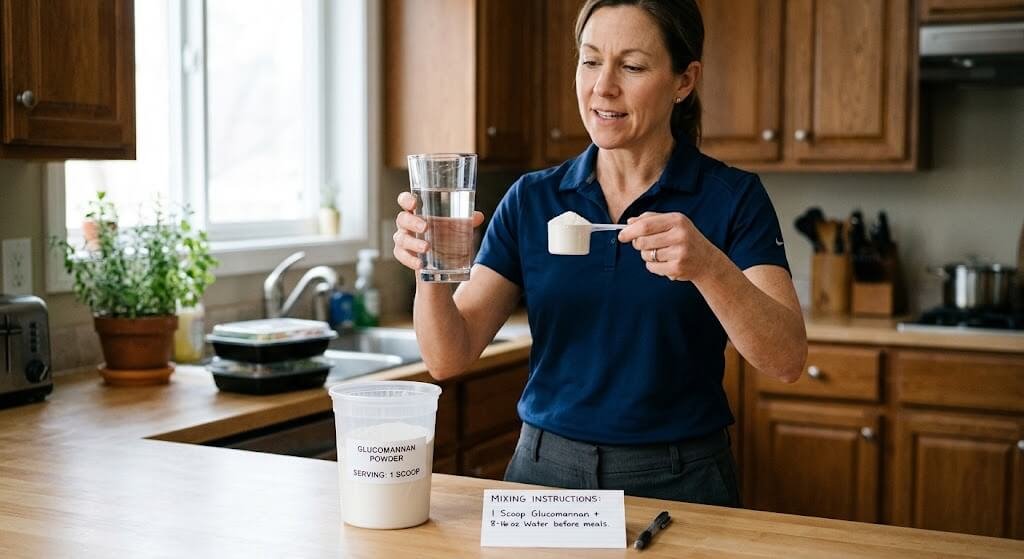
Step-by-Step Form for Taking Glucomannan
- Measure: Use a precise digital scale or the scoop provided to measure exactly 1 gram of glucomannan powder, or prepare the equivalent number of capsules.
- Hydrate First: Pour 8 to 16 ounces (240 to 480 ml) of room-temperature water into a glass.
- Mix Quickly: If using powder, stir or shake vigorously immediately. Glucomannan gels within seconds, so any delay means difficult clumps.
- Drink Immediately: Consume the entire glass right away, followed by another half glass of plain water to ensure it reaches your stomach safely.
- Wait: Wait 15 to 30 minutes before eating your meal to allow the fiber to fully expand.
Sample Daily Schedule
- 7:30 AM: Take 1 gram of glucomannan with 16 oz (480 ml) of water.
- 8:00 AM: Eat a high-protein breakfast (e.g., 3 whole eggs and a cup of spinach).
- 12:30 PM: Take 1 gram of glucomannan with 16 oz (480 ml) of water.
- 1:00 PM: Eat a balanced lunch (e.g., 4 oz grilled chicken breast over a large mixed green salad).
- 6:30 PM: Take 1 gram of glucomannan with 16 oz (480 ml) of water.
- 7:00 PM: Eat a nutrient-dense dinner (e.g., 5 oz baked salmon with roasted broccoli).
Regression (Easier Version)
If you are new to high-fiber supplements, starting at 3 grams a day will likely cause bloating and gas. Start with a regression of 0.5 grams once a day before dinner for the first week. This allows your gastrointestinal tract to adapt to the increased fiber load gradually. Increase to 1 gram twice a day in week two, and reach the full 3 grams in week three.
Progression (Harder Version)
Once you tolerate 3 grams daily without digestive distress, you can progress by ensuring your pre-meal water intake is strictly 16 ounces (480 ml) to maximize the gel volume. You can also pair this with a high-protein meal. Research shows how protein intake affects hunger and fullness hormones, creating a synergistic satiety effect when combined with fiber.
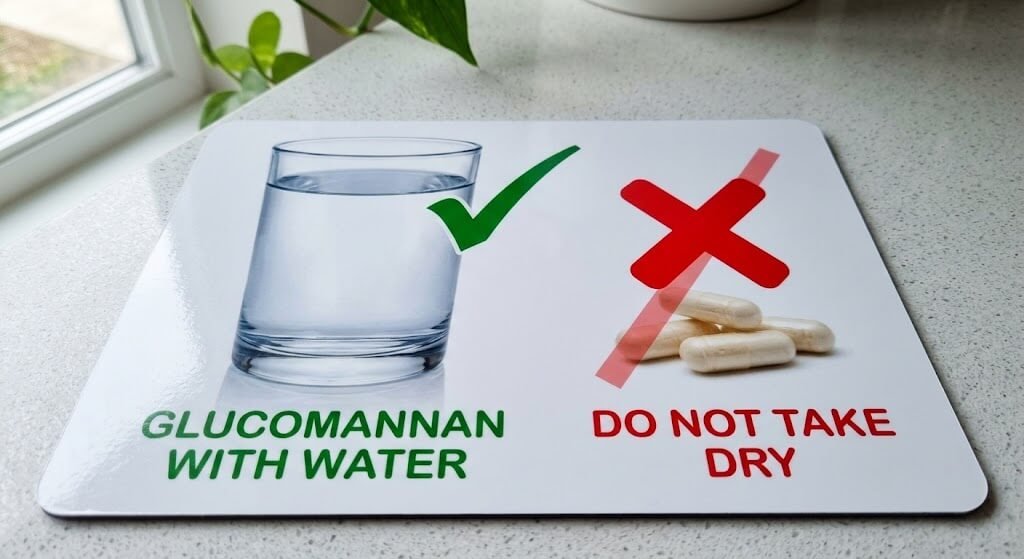
Coach’s Tip: Always take glucomannan with a full glass of water, never dry. The powder can expand in your esophagus if not washed down properly, which is a serious choking hazard.
Common Mistake: Taking glucomannan with your meal instead of before it. If you eat while the fiber is still expanding, you might feel uncomfortably bloated rather than pleasantly full. Timing is critical for comfort and effectiveness.
Safety Notes and Who Should Be Careful
While glucomannan is generally recognized as safe, it is not for everyone. Because it is a powerful physical bulking agent, it comes with specific safety considerations that you must respect.
Choking Hazard
Health Canada and the EFSA have both issued warnings that glucomannan supplements can cause choking or blockage of the esophagus or intestines if taken with insufficient fluid
Never take glucomannan capsules or powder without at least 8 ounces (240 ml) of water. The gel forms rapidly, and without enough liquid, it can become a solid mass in your throat. This is especially important for individuals who have any history of swallowing difficulties.
Medication Interactions
Because glucomannan slows gastric emptying and can bind to substances in the gut, it can reduce the absorption of oral medications. If you take prescription drugs, especially for diabetes (like metformin) or thyroid conditions (like levothyroxine), you must separate your glucomannan dose from your medication by at least 2 to 4 hours. Always consult your doctor before adding it to your routine to ensure it will not interfere with your specific prescriptions.
Digestive Side Effects
When you suddenly increase your fiber intake, your gut bacteria ferment the new substrate. This can lead to temporary side effects such as:
- Bloating and abdominal distension: This is the most common complaint. It usually resolves within a week as your gut microbiome adapts to the new fiber source.
- Flatulence (gas): A natural byproduct of fiber fermentation in the large intestine.
- Mild diarrhea or constipation: Diarrhea can occur if you take too much too quickly. Constipation can occur if you do not drink enough water to move the bulk through your system.
Who Should Avoid It
- Individuals with a history of esophageal narrowing or swallowing difficulties.
- People with existing gastrointestinal blockages or severe irritable bowel syndrome (IBS).
- Pregnant or postpartum women should consult their obstetrician first, as fluid and nutrient needs are highly specific during this time, and excessive fiber can interfere with nutrient absorption.
Additional Coaching Insights on Fiber and Weight Management
When working with clients, I often see them rely solely on supplements while neglecting foundational habits. Glucomannan is a fantastic adjunct, but it cannot compensate for a diet high in ultra-processed foods. Whole foods naturally contain fiber, water, and protein, which work synergistically to promote satiety.
For example, a large apple contains about 4 grams of fiber and significant water volume, providing natural fullness. Glucomannan mimics this effect in a concentrated form. However, you should still aim to get the majority of your daily fiber intake (25 to 38 grams, according to general dietary guidelines) from whole food sources like vegetables, fruits, legumes, and whole grains.
Another critical factor is the temperature of the water you use. Room-temperature or slightly warm water helps glucomannan powder dissolve and gel more evenly than ice-cold water, which can cause the powder to clump together on the outside, trapping dry powder inside. This simple adjustment can prevent the gritty texture that some users dislike and ensure the fiber expands properly in your stomach.
Furthermore, tracking your progress is essential. Do not rely solely on the scale. Glucomannan can cause temporary water retention in the digestive tract as it absorbs fluid. This might show up as a slight, temporary increase in scale weight, even though you are losing body fat. Instead, track your progress using waist measurements (in inches or cm), how your clothes fit, and your energy levels during workouts.
Finally, consistency is key. Taking glucomannan sporadically will not yield the same results as a consistent daily protocol. Your body needs time to adapt to the increased fiber, and the cumulative effect of delayed gastric emptying over weeks and months is what leads to sustainable changes in body composition.
Related Tips: Maximizing Weight Loss with Fiber
Glucomannan is a powerful tool, but it works best as part of a broader, evidence-based strategy. If you are wondering what to look for in a metabolism support supplement, remember that fiber is just one piece of the puzzle.
1. Prioritize Protein Intake
Fiber fills your stomach physically, but protein regulates your hunger hormones at a chemical level. Combining glucomannan with a lean protein source (like chicken breast, Greek yogurt, or a quality protein powder) will keep you fuller for much longer than fiber alone. Aim for 0.7 to 1 gram of protein per pound of body weight (1.5 to 2.2 g per kg) daily to support muscle retention while losing fat.
2. Stay Aggressively Hydrated
Glucomannan pulls water from your body to form its gel. If you are chronically dehydrated, the fiber can actually cause severe constipation. Aim for at least half your body weight in pounds in ounces of water daily. For example, a 160 lb (72.5 kg) person should drink at least 80 oz (2.3 liters) of water, plus extra to account for the fiber supplement.
3. Move Your Body Daily
Supplements cannot out-work a sedentary lifestyle. Incorporate daily movement, such as a 30-minute brisk walk (about 1.5 miles or 2.4 km) after meals. This not only aids digestion and helps move the fiber through your system, but it also naturally blunts post-meal blood sugar spikes, further supporting weight management.
4. Prioritize Quality Sleep
Poor sleep elevates cortisol and ghrelin, making you crave high-calorie, sugary foods regardless of how much fiber you ate. Protecting your 7 to 9 hours of sleep is a non-negotiable part of sustainable weight management. You can learn more about how sleep affects metabolism and weight management.
FAQ
1. How much glucomannan should I take to lose weight? The clinically supported dose for weight loss is 3 grams per day, split into three 1-gram doses. Take each dose with 1 to 2 glasses of water 15 to 30 minutes before your main meals for optimal appetite suppression and satiety.
2. Does glucomannan really work for appetite suppression? Yes, research suggests it works by absorbing water and forming a viscous gel in the stomach. This delays gastric emptying and triggers stretch receptors, sending fullness signals to the brain and helping you eat fewer calories naturally.
3. What are the side effects of glucomannan powder? The most common side effects are mild digestive issues, including bloating, gas, and loose stools. These usually subside after a week as your body adapts. The most serious risk is choking if taken without enough water.
4. Can glucomannan cause bloating? Yes, especially when you first start taking it or if you take too high a dose too quickly. Starting with a smaller 0.5-gram dose and gradually increasing it while drinking plenty of water can help minimize uncomfortable bloating.
5. Is glucomannan safe for long-term use? Glucomannan is generally considered safe for long-term use when taken at recommended doses with adequate water. However, you should cycle off or consult a healthcare provider if you plan to use it daily for more than 3 to 6 months.
6. Does glucomannan interact with medications? Yes. Because it slows digestion and can bind to compounds in the gut, glucomannan may reduce the absorption of oral medications. Always take medications at least 2 to 4 hours apart from your glucomannan dose to ensure proper absorption.
Conclusion
So, does glucomannan help reduce hunger for weight loss? The evidence says yes, but with important caveats. It is not a magic fat-burning pill. It is a highly effective, natural tool that physically fills your stomach and delays digestion, making it easier to stick to a calorie deficit.
To get the best results, take 3 grams daily in divided doses with plenty of water before meals. Pair it with adequate protein, aggressive hydration, and regular exercise. Remember, sustainable weight loss is built on consistent habits, not quick fixes. If you have any underlying health conditions or take prescription medications, always check with your doctor or a registered dietitian before starting a new supplement.