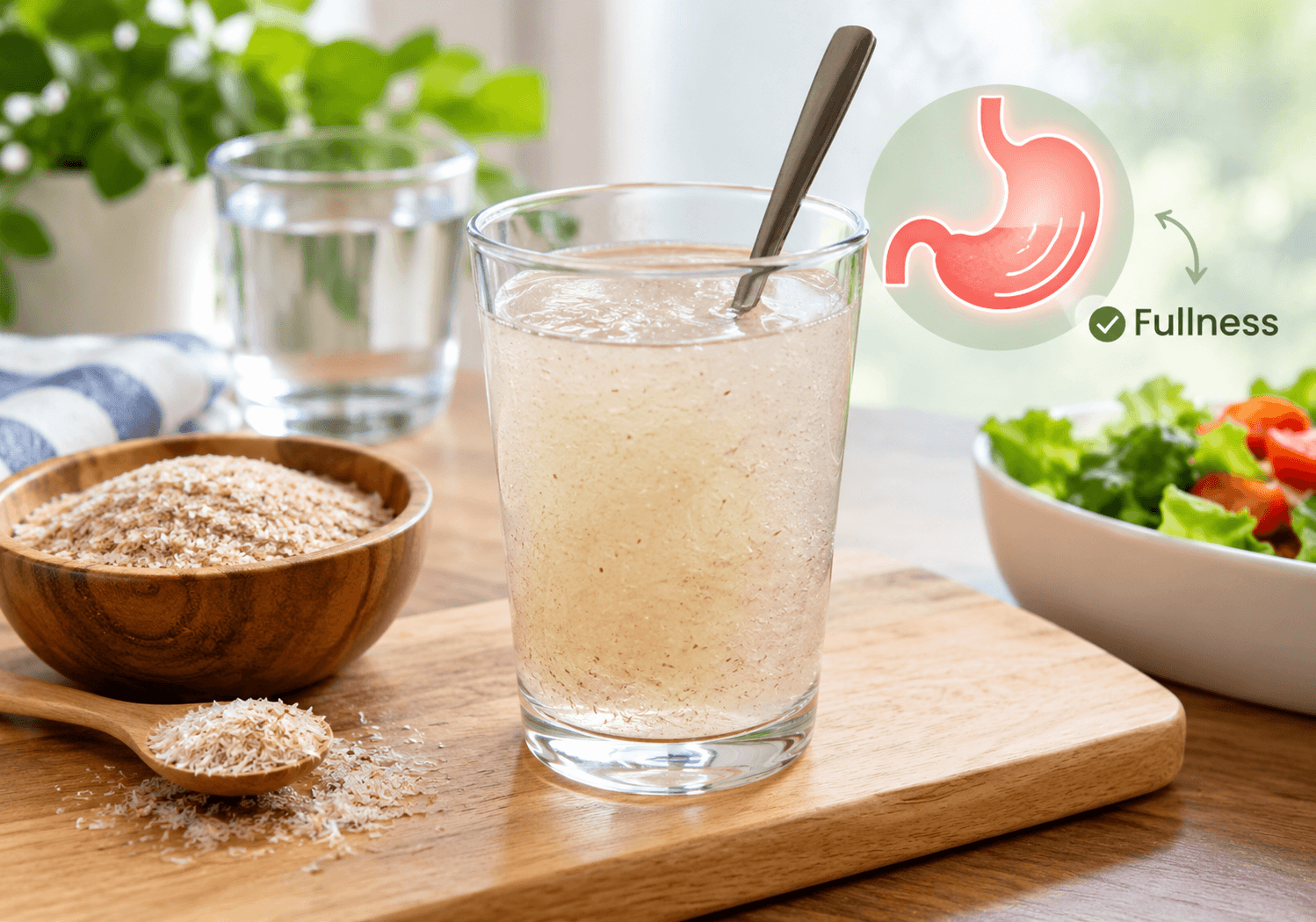
Psyllium husk shows up constantly in conversations about appetite control, especially from people looking for a cheaper, more accessible alternative to prescription weight-loss drugs. The idea makes sense on paper: it’s fiber, fiber fills you up, so more fiber should mean less hunger. But does psyllium husk actually help you feel full before meals, or is that more marketing than mechanism? The short answer is that the fullness effect is real and well-documented — the weight-loss story built on top of it is a lot shakier.
Quick Answer
Yes — research supports psyllium husk’s ability to increase fullness and reduce hunger between meals when taken with water 15–30 minutes before eating. Clinical trials show measurable drops in hunger ratings at doses around 6.8 grams. However, whether that fullness reliably translates into meaningful weight loss is far less settled, with major meta-analyses reaching conflicting conclusions.
How Psyllium Husk Works to Increase Fullness
Psyllium husk comes from the seed coat of the Plantago ovata plant and is classified as a soluble, gel-forming (viscous) fiber, according to the NIH’s MedlinePlus database on blond psyllium. When you mix it with water, it swells into a thick gel rather than dissolving — that’s the property doing most of the work here.
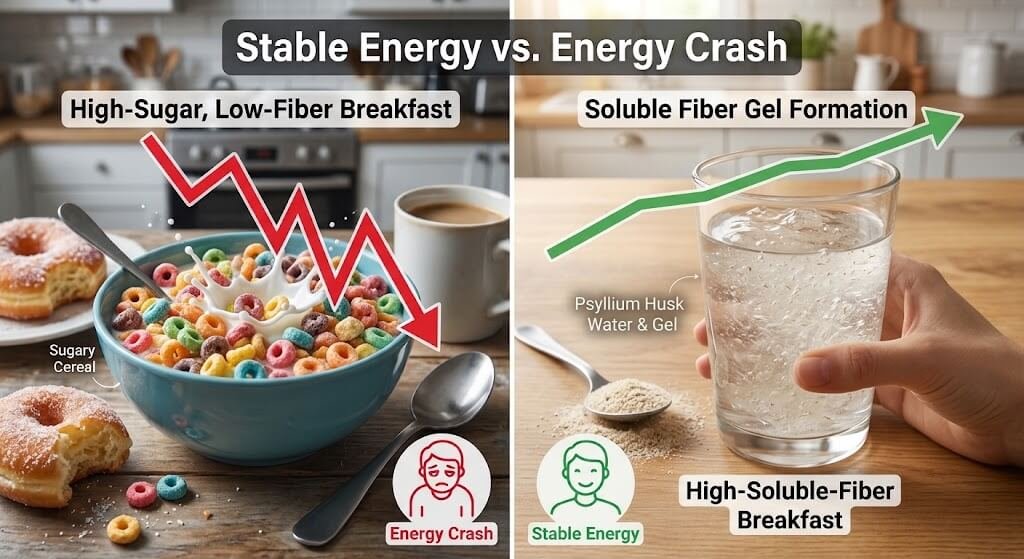
There are two main mechanisms behind the fullness effect:
- Stomach distension and slowed digestion. The gel physically occupies space in the stomach and slows gastric emptying, so food — and the sensation of a full stomach — sticks around longer.
- Gut hormone signaling. As the fiber gel moves into the small intestine, it triggers release of satiety-related gut peptides, including cholecystokinin (CCK). A registered clinical trial on fiber and appetite hormones describes this as part of the “ileal brake” phenomenon, where nutrient delivery to the lower small intestine slows gastric emptying and dampens appetite (ClinicalTrials.gov, NCT01050101).
Coach’s Tip: Think of psyllium less like an “appetite switch” and more like a dimmer. It blunts the edge of hunger and stretches out fullness between meals — it doesn’t eliminate hunger outright, and it works best as part of a plan, not a stand-alone fix.
What the Research Actually Shows About Fullness
The most directly relevant study here is a pair of randomized, double-blind, placebo-controlled crossover trials published in the journal Appetite. Researchers tested psyllium doses of 3.4 g, 6.8 g, and 10.2 g taken before breakfast and lunch over several days in healthy adults. Both higher doses outperformed placebo and the lowest dose, with the 6.8 g dose producing the most consistent reductions in hunger and increases in fullness between meals. A second study using the same 6.8 g dose alongside a calorie-restricted breakfast again found a significant drop in hunger and desire to eat compared to placebo (Brum et al., Appetite, 2016, PubMed).
That’s a meaningfully strong result: it’s randomized, placebo-controlled, and crossover-designed, which is about as rigorous as nutrition research gets for a single supplement. It tells you psyllium reliably makes people feel less hungry and more full between meals.
Fullness Is Not the Same Question as Weight Loss
Here’s where the research gets more complicated, and where a lot of articles on this topic oversimplify. Feeling fuller is not automatically the same as losing weight — appetite is only one input into how much someone eats and how their body weight changes over months.
A comprehensive review and meta-analysis published in the Journal of the American Association of Nurse Practitioners concluded that psyllium, taken before meals, facilitates weight loss in people who are overweight or have obesity (Gibb, Sloan & McRorie, 2023, PMC).
- By contrast, broader systematic reviews of viscous fiber (which includes psyllium as one fiber type among several) have found more modest, sometimes non-significant effects on body weight on their own, with clearer benefits mainly showing up when fiber is paired with a calorie-restricted diet (Jovanovski et al., systematic reviews and meta-analyses of randomized controlled trials on viscous fiber and body weight).
- A meta-analysis focused on people with diabetes found that psyllium meaningfully improved triglycerides, LDL cholesterol, fasting blood sugar, and HbA1c — but did not find a significant change in body weight or BMI (Xiao et al., Phytotherapy Research, 2020, PubMed).
So the honest summary: the fullness effect is well-established. The leap from “feels fuller” to “loses significant weight” is supported by some research and contradicted by other research, and it tends to depend heavily on whether someone is also eating fewer calories overall.
Common Mistake: Treating psyllium husk as a weight-loss drug on its own, with no change to diet, and then being disappointed when the scale doesn’t move much. The fullness is real; the research on fat loss specifically is mixed at best, and psyllium is not comparable to GLP-1 medications like semaglutide in terms of how much weight loss it can produce.
How Fullness Responded to Dose (Clinical Trial Data)
| Psyllium dose | Timing | Reported effect on hunger/fullness |
| 3.4 g | Before breakfast & lunch | Mild, less consistent reduction in hunger vs. placebo |
| 6.8 g | Before breakfast & lunch | Most consistent, statistically significant increase in fullness and drop in hunger |
| 10.2 g | Before breakfast & lunch | Effective, but not meaningfully better than 6.8 g |
Source: Brum et al., Appetite, 2016.
How to Take Psyllium Husk for Fullness Before Meals
If you want to use psyllium husk specifically for appetite control rather than just regularity, timing and hydration matter more than most people assume.
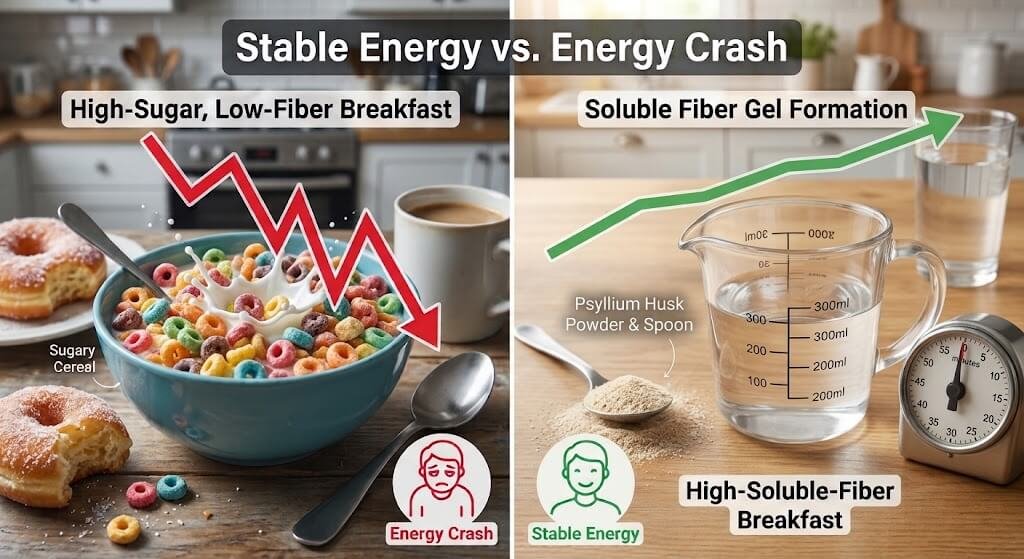
- Mix it with plenty of water. MedlinePlus recommends at least 8 ounces (about 240 ml) of fluid for every 3–5 grams of psyllium husk. This isn’t optional — taking it dry or with too little liquid is the main cause of the one genuinely serious safety issue with this supplement (more on that below).
- Take it 15–30 minutes before a meal. This gives the gel time to form and begin signaling fullness before you start eating, rather than after you’re already full of food.
- Start low and build up. A reasonable starting point is 3–5 grams once daily, working up toward 5–7 grams once or twice daily over one to two weeks as your gut adjusts.
- Be consistent for at least a few weeks. MedlinePlus notes that for weight-related use, psyllium may need to be taken consistently before meals for a couple of months before effects become noticeable.
- Pair it with an actual eating plan. The research most supportive of weight-related benefits combines fiber with a calorie-controlled diet, not fiber alone.
Coach’s Tip: If gas or bloating shows up in week one, that’s usually a sign you’re increasing the dose too fast, not a sign psyllium “doesn’t agree with you.” Cut back to the previous dose for a few more days before trying to increase again.
Safety, Side Effects, and Who Should Be Careful
Psyllium husk is generally well-tolerated, but it isn’t risk-free, and a few of the warnings here are worth taking seriously rather than skimming past.
Common, mild side effects include gas, bloating, stomach cramping, and changes in stool consistency as your gut adjusts (MedlinePlus).
The one real danger: taking it without enough fluid. MedlinePlus is direct about this — blond psyllium is likely unsafe when taken without adequate liquid, and it can cause choking or block the gastrointestinal tract. People with any difficulty swallowing should avoid psyllium husk powder altogether.
Medication interactions worth knowing about. Because psyllium is almost entirely fiber, it can bind to or slow the absorption of several medications if taken too close together, including metformin, digoxin, lithium, carbamazepine, and certain thyroid medications, per MedlinePlus. The general fix is simple: take oral medications about an hour before or several hours after psyllium, rather than at the same time.
Who should talk to a doctor first:
- People with a history of bowel obstruction, esophageal narrowing, or difficulty swallowing
- People with a history of colorectal adenomas (polyps)
- Anyone on the medications listed above, especially those managing diabetes with metformin or a heart condition with digoxin
- People who are pregnant, breastfeeding, managing diabetes, or carrying significant excess weight, since dosing and monitoring needs can differ
This article is for general information and is not a substitute for advice from a doctor or physical therapist. If you’re considering psyllium husk for appetite control or weight management, it’s worth checking in with a doctor or registered dietitian first, especially if you take daily medications or have a digestive condition.
Other Ways to Boost Fullness Naturally
Psyllium husk works better as one piece of a bigger appetite-management picture, not a stand-alone strategy.
- Lead meals with protein and volume. Protein and high-water-content foods (vegetables, broths, fruit) tend to be more filling per calorie than refined carbohydrates.
- Drink water before meals, not just with your fiber dose. Mild dehydration is easy to mistake for hunger.
- Eat slowly. Satiety signals from the gut and brain take roughly 15–20 minutes to catch up to how much you’ve actually eaten.
- Don’t skip meals to “save up” calories. Arriving at a meal extremely hungry makes it much harder for any fiber-driven fullness signal to compete with appetite.
FAQ
Does psyllium husk actually reduce hunger, or just add bulk?
Both. It physically takes up stomach space, but clinical trials also show it lowers subjective hunger and desire-to-eat scores, not just a feeling of being “stuffed” from bulk alone (Brum et al., 2016).
How much psyllium husk should I take before a meal for fullness?
Research supporting consistent fullness benefits used about 6.8 grams before meals. Starting lower (3–5 g) and building up over one to two weeks reduces the risk of gas and bloating.
How long does the full feeling from psyllium husk last?
In clinical trials, the fullness and reduced-hunger effect was measured between meals over several hours, not just immediately after dosing — though individual response varies.
Does psyllium husk cause bloating?
It can, especially early on or if you increase the dose too quickly. Starting low, increasing gradually, and drinking enough water typically reduces this.
Will psyllium husk alone make me lose weight?
Not reliably on its own. Some meta-analyses show meaningful weight loss, others show little to none, and the strongest results appear when psyllium is combined with a calorie-controlled diet rather than used in isolation.
Is psyllium husk the same thing as Metamucil?
Metamucil is a well-studied commercial brand of blond psyllium husk fiber; “psyllium husk” is the generic ingredient itself, available under many brand names.
Conclusion
Psyllium husk can genuinely help you feel full before meals — that part has solid, randomized, placebo-controlled trial support. Where people tend to oversell it is the jump to weight loss: the evidence there is real but mixed, and it works best stacked on top of a sensible eating plan rather than relied on by itself. Taken with enough water, 15–30 minutes before meals, starting low and building up, psyllium husk is a reasonable, low-cost tool for managing hunger between meals — just not a magic one.