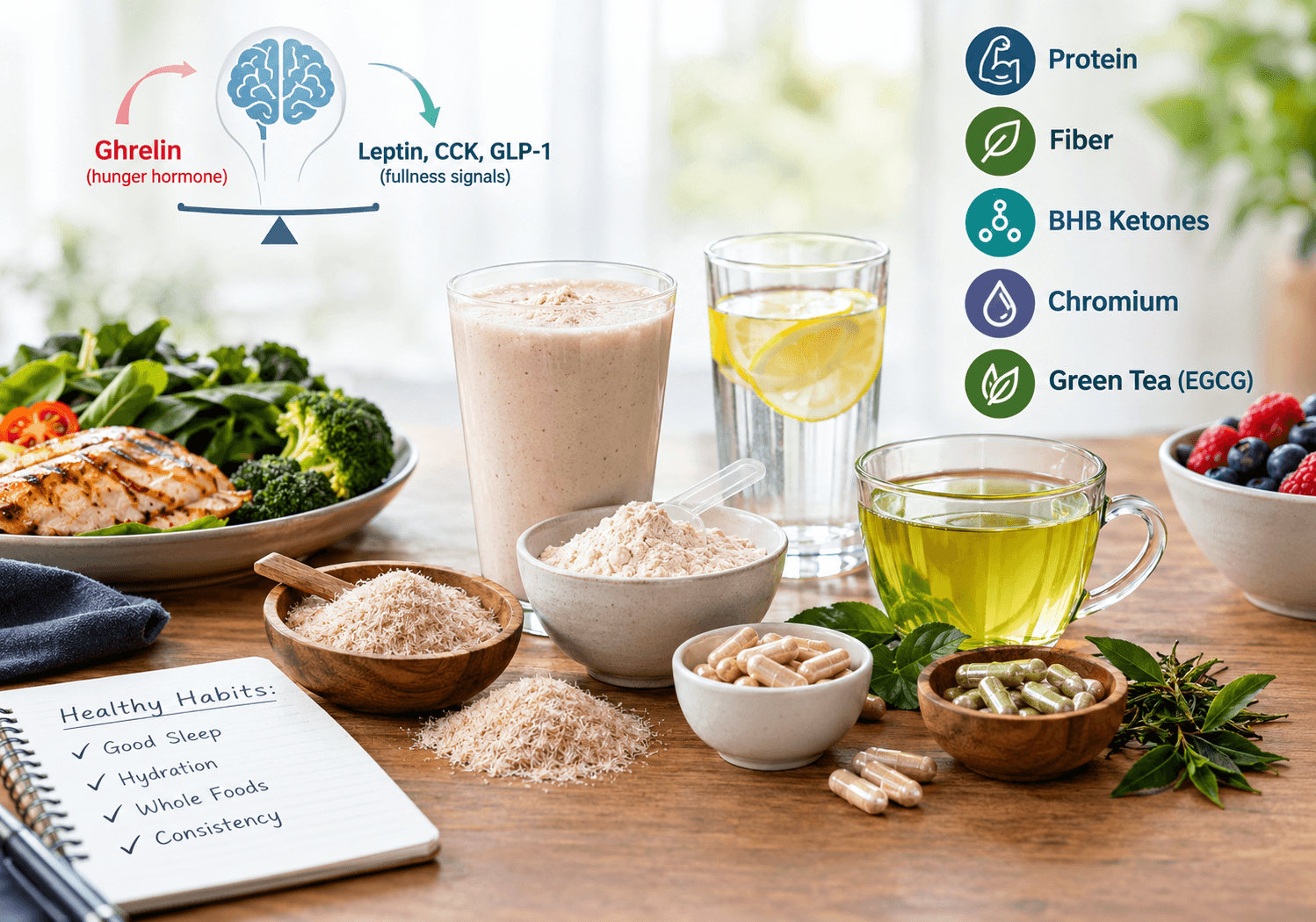
If you are trying to manage your weight, you already know that hunger is the biggest hurdle. You might be wondering, what supplements help control appetite and cravings? As a strength and conditioning coach, I hear this question every single week. The truth is, no magic pill will melt fat away overnight. However, specific, evidence-based supplements can support your body’s natural fullness signals, making it much easier to stick to a healthy calorie deficit.
When you combine the right nutritional tools with consistent training and whole foods, you can take back control of your hunger. In this guide, we will break down the science of appetite, review the top research-backed supplements for craving control, and give you a practical daily routine to make them work. Let us dive into the facts, skip the marketing hype, and find what actually works for your body.
Quick Answer:
The best supplements to help control appetite and cravings include protein powder, soluble fiber (like glucomannan and psyllium husk), exogenous ketones (BHB), chromium picolinate, and green tea extract (EGCG). These work by slowing digestion, balancing blood sugar, and regulating hunger hormones like ghrelin and leptin. Always pair them with a balanced diet and consult your doctor first.
The Science of Hunger: How Appetite Actually Works
Before we look at specific products, it helps to understand why you feel hungry in the first place. Appetite is not just a lack of willpower; it is a complex biological system driven by hormones.
The main “hunger hormone” is called ghrelin. Your stomach produces ghrelin when it is empty, sending urgent signals to your brain that it is time to eat. On the flip side, hormones like leptin, cholecystokinin (CCK), and GLP-1 act as your body’s “fullness signals.” They are released after you eat, telling your brain to stop consuming food.
When you eat highly processed foods or skip meals, these hormones can get out of balance. Your ghrelin spikes rapidly, and your fullness signals weaken. This is exactly why you might feel ravenous just an hour after eating a sugary snack or a refined carbohydrate.
Supplements cannot rewrite your biology, but they can support these natural pathways. For example, certain fibers expand in your stomach to physically trigger fullness, while specific nutrients can help lower ghrelin levels. Understanding this helps you choose tools that work with your body, not against it.
Top Supplements That Help Control Appetite and Cravings
Here are the most effective, science-backed options for managing hunger.
1. Protein Powder (Whey and Casein)
Protein is universally recognized as the most satiating macronutrient. Research shows that dietary protein elevates GLP-1, CCK, and PYY levels, which are secreted in the gut and diminish appetite while also decreasing ghrelin levels
If you are wondering how protein helps control hunger during weight loss, the answer lies in digestion speed and hormone response. Whey protein digests quickly, making it great for post-workout recovery and immediate fullness. Casein protein digests slowly, forming a thick gel in your stomach that keeps you full for hours.
If you want to know can protein powder help control hunger during weight loss, the evidence strongly supports its use as a meal replacement or snack to prevent late-night cravings.
- Practical Use: Mix 1 to 2 scoops (25–50 grams) of protein powder with water or unsweetened almond milk between meals.
- Coach’s Note: Always check the label. Choose a powder with at least 20 grams of protein per serving and less than 5 grams of added sugar to avoid blood sugar spikes.
2. Soluble Fiber: Glucomannan
Glucomannan is a natural, water-soluble dietary fiber extracted from the roots of the elephant yam (konjac). It is famous for its incredible ability to absorb up to 50 times its weight in water.
When you take glucomannan with a large glass of water before a meal, it expands in your stomach. This creates a physical feeling of fullness and delays stomach emptying. A 2024 review noted that dietary supplementation with glucomannan effectively promotes weight loss and improves body composition
Furthermore, meta-analyses have found a significant reduction in body weight following glucomannan consumption in overweight and obese adults
If you are researching does glucomannan reduce hunger, studies confirm it can reduce overall calorie intake by making you feel satisfied with smaller portions.
- Practical Use: Take 1 gram of glucomannan powder or capsules with at least 8 to 16 ounces (240–480 ml) of water, 15 to 30 minutes before your largest meals.
- Safety Warning: Never take glucomannan without plenty of water, as it can cause choking or blockages in the throat or intestines.
3. Soluble Fiber: Psyllium Husk
Psyllium is another powerful, gel-forming, non-fermented fiber. Unlike some fibers that cause gas and bloating, psyllium is generally well-tolerated and highly effective for appetite control.
Research indicates that psyllium doses resulted in directional or statistically significant mean reductions in hunger and desire to eat, and increased fullness
It works similarly to glucomannan by slowing down gastric emptying and stabilizing blood sugar spikes after meals.
Many people ask does soluble fiber help you feel full longer, and psyllium is a prime example of this mechanism in action. By keeping your blood sugar stable, you avoid the sharp crashes that trigger intense sugar cravings. You can learn more about can dietary fiber help with appetite and weight management to see how it fits into a broader nutrition plan.
- Practical Use: Start with 1 teaspoon (about 5 grams) of psyllium husk powder mixed into 8 ounces (240 ml) of water. Drink it immediately before it gets too thick, followed by another glass of plain water.
4. Exogenous Ketones (BHB)
Beta-hydroxybutyrate (BHB) is a ketone body naturally produced by your liver when you are fasting or on a very low-carb ketogenic diet. Exogenous ketones are supplements that deliver BHB directly to your bloodstream.
Why does this matter for hunger? Elevated blood BHB occurs during both exogenous and endogenous ketosis; therefore, BHB may be a direct mediator of the lower appetite and reduced ghrelin levels seen in ketosis
A 2017 study found that a ketone ester drink significantly lowered human ghrelin and appetite compared to a glucose drink
If you are curious about can exogenous ketones suppress appetite, the current science suggests they can help blunt hunger pangs, especially during the transition into a lower-carb eating pattern.
- Practical Use: BHB salts typically come in powder form. Mix 10 to 15 grams with 12 ounces (350 ml) of water. It is best used in the morning or before a workout to curb mid-day cravings. Note that they can taste salty, so look for naturally flavored versions.
5. Chromium Picolinate
Chromium is an essential trace mineral that plays a key role in how insulin helps regulate blood sugar levels. When your blood sugar is stable, you are less likely to experience the sudden, intense cravings for sweets and carbohydrates.
Studies have explored the effects of chromium picolinate on food intake and satiety, suggesting it may help attenuate weight gain and reduce cravings, particularly in individuals with atypical depression or binge eating tendencies
For those wondering does chromium picolinate help reduce sugar cravings, the evidence points to a modest but helpful effect, especially when combined with a balanced diet.
- Practical Use: The typical supplemental dose is 200 to 1,000 micrograms (mcg) per day, often taken with a meal to support steady glucose metabolism.
- Coach’s Note: Chromium is a supporter, not a miracle worker. It works best when your overall diet is already rich in whole foods and fiber.
6. Green Tea Extract (EGCG)
Green tea extract is rich in a powerful antioxidant called epigallocatechin gallate (EGCG). While it is famous for its mild metabolism-boosting effects, it also has notable impacts on satiety.
Research shows that EGCG supplementation induced higher relative gastric volume, and satiation at 90 minutes was higher in the EGCG group compared to placebo
This means it may help food stay in your stomach slightly longer, prolonging the feeling of fullness after a meal.
- Practical Use: Look for a green tea extract supplement standardized to contain at least 50% EGCG. A common dose is 250 to 500 milligrams (mg) per day.
- Safety Note: High doses of green tea extract can stress the liver. Never exceed the manufacturer’s recommended dose, and avoid taking it on an empty stomach.

How to Apply This: A Practical Daily Routine for Craving Control
Knowing the science is only half the battle. Here is how a coach would program these tools into a real day for a client aiming to manage cravings:
- Morning (7:00 AM): Start with a high-protein breakfast (e.g., 3 eggs or a whey protein shake). This sets a low-ghrelin tone for the day and prevents mid-morning snacking.
- Mid-Morning (10:00 AM): If you feel a slump, drink a cup of green tea or take a 250 mg EGCG supplement with a small handful of almonds for healthy fats.
- Before Lunch (12:30 PM): Take 1 gram of glucomannan or 1 teaspoon of psyllium husk with 16 ounces (480 ml) of water. Wait 15 minutes before eating your meal to allow the fiber to expand.
- Afternoon (3:30 PM): This is the classic “craving witching hour.” Instead of hitting the vending machine, mix a serving of BHB exogenous ketones in water. This can help blunt the urge to snack on sugary foods.
- Evening (7:00 PM): Eat a dinner rich in lean protein and vegetables. If you still feel the need to snack after dinner, a slow-digesting casein protein pudding can provide physical fullness without spiking blood sugar.
Common Mistake: Taking fiber supplements without enough water.
The Fix: Soluble fibers like glucomannan and psyllium require water to expand. If you take them dry or with only a sip of water, they can cause severe constipation, bloating, or even esophageal blockage. Always drink at least 8 to 16 ounces (240–480 ml) of water with these supplements, and follow up with another glass.
Coach’s Tip: Supplements are the “cherry on top,” not the whole sundae.
No supplement will control your appetite if you are chronically sleep-deprived, severely dehydrated, or eating a diet devoid of whole foods. Prioritize getting 7 to 9 hours of sleep, drinking at least half your body weight in ounces of water daily, and eating protein and fiber at every meal. Once those foundations are solid, these supplements can give you that extra 10% edge.

Safety Notes and Who Should Be Careful
While these supplements are generally safe for healthy adults, they are not for everyone. Always prioritize safety over speed.
- Pregnancy and Breastfeeding: Avoid exogenous ketones, high-dose green tea extract, and unregulated fiber blends unless explicitly approved by your obstetrician.
- Digestive Conditions: If you have irritable bowel syndrome (IBS), gastroparesis, or a history of bowel obstructions, consult a gastroenterologist before using glucomannan or psyllium husk.
- Medication Interactions: Fiber supplements can bind to prescription medications, reducing their absorption. Take medications at least 2 hours before or after taking fiber. Chromium may interact with diabetes medications, so blood sugar must be monitored closely.
- Liver Health: As mentioned, high doses of green tea extract have been linked to liver toxicity in rare cases. Stick to moderate doses and discontinue use if you experience nausea, abdominal pain, or dark urine.
Disclaimer: This article is for general information and is not a substitute for advice from a doctor or physical therapist. Always consult with a healthcare provider before starting any new supplement regimen, especially if you have pre-existing health conditions or take prescription medications.
Frequently Asked Questions (FAQ)
1. Do exogenous ketones suppress appetite effectively?
Yes, research suggests they can. A 2017 study showed that a ketone ester drink significantly lowered human ghrelin (the hunger hormone) and appetite compared to a glucose drink
They are most effective when used to bridge the gap between meals during a lower-carb eating pattern.
2. Does soluble fiber help you feel full longer?
Absolutely. Soluble fibers like psyllium and glucomannan absorb water and form a gel in your stomach. This physically slows down gastric emptying and digestion, leading to statistically significant reductions in hunger and increased feelings of fullness after meals
3. Can protein powder help control hunger during weight loss?
Yes. Protein is the most satiating macronutrient. It triggers the release of fullness hormones like GLP-1 and CCK while simultaneously lowering ghrelin levels
A protein shake is an excellent tool to prevent mid-afternoon cravings.
4. Does chromium picolinate help reduce sugar cravings?
It may help. Chromium plays a role in insulin function and blood sugar regulation. Studies indicate that chromium picolinate supplementation can help attenuate weight gain and reduce food cravings, particularly for carbohydrates, by stabilizing blood sugar spikes
5. How does protein intake affect hunger and fullness hormones?
Dietary protein directly influences gut hormones. When you consume protein, your body elevates levels of GLP-1, CCK, and PYY, which signal to your brain that you are full, while decreasing the production of the hunger hormone ghrelin
6. Does glucomannan reduce hunger and aid weight loss?
Yes, when used correctly. Meta-analyses show that glucomannan consumption can lead to a significant reduction in body weight in overweight adults by promoting satiety and reducing overall calorie intake
It must be taken with plenty of water before meals to work safely and effectively.
Conclusion
So, what supplements help control appetite and cravings? The evidence points to a shortlist of reliable tools: protein powder, soluble fibers like glucomannan and psyllium husk, exogenous ketones (BHB), chromium picolinate, and green tea extract. These are not magic shortcuts, but they are scientifically supported ways to support your body’s natural fullness signals.
Remember, the foundation of appetite control is built on consistent sleep, adequate hydration, and whole-food nutrition. Use these supplements strategically to support those habits, not replace them. If you are ready to take control of your cravings, pick one or two of these options, talk to your doctor, and see how your body responds.