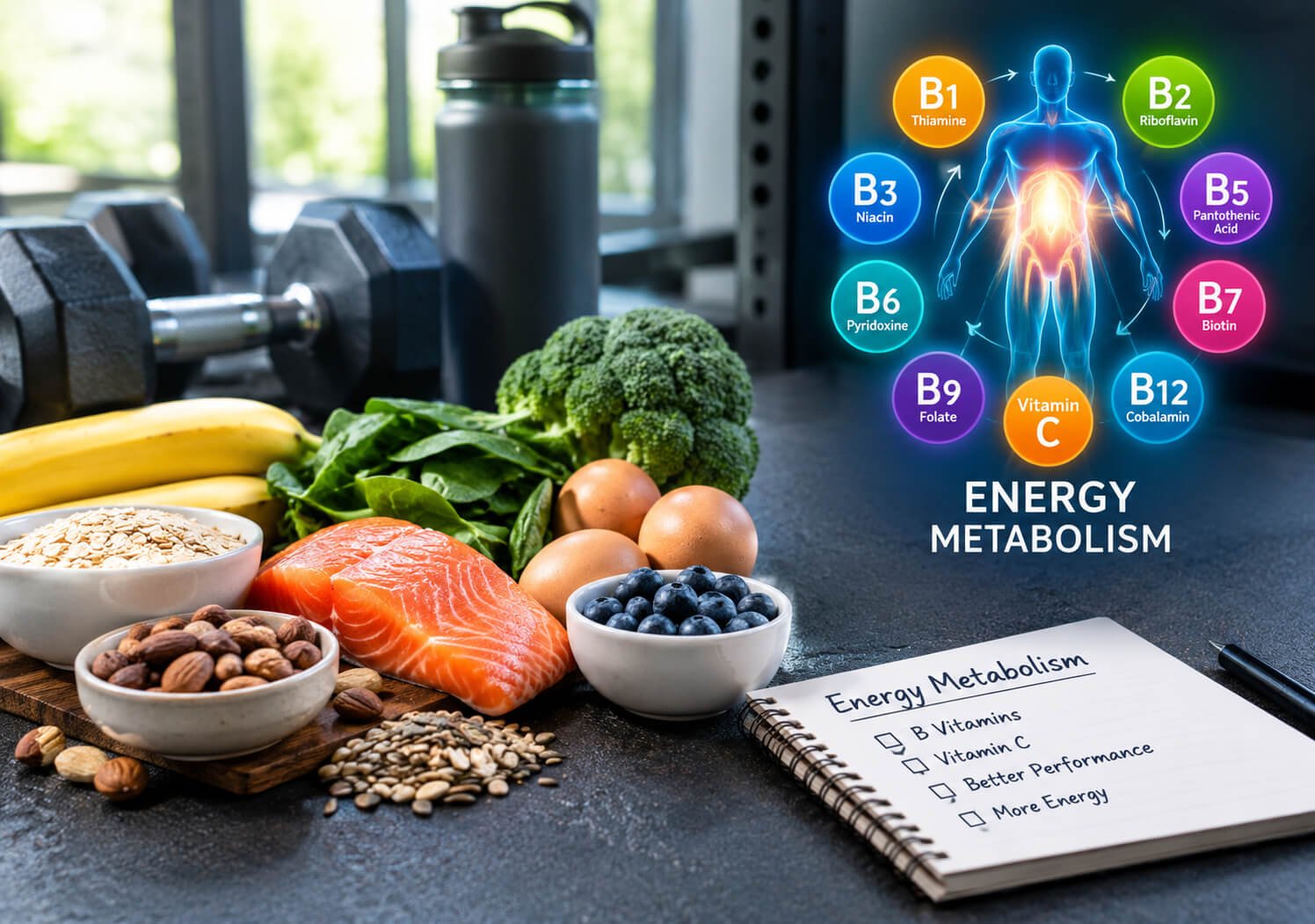
If you feel like your energy drops halfway through a heavy lifting set or your legs turn to lead during cardio, you might jump to blame poor sleep or lack of caffeine. While rest and coffee matter, your body relies on cellular engines that run on specific micronutrients. When clients ask me which vitamins support normal energy metabolism, they are usually looking for a quick fix for daily exhaustion. The real solution lies in understanding how key vitamins act as ignition keys inside your muscles.
Every time you lift a barbell, swing a kettlebell, or jog on a treadmill, your body breaks down carbohydrates, fats, and proteins. It converts these macronutrients into adenosine triphosphate (ATP), the primary energy currency of your cells. Micronutrients do not contain calories or provide direct energy themselves. Instead, they act as essential coenzymes that allow your metabolism to process food into usable fuel.
Without adequate vitamin levels, these chemical reactions slow down. You end up feeling sluggish, recovering poorly, and missing your training goals. In this guide, we will break down the precise vitamins involved in cellular respiration, how they keep your workouts strong, and how to get them through food and smart supplementation.
Quick Answer: Which Vitamins Support Normal Energy Metabolism?
The primary micronutrients that support normal energy metabolism are the eight B-complex vitamins—especially Thiamine (B1), Riboflavin (B2), Niacin (B3), Pantothenic Acid (B5), Pyridoxine (B6), Biotin (B7), Folate (B9), and Cobalamin (B12)—along with Vitamin C. These vitamins serve as mandatory coenzymes to convert carbohydrates, fats, and proteins into ATP energy during exercise.
What Is Energy Metabolism and How Does Exercise Depend On It?
Energy metabolism is the collection of chemical pathways your body uses to convert nutrients into cellular fuel. During physical activity, your muscle fibers require a constant supply of ATP to contract. Whether you are performing a 1-rep max deadlift or running five miles, your cells rely on three interconnected metabolic systems:
- The ATP-PCr System: Provides rapid power for ultra-short bursts of movement (1 to 10 seconds).
- The Anaerobic Glycolytic System: Breaks down glycogen without oxygen for intense work lasting up to two minutes.
- The Aerobic System: Uses oxygen inside your mitochondria to yield massive amounts of ATP from carbohydrates and fats for long-duration workouts.
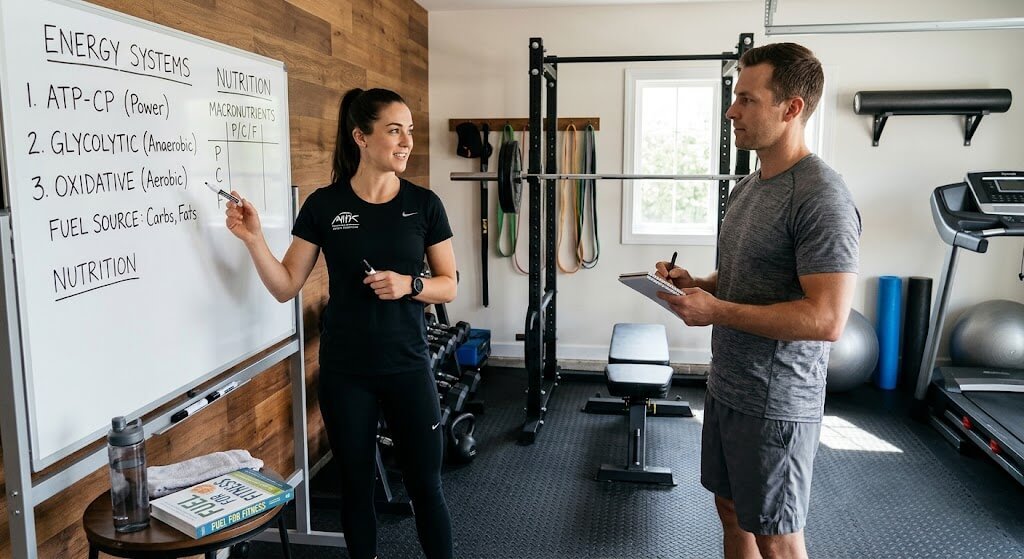
Micronutrients drive every step of these metabolic pathways. If you want to dive deeper into broader dietary factors, you can explore our complete guide on how to support metabolism naturally for weight management. Vitamins act as biological spark plugs. Without them, enzyme systems cannot break down nutrients, leading to reduced physical output and persistent muscular fatigue.
The Core B-Complex Vitamins for Cellular Energy
When addressing which vitamins support normal energy metabolism, the B-complex family takes center stage. These eight water-soluble vitamins work together inside your cell matrix.
Vitamin B1 (Thiamine)
Thiamine acts as a crucial coenzyme in carbohydrate metabolism. It converts pyruvate—a byproduct of glucose breakdown—into Acetyl-CoA, which feeds directly into the Krebs cycle inside your mitochondria.
- Key Role in Gym Performance: Allows your muscles to efficiently burn stored glycogen during high-intensity resistance training.
- Top Food Sources: Whole grains, pork, sunflower seeds, black beans, and trout.
Vitamin B2 (Riboflavin)
Riboflavin is a foundational building block for two vital coenzymes: Flavin Mononucleotide (FMN) and Flavin Adenine Dinucleotide (FAD).
- Key Role in Gym Performance: FAD is required for fatty acid oxidation. This process allows your body to burn stored fat for fuel during long cardio sessions or between heavy lifting sets.
- Top Food Sources: Beef liver, eggs, milk, lean meats, almonds, and spinach.
Vitamin B3 (Niacin)
Niacin forms Nicotinamide Adenine Dinucleotide (NAD+) and Nicotinamide Adenine Dinucleotide Phosphate (NADP+).
- Key Role in Gym Performance: NAD+ carries high-energy electrons during cellular respiration to manufacture bulk ATP. Adequate levels ensure steady energy delivery during intense interval training. Understanding what affects metabolism and body weight highlights why foundational enzymatic pathways like NAD+ production are so important.
- Top Food Sources: Chicken breast, turkey, tuna, salmon, peanuts, and brown rice.
Vitamin B5 (Pantothenic Acid)
Pantothenic acid forms the structural core of Coenzyme A (CoA).
- Key Role in Gym Performance: CoA is the central traffic controller of metabolism. It processes carbohydrates, fats, and amino acids before they enter cellular energy pathways.
- Top Food Sources: Avocados, organ meats, mushrooms, chicken, whole grains, and broccoli.

Vitamin B6 (Pyridoxine)
Vitamin B6, active as Pyridoxal 5′-phosphate (PLP), plays a dominant role in amino acid and protein metabolism.
- Key Role in Gym Performance: It facilitates glycogenolysis—the release of stored glycogen from your liver and muscle tissue to maintain blood glucose during tough workouts. It also assists in converting protein into usable energy when carbohydrate reserves are low.
- Top Food Sources: Chickpeas, yellowfin tuna, salmon, chicken breast, potatoes, and bananas.
Vitamin B7 (Biotin)
Biotin acts as a coenzyme for carboxylase enzymes.
- Key Role in Gym Performance: It fuels gluconeogenesis (the creation of new glucose from non-carbohydrate sources) and supports the synthesis of fatty acids for baseline endurance energy.
- Top Food Sources: Egg yolks, almonds, sweet potatoes, beef liver, and sunflower seeds.
Vitamin B9 (Folate) & Vitamin B12 (Cobalamin)
Folate and B12 work as a team to support cell division, DNA synthesis, and red blood cell production.
- Key Role in Gym Performance: Red blood cells contain hemoglobin, which carries oxygen from your lungs to your working skeletal muscles. A deficiency in B12 or Folate leads to anemia, drastically reducing your aerobic capacity and causing rapid exhaustion.
- Top Food Sources for B12: Clams, beef liver, nutritional yeast, sardines, and dairy products.
- Top Food Sources for Folate: Dark leafy greens (spinach, kale), asparagus, Brussels sprouts, lentils, and beans.
Vitamin C and Energy Metabolism
While people usually associate Vitamin C (ascorbic acid) with immune health, it plays a vital role in cellular energy synthesis.
Vitamin C is a mandatory cofactor for the synthesis of L-carnitine. Carnitine acts as a transport molecule that carries long-chain fatty acids across the inner mitochondrial membrane into the cellular furnace. Without sufficient Vitamin C, your body cannot efficiently burn fat for energy during exercise.
Additionally, Vitamin C protects mitochondrial membranes from oxidative stress generated during high-intensity interval training. You can explore how thermal cellular reactions function in our overview of what thermogenesis is and how it affects metabolism.

Key Energy-Supporting Vitamins Summary Table
| Vitamin | Primary Metabolic Role | Active Form / Coenzyme | Exercise Impact | RDA (Adults) | Top Food Sources |
| B1 (Thiamine) | Carbohydrate breakdown | Thiamine pyrophosphate (TPP) | Fuels high-intensity muscle contractions | 1.1–1.2 mg | Pork, seeds, black beans, whole grains |
| B2 (Riboflavin) | Fatty acid oxidation | FAD / FMN | Sustains long-duration aerobic work | 1.1–1.3 mg | Eggs, organ meats, milk, almonds |
| B3 (Niacin) | Electron transport chain | NAD+ / NADH | Supports peak ATP production in cells | 14–16 mg NE | Chicken breast, tuna, peanuts, turkey |
| B5 (Pantothenic Acid) | Coenzyme A synthesis | Coenzyme A (CoA) | Processes fats, carbs, and proteins | 5 mg | Avocados, mushrooms, chicken, eggs |
| B6 (Pyridoxine) | Protein & glycogen conversion | Pyridoxal 5′-phosphate (PLP) | Releases stored muscle glycogen | 1.3–1.7 mg | Chickpeas, salmon, potatoes, bananas |
| B7 (Biotin) | Gluconeogenesis | Biotin-dependent carboxylases | Creates new glucose during endurance work | 30 mcg | Egg yolks, almonds, sweet potatoes |
| B9 (Folate) | Red blood cell creation | Tetrahydrofolate (THF) | Improves oxygen delivery to working muscles | 400 mcg DFE | Spinach, lentils, asparagus, beans |
| B12 (Cobalamin) | Hemoglobin & myelin synthesis | Methylcobalamin / Adenosylcobalamin | Prevents fatigue by optimizing blood oxygen | 2.4 mcg | Clams, beef liver, eggs, fortified yeast |
| Vitamin C | Carnitine synthesis | Ascorbic acid | Transports fat into mitochondria for fuel | 75–90 mg | Citrus fruits, bell peppers, strawberries |
How Vitamins Direct Energy Metabolism During Workouts
Understanding which vitamins support normal energy metabolism gives you a clear edge in structuring your training and recovery plans. Different exercise modalities draw on different nutrient pathways.
1. Resistance Training & Explosive Power
When performing heavy barbell squats or explosive kettlebell swings, your body relies primarily on anaerobic glycolysis. Vitamins B1, B3, and B6 are vital here.
They help break down stored muscle glycogen into rapid ATP without relying on immediate oxygen delivery. If B6 levels are low, your body struggles to break down glycogen fast enough, causing early muscle burn and quick failure.
2. Endurance & Aerobic Work
During long runs, cycling, or rowing sessions, your mitochondria shift to burning fat via aerobic oxidation. Vitamin B2 and Vitamin C are crucial for this transition.
Riboflavin keeps the electron transport chain moving, while Vitamin C ensures carnitine shuttle systems run smoothly. Meanwhile, Vitamins B9 and B12 maintain healthy red blood cells, ensuring your heart can deliver oxygen to active legs and arms.
Coach’s Tip: Food First, Supplements Second
Do not replace a poor diet with high-dose energy pills. Energy metabolism vitamins work best when absorbed alongside natural cofactors found in whole foods. Synthetic mega-doses are often flushed out in your urine without improving performance. Base your routine on whole foods, then use a balanced B-complex to fill gaps.
Exercise Application: Energy-Boosting Conditioning Routine
To put your metabolic pathways to work, perform this hybrid conditioning workout twice weekly. It stresses both anaerobic and aerobic energy systems, requiring smooth enzymatic function to power through.
Workout Structure & Protocol
| Exercise | Target Muscles | Sets | Reps / Duration | Rest Interval | Intensity / Weight Guidance |
| Trap Bar Deadlift | Quads, Glutes, Hamstrings, Back | 4 | 6–8 reps | 90 seconds | Moderate-Heavy (~75% 1RM) |
| Kettlebell Swings | Posterior Chain, Core, Cardio | 4 | 15–20 reps | 60 seconds | Challenging (e.g., 35–53 lb [16–24 kg]) |
| Dumbbell Thrusters | Quads, Shoulders, Triceps | 3 | 10–12 reps | 60 seconds | Moderate (e.g., 20–35 lb [9–16 kg]) |
| Rowing Machine Intervals | Full Body Aerobic | 4 | 250 meters | 45 seconds | Max Effort (Sprint pace) |
Movement Cues
- Trap Bar Deadlift: Stand inside the bar with feet hip-width apart. Hinge at your hips, grip the handles tightly, flatten your back, and drive through your heels to stand tall.
- Kettlebell Swing: Hinge at your hips while keeping your chest open. Snap your hips forward explosively to drive the kettlebell to chest height. Do not pull with your arms.
- Dumbbell Thruster: Hold two dumbbells at shoulder height. Squat until your thighs are parallel to the floor, then drive up explosively, pressing the weights overhead in one fluid motion.

Exercise Regress & Progress Options
Adapting movements to your fitness level keeps your training safe and effective.
Regressions (Easier Options)
- Replace Trap Bar Deadlift with: Bodyweight Box Squats. Focus on pushing hips back and maintaining a flat spine.
- Replace Kettlebell Swings with: Romanian Deadlifts using a light barbell (e.g., 45 lb [20 kg]). Focus on a slow, controlled hip hinge.
- Replace Dumbbell Thrusters with: Bodyweight Air Squats followed by an overhead arm press without weights.
Progressions (Harder Options)
- Advance Trap Bar Deadlift: Add a 2-second pause at knee height on every repetition.
- Advance Kettlebell Swings: Perform Single-Arm Kettlebell Swings, switching hands at the top of each stroke.
- Advance Dumbbell Thrusters: Increase load or transition to Single-Arm Kettlebell Thrusters to challenge core stability.
Common Mistake: Chasing “Energy” Supplements Over Real Food
The Mistake: Relying on high-stimulant pre-workout powders packed with synthetic caffeine while neglecting basic vitamin intake.
The Fix: Stimulants hide fatigue without solving real energy deficits. Build your base around whole foods rich in micronutrients. If you decide to add targeted formulas, check out our guide on what to look for in a metabolism support supplement.
How to Determine If You Need Vitamin Support
Understanding which vitamins support normal energy metabolism is step one. Step two is identifying whether your current levels are sufficient. While true clinical deficiencies are rare in developed countries, suboptimal micronutrient levels are common among hard-training athletes.
According to research published in the Journal of the International Society of Sports Nutrition, high physical activity increases the turnover and loss of key B-vitamins in sweat and urine.
Signals You May Need to Evaluate Micronutrient Intake:
- Unexplained Persistent Fatigue: Feeling exhausted even after getting 8 hours of sleep.
- Slower Workout Recovery: Prolonged muscle soreness and an inability to maintain target weights or reps.
- Frequent Muscle Cramping or Weakness: Difficulty generating power during strength movements.
- Brain Fog and Lack of Focus: Struggles with mental concentration during complex exercises.
If you are evaluating dietary formulas, learn how to evaluate ingredients in weight management supplements. This helps you select products with meaningful dosages rather than underdosed proprietary blends.
Whole Food Sources vs. Supplements: Getting It Right
The best way to power your cellular metabolism is through a nutrient-dense whole food diet. Food sources provide vitamins alongside co-factors and minerals that enhance absorption.
Maximizing Absorption from Food
- Combine Vitamin C with Plant Iron: Eating bell peppers or citrus alongside spinach or lentils improves non-heme iron absorption. Iron is essential for oxygen transport in energy metabolism.
- Avoid Overcooking Vegetables: Water-soluble B-vitamins and Vitamin C break down when exposed to excessive heat and water. Steam or sauté your greens lightly instead of boiling them.
- Include Healthy Fats: While B-vitamins are water-soluble, overall nutrient delivery improves when meals contain healthy fats like olive oil or avocado. For more on dietary strategies, read our guide on how to increase metabolism naturally for weight loss.
Smart Supplementation Guidelines
If you are vegan, vegetarian, or training intensely, supplementation can help fill gaps:
- Pick Bioavailable Forms: Look for Methylcobalamin (B12) and Pyridoxal-5-Phosphate (B6), which your body absorbs easily.
- Avoid Mega-Doses: High doses of single B-vitamins can interfere with the uptake of others. Stick to daily values close to 100-300% RDA unless directed by a physician.
- Check Third-Party Testing: Choose supplements tested by independent organizations like NSF International or USP to ensure purity and label accuracy.
Safety Notes & Precautions
While water-soluble vitamins are generally safe because your body excretes excess amounts in urine, mega-dosing can cause unwanted side effects:
- Vitamin B6 Toxicity: Long-term intake of high B6 doses (over 100 mg per day) can cause nerve damage, numbness, and tingling in the extremities.
- Niacin Flushing: High doses of Niacin (B3) can trigger uncomfortable skin flushing, redness, and itching.
- Digestive Distress: High doses of Vitamin C (over 2,000 mg per day) can cause stomach cramps and diarrhea.
Always consult a doctor or registered dietitian before starting any new supplement program, especially if you take prescription medications or have existing health conditions.
Frequently Asked Questions
Do B vitamins give you instant energy like caffeine?
No. B vitamins do not act as central nervous system stimulants like caffeine. They do not provide a sudden rush of energy. Instead, they act as cellular coenzymes that help your body convert food into ATP over time. If you are already getting enough B vitamins, taking extra will not produce an immediate spike in physical stamina.
Can a deficiency in B12 affect my gym performance?
Yes, significantly. Vitamin B12 is essential for producing red blood cells, which transport oxygen to working skeletal muscles. A B12 deficiency can lead to megaloblastic anemia, causing severe fatigue, shortness of breath, and a sharp drop in workout capacity during exercise.
Are water-soluble energy vitamins safe to take daily?
Generally, yes. Water-soluble vitamins like the B-complex group and Vitamin C are not stored in high amounts in body tissues. Excess amounts are excreted through your urine. However, taking extremely high doses of certain vitamins—such as Vitamin B6—over long periods can still cause adverse side effects.
Should I take energy metabolism vitamins before or after my workout?
Timing is flexible because these vitamins build up in your system over time. However, taking a balanced B-complex with a pre-workout meal containing carbohydrates can help support food breakdown and nutrient absorption during your exercise session.
Can I get all energy-supporting vitamins on a plant-based diet?
You can get most B-complex vitamins and Vitamin C from plant foods like leafy greens, whole grains, nuts, seeds, and legumes. However, Vitamin B12 occurs naturally almost exclusively in animal products. Plant-based athletes should rely on fortified foods or take a dedicated B12 supplement to maintain optimal energy metabolism.
Conclusion
Understanding which vitamins support normal energy metabolism shifts your focus from quick-fix energy drinks to real, foundational fitness nutrition. The eight B-complex vitamins and Vitamin C are essential partners in converting food into muscle power. They power the metabolic engines that drive every squat, sprint, and daily activity.
By eating a balanced diet of lean proteins, whole grains, nuts, and leafy greens—and supplementing wisely when needed—you keep your cellular energy production running strong. Pair good nutrition with consistent training, and you will notice steady energy, improved gym performance, and faster recovery.