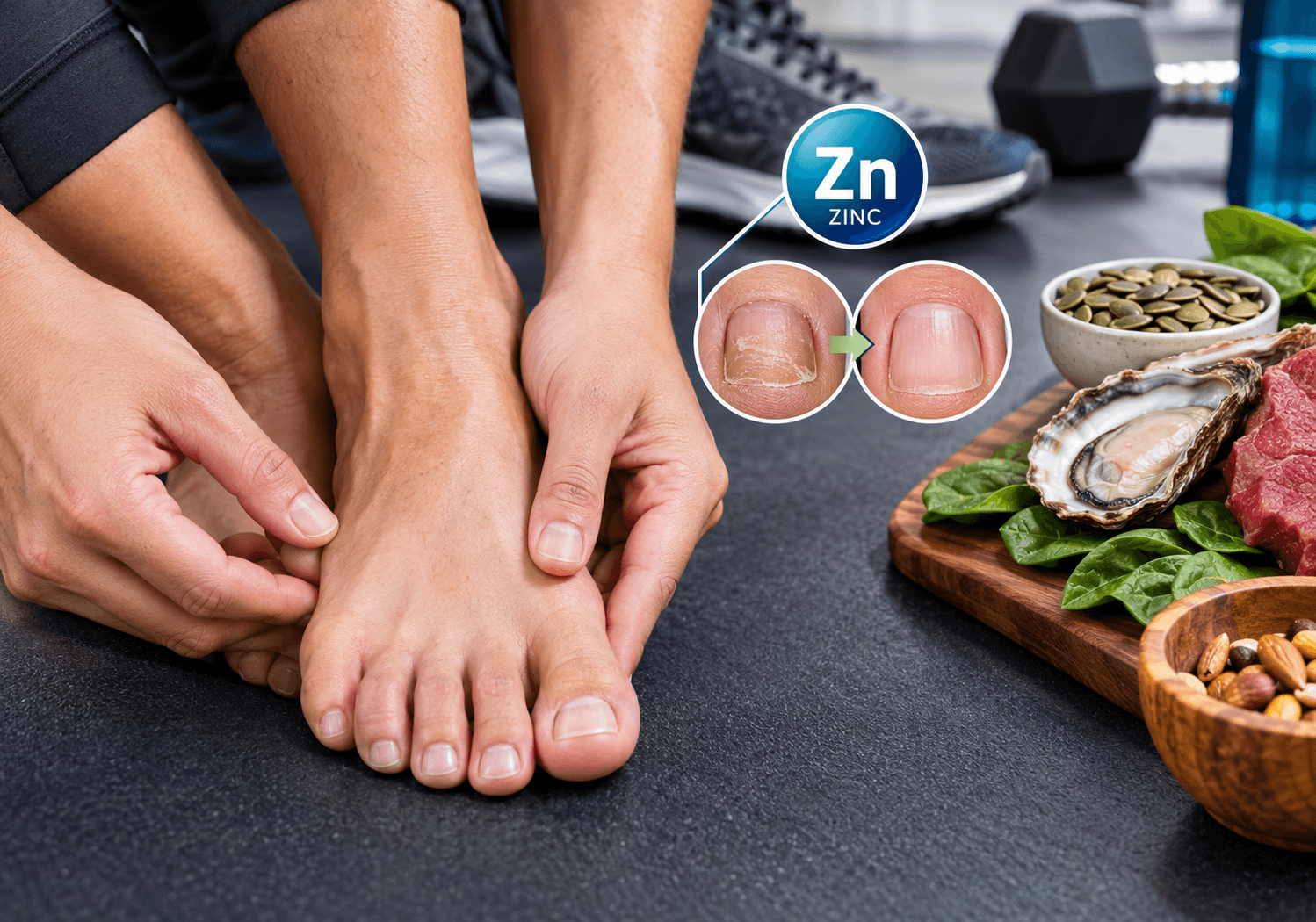
Brittle, slow-growing, or splitting toenails are a frequent nuisance for athletes, lifters, and active adults. Whether your toes take a beating from heavy squats, distance running, or tight athletic shoes, slow nail recovery can become a frustrating problem. You might have heard that taking zinc can speed up nail growth and restore firmness to weak nail plates. But does zinc help toenail growth and strength, or is it just another supplement trend?
Zinc plays an essential role in biological tissue repair and cellular division. However, its actual impact on your toenails depends heavily on your baseline mineral levels, overall diet, and training stress. Let us look closely at what the science says about zinc, how it affects nail structural integrity, and how to use it safely alongside an active lifestyle.
Quick Answer
Does zinc help toenail growth and strength? Yes, but primarily if you are deficient or under-consuming the mineral. Zinc is vital for cell division and keratin production in the nail matrix. Supplementing restores proper growth rates and prevents brittleness when zinc levels are low, but extra zinc will not accelerate growth beyond your body’s biological cap if your levels are already normal.
The Biological Connection Between Zinc and Nail Structure
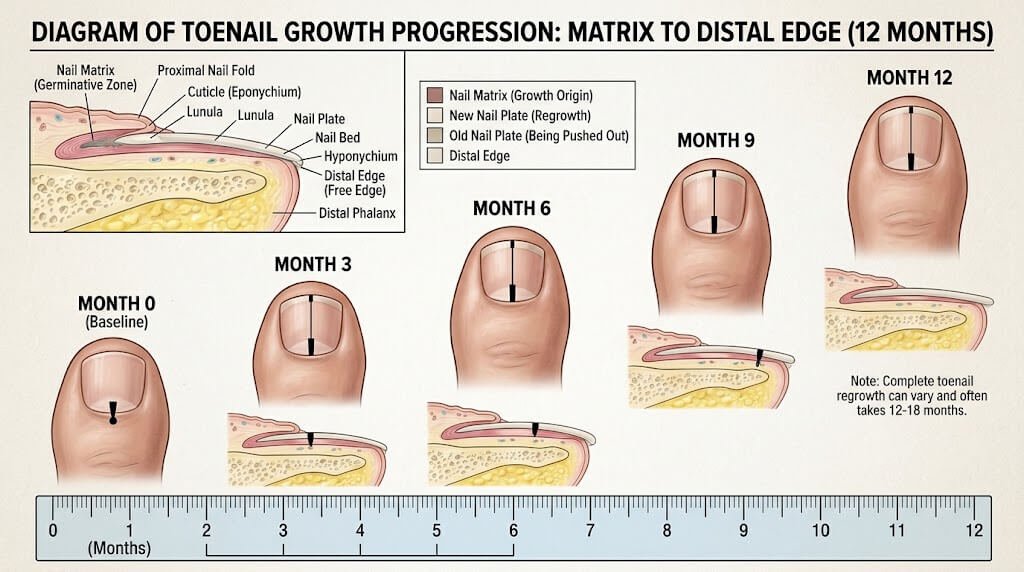
To understand how zinc impacts your toenails, you must first understand how nails actually form. Your toenails do not grow from the tip. Instead, they are produced deep within the nail matrix, located beneath the skin just behind your cuticle.
The nail matrix contains rapidly dividing cells called keratinocytes. These cells synthesize keratin—a tough, protective structural protein that forms the hard nail plate.
Because the cells inside the nail matrix divide so rapidly, they require a constant supply of enzymes, amino acids, and minerals. Zinc is a required cofactor for over 300 enzymatic processes in the human body, many of which control DNA replication, protein synthesis, and cellular division.
According to research published in the Journal of Drugs in Dermatology, zinc deficiency directly disrupts the rapid cellular turnover in the matrix. When zinc levels drop, nail matrix cells cannot replicate efficiently, leading to structural flaws in the newly formed keratin layer.
How Zinc Affects Toenail Growth and Strength
Toenails grow at an average rate of 1.6 millimeters per month, which is roughly one-third the speed of fingernails. Because blood flow to the feet is lower than to the hands, nutrient delivery to the toe matrix is naturally slower.
When your body maintains adequate zinc status, several key biological mechanisms preserve nail integrity:
- Accelerated Matrix Turnover: Adequate zinc enables nail matrix cells to divide at their maximum genetic potential, preventing growth stalls.
- Structural Keratin Alignment: Zinc-dependent enzymes regulate protein folding, ensuring the keratin layers pack tightly together to form a hard nail plate.
- Reduction of Leukonychia: Transverse white spots or lines across the nail plate (leukonychia) are classic signs of cellular disruption in the matrix often linked to acute zinc depletion.
- Enhanced Tissue Repair: For athletes dealing with micro-trauma from footwear pressure during heavy lunges or running, zinc supports tissue recovery at the nail bed.
If you are curious about optimizing nutrient absorption for recovery, exploring which nutrients support normal energy metabolism can provide broader context on how micro-minerals fuel cellular repair.

Signs of Zinc Deficiency in Your Toenails
Recognizing whether your toenails are suffering from a mineral deficit is the first step toward correcting the issue. A shortfall in zinc rarely shows up in isolation; it usually affects both fingernails and toenails, though toenail recovery takes significantly longer due to lower local blood flow.
| Toenail Symptom | What It Looks Like | Possible Micronutrient Link |
| Brittle or Flaking Nails | Nails split horizontally or peel in thin layers | Zinc, Iron, or Biotin Deficiency |
| Transverse Leukonychia | Horizontal white lines or spots moving outward | Acute Zinc Deficiency or Matrix Micro-Trauma |
| Severe Growth Stalls | Nails show minimal growth over 3 to 6 months | Severe Zinc Deficiency or Reduced Peripheral Blood Flow |
| Beau’s Lines | Deep horizontal grooves across the nail plate | Systemic Stress, High Fever, or Severe Zinc Shortfall |
| Frequent Nail Bed Infections | Redness, inflammation, or fungal susceptibility | Immune Impairment (Zinc-dependent immune loss) |
When athletes restrict calories or cut out whole food groups, they risk missing essential trace elements. If you are currently limiting calories for body composition goals, reviewing how protein intake affects hunger and fullness hormones can help you structure nutrient-dense meals that preserve both muscle mass and micronutrient status.
Daily Zinc Intake and Dietary Sources for Healthy Nails
To maintain strong toenails, you must hit your baseline daily zinc requirements through diet or targeted supplementation.
The National Institutes of Health Office of Dietary Supplements recommends the following daily dietary allowances for adults:
- Adult Men: 11 mg per day
- Adult Women: 8 mg per day
- Pregnant / Lactating Women: 11–12 mg per day
- Tolerable Upper Intake Level (UL): 40 mg per day for all adults
Top Dietary Sources of Bioavailable Zinc
The body absorbs zinc most efficiently from animal sources because they lack phytates—compounds found in grains and legumes that bind to minerals and lower their absorption.
- Oysters (cooked, 3 oz [85 g]): 74 mg (673% DV)
- Beef Chuck Roast (cooked, 3 oz [85 g]): 7.0 mg (64% DV)
- Crab (cooked, 3 oz [85 g]): 4.7 mg (43% DV)
- Pumpkin Seeds (dried, 1 oz [28 g]): 2.2 mg (20% DV)
- Turkey Breast (cooked, 3 oz [85 g]): 1.5 mg (14% DV)
- Lentils (cooked, 1/2 cup [100 g]): 1.3 mg (12% DV)
Coach’s Tip: Pairing Minerals for Absorption
If you follow a plant-based diet, your dietary zinc requirements may be up to 50% higher due to phytate inhibition. Soaking, sprouting, or fermenting grains and legumes reduces phytate levels, significantly increasing zinc bioavailability for tissue and nail growth.
Zinc Supplement Types and Bioavailability
If your diet lacks zinc-rich whole foods, high-quality oral supplements can help bridge the gap. However, not all zinc formulations absorb at the same rate inside the gastrointestinal tract.
- Zinc Picolinate: Chelated with picolinic acid, this form passes through the intestinal wall efficiently. Research indicates it offers superior absorption compared to inorganic forms.
- Zinc Citrate: Bound to citric acid, this option offers high bioavailability and is gentle on sensitive stomachs.
- Zinc Gluconate: Commonly found in over-the-counter lozenges and multivitamin complex formulas; offers moderate, reliable absorption.
- Zinc Oxide: An inorganic, inexpensive form commonly used in topical creams. Oral absorption is poor compared to chelated options.

When evaluating multi-ingredient recovery or metabolic blends, understanding how to evaluate ingredients in weight management supplements helps you avoid cheap filler compounds and low-bioavailability mineral forms.
Realistic Timeline: How Long Does It Take to See Results?
One common mistake athletes make is expecting overnight changes after starting a zinc supplement. Toenails grow extremely slowly—averaging just 0.05 inches (0.13 cm) per month.
Because zinc acts on the matrix beneath the cuticle, any improvement in nail density, thickness, or texture will only appear in the newly formed nail plate moving outward.
- Weeks 1–4: Cellular zinc levels normalize inside the matrix tissue. No visible changes on the existing toenail plate yet.
- Months 2–3: A fresh band of smoother, firmer nail emerges from beneath the cuticle line.
- Months 6–9: The top half of your toenail shows renewed structural firmness.
- Months 9–12: Complete replacement of the big toenail plate with healthier keratin tissue.
Patience is essential. If you stop supplementation after three weeks because your big toe looks identical, you are cutting off nutrient delivery right as the matrix begins synthesizing stronger tissue.
Can Too Much Zinc Damage Your Nails and Health?
While meeting daily zinc needs is essential for tissue recovery, taking excessive amounts creates severe biological imbalances. Taking high doses of elemental zinc over extended periods interferes with copper absorption.
According to a review from the Harvard T.H. Chan School of Public Health, chronic daily zinc intakes above 40 mg can suppress copper absorption, causing systemic problems:
- Copper Deficiency Anemia: Excess zinc induces the synthesis of metallothionein, an intestinal protein that traps copper and prevents its absorption into the bloodstream.
- Brittle Nails and Hair: Paradoxically, secondary copper deficiency impairs collagen cross-linking, making nails and connective tissue more brittle over time.
- Depressed Immune Function: High zinc doses disrupt white blood cell activity, reversing the immune-supportive benefits of normal mineral levels.
- Nausea and GI Distress: Doses exceeding 50 mg on an empty stomach frequently cause severe cramping and nausea.
Common Mistake: High-Dose Megadosing
The Mistake: Taking 50–100 mg of elemental zinc daily hoping to speed up toenail growth twice as fast. The Fix: Cap supplemental zinc at 15–30 mg daily for short-term correction, and never exceed the 40 mg tolerable upper limit without direct medical supervision.
Zinc vs. Biotin for Toenail Strength: Which Is Better?
When looking for nail health solutions, you will often find zinc compared directly with Biotin (Vitamin B7). While both contribute to tissue integrity, they function through completely different biological pathways.
| Parameter | Zinc (Trace Mineral) | Biotin / Vitamin B7 (Water-Soluble Vitamin) |
| Primary Mechanism | Drives cellular division in the nail matrix and supports protein synthesis. | Improves lipid structure between keratin layers to reduce splitting. |
| Best Used For | Slow-growing nails, leukonychia (white spots), and poor matrix repair. | Brittle, peeling, soft, or easily bent nail plates. |
| Deficiency Signs | White lines, slow growth, impaired immunity, delayed skin healing. | Thinning hair, rash around facial orifices, brittle splitting nails. |
| Dietary Sources | Oysters, beef, pumpkin seeds, dark poultry meat. | Eggs, almonds, sweet potatoes, sunflower seeds. |
| Clinical Verdict | Restores growth rate and matrix cell replication. | Increases nail plate thickness in brittle-nail syndrome. |
Rather than viewing these two nutrients as competitors, treat them as complementary partners. Biotin improves the flexible bond between keratin sheets, while zinc ensures the matrix produces dense keratin cells at a normal, healthy pace.
If you are managing your diet carefully alongside fitness routines, learning how protein helps control hunger during weight loss can help you build whole-food meal plans rich in both biotin and zinc.
Practical Action Plan: Optimizing Toenail Growth and Foot Mechanics
Supplements are only one piece of the puzzle. For gym-goers, lifters, and runners, mechanical stress on the feet plays a massive role in toenail integrity. Repetitive impact against the toe box of your shoe causes micro-trauma, which can damage the nail bed faster than zinc can rebuild it.
1. Optimize Footwear for Matrix Health
Ensure your training shoes have at least a thumb’s width of space between your longest toe and the end of the shoe. When performing high-impact movements or heavy weightbearing exercises, tight toe boxes jam the toenail backward into its matrix, stalling growth regardless of your mineral status.
2. Strengthen Lower-Extremity Circulation
Because blood flow to the toes is naturally limited, poor peripheral circulation slows nutrient delivery. Incorporate foot and calf exercises into your routine to promote healthy blood flow:
Calf Raise Execution Cues
- Stand on a block with heels hanging off the edge.
- Lower your heels smoothly over a 3-second tempo to achieve a deep stretch.
- Press up through your big toe joint to full extension, holding the contraction for 1 second.
- Sets/Reps: 3 sets of 15–20 reps resting 60 seconds between sets.
Regression & Progression Options
- Regression (Easier): Perform double-leg calf raises flat on the floor without weight.
- Progression (Harder): Perform single-leg calf raises holding a 25 lb (11.3 kg) dumbbell in the hand on the working side.

Integrating Mineral Support with Active Fitness Goals
Athletes and active adults burn through micronutrient stores faster than sedentary individuals due to sweat loss and ongoing tissue repair. Combining targeted zinc intake with structured nutrition keeps your cellular recovery operating smoothly.
If you are exploring calorie-controlled regimens or keto strategies for body composition, review how exogenous ketones compare with a keto diet to maintain balanced mineral intake while controlling your macronutrients.
Furthermore, active individuals managing daily energy needs can benefit from learning how to support metabolism naturally for weight management. Maintaining steady systemic energy ensures your body continues delivering trace minerals to non-essential tissues like nails and hair.
Who Should Exercise Caution with Zinc Supplementation?
While zinc is a safe mineral at appropriate doses, certain health conditions require careful oversight:
- Individuals taking Antibiotics: Zinc binds to quinolone and tetracycline antibiotics in the digestive tract, reducing the absorption of both the medication and the mineral. Take them at least 2 hours apart.
- People on Diuretic Medications: Thiazide diuretics increase zinc excretion through urine, which can lower systemic mineral levels over time.
- Patients with Chronic Kidney Disease: Impaired renal function alters trace mineral excretion. Supplementation should always be directed by a physician.
- Individuals with Low Copper Levels: Unmonitored long-term zinc use can worsen underlying copper deficiencies.
Note: This article is for general informational purposes and does not replace individualized evaluation from a physician or podiatrist.
Sample Foot Health and Mineral Recovery Protocol
To build stronger, healthier toenails while maintaining peak performance in the gym, follow this simple 4-week practical daily routine:
- Daily Mineral Base: Target 11–15 mg of elemental zinc daily through whole foods or a chelated supplement (such as zinc picolinate).
- Proper Shoe Sizing: Check that your running and lifting shoes allow your toes to splay naturally without crushing against the front wall.
- Targeted Blood Flow Work: Complete 3 sets of bodyweight calf raises and toe flexions four times a week after training to move fresh, nutrient-rich blood down to the feet.
- Hydration and Tissue Care: Apply a deeply moisturizing urea-based cream around cuticles nightly to prevent skin cracking around the matrix.
Frequently Asked Questions
Does zinc make toenails grow faster?
Zinc restores sluggish toenail growth back to your normal biological rate if a mineral deficiency is slowing it down. However, taking extra zinc when your body already has sufficient levels will not speed up growth beyond your normal maximum genetic pace.
How long does it take for zinc to strengthen toenails?
It takes roughly 3 to 6 months to see visible strengthening in your toenails after correcting a zinc deficiency. Because toenails grow from the matrix beneath the cuticle line outward, newly synthesized keratin tissue takes several months to reach the tip of the toe.
What are the main signs of zinc deficiency in toenails?
The most common toenail signs include slow growth, brittle plates that split or peel easily, horizontal white spots or lines (leukonychia), and frequent irritation or minor infections around the nail bed.
Is zinc better than biotin for weak toenails?
Neither is strictly better; they perform complementary roles in tissue health. Zinc drives cellular division and initial protein synthesis in the nail matrix, while biotin reinforces the lipid bonds between keratin layers to reduce splitting and cracking.
Can taking too much zinc harm my nails?
Yes, taking excessive zinc (over 40 mg of elemental zinc daily for extended periods) can block copper absorption in your gut. A secondary copper deficiency weakens collagen synthesis, which can lead to brittle nails, poor skin repair, and reduced immune function.
Conclusion
So, does zinc help toenail growth and strength? The answer lies in your body’s baseline mineral balance. If a dietary shortfall or high workout stress has depleted your zinc levels, restoring optimal intake through bioavailable foods or chelated supplements like zinc picolinate can restore healthy cell division in the matrix. This leads to thicker, firmer toenail growth over time.
Keep in mind that toenails take up to a full year to completely regrow from root to tip. Pair your nutritional approach with spacious athletic footwear, good foot hygiene, and calf-strengthening exercises to keep blood circulating down to your toes. Stay consistent with your routine, give your matrix time to rebuild, and you will build a solid foundation for long-term foot health and gym performance.