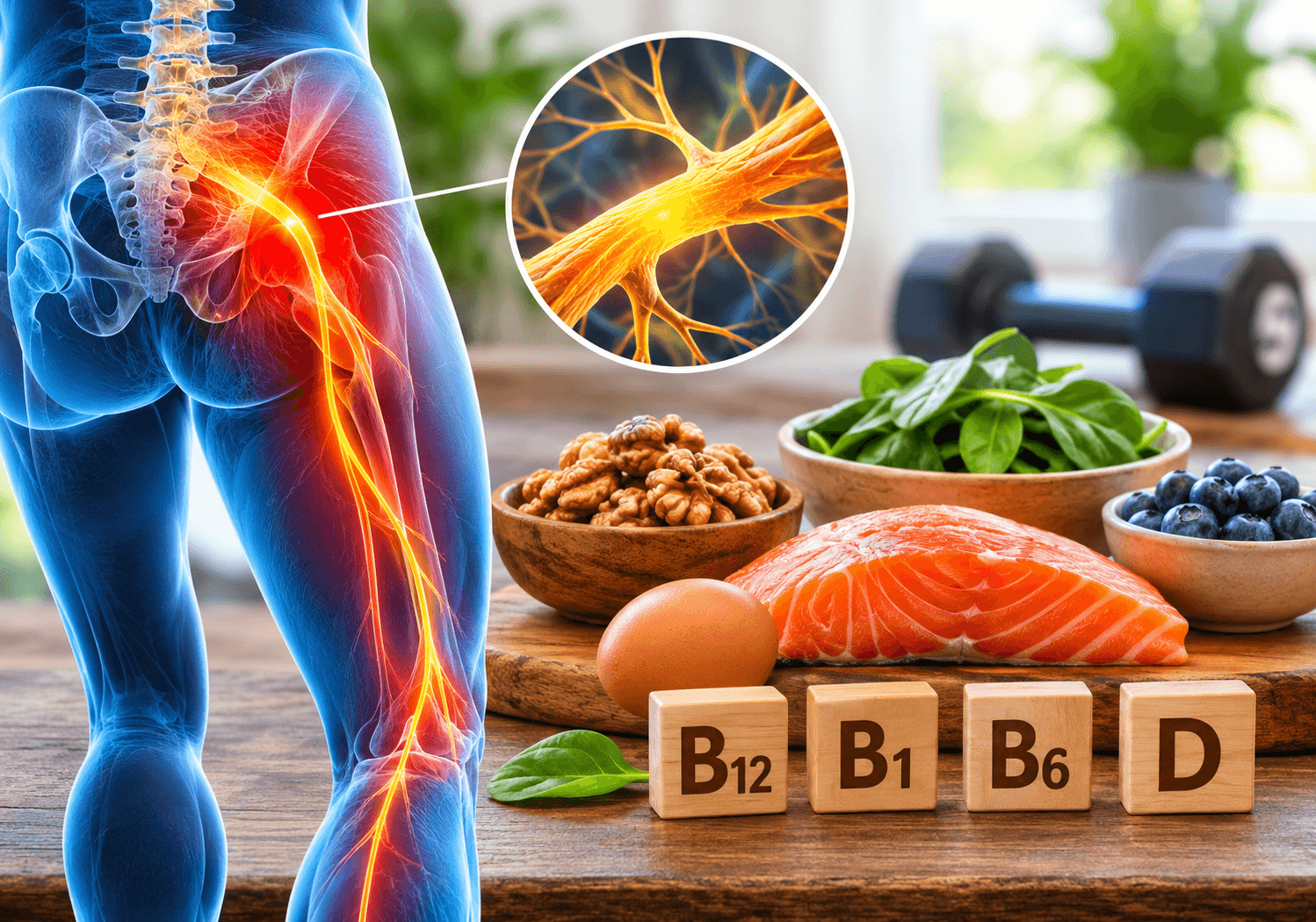
Sciatic nerve pain can stop you right in your tracks. When that sharp, shooting ache travels from your lower back down through your glute and into your calf, even standing up out of a chair feels like a heavy squat. As a strength and conditioning coach, I see active lifters, runners, and desk workers struggle with nerve compression every month. While targeted movement is essential for long-term relief, your body also needs the right raw materials to rebuild irritated neural tissue. Exploring the right vitamins for sciatic nerve pain can help support your body’s natural nerve repair process, calm hyperactive pain signals, and speed up your recovery time.
Before changing your daily supplement routine, remember that back and leg pain requires a clear diagnosis. You should always consult with your doctor or physical therapist before starting new high-dose supplements, especially if you take prescription medications.
Quick Answer
The most effective vitamins for sciatic nerve pain are neurotropic B vitamins (especially B12 as methylcobalamin, B1, and B6), vitamin D3, and magnesium. These nutrients help restore the protective myelin sheath around damaged nerves, reduce neuroinflammation, and relax tight surrounding muscles like the piriformis. Pair these supplements with gentle nerve flossing and spinal stabilization for the best results.

Understanding Sciatica: Why Micronutrients Matter for Nerve Recovery
Sciatica is not a standalone disease. It is a symptom of mechanical pressure or chemical inflammation affecting the sciatic nerve root in your lumbar spine. As the Mayo Clinic explains regarding sciatica causes, this discomfort usually happens when a herniated lumbar disc, bone spur, or tight piriformis muscle compresses part of the nerve.
When a nerve gets pinched, two distinct problems occur:
- Mechanical ischemia: Blood supply to the nerve decreases, starving the cells of oxygen and essential nutrients.
- Myelin breakdown: The insulating layer of fatty protein around the nerve—called the myelin sheath—starts to fray like an old electrical cord.
When the myelin sheath breaks down, normal signals become erratic. Light pressure turns into burning pain, numbness, or tingling sensations down your leg.
This is where nutrition plays an active role. Medication can dull the brain’s perception of pain, but specific micronutrients work at the cellular level. They help synthesize phospholipids, maintain axonal health, and clear local oxidative stress. Just as you need amino acids to rebuild muscle tissue after a tough lifting session, your peripheral nervous system relies on specific micronutrients to rebuild damaged nerve coatings. Learning how vitamins support metabolism during deficiency shows that without baseline nutritional support, tissues struggle to repair themselves under physical stress.
10 Best Vitamins for Sciatic Nerve Pain and Nerve Recovery
Targeting nerve irritation requires an organized strategy. Below are the 10 most researched vitamins, minerals, and supportive compounds that help rebuild irritated nerve pathways and reduce shooting pain.
1. Vitamin B12 (Methylcobalamin): Myelin Sheath Regeneration
Vitamin B12 is the primary nutrient for peripheral nerve health. It is an essential cofactor in the synthesis of myelin, the protective sheath that insulates the sciatic nerve. Without adequate B12, your body cannot produce the fatty coatings that protect nerve fibers from mechanical wear and tear.
A clinical review indexed in PubMed Central on neurotropic B vitamins notes that B12 supports axonal regeneration, promotes nerve cell survival, and reduces neuropathic symptoms. When choosing a supplement, look for methylcobalamin rather than cyanocobalamin. Methylcobalamin is already in its bioactive form, meaning your body absorbs and uses it more easily.
- Best Form: Methylcobalamin (sublingual lozenge or liquid drops).
- Typical Dose: 1,000 mcg to 2,000 mcg daily during flare-ups.
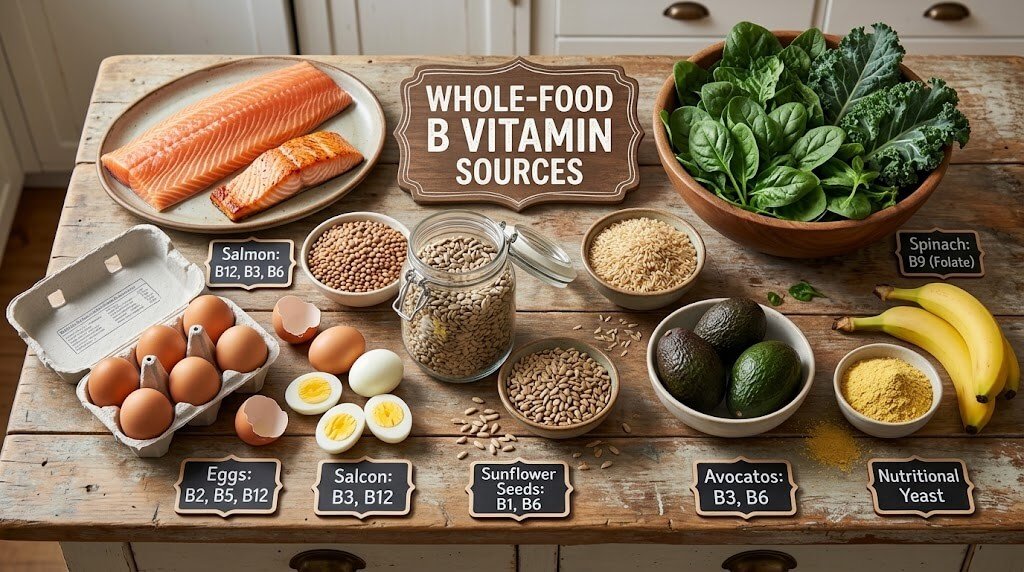
- Dietary Sources: Beef liver, salmon, sardines, eggs, and fortified nutritional yeast.
- Coach’s Note: If you eat a plant-based diet, B12 supplementation is essential. Understanding the systemic role of vitamin B12 highlights how crucial this nutrient is for daily cellular function.

2. Vitamin B1 (Thiamine / Benfotiamine): Axonal Energy Production
Your nerves consume large amounts of glucose to maintain electrical gradients across their cell membranes. Vitamin B1 (thiamine) turns carbohydrates into cellular energy inside nerve cells. When thiamine levels drop, nerve cells suffer an energy crisis that makes them hypersensitive to minor pressure.
Benfotiamine is a fat-soluble form of thiamine that passes through nerve cell membranes much better than standard water-soluble thiamine. Research from NCBI on benfotiamine in neuropathy shows that fat-soluble thiamine improves nerve conduction velocity and relieves shooting neuropathic discomfort.
- Best Form: Benfotiamine.
- Typical Dose: 150 mg to 300 mg daily.
- Dietary Sources: Sunflower seeds, pork chops, black beans, and acorn squash.
- Coach’s Note: Benfotiamine works well when combined with B12 because it fuels the cellular energy engines needed to rebuild nerve tissue.
3. Vitamin B6 (Pyridoxine): Neurotransmitter Balance
Vitamin B6 helps your body create critical neurotransmitters like GABA (gamma-aminobutyric acid). GABA acts as your nervous system’s internal brake pedal, calming down hyperactive nerve signals before they reach your brain.
When searching for effective vitamins for sciatic nerve pain, B6 is often included in clinical B-complex blends. However, you must handle B6 with care. While mild deficiencies make nerves overly sensitive, taking too much B6 can cause sensory neuropathy.
- Best Form: Pyridoxal-5-Phosphate (P5P), the active enzymatic form.
- Typical Dose: 25 mg to 50 mg daily (keep total daily intake below 100 mg).
- Dietary Sources: Chickpeas, yellowfin tuna, chicken breast, and potatoes.
- Coach’s Note: Always read supplement labels carefully. Avoid products that contain more than 100 mg of standard pyridoxine HCl per serving.
4. Vitamin D3 (Cholecalciferol): Reducing Neuroinflammation
Vitamin D acts more like a neuro-steroid hormone than a basic vitamin. Receptors for vitamin D are located throughout your spinal cord and peripheral nerves. Low levels of vitamin D are directly linked to chronic lower back pain and heightened nerve sensitivity.
According to research published by Harvard Health on vitamin D and pain management, correcting a vitamin D deficiency can lower inflammatory cytokines and improve pain tolerance in patients with persistent musculoskeletal pain. When your levels are low, your body produces higher amounts of inflammatory markers that make irritated disc tissue more painful.
- Best Form: Vitamin D3 (cholecalciferol) paired with Vitamin K2 (MK-7) for proper calcium absorption.
- Typical Dose: 2,000 IU to 5,000 IU daily (adjusted based on regular blood testing).
- Dietary Sources: Direct sunlight exposure, cod liver oil, mackerel, and fortified dairy.
- Coach’s Note: Have your doctor check your 25-hydroxy vitamin D levels. Aim for a healthy range between 40 and 60 ng/mL.
5. Magnesium: Calming Muscular Spasms Around the Nerve
While magnesium is technically a mineral, it is one of the most effective partners for vitamins for sciatic nerve pain. The sciatic nerve runs directly under—and sometimes through—the piriformis muscle in your glute. When that muscle spasms, it pinches the nerve, creating deep radiating leg pain.
As noted by the NIH Office of Dietary Supplements on magnesium, magnesium regulates muscle contractions and acts as a natural calcium blocker, helping muscle fibers relax after firing. It also blocks NMDA receptors in your spinal cord, which calms down exaggerated pain signaling.
- Best Form: Magnesium Glycinate (for muscle relaxation and sleep) or Magnesium Malate (for day-time nerve energy).
- Typical Dose: 200 mg to 400 mg taken in the evening.
- Dietary Sources: Pumpkin seeds, spinach, dark chocolate (85%+), and almonds.
- Coach’s Note: Avoid magnesium oxide. It has poor absorption rates and often causes digestive issues instead of relaxing your muscles.
6. Alpha-Lipoic Acid (ALA): Clearing Nerve Free Radicals
Alpha-lipoic acid is a fat- and water-soluble antioxidant that enters nerve tissue easily. When your sciatic nerve is pinched, stagnant blood flow generates harmful free radicals that damage delicate nerve structures.
A landmark clinical trial published in PubMed on alpha-lipoic acid for neuropathic pain showed that oral intake of 600 mg of ALA daily significantly reduced burning pain, numbness, and tingling. It works by scavenging free radicals and improving local microcirculation to damaged nerve fibers.
- Best Form: R-Alpha-Lipoic Acid (R-ALA), the naturally occurring, bioactive isomer.
- Typical Dose: 300 mg to 600 mg daily on an empty stomach.
- Dietary Sources: Organ meats, broccoli, spinach, and Brussels sprouts (though supplement doses are far higher than food sources).
- Coach’s Note: Take ALA about 30 minutes before breakfast. If you experience an upset stomach, switch to taking it with a small meal.
7. Vitamin C (Ascorbic Acid): Supporting Disc Collagen and Tissue Repair
Vitamin C does far more than support your immune system; it is a required building block for collagen synthesis. Your spinal discs are made of tough rings of cartilage (the annulus fibrosus) that surround a soft inner core. When discs bulge or tear, they trigger the inflammatory response that irritates the sciatic nerve.
Research indexed by the National Institutes of Health on collagen synthesis demonstrates that vitamin C plays an active role in collagen cross-linking and connective tissue healing. Getting enough vitamin C gives your spinal discs the support they need to heal after a tear or bulge.
- Best Form: Pure ascorbic acid or buffered sodium ascorbate.
- Typical Dose: 500 mg to 1,000 mg daily.
- Dietary Sources: Bell peppers, kiwis, strawberries, oranges, and broccoli.
- Coach’s Note: Split your vitamin C into two smaller daily doses (e.g., 500 mg morning and night) to keep your blood levels steady.
8. Vitamin E (Mixed Tocopherols): Protecting Nerve Membranes
Every nerve cell is wrapped in a delicate membrane made of polyunsaturated fatty acids. These fats are vulnerable to lipid peroxidation—a chemical process where free radicals damage cell walls. Vitamin E settles directly into fatty tissues, protecting cell membranes from oxidative stress.
Clinical research from the Cleveland Clinic on peripheral nerve protection emphasizes that reducing surrounding tissue oxidation helps relieve localized nerve entrapment symptoms. Using vitamin E alongside other antioxidant vitamins for sciatic nerve pain helps shield regenerating axons from ongoing inflammation.
- Best Form: Full-spectrum mixed tocopherols and tocotrienols (d-alpha, d-beta, d-gamma, d-delta).
- Typical Dose: 200 IU to 400 IU daily with a meal containing healthy fats.
- Dietary Sources: Avocados, wheat germ oil, hazelnuts, and extra-virgin olive oil.
- Coach’s Note: Avoid cheap synthetic versions labeled “dl-alpha-tocopherol.” Always look for natural “d-” forms on the ingredient panel.
9. Omega-3 Fatty Acids (EPA and DHA): Reducing Chronic Inflammation
While technically classified as essential fatty acids, EPA and DHA work alongside dietary vitamins to resolve chronic pain. These fats serve as building blocks for specialized molecules called resolvins and protectins, which shut down runaway inflammatory responses.
A study in Surgical Neurology International on omega-3 fatty acids for spinal pain found that high-dose, purified omega-3 fish oil reduced disc-related back pain as effectively as conventional nonsteroidal anti-inflammatory drugs (NSAIDs), without causing stomach irritation.
- Best Form: Molecularly distilled wild fish oil or concentrated algal oil.
- Typical Dose: 2,000 mg to 3,000 mg of combined EPA/DHA daily.
- Dietary Sources: Wild Alaskan salmon, mackerel, herring, and sardines.
- Coach’s Note: Take your fish oil with your largest meal of the day to maximize absorption and prevent fishy burps.
10. Curcumin (with Piperine): Natural Cytokine Suppression
Curcumin is the active compound found in turmeric root. While it is an herbal extract rather than a traditional vitamin, it works well alongside nutrients that support energy metabolism and tissue repair. Curcumin helps block the NF-kB pathway, an internal switch that triggers inflammatory molecules like TNF-alpha and IL-6 around compressed nerve roots.
Data from the National Center for Complementary and Integrative Health shows that bioavailable curcumin extracts help reduce systemic inflammatory markers and calm persistent joint and nerve irritation.
- Best Form: Curcumin standardized to 95% curcuminoids, combined with piperine (black pepper extract) or a phospholipid delivery system.
- Typical Dose: 500 mg to 1,000 mg daily with food.
- Dietary Sources: Fresh or powdered turmeric root cooked in healthy cooking oils.
- Coach’s Note: Raw turmeric powder has low bioavailability on its own. Always pair it with black pepper and healthy fats to help your gut absorb it.
Comparison of Top Nutrients for Sciatic Nerve Support
To help you compare your options, this quick-reference table summarizes how each nutrient works, its recommended form, and why it matters for nerve health.
| Nutrient | Primary Mechanism | Optimal Form | Typical Daily Dose | Primary Benefit |
| Vitamin B12 | Rebuilds myelin sheath | Methylcobalamin | 1,000–2,000 mcg | Restores nerve insulation |
| Vitamin B1 | Boosts axonal glucose energy | Benfotiamine | 150–300 mg | Improves conduction speed |
| Vitamin B6 | Balances calming neurotransmitters | Pyridoxal-5-Phosphate | 25–50 mg | Lowers pain hypersensitivity |
| Vitamin D3 | Downregulates pain cytokines | D3 + K2 | 2,000–5,000 IU | Reduces deep back ache |
| Magnesium | Relaxes muscular tightness | Glycinate / Malate | 200–400 mg | Eases piriformis tension |
| Alpha-Lipoic Acid | Clears free radicals | R-ALA | 300–600 mg | Eases burning and tingling |
| Vitamin C | Supports disc collagen | Ascorbic acid | 500–1,000 mg | Helps repair disc tissue |
| Vitamin E | Shields lipid membranes | Mixed tocopherols | 200–400 IU | Guards against nerve stress |
| Omega-3s | Reduces inflammatory chemicals | Purified EPA/DHA | 2,000–3,000 mg | Relieves nerve root swelling |
| Curcumin | Inhibits inflammatory pathways | Curcumin + Piperine | 500–1,000 mg | Eases radiating leg pain |
Reviewing these nutrients alongside essential vitamins for metabolic repair can help you build a well-rounded recovery plan.
How to Combine Vitamins for Sciatic Nerve Pain with Active Movement
Relying entirely on pills and powders will not correct an active disc bulge or tight piriformis muscle. Taking vitamins for sciatic nerve pain supplies your body with the nutrients it needs to repair tissue, but movement provides the mechanical stimulus that pumps fresh, oxygenated blood into the nerve bed.
Here is how to combine your nutritional routine with gentle mobility exercises to free up trapped nerve tissue.
1. Seated Sciatic Nerve Flossing (Neural Gliding)
Nerves are designed to slide and glide through surrounding muscles and fascia. When surrounding tissues become inflamed, the nerve can stick to nearby structures, causing sharp pain whenever you move. Nerve flossing gently pulls the nerve back and forth through its pathway to break up adhesions without irritating sensitive nerve roots.
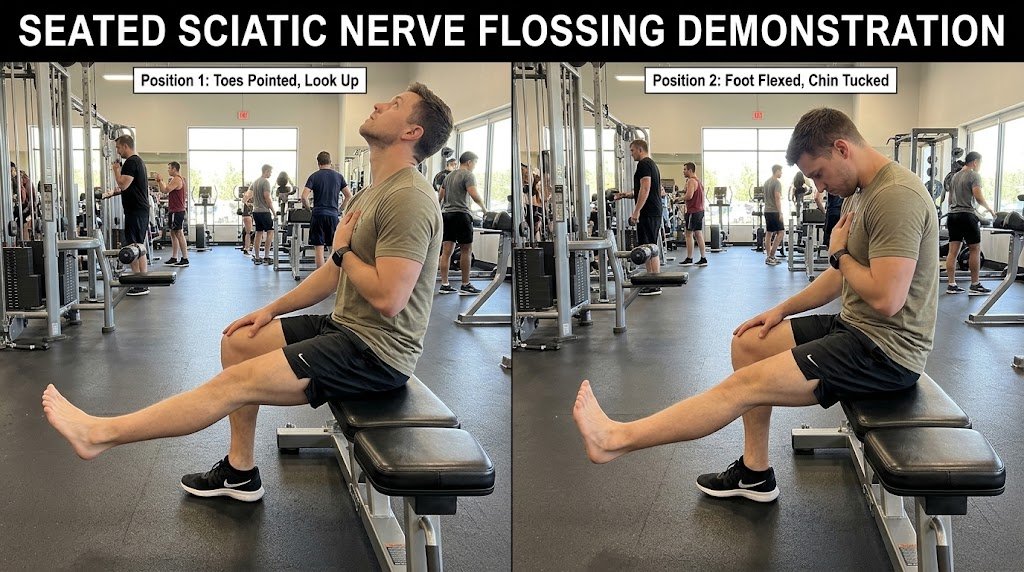
- Sit tall on a sturdy chair with your knees bent at 90 degrees and both feet flat on the floor.
- Slowly extend your affected leg straight out in front of you while tipping your head back toward the ceiling. Point your toes away from you.
- Pause for one second, then lower your foot back down while tucking your chin toward your chest.
- Perform this continuous, smooth gliding motion for 10 to 12 slow repetitions per side.
- Regression (Easier): Perform the movement lying on your back with your hip supported at 90 degrees, moving only your lower leg through a smaller range of motion.
- Progression (Harder): Flex your ankle back toward your face as you extend your knee, adding gentle tension to the nerve tract. Only advance to this step once your acute pain has subsided.
Coach’s Tip: The “Two-Second Rule” for Nerve Mobilization
Never hold a nerve stretch for a long time. Unlike tight hamstring muscles, irritated nerves react poorly to sustained, forceful stretching. Think of nerve flossing like dental floss: you want a smooth, gentle back-and-forth movement. If your pain spikes above a 3 out of 10 during the exercise, stop immediately and reduce your range of motion.
2. Prone Press-Up (McKenzie Extension)
If your sciatica stems from a bulging or herniated lumbar disc, backward bending can help move disc material away from sensitive spinal nerve roots.
- Lie flat on your stomach on an exercise mat with your hands placed under your shoulders, as if preparing for a push-up.
- Relax your glutes, hips, and lower back completely.
- Press through your palms to gently raise your chest off the floor, keeping your pelvis flat against the mat.
- Straighten your arms only as far as comfortable without feeling pinch sensations in your spine. Hold for two seconds at the top, then slowly lower down.
- Complete 8 to 10 smooth repetitions.
- Regression: Rest on your forearms in a relaxed sphinx position for 30 to 45 seconds instead of pressing all the way up onto your hands.
- Progression: Exhale fully at the top of the press-up to sink deeper into lumbar extension, allowing your lower back to drop toward the floor.
Common Mistake: Squeezing the Glutes During Back Extensions
Many people make the mistake of flexing their glutes and hamstrings when pressing upward. Doing this increases tension in the lower back, which can compress the nerve root. Keep your lower body completely relaxed so your lumbar spine can extend naturally.
3. The Bird-Dog (Core Stability Without Lumbar Flexion)
Once your shooting pain starts to settle, you need to build core stiffness to keep your lumbar spine stable during daily movements. The bird-dog exercise trains the deep spinal stabilizers without placing compressive loads on irritated discs.
- Start on all fours with your hands placed directly under your shoulders and your knees directly under your hips.
- Brace your abdominal muscles as if preparing to take a light punch to your stomach.
- Slowly reach your right arm straight forward while kicking your left leg straight back behind you, keeping both parallel to the floor.
- Hold for three seconds, focusing on keeping your hips level and avoiding any arching in your lower back.
- Return to the starting position with control, then repeat with your left arm and right leg. Complete 6 reps per side.
- Regression: Raise only one arm or one leg at a time until you build reliable balance and hip stability.
- Progression: Draw an imaginary square in the air with your raised hand and foot before returning to the floor to challenge your rotational stability.
7-Day Sample Routine: Nutrition, Supplements, and Movement
To get the most out of your supplements, pair them with consistent low-impact movement and steady hydration throughout the week. Walking helps pump nutrient-rich blood into spinal tissues, while deep sleep lowers systemic inflammation to support faster cellular repair.
| Day | Morning Nutrition & Supplements | Movement Session (15–20 Mins) | Afternoon / Evening Supplements |
| Mon | B-Complex (B1/B6/B12), Vitamin D3 (3,000 IU), 16 oz water | 10-min easy walk + Seated Nerve Flossing (2 sets of 10 reps) | Magnesium Glycinate (300 mg) + Omega-3s (2,000 mg) |
| Tue | R-ALA (300 mg before breakfast), Vitamin C (500 mg) | Prone Press-Ups (3 sets of 8 reps) + Gentle pelvic tilts | Curcumin with piperine (500 mg) with dinner |
| Wed | B-Complex, Vitamin D3, 16 oz water with lemon | 15-min brisk walk + Bird-Dog stability work (3 sets of 5 reps) | Magnesium Glycinate (300 mg) + Omega-3s (2,000 mg) |
| Thu | R-ALA (300 mg), Vitamin C (500 mg) | Seated Nerve Flossing (2 sets of 10) + McKenzie Sphinx hold | Curcumin (500 mg) + Mixed Tocopherols (200 IU) |
| Fri | B-Complex, Vitamin D3, balanced whole-food breakfast | 15-min flat terrain walk + Prone Press-Ups (3 sets of 8 reps) | Magnesium Glycinate (400 mg) before bed |
| Sat | Full micronutrient stack with eggs and avocado | Light mobility flow: Cat-Cow, Bird-Dog, Glute Bridges | Omega-3s (2,000 mg) + Curcumin with dinner |
| Sun | R-ALA (300 mg), plenty of water, light anti-inflammatory meals | Easy 20-min recovery walk + gentle spinal decompressions | Magnesium Glycinate (300 mg) + restful sleep routine |

Combining these habits with vitamins for sustained energy helps keep your body fueled and ready to handle daily activities while your nerve heals.
Safety, Toxicity Risks, and Who Should Be Careful
Natural supplements carry real biological effects. Taking the wrong forms or unsafe doses can cause complications or interact with prescription medications.
1. Vitamin B6 Neurotoxicity
The most critical safety warning involves vitamin B6. While low levels of B6 can lead to nerve pain, consuming excessive amounts (often over 100 mg to 200 mg daily for several months) can actually cause sensory peripheral neuropathy. Never combine multiple daily supplements that all contain high levels of B6. If you notice unusual tingling in your fingers or toes, stop taking B6 supplements and speak with your doctor right away.
2. Blood Thinning Interactions
Both high-dose omega-3 fish oils (over 3,000 mg daily) and concentrated curcumin thin the blood and slow down clotting. If you take blood-thinning medications like warfarin or aspirin, or if you have an upcoming surgery, consult your doctor before using these supplements.
3. Diabetes and Blood Sugar Drops
Alpha-lipoic acid improves insulin sensitivity and helps shuttle glucose into cells. While this is great for overall metabolic health, combining ALA with prescription diabetes medications can cause blood sugar levels to drop too low. Monitor your blood glucose closely if you take both. Choosing supplements without harsh stimulants helps keep your heart rate and blood pressure stable while recovering.
Frequently Asked Questions About Vitamins for Sciatic Nerve Pain
What is the single best vitamin for sciatic nerve pain?
Vitamin B12 in its bioactive methylcobalamin form is generally considered the most effective option. It directly supports myelin sheath repair, improves nerve conduction speed, and helps protect exposed nerve fibers from ongoing inflammation.
How long does it take for vitamins to help sciatica?
Nerve tissue heals slowly, often at a rate of roughly 1 millimeter per day. Most people need to take their supplements consistently for 4 to 8 weeks alongside daily mobility work before noticing a steady reduction in shooting pain and numbness.
Can a vitamin D deficiency cause sciatic nerve pain?
A vitamin D deficiency does not pinch the nerve on its own, but it makes nearby tissues much more sensitive to pain. Low vitamin D increases circulating inflammatory markers, which makes a disc bulge or tight piriformis feel far more painful than it would otherwise.
Is magnesium good for sciatica symptoms?
Yes. Magnesium glycinate helps relax tight muscles that press against the sciatic nerve, such as the piriformis. It also calms NMDA pain receptors in your spinal cord, which helps turn down sharp, radiating pain signals.
Can taking too many vitamins make sciatic nerve pain worse?
Yes, especially if you take too much vitamin B6 (pyridoxine). Doses over 100 mg per day over an extended period can cause sensory neuropathy. Stick to moderate, balanced doses of B vitamins and review all your supplement labels to stay within safe daily limits.
Should I take these vitamins with food?
Fat-soluble nutrients like vitamins D3 and E, omega-3s, and curcumin absorb best when taken with meals that contain healthy fats like eggs, avocado, or olive oil. Alpha-lipoic acid, on the other hand, absorbs best when taken on an empty stomach about 30 minutes before eating.
Conclusion: Long-Term Management of Sciatic Nerve Discomfort
Overcoming sciatic nerve pain requires patience, consistent movement, and proper nutritional support. Using targeted vitamins for sciatic nerve pain—especially neurotropic B vitamins, vitamin D3, and magnesium—provides the essential building blocks your body needs to rebuild damaged myelin, calm overactive nerve signals, and relax tight surrounding muscles.
Remember that nutrition is only one half of your recovery plan. Combine your daily supplements with gentle seated nerve flossing, safe core-stabilization exercises like the bird-dog, and short, frequent daily walks. By treating both the mechanical pressure and the internal inflammation, you can help calm your irritated nerve pathways and return to your favorite workouts safely.