If you are feeling constantly fatigued, struggling to recover from workouts, or noticing a sluggish metabolic rate, a micronutrient shortfall might be the culprit. Understanding exactly what vitamins support metabolism when you have a deficiency is critical for both your daily energy and your long-term fitness goals. As a strength coach, I see clients hit frustrating plateaus not because of poor programming, but because their cellular engine lacks the right micronutrients to fire efficiently.
Your metabolism is not just about weight loss; it is the sum of all chemical reactions that keep you alive, moving, and recovering. When key vitamins are missing, these reactions slow down. This guide breaks down the science, the specific nutrients you need, and how to adjust your training while you get your levels back on track.
Quick Answer
The B-complex vitamins (B1, B2, B3, B5, B6, B7, B9, B12), vitamin D, and key minerals like iron and magnesium are the primary nutrients that support cellular energy production. If you have a deficiency, restoring these levels through diet or targeted supplementation can help normalize your basal metabolic rate and reduce exercise fatigue. Always consult a doctor for blood testing before starting high-dose supplements.
The Science: How Vitamins Drive Your Metabolic Engine
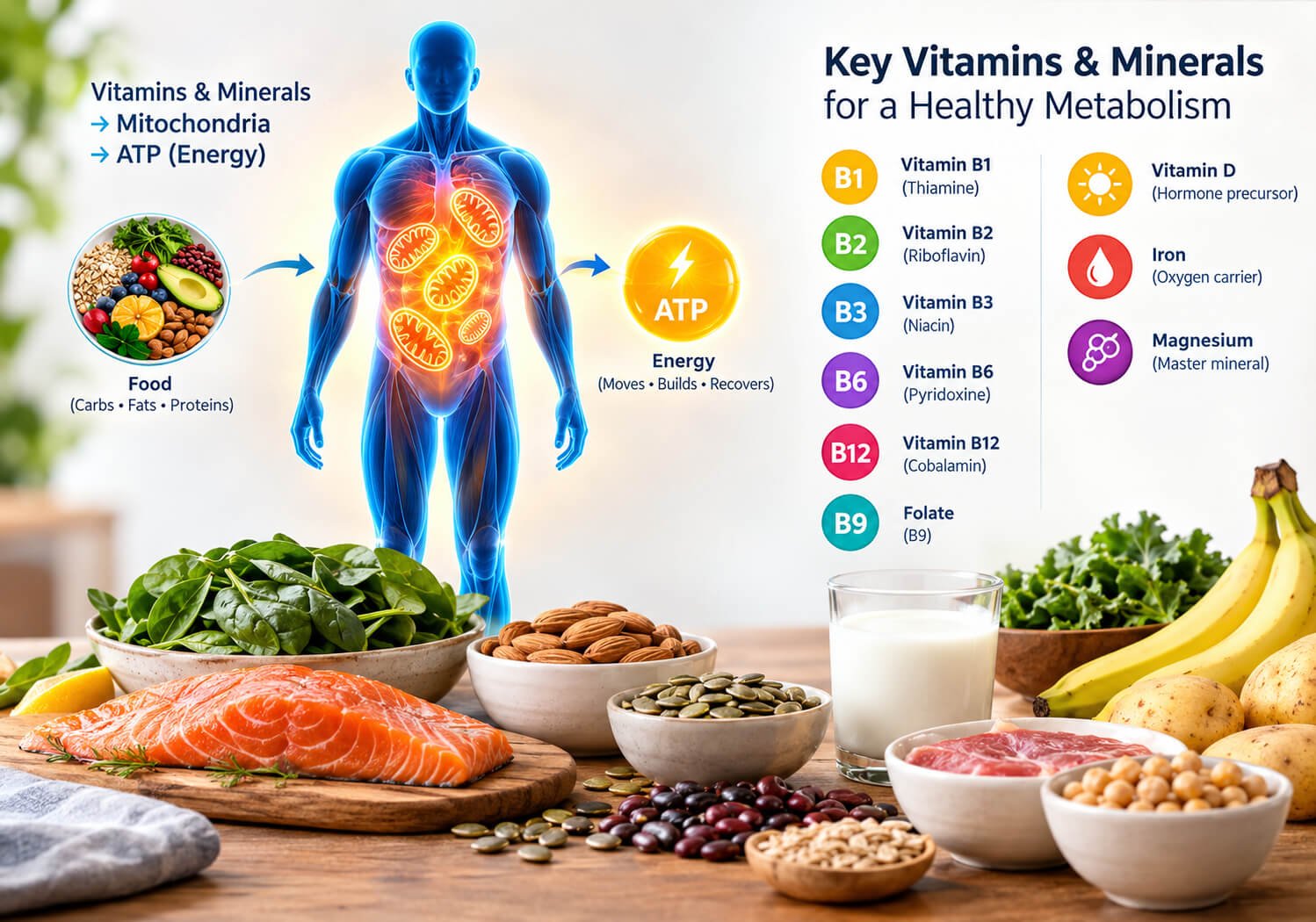
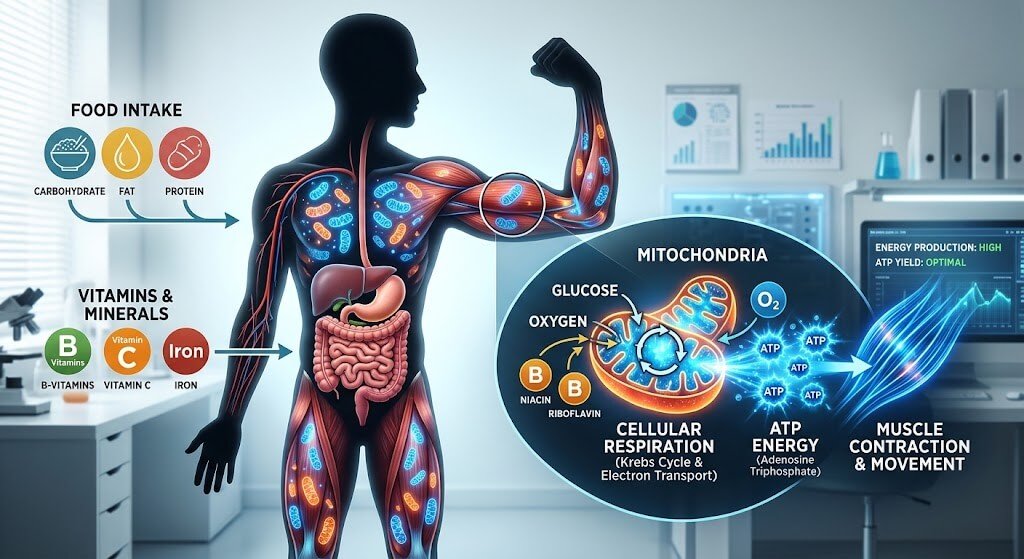
Metabolism is often misunderstood as a simple calorie-burning switch. In reality, it is a complex network of enzymatic reactions occurring primarily in your mitochondria, the powerhouses of your cells. These reactions convert the macronutrients you eat (carbohydrates, fats, and proteins) into adenosine triphosphate (ATP), the usable energy currency of your body.
Vitamins and minerals act as essential coenzymes and cofactors in this process. Without them, the enzymes cannot function. For example, the Cleveland Clinic explains that metabolism relies heavily on micronutrients to break down food and build cellular structures. When you lack these specific nutrients, your body cannot produce ATP efficiently.
This inefficiency manifests as a lower basal metabolic rate (BMR), persistent fatigue, and poor workout performance. Your body essentially goes into energy-conservation mode. Understanding what affects metabolism and body weight requires looking beyond just calories and examining your micronutrient status.
What Vitamins Support Metabolism When You Have a Deficiency?
If you suspect a shortfall, you need to know which specific nutrients to target. Below are the most critical vitamins and minerals that directly influence metabolic pathways, along with practical coaching insights on how a deficiency feels in the gym.
1. Vitamin B1 (Thiamine)
Thiamine is fundamental for converting carbohydrates into glucose, which your body uses for energy. It is a key coenzyme in the Krebs cycle (citric acid cycle), the central metabolic pathway for ATP production.
- Signs of Deficiency: Unexplained fatigue, muscle weakness, and irritability. In severe cases, it can cause neuropathy.
- Food Sources: Pork chops, sunflower seeds, black beans, and fortified whole grains.
- Coach’s Note: If you are a high-carb athlete (like a runner or CrossFitter) and feel heavy-legged during squats or sprints, thiamine depletion might be a factor.
2. Vitamin B2 (Riboflavin)
Riboflavin is required for the metabolism of fats, drugs, and steroids. It helps produce the coenzymes FAD and FMN, which are vital for mitochondrial energy production and combating oxidative stress after intense training.
- Signs of Deficiency: Cracks at the corners of the mouth, sore throat, and sensitivity to light.
- Food Sources: Almonds, eggs, lean meats, and green leafy vegetables.
- Coach’s Note: Riboflavin works synergistically with other B vitamins. Isolating it without addressing the whole B-complex is rarely effective.
3. Vitamin B3 (Niacin)
Niacin is a precursor to NAD and NADP, coenzymes involved in over 400 enzymatic reactions, most of which are related to cellular energy metabolism. It is crucial for translating the food you eat into usable fuel.
- Signs of Deficiency: Pellagra (in severe cases), characterized by dermatitis, diarrhea, and dementia. Mild deficiency causes fatigue and poor appetite.
- Food Sources: Chicken breast, tuna, turkey, and peanuts.
- Coach’s Note: Niacin can cause a temporary “flush” (red, warm skin) at high supplemental doses. This is harmless but can be uncomfortable during a workout.
4. Vitamin B6 (Pyridoxine)
Vitamin B6 is involved in more than 100 enzyme reactions, mostly concerned with protein metabolism. It is essential for glycogen breakdown, meaning it helps your muscles access stored carbohydrates during a tough set.
- Signs of Deficiency: Microcytic anemia, depression, confusion, and weakened immune function.
- Food Sources: Chickpeas, salmon, potatoes, and bananas.
- Coach’s Note: Because B6 is heavily involved in protein metabolism, athletes with high protein intake metabolism weight loss goals must ensure their B6 levels are adequate to process that protein efficiently.
5. Vitamin B12 (Cobalamin) and Folate (B9)
These two work together to form red blood cells and synthesize DNA. B12 is also critical for nerve function and fatty acid metabolism. A deficiency here directly reduces the oxygen-carrying capacity of your blood, tanking your metabolic efficiency and aerobic capacity.
- Signs of Deficiency: Megaloblastic anemia, severe fatigue, weakness, numbness in hands and feet, and balance issues.
- Food Sources: B12 is found almost exclusively in animal products (clams, beef liver, trout, salmon). Folate is abundant in dark leafy greens, beans, and fortified cereals.
- Coach’s Note: Vegans and vegetarians are at a high risk for B12 deficiency. If you follow a plant-based diet, supplementation is not optional; it is a metabolic necessity.

6. Vitamin D
While technically a hormone precursor, vitamin D is classified as a vitamin. It plays a surprising role in metabolic health, influencing insulin sensitivity and mitochondrial function. Research from the NIH Office of Dietary Supplements notes that vitamin D receptors are present in almost every tissue, including skeletal muscle.
- Signs of Deficiency: Bone pain, muscle weakness, frequent illnesses, and depressed mood.
- Food Sources: Fatty fish (salmon, mackerel), fortified dairy, and egg yolks. Sunlight exposure is the primary natural source.
- Coach’s Note: If you train indoors year-round and live above the 37th parallel north, your vitamin D levels are likely suboptimal without supplementation.
7. Iron (The Oxygen Carrier)
Iron is a mineral, but it must be discussed alongside vitamins because it is the core component of hemoglobin, the protein that carries oxygen in your blood. It is also part of myoglobin, which supplies oxygen to your muscles. Without iron, your mitochondria cannot perform oxidative phosphorylation, effectively halting aerobic metabolism.
- Signs of Deficiency: Extreme fatigue, pale skin, cold hands and feet, brittle nails, and shortness of breath during mild exertion.
- Food Sources: Red meat, spinach, lentils, and fortified cereals. Pair plant-based iron with vitamin C to enhance absorption.
- Coach’s Note: Female athletes, especially those with heavy menstrual cycles, are at a high risk for iron deficiency. Do not guess with iron; get a ferritin test.
8. Magnesium (The Master Mineral)
Magnesium is a cofactor in more than 300 enzyme systems that regulate diverse biochemical reactions, including protein synthesis, muscle and nerve function, and glucose control. It is directly required for the creation of ATP.
- Signs of Deficiency: Muscle cramps, twitches, fatigue, irregular heartbeat, and poor sleep quality.
- Food Sources: Pumpkin seeds, spinach, black beans, and almonds.
- Coach’s Note: Sweating during intense workouts depletes magnesium. If you are cramping during high-rep sets or struggling to relax post-workout, magnesium is a prime suspect.

Signs Your Training Is Suffering from a Micronutrient Deficiency
As a coach, I look for specific red flags that suggest a client’s metabolism is being hindered by a nutritional gap, rather than just poor programming. If you experience two or more of the following, it is time to investigate your micronutrient status:
- Prolonged Recovery: Normal muscle soreness lasts 24 to 72 hours. If you are still severely sore after 4 days, your cellular repair processes are stalled.
- Elevated Resting Heart Rate (RHR): A sudden, unexplained increase of 5–10 beats per minute in your morning RHR can indicate your body is working overtime to compensate for low oxygen delivery (often tied to iron or B12).
- Heavy, Lead-Like Limbs: If a weight that usually feels like 50 lb (22.6 kg) suddenly feels like 100 lb (45.3 kg), your muscles are likely struggling with glycogen breakdown or ATP production.
- Brain Fog During Complex Movements: Exercises like the clean and jerk or heavy squats require intense neural drive. B-vitamin deficiencies directly impair nerve function and cognitive sharpness.
- Unexplained Weight Stagnation: If you are in a caloric deficit and exercising consistently, but the scale and body measurements (in inches/cm) are not moving, your basal metabolic rate may have downregulated due to a nutrient shortfall.
Learning how to support metabolism naturally for weight management starts with ensuring these foundational nutrients are present in adequate amounts.
How to Adjust Your Workouts During a Deficiency
Training hard while deficient is like driving a car with the parking brake on. You will cause excessive wear and tear without gaining speed. If you suspect a deficiency, you must modify your training until bloodwork confirms your status and you begin correction.
The Regression: Training While Fatigued
When your metabolic engine is compromised, your goal shifts from adaptation to maintenance and recovery.
- Reduce Volume: Cut your total working sets by 30% to 50%. If you normally do 4 sets of 8 reps, drop to 2 or 3 sets.
- Extend Rest Periods: Increase rest between sets from the standard 60–90 seconds to 2–3 minutes. This allows your limited ATP stores to replenish fully.
- Lower Intensity: Keep the weight moderate. Avoid testing your 1-rep max (1RM). Focus on perfect form and controlled tempo (e.g., 3 seconds down, 1 second up).
- Prioritize Sleep: How sleep affects metabolism and weight management is profound. Aim for 8–9 hours per night to maximize natural hormonal recovery.
The Progression: Returning to Baseline
Once you have addressed the deficiency through diet or supplementation and your energy returns:
- Week 1: Return to 75% of your normal volume. Monitor how your joints and muscles feel 24 hours later.
- Week 2: If recovery is normal, return to 100% of your programmed volume.
- Week 3: You can safely begin progressive overload again, adding small increments of weight (e.g., 5 lb or 2.2 kg) to your main lifts.
Coach’s Tip
Do not try to “sweat out” a deficiency with excessive cardio. High-volume cardiovascular work increases the demand for iron, B vitamins, and electrolytes. If you are deficient, aggressive cardio will only dig the metabolic hole deeper. Stick to light, 20-minute walks (about 1 mile or 1.6 km) to promote blood flow without taxing your system.
Common Mistake
Self-Diagnosing and Mega-Dosing. Many lifters feel tired and immediately buy a high-dose B-complex or iron supplement. While B vitamins are water-soluble and generally safe, mega-dosing iron without a confirmed deficiency can lead to iron toxicity, which damages the liver and heart. Always get a blood test first.

How to Get Tested and Safely Correct a Deficiency
You cannot manage what you do not measure. If you suspect your metabolism is dragging due to a nutrient gap, follow these practical steps.
Step 1: Request Specific Blood Tests
Go to your primary care physician and request a comprehensive metabolic panel alongside specific micronutrient markers. Do not just ask for a “routine checkup.” Ask for:
- Complete Blood Count (CBC): To check for anemia.
- Ferritin: This measures your stored iron. A normal range is broad, but many sports medicine doctors prefer athletes to be above 50 ng/mL for optimal performance.
- 25-Hydroxy Vitamin D: The gold standard for measuring vitamin D status. Optimal levels are generally considered to be between 30–50 ng/mL.
- Vitamin B12 and Folate: To rule out megaloblastic anemia.
- RBC Magnesium: A red blood cell magnesium test is more accurate than a standard serum magnesium test for detecting cellular deficiency.
Step 2: Prioritize Food First
Supplements are meant to supplement, not replace, a poor diet. Whole foods provide a matrix of cofactors that enhance absorption. For example, the vitamin C in a bell pepper dramatically increases the absorption of non-heme iron from spinach. Focus on building a nutrient-dense plate. If you need ideas, exploring which nutrients support normal energy metabolism through whole foods is always the safest first step.
Step 3: Use Targeted Supplementation Wisely
If your bloodwork confirms a deficiency, your doctor may recommend a specific supplement protocol.
- Choose third-party tested brands (look for NSF Certified for Sport or Informed Choice logos).
- Be patient. It takes about 3 to 6 months of consistent supplementation to rebuild ferritin stores or correct a B12 deficiency. You will not feel better in three days.
- If you are exploring options, review which supplements support metabolism without stimulants to ensure you are not relying on caffeine to mask an underlying nutrient deficit.
Frequently Asked Questions (FAQ)
Which B vitamins help with metabolism the most?
All eight B vitamins work synergistically, but B1 (thiamine), B2 (riboflavin), B3 (niacin), and B5 (pantothenic acid) are the most directly involved in the Krebs cycle, which is the primary pathway your body uses to convert food into cellular energy (ATP).
Can a vitamin deficiency cause a slow metabolism?
Yes. Deficiencies in key nutrients like iron, vitamin D, and B vitamins impair mitochondrial function and enzyme activity. This forces your body to operate inefficiently, which can lower your basal metabolic rate and make weight management much more difficult.
How do I know if I have a vitamin deficiency affecting my metabolism?
Common signs include persistent fatigue that sleep does not fix, prolonged muscle soreness, brain fog, unexplained weight stagnation, and feeling unusually weak during workouts that were previously manageable. A blood test is the only way to know for sure.
Does iron deficiency lower metabolic rate?
Indirectly, yes. Iron is required to make hemoglobin, which carries oxygen to your cells. Without adequate oxygen, your mitochondria cannot produce ATP efficiently. This forces your body to rely on less efficient energy pathways, reducing overall metabolic output and causing severe fatigue.
Can taking vitamins speed up a slow metabolism?
If your slow metabolism is caused by a documented deficiency, correcting that deficiency will help restore your metabolic rate to its normal, healthy baseline. However, taking extra vitamins when you are not deficient will not “supercharge” or artificially speed up your metabolism.
Which vitamins are essential for thyroid metabolism?
The thyroid gland regulates your metabolic rate. Iodine, selenium, zinc, and vitamin D are crucial for the production and conversion of thyroid hormones (T4 to T3). A deficiency in any of these can lead to hypothyroidism and a sluggish metabolism.
Conclusion
Your body is a highly adapted machine, but it cannot build energy out of thin air. Knowing exactly what vitamins support metabolism when you have a deficiency is the first step toward reclaiming your energy, improving your workout performance, and supporting healthy weight management. The B-complex vitamins, vitamin D, iron, and magnesium are the non-negotiable pillars of cellular energy production.
Do not ignore persistent fatigue or write it off as “just getting older.” Advocate for yourself, get the appropriate blood tests, and fuel your body with the micronutrients it needs to thrive. By combining targeted nutritional correction with smart, adjusted training, you will rebuild your metabolic engine and reach your fitness goals safely and effectively.