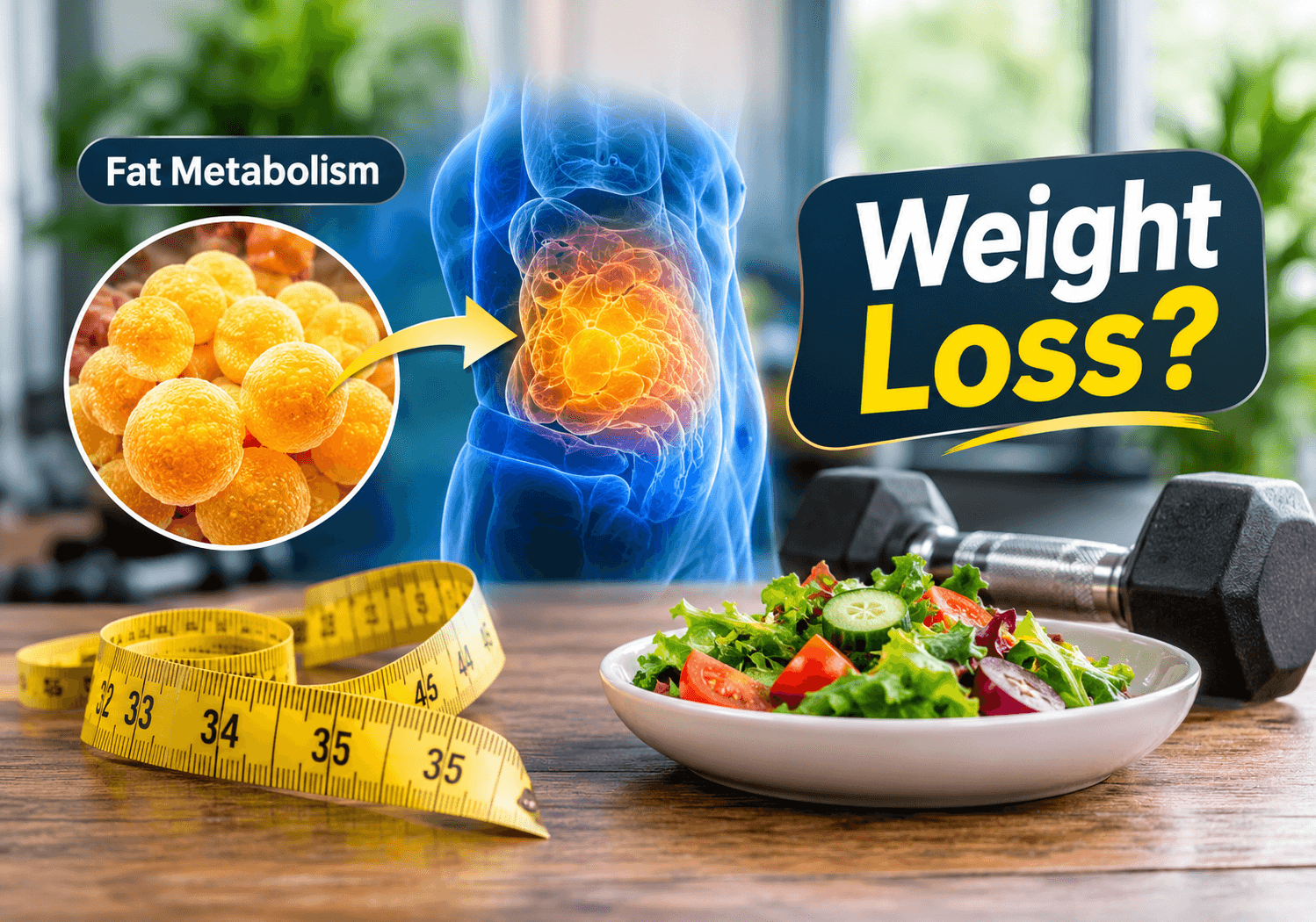
Does fat metabolism affect weight loss? The short answer is yes, but not in the way most people think. Many individuals believe that simply “boosting” their metabolism will melt away body fat without changing their diet or activity levels. As a certified strength and conditioning coach, I see this misconception daily. Fat metabolism is the biological process your body uses to break down stored adipose tissue into usable energy. While it is a critical component of weight management, it does not operate in a vacuum. True, sustainable weight loss requires a strategic combination of a calorie deficit, targeted exercise, and metabolic health optimization. Understanding what affects metabolism is the first step toward taking control of your body composition. This guide breaks down the science of lipid oxidation, how your body actually burns fat, and the exact, evidence-based steps you can take to improve your metabolic health safely and effectively.
Quick Answer
Yes, fat metabolism directly affects weight loss because it is the physiological process of breaking down stored fat (lipolysis) into usable energy (beta-oxidation). However, an elevated fat metabolism alone does not guarantee weight loss. You must maintain a consistent calorie deficit through diet and exercise to force your body to rely on stored fat for fuel. Improving metabolic flexibility through resistance training and Zone 2 cardio optimizes this process over time.
The Science Behind Fat Metabolism and Weight Loss
To understand how your body sheds pounds, we must first define the mechanics of fat burning. Fat metabolism is not a single event; it is a multi-step biochemical pathway.
First, your body undergoes lipolysis. This is the process where hormones like epinephrine and norepinephrine signal your fat cells (adipocytes) to release stored triglycerides into the bloodstream as free fatty acids. Think of this as unlocking the warehouse where your body keeps its energy reserves.
Second, these free fatty acids travel to your working muscles, where they enter the mitochondria—the powerhouses of the cell. Here, a process called beta-oxidation occurs. Beta-oxidation breaks down the fatty acids into acetyl-CoA, which then enters the Krebs cycle to produce adenosine triphosphate (ATP), the primary energy currency of your cells. This is the actual “fat burning” phase.
However, this entire system is governed by a principle called metabolic flexibility. Metabolic flexibility is defined as the ability of the body to switch between energy substrates, primarily fats and carbohydrates, to produce energy based on availability and demand. When you are metabolically flexible, your body efficiently burns fat during low-intensity activities and seamlessly switches to carbohydrates during high-intensity efforts. Research shows that weight loss is an important step in restoring metabolic flexibility, which is often impaired in individuals with obesity or insulin resistance.
It is crucial to understand that fat metabolism is the mechanism of fat loss, but a calorie deficit is the trigger. You cannot out-metabolize a surplus of calories. If you consume more energy than you expend, your body will store the excess as fat, regardless of how “fast” your metabolism is. Therefore, optimizing fat metabolism is about making the calorie deficit more effective and sustainable, not about finding a magical loophole.
Fat Metabolism vs. Weight Loss Factors
Many factors influence how efficiently your body processes and burns fat. Below is a breakdown of the primary drivers and their actual impact on your weight loss journey.
| Factor | Role in Fat Metabolism | Impact on Weight Loss |
| Calorie Deficit | Forces the body to tap into stored adipose tissue for energy when dietary intake is insufficient. | The absolute foundation of weight loss. Without it, fat metabolism cannot result in net fat loss. |
| Resting Metabolic Rate (RMR) | Determines how many calories your body burns at complete rest to maintain basic physiological functions. | A higher RMR increases your total daily energy expenditure, making it easier to maintain a deficit. |
| Zone 2 Cardio | Trains the mitochondria to become more efficient at oxidizing free fatty acids at lower intensities. | Enhances metabolic flexibility, allowing you to burn a higher percentage of fat during daily activities. |
| Resistance Training | Builds skeletal muscle, which is highly metabolically active tissue that increases basal energy expenditure. | Preserves lean mass during a deficit, preventing the metabolic slowdown that often accompanies weight loss. |
| Sleep Quality | Regulates hormones like leptin and ghrelin, which control hunger, and cortisol, which influences fat storage. | Poor sleep severely blunts fat oxidation and increases cravings, making a calorie deficit much harder to maintain. |
| Protein Intake | Increases the thermic effect of food (TEF) and provides amino acids necessary for muscle repair and growth. | Boosts daily calorie burn and protects muscle mass, ensuring the weight lost comes from fat, not muscle. |
Analysis of Key Factors
Your Resting Metabolic Rate (RMR) accounts for roughly 60-75% of your total daily energy expenditure. While genetics play a role, you can positively influence your RMR by building muscle through resistance training. Skeletal muscle is more metabolically demanding than adipose tissue, meaning it burns more calories even when you are sitting still.
Furthermore, sleep is a non-negotiable pillar of metabolic health. Research indicates that sleep deprivation alters substrate utilization, pushing the body to rely more on carbohydrates and sparing fat stores, while simultaneously increasing appetite. If you want to learn more about how sleep affects metabolism, prioritizing 7-9 hours of quality rest is one of the highest-return investments you can make.

How to Optimize Fat Metabolism for Weight Loss: A Practical Routine
Knowing the science is only half the battle. As a coach, my job is to translate this biochemistry into actionable steps you can apply in the gym and kitchen. To maximize lipid oxidation and support sustainable weight management, you need a balanced approach that combines strength training, targeted cardiovascular work, and strategic nutrition.
If you are looking for a comprehensive strategy, learning how to support metabolism naturally is far more effective than relying on quick fixes. Below is a practical, evidence-based weekly routine designed to enhance your metabolic flexibility and drive fat loss.
The Weekly Fat-Metabolism Workout Schedule
| Day | Workout Type | Duration | Primary Focus |
| Monday | Full-Body Strength Training | 45-50 mins | Muscle preservation, metabolic demand |
| Tuesday | Zone 2 Cardio | 30-45 mins | Mitochondrial efficiency, fat oxidation |
| Wednesday | Active Recovery / Mobility | 20-30 mins | Cortisol management, joint health |
| Thursday | Full-Body Strength Training | 45-50 mins | Muscle preservation, metabolic demand |
| Friday | Zone 2 Cardio or Light Hike | 45-60 mins | Sustained energy expenditure, stress relief |
| Saturday | Full-Body Strength Training | 45-50 mins | Muscle preservation, metabolic demand |
| Sunday | Complete Rest | N/A | Hormonal recovery, central nervous system reset |
Step-by-Step Exercise Execution
To get the most out of your strength sessions, focus on compound movements that recruit large amounts of muscle mass. This creates a higher metabolic demand both during and after the workout (excess post-exercise oxygen consumption, or EPOC).
1. Goblet Squat
- How to do it: Hold a dumbbell or kettlebell vertically against your chest with both hands. Stand with feet shoulder-width apart. Brace your core, push your hips back, and bend your knees to lower your body until your thighs are parallel to the floor. Drive through your mid-foot to return to the starting position.
- Sets/Reps/Rest: 3 sets of 8-12 reps, resting 60-90 seconds between sets.
- Tempo: 3 seconds down, 1 second pause, 1 second up.
- Weight Guidance: Start with a 15 lb (7 kg) dumbbell. Progress to 25-35 lb (11-16 kg) as form allows.
- What it should feel like: Tension in your quads, glutes, and core. Your chest should stay proud, and your lower back should remain neutral.
- Regression: Sit down onto a bench or chair and stand back up without using your hands.
- Progression: Hold a heavier kettlebell or transition to a barbell back squat.

2. Dumbbell Romanian Deadlift (RDL)
- How to do it: Hold a dumbbell in each hand in front of your thighs. Keep a slight bend in your knees. Hinge at your hips, pushing them straight back while keeping the dumbbells close to your legs. Lower until you feel a deep stretch in your hamstrings (usually just below the knees). Squeeze your glutes to return to the starting position.
- Sets/Reps/Rest: 3 sets of 10-12 reps, resting 60-90 seconds between sets.
- Tempo: 3 seconds down, 1 second pause at the stretch, 1 second up.
- Weight Guidance: Start with two 15 lb (7 kg) dumbbells. Progress to two 25-30 lb (11-14 kg) dumbbells.
- What it should feel like: A strong, controlled stretch in the back of your thighs and engagement in your glutes. Your back must remain completely flat.
- Regression: Perform the movement without weights, focusing solely on the hip hinge pattern by sliding your hands down your thighs.
- Progression: Use a barbell with heavier loading or perform single-leg RDLs to challenge balance and unilateral strength.

3. Incline Treadmill Walking (Zone 2 Cardio)
- How to do it: Set the treadmill to an incline of 8-12% and a speed of 2.5 to 3.5 mph (4.0 to 5.6 km/h). Walk without holding onto the handrails.
- Duration: 30-45 minutes.
- What it should feel like: You should be breathing heavier than normal but still able to hold a full conversation without gasping for air. This is the hallmark of Zone 2 training, which maximizes fat oxidation.
- Regression: Lower the incline to 3-5% and reduce the speed to 2.0 mph (3.2 km/h).
- Progression: Increase the incline to 15% or add a weighted vest (10-20 lb / 4.5-9 kg) to increase the metabolic demand.

Safety Notes and Who Should Be Careful
While optimizing your metabolism is highly beneficial, it must be done safely. Extreme calorie restriction or excessive high-intensity exercise can lead to metabolic adaptation, where your body deliberately slows down your RMR to conserve energy. This is a survival mechanism, not a personal failure.
Certain populations should exercise additional caution:
- Women over 40 and Menopausal Women: Hormonal shifts can naturally alter fat distribution and insulin sensitivity. Focus heavily on resistance training and adequate protein, as muscle mass naturally declines with age.
- Always prioritize form over weight, and consider working with a physical therapist to establish a safe baseline.
- Individuals with Medical Conditions: If you have diabetes, thyroid disorders, or cardiovascular issues, your metabolic pathways function differently.
Always consult with a doctor or a registered physical therapist before starting a new diet or exercise program, especially if you have pre-existing health conditions or are taking medication.
Coach’s Tips and Common Mistakes
Coach’s Tip: Do not underestimate the power of dietary protein. Increasing your protein intake and metabolism is one of the most effective, evidence-based strategies for weight loss. Protein has a high thermic effect of food (TEF), meaning your body burns about 20-30% of the calories in protein just to digest it. Furthermore, it preserves lean muscle mass during a calorie deficit, ensuring that the weight you lose is actual fat, not metabolically active tissue. Aim for 0.7 to 1.0 grams of protein per pound of body weight daily.
Common Mistake: Relying on “fat burner” supplements instead of fixing the basics. Many people spend hundreds of dollars on pills hoping to increase metabolism naturally without changing their habits. While some ingredients like caffeine or green tea extract may offer a marginal boost, they cannot override a poor diet or a sedentary lifestyle. Furthermore, if you are deficient in key nutrients, addressing those vitamins that support metabolism is a smarter, safer first step than buying proprietary stimulant blends.
Another frequent error is doing too much high-intensity interval training (HIIT). While HIIT is effective, doing it 5-6 days a week elevates cortisol chronically, which can promote abdominal fat storage and hinder recovery. Balance is the key to boosting metabolic flexibility without burning out.
Frequently Asked Questions About Fat Metabolism
1. Does fat metabolism affect weight loss directly? Yes, fat metabolism is the direct physiological mechanism by which stored body fat is broken down and used for energy. However, it only results in weight loss if you are in a sustained calorie deficit. Without a deficit, the fat released into the bloodstream is simply re-stored.
2. Can you change your fat metabolism? Yes, you can improve your metabolic flexibility. Through consistent resistance training, Zone 2 cardiovascular exercise, and adequate protein intake, you can increase the number and efficiency of mitochondria in your muscle cells, enhancing your body’s ability to oxidize fat.
3. Does a slow metabolism prevent weight loss? A genuinely “slow” metabolism (like hypothyroidism) can make weight loss more challenging by lowering your resting energy expenditure. However, for most people, perceived “slow metabolism” is actually the result of underestimating calorie intake, overestimating calorie burn, or having low daily non-exercise activity thermogenesis (NEAT).
4. How does exercise affect fat metabolism? Exercise increases energy demand, forcing the body to mobilize free fatty acids. Resistance training builds muscle, which raises your basal metabolic rate. Zone 2 cardio specifically trains your body to become more efficient at using fat as a primary fuel source during prolonged activity.
5. What foods boost fat metabolism? No single food magically burns fat. However, foods high in protein require more energy to digest (thermic effect). Additionally, ensuring you get enough fiber can help manage hunger. Some find that protein and fiber supplements help them maintain the calorie deficit necessary for fat loss.
6. Does age affect fat metabolism and weight loss? Yes. As we age, we naturally lose skeletal muscle mass (sarcopenia) and experience hormonal changes, both of which can lower resting metabolic rate. This makes consistent strength training and high protein intake even more critical for weight management after age 40.
Final Thoughts on Fat Metabolism and Weight Loss
So, does fat metabolism affect weight loss? Absolutely. It is the engine that drives the removal of stored body fat. However, an engine cannot run without fuel, and in this case, the “fuel” is the disciplined application of a calorie deficit, progressive resistance training, and adequate recovery.
Stop chasing metabolic myths and quick fixes. Instead, focus on building metabolically active muscle, engaging in consistent, manageable cardiovascular activity, and fueling your body with nutrient-dense foods. By understanding and respecting the science of lipid oxidation, you can build a sustainable, healthy body composition that lasts a lifetime.