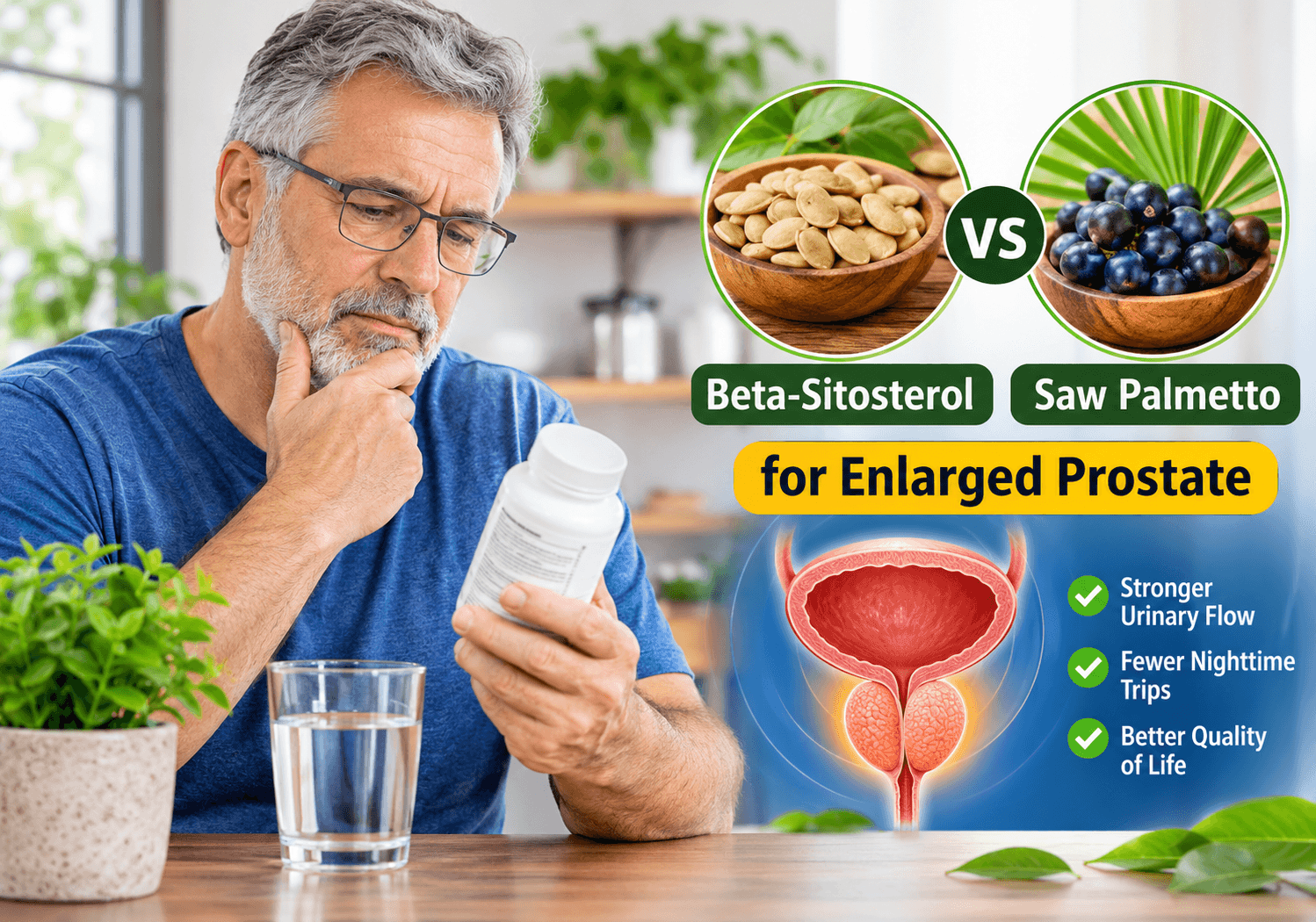
Dealing with frequent nighttime bathroom trips or a weak urinary stream is frustrating. For millions of men over 40, these are classic signs of benign prostatic hyperplasia (BPH), commonly known as an enlarged prostate. When exploring natural relief, the debate of beta-sitosterol vs saw palmetto for enlarged prostate is one of the most common questions I hear. Both are popular, plant-based supplements, but they work differently in the body. Understanding their unique mechanisms, clinical evidence, and ideal use cases will help you make an informed, confident decision about your urological health.
Quick Answer
When comparing beta-sitosterol vs saw palmetto for enlarged prostate, beta-sitosterol generally shows stronger clinical evidence for improving urinary flow and reducing residual urine volume. Saw palmetto is widely used but has mixed clinical trial results. For moderate to severe symptoms, beta-sitosterol is often the more reliable standalone choice, though some men benefit from combining both under medical supervision.
Side-by-Side Comparison: Beta-Sitosterol and Saw Palmetto
Before diving into the details, here is a quick reference table to compare these two natural prostate support options.
| Feature | Beta-Sitosterol (Plant Sterols) | Saw Palmetto (Serenoa repens) |
| Primary Mechanism | Improves urinary flow dynamics; may reduce prostate inflammation. | Inhibits 5-alpha reductase, potentially lowering DHT conversion. |
| Best For | Men seeking measurable improvements in urinary stream strength and nighttime frequency. | Men with mild BPH symptoms looking for general hormonal balance support. |
| Typical Daily Dose | 60 mg to 130 mg of pure beta-sitosterol (often delivered via 300–600 mg of plant sterol extract). | 320 mg of standardized liposterolic extract. |
| Clinical Evidence | Strong. Multiple meta-analyses show significant improvement in symptom scores and flow rate. | Mixed. Some studies show mild benefit, while large randomized trials show no difference from placebo. |
| Common Side Effects | Mild digestive upset, nausea, or constipation. | Mild stomach discomfort, headache, or dizziness. |
How Beta-Sitosterol Works for Prostate Health
Beta-sitosterol is a plant sterol, a type of natural compound found in the cell membranes of plants. It is structurally similar to cholesterol but is not absorbed by the human body in the same way. You can find it in foods like avocados, pumpkin seeds, pecans, and soybeans.
When used as a supplement for BPH, beta-sitosterol does not shrink the prostate gland itself. Instead, it targets the symptoms. Research suggests it improves the function of the bladder and the urinary tract. It is believed to reduce inflammation in the prostate tissue and improve the contractility of the bladder muscle. This leads to a stronger urinary stream and a more complete emptying of the bladder, which directly reduces that annoying feeling of residual urine.
According to a comprehensive Cochrane Database of Systematic Reviews analysis, men taking beta-sitosterol experienced significant improvements in their International Prostate Symptom Score (IPSS) and maximum urinary flow rate compared to those taking a placebo.
How Saw Palmetto Works for Prostate Health
Saw palmetto is an extract derived from the fruit of the Serenoa repens tree, native to the southeastern United States. It has been a staple in traditional medicine for over a century.
The primary theory behind saw palmetto is its ability to act as a mild 5-alpha reductase inhibitor. This is the same enzyme that prescription medications like finasteride target. By inhibiting this enzyme, saw palmetto may prevent the conversion of testosterone into dihydrotestosterone (DHT). DHT is the primary hormone responsible for stimulating prostate cell growth. Lowering DHT levels theoretically slows or stops prostate enlargement.
Additionally, saw palmetto contains fatty acids and phytosterols that may have anti-inflammatory properties. However, the clinical reality is more complex. While early, smaller studies showed promise, larger, high-quality trials have painted a different picture. For example, a major study funded by the National Institutes of Health (NIH) found that saw palmetto was no more effective than a placebo in reducing BPH symptoms over a 12-month period.
Efficacy and Clinical Evidence: Beta-Sitosterol vs Saw Palmetto for Enlarged Prostate
When evaluating beta-sitosterol vs saw palmetto for enlarged prostate, the weight of scientific evidence favors beta-sitosterol for symptomatic relief.
A landmark meta-analysis published in the Journal of Urology reviewed four randomized, double-blind, placebo-controlled trials involving 519 men. The results showed that beta-sitosterol significantly improved urinary symptom scores and increased peak urinary flow. The men also reported a decrease in the amount of urine left in the bladder after voiding (residual urine volume).
Conversely, the evidence for saw palmetto remains highly debated. A rigorous 2012 review in the Journal of the American Medical Association (JAMA) concluded that saw palmetto extract did not improve urinary symptoms or quality of life more than a placebo in men with moderate-to-severe BPH.
This does not mean saw palmetto is useless. Some men report subjective improvements in mild symptoms, and it may work better in specific, standardized extract forms. However, if your primary goal is measurable improvement in urinary flow and nighttime bathroom trips, beta-sitosterol has a more consistent track record in peer-reviewed literature.
When to Choose Beta-Sitosterol
You should consider beta-sitosterol if:
- Your main complaint is a weak urinary stream or difficulty starting urination.
- You wake up two or more times per night to urinate (nocturia).
- You want a supplement with stronger, more consistent clinical backing for symptom relief.
- You are looking for a natural option before discussing prescription 5-alpha reductase inhibitors with your doctor.
Beta-sitosterol is particularly effective for men who want to address the functional symptoms of BPH without necessarily altering their systemic hormone levels.
When to Choose Saw Palmetto
You might lean toward saw palmetto if:
- Your BPH symptoms are very mild and you are seeking general prostate maintenance.
- You are already taking a comprehensive men’s health formula that includes saw palmetto alongside other supportive nutrients, such as zinc, which is known to support healthy testosterone levels in men (learn more about how zinc supports healthy testosterone levels).
- You have tried beta-sitosterol and did not tolerate it well, though cross-reactivity is rare.
- Your healthcare provider specifically recommends it based on your unique hormonal profile.

Can You Take Beta-Sitosterol and Saw Palmetto Together?
Yes, many commercial prostate health supplements combine both ingredients. The rationale is synergistic: saw palmetto may address the hormonal root cause (DHT conversion), while beta-sitosterol addresses the mechanical symptoms (urinary flow and bladder emptying).
If you choose to combine them, start with one supplement at a time. Introduce saw palmetto for two weeks, monitor your symptoms and any digestive changes, and then add beta-sitosterol. This method helps you identify which ingredient is actually working for your body and prevents overwhelming your digestive system. Always consult your urologist before stacking supplements, especially if you are already on prescription BPH medications like tamsulosin or finasteride, to avoid compounded side effects like dizziness or excessive blood pressure drops.
Cost Comparison and Value
When budgeting for long-term supplementation, cost and quality matter.
- Beta-Sitosterol: High-quality, standardized beta-sitosterol supplements typically range from $15 to $35 per month. Look for products that specify the exact milligrams of pure beta-sitosterol, not just the total weight of the “plant sterol complex.”
- Saw Palmetto: This is generally very affordable, ranging from $10 to $25 per month. However, cheap extracts may lack the necessary liposterolic active compounds. Ensure the label states “320 mg of standardized extract.”
While saw palmetto is slightly cheaper, beta-sitosterol often provides better value for money due to its higher likelihood of delivering noticeable symptom relief. Investing in a third-party tested brand (look for USP, NSF, or ConsumerLab seals) is non-negotiable for both, as the supplement industry is not strictly regulated by the FDA.

The Coach’s Protocol: Supporting Prostate Health Through Movement
As a strength and conditioning coach, I always remind my clients that supplements are only one piece of the puzzle. Your daily movement habits profoundly impact pelvic blood flow, inflammation, and overall urological health. You cannot out-supplement a sedentary lifestyle.
Here is how to integrate physical activity to support your prostate health alongside your chosen supplement.
1. Daily Cardiovascular Walking
Aim for 30 to 45 minutes of brisk walking most days of the week. This equals about 1.5 to 2 miles (2.4 to 3.2 km). Regular cardiovascular exercise reduces systemic inflammation and helps manage body weight. Excess body fat, particularly around the abdomen, is linked to higher estrogen levels and increased BPH risk.
2. Pelvic Floor Strengthening (Kegels)
Many men think Kegels are only for women, but they are crucial for male urinary control. Strong pelvic floor muscles help you fully empty your bladder and reduce post-void dribbling.
- How to do it: Identify the muscles you use to stop the flow of urine. Contract these muscles for 3 to 5 seconds, then relax for 5 seconds.
- Sets/Reps: Perform 3 sets of 10 repetitions daily. Do not hold your breath or tighten your abs, glutes, or thighs.
3. Lower Body Strength Training
Compound movements promote healthy circulation to the pelvic region.
- Exercise: Goblet Squats. Hold a 15 lb to 25 lb (6.8 kg to 11.3 kg) kettlebell or dumbbell at your chest.
- Form: Keep your chest up, push your hips back, and squat down until your thighs are parallel to the floor. Drive through your heels to stand.
- Sets/Reps: 3 sets of 10 to 12 repetitions, resting 60 seconds between sets.
Coach’s Tip: Consistency beats intensity. A daily 20-minute walk and regular pelvic floor exercises will do more for your long-term urinary health than an occasional, grueling workout. Pair this movement with a diet rich in fiber to avoid constipation, which can put unnecessary physical pressure on your bladder and prostate. You can learn how to manage cravings and support metabolism naturally to maintain a healthy weight, which directly benefits prostate health.
Common Mistake: Expecting overnight results from supplements or exercise. Natural prostate support takes time. It typically takes 4 to 6 weeks of consistent supplement use and lifestyle adjustments to notice a meaningful reduction in nighttime urination or an improvement in urinary flow. Do not double the dose if you do not see results in week one; this only increases the risk of stomach upset.
Safety Notes and Who Should Be Careful
While both beta-sitosterol and saw palmetto are generally well-tolerated, they are not for everyone.
- Surgery: Stop taking both supplements at least two weeks before any scheduled surgery, as they may affect bleeding or interact with anesthesia.
- Medication Interactions: Saw palmetto may interact with blood thinners (like warfarin) and oral contraceptives. Beta-sitosterol can interfere with the absorption of fat-soluble vitamins (A, D, E, K) and certain cholesterol-lowering drugs (ezetimibe). Take beta-sitosterol at a different time of day than these medications.
- Underlying Conditions: If you have a history of hormone-sensitive conditions, consult your doctor first.
Furthermore, managing overall wellness is key. Poor sleep and high stress can exacerbate perceived symptoms and negatively impact overall male vitality. Research shows that stress and poor sleep lower male libido and can worsen the perception of pain and discomfort, including pelvic tension. Ensuring you get 7 to 8 hours of quality sleep is a foundational step in managing BPH.
Frequently Asked Questions (FAQ)
1. Is beta-sitosterol better than saw palmetto for BPH?
For most men, yes. Clinical meta-analyses show beta-sitosterol consistently improves urinary flow rates and reduces residual urine volume. Saw palmetto has mixed, often inconclusive, results in large-scale, high-quality trials, making beta-sitosterol the more evidence-backed choice for symptom relief.
2. How long does it take for saw palmetto to shrink the prostate?
Saw palmetto does not reliably shrink the prostate. While it may take 4 to 6 weeks to notice mild improvements in urinary symptoms like frequency or urgency, it does not significantly reduce prostate volume in the way prescription 5-alpha reductase inhibitors do.
3. What is the best dose of beta-sitosterol for enlarged prostate?
The most studied and effective dose is between 60 mg and 130 mg of pure beta-sitosterol per day. Because supplements vary, this often means taking 300 mg to 600 mg of a standardized plant sterol extract. Always check the supplement facts panel for the specific beta-sitosterol content.
4. Can you take beta-sitosterol and saw palmetto together?
Yes, they are frequently combined in prostate health formulas. They target different pathways: saw palmetto may influence hormonal conversion, while beta-sitosterol improves bladder function and urinary flow. Introduce them one at a time to monitor for any digestive side effects.
5. Does saw palmetto lower PSA levels?
Some studies suggest saw palmetto might slightly lower Prostate-Specific Antigen (PSA) levels, while others show no effect. If you take saw palmetto, you must inform your doctor before a PSA test, as it could potentially mask early signs of prostate cancer, leading to a false sense of security.
6. What are the side effects of beta-sitosterol for prostate health?
Beta-sitosterol is generally safe and well-tolerated. The most common side effects are mild and digestive, including nausea, indigestion, diarrhea, or constipation. Taking the supplement with a meal can significantly reduce the chance of stomach upset.
Conclusion
When evaluating beta-sitosterol vs saw palmetto for enlarged prostate, the scientific evidence points clearly toward beta-sitosterol as the more reliable option for improving urinary flow, reducing nighttime bathroom trips, and enhancing overall quality of life. Saw palmetto remains a popular, affordable choice for mild maintenance, but its clinical track record is inconsistent.
Remember that supplements work best when paired with healthy lifestyle habits. Regular walking, pelvic floor exercises, and maintaining a healthy weight create a strong foundation for urological health. Always discuss new supplements with your healthcare provider to ensure they do not interact with your current medications or mask other underlying conditions.