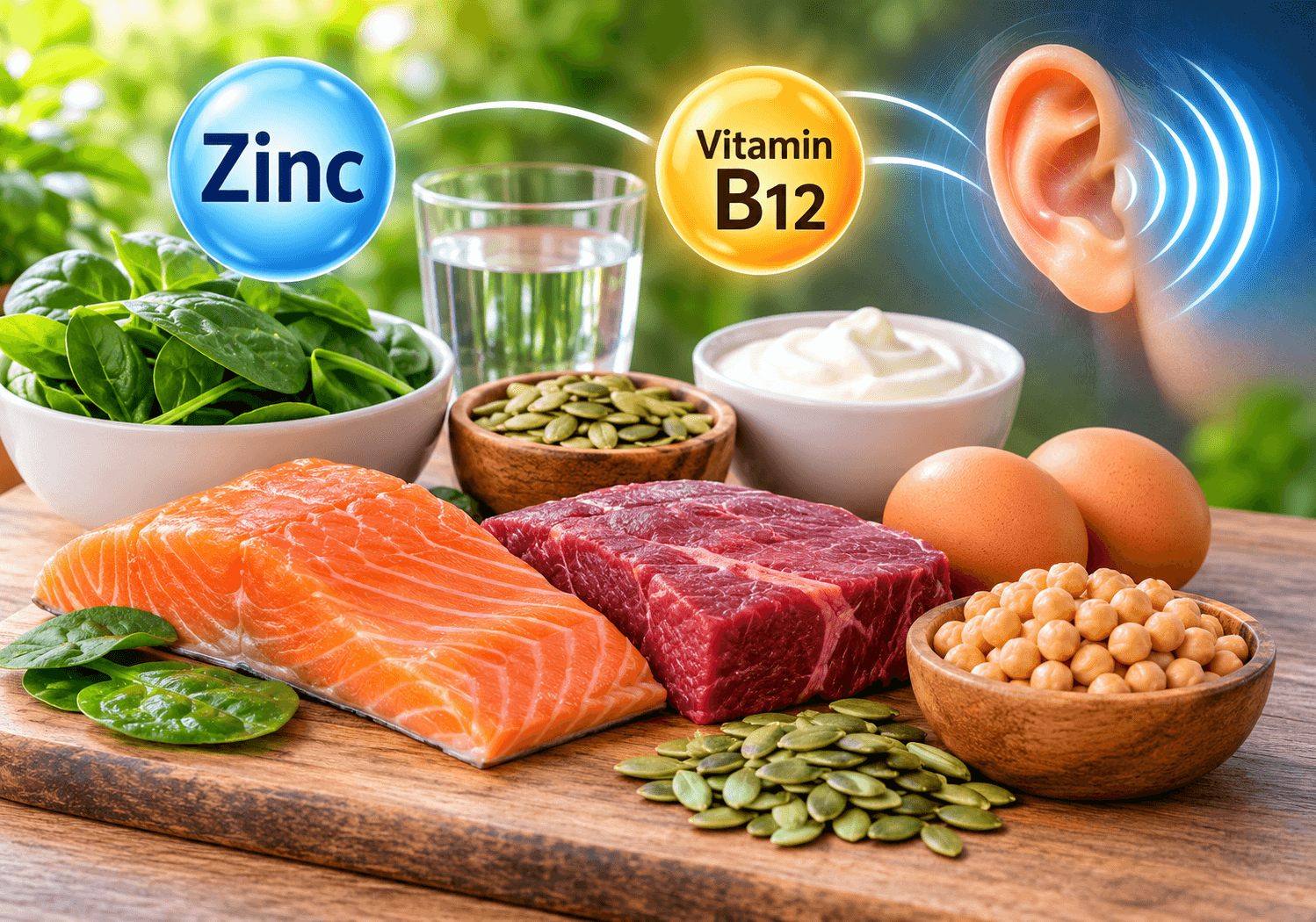
When a constant ringing, buzzing, or hissing sound refuses to leave your ears, it is natural to look at your nutrition cabinet for answers. Many people turn to zinc and vitamin B12 for tinnitus relief hoping a simple daily capsule will quiet the noise.
As a strength and conditioning coach who regularly reviews supplement research with active adults, I look at micronutrients the same way I look at recovery programming: they fix specific bottlenecks, not every problem. If your body is low in key minerals or B vitamins, correcting that gap supports nerve and inner ear health—but taking mega-doses when your levels are already normal will not silence ear ringing. Please check with a doctor or registered dietitian before starting new supplements, especially if you take prescription medications or have sudden hearing changes.
Quick Answer: Do Zinc and Vitamin B12 Help Tinnitus?
Research shows that zinc and vitamin B12 for tinnitus relief mainly help people who have an underlying deficiency in one or both nutrients. Clinical trials show mixed or minimal results in adults with normal blood levels, while targeted supplementation may reduce ringing intensity in older adults, vegans, or individuals with confirmed low serum levels.
How Zinc and Vitamin B12 Affect Your Ears and Auditory Nerves
To understand why these two micronutrients get so much attention for ear health, it helps to look at what happens inside your inner ear and along your auditory nerve pathways. Your cochlea (the spiral-shaped hearing organ in your inner ear) and the nerve fibers connecting it to your brain have some of the highest metabolic demands in your body.
Zinc’s Role in the Inner Ear
Your inner ear contains one of the highest concentrations of zinc anywhere in the human body. Inside the cochlea, zinc serves three distinct physiological roles:
- Antioxidant Defense: Zinc is a structural cofactor for copper-zinc superoxide dismutase (Cu/Zn-SOD), an enzyme that neutralizes free radicals generated by loud noise exposure and normal cellular metabolism.
- Synaptic Signaling: Zinc helps regulate glutamate receptors at the synapses between inner ear hair cells and auditory nerve fibers, preventing overexcitation that can contribute to phantom sound perception.
- Cellular Repair: Adequate zinc supports protein synthesis and tissue recovery across delicate sensory structures.
Vitamin B12’s Role in Nerve Insulation
Vitamin B12 (cobalamin) does not act on inner ear fluid directly; instead, it protects the wiring that carries sound signals to your brain.
- Myelin Sheath Maintenance: Vitamin B12 is essential for producing and maintaining myelin, the fatty protective coating around the vestibulocochlear nerve. Damaged or thinned myelin slows nerve conduction and scrambles auditory signals.
- Homocysteine Regulation: Low B12 causes an amino acid called homocysteine to build up in the bloodstream, which impairs microvascular blood flow to the tiny capillaries feeding the cochlea.
- Red Blood Cell Production: Healthy B12 levels support oxygen delivery to high-energy auditory neurons.
| Nutrient | Primary Auditory Function | Common Risk Groups for Deficiency | Key Food Sources |
| Zinc | Powers cochlear antioxidant enzymes (SOD) and regulates nerve synapses. | Older adults, heavy sweaters/athletes, vegetarians, people with digestive disorders. | Oysters, beef, crab, pumpkin seeds, chickpeas, cashews. |
| Vitamin B12 | Builds protective myelin around auditory nerves and supports cochlear blood flow. | Vegans/vegetarians, adults over 50, people taking metformin or acid reducers. | Salmon, beef liver, eggs, Greek yogurt, fortified nutritional yeast. |
What Clinical Research Says About Zinc and Vitamin B12 for Tinnitus Relief
Before spending money on specialized ear-health blends, it is important to look closely at human clinical trials rather than supplement marketing claims.
The Evidence on Zinc Supplementation
Studies on zinc for ear ringing show clear boundaries between who responds and who does not. A comprehensive review by the Cochrane Library (indexed via PubMed) evaluated randomized controlled trials testing oral zinc supplements in adults with chronic tinnitus. The researchers concluded that there is no strong evidence that zinc improves tinnitus symptoms in the general population with normal zinc status.
However, targeted clinical trials tell a more nuanced story. Research published in Otology & Neurotology (via PubMed) found that while placebo and zinc groups showed similar overall averages, the specific subgroup of patients who entered the study with confirmed low serum zinc levels experienced statistically significant reductions in tinnitus loudness after correcting their deficiency.
The Evidence on Vitamin B12 Supplementation
Vitamin B12 research follows a similar pattern—deficiency status drives the outcome. A randomized, double-blind pilot study published in Noise & Health (via PubMed Central) examined patients with chronic tinnitus and found that nearly half had low vitamin B12 levels. Participants who received weekly B12 injections showed measurable improvements in tinnitus severity scores compared to those receiving placebo, particularly among individuals who started with deficient B12 levels.
Additional observational research summarized by the National Institutes of Health Office of Dietary Supplements (NIH ODS) notes that low cobalamin status is linked to higher rates of noise-induced hearing threshold shifts and auditory nerve dysfunction in older adults. Just as which vitamins support metabolism when you have a deficiency depends entirely on filling an actual nutritional gap, B12 works best when your baseline stores are depleted.
Coach’s Tip: Never guess your nutrient status based on symptoms alone. Ask your doctor for two simple blood tests before buying high-dose bottles: a serum zinc test and a serum vitamin B12 test (along with methylmalonic acid, or MMA, if your B12 sits in the borderline low-normal range). Testing takes guesswork out of your budget and protects you from side effects.

Who Is Most Likely to Benefit from Zinc and Vitamin B12?
Because deficiency is the main reason supplementation helps, certain groups of people see much better results from zinc and vitamin B12 for tinnitus relief than others.
1. Adults Over Age 50
As you age, your stomach naturally produces less hydrochloric acid and intrinsic factor—two digestive compounds required to pull vitamin B12 out of food proteins. According to the NIH Office of Dietary Supplements, roughly 10% to 30% of older adults have reduced ability to absorb food-bound B12, making oral supplements or fortified foods much more reliable.
2. Vegetarians, Vegans, and Plant-Forward Eaters
Vitamin B12 occurs naturally only in animal-derived foods. At the same time, plant foods like beans, grains, and seeds contain phytates—natural compounds that bind to zinc in your digestive tract and block absorption. If you follow a plant-based diet without fortified foods or supplements, you face a higher risk of falling short on both nutrients simultaneously.
3. Endurance Athletes and Heavy Lifters
If you train hard 4 to 6 days a week, your micronutrient turnover increases. Heavy sweating causes measurable zinc losses, while intense training increases oxidative stress across muscles and nerves. Checking your micronutrient intake alongside which nutrients support normal energy metabolism ensures hard workouts do not leave your recovery systems depleted.
4. People Taking Certain Common Medications
Long-term use of proton pump inhibitors (acid reflux medications like omeprazole), H2 blockers, or the blood sugar medication metformin significantly reduces vitamin B12 absorption. Diuretics used for blood pressure can also increase urinary zinc excretion over time.
Choosing the Right Forms and Dosages
Walk down any supplement aisle and you will see dozens of different chemical forms on the back label. Picking an absorbable form at a safe, evidence-based dose prevents stomach upset and ensures your body actually uses what you swallow.
Best Forms of Zinc
- Zinc Picolinate or Zinc Glycinate: Chelated forms bound to organic acids or amino acids. They offer superior absorption and are much gentler on an empty or sensitive stomach.
- Zinc Gluconate or Zinc Citrate: Widely available, affordable, and well-absorbed for daily maintenance.
- Zinc Oxide or Zinc Sulfate: Cheaper forms often found in low-end multivitamins; zinc oxide has poor bioavailability, while zinc sulfate frequently causes nausea.
Best Forms of Vitamin B12
- Methylcobalamin: The active, coenzyme form of vitamin B12 already ready for your nervous system to use without needing liver conversion.
- Cyanocobalamin: A stable, synthetic form that converts efficiently into active B12 in most healthy adults and offers a longer shelf life.
- Delivery Format: Sublingual (under-the-tongue) tablets, liquid drops, and standard oral capsules all raise blood B12 levels effectively when dosed properly.
Safe Daily Intake vs. Upper Limits
More is never better with trace minerals. The table below outlines standard adult benchmarks established by the National Institutes of Health (NIH):
| Nutrient | Adult Daily RDA (Men / Women) | Typical Supplemental Dose (If Low) | Tolerable Upper Intake Level (UL) |
| Zinc (Elemental) | 11 mg / 8 mg | 15 mg – 30 mg daily (short-term) | 40 mg per day from all sources |
| Vitamin B12 | 2.4 mcg / 2.4 mcg | 500 mcg – 1,000 mcg daily | No established upper limit (water-soluble) |
Common Mistake: Taking 50 mg or more of elemental zinc every day for months on end. High-dose zinc blocks copper absorption in your small intestine, which can trigger copper-deficiency anemia and nerve damage—ironically making neurological symptoms worse. Never exceed 40 mg of elemental zinc daily unless a doctor directly supervises your blood work, and consider pairing long-term zinc (over 25 mg/day) with 1–2 mg of copper.

How to Build a Practical 90-Day Supplement and Nutrition Plan
If blood work shows you are low—or if your diet lacks animal proteins and zinc-rich foods—use a structured, trackable approach rather than randomly grabbing bottles.
Step 1: Audit Your Whole-Food Baseline First
Supplements work best on top of solid daily meals. Aim to include at least two servings of zinc- and B12-rich foods every day:
- 3 oz (85 g) cooked lean beef or lamb: Provides roughly 5–7 mg of zinc and 2.4 mcg of vitamin B12.
- 3 oz (85 g) wild salmon or trout: Delivers nearly 4–5 mcg of vitamin B12 plus anti-inflammatory omega-3 fats.
- 2 large whole eggs + 1 cup (245 g) Greek yogurt: Supplies around 2.5 mg of zinc and 2.1 mcg of B12 for breakfast.
- 1 oz (28 g) roasted pumpkin seeds: Adds 2.2 mg of plant-based zinc as an easy afternoon snack.
Step 2: Time Your Doses for Maximum Absorption
- Take Zinc With a Protein-Containing Meal: Taking zinc on an empty stomach often causes sharp nausea within 15 minutes. Take it alongside lunch or dinner—ideally a meal that does not contain massive amounts of bran or raw legumes, which can slow mineral uptake.
- Take Vitamin B12 in the Morning: Because B12 supports cellular energy production—a mechanism detailed in our guide on vitamin B12, energy, and metabolic support—taking it with breakfast avoids any mild evening alertness in sensitive people.
- Separate Zinc from Iron or Calcium Supplements: High doses of iron or calcium compete with zinc for the same intestinal transporters. Space them at least 2 hours apart.
Step 3: Track Functional Changes Over 8 to 12 Weeks
Nerve myelin repair and cochlear enzyme replenishment happen slowly. Give your protocol a full 8 to 12 weeks before judging results, and retest your blood levels at the 3-month mark to confirm you have reached optimal range without overshooting.
Combining Nutrition with Daily Habits That Calm Ear Ringing
Even when correcting a deficiency helps, zinc and vitamin B12 for tinnitus relief work far better when paired with daily habits that lower auditory stress. Think of nutrition as strengthening the hardware while daily habits calm the software.
- Use Gentle Background Sound in Quiet Rooms: Dead silence forces your brain to amplify internal ear ringing. Running a bedroom fan or low-level rain track keeps your auditory cortex occupied with neutral sound.
- Protect Your Ears During Loud Workouts: Commercial gym music and clanging weight plates easily exceed 85 to 95 decibels. Keep high-fidelity earplugs in your gym bag to prevent fresh acoustic irritation.
- Prioritize Consistent Sleep and Steady Energy: Poor sleep heightens nervous system sensitivity to sound. Building steady routines—like those covered in how to improve daily energy without caffeine and how sleep affects metabolism and recovery—keeps your stress hormones balanced so your brain can tune out background ringing.
- Check Other Foundational Nutrients: If you train regularly or eat a restricted diet, verify whether you also need targeted support like zinc for healthy hormone and recovery function rather than stacking overlapping multivitamins.

Safety Warnings and When to Skip Supplements
While vitamin B12 has an excellent safety profile, zinc carries real toxicity risks if misused, and neither supplement replaces a medical evaluation.
- Watch for Zinc Toxicity Signs: Nausea, metallic taste in the mouth, stomach cramps, diarrhea, frequent headaches, or new numbness/tingling in your hands and feet (a sign of zinc-induced copper deficiency) mean you should stop immediately and call your doctor.
- Check Medication Interactions: Zinc can bind to certain antibiotics (tetracyclines and quinolones) and penicillamine in your stomach, preventing those prescriptions from working. Always space zinc at least 2 to 4 hours away from prescription drugs.
- Beware of “Tinnitus Cure” Proprietary Blends: Many over-the-counter ear-ringing pills bundle tiny amounts of B12 with unverified herbal fillers and charge inflated prices. Single-ingredient, third-party tested supplements (USP, NSF, or ConsumerLab verified) are safer, cleaner, and far more cost-effective.
- Seek Prompt Medical Care for Red-Flag Symptoms: See an ear, nose, and throat specialist (ENT) right away if your tinnitus starts suddenly, affects only one ear, pulses in rhythm with your heartbeat, or comes with dizziness or sudden hearing loss.
Frequently Asked Questions (FAQ)
Does zinc and vitamin B12 help stop tinnitus?
Zinc and vitamin B12 primarily help reduce tinnitus symptoms in people who have a confirmed deficiency in one or both nutrients. Clinical research reviewed by the Cochrane Library and NIH shows little benefit for adults whose blood levels are already normal, so testing before supplementing is the smartest approach.
Can a vitamin B12 deficiency cause ringing in the ears?
Yes, severe or prolonged vitamin B12 deficiency can contribute to ear ringing. Vitamin B12 maintains the protective myelin sheath around your auditory nerve and keeps homocysteine levels low to protect inner ear blood flow. When B12 drops too low, nerve signaling can become erratic and trigger phantom sounds.
How much zinc should I take for tinnitus relief?
If blood work confirms low zinc, doctors commonly recommend 15 mg to 30 mg of elemental zinc daily for 8 to 12 weeks. Do not exceed the adult Tolerable Upper Intake Level of 40 mg per day from food and supplements combined, as excess zinc depletes copper and harms nerve health.
What type of vitamin B12 is best for auditory nerve health?
Methylcobalamin and cyanocobalamin are both effective forms for raising blood vitamin B12 levels and supporting auditory nerve myelin. Methylcobalamin is already in its active coenzyme state, while cyanocobalamin is highly stable and converts cleanly in the body. Typical daily supplemental doses range from 500 mcg to 1,000 mcg.
Are there side effects to taking high-dose zinc for ear ringing?
Yes. Taking more than 40 mg of elemental zinc daily can cause nausea, stomach cramps, diarrhea, and suppressed immune function. Over several months, high-dose zinc blocks copper absorption, leading to copper-deficiency anemia and peripheral nerve tingling that can worsen neurological symptoms.
How long does it take for vitamins to help tinnitus?
When a true zinc or vitamin B12 deficiency is present, rebuilding tissue stores and supporting nerve repair takes time. Most people who respond to supplementation notice gradual improvements after 8 to 12 weeks of consistent daily intake alongside good sleep and sound-masking habits.
Conclusion
Using zinc and vitamin B12 for tinnitus relief works best when treated as targeted nutritional repair rather than a universal cure. Both nutrients play vital roles in cochlear antioxidant defense and auditory nerve insulation, meaning correcting a true deficiency can noticeably ease ear ringing—especially for older adults, plant-based eaters, and hard-training athletes. Start by asking your doctor for simple blood work, prioritize nutrient-dense whole foods first, and stick to safe, third-party tested doses if your levels come back low.