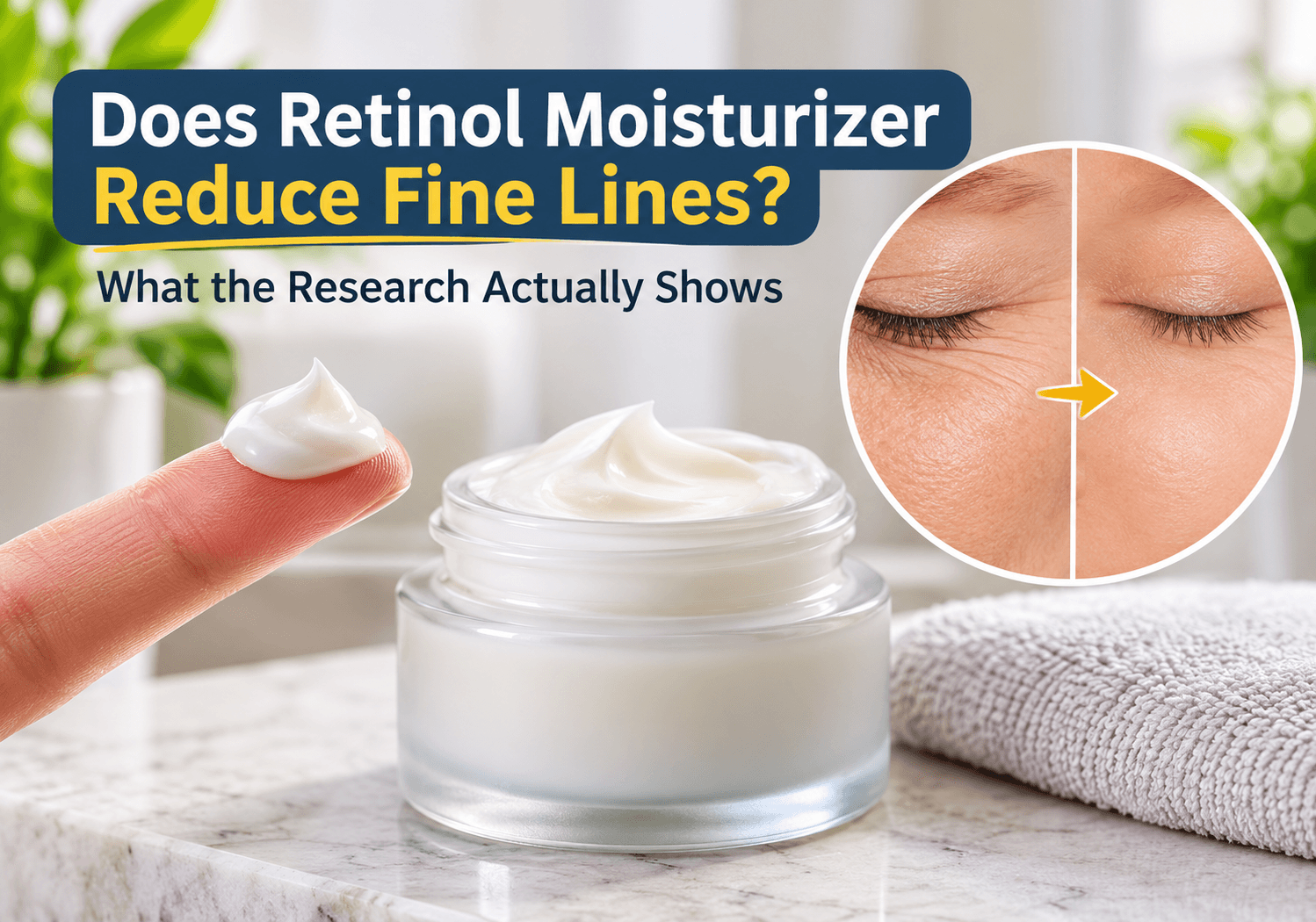
Fine lines around the eyes, across the forehead, and along the lips are one of the first things people notice as skin ages. Retinol has become the go-to ingredient in drugstore and premium skincare alike, and the marketing claims can be overwhelming. Does retinol moisturizer reduce fine lines, or is it just another buzzword on a jar?
The short answer is yes—but with important context about how long it takes, what concentration matters, and what retinol can and cannot do. Below, I break down the science, the practical routine, the safety considerations, and the realistic timeline so you can decide whether a retinol moisturizer fits your skincare goals.
Quick Answer: Yes, retinol moisturizer can reduce the appearance of fine lines. A randomized clinical trial published in Archives of Dermatology found that 0.4% topical retinol applied nightly for 12 weeks significantly reduced photoaged fine lines, improved skin texture, and stimulated dermal collagen production. Results typically become visible after 8–12 weeks of consistent nightly use. [1]
What the Research Says About Retinol and Fine Lines
Retinol is the over-the-counter form of vitamin A. Once applied to the skin, enzymes in the epidermis convert it step-by-step into retinoic acid, the active molecule that actually changes cell behavior. This conversion is slower than applying prescription tretinoin (which is already retinoic acid), but it is still biologically meaningful.
The collagen connection
Fine lines form when the dermis loses collagen and elastin, the structural proteins that keep skin plump and smooth. Ultraviolet (UV) radiation from the sun is the single largest external driver of that loss, a process dermatologists call photoaging. Retinoic acid stimulates fibroblasts—the cells in the dermis that produce collagen type I and type III—and also slows the breakdown of existing collagen by inhibiting matrix metalloproteinases (MMPs), the enzymes that chop up collagen fibers. [2]
A 12-week randomized, vehicle-controlled trial by Kang and colleagues applied 0.4% retinol cream nightly to photoaged skin on the forearms of 120 participants. After 12 weeks, the retinol group showed statistically significant improvements in wrinkle depth, skin roughness, and dermal collagen density compared to the placebo group. Histological analysis confirmed new collagen deposition in the retinol-treated tissue. [1]
Cell turnover and surface texture
Retinol also accelerates cell turnover in the epidermis. Healthy skin renews itself roughly every 28 days, but that cycle slows with age. By nudging keratinocytes (skin cells) through their lifecycle faster, retinol helps shed dull, flat, sun-damaged cells and bring fresher cells to the surface. This is why users often notice smoother texture and a more even tone within the first few weeks, even before deeper wrinkle changes appear.
What retinol cannot do
It is important to set realistic expectations. Retinol moisturizer works best on fine lines and early wrinkles—the shallow, crease-like marks that appear in your late 20s through 40s. Deep, static wrinkles (the kind that are visible even when your face is relaxed) are caused by significant loss of dermal volume and structural support. Topical retinoids, including prescription-strength tretinoin, have limited ability to reverse those. For deeper concerns, dermatologists may recommend in-office procedures such as laser resurfacing, chemical peels, or dermal fillers in addition to a retinoid regimen. [3]
Retinol Concentrations and What They Mean for Fine Lines
Not all retinol products are created equal. The concentration of active retinol (or a related retinoid) on the label determines how strongly the product can stimulate collagen and accelerate turnover.
| Concentration / Form | Typical Use | Expected Timeline for Fine-Line Improvement |
| 0.1%–0.25% retinol (or retinyl palmitate) | Sensitive skin, first-time users | 12–16 weeks; modest improvement in very fine lines |
| 0.3%–0.5% retinol | Most common OTC range; good for early fine lines | 8–12 weeks; noticeable smoothing of fine lines |
| 0.5%–1% retinol | More experienced users; moderate photoaging | 8–10 weeks; stronger collagen stimulation |
| 0.025%–0.1% tretinoin (prescription) | Moderate to significant wrinkles | 8–12 weeks; gold-standard topical retinoid |
| Retinaldehyde (0.05%–0.1%) | Middle ground between retinol and tretinoin | 8–12 weeks; fewer conversion steps, faster action |
Key point: Higher concentration does not automatically mean better results. A 0.5% retinol product that you use every night will outperform a 1% product you can only tolerate twice a week because of irritation. Consistency beats concentration. [4]
How to Build a Retinol Routine for Fine Lines
You do not need a 12-step routine. A simple, consistent approach gets the best results. Here is a practical nightly and morning routine you can start this week.
Nightly routine (apply retinol)
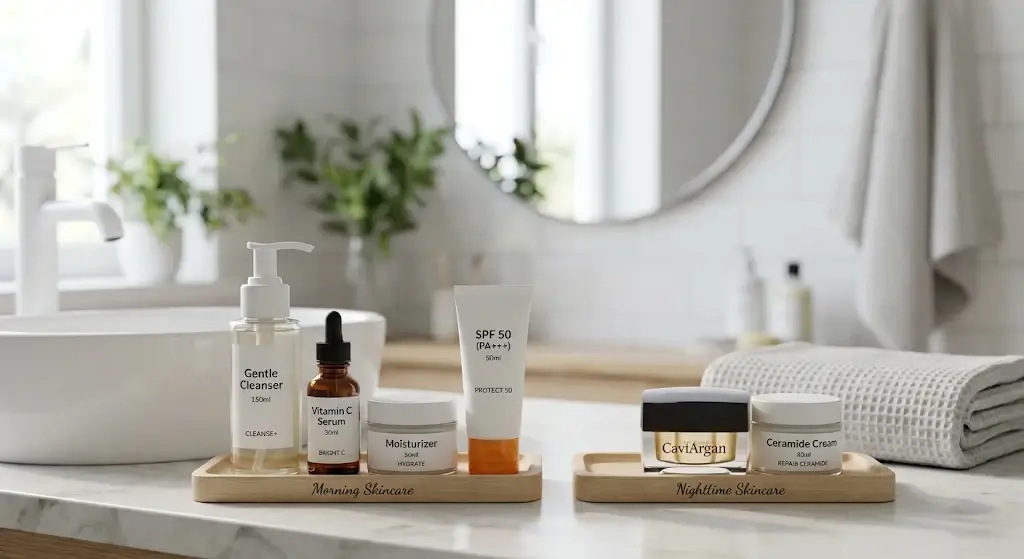
- Cleanse. Use a gentle, pH-balanced cleanser. Pat your face dry with a soft towel. Wait about 10–15 minutes until the skin is fully dry. Applying retinol to damp skin increases penetration and the chance of irritation.
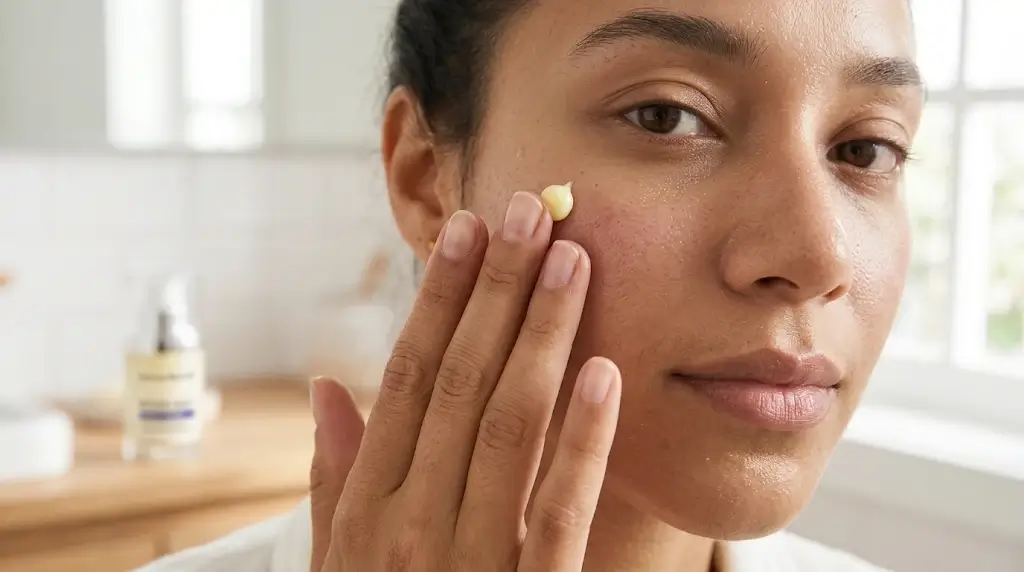
- Apply retinol. Squeeze a pea-sized amount (roughly 0.3–0.5 mL) of your retinol moisturizer or serum onto your fingertips. Dot it across your forehead, cheeks, chin, and around the nose. Gently press it in—do not rub aggressively.
- Moisturize. Follow with a fragrance-free moisturizer containing ceramides or hyaluronic acid to support the skin barrier and reduce the dryness and flaking that often accompany early retinol use.
- Start slow. For the first two weeks, apply retinol every other night. If your skin tolerates it (no persistent redness, peeling, or stinging), move to nightly use.
Morning routine (protect the skin)
- Cleanse with a gentle cleanser.
- Apply vitamin C serum (10%–20% L-ascorbic acid) if you want an extra antioxidant boost. Vitamin C supports collagen synthesis and helps neutralize free radicals from UV exposure. [5]
- Moisturize with a lightweight, non-comedogenic cream.
- Apply broad-spectrum SPF 30 or higher. This is non-negotiable. Retinol makes the skin more photosensitive, and UV exposure will undo the collagen-building work retinol is doing. Reapply every two hours if you are outdoors. [3]
Coach’s Tip: Think of retinol like a progressive overload program in the gym. You start with a lighter load (lower frequency or concentration), let your skin adapt over 2–3 weeks, then increase the intensity. Jumping straight into a 1% retinol product nightly is the skincare equivalent of deadlifting your max on day one—it works, but you will likely “tear” (irritate) your skin barrier and quit.
Common Mistake: Applying retinol and then immediately layering a strong exfoliating acid (glycolic, lactic, or salicylic acid) on the same night. This combination strips the skin barrier, increases redness, and can actually slow collagen production because the skin is in a repair state rather than a building state. Keep exfoliating acids to 1–2 nights per week, and never on the same night as retinol.
Realistic Timeline: When Will You See Fine-Line Changes?
One of the most common questions I hear is, “How long does retinol take to reduce fine lines?” Here is a general timeline based on clinical trial data and dermatology guidance:
| Timeframe | What to Expect |
| Weeks 1–2 | Possible mild dryness, flaking, or “retinization” (a brief adjustment period). No visible wrinkle changes yet. |
| Weeks 3–4 | Skin texture starts to feel smoother. Dullness may lighten. Very fine lines may look slightly less pronounced. |
| Weeks 5–8 | Noticeable improvement in fine-line depth, especially on the forehead and around the mouth. Skin tone becomes more even. |
| Weeks 9–12 | The 12-week mark in the Kang et al. trial showed the most significant wrinkle-depth reduction. Collagen density increases are measurable at this stage. [1] |
| Months 4–6 | Continued refinement. Fine lines are visibly softer. Skin looks more “filled in” as dermal collagen accumulates. |
| 6+ months | Maintenance phase. Consistent use sustains the improvements. Stopping retinol will gradually allow the aging process to resume. |
If you are pairing a topical retinol moisturizer with an oral collagen supplement, keep in mind that collagen peptides typically show measurable skin-hydration and elasticity improvements around the 8-to-12-week mark as well. You can read more about that timeline in our guide on how long collagen supplements take to work on skin.
Safety Notes and Who Should Be Cautious
Retinol is generally well-tolerated, but there are important safety considerations:
- Pregnancy and breastfeeding. Retinoids (including retinol in high concentrations) are classified as teratogenic in animal studies. Most dermatologists recommend avoiding all topical retinoids during pregnancy and while nursing. Check with your OB-GYN before starting or continuing any retinoid product. [3]
- Compromised skin barrier. If you have active eczema, rosacea flare-ups, or a broken skin barrier (from over-exfoliation, chemical peels, or recent laser work), hold off on retinol until the barrier has healed. Applying it to inflamed skin will worsen irritation.
- Sensitive or reactive skin. Start with a lower concentration (0.1%–0.25%) or a retinol-encapsulated formula that releases the active ingredient more slowly. Buffer by applying a thin layer of moisturizer first, then the retinol, then another layer of moisturizer (“sandwich method”).
- Photosensitivity. Retinol increases the skin’s sensitivity to UV light. Daily SPF 30+ is essential. Skipping sunscreen while using retinol can accelerate photoaging and negate the benefits.
- Drug interactions. If you are using topical antibiotics (like clindamycin or benzoyl peroxide for acne), talk to a dermatologist about timing them so they do not compete with or inactivate the retinol.
If you have a history of skin conditions, are on isotretinoin (Accutane), or are over 60 with thinner, more fragile skin, it is wise to run your routine by a board-certified dermatologist before starting a retinoid regimen.
Pairing Retinol With Other Anti-Aging Strategies
Retinol is one powerful tool, but it works best as part of a broader approach to skin health.
Antioxidant support from within
Oxidative stress from UV light, pollution, and normal metabolism contributes to collagen breakdown. Antioxidant nutrients can help support the skin from the inside. Astaxanthin, a carotenoid found in microalgae and salmon, has shown promise in small clinical trials for improving skin elasticity and hydration. You can explore the research in our article on astaxanthin for skin glow and anti-aging.
Omega-3 fatty acids (EPA and DHA) support the skin’s lipid barrier and have anti-inflammatory properties that may help reduce the low-grade inflammation associated with photoaging. Our breakdown of omega-3 fatty acids for skin hydration and inflammation covers dosing and food sources.
Topical partners that complement retinol
- Hyaluronic acid: A humectant that draws water into the skin. Pairing it with retinol helps counteract the dryness retinol can cause and keeps the barrier supple.
- Niacinamide (vitamin B3): Supports ceramide production, strengthens the barrier, and has mild anti-inflammatory effects. It pairs well with retinol and is generally well-tolerated.
- Peptides (e.g., Matrixyl, Argireline): Short chains of amino acids that may signal fibroblasts to produce more collagen. They are a gentler complement for areas where retinol feels too harsh.
- Vitamin C (L-ascorbic acid, 10%–20%): Used in the morning, it boosts collagen synthesis and protects against UV-induced free radical damage. [5]
Lifestyle factors that matter as much as any product
- Sleep. Chronic sleep deprivation elevates cortisol, which can accelerate collagen breakdown. Aim for 7–9 hours per night.
- Sun protection. As mentioned, daily SPF is the single most important “anti-aging product” you can use. It prevents the UV damage that retinol is trying to repair.
- Not smoking. Tobacco smoke generates free radicals and constricts blood vessels in the dermis, reducing nutrient delivery to skin cells. Quitting is one of the most effective things you can do for long-term skin health.
- Hydration and nutrition. Adequate water intake and a diet rich in colorful vegetables, lean protein, and healthy fats provides the building blocks (amino acids, vitamins, minerals) your fibroblasts need to make new collagen.
Does Retinol Moisturizer Work for Specific Areas?
Different areas of the face and body respond differently to retinol:
- Forehead and crow’s feet: These are classic fine-line areas. Retinol at 0.3%–0.5% applied nightly tends to show good results here because the skin is relatively thick and the lines are shallow.
- Under the eyes: The skin here is the thinnest on the face (about 0.5 mm vs. roughly 2 mm on the cheeks). Use a lower concentration (0.1%–0.25%) or a retinol-encapsulated formula specifically designed for the eye area. Avoid getting product directly in the eye. If you have deep under-eye hollows, retinol will not fill them; a dermatologist can discuss filler options.
- Around the mouth (marionette lines, perioral lines): These respond well to retinol, especially if they are fine and not yet deep static creases.
- Neck and décolletage: Often neglected, but the same photoaging process occurs here. Apply retinol to the neck and chest with the same routine you use on your face.
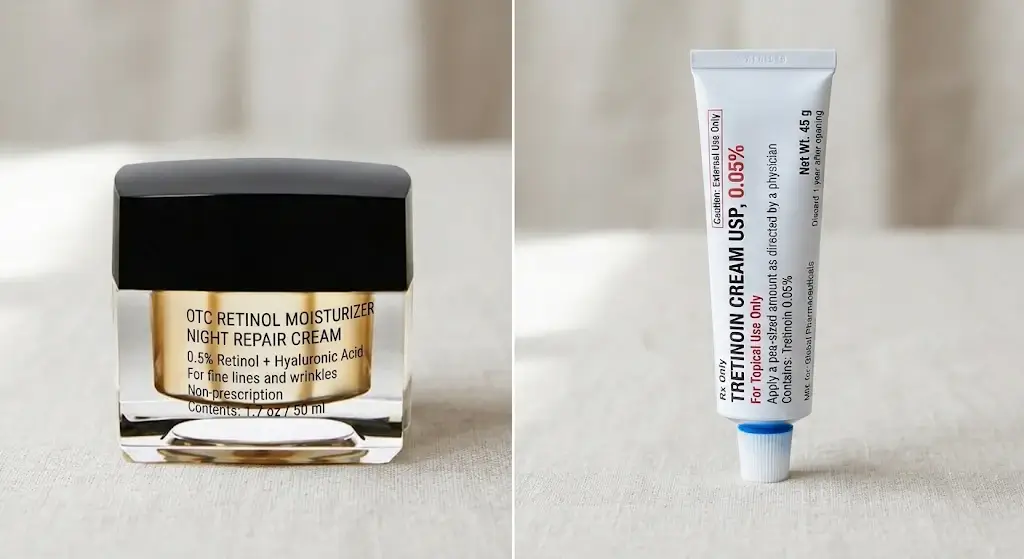
Retinol Moisturizer vs. Prescription Retinoid: Which Is Right for You?
| Factor | OTC Retinol Moisturizer | Prescription Tretinoin / Adapalene |
| Typical concentration | 0.1%–1% retinol | 0.025%–0.1% tretinoin; 0.1%–0.3% adapalene |
| Conversion to retinoic acid | Required (slower) | Tretinoin is already retinoic acid (faster) |
| Onset of visible results | 8–12 weeks | 8–12 weeks (sometimes slightly faster) |
| Irritation potential | Moderate (lower) | Moderate to high (especially at higher strengths) |
| Cost (monthly) | 10–40 | 30–150+ (varies by insurance) |
| Requires prescription | No | Yes |
| Best for | Fine lines, early photoaging, maintenance | Moderate to significant wrinkles, acne, more aggressive collagen stimulation |
If your primary concern is fine lines and you are in your late 20s to 40s, a quality OTC retinol moisturizer at 0.3%–0.5% is a strong starting point. If you have more established wrinkles or want the fastest-acting topical option, a dermatologist can prescribe tretinoin. You can read more about the broader anti-aging supplement landscape, including how astaxanthin supports skin glow and anti-aging, as a complementary approach.
How to Choose a Retinol Moisturizer
When you are shopping, here is a practical checklist:
- Check the active ingredient and concentration. The label should say “retinol” (or “retinyl palmitate,” which is a weaker ester form) and list the percentage. If it does not list a percentage, the amount may be too low to be effective.
- Look for a stable formulation. Retinol degrades with light and air. Opaque or airless-pump packaging is a good sign. Avoid clear glass bottles left on a sunny windowsill.
- Fragrance-free is better. Fragrances are a common source of irritation, especially when combined with an active ingredient like retinol.
- pH matters. Retinol works best at a slightly acidic pH (around 5–6). If the product is highly alkaline, the retinol may be less effective.
- Patch test first. Apply a small amount behind your ear or on your inner forearm for 3–5 nights before applying it to your face. Watch for redness, itching, or burning.
- Read the full ingredient list. If you are also using a vitamin C serum or niacinamide, make sure the retinol product does not already contain those at high concentrations to avoid overloading your skin.
FAQ
Does retinol moisturizer actually work on fine lines, or is it marketing?
Yes, it works. A 12-week randomized controlled trial in Archives of Dermatology demonstrated that 0.4% topical retinol reduced wrinkle depth and increased dermal collagen in photoaged skin. The effect is real but gradual—most people see meaningful improvement around the 8-to-12-week mark. [1]
How long does retinol take to reduce fine lines?
Most clinical data and dermatology guidance point to 8–12 weeks of consistent nightly use before fine-line improvement becomes clearly visible. Some users notice smoother texture in 3–4 weeks, but measurable collagen changes take longer. [1][4]
What concentration of retinol is best for fine lines?
For most adults dealing with early to moderate fine lines, a 0.3%–0.5% retinol product is the sweet spot. If you are a first-time user or have sensitive skin, start at 0.1%–0.25% and work up. Going above 1% OTC retinol offers diminishing returns and increases irritation risk.
Can retinol moisturizer reverse deep wrinkles?
Retinol is most effective on fine lines and early wrinkles. Deep, static wrinkles involve significant loss of dermal volume and structural support that a topical product cannot fully restore. A dermatologist may recommend in-office treatments alongside a retinoid for those concerns. [3]
Is retinol moisturizer better than a prescription retinoid for fine lines?
For fine lines specifically, a well-formulated OTC retinol at 0.3%–0.5% can deliver comparable results to low-strength prescription tretinoin (0.025%), with less irritation. Prescription retinoids become more advantageous for moderate to significant wrinkles or when faster, stronger collagen stimulation is needed.
Can I use retinol moisturizer if I am over 50?
Yes, but the skin is thinner and more sensitive with age. Start with a lower concentration, use the sandwich method (moisturizer–retinol–moisturizer), and be diligent with SPF. If you have thin, fragile, or sun-damaged skin, consult a dermatologist before starting.
The Bottom Line
Does retinol moisturizer reduce fine lines? The evidence says yes. Retinol stimulates collagen production, accelerates cell turnover, and improves skin texture and elasticity over time. A well-designed 12-week nightly routine with a 0.3%–0.5% retinol product, paired with daily SPF 30+ and a basic moisturizer, is one of the most evidence-backed things you can do for early to moderate fine lines.
It is not a magic eraser. It will not fill deep wrinkles, remove age spots, or replace the structural changes that come with significant aging. But for the fine lines that appear in your 30s and 40s—the ones that make your skin look a little tired or a little older than you feel—retinol is a proven, accessible, and affordable tool. Start slow, be consistent, protect your skin from the sun, and give it the 8-to-12 weeks it needs to show its work.