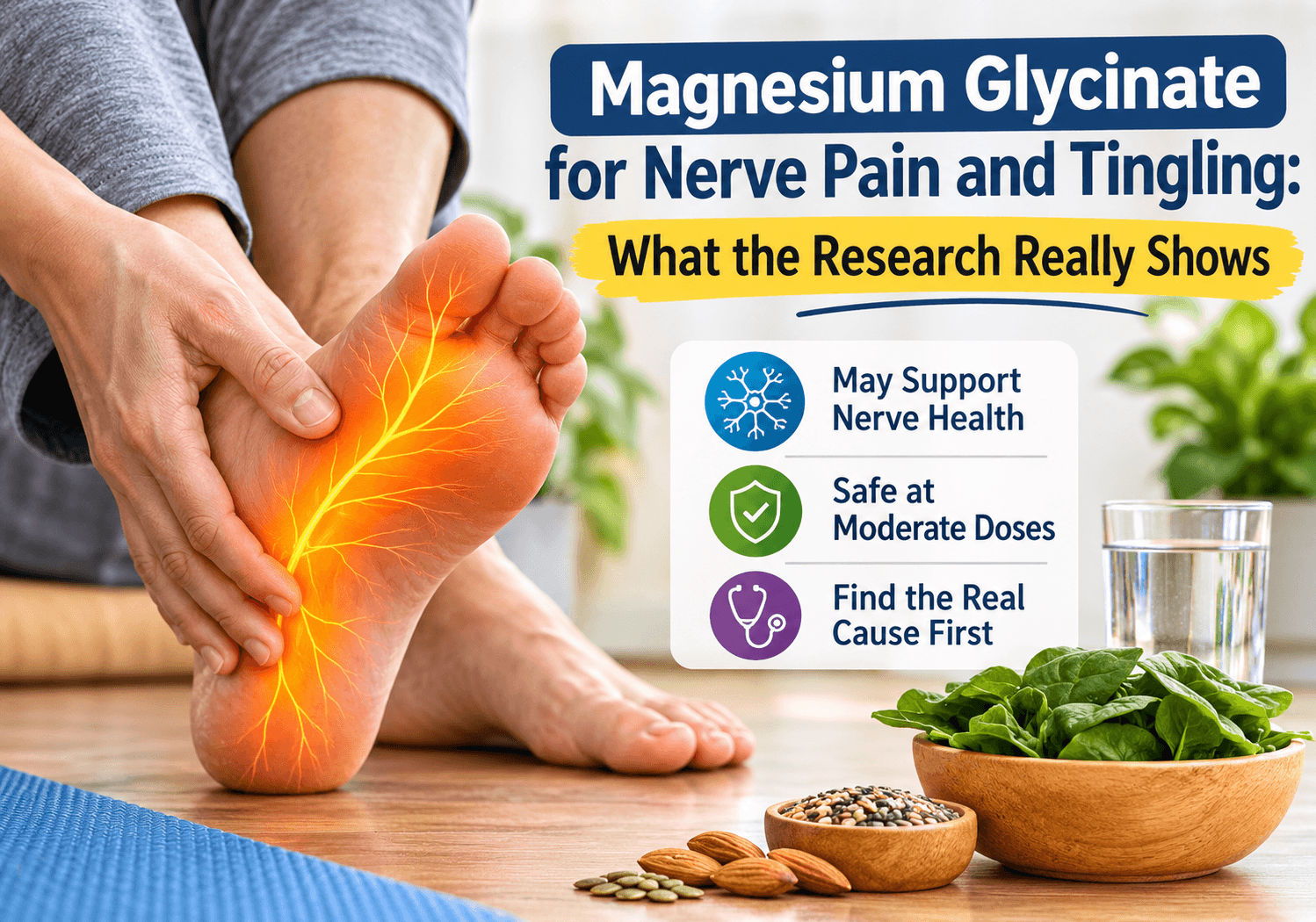
Tingling in your hands or feet is annoying, and it can be worrying. Many people reach for supplements first. Magnesium glycinate for nerve pain and tingling is one of the most searched options, and it is easy to see why. It is gentle on the stomach, easy to buy, and often called a “calming” form of magnesium.
I’ll explain what the research does and does not show. I’ll also cover safe limits and what else to check before you spend money on capsules. I don’t make big promises here, because the evidence doesn’t support them yet.
⚡ Quick Answer
Research on magnesium glycinate for nerve pain and tingling is limited. Small studies and reviews suggest magnesium may help some nerve symptoms, but experts say the evidence is not strong enough to recommend it routinely. Tingling can have serious causes, so see a doctor first. Don’t exceed 350 mg a day from supplements.
Why Your Nerves Tingle in the First Place
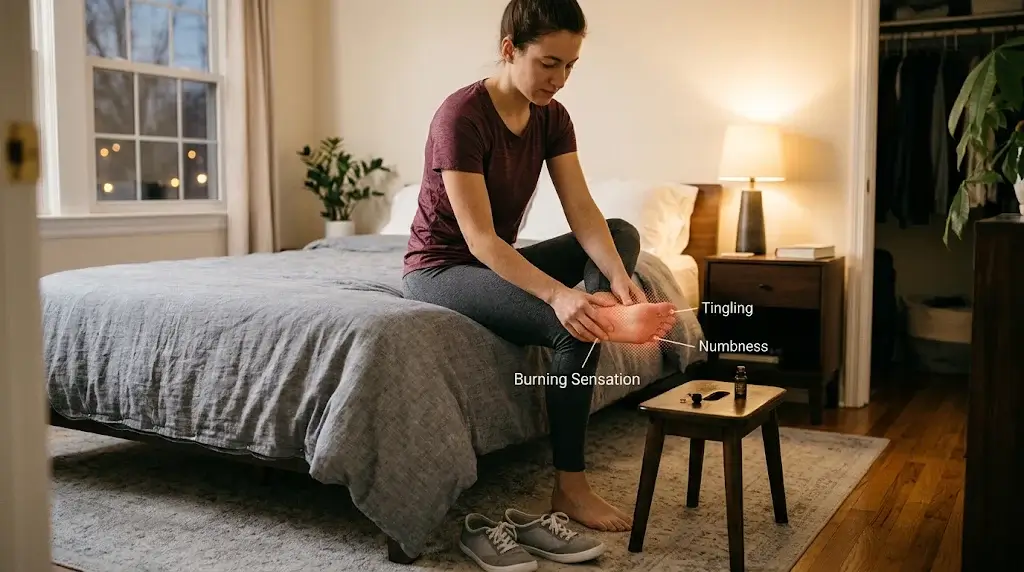
Tingling is not a disease. It’s a signal. Your peripheral nerves carry touch, temperature, and pain messages from your skin to your brain. When those nerves are squeezed, irritated, or damaged, they can misfire. That feels like pins and needles, burning, or numbness.
The Mayo Clinic explains that peripheral neuropathy often causes weakness, numbness, and pain, usually in the hands and feet. People often describe it as stabbing, burning, or tingling. The same source lists many possible causes:
- Diabetes and metabolic syndrome, which are among the most common causes
- Low vitamin levels, especially B12
- Kidney, liver, or thyroid problems
- Infections and autoimmune diseases
- Some medicines, including chemotherapy
- Alcohol misuse
- Pressure on a nerve from repetitive motion, a cast, or crutches
That list matters for one simple reason. Magnesium is only one possible piece, and often not the main one. If the real cause is uncontrolled blood sugar, a pinched nerve, or low B12, a magnesium capsule won’t fix it.
Mayo Clinic advises seeking medical care right away if you notice tingling, weakness, or pain in your hands or feet. Early diagnosis gives you the best chance of preventing further nerve damage.
Where magnesium fits in
Magnesium helps nerves and muscles work normally. The NIH Office of Dietary Supplements says low intake, certain health conditions, alcohol misuse, and some medicines can lead to magnesium deficiency. Severe deficiency can cause numbness and tingling. [VERIFY exact wording on the current ODS page before publishing.] Most people with mild tingling are not severely deficient, though. That is why testing and a doctor’s visit come before supplements.
What the Research Says About Magnesium Glycinate for Nerve Pain and Tingling
The short version: the idea is plausible, the human evidence is small, and almost none of it tests glycinate by name.
The idea behind it
Pain signals can get “turned up” in the nervous system. One pathway involves the NMDA receptor. A 2024 narrative review in PMC describes how magnesium can block this receptor. That may help limit the nerve over-sensitization that follows tissue injury. This is a mechanism, not proof that a capsule will quiet your symptoms.
What human studies show
The research is mixed and early:
- A systematic review in Anesthesia & Analgesia (2020) looked at magnesium for chronic pain in adults. Only three studies examined neuropathic pain, with 62 participants in total. That is very small.
- A 2024 systematic review in Pain Practice reviewed diet and supplements for chronic neuropathic pain. The authors could not recommend any supplement for chemotherapy-related nerve pain. They said magnesium, among a few others, deserves more research.
- A meta-analysis of magnesium sulfate for neuropathic pain concluded it may hold potential. It also said current evidence is insufficient to support routine use.
- A 2025 review in Nutrition Research examined the link between magnesium and diabetic neuropathy. It covered everything from lab work to clinical studies. That shows researchers are interested, but interest is not proof.
Notice what’s missing. Most of these studies used magnesium sulfate, often by IV or in other settings. They did not test over-the-counter glycinate capsules for everyday tingling.
What’s missing for glycinate specifically
Magnesium glycinate (also called bisglycinate) is magnesium bound to the amino acid glycine. Supplement makers say this makes it easy to absorb and gentle on the gut. There is some logic to that. A PMC article on magnesium chelates notes that more soluble magnesium forms are typically more bioavailable. It also says chelate ligands are used to reduce the laxative effect.
But I could not find high-quality human trials that show glycinate treats nerve pain or tingling. Many websites claim exact absorption percentages and “clinical proof.” Most are written by supplement sellers and don’t link to real studies. I didn’t use them here, and you shouldn’t trust them either.
🏋️ Coach’s Tip: Treat any supplement as a short, tracked experiment, not a cure. Write down your symptoms before you start. That way you’ll know whether anything changed, instead of guessing.

Magnesium Glycinate vs. Other Forms
Not all magnesium is the same. The table below sums up the common forms and what is reasonably known. Absorption and gut effects vary by person and product.
| Form | Commonly used for | Gut tolerance | Notes |
| Glycinate / bisglycinate | General supplementation, “calming” use | Usually gentler | Little direct evidence for nerve pain [VERIFY] |
| Citrate | Raising magnesium, constipation | May loosen stools | NIH lists it among more easily absorbed forms |
| Oxide | Cheap multivitamins, antacids | Can cause diarrhea | Often poorly absorbed |
| Sulfate | IV use in medical settings; most nerve pain trials | Not a typical daily capsule | Used in studies under medical supervision |
| Chloride / lactate | Supplements, topical products | Varies | NIH lists as more easily absorbed forms |
The NIH Office of Dietary Supplements consumer fact sheet is the best place to confirm current details on forms. Its main message is simple: the form is less important than your total intake, your health conditions, and your medicines.
Evidence at a Glance
| Question | What we know | Confidence |
| Can severe low magnesium cause tingling? | Yes, in severe deficiency | Moderate [VERIFY] |
| Does magnesium affect pain signaling? | Plausible mechanism (NMDA receptor) | Lab and mechanism level |
| Does magnesium help neuropathic pain? | Small studies; mixed; not enough for routine use | Low |
| Does glycinate help nerve pain specifically? | No strong human trials found | Very low |
| Is it safe at normal doses? | Generally yes for healthy people, with exceptions | Moderate |
How to Try Magnesium Glycinate Safely
If your doctor says it’s fine to try magnesium, here is a sensible, low-risk way to do it.
- Get checked first. Ask your doctor about tingling. Mayo Clinic notes that blood tests can detect low vitamin levels, diabetes, and other causes of neuropathy.
- Start with food. The ODS lists legumes, nuts, seeds, whole grains, green leafy vegetables like spinach, and dairy as magnesium sources. A handful of almonds and a bowl of beans go a long way.
- Read the label for elemental magnesium. A capsule that says “1,000 mg magnesium glycinate” may contain far less actual magnesium. Look for the “elemental magnesium” number on the Supplement Facts panel.
- Stay under the upper limit. The ODS sets 350 mg per day for adults as the upper limit from supplements and medications. This does not include magnesium from food. Many people do well at lower amounts. Ask your doctor what’s right for you.
- Start low. Take a small dose with food. Increase only if your doctor agrees and your stomach tolerates it.
- Give it a fair, tracked trial. Try 4 to 8 weeks while tracking symptoms. If nothing changes, stop and revisit the cause with your doctor.
⚠️ Common Mistake: Taking a high dose to “speed things up.” The ODS warns that high intakes from supplements and medications can cause diarrhea, nausea, and abdominal cramping. More is not better, and you don’t get faster results.
Quick tracking plan
Use a simple 1–10 score each evening for tingling, burning, and sleep. Note any gut upset. After four weeks, compare your first week to your last. If your score hasn’t moved, magnesium probably isn’t your answer, and that is useful information.

Safety Notes: Who Should Skip It or Ask First
Check with your doctor or pharmacist before taking magnesium if any of these apply to you. This is especially true if you take regular medicines.
- Kidney disease. Healthy kidneys remove extra magnesium. If your kidneys don’t work well, magnesium can build up. The ODS flags this risk. [VERIFY that kidney-disease language on the current ODS page.]
- Certain medicines. The ODS consumer page says magnesium can interfere with some medicines. Examples include bisphosphonates for osteoporosis, some antibiotics, and diuretics. Timing matters.
- Acid-reducing medicines (PPIs). These can lower magnesium levels. Your doctor may want to test you instead of guessing.
- Pregnancy, breastfeeding, or older age. Dosing and needs change. Ask first.
- Chemotherapy or an existing neuropathy diagnosis. Never self-treat these. Your care team needs to guide any supplement use.
Stop and call a doctor if you have sudden weakness, trouble walking, loss of bladder or bowel control, or numbness that spreads quickly. Seek urgent care for symptoms on one side of the body, facial drooping, or trouble speaking.
Other Things Worth Checking Before You Blame Magnesium
Mayo Clinic lists low levels of B vitamins (B-1, B-6, B-12), copper, and vitamin E as nerve-health factors. B12 is a common suspect. If you eat little meat, fish, eggs, or dairy, or you take certain medicines, ask your doctor about testing. You can read more in our guide on vitamin B12 and energy.
Nutrient gaps also tend to travel together. Our article on which vitamins support metabolism when you’re deficient explains why a blood test beats guessing.
Mineral balance matters too. Very high zinc doses can interfere with how your body handles magnesium, according to the ODS. If you also take zinc, our look at zinc and testosterone covers sensible amounts.
Other factors worth reviewing with your doctor:
- Blood sugar. Diabetes is one of the most common causes of neuropathy.
- Alcohol. Heavy drinking harms nerves and depletes nutrients.
- Repetitive strain or posture. Typing, tools, or a tight shoe can compress a nerve.
- Medicines. Some drugs list neuropathy as a side effect.
Movement can help, with your doctor’s OK
Mayo Clinic suggests regular exercise, with your doctor’s approval, as part of nerve health. It recommends 30 minutes to one hour at least three times a week. As a coach, I’d keep it simple and gentle:
- Easier version: a 10-minute easy walk (about half a mile, 0.8 km) after dinner, three days a week.
- Standard version: 30 minutes of brisk walking, three days a week.
- Harder version: 45–60 minutes, adding hills or light strength work such as bodyweight squats and wall push-ups.
If you have numb feet, wear well-fitted shoes and check your skin daily. You may not feel small injuries.
Choosing a Quality Supplement
Supplements aren’t reviewed the way medicines are, so quality varies. Before buying, use this checklist. Our guide to what to look for in a supplement goes deeper on labels.
- Elemental magnesium listed clearly per serving
- Third-party testing (look for a seal from a lab such as USP or NSF) [VERIFY seal names before publishing]
- Short ingredient list with no “proprietary blend” hiding doses
- No big health claims. “Cures neuropathy” is a red flag.
- Realistic price. Very cheap or very pricey isn’t a quality signal on its own.
To learn how to judge ingredient claims in general, see our walkthrough on evaluating supplement ingredients.
Related Tips: Sleep, Stress, and Daily Habits
Magnesium glycinate is often marketed for sleep and relaxation. The evidence for that is also mixed, but the habits around it are well understood. Poor sleep can make pain feel worse. Our article on how sleep affects metabolism covers practical routines.
A few simple steps that cost nothing:
- Keep a steady bedtime and wake time.
- Limit alcohol, since it can worsen nerve symptoms.
- Stretch calves and feet gently in the evening.
- Keep blood sugar steady with regular meals.
For overall nutrition support, see which nutrients support normal energy metabolism. Good basics make any supplement decision easier.
Frequently Asked Questions
Does magnesium glycinate help nerve pain?
It might help some people, but research is limited. Small studies and reviews suggest magnesium may affect nerve pain signaling. Experts say the evidence isn’t strong enough for routine use, and few trials test glycinate itself. Talk to your doctor before trying it.
Can low magnesium cause tingling?
Yes, severe low magnesium can cause numbness and tingling. Most tingling, however, comes from other causes such as diabetes, low B12, nerve compression, or medicines. A blood test and exam can separate these, so see a doctor before assuming magnesium is the problem.
How much magnesium glycinate should I take?
There is no proven dose for nerve pain. The NIH upper limit for adults is 350 mg per day of magnesium from supplements and medications, not counting food. Start low, read the elemental magnesium amount on the label, and ask your doctor or pharmacist for your own number.
How long does it take to work?
There is no established timeline for nerve symptoms. A reasonable trial is four to eight weeks with symptom tracking. If you see no change, stop and talk to your doctor. Don’t raise the dose to speed things up, because high doses can cause diarrhea and cramping.
Is magnesium glycinate better than citrate for nerves?
No study I found compares them for nerve pain. Glycinate is usually gentler on the stomach, while citrate can loosen stools. Both are used to raise magnesium intake. Pick the one you tolerate best, and don’t expect either to treat the underlying cause.
Can I take magnesium glycinate with B12?
Many people take both, and no major interaction is listed on the NIH magnesium page. But your medicines and health conditions matter. Ask your pharmacist to check your full list. If B12 is low, your doctor may recommend a specific dose.
Conclusion
Magnesium glycinate for nerve pain and tingling is a reasonable thing to ask about, but not a proven fix. The idea makes biological sense, and some studies are encouraging. Still, the reviews I found call for more research. Almost none test glycinate for everyday tingling.
Your best first step is a doctor’s visit to find the real cause. Check blood sugar, B12, kidney function, and your medicines. Eat magnesium-rich foods, stay under the 350 mg supplement limit, track your symptoms, and keep moving. If you decide to try magnesium glycinate for nerve pain and tingling, treat it as a short, supervised experiment.