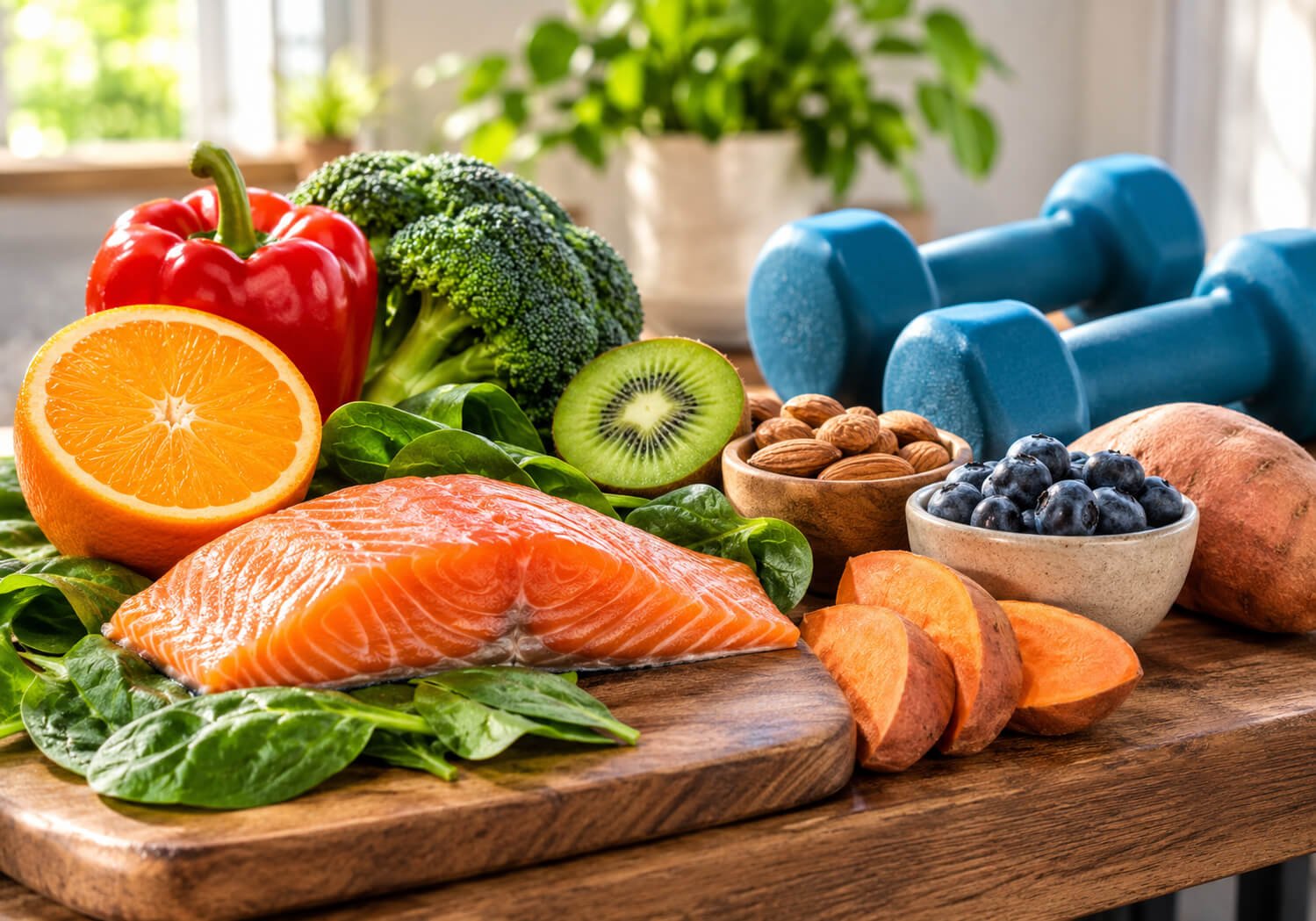
When you hit your 40s, 50s, and beyond, your body sends clear signals that its internal repair systems are slowing down. Your knees might feel stiff during the first five minutes of a morning walk, and the skin on your face and hands loses some of its bounce.
Finding the best vitamins for aging skin and joint pain relief requires understanding one simple biological truth: your skin and your joints are built from the exact same structural proteins. Both rely heavily on collagen, elastin, and proper hydration to handle daily physical stress. As a strength coach working with active adults, I see clients spend hundreds of dollars on separate beauty creams and joint pills when targeted foundational nutrition supports both systems simultaneously.
Before starting any new supplement routine—especially if you manage chronic joint pain, take blood thinners, or have underlying medical conditions—check with your doctor or physical therapist first.
Quick Answer
The best vitamins for aging skin and joint pain relief are Vitamin C, Vitamin D3, Vitamin K2, Vitamin E, and Vitamin A. Vitamin C drives collagen synthesis for firm skin and strong cartilage, while Vitamins D3 and K2 regulate calcium and calm joint inflammation. Vitamins E and A protect connective tissues from oxidative damage and support cellular turnover.
Why Aging Skin and Joint Pain Share the Same Root Cause
To understand why certain vitamins improve both your complexion and your mobility, look at your body’s extracellular matrix. Think of this matrix as the biological scaffolding that holds your cells together.
In your skin, Type I and Type III collagen fibers keep the dermis thick, firm, and resistant to wrinkling. In your joints, Type II collagen forms the smooth articular cartilage that cushions the ends of your bones during movement.
Starting around age 25, your natural collagen production drops by roughly 1% per year, according to research indexed by the National Center for Biotechnology Information (NCBI). By age 50, cumulative sun exposure, repetitive mechanical wear, and low-grade systemic inflammation accelerate this breakdown.
When collagen degrades faster than your body rebuilds it, two things happen at once. Your skin develops fine lines and sagging, while your joint cartilage thins, leading to friction, stiffness, and post-workout soreness. Supplying your body with the exact vitamin cofactors needed to synthesize new collagen and neutralize free radicals addresses both issues at the cellular level.
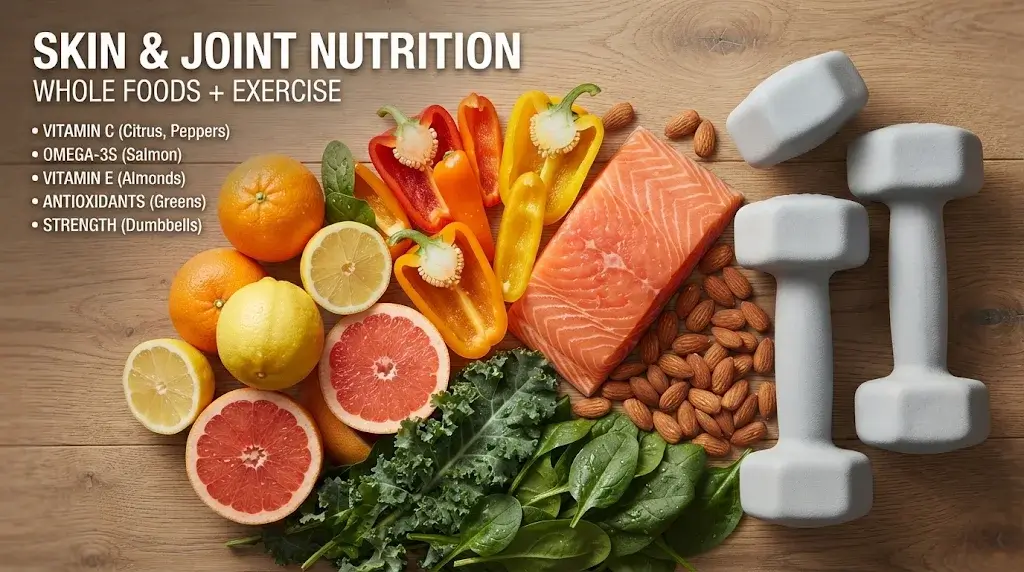
The 6 Best Vitamins for Aging Skin and Joint Pain Relief
Not every vitamin on the pharmacy shelf earns a spot in an active adult’s daily routine. Below are the six most effective, research-backed micronutrients that target connective tissue repair, hydration, and inflammation control.
1. Vitamin C (Ascorbic Acid): The Master Collagen Builder
If you only focus on one nutrient from this list, make it Vitamin C. Your body cannot physically assemble stable collagen molecules without it. Vitamin C acts as an essential enzymatic cofactor for prolyl hydroxylase and lysyl hydroxylase—the two enzymes that twist amino acids into strong, triple-helix collagen fibers.
- How it helps aging skin: Beyond building dermal collagen, Vitamin C is a potent antioxidant that neutralizes UV-induced free radicals. According to the National Institutes of Health (NIH) Office of Dietary Supplements, adequate Vitamin C intake supports skin barrier function and helps reduce the appearance of oxidative skin damage.
- How it helps joint pain: Cartilage cells (chondrocytes) rely on Vitamin C to maintain the shock-absorbing matrix inside your knees, hips, and shoulders. Clinical observations published via PubMed Central indicate that Vitamin C supports musculoskeletal healing and helps lower inflammatory markers after physical stress.
- Daily target & food sources: Aim for 75 mg to 90 mg daily as a baseline, though active adults often use 250 mg to 500 mg split across meals. Top whole-food sources include red bell peppers, kiwi, strawberries, broccoli, and oranges.
2. Vitamin D3 (Cholecalciferol): The Inflammation & Bone Regulator
Vitamin D functions more like a master hormone than a standard vitamin, regulating over 200 genes across your immune system, muscles, and bones. Deficiency is remarkably common in adults over 40, particularly those who work indoors or live in northern climates.
- How it helps aging skin: Vitamin D receptors sit directly inside skin cells (keratinocytes), where they regulate cell growth, repair, and skin barrier immunity. Proper levels help prevent excessive dryness and support wound healing.
- How it helps joint pain: Low Vitamin D status is strongly linked to increased joint discomfort, muscle weakness, and slower recovery from strength training. Research from the Mayo Clinic confirms that Vitamin D is essential for calcium absorption and bone mineralization, protecting the subchondral bone right beneath your joint cartilage.
- Daily target & food sources: The Recommended Dietary Allowance (RDA) is 600 IU (15 mcg) for adults up to age 70 and 800 IU (20 mcg) for those over 70, though doctors frequently recommend 1,000 IU to 2,000 IU daily based on blood tests. Fatty fish like salmon, fortified dairy, and egg yolks provide natural dietary amounts.
3. Vitamin K2 (Menaquinone): The Calcium Traffic Cop
Vitamin K2 works as the essential partner to Vitamin D3. While Vitamin D pulls calcium from your digestive tract into your bloodstream, Vitamin K2 activates proteins that direct that calcium into your bones and teeth—and keep it out of your soft tissues.
- How it helps aging skin: When excess calcium deposits into the elastin fibers of your skin, those fibers stiffen and lose their snap, accelerating deep wrinkles. Vitamin K2 activates matrix Gla-protein (MGP), which helps prevent soft-tissue calcification and preserves skin elasticity.
- How it helps joint pain: Calcification inside joint cartilage and tendons contributes to stiffness and chronic aches. By guiding minerals into bone tissue rather than cartilage, Vitamin K2 supports smooth joint mechanics and bone density.
- Daily target & food sources: Look for the MK-7 form of Vitamin K2 at 90 mcg to 120 mcg daily. You can get it naturally from fermented foods like natto, sauerkraut, hard cheeses, and pasture-raised egg yolks. (Note: Consult your doctor before taking Vitamin K if you use prescription blood thinners like warfarin.)
4. Vitamin E (Alpha-Tocopherol): The Cell Membrane Shield
Vitamin E is your body’s primary fat-soluble antioxidant. Because cell membranes in both your skin and your joint linings are made of delicate lipids (fats), they are prime targets for oxidative stress from sun exposure, pollution, and intense exercise.
- How it helps aging skin: Vitamin E embeds itself directly into the lipid barrier of your epidermis, locking in moisture and working alongside Vitamin C to defend against photoaging.
- How it helps joint pain: Inside your joints, synovial fluid lubricates cartilage surfaces so bones glide smoothly. Oxidative stress degrades this fluid, making joints feel “creaky.” Studies indexed on PubMed suggest that Vitamin E’s antioxidant properties may help protect joint cartilage from oxidative breakdown.
- Daily target & food sources: Adults need 15 mg (22.4 IU) daily. Sunflower seeds, almonds, hazelnuts, spinach, and avocado provide easily absorbed natural Vitamin E.
5. Vitamin A & Beta-Carotene: The Cellular Turnover Drivers
Vitamin A exists in two primary dietary forms: preformed Vitamin A (retinol) from animal foods and provitamin A carotenoids (like beta-carotene) from colorful plants. Both play vital roles in tissue remodeling.
- How it helps aging skin: Dermatologists rely on topical retinoids because Vitamin A accelerates epidermal cell turnover, clears dull surface cells, and stimulates dermal fibroblasts to produce fresh collagen. Dietary Vitamin A supports this exact same renewal process from the inside out.
- How it helps joint pain: Beta-carotene and other carotenoids help modulate inflammatory pathways in the body, protecting soft tissues from free radical damage during exercise recovery.
- Daily target & food sources: Adult women need 700 mcg RAE and adult men need 900 mcg RAE daily. Sweet potatoes, carrots, pumpkin, dark leafy greens, and beef liver are top sources. Stick to food sources or beta-carotene supplements rather than high-dose preformed retinol to avoid toxicity.
6. B-Complex Vitamins (Especially B3, B6, and B12): The Circulation & Nerve Supporters
The eight B vitamins act as spark plugs for cellular energy production, red blood cell formation, and nervous system health. As we age, stomach acid naturally declines, making it harder to absorb certain B vitamins—especially B12—from food.
- How it helps aging skin: Vitamin B3 (niacinamide) boosts ceramide production in the skin barrier, helping aging skin hold onto hydration and calming redness. Biotin (B7) and B5 (pantothenic acid) further support skin smoothness and tissue repair.
- How it helps joint pain: Vitamins B6, B9 (folate), and B12 work together to keep blood levels of homocysteine in check. Elevated homocysteine is linked to higher systemic inflammation and weaker collagen cross-linking in bone and cartilage. If you want to explore how B vitamins also support daily stamina, review our guide on which vitamins support metabolism when you’re deficient.
- Daily target & food sources: Aim for 100% of the Daily Value via a balanced B-complex or eat lean poultry, wild fish, eggs, legumes, and nutritional yeast.

Comparison Table: Top Vitamins for Skin Elasticity and Joint Relief
Use this quick-reference chart to compare how each nutrient works, how much you need daily, and the best whole foods to put on your grocery list.
| Vitamin | Primary Skin Benefit | Primary Joint Benefit | Daily Adult Target (RDA/AI) | Best Whole-Food Sources |
| Vitamin C | Stimulates collagen synthesis & brightens tone | Builds cartilage matrix & lowers oxidative stress | 75–90 mg (up to 500 mg active) | Red bell peppers, kiwi, citrus, broccoli |
| Vitamin D3 | Supports skin cell repair & barrier immunity | Regulates bone mineralization & eases stiffness | 600–800 IU (15–20 mcg) | Wild salmon, sardines, fortified milk, egg yolks |
| Vitamin K2 | Protects skin elastin from calcification | Directs calcium to bone instead of cartilage | 90–120 mcg (AI for Vitamin K) | Natto, sauerkraut, aged gouda, pasture eggs |
| Vitamin E | Locks in lipid moisture & guards against UV damage | Protects synovial fluid & cartilage lipids | 15 mg (22.4 IU) | Almonds, sunflower seeds, avocado, spinach |
| Vitamin A | Drives cell turnover & dermal thickness | Fights free radical inflammation in soft tissue | 700–900 mcg RAE | Sweet potatoes, carrots, kale, eggs |
| B-Complex | Boosts skin ceramides (B3) & barrier hydration | Lowers homocysteine & supports nerve health | Varies (e.g., 2.4 mcg B12; 14–16 mg B3) | Chicken breast, tuna, lentils, eggs |
Coach’s Tip & Common Mistake When Taking Joint and Skin Vitamins
Coach’s Tip: Pair Your Vitamins With Healthy Fats and Protein
Vitamins A, D3, E, and K2 are fat-soluble, meaning your digestive tract cannot absorb them properly if you swallow them with black coffee or a dry piece of toast. Take your daily vitamins alongside a meal containing at least 10 to 15 grams of healthy fat (like eggs, avocado, olive oil, or salmon) and 25 to 35 grams of complete protein. The fat unlocks vitamin absorption, while the protein supplies the amino acids (glycine and proline) that Vitamin C needs to build new collagen.
Common Mistake: Megadosing Fat-Soluble Vitamins
More is not better when it comes to vitamins. Unlike water-soluble Vitamin C—where excess amounts are flushed out in your urine—excess Vitamins A, D, and E build up in your liver and fat tissue. Taking massive doses of preformed Vitamin A can actually cause dry, peeling skin and joint pain, while excessive Vitamin D without K2 can raise blood calcium to unsafe levels. Stick to evidence-based daily doses and verify your Vitamin D levels with a simple blood test before taking high-potency supplements.
Supporting Nutrients That Multiply Your Vitamin Results
Vitamins act as the construction crew, but they still need raw building materials to repair worn cartilage and thinning skin. Pairing the best vitamins for aging skin and joint pain relief with three foundational compounds creates a complete structural recovery stack.
- Hydrolyzed Collagen Peptides (10–15 grams daily): Collagen supplements provide concentrated doses of glycine, proline, and hydroxyproline. When combined with Vitamin C, these peptides signal fibroblasts in your skin and chondrocytes in your joints to ramp up tissue repair. To maximize uptake, learn the best time to take collagen powder and pair it with Vitamin C.
- Omega-3 Fatty Acids (1,000–2,000 mg combined EPA/DHA): Found in fatty fish and purified fish oil, omega-3s directly calm inflammatory prostaglandins in stiff joints while strengthening the lipid barrier of dry, aging skin. Explore the full science in our breakdown of omega-3 fatty acids for skin hydration and inflammation.
- Astaxanthin (4–8 mg daily): This deep-red carotenoid antioxidant found in microalgae is 6,000 times stronger than Vitamin C at quenching certain free radicals. Research shows it helps protect skin elasticity under UV stress and reduces exercise-induced joint soreness. You can read more about how an astaxanthin supplement supports skin glow and anti-aging.
How to Choose High-Quality Supplements (Buyer’s Checklist)
The dietary supplement industry is not strictly regulated for efficacy before products hit store shelves. According to the Harvard T.H. Chan School of Public Health, independent testing often reveals wide gaps between what is printed on a supplement label and what is inside the capsule.
Use this 5-point coach’s checklist before buying any vitamin formula for skin and joint health:
- Look for Third-Party Verification Seals: Only buy supplements tested by independent organizations like USP (U.S. Pharmacopeia), NSF International, or ConsumerLab. These seals verify that the bottle contains the exact ingredients listed on the label without heavy metals or contaminants.
- Check Bioavailable Forms: Choose Vitamin D3 (cholecalciferol) over D2 (ergocalciferol), Vitamin K2 as MK-7 rather than synthetic K1, and methylated B vitamins (methylcobalamin for B12, methylfolate for B9) for superior cellular absorption.
- Avoid “Proprietary Blends”: If a label hides individual vitamin or herb amounts behind a “proprietary complex,” skip it. You need exact milligram and microgram measurements to ensure you are getting effective clinical doses.
- Skip Added Sugars and Artificial Dyes: Many gummy vitamins pack 3 to 5 grams of added cane sugar per serving. Excess sugar binds to collagen fibers through a process called glycation, making skin stiff and joints more inflamed. Stick to capsules, softgels, or unflavored powders.
- Check Expiration Dates and Packaging: Vitamins C and E oxidize quickly when exposed to heat, light, and air. Choose dark amber glass or opaque UV-blocking bottles and store them in a cool, dry cabinet rather than a steamy bathroom medicine chest.
Why Movement Is Required to Deliver Vitamins to Your Joints
Taking the right vitamins puts nutrients into your bloodstream, but your joints have a unique anatomical challenge: articular cartilage has no direct blood supply.
Instead of receiving nutrients through blood vessels like your muscles do, joint cartilage relies on a sponge-like pumping mechanism. When you load a joint through strength training or low-impact movement, gentle pressure squeezes waste fluid out of the cartilage. When you release the load, fresh synovial fluid—loaded with Vitamin C, Vitamin D, amino acids, and oxygen—gets drawn back into the cartilage tissue.
In my coaching practice, clients who combine smart micronutrient intake with 2 to 3 weekly resistance training sessions see dramatically better joint comfort than those who rely on supplements alone. Mechanical tension also stimulates skin fibroblasts and increases blood flow to the dermis, delivering nutrients straight to aging skin cells.
Coach’s 20-Minute Joint-Friendly Strength Routine to Maximize Nutrient Delivery
Perform this simple, joint-nourishing strength circuit twice a week. It uses controlled tempos and moderate loads to pump nutrient-rich synovial fluid into your knees, hips, shoulders, and spine without irritating sensitive joints.
| Exercise | Sets | Reps | Tempo | Rest | Target Joints & Muscles |
| 1. Box Goblet Squat | 3 | 10–12 | 3-1-1-0 | 60 sec | Knees, hips, quads, glutes |
| 2. Chest-Supported Dumbbell Row | 3 | 10–12 | 2-1-1-0 | 60 sec | Shoulders, thoracic spine, upper back |
| 3. Dumbbell Romanian Deadlift | 3 | 10 | 3-1-1-0 | 60 sec | Hips, hamstrings, glutes, lower back |
| 4. Isometric Wall Sit | 2 | 30–45 sec | Hold | 60 sec | Patellar tendon, quads, knee cartilage |
Box Goblet Squat: Hold a 10 to 25 lb (4.5 to 11 kg) dumbbell or kettlebell tight against your chest. Stand 6 inches (15 cm) in front of a sturdy bench or chair set at knee height (about 16 to 18 inches / 41 to 46 cm high). Push your hips back, keep your chest proud, and lower slowly for 3 seconds until your glutes lightly tap the box. Drive through your whole foot to stand up.
- Easier version (Regression): Perform bodyweight sit-to-stands to a higher chair without holding a weight.
- Harder version (Progression): Remove the box and hold a 30 to 40 lb (13.5 to 18 kg) dumbbell for full-depth goblet squats.
- Chest-Supported Dumbbell Row: Set an adjustable weight bench to a 30-to-45-degree incline. Lie chest-down with a 10 to 20 lb (4.5 to 9 kg) dumbbell in each hand, arms hanging straight down. Pull your shoulder blades back and drive your elbows toward your hips, pausing for 1 second at the top before lowering slowly.
- Easier version (Regression): Use a light resistance band anchored to a doorknob while seated upright.
- Harder version (Progression): Increase dumbbell weight to 25 to 35 lb (11 to 16 kg) and add a 2-second squeeze at the top of each rep.
- Dumbbell Romanian Deadlift: Stand with feet hip-width apart holding two 15 to 25 lb (7 to 11 kg) dumbbells in front of your thighs. Unlock your knees slightly, keep your spine flat, and push your hips straight back until you feel a deep stretch in your hamstrings (usually with the weights just below your knees). Squeeze your glutes to return to standing.
- Easier version (Regression): Practice the hip hinge holding a single 10 lb (4.5 kg) dumbbell at your chest or using a dowel rod along your back.
- Harder version (Progression): Use 30 to 45 lb (13.5 to 20 kg) dumbbells or perform single-leg kickstand RDLs.
- Isometric Wall Sit: Slide your back down a flat wall until your knees are bent at a comfortable 60-to-90-degree angle with your ankles directly beneath your knees. Press your lower back gently into the wall and hold steady while breathing deeply. Isometric holds are clinically shown to calm tendon discomfort while strengthening the muscles that protect aging knees.

Building healthier skin and resilient joints does not require a complicated 15-pill regimen. Follow this practical daily schedule to cover your nutritional bases consistently:
- Morning Breakfast (With Healthy Fats & Protein): Eat two eggs cooked in olive oil with sautéed spinach and a side of berries or kiwi. Take your Vitamin D3 (1,000–2,000 IU) + Vitamin K2 (90–120 mcg) and Vitamin C (250–500 mg) with this meal for maximum absorption. If you also take collagen, stir 10 to 15 grams of hydrolyzed peptides into your morning coffee or smoothie; you can check how long collagen supplements take to work on skin to set realistic milestones.
- Midday Hydration & Movement: Drink at least 64 to 80 ounces (1.9 to 2.4 liters) of water throughout the day. Hyaluronic acid in your skin and synovial fluid in your joints both require steady hydration to stay plump and slippery. Take a 10-to-15-minute brisk walk after lunch to circulate nutrients to lower-body joints.
- Evening Dinner (Antioxidant & Omega-3 Focus): Build your plate around 4 to 6 ounces (115 to 170 g) of wild salmon, chicken, or lentils, paired with roasted sweet potatoes or bell peppers and a handful of almonds or avocado. This naturally supplies Vitamins A, E, and B-complex alongside anti-inflammatory omega-3 fats.
- Prioritize 7–8 Hours of Quality Sleep: Your body releases its highest pulse of natural growth hormone during deep sleep, which drives overnight collagen remodeling in both skin and cartilage. Learn more about the recovery connection in our guide on how sleep affects metabolism and weight management.
For adults over 40 who also want to keep body weight in a healthy range—since every 1 lb (0.45 kg) of excess body weight adds roughly 4 lb (1.8 kg) of mechanical pressure across your knees—review our practical tips on how to increase metabolism naturally after 40 and how adequate protein intake supports weight management.
Frequently Asked Questions (FAQ)
What are the best vitamins for aging skin and joint pain relief?
The most effective vitamins for both skin elasticity and joint comfort are Vitamin C, Vitamin D3, Vitamin K2, Vitamin E, and Vitamin A. Vitamin C builds collagen fibers in skin and cartilage, Vitamins D3 and K2 regulate calcium and calm joint inflammation, and Vitamins E and A protect tissues from oxidative aging.
Can vitamin C help both wrinkles and sore joints?
Yes. Vitamin C is a mandatory cofactor for the enzymes that synthesize and stabilize collagen in both your skin’s dermis and your joints’ articular cartilage. Adequate daily Vitamin C intake helps maintain skin firmness, defends against UV-induced free radicals, and supports cartilage repair after exercise.
How long do vitamins take to improve aging skin and joint pain?
Most people notice initial improvements in joint stiffness and skin hydration within 4 to 6 weeks of consistent daily intake. However, because skin cell turnover takes roughly 28 to 40 days and cartilage remodels slowly, measurable changes in skin elasticity and joint comfort typically take 8 to 12 weeks.
Should I take vitamin K2 with vitamin D3 for joint health?
Yes, pairing Vitamin D3 with Vitamin K2 (specifically the MK-7 form) is widely recommended. Vitamin D3 helps your body absorb calcium from food, while Vitamin K2 activates proteins that direct calcium into your bones rather than allowing it to calcify inside joint cartilage or skin elastin fibers.
Which vitamin deficiency causes dry skin and aching joints?
Low levels of Vitamin D, Vitamin C, and B-complex vitamins commonly contribute to both dry, slow-healing skin and generalized joint or muscle aches. Severe Vitamin C deficiency directly impairs collagen maintenance, while Vitamin D deficiency weakens bone support and increases inflammatory discomfort around joints.
Are whole foods better than vitamin supplements for skin and joints?
Whole foods should always be your foundation because fruits, vegetables, fatty fish, and nuts deliver vitamins alongside fiber, polyphenols, and amino acids that improve absorption. Supplements are useful for filling specific gaps—such as Vitamin D3 in winter or targeted Vitamin C—when diet alone falls short.
Conclusion
Supporting your body as you age does not mean choosing between looking vibrant and moving without stiffness. Because your skin and your joints rely on the exact same collagen framework and antioxidant defenses, focusing on the best vitamins for aging skin and joint pain relief delivers a double return on your daily nutrition habits.
Start by building meals around Vitamin C-rich produce, healthy fats packed with Vitamin E and beta-carotene, and quality protein. Add targeted, third-party-tested Vitamin D3 and K2 if your blood work or sun exposure indicates a gap, and pair your nutrition with twice-weekly strength training to pump those nutrients straight into your cartilage. Consistency over 8 to 12 weeks will reward you with smoother movement on the gym floor and healthier, more resilient skin.