
If you are wondering how does oral collagen improve skin elasticity and joint health, the answer lies in the specific amino acids it delivers directly to your connective tissues. As a strength and conditioning coach, I regularly work with clients over 40 who struggle with joint stiffness, tendon soreness, and visible changes in their skin. Hydrolyzed collagen peptides provide the exact building blocks—glycine, proline, and hydroxyproline—needed to stimulate fibroblast activity. This biological process supports the extracellular matrix in your skin and promotes vital cartilage synthesis in your joints. Let us break down the science and practical application so you can use this supplement effectively and safely.
Quick Answer
Oral collagen improves skin elasticity and joint health by providing bioavailable amino acids like glycine and proline. These compounds stimulate fibroblasts to produce new collagen fibers, increasing skin hydration and density while supporting cartilage repair and tendon stiffness in joints. For best results, take 10–20 grams of hydrolyzed collagen peptides daily with vitamin C.
The Science: How Does Oral Collagen Improve Skin Elasticity and Joint Health?
To understand the benefits, we must look at what happens at the cellular level. Collagen is the most abundant protein in the human body, making up about 30% of total protein content. It acts as the structural scaffolding for your skin, bones, tendons, ligaments, and cartilage. However, natural collagen production declines by about 1% to 1.5% per year starting in our mid-20s, accelerating significantly for women during menopause due to dropping estrogen levels.
When you consume hydrolyzed collagen peptides, the long protein chains are broken down into smaller di-peptides and tri-peptides. This hydrolysis process dramatically increases bioavailability, allowing these molecules to be absorbed through the intestinal wall and enter the bloodstream within an hour of ingestion.
Once in the bloodstream, these peptides do two critical things:
- They act as building blocks: They provide a high concentration of glycine, proline, and hydroxyproline, which are the primary amino acids required to build new collagen structures.
- They act as signaling molecules: Research published in the Journal of Medicinal Food indicates that specific collagen peptides accumulate in cartilage and stimulate fibroblasts and chondrocytes (cartilage cells) to increase the synthesis of new extracellular matrix proteins.
For the skin, this means increased fibroblast activity leads to greater production of both collagen and hyaluronic acid. A study in Skin Pharmacology and Physiology demonstrated that women taking 2.5 to 5 grams of collagen peptides daily for 8 weeks showed significantly improved skin elasticity and hydration compared to a placebo group.
For the joints, the mechanical loading of exercise combined with collagen supplementation has been shown to increase tendon stiffness and reduce joint pain. The amino acids specifically target the connective tissues that often become brittle and painful with age or heavy training.

Collagen Types: What Works Best for Your Goals?
Not all collagen is created equal. Different types of collagen serve different purposes in the body. Understanding this helps you choose the right supplement for your specific needs.
| Collagen Type | Primary Location in Body | Main Benefit | Best For |
| Type I | Skin, tendons, bones, ligaments | Improves skin elasticity, hydration, and wound healing; supports tendon strength. | Skin anti-aging, hair/nail health, general joint support. |
| Type II | Cartilage (especially in joints) | Supports cartilage structure, reduces inflammation, and may ease osteoarthritis symptoms. | Joint pain relief, osteoarthritis management, heavy lifters. |
| Type III | Skin, muscles, blood vessels | Works alongside Type I to maintain skin structure and muscle integrity. | Skin elasticity, muscle recovery, cardiovascular health. |
Most high-quality oral collagen supplements on the market are derived from bovine (cow) or marine (fish) sources and contain a mix of Type I and Type III collagen. If your primary goal is targeted joint cartilage support, you may want to look for undenatured Type II collagen (often labeled as UC-II), which works through a different immune-modulating mechanism in the gut to protect joint cartilage.
Practical Application: How to Use Collagen for Maximum Benefit
Knowing the science is only half the battle. As a coach, I care about how you apply this information to your daily routine. Taking collagen randomly will not yield optimal results. You need a strategic approach to dosing, timing, and pairing.
1. Optimal Dosing
Research consistently points to a sweet spot for collagen supplementation. For skin health and general connective tissue support, 2.5 to 5 grams per day is the minimum effective dose. However, for athletes, heavy lifters, or individuals actively managing joint pain, the dose should be higher. I recommend 10 to 20 grams of hydrolyzed collagen peptides daily. This amount ensures a sufficient spike in blood amino acid levels to drive tissue synthesis.
2. The Vitamin C Connection
Collagen synthesis cannot occur without vitamin C. Vitamin C acts as an essential cofactor for the enzymes prolyl hydroxylase and lysyl hydroxylase, which are responsible for stabilizing the triple-helix structure of collagen. Without adequate vitamin C, the collagen your body tries to build will be weak and unstable.
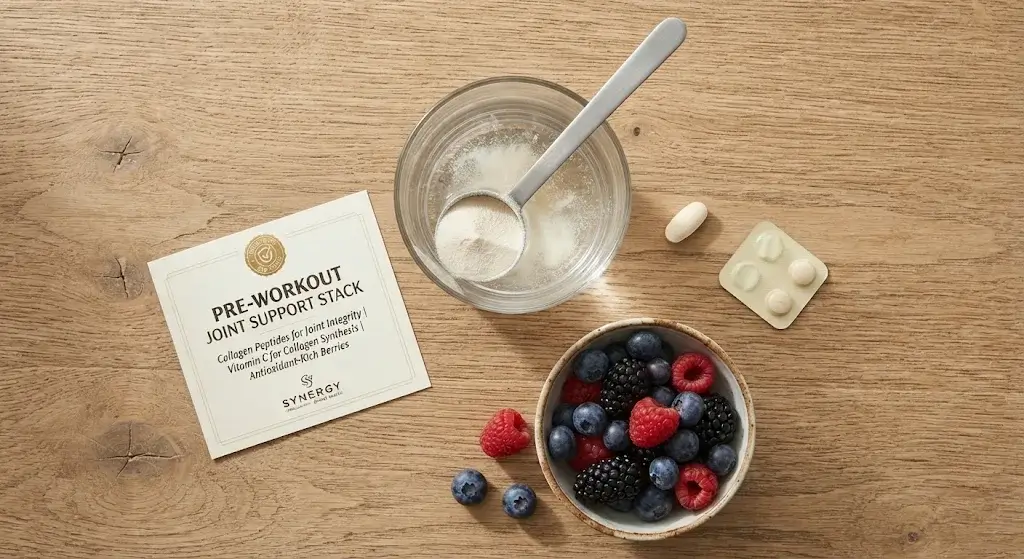
Coach’s Tip: Always pair your collagen dose with at least 50 mg of vitamin C. This is easily achieved by mixing your collagen powder into a glass of orange juice, adding it to a smoothie with strawberries, or simply taking a basic 500 mg vitamin C tablet alongside your collagen serving. For a deeper dive into timing, read our guide on the best time to take collagen powder for skin absorption and joint targeting.
3. Timing Around Workouts
If you are using collagen to support joint health and tendon resilience, timing matters. Research suggests that consuming collagen peptides 45 to 60 minutes before exercise maximizes the delivery of amino acids to the connective tissues precisely when they are being mechanically stressed. The increased blood flow from exercise shuttles the collagen peptides directly into the tendons and ligaments you are working.
Sample Weekly Routine: Combining Collagen with Joint-Friendly Training
Supplements work best when paired with the right stimulus. To improve joint health and skin elasticity, you must combine oral collagen with progressive, joint-friendly resistance training. Below is a practical weekly framework.
Daily Supplementation Protocol:
- Morning (or 45 mins pre-workout): 15 grams of hydrolyzed collagen peptides + 500 mg Vitamin C in 16 oz (473 ml) of water or a smoothie.
- Note: While collagen is a protein, it is not a complete protein because it lacks tryptophan. Do not count it toward your primary daily protein intake for metabolism and muscle-building goals. Continue to eat whole-food protein sources like chicken, fish, eggs, or legumes.
Sample Joint-Friendly Training Day (Lower Body Focus):
- Warm-up (5-10 mins): Stationary bike or brisk walk to increase synovial fluid production in the knees and hips.
- Exercise 1: Box Squats (Regression for knee pain)
- Sets/Reps: 3 sets of 8–10 reps
- Tempo: 3 seconds down, 1 second pause on the box, 1 second up.
- Form Cue: Keep your chest up and push your knees outward. The box prevents excessive knee travel, reducing shear force while still loading the tendons.
- Exercise 2: Romanian Deadlifts (RDLs)
- Sets/Reps: 3 sets of 10–12 reps
- Weight: Start with 15 lb (7 kg) dumbbells, progress to 35 lb (16 kg) as form allows.
- Form Cue: Hinge at the hips, keeping a slight bend in the knees. Feel the stretch in your hamstrings. This strengthens the posterior chain without compressing the spine.
- Exercise 3: Seated Leg Curls
- Sets/Reps: 3 sets of 12–15 reps
- Form Cue: Control the weight on the way down. Strengthening the hamstrings balances the forces on the knee joint, protecting the anterior cruciate ligament (ACL).

Progression Strategy:
Start with bodyweight or light resistance for the first 2 weeks. Focus entirely on the tempo and feeling the target muscles work. Once the movement feels smooth and pain-free, increase the weight by 5 lb (2.2 kg) increments. This gradual progression safely stimulates tendon remodeling without causing inflammation.
Common Mistakes to Avoid
Even with the best intentions, clients often make errors that blunt the benefits of collagen supplementation.
Common Mistake: Thinking collagen is a magic bullet that replaces a poor diet or fixes severe joint damage overnight.
The Fix: Collagen is a supplement, not a substitute. It supports the body’s natural repair processes, but it cannot regenerate bone-on-bone arthritis. Furthermore, many people forget that overall nutrition matters. Supporting your body with nutrients that support normal energy metabolism and a balanced diet is foundational. Also, manage your expectations: it typically takes 8 to 12 weeks of consistent use to notice visible changes in skin or measurable reductions in joint pain. Learn more about how long for collagen supplements to work on your specific tissues.
Safety Notes: Who Should Be Careful?
Collagen peptides are generally recognized as safe (GRAS) by the FDA, and adverse effects are rare. However, certain populations should exercise caution or consult a healthcare provider before starting supplementation.
- Allergies: Marine collagen is derived from fish. If you have a shellfish or fish allergy, you must avoid marine collagen and opt for bovine or porcine sources. Always check the label for cross-contamination warnings.
- Kidney Disease: Because collagen is a protein, individuals with chronic kidney disease (CKD) or those on protein-restricted diets should consult their nephrologist before adding collagen peptides to their routine.
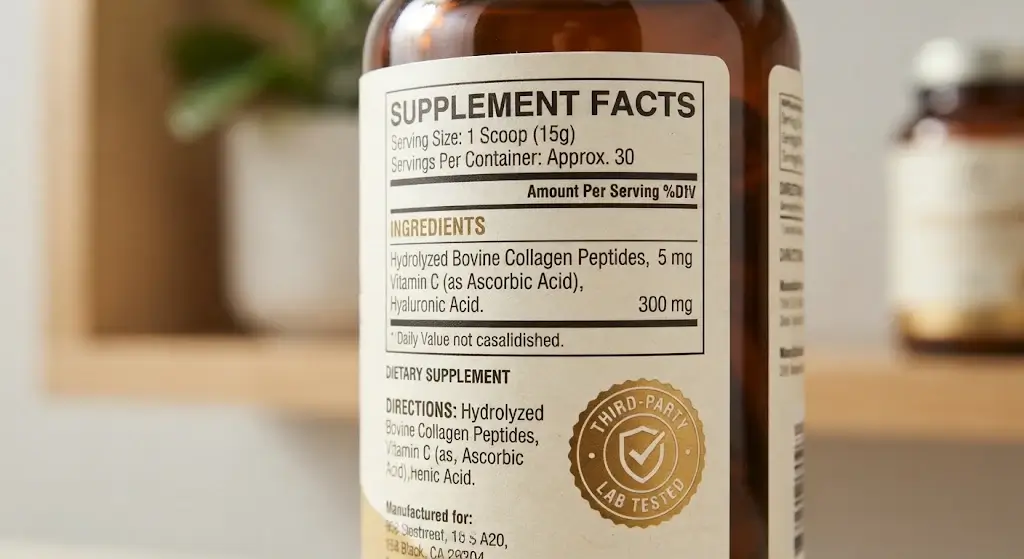
- Histamine Intolerance: Some fermented or poorly processed collagen supplements can be high in histamines, which may trigger headaches or digestive issues in sensitive individuals. Look for high-quality, third-party tested brands.
- Pregnancy and Breastfeeding: While collagen is a natural protein, there is limited clinical research on high-dose collagen supplementation during pregnancy. It is best to get amino acids from whole food sources like bone broth and lean meats during this time, or get explicit clearance from your obstetrician.
Related Tips for Holistic Joint and Skin Health
Collagen is highly effective, but it works best as part of a broader lifestyle strategy.
- Hydration is Non-Negotiable: The extracellular matrix in your skin and the synovial fluid in your joints are predominantly water. Aim for at least half your body weight in ounces of water daily. For example, a 160 lb (72 kg) person should drink a minimum of 80 oz (2.3 liters) of water.
- Add Omega-3s: Omega-3 fatty acids possess potent anti-inflammatory properties that complement collagen’s structural support. Consider adding fatty fish like salmon to your diet or discussing an omega-3 supplement with your doctor. You can explore more about omega-3 fatty acids for skin hydration and inflammation control.
- Manage Stress and Sleep: High cortisol levels from chronic stress break down collagen fibers in the skin and impair tissue recovery. Prioritize 7–9 hours of quality sleep per night. If you are over 40, learning how to increase metabolism naturally after 40 also involves prioritizing sleep and stress management to keep hormonal balance in check.
- Consider Synergistic Antioxidants: Antioxidants protect existing collagen from free radical damage caused by UV exposure and pollution. Ingredients like astaxanthin are highly regarded for this. Read about the benefits of an astaxanthin supplement for skin glow and anti-aging support.
- Check for Deficiencies: Sometimes, poor tissue repair is linked to underlying micronutrient gaps. Ensure you are getting enough vitamins that support metabolism and tissue repair, such as zinc, copper, and vitamin A.
Frequently Asked Questions (FAQ)
1. What is the best time to take collagen for skin and joints?
For general skin health, timing is flexible; take it whenever you will remember it consistently. For joint and tendon health, the optimal time is 45 to 60 minutes before resistance training or physical activity. This ensures amino acids are circulating in your blood when mechanical loading increases blood flow to the connective tissues.
2. Does collagen powder really work for joint pain?
Yes, clinical research suggests it can help. Multiple studies show that daily supplementation with 10 grams of hydrolyzed collagen reduces activity-related joint pain in athletes and older adults. It works by stimulating cartilage cells to repair the extracellular matrix, though it is not a cure for severe osteoarthritis.
3. How much collagen should I take daily for skin elasticity?
Studies demonstrate that 2.5 to 5 grams of specific hydrolyzed collagen peptides per day is sufficient to improve skin elasticity, hydration, and dermal collagen density over an 8- to 12-week period. For joint support, a higher dose of 10 to 15 grams is typically recommended.
4. Can collagen supplements reverse joint damage?
No, collagen supplements cannot reverse severe structural joint damage, such as bone-on-bone osteoarthritis or torn ligaments. However, they can help slow further degradation, reduce inflammation, and improve the health of the remaining cartilage and surrounding tendons, leading to less pain and better mobility.
5. What type of collagen is best for skin and joints?
For skin elasticity, hair, and nails, Type I and Type III collagen (usually from bovine or marine sources) are the most effective. For targeted joint cartilage support, undenatured Type II collagen is often recommended, as it specifically targets the cartilage in your joints through immune-modulating pathways.
6. Are there any side effects of taking oral collagen?
Collagen is generally very safe and well-tolerated. Mild side effects can include a feeling of fullness, mild heartburn, or an unpleasant taste in the mouth. Those with fish or shellfish allergies should avoid marine collagen. Always choose third-party tested products to ensure purity and avoid heavy metal contamination.
Conclusion
Understanding how does oral collagen improve skin elasticity and joint health empowers you to make informed decisions about your long-term wellness. By providing your body with bioavailable glycine, proline, and hydroxyproline, hydrolyzed collagen peptides actively support fibroblast function, skin hydration, and cartilage synthesis. When paired with adequate vitamin C, proper hydration, and joint-friendly resistance training, collagen becomes a powerful tool in your health arsenal.
Remember that consistency is key. Give your body 8 to 12 weeks of daily supplementation to see and feel the results. Always prioritize high-quality, third-party tested products, and listen to your body as you progress.