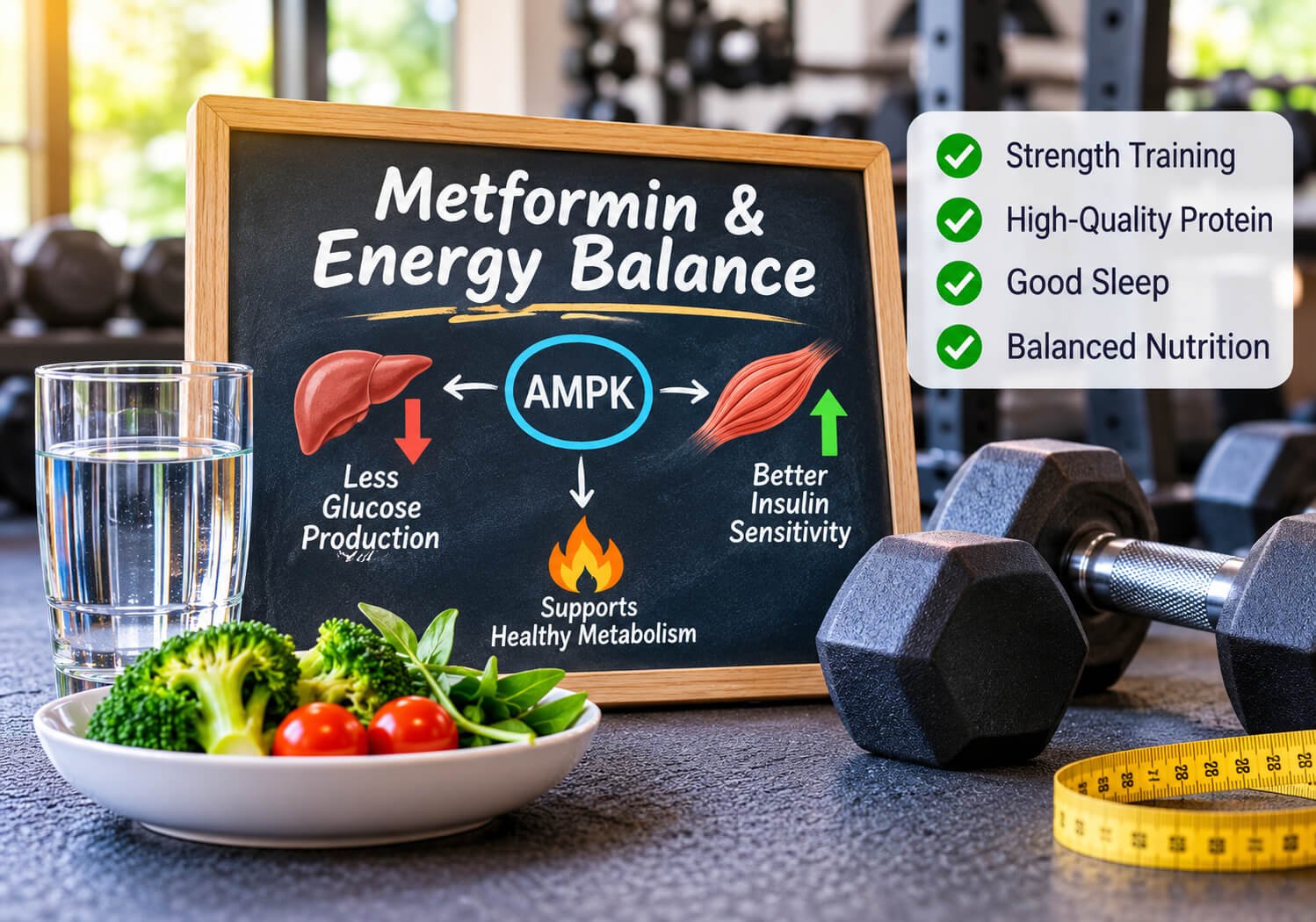
Understanding what role does metformin play in energy balance regulation is critical for anyone managing metabolic health while pursuing fitness goals. As a certified strength and conditioning coach, I regularly work with clients over 40 who are prescribed metformin for insulin resistance, prediabetes, or general metabolic health. While I do not prescribe medication, understanding the science behind your prescription helps us optimize your nutrition and workout programming.
Many clients worry that metabolic medications will ruin their gym progress or drain their energy. The truth is more nuanced. Metformin changes how your cells process fuel, which can be highly beneficial for long-term health. However, it also requires smart adjustments to your training and diet to ensure you continue building strength and maintaining muscle mass. This guide breaks down the science, the practical impacts on your workouts, and the exact steps you can take to thrive.
Quick Answer
Metformin primarily regulates energy balance by activating the AMPK pathway, which reduces liver glucose production and improves insulin sensitivity. This helps stabilize blood sugar and supports metabolic health. However, it may slightly blunt muscle growth signals, meaning you must prioritize adequate protein intake and heavy resistance training to maintain muscle mass.
The Science Behind Metformin and Energy Balance Regulation
To understand what role does metformin play in energy balance regulation, we have to look at the cellular level. Think of your cells as having a “fuel thermostat.” When energy is low, the thermostat turns on systems to create more energy and stop storing fat. Metformin essentially tricks this thermostat into turning on.
The primary mechanism is the activation of an enzyme called AMP-activated protein kinase (AMPK). According to research published by the National Institutes of Health (NIH), AMPK acts as a master regulator of cellular energy homeostasis. When metformin activates AMPK, it triggers several key responses:
- Reduced Hepatic Glucose Production: The liver stops pumping excess sugar into the bloodstream. This lowers fasting blood glucose levels and reduces the need for high insulin secretion.
- Improved Insulin Sensitivity: Skeletal muscle becomes more efficient at pulling glucose from the blood to use as fuel, rather than storing it as fat.
- Mitochondrial Modulation: Metformin mildly inhibits mitochondrial complex I. This temporarily lowers ATP (cellular energy) production, which further signals the AMPK pathway to improve metabolic efficiency over time.
Because of these mechanisms, metformin is often described as a “caloric restriction mimetic.” It provides some of the metabolic benefits of fasting or eating fewer calories without actually requiring you to starve. This is why it is frequently studied for its potential role in longevity and metabolic health.
How Metformin Affects Your Workouts and Muscle Growth
While the metabolic benefits are clear, there is a catch for fitness enthusiasts. The same AMPK activation that improves metabolic health can interfere with muscle growth.
Muscle hypertrophy (growth) is primarily driven by a different pathway called mTOR (mammalian target of rapamycin). When you lift weights and consume protein, mTOR is activated, signaling your body to build new muscle tissue. Research in the Journal of Clinical Endocrinology & Metabolism has shown that metformin can attenuate (reduce) muscle hypertrophy in older adults undergoing resistance training. Essentially, AMPK and mTOR act like a seesaw; when one goes up, the other tends to go down.

Does this mean you should stop lifting weights? Absolutely not. The health benefits of maintaining muscle mass far outweigh the slight blunting effect of the medication. Muscle tissue is the largest sink for glucose disposal in the body. More muscle means better natural blood sugar control. The key is to adjust your training and nutrition to overcome this hurdle.
Practical Training Adjustments for Metformin Users
If you are taking metformin, your training program must be intentional. You cannot rely on “junk volume” (endless sets of light weights). You need to provide a strong, clear signal to your mTOR pathway to build muscle. Here is how to structure your training.
1. Prioritize Heavy, Compound Movements
Focus on exercises that recruit multiple large muscle groups. These generate the highest mechanical tension, which is the primary driver of mTOR activation.
- Barbell Back Squat: 3–4 sets of 6–8 reps. Rest 2–3 minutes between sets. Use a weight that is challenging but allows strict form (e.g., 135 lb / 61 kg for a trained male, or 65 lb / 29 kg for a trained female).
- Dumbbell Bench Press: 3–4 sets of 8–10 reps. Rest 90–120 seconds.
- Bent-Over Barbell Row: 3–4 sets of 8–10 reps. Rest 90–120 seconds.

2. Control the Tempo
Slowing down the eccentric (lowering) phase of a lift increases muscle damage and metabolic stress, which helps stimulate growth. Aim for a 3-1-1-0 tempo: 3 seconds lowering, 1-second pause at the bottom, 1 second lifting, 0 seconds rest at the top.
3. Regression and Progression
- Regression: If a barbell back squat is too demanding, regress to a goblet squat holding a 25 lb (11 kg) kettlebell at chest height. This reduces spinal loading while still targeting the quads and glutes.
- Progression: Add a 2-second isometric pause at the bottom of the squat or bench press to eliminate momentum and increase time under tension.
Coach’s Tip
Time your workouts strategically. If you experience mild gastrointestinal discomfort or fatigue from metformin, schedule your hardest lifting sessions for the time of day when you feel most energetic, often a few hours after your morning dose and a solid meal.
Common Mistake
Doing excessive steady-state cardio (like 60+ minutes of jogging) immediately after heavy lifting. While cardio is great for heart health, combining high-volume cardio with metformin can amplify the AMPK signal, further suppressing muscle growth. Keep cardio sessions separate from lifting by at least 6 hours, or do them on alternate days.
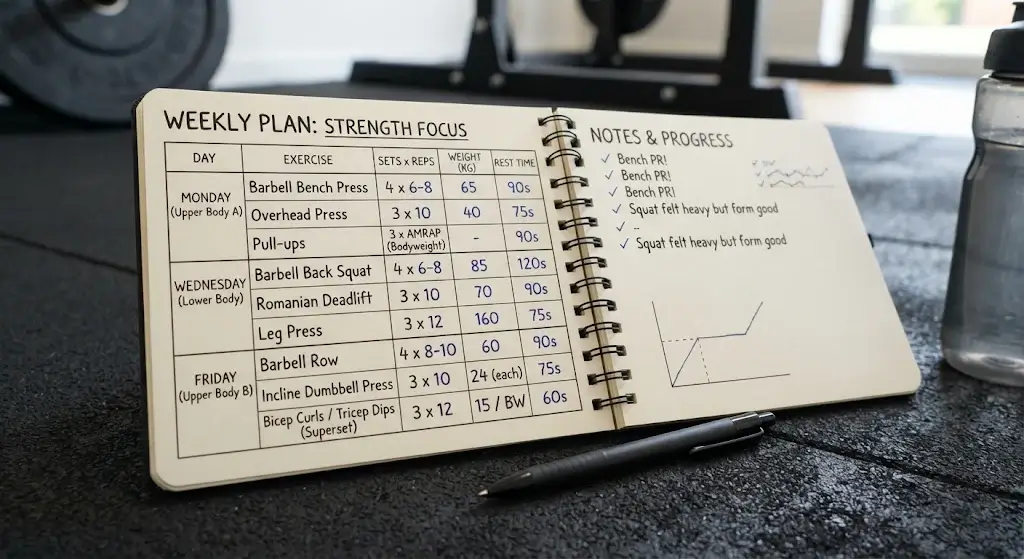
Sample Weekly Workout Plan
This sample schedule balances resistance training with metabolic health, ensuring you stimulate muscle growth without overtaxing your recovery.
| Day | Focus | Exercises | Sets x Reps | Rest |
| Monday | Lower Body Strength | Barbell Squat, Romanian Deadlift, Leg Press, Calf Raises | 3-4 x 6-10 | 2-3 min |
| Tuesday | Upper Body Strength | Dumbbell Bench Press, Seated Cable Row, Overhead Press, Bicep Curls | 3-4 x 8-10 | 90-120 sec |
| Wednesday | Active Recovery | 30-minute brisk walk (2 miles / 3.2 km) + 15 min mobility stretching | N/A | N/A |
| Thursday | Lower Body Hypertrophy | Goblet Squat, Leg Curl Machine, Walking Lunges (20 yards / 18 m), Plank | 3 x 10-15 | 60-90 sec |
| Friday | Upper Body Hypertrophy | Incline Dumbbell Press, Lat Pulldown, Lateral Raises, Tricep Pushdowns | 3 x 10-15 | 60-90 sec |
| Saturday | Metabolic Conditioning | 20-minute interval cycling or rowing (1 min hard, 2 min easy) | N/A | N/A |
| Sunday | Rest | Complete rest, light walking, focus on sleep and meal prep | N/A | N/A |
Nutrition and Recovery Strategies to Optimize Energy
Training is only half the equation. Because metformin alters how your body handles energy, your nutrition and recovery must be dialed in to support your goals.
1. Maximize Protein Intake
To counteract the mild mTOR-blunting effect of metformin, you need a stronger protein signal. Aim for 0.8 to 1.0 grams of protein per pound of body weight (1.8 to 2.2 g per kg) daily. Distribute this evenly across 3–4 meals. Research on protein intake and metabolism shows that spreading protein intake maximizes muscle protein synthesis throughout the day. Include high-quality sources like chicken breast, lean beef, eggs, Greek yogurt, or whey protein isolate.
2. Leverage Dietary Fiber
Metformin can cause mild digestive upset in some users. Pairing your meals with high-fiber foods can stabilize blood sugar further and improve gut comfort. Learn more about how dietary fiber helps with appetite and weight management. Aim for 25–35 grams of fiber daily from vegetables, legumes, and whole grains.
3. Prioritize Sleep for Metabolic Health
Poor sleep drastically worsens insulin resistance, working against the benefits of your medication. Adults should aim for 7–9 hours of quality sleep per night. Understanding how sleep affects metabolism and weight management is just as important as the medication itself. Keep your bedroom cool (around 65°F / 18°C), dark, and screen-free for an hour before bed.
4. Monitor Vitamin B12 Levels
Long-term metformin use is linked to reduced absorption of vitamin B12 in the intestines, which can lead to fatigue, weakness, and nerve issues. The NIH Office of Dietary Supplements recommends that individuals on metformin have their B12 levels checked annually. If deficient, a doctor may recommend a B12 supplement.
Safety Notes and Who Should Be Careful
While metformin is one of the most widely studied and safest medications in the world, it is not without considerations, especially for active individuals.
- Gastrointestinal Distress: Nausea, diarrhea, and stomach cramps are common when starting. Taking the medication with a large meal or asking your doctor about an extended-release (ER) formulation can help.
- Lactic Acidosis Risk: This is a rare but serious condition. It is more likely if you have severe kidney impairment, liver disease, or consume excessive alcohol. If you experience unusual muscle pain, trouble breathing, or severe weakness during a workout, stop exercising and seek medical attention immediately.
- Hypoglycemia with Intense Exercise: While metformin alone rarely causes low blood sugar, combining it with intense, prolonged exercise and inadequate carbohydrate intake can drop your glucose levels. Always keep a fast-acting carbohydrate (like a small piece of fruit or glucose tablets) handy during long training sessions.
- Consult Your Healthcare Provider: Never start, stop, or change the dosage of your medication without speaking to your doctor. If you are planning a major change in your exercise routine, clear it with them first.

Related Tips for Natural Metabolic Support
Medication is a powerful tool, but it works best alongside foundational lifestyle habits. If you want to maximize your metabolic health, consider these evidence-based strategies:
- Build Metabolic Flexibility: Train your body to switch between burning carbs and fats efficiently. You can learn how to boost metabolic flexibility without crash dieting through structured nutrition and varied training intensities.
- Manage Cravings Naturally: Blood sugar swings can trigger intense hunger. Discover practical ways to manage food cravings without supplements by stabilizing your meals with protein and fiber.
- Support Insulin Sensitivity: Certain natural compounds may complement your efforts. Read about how berberine supports metabolic health as a potential natural adjunct, but always clear it with your doctor to avoid interactions.
Frequently Asked Questions (FAQ)
1. Does metformin cause fatigue during exercise?
Metformin itself does not directly cause fatigue, but it can mildly reduce maximal exercise capacity in some individuals by altering mitochondrial energy production. Ensuring adequate carbohydrate intake before workouts and staying hydrated can help mitigate this feeling.
2. Can I still build muscle while taking metformin?
Yes, you can absolutely build muscle. While research suggests metformin may slightly blunt the rate of muscle hypertrophy, consistent heavy resistance training and high protein intake (0.8–1.0 g per lb of body weight) will still drive significant muscle growth and strength gains.
3. What role does metformin play in energy balance regulation compared to diet?
Metformin acts as a “caloric restriction mimetic” by activating AMPK, similar to the cellular signals sent by eating fewer calories. However, it does not replace the need for a nutritious diet. It works synergistically with a balanced diet to improve insulin sensitivity and reduce liver glucose output.
4. Should I take metformin before or after my workout?
Timing depends on your doctor’s instructions and your personal tolerance. Many people take it with their largest meal to reduce stomach upset. If you notice GI distress during workouts, avoid taking it immediately before training. Always follow your prescribing physician’s guidance.
5. Does metformin interfere with protein synthesis?
Metformin can mildly inhibit the mTOR pathway, which is responsible for muscle protein synthesis. However, this effect is largely overcome by consuming a sufficient amount of high-quality protein (20–40 grams per meal) and performing progressive overload resistance training.
6. Is it safe to drink alcohol while on metformin and exercising?
It is best to limit or avoid alcohol. Alcohol increases the risk of lactic acidosis when combined with metformin and impairs muscle recovery, dehydration, and sleep quality, all of which negatively impact your fitness goals.
Conclusion
Understanding what role does metformin play in energy balance regulation empowers you to take control of your fitness journey. By activating the AMPK pathway, metformin improves insulin sensitivity, reduces liver glucose production, and supports long-term metabolic health. While it may present a minor hurdle to muscle growth by mildly inhibiting the mTOR pathway, this is easily managed.
As your coach, my advice is simple: do not skip the weights. Lift heavy, prioritize compound movements, and eat enough protein to fuel your recovery. Pair your medication with quality sleep, adequate fiber, and consistent training. By aligning your lifestyle with the science, you can achieve robust metabolic health and a strong, capable body.