You’ve spent the summer outdoors, and now your skin looks rough, mottled, and dotted with dark patches that won’t fade. You’ve tried SPF 50, wide-brim hats, and aloe vera after every session, but the damage still crept in. That’s where a polypodium leucotomos supplement for sun damage and dark spots enters the conversation. This oral extract from the Mexican sun fern has been studied for its ability to add a layer of systemic protection against UV radiation, calm skin inflammation, and support the skin’s natural repair cycle.
I’ve spent years guiding clients through supplement stacks, and I’ll be straight with you: no pill replaces sunscreen. But the research on this particular fern extract is more robust than most “sunscreen in a bottle” claims. Below, I break down what the science actually shows, how to use it correctly, and where it fits into a realistic skin-protection routine.
Quick Answer
Polypodium leucotomos is an oral fern extract studied for photoprotection. Research suggests it may reduce UV-induced inflammation, lower sunburn severity, and support skin repair when taken alongside (not instead of) broad-spectrum sunscreen. Typical studied doses range from 240 to 720 mg daily. It is not a treatment for existing dark spots but may help prevent new UV-driven hyperpigmentation.
What the Research Actually Says About Photoprotection
The fern Polypodium leucotomos (family Polypodiaceae) has been used in traditional Mexican medicine for centuries. Modern clinical interest began in the 1990s, when researchers isolated the extract’s active components—polypodosides, flavonoids, and phenolic acids—and tested them in controlled human trials.
The primary mechanism is antioxidant and anti-inflammatory. UV radiation, especially UVA (320–400 nm) and UVB (280–320 nm), triggers a cascade in the epidermis: reactive oxygen species (ROS) flood the cells, inflammatory cytokines are released, and melanocytes ramp up melanin production. That melanin surge is what creates the dark spots and uneven tone you see weeks after a sun exposure.
Several randomized, double-blind, placebo-controlled trials have examined the extract’s effects:
- Reduced erythema (redness) and edema (swelling). In a split-arm study, participants who took the oral extract and then received a standardized UVB dose showed significantly less redness and swelling compared to the placebo arm. The extract appeared to blunt the inflammatory response before it fully developed .
- Thickened stratum corneum. One study reported a measurable increase in the thickness of the outermost skin layer after eight weeks of daily supplementation, suggesting the extract may support the skin’s structural barrier .
- Lower oxidative markers. Serum and skin-biopsy measurements showed reduced lipid peroxidation and lower levels of pro-inflammatory markers (IL-1α, IL-6, TNF-α) in the supplement group versus placebo].
- Support in melasma and photoaging. A smaller open-label trial in women with melasma found that oral polypodium leucotomos, combined with a standard topical regimen, was associated with a modest reduction in lesion darkness over 12 weeks. The authors noted the sample size was small and called for larger trials .
A 2020 systematic review in Photodermatology Photoimmunology & Photomedicine concluded that the evidence supports a modest but consistent photoprotective effect when the extract is used as an adjunct to topical sunscreen, not as a standalone.
What It Does NOT Do
It’s just as important to set clear boundaries:
- It is not a substitute for SPF sunscreen. No oral supplement has been shown to provide an SPF equivalent to a topical product.
- It does not erase existing dark spots the way a topical hydroquinone, azelaic acid, or a professional chemical peel might.
- It is not FDA-approved as a drug for any skin condition. It is sold as a dietary supplement.
Coach’s Tip: Think of polypodium leucotomos as the “insurance policy” layer in your sun-protection stack. Sunscreen is your primary defense. The supplement is the backup that may soften the inflammatory hit when a few UV photons slip through. Never skip the sunscreen because you took a capsule.
How It Works: The Step-by-Step Mechanism
Understanding the mechanism helps you set realistic expectations. Here’s the sequence, simplified:
- You take the capsule. The extract is absorbed in the small intestine and enters the bloodstream.
- Active compounds reach the skin. Polypodosides and flavonoids are distributed systemically, including to the epidermis and dermis.
- Free radicals are neutralized. The antioxidants in the extract scavenge ROS generated by UV exposure, reducing oxidative stress in skin cells.
- Inflammatory signaling is dampened. Lower levels of IL-1α, IL-6, and TNF-α mean less redness, less swelling, and less “after-burn” sensitivity.
- Melanocyte overdrive is moderated. By reducing the inflammatory trigger, the extract may help prevent the exaggerated melanin response that leads to new dark spots.
- Barrier support. Some evidence suggests the extract supports epidermal cell turnover and stratum corneum integrity, helping the skin recover faster after UV exposure.
This is why the effect is described as adjunctive—it works with your skin’s own defenses and with topical sunscreen, not in place of them.
Dosing, Timing, and Practical Use
Here’s a practical dosing table based on the ranges used in published clinical trials:
| Goal | Typical Studied Dose | Timing | Duration in Trials |
| General photoprotection (outdoor workers, athletes) | 240–480 mg/day | 30–60 min before sun exposure | 4–12 weeks |
| Support for melasma / dark-spot prevention | 480–720 mg/day | With a meal, morning | 8–12 weeks |
| Post-sunburn recovery (adjunct) | 480 mg/day | With food, twice daily | 2–4 weeks |
A few practical notes:
- Take it with food. The extract contains phenolic compounds that can cause mild stomach upset on an empty stomach.
- Consistency matters. The antioxidant and anti-inflammatory effects build over days to weeks. You won’t feel a difference after one dose.
- Start at the lower end. If you’ve never taken the supplement, begin at 240 mg for the first week, then move to your target dose.
- Pair with other skin-supportive nutrients. Vitamin C (500–1,000 mg), vitamin E (400 IU), and omega-3 fatty acids have their own photoprotective and anti-inflammatory data. You can learn more about how omega-3 fatty acids support skin hydration and reduce inflammation in a complementary way.
Common Mistake: Buying a cheap, unbranded “fern extract” capsule without checking the label for the specific Polypodium leucotomos extract standardization. Many products list a generic “plant extract” without specifying the active polypodoside content. Look for a product that states the extract source, the mg of standardized extract per capsule, and third-party testing (USP, NSF, or ConsumerLab verification). The same ingredient-evaluation principles I use for how to evaluate ingredients in weight-management supplements apply here: read the label, check for third-party testing, and avoid proprietary blends that hide dosages.
Can It Help With Dark Spots Specifically?
This is the question most people ask, and the honest answer is maybe, with caveats.
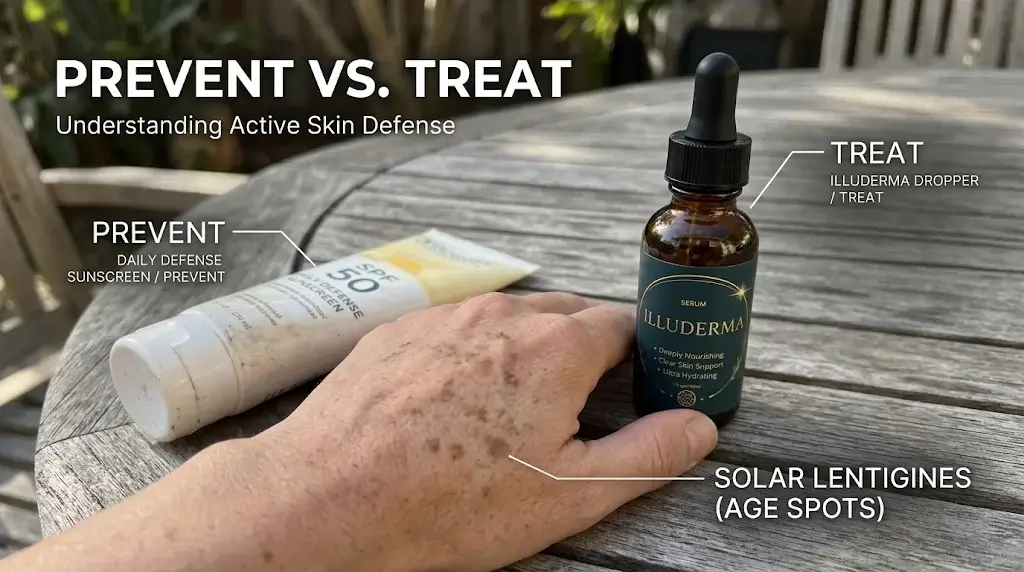
Dark spots (solar lentigines, post-inflammatory hyperpigmentation, melasma) are driven by excess melanin production in melanocytes. UV exposure is the #1 external trigger. By reducing the inflammatory and oxidative signals that tell melanocytes to overproduce melanin, polypodium leucotomos may help prevent new spots from forming and may slow the darkening of existing ones.
However:
- No trial has shown it removes established dark spots on its own.
- For visible improvement in existing pigmentation, dermatologists typically recommend a combination of a topical agent (hydroquinone 2–4%, azelaic acid 15–20%, retinoids, or a chemical peel) plus strict daily SPF 30+ use.
- The supplement’s role is supportive and preventive, not corrective.
If you’re dealing with persistent or spreading dark spots, see a board-certified dermatologist before starting any new supplement. They can rule out conditions like lentigo maligna and tailor a treatment plan.
Safety, Side Effects, and Who Should Be Cautious
Polypodium leucotomos is generally well tolerated in the doses studied (up to 720 mg/day for 12 weeks). The most commonly reported side effects in trials were mild and included:
- Transient nausea or stomach discomfort (usually resolved by taking with food)
- Rare mild headache
Who should talk to a doctor before taking it:
- Pregnant or breastfeeding women (no safety data)
- Children under 18 (no pediatric trials)
- People taking blood thinners (warfarin, apixaban, etc.)—the extract’s anti-inflammatory properties could theoretically interact
- People with known fern or Polypodiaceae family allergies
- People with autoimmune skin conditions (lupus, vitiligo) who are on immunosuppressants
There is no established upper daily limit from a regulatory body. Sticking to the 240–720 mg range used in published trials is the safest approach. If you’re already taking other supplements for skin or general health, check for interactions with your pharmacist. For a broader look at which supplements may support overall wellness safely, the same “start low, go slow, check with your provider” rule applies.
How to Build a Realistic Sun-Protection + Supplement Routine
Here’s a simple daily routine that layers topical and oral protection:
Morning (before heading outside)
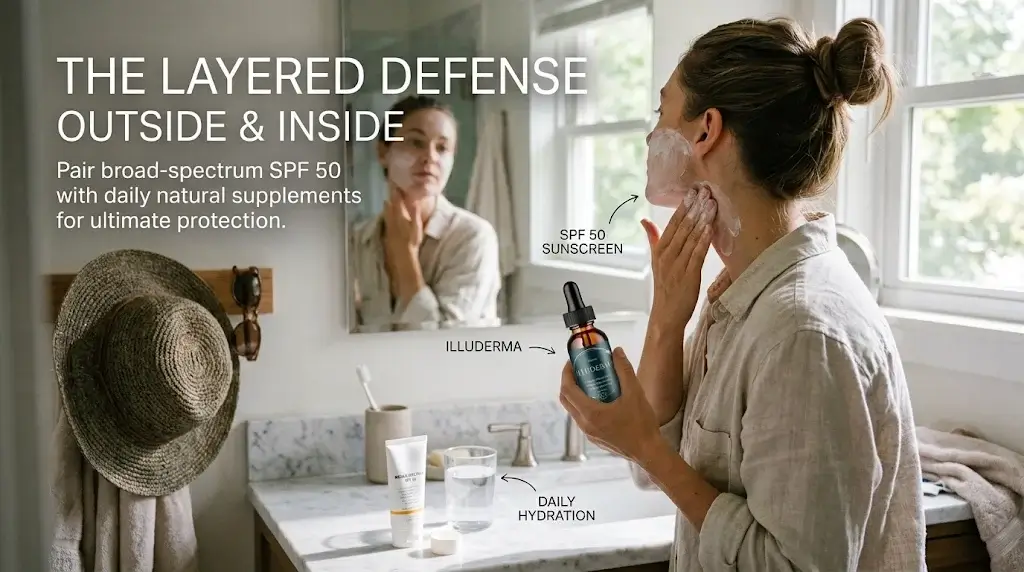
- Apply broad-spectrum SPF 30+ sunscreen to all exposed skin. Reapply every 2 hours if you’re in direct sun.
- Take your polypodium leucotomos capsule (240–720 mg) with breakfast.
- Optional: Add 500 mg vitamin C and 400 IU vitamin E with the same meal for additional antioxidant support.
- Wear a wide-brim hat, UV-blocking sunglasses, and a long-sleeve shirt if you’ll be outdoors for more than 30 minutes.
Midday (if still outdoors)
- Reapply sunscreen every 2 hours, or immediately after swimming or heavy sweating.
- Stay in shade between 10 a.m. and 4 p.m. when UV index is highest, per CDC sun safety guidelines.
Evening
- Wash off sunscreen with a gentle cleanser.
- Apply a retinoid or vitamin C serum if your dermatologist has recommended one for pigmentation.
- Moisturize to support the skin barrier overnight.
Weekly / Seasonal
- Check your supplement supply and reorder before you run out. Consistency is key.
- Schedule a dermatology check-up at least once a year if you have a history of sun damage, moles, or dark spots.
Coach’s Tip: If you’re also taking collagen for skin elasticity, timing matters. Research suggests collagen peptides are best absorbed when taken on an empty stomach or paired with vitamin C. You can take your collagen in the evening and your polypodium leucotomos in the morning to avoid any absorption overlap and keep your routine simple.
What About Heliocare vs. Generic Brands?
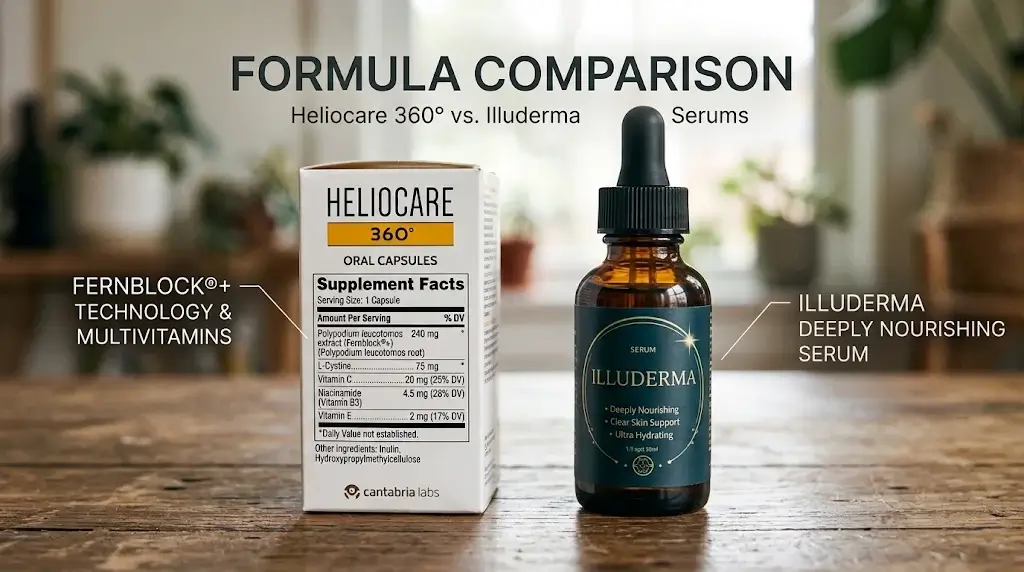
The most studied brand of polypodium leucotomos is Heliocare (by Cantabria Labs, Spain). Most of the clinical trials cited above used Heliocare 360° or the original Heliocare formulation. That doesn’t mean generic versions won’t work, but it does mean the dose-response data is specific to that brand’s extraction process.
When shopping for a generic or store-brand polypodium leucotomos:
- Look for standardized extract (the label should state the % of active phenolics or polypodosides).
- Check for third-party testing (USP Verified, NSF International, or ConsumerLab.com).
- Avoid products that list “proprietary blend” without a clear mg amount.
- Read the Supplement Facts panel carefully. You want Polypodium leucotomos extract, not a vague “fern complex.”
- Compare the cost per mg of active extract, not just the price per bottle.
If you’re also considering other skin-targeted supplements like astaxanthin for its antioxidant and photoprotective properties, astaxanthin for skin glow and anti-aging is a separate but complementary pathway. You don’t need both, but they work through different mechanisms.
When to See a Doctor Instead of Relying on a Supplement
A polypodium leucotomos supplement is a supportive tool, not a medical treatment. See a dermatologist or primary-care physician if:
- A dark spot is changing in size, shape, color, or texture (the ABCDEs of melanoma: Asymmetry, Border irregularity, Color variation, Diameter > 6 mm, Evolving).
- You have a history of skin cancer or a strong family history.
- Your dark spots are spreading rapidly or appearing in areas that don’t get sun exposure.
- You are pregnant, postpartum, or on hormonal therapy and notice new or worsening pigmentation (melasma is common in these situations and may resolve after hormonal changes).
- You experience persistent redness, peeling, or blistering that doesn’t improve within a week of sun exposure.
This article is for general information and is not a substitute for advice from a doctor or physical therapist.
FAQ
Does polypodium leucotomos actually protect against sunburn?
Research from multiple randomized trials suggests it may reduce the severity of sunburn (erythema and edema) when taken 30–60 minutes before UV exposure. The effect is modest and works best as a supplement to topical sunscreen, not a replacement.
Can oral fern extract replace sunscreen?
No. No oral supplement has demonstrated an SPF equivalent to a topical broad-spectrum sunscreen. The CDC and dermatology guidelines are clear: sunscreen, protective clothing, and shade are the primary defenses. The supplement is an adjunct.
What dose of polypodium leucotomos is best for dark spots?
Trials studying melasma and hyperpigmentation have used 480–720 mg per day for 8–12 weeks. Start at 240 mg for the first week to assess tolerance, then increase. Always take with food.
How long do I need to take it before seeing results?
Most trials measured outcomes at 4, 8, or 12 weeks. You likely won’t notice a difference in the first few days. Give it at least 6–8 weeks of consistent daily use before evaluating whether it’s helping.
Is polypodium leucotomos safe to take every day?
In published trials, daily use up to 720 mg for 12 weeks was well tolerated. Long-term safety data beyond 12 weeks is limited. If you plan to take it year-round, check in with your doctor annually.
Can I take polypodium leucotomos with other skin supplements like vitamin C or astaxanthin?
There are no known interactions between polypodium leucotomos and common skin-supportive nutrients like vitamin C, vitamin E, or astaxanthin. Take the fern extract in the morning with food and other supplements at times that suit your routine. If you’re on prescription medications, ask your pharmacist first.
Final Thoughts
A polypodium leucotomos supplement for sun damage and dark spots is one of the more evidence-backed “sunscreen in a bottle” options on the market. The research points to a real, if modest, photoprotective effect: less inflammation, less oxidative stress, and a small but measurable support for the skin’s barrier. It will not erase the dark spots you already have, and it will not let you skip your SPF 50 on a beach day. But as part of a layered routine—sunscreen, protective clothing, shade, and a consistent oral antioxidant strategy—it may help your skin handle UV exposure a little more gracefully over time.
Start at the lower dose, pair it with the habits that actually prevent damage, and give it 8 weeks before judging whether it’s worth keeping in your rotation. And if your dark spots are changing or spreading, that’s a conversation for your dermatologist, not a supplement bottle.