
Best Probiotic Supplements for Bloating and Gas Relief: A Coach’s Buying Guide
Nothing ruins a heavy training session or a tailored outfit faster than sudden, uncomfortable abdominal pressure. As a strength coach, I regularly see athletes and active adults dial in their nutrition, hydration, and workouts, only to get sidelined by stubborn digestive distension after eating a high-protein meal or drinking a post-workout shake. Finding the best probiotic supplements for bloating and gas relief comes down to matching clinically studied bacterial strains to your specific digestive triggers rather than simply buying the bottle with the highest number on the front label.
Before starting any new dietary supplement, especially if you experience chronic gastrointestinal pain or have underlying health conditions, check with a doctor or healthcare provider first.
Quick Answer
For most active adults seeking relief from gas and abdominal pressure, Seed DS-01 Daily Synbiotic is our top overall pick due to its multi-strain clinical backing and nested capsule delivery. Physician’s Choice 60 Billion Probiotic offers the best budget-friendly multi-strain formula, while Align Probiotic 24/7 Digestive Support is the top upgrade pick for targeted, single-strain relief.
Comparison of the Best Probiotic Supplements for Bloating and Gas Relief
Choosing the right supplement requires looking past flashy marketing claims and examining the exact bacterial strains, delivery mechanisms, and independent testing standards. The table below breaks down our top evidence-based picks for digestive comfort.
| Product Name | Key Spec (Strains & CFU) | Delivery & Storage | Best For | Price Range |
| Seed DS-01 Daily Synbiotic | 24 strains; 53.6 Billion AFU | ViaCap nested capsule; shelf-stable | Overall multi-strain gut support | $$$ (45–55/month) |
| Physician’s Choice 60 Billion Probiotic | 10 strains + organic prebiotics; 60 Billion CFU | Acid-resistant vegetarian capsule; shelf-stable | Budget-conscious buyers | $ (20–28/month) |
| Align Probiotic 24/7 Digestive Support | Bifidobacterium longum 35624; 1 Billion CFU | Blister-packed capsule; shelf-stable | Targeted, single-strain gas relief | $$$ (35–48/month) |
| Culturelle Digestive Daily Probiotic | Lactobacillus rhamnosus GG; 10 Billion CFU | Blister-packed capsule; shelf-stable | Travel and routine regularity | $$ (22–30/month) |
| Florastor Daily Probiotic Supplement | Saccharomyces boulardii CNCM I-745; 5 Billion CFU | Vegetarian capsule; shelf-stable | Antibiotic-related digestive upset | $$ (25–35/month) |
| Ritual Synbiotic+ | 2 strains (LGG and BB-12); 11 Billion CFU | Delayed-release capsule; shelf-stable | Minimalist, all-in-one pre/pro/postbiotic | $$$ (50–55/month) |
| Garden of Life Dr. Formulated Once Daily | 14 strains; 30 Billion CFU | Shelf-stable bottle; vegetarian capsule | Whole-food, non-GMO preference | $$ (28–36/month) |
Top 7 Probiotic Supplements for Bloating and Gas Relief
When evaluating the best probiotic supplements for bloating and gas relief, every formula on this list was selected based on strain transparency, clinical research backing, survival through stomach acid, and third-party quality verification.
1. Seed DS-01 Daily Synbiotic (Best Overall)
Who It’s For: Seed DS-01 is designed for active adults, lifters, and individuals looking for a comprehensive daily synbiotic that addresses bloating, irregular bowel movements, and gut barrier integrity without requiring refrigeration.
Key Features: Unlike standard supplements that list Colony Forming Units (CFU), Seed measures potency in Active Fluorescent Units (AFU) at 53.6 billion across 24 clinically studied strains, including Bifidobacterium longum and Lactobacillus plantarum. It uses a proprietary ViaCap delivery system—an outer capsule containing prebiotic polyphenols derived from Indian pomegranate and an inner capsule protecting the live bacteria from stomach acid. Seed conducts rigorous third-party testing for heavy metals, allergens, and potency across every batch.
Pros:
- Nested capsule technology protects live microbes from harsh gastric acid
- Free from common allergens, binders, and fermentable prebiotic fibers (like inulin) that trigger gas
- Transparent strain-level labeling with documented clinical research
Cons:
- Higher monthly price point compared to standard drugstore options
- Requires taking two capsules daily on an empty stomach

2. Physician’s Choice 60 Billion Probiotic (Best Budget Pick)
Who It’s For: This formula is built for everyday gym-goers and budget-minded shoppers who want a high-potency, multi-strain probiotic that covers foundational digestive support without breaking the bank.
Key Features: Physician’s Choice packs 60 billion CFU across 10 diverse probiotic strains, including Lactobacillus acidophilus, Lactobacillus paracasei, and Bifidobacterium lactis. The formula includes a modest organic prebiotic fiber blend alongside acid-resistant delayed-release capsules to help the bacteria reach the small intestine intact. Every batch undergoes third-party testing in the United States for purity and label accuracy.
Pros:
- Very affordable cost per serving compared to boutique brands
- Acid-resistant capsule shell improves bacterial survival rates
- Widely available online and in major retail stores
Cons:
- Contains organic prebiotic fibers (Jerusalem artichoke and chicory root), which may cause mild initial gas in sensitive stomachs
- Strain-specific alphanumeric codes are not fully listed on the front label
3. Align Probiotic 24/7 Digestive Support (Best Single-Strain Upgrade)
Who It’s For: Align is ideal for individuals whose primary complaint is recurring abdominal pressure, lower-belly distension, and unpredictable gas, especially those who have reacted poorly to high-dose, multi-strain blends.
Key Features: Rather than throwing dozens of competing bacteria into one pill, Align relies on a single, patented strain: Bifidobacterium longum 35624 (formerly classified as B. infantis 35624) at 1 billion CFU. Clinical trials published via PubMed Central have examined this specific strain for reducing abdominal discomfort, bloating, and bowel movement difficulty. Each capsule is individually sealed in moisture-blocking foil blister packs to preserve shelf stability.
Pros:
- Backed by extensive human clinical trials specifically targeting bloating and gas
- Low 1 billion CFU dose minimizes the risk of initial digestive adjustment symptoms
- Foil blister packaging protects bacteria from humidity in bathroom cabinets
Cons:
- Expensive per capsule for a single-strain formula
- Contains milk-derived processing ingredients (trace amounts, though labeled gluten-free)
4. Culturelle Digestive Daily Probiotic (Best for Travel and Routine Support)
Who It’s For: Culturelle works well for frequent travelers, busy professionals, and athletes who experience digestive sluggishness when their daily schedule, hydration, or meal timing changes.
Key Features: Each capsule delivers 10 billion CFU of Lactobacillus rhamnosus GG (LGG), one of the most thoroughly researched probiotic strains in modern gastroenterology. According to the National Institutes of Health Office of Dietary Supplements, Lactobacillus species help maintain a balanced intestinal environment and crowd out gas-producing microbes. Culturelle includes 200 mg of inulin prebiotic fiber in its standard daily capsule.
Pros:
- Features the extensively researched LGG strain for predictable digestive support
- Individually blister-packed for easy packing in gym bags or carry-on luggage
- Easy-to-swallow single daily capsule
Cons:
- Added inulin can trigger temporary bloating in people sensitive to FODMAPs
- Single-strain focus lacks Bifidobacterium species
5. Florastor Daily Probiotic Supplement (Best Yeast-Based Probiotic)
Who It’s For: Florastor is the go-to choice for anyone recovering from a round of antibiotics, experiencing loose stools alongside gas, or struggling with traveler’s stomach upset.
Key Features: Unlike bacterial probiotics, Florastor uses 5 billion CFU (250 mg per capsule) of Saccharomyces boulardii CNCM I-745, a beneficial probiotic yeast. Because it is a yeast rather than a bacterium, antibiotics do not wipe it out, allowing you to take it concurrently with prescribed medications to protect your gut lining. The capsules are vegetarian, gluten-free, and shelf-stable for up to three years.
Pros:
- Naturally resistant to antibacterial medications
- Helps restore normal fluid balance and stool consistency quickly
- Does not colonize permanently, clearing naturally within days of stopping
Cons:
- Contains a small amount of lactose (33 mg per capsule), making it unsuitable for severe dairy allergies
- Requires taking two capsules once or twice daily for full dosing
6. Ritual Synbiotic+ (Best Minimalist All-in-One Formula)
Who It’s For: Ritual Synbiotic+ fits health-conscious consumers who want clean, traceable ingredients combining prebiotics, probiotics, and postbiotics in a single daily capsule.
Key Features: Ritual pairs 11 billion CFU of two well-studied strains—Lactobacillus rhamnosus (LGG) and Bifidobacterium animalis ssp. lactis (BB-12)—with PreforPro, a low-dose bacteriophage prebiotic that works without requiring bulky, gas-inducing fiber doses. It also includes 300 mg of tributyrin, a postbiotic that delivers butyrate directly to the colon to support gut barrier health. The delayed-release capsule is mint-essenced and requires no refrigeration.
Pros:
- Uses a non-fiber prebiotic (PreforPro) that avoids traditional prebiotic gas
- Includes butyrate (postbiotic) to nourish intestinal lining cells
- Full supply-chain traceability and third-party testing
Cons:
- Premium subscription pricing
- Only contains two bacterial strains
7. Garden of Life Dr. Formulated Once Daily (Best Whole-Food Formula)
Who It’s For: This supplement is tailored for shoppers who prioritize non-GMO, vegetarian, gluten-free formulations with a broad spectrum of Lactobacillus and Bifidobacterium strains.
Key Features: Delivering 30 billion CFU across 14 distinct probiotic strains, this formula emphasizes Lactobacillus acidophilus, Lactobacillus plantarum, and Bifidobacterium lactis alongside an organic potato and acacia fiber prebiotic blend. The bottle uses moisture-control lining technology to keep the live cultures viable at room temperature without needing a refrigerator.
Pros:
- Balanced ratio of both Lactobacillus and Bifidobacterium strains
- Acacia fiber is generally gentler on sensitive stomachs than chicory root inulin
- Certified gluten-free and non-GMO
Cons:
- Capsules are slightly larger than average
- Exact strain-level alphanumeric designations are not disclosed on the label

How Probiotics Actually Relieve Bloating and Gas
To understand why certain supplements calm a distended stomach while others do nothing, it helps to look at what happens inside your digestive tract during and after a meal. Gas is a normal byproduct of digestion, produced when bacteria in your large intestine ferment undigested carbohydrates, fibers, and proteins. Bloating occurs when excess gas gets trapped, gut motility slows down, or the intestinal lining becomes hypersensitive to normal pressure.
Research indexed on PubMed suggests that targeted probiotic strains help relieve these symptoms through three primary mechanisms:
- Modulating Fermentation: Beneficial bacteria compete with gas-producing microbes for nutrients, shifting fermentation toward short-chain fatty acids (like butyrate) rather than excessive hydrogen or methane gas.
- Supporting Gut Motility: Certain Bifidobacterium strains help regulate the rhythmic muscle contractions (peristalsis) that move food and gas smoothly through the digestive tract, preventing painful pockets of trapped air.
- Strengthening the Intestinal Barrier: Probiotics help reinforce tight junctions in the gut lining, which may reduce localized inflammation and visceral hypersensitivity—the sensation that your stomach is painfully stretched even when gas volume is normal.
Coach’s Tip: If you lift weights or train your core, chronic bloating does more than feel uncomfortable—it directly interferes with intra-abdominal pressure. When your abdomen is distended with trapped gas, it becomes much harder to execute a proper diaphragmatic breath and brace your transverse abdominis before a heavy squat or deadlift. Treat digestive health with the same consistency you apply to your warm-up routine.
How to Choose the Right Probiotic for Your Gut
Walking down the supplement aisle can feel overwhelming when every bottle promises total digestive transformation. Use this five-point coach’s checklist to evaluate any probiotic before you buy it.
1. Check for Specific Strain Names (Genus, Species, and Strain)
A quality label never just says “Proprietary Probiotic Blend.” Look for three parts on the Supplement Facts panel: the genus (e.g., Bifidobacterium), the species (e.g., longum), and the specific alphanumeric strain code (e.g., 35624). According to the Mayo Clinic, health benefits are strain-specific, meaning a strain studied for immune health may not help with lower-belly bloating.
2. Look at Realistic CFU Counts (1 Billion to 60 Billion)
More Colony Forming Units (CFU) is not automatically better. Clinical trials have demonstrated bloating relief with doses as low as 1 billion CFU (such as B. longum 35624) and up to 50–60 billion CFU for multi-strain blends. Mega-doses exceeding 100 billion CFU often overwhelm sensitive digestive systems and trigger worse gas during the first two weeks. Also verify that the label guarantees potency “through the expiration date,” not merely “at time of manufacture.”
3. Verify Acid-Resistant Delivery Technology
Your stomach maintains an acidic environment (pH 1.5 to 3.5) designed to break down food and destroy incoming pathogens. Standard gelatin or cellulose capsules often dissolve within minutes in the stomach, killing delicate probiotic bacteria before they reach your intestines. Prioritize supplements featuring delayed-release capsules, enteric coatings, or nested capsule designs that shield the microbes until they enter the higher-pH environment of the small intestine.
4. Watch Out for Hidden Prebiotic Triggers
Many combination “synbiotic” supplements add 100 mg to 500 mg of prebiotic fibers like inulin, chicory root, or fructooligosaccharides (FOS) to feed the bacteria. While prebiotics support long-term microbiome diversity, fermentable fibers are high-FODMAP ingredients that rapidly produce gas in people prone to bloating. If you know high-fiber foods bloat you, choose a probiotic without added inulin or one that uses a gentler prebiotic like acacia fiber or polyphenols.
5. Demand Third-Party Testing and Shelf Stability
Because dietary supplements are not approved for efficacy by the FDA before hitting store shelves, independent quality verification is critical. Look for seals from organizations like USP, NSF International, or ConsumerLab, or verify on the brand’s website that every batch undergoes independent testing for microbial viability and contaminants. Additionally, unless you want to store your bottle next to your milk, choose shelf-stable blister packs or moisture-lined bottles.
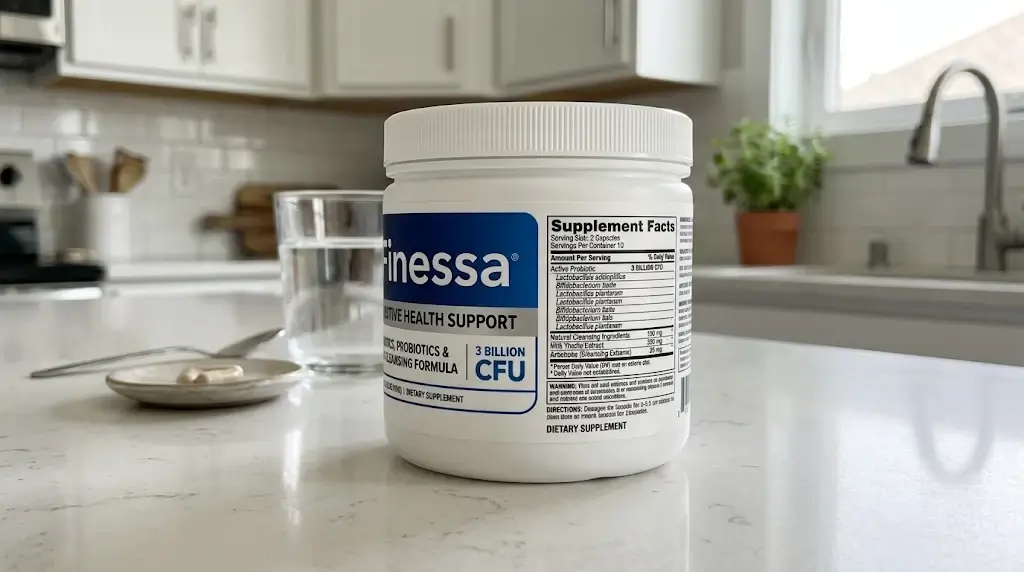
Coach’s Protocol: How to Take Probiotics for Best Results
Even the highest-quality supplement will fall short if you take it inconsistently or wash it down with scalding hot coffee. Follow this practical protocol to give your gut the best chance to adapt smoothly.
Step 1: Time Your Dose Around Stomach Acidity
Take your probiotic 15 to 30 minutes before a meal (such as breakfast) with a full 8 to 12 oz (240 to 355 ml) glass of cool or room-temperature water. Fasting stomach acid is concentrated, whereas eating triggers a surge of digestive acid; taking the capsule right before food dilutes stomach acid and helps shuttle the bacteria quickly into the small intestine. Avoid swallowing probiotics with hot beverages above 115°F (46°C), as heat can kill live cultures.
Step 2: Commit to a 4-Week Consistency Window
Probiotics are not antacids or simethicone gas pills that work in 20 minutes. Live microbes need time to interact with your resident gut flora, influence motility, and calm low-grade intestinal irritation. Take your chosen supplement daily at the same time for at least 28 days before deciding whether it works for your body.
Step 3: Manage the 3-to-7-Day Adjustment Phase
When you introduce billions of new bacteria into your gastrointestinal tract, a brief shift in microbial fermentation can occur. Mild gurgling, slightly increased flatulence, or minor changes in stool consistency during the first 3 to 7 days are normal signs that your microbiome is adjusting. Stay well-hydrated—aiming for roughly half your body weight in ounces of water daily—and keep your daily fiber intake steady rather than making drastic diet changes at the exact same time.
Common Mistake: Throwing three different gut supplements—a high-CFU probiotic, a heavy prebiotic powder, and a digestive enzyme complex—into your routine on the exact same Monday morning. If you develop cramps or worse gas, you will have zero way to identify the culprit. Introduce one supplement at a time, track your post-meal comfort on a simple 1-to-5 scale for two weeks, and adjust systematically.
Nutrition and Lifestyle Habits That Multiply Probiotic Results
A supplement works best when it reinforces smart daily habits. If you are serious about eliminating post-meal distension, pair your probiotic with these foundational nutrition and training strategies:
- Audit Your Protein Powders and Sugar Alcohols: Active individuals frequently blame gut bacteria for bloating that is actually caused by lactose in cheap whey concentrate or sugar alcohols (sorbitol, xylitol, erythritol) in protein bars and pre-workouts. Switching to a cleaner protein source or tracking how dietary fiber affects appetite and digestion can quickly isolate non-microbial triggers.
- Slow Down Your Eating Pace: Swallowing air (aerophagia) while rushing through a meal between meetings or immediately after a tough workout pumps excess nitrogen and oxygen directly into your stomach. Put your fork down between bites and chew thoroughly so salivary enzymes begin breaking down carbohydrates before they reach your gut.
- Take a 10-Minute Post-Meal Walk: Light physical movement stimulates gastric emptying and gentle intestinal contractions. A brisk 10-minute walk—roughly 0.5 miles (0.8 km)—after your largest meal of the day helps move trapped gas through the colon far more effectively than sitting slouched at a desk.
- Support Overall Metabolic and Gut Balance: Gut health is closely tied to sleep quality, stress management, and steady nutrient intake. Exploring how probiotics influence appetite and weight management alongside prioritizing quality sleep for metabolic health helps address the broader hormonal signals that govern digestion.
- Include Naturally Fermented Foods Gradually: Whole foods like plain Greek yogurt, kefir, sauerkraut, and kimchi supply diverse live cultures alongside beneficial organic acids. Start with small portions—such as 2 to 3 tablespoons of raw sauerkraut or 4 oz (120 ml) of kefir—and build up gradually so you do not overwhelm your system. Learning how to evaluate supplement ingredients and understanding soluble fiber’s role in fullness will further help you build a gut-friendly meal plan.

Who Should Be Careful With Probiotics?
While probiotic supplements are generally recognized as safe for healthy adults, they introduce live microorganisms into the body and are not appropriate for everyone. According to the Cleveland Clinic, certain populations face a higher risk of rare complications such as bloodstream infections or unwanted bacterial overgrowth and should consult a physician before using them:
- Immunocompromised Individuals: People undergoing chemotherapy, taking immunosuppressive medications after an organ transplant, or living with advanced HIV/AIDS should avoid live microbial supplements unless specifically prescribed by their specialist.
- Critically Ill or Hospitalized Patients: Individuals with central venous catheters, severe acute pancreatitis, or recent major gastrointestinal surgery face elevated risks from live bacterial supplementation.
- People With Suspected SIBO (Small Intestinal Bacterial Overgrowth): If your bloating occurs within 30 minutes of eating almost any carbohydrate or fiber, adding more bacteria—especially formulas containing prebiotic fibers—can sometimes worsen symptoms until a gastroenterologist evaluates you.
- Pregnant or Nursing Women: Always confirm strain safety and dosing with your OB-GYN or midwife before starting any new supplement regimen.
If your bloating is accompanied by red-flag symptoms—such as unintentional weight loss, severe abdominal pain, persistent diarrhea, blood in your stool, or fever—skip the supplement aisle and schedule a medical evaluation immediately.
Frequently Asked Questions (FAQ)
What is the best probiotic strain for bloating and gas?
Clinical research points most consistently toward Bifidobacterium longum 35624 (formerly B. infantis 35624), Bifidobacterium animalis ssp. lactis (BB-12), and Lactobacillus acidophilus for easing abdominal distension and gas. Choosing a supplement that lists these exact strain designations on the label gives you the best odds of targeted digestive relief.
How long does it take for probiotics to stop bloating?
Most people need 2 to 4 weeks of consistent daily use before noticing a meaningful reduction in bloating and gas. While some individuals feel lighter within the first week, live bacteria require several weeks to influence gut motility, balance fermentation, and calm intestinal sensitivity.
Can probiotics make gas and bloating worse at first?
Yes, temporary mild gas, bloating, or changes in bowel habits can happen during the first 3 to 7 days of starting a probiotic. This brief adjustment period occurs as the new bacteria interact with your existing gut microbes. If discomfort lasts beyond two weeks, lower your dose or switch to a prebiotic-free formula.
Should I take probiotics on an empty stomach or with food?
Taking most encapsulated probiotics 15 to 30 minutes before a meal with a full glass of cool water works best. During this window, stomach acid is less concentrated than at the peak of digestion, allowing more live bacteria to pass safely through the stomach and reach your small intestine intact.
What CFU count is best for bloating relief?
An effective daily dose for bloating relief typically falls between 1 billion and 60 billion CFU, depending on the specific strains used. Single-strain formulas like Bifidobacterium longum 35624 are clinically effective at 1 billion CFU, while multi-strain blends commonly perform well in the 10 billion to 50 billion CFU range.
Do probiotics help with protein shake bloating?
Probiotics containing Lactobacillus acidophilus and Bifidobacterium lactis may help your gut break down residual lactose and protein peptides more comfortably. However, if protein shakes consistently cause severe gas, switching from whey concentrate to a filtered whey isolate or plant-based protein—and avoiding sugar alcohols—often solves the issue faster.
Conclusion
Eliminating uncomfortable post-meal pressure does not require an overflowing cabinet of mystery powders or extreme elimination diets. By matching clinically studied strains like Bifidobacterium longum 35624 or multi-strain synbiotics to your body’s needs, verifying delayed-release capsule protection, and staying consistent for at least four weeks, you can find the best probiotic supplements for bloating and gas relief and get back to feeling strong, comfortable, and focused inside and outside the gym.