Most people who train outdoors, spend hours running in the sun, or deal with stubborn post-blemish marks expect oral skin supplements to work like a magic eraser. You take a capsule on Monday and hope to see clearer, more even skin by Friday.
Unfortunately, human biology moves on a much slower schedule than our impatience. Whether you are dealing with sunspots from miles of outdoor cardio, hormonal melasma, or lingering marks from old breakouts, fading uneven pigment from the inside out requires patience, consistency, and realistic expectations. Just like building strength in the gym, changing how your skin produces and clears pigment takes weeks of steady, uninterrupted effort.
Quick Answer
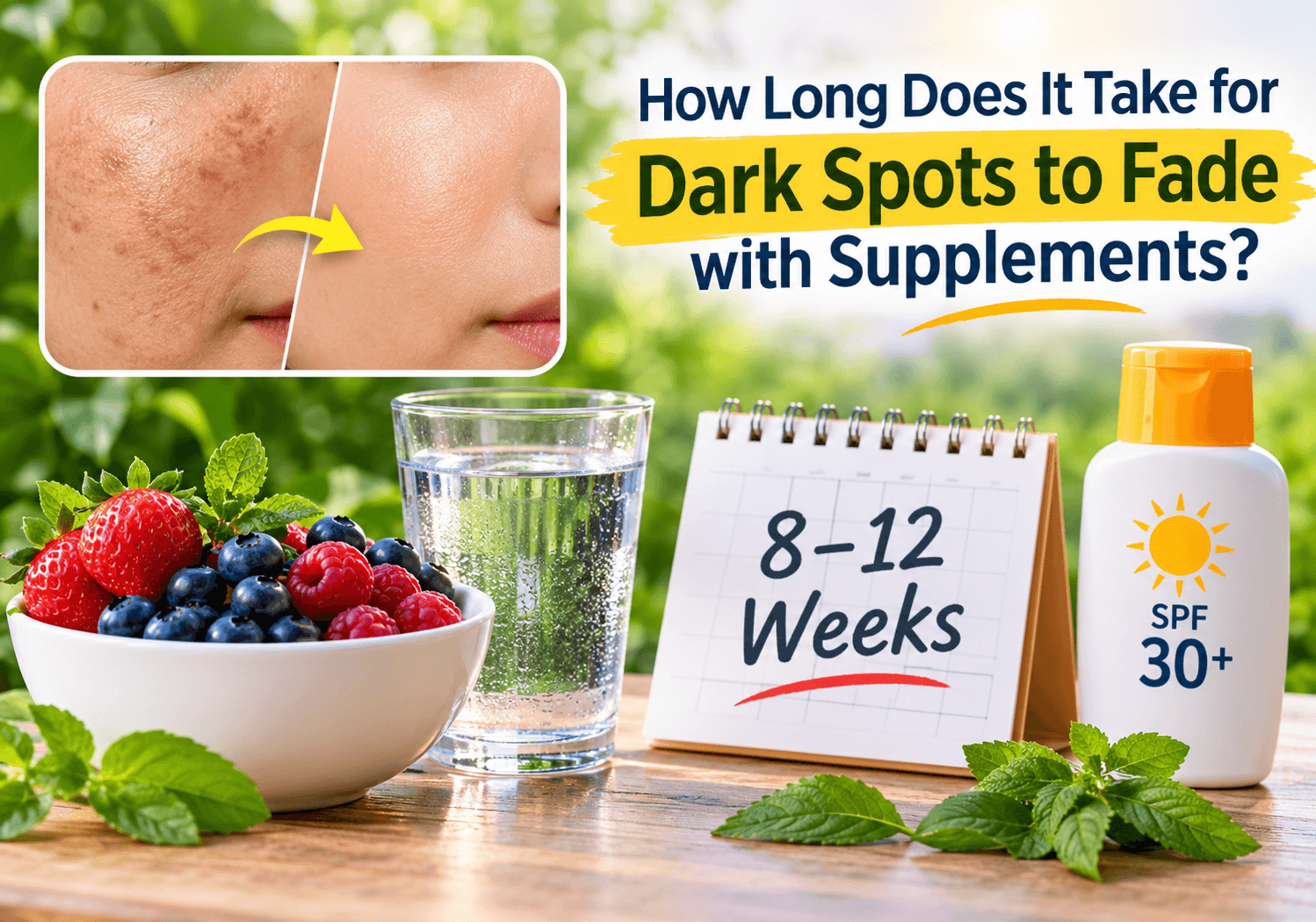
It typically takes 8 to 12 weeks of consistent daily supplementation to notice visible fading in dark spots, with deeper pigmentation requiring 3 to 6 months. Oral supplements work by slowing new melanin production and supporting your natural 28-to-40-day skin cell turnover cycle, rather than instantly bleaching existing surface spots.
How Long Does It Take for Dark Spots to Fade with Supplements Based on Spot Depth?
Understanding how long does it take for dark spots to fade with supplements starts with knowing where that pigment actually lives in your skin. Not all dark spots sit at the same depth, and deeper pigment always takes longer to clear.
Your skin has two main layers involved in hyperpigmentation: the outer layer (epidermis) and the deeper structural layer (dermis). According to the American Academy of Dermatology (AAD), dark spots form when specialized cells called melanocytes produce excess melanin in response to triggers like ultraviolet (UV) light, heat, inflammation, or hormone shifts.
When you take oral antioxidants and skin-brightening nutrients, they do not strip away old, dark skin cells on the surface. Instead, they travel through your bloodstream to calm overactive melanocytes so that new skin cells are produced with less excess pigment. You then have to wait for your body to naturally shed the older, darker cells upward and off the surface.
| Type of Dark Spot | Pigment Depth | Typical Supplement Timeline | Key Biological Factor |
| Fresh Post-Blemish Marks (PIH) | Epidermal (Shallow) | 6 to 10 weeks | Follows standard 28-to-40-day epidermal cell turnover. |
| Mild Sunspots (Solar Lentigines) | Epidermal | 8 to 12 weeks | Requires consistent UV protection alongside antioxidant support. |
| Stubborn Age Spots | Deep Epidermal | 3 to 4 months | Slower cell renewal rates in adults over 40 extend the timeline. |
| Hormonal Melasma | Mixed (Epidermal & Dermal) | 4 to 6+ months | Triggered by both UV rays and internal heat/hormones; high recurrence risk. |
Coach’s Tip: Treat skin supplementation just like a 12-week progressive overload block in the gym. Take clear, well-lit photos of your face or shoulders in the exact same natural morning light on Day 1, Week 4, Week 8, and Week 12. Looking in the mirror every morning makes gradual progress nearly impossible to spot, just like checking the scale every single day.
The Science Behind Oral Supplements and Melanin Production
To understand why you will not see dramatic changes in two weeks, you need to look at two biological clocks running inside your body: melanogenesis (pigment creation) and desquamation (skin cell shedding).
1. Slowing Down Tyrosinase
Inside your melanocytes, an enzyme called tyrosinase acts like the ignition switch for melanin production. When UV rays from an outdoor workout or inflammation from a skin blemish hit your skin, tyrosinase speeds up and pumps out dark pigment to protect your DNA. Many evidence-based supplements work as gentle tyrosinase inhibitors or free-radical scavengers, telling those cells to dial back pigment output.
2. Waiting for Epidermal Turnover
Even if an oral supplement slowed excess melanin production on your very first day, you would still have weeks of already-pigmented cells sitting above the base layer of your epidermis. In younger adults in their 20s, a new skin cell takes roughly 28 days to travel from the bottom of the epidermis to the surface and shed. Research published via the National Library of Medicine (NCBI) notes that as we age into our 40s, 50s, and beyond, this epidermal turnover cycle naturally slows down to 40 to 60 days.
Because of this biological conveyor belt, you usually need at least two full skin cycles (8 to 12 weeks) before fresh, evenly pigmented skin cells replace the older, darkened layers on top.

What Research Says About Specific Supplements for Dark Spots
Not every pill marketed for “glowing skin” has clinical evidence behind it. When evaluating supplements for hyperpigmentation, look at the specific compounds studied in human trials and their realistic timelines.
Glutathione (Reduced or Liposomal)
Glutathione is your body’s master intracellular antioxidant. In dermatology research, oral glutathione has been studied for its ability to shift melanin production away from dark brown/black eumelanin toward lighter yellow/red pheomelanin, while also inhibiting tyrosinase.
A randomized, double-blind clinical trial indexed on PubMed evaluating oral glutathione (500 mg daily) found measurable reductions in melanin indices across sun-exposed areas after 4 weeks, with much clearer improvements appearing between 8 and 12 weeks. Because standard oral glutathione can break down in the digestive tract, many clinicians look for reduced (Setria) or liposomal forms to improve absorption.
Vitamin C (Ascorbic Acid)
Vitamin C is essential for both collagen synthesis and interrupting the chemical steps required to build melanin. While topical vitamin C acts directly on the epidermis, oral vitamin C supports systemic antioxidant defenses and helps regenerate oxidized vitamin E and glutathione in the skin.
According to the NIH Office of Dietary Supplements, vitamin C is concentrated in the epidermis and dermis to defend against UV-induced free radicals. Alone, oral vitamin C works slowly on existing dark spots—typically taking 12 to 16 weeks—but it acts as a vital teammate when paired with glutathione or astaxanthin.
Astaxanthin
Astaxanthin is a potent red carotenoid derived from microalgae that helps protect cell membranes against oxidative stress caused by UV exposure. If you spend a lot of time running, cycling, or playing outdoor sports, UV-driven oxidative stress is likely fueling your dark spots.
Taking an astaxanthin supplement for skin glow and anti-aging has been shown in clinical trials indexed on PubMed Central (PMC) to improve skin elasticity, reduce UV-induced skin roughness, and help suppress excess melanin formation over an 8-to-12-week period at doses of 4 mg to 12 mg daily.
Polypodium Leucotomos Extract (PLE)
Extracted from a tropical fern native to Central and South America, Polypodium leucotomos is widely studied as an oral photoprotective antioxidant. Studies indexed on PubMed indicate that PLE helps reduce UV-induced inflammation and DNA damage, making it particularly useful as an add-on for people managing stubborn melasma. Noticeable stabilization and gradual fading typically take 12 weeks alongside strict daily sunscreen use.
Collagen Peptides
Many active adults take hydrolyzed collagen for joint recovery and tendon health, wondering if it will also erase sunspots. Understanding how long for collagen supplements to work on skin is helpful here: collagen peptides typically improve skin hydration and elasticity within 8 to 12 weeks, which supports overall skin repair and barrier function, though collagen does not directly block melanin production on its own.
Niacinamide (Vitamin B3)
Oral niacinamide supports cellular energy (NAD+) and DNA repair after UV exposure. While topical niacinamide blocks the transfer of pigment packets (melanosomes) to skin cells, oral niacinamide (often studied at 500 mg once or twice daily) supports skin barrier resilience and reduces UV-induced immunosuppression over 8 to 12 weeks.
Comparison of Evidence-Based Supplements for Dark Spots
| Supplement Ingredient | Typical Daily Dose Range | Primary Mechanism | Expected Timeline for Results | Best Used For |
| L-Glutathione | 250 mg – 500 mg | Inhibits tyrosinase; shifts melanin type | 8 to 12 weeks | Overall tone brightening & sunspots |
| Vitamin C | 500 mg – 1,000 mg | Antioxidant; recycles glutathione | 12 to 16 weeks | General UV defense & supporting stacks |
| Astaxanthin | 4 mg – 12 mg | Neutralizes UV free radicals; calms inflammation | 8 to 12 weeks | Outdoor athletes & sun-triggered spots |
| Polypodium Leucotomos | 240 mg – 480 mg | Oral photoprotection; reduces UV DNA damage | 12 weeks | Melasma & high sun-exposure lifestyles |
| Niacinamide (B3) | 500 mg | Supports skin barrier & UV DNA repair | 8 to 12 weeks | Post-inflammatory marks & skin resilience |
| Omega-3 Fatty Acids | 1,000 mg – 2,000 mg (EPA/DHA) | Lowers systemic skin inflammation | 12+ weeks | Calming red/brown post-acne marks |
Week-by-Week Timeline: What to Expect When Taking Supplements
Knowing what happens beneath the surface at each stage keeps you from quitting right before your results show up. Here is a realistic progression when you combine targeted supplements with daily sun protection.
Weeks 1 to 4: Internal Antioxidant Loading
During the first month, you will likely see zero visible change in your dark spots. Internally, however, your bloodstream and skin tissues are building up antioxidant reserves. Oxidative stress from daily sun exposure and intense workouts begins to drop, and overactive melanocytes start receiving fewer inflammatory signals to pump out excess pigment.
Weeks 5 to 8: Tone Stabilization and Subtle Brightening
By week 6 or 8, you have completed roughly one to two epidermal turnover cycles. New dark spots stop forming as easily after sun exposure, and the outer edges of existing sunspots or post-blemish marks may begin to look slightly softer or less sharply defined. Your overall complexion often looks less dull or inflamed.
Weeks 9 to 12: Visible Fading of Surface Pigment
This is the milestone where most clinical studies measure clear, statistically significant drops in melanin scores. Shallow epidermal spots—such as recent breakout marks and mild sunspots—noticeably lighten. Deeper patches look less dense, though they rarely vanish completely at the 12-week mark.
Months 4 to 6: Deeper Dermal Remodeling and Maintenance
For long-standing sun damage or hormonal melasma, consistent supplementation between months 4 and 6 continues to support gradual fading as deeper pigment slowly breaks down and clears. At this stage, many people shift from an intensive loading routine to a steady maintenance dose.
5 Factors That Speed Up or Slow Down Your Results
Two people can take the exact same supplement at the exact same dose and see completely different timelines. Just like recovery between strength workouts, lifestyle variables dictate how well your body responds.
- Daily Sun Exposure (The #1 Dealbreaker): UV light—even through clouds or car windows—instantly triggers melanocytes to produce fresh pigment. Ten minutes of unprotected midday sun can undo two months of oral supplements.
- Heat and High-Intensity Outdoor Training: If you run 5 miles (8 km) in high heat or spend hours in a sauna, elevated skin temperature alone can stimulate melasma and stubborn dark spots, even if you wear a hat.
- Age and Cell Turnover Speed: Adults in their 20s and early 30s renew their epidermis roughly every 4 weeks, whereas adults over 45 may take 6 to 8 weeks per cycle, naturally stretching the timeline.
- Nutrient Absorption and Timing: Fat-soluble antioxidants like astaxanthin and omega-3 fatty acids for skin hydration and inflammation absorb poorly on an empty stomach. Taking them without dietary fat reduces the amount that actually reaches your skin.
- Chronic Inflammation and Poor Sleep: High cortisol from sleep deprivation and systemic inflammation keep your skin in a reactive state. Prioritizing recovery helps calm the inflammatory pathways that drive post-blemish hyperpigmentation.
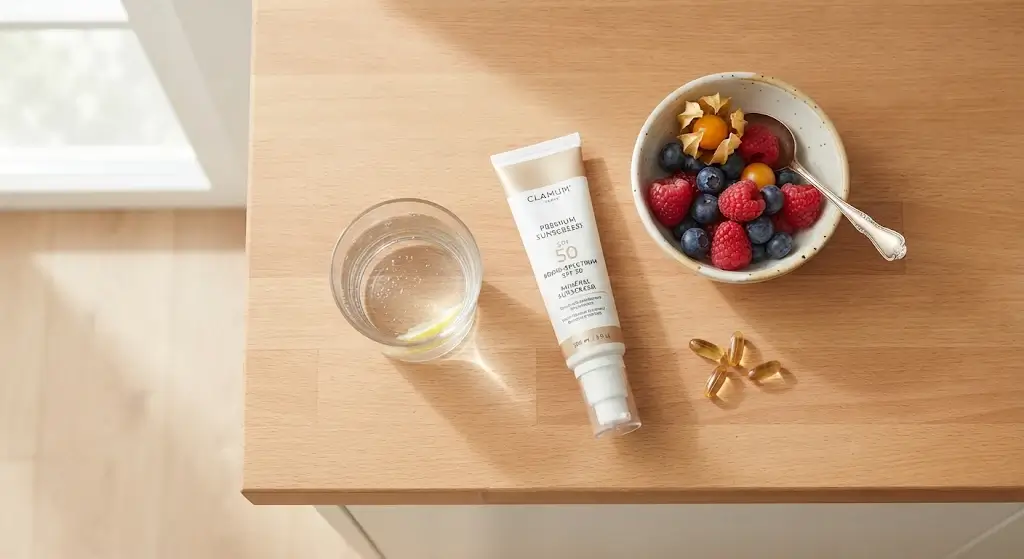
Common Mistake: Taking skin-brightening supplements while skipping daily broad-spectrum sunscreen. Oral supplements act like a backup defense system, not an invisible force field. Without daily SPF 30 or higher, UV rays continuously stimulate new melanin faster than any supplement can calm it down.
How to Build a Practical Daily Routine for Fading Dark Spots
If you want the best return on your effort, combine internal nutrition with basic external habits. You do not need a complicated 12-step skincare routine—just a consistent daily framework.
Step 1: Anchor Supplements to Meals for Maximum Absorption
Split your supplements based on whether they are water-soluble or fat-soluble so your body actually absorbs them:
- Morning with breakfast (containing healthy fats like eggs, avocado, or yogurt): Take fat-soluble antioxidants such as astaxanthin (4–8 mg) and omega-3s, alongside vitamin C (500 mg) to boost daytime antioxidant protection before you head outdoors.
- Empty stomach or between meals (or per label directions): Take reduced/liposomal L-glutathione (250–500 mg) with a full glass of water, as certain amino acid transporters absorb well without competing proteins.
- Pair collagen smartly: If you already use collagen for joint and skin support, learning the best time to take collagen powder for skin absorption helps ensure you pair it with vitamin C so your body can properly cross-link new collagen fibers.
Step 2: Lock In Non-Negotiable Morning UV Protection
Apply a broad-spectrum sunscreen rated SPF 30 or higher every single morning—rain or shine—using roughly two finger-lengths of product for your face and neck. If you train outdoors, sweat heavily, or swim, reapply every 80 to 120 minutes. Tinted sunscreens containing iron oxides offer extra protection against visible light, which is especially important for deeper skin tones and melasma.
Step 3: Support the Outside with Gentle Topical Basics
Oral supplements work best when paired with simple, proven topical ingredients that speed up surface cell turnover:
- Morning: Topical vitamin C serum underneath your sunscreen.
- Evening: A gentle retinoid (like retinol or adapalene) or azelaic acid a few nights a week to help shed pigmented surface cells faster, followed by a plain moisturizer to protect your skin barrier.
Step 4: Eat Whole Foods Rich in Polyphenols and Carotenoids
Supplements fill gaps, but whole foods deliver hundreds of synergistic plant compounds. Aim to include colorful produce daily—such as bell peppers, berries, tomatoes, spinach, and wild-caught salmon—to provide steady dietary vitamin C, lycopene, beta-carotene, and anti-inflammatory fats.
![Athlete drinking water after an outdoor workout while wearing a wide-brimmed sun hat and UV-protective sunglasses]](https://pillsfeed.com/wp-content/uploads/2026/11/Athlete-drinking-water-after-an-outdoor-workout-while-wearing-a-wide-brimmed-sun-hat-and-UV-protective-sunglasses.webp)
Safety Notes and When to Talk to a Doctor
Because dietary supplements are not regulated as strictly as prescription medications before hitting the market, quality and safety matter. Keep these precautions in mind before starting a skin-focused supplement routine:
- Check with a healthcare professional first: Always consult a doctor, dermatologist, or registered dietitian before starting new supplements—especially if you are pregnant, breastfeeding, taking prescription medications, or managing liver, kidney, or autoimmune conditions.
- Choose third-party tested products: Look for seals from independent organizations like USP, NSF International, or ConsumerLab to verify that the bottle actually contains the listed ingredients without heavy metal contamination.
- Avoid mega-dosing: Taking excessive amounts of single nutrients will not fade dark spots faster. High doses of vitamin C (over 2,000 mg daily) can cause digestive upset and kidney stones, while excessive niacinamide (flush-free or high-dose nicotinic acid) can stress the liver.
- Watch for suspicious or changing spots: Never try to fade a dark spot with supplements if it has irregular borders, multiple colors, rapid growth, itching, or bleeding. Have a board-certified dermatologist examine any new or changing spot to rule out skin cancer such as melanoma.
- Steer clear of unverified “bleaching” pills: Avoid overseas or unregulated online pills promising overnight skin whitening, as some have been found to contain hidden steroids, mercury, or unsafe doses of unregulated compounds.
Frequently Asked Questions (FAQ)
How long does glutathione take to fade dark spots?
Clinical studies suggest oral glutathione typically takes 8 to 12 weeks of consistent daily use (usually 250 mg to 500 mg) to produce noticeable fading in sun-exposed dark spots. While subtle reductions in skin melanin indices may begin around week 4, visible tone evening requires at least two full skin cell turnover cycles.
Can oral supplements completely remove hyperpigmentation?
Oral supplements rarely erase deep dark spots completely on their own. Instead, they help slow excess melanin production, calm oxidative stress, and gradually lighten uneven pigment by 20% to 50% over several months. Combining supplements with daily broad-spectrum sunscreen and targeted topical skincare delivers significantly better results than pills alone.
What vitamins fade dark spots the fastest?
Vitamin C (ascorbic acid) and niacinamide (vitamin B3) are the most studied essential vitamins for supporting even skin tone, typically showing gradual improvement over 8 to 16 weeks. Vitamin C helps interrupt melanin synthesis and recycles antioxidants, while niacinamide supports DNA repair and skin barrier resilience after ultraviolet exposure.
Do collagen supplements help fade dark spots?
Collagen supplements do not directly block melanin production or bleach dark spots. However, hydrolyzed collagen peptides support dermal hydration, elasticity, and overall tissue repair within 8 to 12 weeks. Healthier, well-hydrated skin recovers faster from blemish inflammation, which may help prevent lingering post-acne marks from worsening.
Why are my dark spots taking so long to fade?
Dark spots often persist because daily ultraviolet light, visible light, or heat continually triggers melanocytes to produce fresh pigment faster than your skin sheds old cells. Additionally, deeper dermal pigment (like melasma) and slower skin cell turnover in adults over 40 naturally extend the fading timeline to 4 to 6 months.
Are oral skin brightening supplements safe to take daily?
Evidence-based antioxidants like vitamin C, astaxanthin, and reduced glutathione are generally well tolerated by healthy adults when taken within studied daily ranges. However, high doses can cause digestive upset or interact with medications, so you should verify third-party testing and consult your doctor before starting any daily supplement stack.
Conclusion
Figuring out how long does it take for dark spots to fade with supplements comes down to respecting your skin’s natural biology. You cannot rush epidermal cell turnover any more than you can rush muscle recovery after a heavy training block. For most people, consistent daily use of evidence-based antioxidants—such as glutathione, astaxanthin, vitamin C, and Polypodium leucotomos—begins delivering visible brightening around 8 to 12 weeks, while stubborn sun damage or melasma often requires 3 to 6 months.
To give yourself the best chance at clearer, more even skin, treat supplements as one piece of a smart daily system: pair targeted nutrients with healthy meals for proper absorption, stay consistent for at least three months before judging your results, and wear broad-spectrum sunscreen every single morning.