
You have probably seen it on social media: a small glass of apple cider vinegar (ACV) before dinner, a “detox” shot in the morning, a bottle of ACV next to your protein shakes. The promise is the same every time—drink this, and your metabolism will fire up while the fat melts away. But does apple cider vinegar actually help with weight loss and metabolism, or is it just another wellness trend riding on a wave of hype?
I’ve spent years coaching clients through real, sustainable body composition changes, and I’ve been asked about ACV more times than I can count. The honest answer is: the science shows some modest effects, but nothing close to the magic fix the internet sells. Let’s break down what the research actually says, what it can’t do, and how to think about it if you still want to try.
Quick Answer: Research suggests apple cider vinegar may produce a small weight loss (roughly 1–2 kg over 12 weeks) and slightly improve insulin sensitivity and appetite. The active compound, acetic acid, may modestly blunt post-meal blood sugar spikes. However, ACV does not burn fat directly, does not meaningfully raise your resting metabolic rate, and does not replace a caloric deficit, resistance training, or adequate protein. Think of it as a very small supporting tool at best—not a driver of weight loss.

What the Research Actually Shows About ACV and Weight Loss
Let’s start with the two most-cited human studies, because they set the realistic ceiling for what ACV can do.
The Kondo 2009 study (published in the Journal of Medicinal Food) gave 175 overweight adults either 15 ml or 30 ml of apple cider vinegar daily for 12 weeks. The 30 ml group lost about 2.6 kg (5.7 lb) more than the placebo group. Waist circumference dropped roughly 2 cm (0.8 in) in the higher-dose group. That’s real, but put it in perspective: a single 30-minute brisk walk burns roughly 150–200 calories, and a modest 250-calorie daily deficit over 12 weeks would shed about 2.5 kg on its own. The ACV effect is in the same neighborhood as a small dietary tweak.
The Stull 2018 study (published in Nutrition Journal) followed 39 healthy adults for 12 weeks. Those who drank 30 ml of ACV daily reported reduced appetite and ate about 200 fewer calories per day compared to the control group. Weight loss was modest—around 1.2 kg (2.6 lb) over the study period. The sample size was small, so the effect size carries wide confidence intervals.
A few animal studies (rats and mice) have looked at acetic acid’s impact on lipid metabolism, liver fat, and body composition. Those results are more dramatic than the human data, but you can’t directly translate rodent findings to a 70-kg (154-lb) adult walking around a gym.
What the numbers tell us
- Weight loss magnitude: 1–2.6 kg (2–5.7 lb) over 12 weeks at 15–30 ml/day.
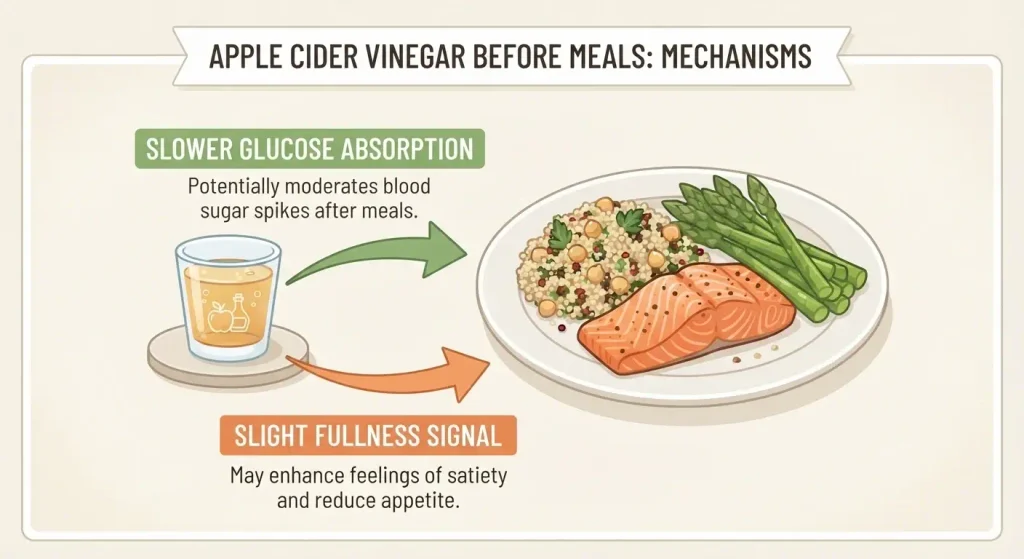
- Mechanism: Likely a combination of slight appetite reduction, a small blunting of post-meal glucose, and possibly a minor effect on how the body stores fat.
- What it does NOT do: It does not increase your basal metabolic rate in any meaningful way. It does not “detox” your liver. It does not target belly fat specifically. It does not create a caloric deficit on its own.
Coach’s Tip: If a client tells me they’re drinking ACV and expecting to lose 10 lb in a month, I gently redirect. “That bottle is not doing the work a 200-calorie deficit and three resistance sessions a week are doing. Let’s focus on the levers that actually move the scale, and if you want to add ACV as a small extra, fine—but don’t build your whole plan around it.”

How Apple Cider Vinegar May Affect Metabolism
“Metabolism” is a broad word, so let’s separate the pieces.
Insulin sensitivity and postprandial glucose
This is where the strongest evidence sits. Acetic acid, the main active acid in vinegar, appears to slow the rate at which stomach contents empty into the small intestine. That slower transit means glucose enters the bloodstream more gradually, producing a smaller spike in blood sugar and a smaller insulin response. Multiple small human trials have confirmed this effect, particularly when vinegar is consumed with a high-carbohydrate meal.
For someone managing pre-diabetes or insulin resistance, a smaller glucose spike is a meaningful (if modest) benefit. For a healthy 25-year-old eating a balanced plate, the practical impact is small.
Appetite and satiety
The Stull 2018 study is the most direct evidence here. Participants who drank ACV before a meal reported feeling slightly more full and ended up eating fewer calories at that meal. The mechanism is not fully understood, but the acetic acid may interact with gut hormones like GLP-1 and PYY that signal fullness to the brain. The effect is real but gentle—think “I’m not as ravenous at dinner,” not “I forgot to eat.”
Thermic effect and fat oxidation
Here’s where the hype outruns the data. The thermic effect of food (the calories your body burns digesting what you ate) is driven almost entirely by the macronutrient composition of your meal—protein has the highest thermic effect at about 20–30%, carbohydrates 5–15%, and fat 0–3%. There is no credible evidence that 15–30 ml of ACV meaningfully increases thermogenesis or shifts your body toward greater fat oxidation at rest. If you want to understand the real drivers of your daily caloric burn, it’s worth reading up on what affects metabolism and body weight before attributing changes to a tablespoon of vinegar.
Gut microbiome
Some animal research suggests acetic acid may alter the composition of gut bacteria in ways that influence energy extraction from food. Human data on this is still very early and inconsistent. I’d call this a “maybe, possibly, more research needed” area rather than a proven mechanism.
Bottom line on metabolism
ACV’s metabolic effects are real but small. They operate mainly through a gentler glucose/insulin response and a slight nudge on appetite. They do not turn up the dial on your resting metabolic rate the way building lean muscle through resistance training and adequate protein intake does.
The Numbers: What ACV Can and Can’t Do
This table helps set expectations before you pour your first glass.
| Claim | What the evidence says | Verdict |
| ACV burns fat directly | No mechanism identified. No human trial shows ACV increases fat oxidation at rest. | Not supported |
| ACV raises resting metabolic rate | No credible human data showing a meaningful BMR increase from 15–30 ml ACV. | Not supported |
| ACV causes 10+ lb weight loss in a month | Human trials show 1–2.6 kg (2–5.7 lb) over 12 weeks at most. | Not supported |
| ACV blunts post-meal blood sugar spikes | Multiple small trials confirm a modest reduction in postprandial glucose, especially with high-carb meals. | Supported (modest) |
| ACV improves insulin sensitivity | Several small studies show improved insulin sensitivity markers with daily vinegar use. | Supported (modest) |
| ACV reduces appetite slightly | Stull 2018 and a few smaller trials show reduced hunger ratings and ~200 fewer calories eaten at the next meal. | Supported (small) |
| ACV “detoxes” the liver or flushes toxins | No physiological basis. The liver detoxes continuously; vinegar does not accelerate this. | Not supported |
| ACV targets belly fat specifically | No mechanism for spot reduction exists. The small overall fat loss in trials was not belly-specific. | Not supported |
| ACV is safe in moderate daily amounts | 15–30 ml diluted in water is generally well-tolerated in short- to medium-term studies. | Supported (with caveats) |
How to Apply ACV Safely (If You Want to Try It)
I’m not going to tell you to skip it. If you want to add ACV as a small supporting habit, here’s how I’d frame it for a client.
Practical steps
- Start low. Begin with 1 tablespoon (15 ml) of raw, unfiltered ACV (the kind with “the mother”) mixed into 8 oz (240 ml) of water. Drink it 10–15 minutes before a meal that’s higher in carbohydrates—lunch or dinner works well.
- Use a straw. Acetic acid is corrosive to tooth enamel. A straw keeps it away from your front teeth. Rinse your mouth with plain water afterward. Do not brush for at least 30 minutes after.
- Give it 4–6 weeks. The Stull study used 12 weeks, but you’ll notice whether it changes your hunger or comfort level within a month. If nothing changes, it’s not doing much for you.
- Don’t chug it straight. Undiluted ACV can irritate the esophagus and stomach lining. Always dilute.
- Pair it with the real work. ACV is not a program. It’s a garnish. Your caloric balance, protein intake, sleep, and movement are the program. If you want a full framework, my guide on how to support metabolism naturally for weight management covers the levers that actually matter.
Easier version (if you’re new to ACV)
- 1 teaspoon (5 ml) ACV in a full glass of water, once a day, before dinner.
- Add a squeeze of lemon to mask the taste.
- Skip it on days you’re eating out or don’t have time.
Harder version (if you want to maximize the small benefit)
- 2 tablespoons (30 ml) ACV in 10 oz (300 ml) water, 15 minutes before both lunch and dinner on days you eat higher-carb meals.
- Combine with a 20-minute walk after each meal to further blunt the glucose response.
- Track your hunger ratings and food intake for 4 weeks to see if the small appetite effect is real for you.
Common Mistake: Drinking ACV on an empty stomach first thing in the morning and then wondering why your stomach hurts. The acetic acid is irritating to a bare stomach lining. Always take it with or just before food, and always dilute it. If you get persistent heartburn, nausea, or stomach pain, stop and talk to your doctor.

Safety Notes and Who Should Skip ACV
ACV in the doses studied (15–30 ml/day, diluted) is generally safe for healthy adults over a period of a few weeks to a few months. That said, there are real cautions.
- Tooth enamel erosion. Acetic acid is acidic (pH around 2–3). Regular, undiluted contact with teeth will wear enamel over time. Dilute, use a straw, and rinse.
- Medication interactions. ACV may enhance the effect of certain diabetes medications (metformin, sulfonylureas) and could increase the risk of hypoglycemia. It may also interact with diuretics, potassium-sparing drugs, and some heart medications. If you take any prescription medication, check with your pharmacist or doctor before adding daily ACV.
- GI sensitivity. People with GERD, gastritis, ulcers, or a history of esophageal issues may find even diluted ACV irritating.
- Low potassium risk (theoretical). Very high, chronic doses of acetic acid have been linked in case reports to hypokalemia (low potassium). This is extremely unlikely at 15–30 ml/day, but it’s worth knowing if you’re already on a low-potassium diet or taking potassium-wasting diuretics.
- Pregnancy, postpartum, and existing medical conditions. If you’re pregnant, postpartum, managing a chronic condition, or taking daily medications, run this by your doctor or registered dietitian before adding ACV to your routine.
If you have any of the above conditions or are on medication, check with a doctor or physical therapist before starting a daily ACV routine.
What Actually Moves the Needle on Weight and Metabolism
Here’s where I redirect the conversation, because ACV is a rounding error next to the big four:
- Caloric balance. You lose body fat when you consistently eat fewer calories than you burn. A 250–500 calorie daily deficit produces roughly 0.25–0.5 kg (0.5–1 lb) of fat loss per week. No supplement, vinegar or otherwise, creates that deficit for you.
- Resistance training. Building and maintaining lean muscle raises your resting energy expenditure and improves insulin sensitivity far more than a tablespoon of acetic acid. The HHS Physical Activity Guidelines recommend muscle-strengthening activity at least two days per week for adults.
- Protein intake. Protein has the highest thermic effect of any macronutrient and is the most satiating. Hitting 1.6–2.2 g/kg (0.7–1 g/lb) of body weight per day supports muscle retention during a deficit and keeps hunger in check. My guide on protein intake and metabolism for weight loss goes deeper on the numbers.
- Sleep and stress management. Poor sleep disrupts hunger hormones (ghrelin and leptin), increases cravings, and lowers the next day’s energy expenditure. If you’re sleeping less than 7 hours, fixing that will do more for your body composition than any vinegar shot. Understanding how sleep affects metabolism and weight management is a high-ROI move.
If you’re over 40 and feeling like your metabolism has “slowed down,” the evidence points to muscle loss (sarcopenia) and hormonal shifts as the main drivers, not a mysterious metabolic stall. A practical, age-appropriate training and nutrition plan will outperform any supplement. My guide to increasing metabolism naturally after 40 walks through the specific adjustments.
Where ACV fits in the bigger picture
Think of ACV as the salt in your salad. It adds a tiny bit of flavor. It doesn’t make the salad. If your “salad” (your training, nutrition, and sleep) is solid, ACV is a harmless little extra. If your salad is missing, adding salt won’t fix it.
If you’re exploring other evidence-based strategies for appetite and metabolic support, it’s worth reading up on what actually helps control hunger during weight loss and how to boost metabolic flexibility without crash dieting. Those approaches have far more robust evidence behind them.

How much apple cider vinegar should I drink for weight loss?
The studies that showed any effect used 15–30 ml (1–2 tablespoons) per day, diluted in water, taken before a meal. Start with 15 ml and see how your stomach and teeth tolerate it. There is no evidence that more than 30 ml per day adds benefit, and higher doses increase the risk of GI irritation and enamel damage.
Does apple cider vinegar burn fat while sleeping?
No. There is no known mechanism by which ACV increases fat oxidation overnight or at rest. Your body’s overnight fat-burning rate is governed by your hormonal environment, sleep quality, and overall caloric balance—not by a glass of vinegar you drank before bed. If you’re looking for what actually influences overnight metabolism, how sleep affects metabolism is a good starting point.
Can apple cider vinegar replace exercise for weight loss?
No, and I’d push back on the framing. ACV’s modest appetite and glucose effects cannot replicate the caloric expenditure, muscle-building stimulus, cardiovascular benefit, and metabolic improvements that come from regular resistance training and aerobic activity. The CDC’s physical activity guidelines recommend at least 150 minutes of moderate aerobic activity plus two days of strength work per week. No vinegar shot substitutes for that.
What time of day should I take apple cider vinegar?
The research doesn’t point to a magic time. The most studied protocol is 10–15 minutes before a higher-carbohydrate meal (lunch or dinner), which is when the glucose-blunting effect is most relevant. If you’re using it for the mild appetite effect, before your largest meal makes the most sense. Consistency matters more than the clock.
Does apple cider vinegar work for women over 40?
The existing trials included mixed-gender adult samples, and I’m not aware of a study showing ACV works differently by sex or age. If you’re over 40, the metabolic changes you’re feeling (slower recovery, more stubborn fat storage, hormonal shifts) are best addressed with targeted resistance training, adequate protein, and sleep hygiene. ACV, if you tolerate it, is a fine small addition, but it’s not the intervention your age-related changes call for.
Is apple cider vinegar safe to drink every day?
For healthy adults, 15–30 ml diluted in water daily is generally well-tolerated in studies lasting up to 12 weeks. Long-term safety data beyond a few months is limited. The main risks are tooth enamel erosion, GI irritation, and interactions with certain medications. If you have a GI condition, take diabetes or heart medications, or are pregnant, talk to your doctor first.
Conclusion
So, does apple cider vinegar actually help with weight loss and metabolism? The short answer: a little, in a small, specific way, and only for some people. The research supports a modest reduction in post-meal blood sugar, a slight appetite dampening, and a small amount of additional weight loss over 12 weeks—roughly 1–2.6 kg (2–5.7 lb). That’s real, but it’s not transformative.
ACV does not burn fat. It does not raise your resting metabolic rate. It does not target belly fat. It does not replace the caloric deficit, the resistance training, the protein, and the sleep that actually reshape your body. If you want to try it as a small, low-cost addition to a solid plan, go ahead—dilute it, use a straw, give it four to six weeks, and see if you notice a difference. But don’t build your weight-loss strategy around a bottle of vinegar. The levers that matter are bigger, and they’re within your control.
If you’re ready to focus on the evidence-backed levers—training, nutrition, sleep, and metabolic flexibility—start with the resources linked above and build a plan that works for your body, your schedule, and your goals. That’s where the real change happens.