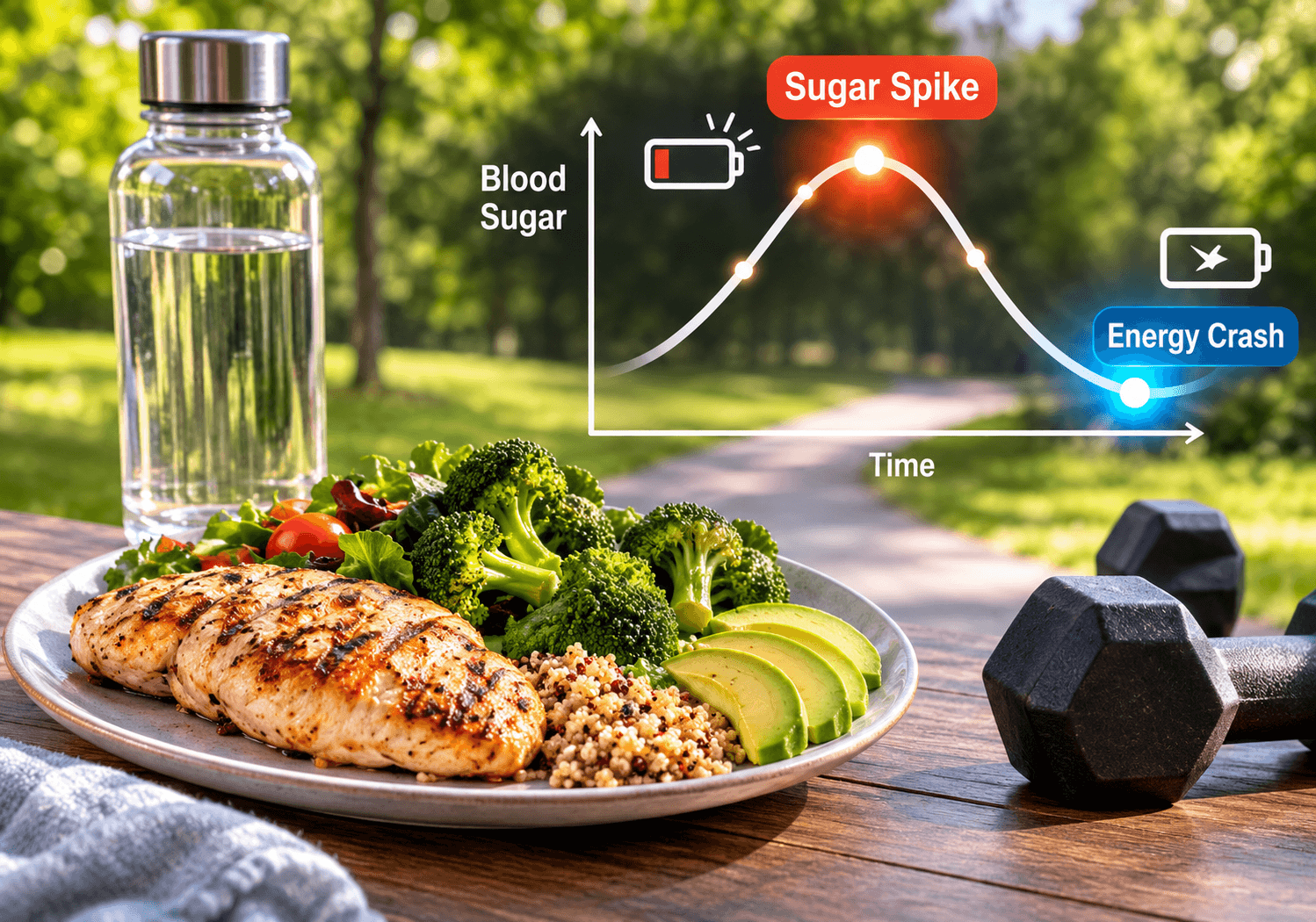
You finish lunch, sit back down at your desk, and within forty-five minutes your eyelids feel like lead. You reach for a second cup of coffee or a handful of sweet snacks just to make it through the afternoon, only to crash again before dinner.
As a strength and conditioning coach, I see this exact pattern derail more fitness goals than a lack of willpower ever could. When your workouts feel sluggish and your daily stamina swings wildly, the culprit is often sitting right on your plate and in your daily movement habits. Learning to spot the signs your blood sugar is affecting your energy and what to do about it will help you take back control of your stamina, focus, and gym performance.
Quick Answer:
Key signs your blood sugar is affecting your energy include heavy fatigue 30 to 90 minutes after meals, sudden irritability, intense sugar cravings, brain fog, and shaky weakness between meals. To fix this, pair carbohydrates with lean protein and fiber, take a brisk 10-to-15-minute walk after eating, and perform full-body resistance training three times per week.
How Blood Sugar Powers Your Body and Brain
To understand why your energy tanks, it helps to look at how your body handles fuel. Every time you eat carbohydrates, your digestive system breaks them down into glucose, a simple sugar that enters your bloodstream.
Your pancreas responds by releasing insulin, a hormone that acts like a key to unlock your muscle, fat, and liver cells so glucose can move inside and produce energy. According to the Centers for Disease Control and Prevention (CDC), keeping blood glucose within a steady, healthy range is essential for maintaining consistent cellular energy throughout the day.
Problems start when glucose floods your bloodstream too quickly—usually after a meal heavy in refined starches or added sugars without enough protein, fat, or fiber to slow digestion. Your pancreas overcompensates by pumping out a large wave of insulin. That surge clears glucose out of your blood too rapidly, leaving your brain and muscles temporarily short on fuel. That sharp rise followed by a steep drop is what you feel as a mid-morning or mid-afternoon energy crash.
9 Signs Your Blood Sugar Is Affecting Your Energy
Blood sugar swings do not always announce themselves with obvious symptoms. In fact, many active adults mistake glucose instability for poor sleep, overtraining, or simple aging. Here are the nine most common warning signs I look for when coaching clients through energy slumps.
1. Heavy Fatigue 30 to 90 Minutes After Eating
Feeling slightly relaxed after a big meal is normal, but feeling like you need a nap after a standard lunch is a classic red flag. When a high-glycemic meal triggers a rapid insulin surge, your blood glucose drops shortly afterward, leading to post-meal lethargy. Research published via the National Library of Medicine (PMC) notes that sharp fluctuations in post-meal blood sugar are closely linked to increased fatigue and lower alertness.
2. Intense Cravings for Sweets or Refined Carbs Shortly After a Meal
If you finish a full plate of pasta or a sweetened coffee drink and immediately start hunting for cookies an hour later, your cells are sending a distress signal. When blood sugar plummets, your brain perceives an energy emergency and demands the fastest-acting fuel available: pure sugar. Giving in to that craving restarts the spike-and-crash roller coaster all over again.
3. Sudden Irritability, Anxiety, or “Hanger” Between Meals
Your brain relies heavily on a steady supply of glucose to regulate mood and focus. When your blood sugar drops too low between meals—a state known as reactive hypoglycemia in non-diabetics—your body releases stress hormones like adrenaline and cortisol to force stored glucose out of your liver. That sudden dump of stress hormones feels like irritability, restlessness, or unexplained anxiety.
4. Brain Fog and Difficulty Concentrating
Have you ever stared at the same paragraph on your computer screen four times without absorbing a single word? High glycemic variability starves your brain of consistent fuel, making complex thinking, memory recall, and decision-making feel exhausting. Stabilizing your post-meal glucose is one of the fastest ways to sharpen mental clarity without adding more caffeine.
5. Shakiness, Lightheadedness, or Cold Sweats When Delayed for a Meal
If missing lunch by forty-five minutes leaves your hands trembling or your head spinning, your metabolic flexibility needs attention. A metabolically healthy body smoothly transitions from burning dietary glucose to tapping into stored body fat when meals are spaced out. Relying strictly on frequent sugar hits leaves you vulnerable to physical weakness whenever food is delayed.
6. Waking Up Exhausted or Waking at 3:00 AM Wired
Blood sugar instability does not stop when your head hits the pillow. Eating a heavy, sugary dinner or dessert right before bed can cause an overnight glucose drop around 2:00 AM or 3:00 AM. Your body responds by releasing cortisol and adrenaline to raise your blood sugar back up, which jolts you awake and ruins deep, restorative sleep.
7. Energy Crashes Mid-Workout Despite Eating Beforehand
As a coach, this is one of the clearest signs I see on the gym floor. A client eats a quick granola bar or drinks a sugary sports drink twenty minutes before lifting, feels great during the warm-up, and completely runs out of gas halfway through their working sets. The rapid pre-workout sugar spike triggers an insulin surge right as exercise begins, pulling glucose out of the bloodstream faster than muscles can replenish it.
8. Relying on Caffeine Every Few Hours Just to Function
Caffeine blocks adenosine receptors in your brain to mask tiredness, but it does not provide actual cellular energy. Worse yet, high doses of caffeine on an empty stomach can stimulate cortisol release, temporarily nudging blood sugar up before a subsequent dip. If you need coffee at 8:00 AM, 11:00 AM, and 3:00 PM just to stay upright, you are likely medicating blood sugar swings.
9. Frequent Thirst and Urination Paired With Tiredness
When blood sugar stays elevated for extended periods rather than crashing quickly, your kidneys work overtime to filter and flush out the excess glucose through urine. That fluid loss leads to mild dehydration, which thickens your blood slightly and forces your heart to work harder, leaving you drained and sluggish.
Coach’s Tip:
Keep a simple three-day energy and meal log. Write down what you eat, when you eat it, and rate your energy on a 1-to-10 scale at 60 and 120 minutes after each meal. Patterns jump off the page within 72 hours, showing you exactly which meals drain your battery.
Blood Sugar Crash vs. Other Causes of Fatigue
Low energy does not always come from glucose swings. Dehydration, iron deficiency, poor sleep quality, and overtraining share overlapping symptoms. Use the comparison table below to distinguish a blood sugar issue from other common energy drains.
| Symptom or Pattern | Likely Blood Sugar Fluctuation | Likely Sleep Debt or Overtraining | Likely Dehydration or Electrolyte Loss |
| Timing of Fatigue | Hits 30–90 minutes after eating or 3–4 hours after a carb-heavy meal | Constant all day, starting the moment you wake up | Builds gradually through the afternoon or during sweaty workouts |
| Hunger & Cravings | Strong cravings for sweets, bread, or salty-sweet snacks | Increased general appetite or loss of appetite | Thirst, dry mouth, or cravings for salty foods |
| Mood & Focus | Sudden irritability, shakiness, or brain fog that improves within 15 minutes of eating | Heavy limbs, low motivation, and sluggish reaction times | Dull headache, dizziness when standing up fast |
| Response to Movement | A brisk 10-minute walk noticeably boosts alertness | Movement feels heavy and heart rate stays unusually high | Exercise feels harder until fluids and sodium are replaced |
If your fatigue persists even after improving your nutrition, hydration, and sleep—or if you experience extreme thirst, blurred vision, or unexplained weight loss—schedule a visit with your doctor for simple blood tests like fasting glucose and hemoglobin A1C.
What to Do About It: Your 5-Step Action Plan
Fixing energy crashes does not require banning carbohydrates or buying expensive detox teas. Your muscles are the largest glucose sink in your entire body, which means combining smart nutrition with targeted movement gives you unmatched control over your blood sugar.
Step 1: Build Balanced, “Glucose-Steady” Plates
The order and combination of foods on your plate dictate how fast glucose enters your bloodstream. Instead of eating naked carbohydrates—like a plain bagel, a bowl of white rice, or a pastry on its own—anchor every meal with protein, fiber, and healthy fats.
- Prioritize lean protein: Aim for 25 to 40 grams of protein per meal from sources like chicken breast, eggs, Greek yogurt, fish, tofu, or lean beef. Protein slows stomach emptying and stimulates fullness hormones. You can learn more about how protein intake affects hunger and fullness hormones to fine-tune your portions.
- Load up on soluble fiber: Non-starchy vegetables, berries, oats, beans, and chia seeds form a gentle gel in your digestive tract that slows sugar absorption. Research summarized by the Harvard T.H. Chan School of Public Health confirms that high-fiber diets blunt post-meal blood glucose spikes and support steady energy.
- Eat in the right order: Whenever possible, eat your vegetables and protein first, and save starches or fruit for the final bites of the meal. Studies show this simple sequencing habit lowers post-meal glucose peaks without changing a single calorie.

Step 2: Take a 10-to-15-Minute Post-Meal Walk
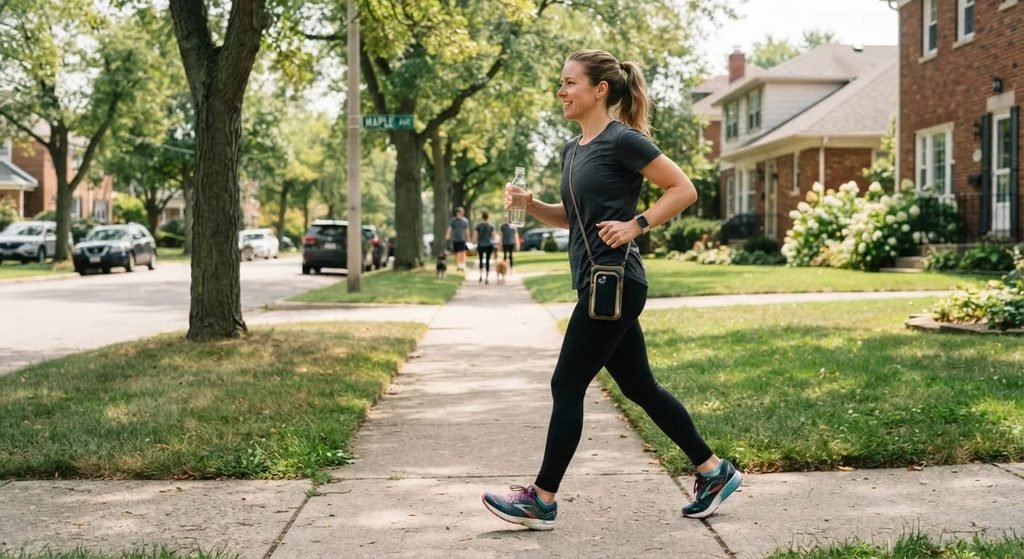
If you only adopt one habit from this guide, make it a short walk right after your largest meals. When your leg muscles contract during walking, they pull glucose directly out of your bloodstream to use for fuel—even without needing much insulin.
- Keep the pace brisk but conversational: Aim for roughly 3.0 to 3.5 mph (4.8 to 5.6 km/h). You should be able to speak in full sentences without gasping for air.
- Time it right: Start walking within 15 to 30 minutes of finishing your meal, right as digested glucose begins entering your bloodstream.
- Indoor option: If the weather is bad or you are stuck in an office, march in place, climb stairs, or hop on a walking pad for 10 minutes. Even 2 to 5 minutes of light walking breaks up sitting time and softens blood sugar spikes.
Step 3: Lift Weights 3 Times Per Week to Build Your “Glucose Sink”
Cardio burns glucose in the moment, but strength training upgrades your body’s storage capacity around the clock. Every pound of lean muscle you build increases the total number of GLUT4 transporters—specialized protein doorways that shuttle sugar out of your blood and into muscle tissue for storage as glycogen.
According to the American College of Sports Medicine (ACSM), combining regular resistance training with aerobic exercise significantly improves insulin sensitivity and blood glucose regulation. Focus on compound exercises that recruit large muscle groups like your quads, glutes, back, and chest, as larger muscles clear far more glucose than small isolation moves.

Step 4: Time Your Pre-Workout Fuel Smartly
To prevent mid-workout crashes, match your pre-training snack to how much time you have before lifting or running:
- 2 to 3 hours before training: Eat a full balanced meal containing complex carbs, 30 grams of protein, and light healthy fats (such as oatmeal with whey protein and berries, or turkey and rice with vegetables).
- 30 to 60 minutes before training: Keep fats and heavy fiber low so food does not sit heavy in your stomach, but pair a modest portion of carbs with fast protein—like half a banana with a small scoop of protein powder—to avoid a sudden sugar spike and crash.
- Fasted morning workouts: If you train first thing in the morning before eating, keep sessions under 45 to 60 minutes and drink 16 to 20 oz (475 to 600 ml) of water upon waking.
Step 5: Protect Your Sleep and Hydration
Even one night of poor sleep makes your cells temporarily more resistant to insulin the following day. Aim for 7 to 9 hours of consistent sleep in a cool, dark room. Reviewing how sleep affects metabolism and weight management can help you build an evening routine that keeps overnight stress hormones low.
Alongside sleep, drink water consistently throughout the day rather than chugging large amounts all at once. Mild dehydration concentrates glucose in your bloodstream and triggers fatigue, so keep a reusable water bottle nearby and sip steadily between meals.
Common Mistake:
Many people try to fix blood sugar crashes by slashing their calories drastically or skipping meals entirely until dinner. Extreme restriction spikes cortisol, drains workout performance, and almost always leads to evening overeating. Focus on steady, protein-anchored meals spaced every 3.5 to 4.5 hours instead.
Coach’s 25-Minute “Glucose-Clearing” Full-Body Workout
When you feel an afternoon slump creeping in—or want to maximize how well your muscles absorb carbohydrates from dinner—use this quick, joint-friendly resistance circuit. It targets your largest muscle groups (quadriceps, glutes, hamstrings, back, and chest) with minimal equipment to maximize glucose uptake.
- Goal: Improve insulin sensitivity and boost afternoon energy
- Frequency: 3 non-consecutive days per week (e.g., Monday, Wednesday, Friday)
- Equipment Needed: One pair of medium dumbbells (10–25 lb / 4.5–11.5 kg) and a sturdy bench or chair
Warm-Up (4 Minutes)
Perform each movement continuously for 60 seconds at an easy, controlled pace:
- Marching in Place with Arm Swings: Drive knees to hip height while swinging arms loosely.
- Bodyweight Good Mornings: Hinge at your hips with a flat back to warm up your hamstrings and glutes.
- Wall or Incline Push-Ups: Perform slow reps to warm up your chest, shoulders, and wrists.
- Bodyweight Squats to a Chair: Tap your glutes lightly to the seat and stand tall.
The Main Workout (18 Minutes)
Perform the exercises below as a circuit, moving from Exercise 1 to Exercise 5 with 30 seconds of rest between exercises. Rest 90 seconds after completing all 5 moves, and repeat for 3 total rounds.
| Exercise | Target Muscles | Sets | Reps | Tempo | Rest | Starting Weight Guidance |
| 1. Dumbbell Goblet Squat | Quads, Glutes, Core | 3 | 10–12 | 3-1-1-0 | 30 sec | 15–30 lb (7–13.5 kg) single dumbbell |
| 2. Elevated Push-Up | Chest, Shoulders, Triceps | 3 | 8–12 | 2-1-1-0 | 30 sec | Bodyweight (hands on 18-inch / 45 cm bench) |
| 3. Dumbbell Romanian Deadlift | Hamstrings, Glutes, Back | 3 | 10–12 | 3-1-1-0 | 30 sec | 10–25 lb (4.5–11.5 kg) per hand |
| 4. One-Arm Dumbbell Row | Lats, Upper Back, Biceps | 3 | 10/side | 2-1-1-0 | 30 sec | 15–30 lb (7–13.5 kg) single dumbbell |
| 5. Seated Calf Raises (Soleus Focus) | Soleus, Calves | 3 | 15–20 | 2-1-2-0 | 90 sec | 15–30 lb (7–13.5 kg) resting on knees |
(Tempo key: 3-1-1-0 means 3 seconds lowering, 1-second pause at the bottom, 1 second lifting, 0 seconds pause at the top.)
- Dumbbell Goblet Squat: Hold one dumbbell vertically against your sternum with both hands, elbows tucked down. Stand with feet shoulder-width apart, brace your core, and sit straight down between your heels until your thighs are parallel to the floor. Drive through your mid-foot to stand tall without letting your knees cave inward.
- Elevated Push-Up: Place your hands slightly wider than shoulder-width apart on a sturdy bench, box, or countertop about 18 to 24 inches (45 to 60 cm) high. Keep your body in a rigid plank from head to heels, lower your chest until it lightly touches the edge, and press back up smoothly.
- Dumbbell Romanian Deadlift: Hold a dumbbell in each hand in front of your thighs with a soft bend in your knees. Push your hips straight back as if closing a car door with your glutes, lowering the weights to mid-shin while keeping your spine completely neutral. Squeeze your glutes to return to standing.
- One-Arm Dumbbell Row: Place your left hand and left knee on a bench with your back flat and parallel to the floor. Hold a dumbbell in your right hand, pull your elbow toward your hip pocket until the weight reaches your ribcage, pause for one second, and lower with control.
- Seated Calf Raises: Sit tall on a chair or bench with your knees bent at 90 degrees and the balls of your feet resting on the floor (or a 2-inch / 5 cm book for extra range). Rest a dumbbell across your lower thighs just above your knees, push through your big toes to lift your heels as high as possible, and lower slowly. Research highlighted by the National Institutes of Health (NIH) shows that sustained activation of the soleus muscle—the deep calf muscle targeted when knees are bent—plays a remarkably powerful role in clearing blood glucose and improving oxidative metabolism.

Cool-Down (3 Minutes)
Spend 45 seconds each on slow nasal breathing (4-second inhale, 6-second exhale), a standing quad stretch, a doorway chest stretch, and a seated hamstring stretch to bring your heart rate down and shift your nervous system into recovery mode.
Regressions and Progressions
- Easier Version (Beginner / Low-Impact): Perform bodyweight squats to an 18-inch (45 cm) chair, do push-ups against a wall, use a 5 to 8 lb (2.5 to 3.5 kg) weight for rows and deadlifts, and rest 45 to 60 seconds between exercises.
- Harder Version (Intermediate / Advanced): Increase dumbbell weights by 5 lb (2.5 kg) once you hit the top of the rep range cleanly, lower your push-up hands to the floor, or add a 10-minute brisk incline walk at 3.5 mph (5.6 km/h) on a 5% grade immediately after your third circuit.
Daily Glucose-Steady Sample Schedule
Putting these habits together works best when they fit naturally into a normal workday. Here is how a practical, energy-stabilizing day looks in action:
| Time of Day | Action Step | Why It Protects Your Energy |
| 7:00 AM | Drink 16 oz (475 ml) water + eat breakfast with 30g protein, fiber, and slow carbs (e.g., 3 eggs, sautéed spinach, 1 slice whole-grain toast) | Rehydrates after sleep and prevents an early morning cortisol-and-sugar spike |
| 10:30 AM | Optional snack if hungry: Greek yogurt with berries or a handful of almonds (20–28g) | Bridges a long gap before lunch without triggering an insulin surge |
| 12:30 PM | Eat lunch starting with vegetables and lean protein before starches | Blunts the post-lunch glucose rise that causes afternoon brain fog |
| 12:50 PM | Take a brisk 10-to-15-minute walk outdoors or indoors | Uses leg muscles to clear post-meal glucose immediately |
| 4:30 PM | Complete the 25-minute full-body resistance circuit (3x/week) or a 20-minute brisk walk | Depletes muscle glycogen slightly so dinner carbs refill muscle stores instead of spiking blood sugar |
| 7:00 PM | Balanced dinner (salmon, roasted sweet potato, asparagus) at least 3 hours before bed | Gives digestion time to settle so overnight blood sugar stays steady |
If you are looking for additional nutritional strategies to support steady energy during busy workweeks or calorie deficits, exploring how to boost metabolic flexibility without crash dieting and which nutrients support normal energy metabolism can give you a strong foundation alongside your training.
Who Should Be Careful and Talk to a Doctor
While nutrition adjustments and regular exercise are safe and effective for most healthy adults, certain situations require medical guidance before changing your routine. Check with a doctor or registered dietitian first if you:
- Have been diagnosed with Type 1 diabetes, Type 2 diabetes, or prediabetes, especially if you take insulin or blood-sugar-lowering medications (exercise increases insulin sensitivity and can cause blood sugar to drop too low if medications are not adjusted).
- Experience frequent dizziness, fainting spells, heart palpitations, or numbness in your hands and feet.
- Are pregnant, postpartum, or managing conditions like polycystic ovary syndrome (PCOS) or thyroid disorders.
- Have joint pain, lower back injuries, or cardiovascular concerns before starting a new strength or walking program.
For practical ways to curb mid-afternoon sweet cravings while making these habit shifts, check out our guide on how to manage cravings during a calorie deficit or learn how to improve daily energy without caffeine.
Frequently Asked Questions
Why do I feel so tired right after eating a carb-heavy lunch?
Eating refined carbohydrates without enough protein, fat, or fiber causes a rapid spike in blood glucose. Your pancreas responds by releasing a large wave of insulin, which clears sugar from your blood too quickly. That sharp rebound drop leaves your brain and muscles temporarily low on fuel, causing heavy post-meal fatigue.
How long should I walk after eating to stabilize my blood sugar?
A brisk 10-to-15-minute walk starting within 15 to 30 minutes of finishing your meal is enough to noticeably lower post-meal blood sugar spikes. Even 2 to 5 minutes of light walking or marching in place helps your leg muscles absorb circulating glucose and prevents an afternoon energy crash.
Does lifting weights actually help keep blood sugar steady?
Yes. Skeletal muscle is the primary storage site for glucose in your body. Performing resistance training three times per week activates glucose transporters in muscle cells during your workout and builds lean muscle mass over time, which increases your body’s capacity to store carbohydrates smoothly without sharp energy swings.
What should I eat for breakfast to prevent a mid-morning energy crash?
Skip sugary pastries, sweetened cereals, or juice on an empty stomach. Instead, aim for 25 to 35 grams of lean protein paired with high-fiber vegetables or whole grains and healthy fats—such as scrambled eggs with spinach and whole-grain toast, or plain Greek yogurt topped with berries and chia seeds.
Can poor sleep really make my blood sugar spike the next day?
Yes. Even one or two nights of short or fragmented sleep increases evening cortisol levels and temporarily reduces how well your cells respond to insulin. As a result, the exact same breakfast that normally gives you steady energy can trigger a higher glucose spike and sharper crash after a poor night’s sleep.
When should I see a doctor about blood sugar and fatigue?
Schedule a medical evaluation if afternoon crashes, shakiness, or brain fog continue after two to three weeks of balanced meals and regular movement. Seek prompt medical care if fatigue comes with excessive thirst, frequent urination, blurred vision, dizziness, or unexplained weight loss.
Take Control of Your Daily Energy
You do not have to accept afternoon exhaustion, stubborn brain fog, or mid-workout crashes as a normal part of getting older. By recognizing the signs your blood sugar is affecting your energy and what to do about it, you can replace the spike-and-crash roller coaster with steady, reliable stamina from morning until night.
Start small this week: anchor your next three lunches with 30 grams of lean protein and fibrous vegetables, take a brisk 10-minute walk afterward, and schedule three 25-minute full-body strength sessions. Your muscles—and your focus—will feel the difference within days.