Determining the best time to take magnesium glycinate for sleep is a common question among athletes, busy professionals, and anyone struggling to wind down at night. Magnesium is a critical mineral for neuromuscular function and nervous system regulation. However, the specific form you choose and the timing of your dose dramatically impact its effectiveness.
Many people take supplements randomly, missing the window where their body can actually use them for recovery. As a strength and conditioning coach, I see clients waste money on supplements because they ignore timing and dosage fundamentals. This guide breaks down the science, the exact timing, and practical steps to help you build a reliable nighttime routine.
Quick Answer
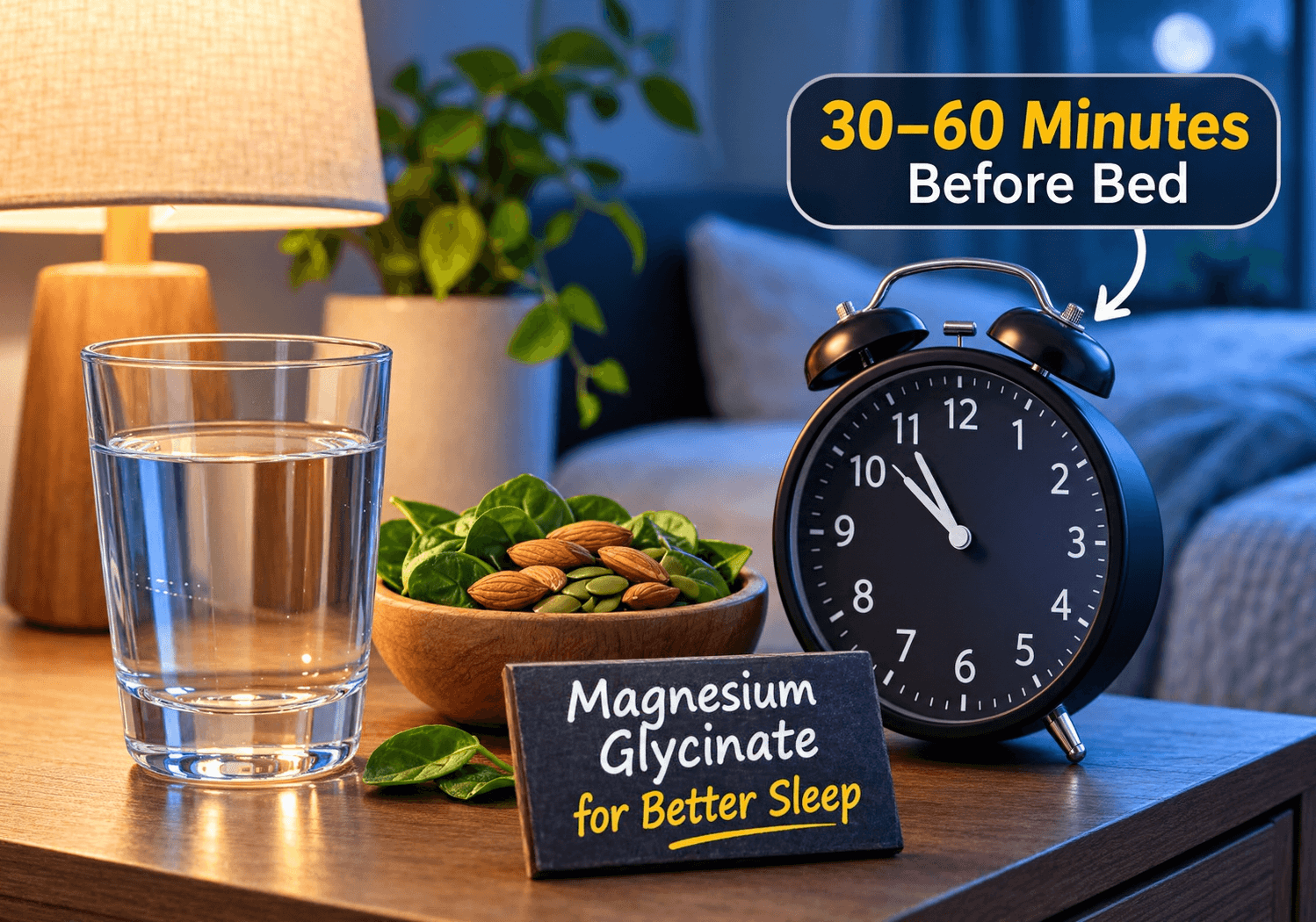
The best time to take magnesium glycinate for sleep is 30 to 60 minutes before bedtime. This window allows the chelated magnesium to absorb and interact with GABA receptors, promoting nervous system relaxation and reducing sleep onset latency. A standard adult dose ranges from 200 to 400 mg, taken consistently each night.
What Is Magnesium Glycinate and How Does It Work?
Magnesium is an essential mineral involved in over 300 enzymatic reactions in the human body. It regulates muscle contractions, nerve signals, and blood sugar levels. However, not all magnesium supplements are created equal.
Magnesium glycinate is formed by combining elemental magnesium with the amino acid glycine. This process is called chelation. Chelation protects the mineral as it passes through the digestive tract, leading to higher bioavailability compared to cheaper forms like magnesium oxide.
Glycine itself is an inhibitory neurotransmitter. Research shows that glycine has a calming effect on the brain. When you consume magnesium glycinate, you get a dual benefit: the muscle-relaxing properties of magnesium and the neuro-calming effects of glycine. This makes it uniquely suited for nighttime use, unlike magnesium citrate, which is more commonly used to relieve occasional constipation.

The Science of Magnesium and Sleep Quality
Understanding why this mineral works requires looking at the central nervous system. Magnesium plays a direct role in regulating neurotransmitters that send signals throughout the nervous system and brain.
Specifically, magnesium binds to gamma-aminobutyric acid (GABA) receptors. GABA is responsible for quieting down nerve activity. When GABA functions optimally, your brain transitions from a state of alertness to a state of rest. A study published in the Journal of Research in Medical Sciences found that older adults with insomnia who supplemented with magnesium experienced longer sleep time, faster sleep onset, and higher sleep efficiency compared to a placebo group (Abbasi et al., 2012).
Furthermore, glycine has been shown to lower core body temperature slightly, a physiological trigger that signals to your brain that it is time to sleep. Research in Sleep and Biological Rhythms demonstrated that glycine ingestion before bed significantly improved subjective sleep quality and reduced daytime sleepiness (Yamadera et al., 2007).
Poor sleep does not just make you tired. It disrupts your entire physiological recovery process. For example, understanding how sleep affects metabolism is crucial for anyone managing their body composition, as sleep deprivation spikes hunger hormones and stalls fat oxidation.
Why Timing Matters: The Science Behind the Best Time to Take Magnesium Glycinate for Sleep
Taking a supplement at the wrong time can render it useless or cause unwanted side effects. The digestive system processes chelated minerals at a specific rate.
When you swallow a magnesium glycinate capsule, it must travel through the stomach and into the small intestine for absorption. This process typically takes 30 to 60 minutes. If you take it right as your head hits the pillow, the mineral has not yet entered your bloodstream to exert its calming effects on your GABA receptors.
Conversely, taking it too early, such as with dinner at 6:00 PM, might mean the peak blood concentration occurs before you are actually ready to sleep, wasting the acute relaxation benefits.
Consistency is equally important. Magnesium is not a sedative drug like a prescription sleep aid. It is a nutrient that builds up in your system over time. Taking it at the same time every night trains your body’s circadian rhythm to associate that routine with winding down. This behavioral cue, combined with the chemical effect, creates a powerful sleep trigger.

Dosage and Timing Guide for Adults
Finding the right dose is highly individual. It depends on your body weight, dietary magnesium intake, and specific sleep challenges. The National Institutes of Health (NIH) Office of Dietary Supplements recommends a Recommended Dietary Allowance (RDA) of 310–420 mg per day for adults, depending on age and sex.
Since we get some magnesium from food (leafy greens, nuts, seeds), a supplemental dose of 200 to 400 mg of elemental magnesium is generally considered safe and effective for sleep support.
| Goal | Recommended Dosage (Elemental Mg) | Timing | Expected Effect |
| General Sleep Support | 200 mg | 45 mins before bed | Mild relaxation, easier sleep onset |
| High Stress / Muscle Cramps | 300–400 mg | 45–60 mins before bed | Deep muscle relaxation, reduced nighttime waking |
| Beginner / Sensitive Stomach | 100–150 mg | 60 mins before bed | Gentle introduction to assess tolerance |
Note: Always check the supplement label for “elemental magnesium.” A 500 mg capsule of magnesium glycinate does not contain 500 mg of elemental magnesium; it contains a fraction of that, with the rest being the glycine molecule.
How to Build a Nightly Routine Around the Best Time to Take Magnesium Glycinate for Sleep
A supplement works best when it is part of a broader system. Relying solely on a pill while staring at a bright phone screen will not fix your sleep architecture. Here is a practical, step-by-step evening routine to maximize your results.
Step 1: Set a Consistent Target Bedtime
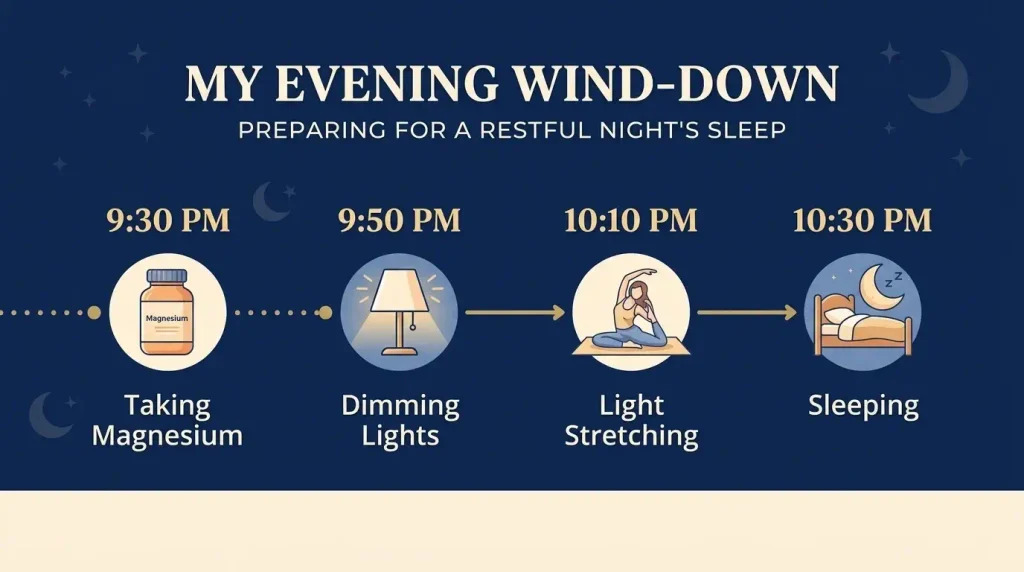
Choose a realistic bedtime and work backward. If you want to be asleep by 10:30 PM, your wind-down routine starts at 9:30 PM.
Step 2: Take Your Supplement at 9:30 PM
Take your 200–400 mg dose of magnesium glycinate with a small sip of water. Avoid taking it on a completely empty stomach if you are prone to mild nausea, but avoid pairing it with a heavy, high-fat meal, which can slow absorption.
Step 3: Dim the Lights and Reduce Screen Time
Blue light from phones and TVs suppresses natural melatonin production. Switch to dim, warm lighting in your home.
Step 4: Engage in Passive Relaxation
Spend 20 minutes doing something low-stakes. Read a physical book, do light static stretching, or practice box breathing (inhale 4 seconds, hold 4 seconds, exhale 4 seconds, hold 4 seconds).
Step 5: Cool the Room
Your core body temperature needs to drop to initiate sleep. Keep your bedroom between 60–67°F (15–19°C).
By anchoring your magnesium intake to this sequence, you create a reliable Pavlovian response. Your brain learns that the combination of the supplement, dim lights, and stretching means it is time to shut down.
Coach’s Tip
Pair your magnesium glycinate with a source of complex carbohydrates if you take it with a small snack. Carbohydrates can help shuttle tryptophan into the brain, which is a precursor to serotonin and melatonin. A small apple or a few whole-grain crackers with your supplement can enhance the natural sleep-promoting environment without spiking your blood sugar.
Common Mistake
Taking magnesium oxide instead of glycinate. Many cheap “magnesium” supplements at the grocery store use magnesium oxide. This form has a bioavailability of as low as 4%. It is far more likely to cause digestive distress, diarrhea, and stomach cramps at night, which will actively destroy your sleep quality. Always verify the label says “magnesium glycinate” or “magnesium bisglycinate.”
Safety Notes and Who Should Be Careful
While magnesium is generally safe for healthy adults, it is not without contraindications. The kidneys are responsible for filtering excess magnesium from the blood.
Who should consult a doctor first:
- Individuals with kidney disease: Impaired kidney function can lead to magnesium toxicity (hypermagnesemia), which causes dangerous drops in blood pressure and irregular heartbeats.
- People on certain medications: Magnesium can interact with bisphosphonates (for osteoporosis), certain antibiotics (like tetracyclines), and diuretics. Space out magnesium intake by at least 2 hours from these medications.
- Those with heart block or severe low blood pressure: Magnesium naturally relaxes blood vessels, which can compound these conditions.
Start with the lowest effective dose (100–200 mg) to assess your tolerance. If you experience loose stools, reduce the dose. While glycinate is the gentlest form, individual digestive systems vary.
It is also worth noting that chronic sleep issues can be a symptom of underlying metabolic or hormonal imbalances. For instance, the hormonal connection between sleep and weight means that unresolved sleep apnea or chronic stress can override any supplement’s benefits. Address the root cause alongside your supplementation.
Related Tips for Better Sleep and Recovery
Supplements are just one piece of the recovery puzzle. To truly optimize your sleep, consider these evidence-based lifestyle adjustments.
1. Evaluate Your Overall Nutrient Intake
Magnesium does not work in isolation. Ensuring you have adequate levels of nutrients that support normal energy metabolism during the day prevents nighttime deficits that can cause restless legs or muscle twitches.
2. Manage Evening Cortisol Levels
High stress keeps cortisol elevated at night, directly opposing melatonin. If you struggle with a racing mind, look into evidence-based strategies for cortisol management and stress. Techniques like journaling or light yoga can physically lower cortisol before bed.
3. Check for Micronutrient Deficiencies
If you are constantly fatigued, you may have broader deficiencies. Understanding which vitamins that support metabolism when deficient can help you build a comprehensive daily stack, rather than just guessing at nighttime solutions.
4. Address the Broader Impact of Sleep Loss
Do not underestimate how deeply poor rest affects your entire body. Research clearly outlines the impact of poor sleep on overall health, including hormonal disruption, decreased cognitive function, and impaired physical recovery. Prioritize sleep as heavily as you prioritize your workouts.

Frequently Asked Questions (FAQ)
1. How long before bed should I take magnesium glycinate?
You should take magnesium glycinate 30 to 60 minutes before your intended bedtime. This gives your digestive system enough time to break down the chelated mineral and allows blood levels to peak just as you are trying to fall asleep, maximizing its calming effect on the nervous system.
2. Can you take magnesium glycinate in the morning?
Yes, you can take it in the morning, but it is not ideal for sleep. Because glycine has a calming effect, taking it in the morning might make some sensitive individuals feel slightly sluggish. However, if your primary goal is to correct a general magnesium deficiency rather than target sleep, morning intake is perfectly safe and effective.
3. Does magnesium glycinate make you drowsy?
Magnesium glycinate does not cause “drowsiness” in the same way a prescription sedative or antihistamine does. Instead, it promotes relaxation. It helps quiet an overactive nervous system and relaxes tight muscles, making it easier for your body to transition into its natural sleep state without forcing unconsciousness.
4. What is the optimal magnesium glycinate dose for adults?
The optimal dose for sleep support typically ranges from 200 mg to 400 mg of elemental magnesium per day. It is best to start at the lower end of this range (200 mg) to assess your digestive tolerance, then gradually increase to 400 mg if needed and well-tolerated.
5. Will magnesium glycinate disrupt my stomach at night?
Magnesium glycinate is the least likely form of magnesium to cause digestive upset. The glycine chelation makes it highly absorbable in the small intestine, bypassing the laxative effect commonly seen with magnesium oxide or citrate. However, taking it on a completely empty stomach may cause mild nausea in a small subset of people.
6. Can I take magnesium glycinate with melatonin?
Yes, magnesium glycinate and melatonin can be taken together safely, and they work via different mechanisms. Magnesium relaxes the muscles and nervous system, while melatonin signals to your brain that it is nighttime. Many people find this combination highly effective for resetting their circadian rhythm.
Conclusion
Finding the best time to take magnesium glycinate for sleep is about more than just swallowing a pill. It is about strategic timing, consistent dosing, and pairing the supplement with solid sleep hygiene practices. By taking 200 to 400 mg of this highly bioavailable, chelated mineral 30 to 60 minutes before bed, you give your body the exact tools it needs to downregulate nervous system activity and prepare for deep, restorative rest.
Remember that supplements are meant to support a healthy lifestyle, not replace it. Pair your magnesium routine with a cool, dark room, reduced screen time, and consistent sleep schedules. If you have underlying health conditions, always clear new supplements with your healthcare provider. Stick to the best time to take magnesium glycinate for sleep, and let your body’s natural recovery processes do the rest.