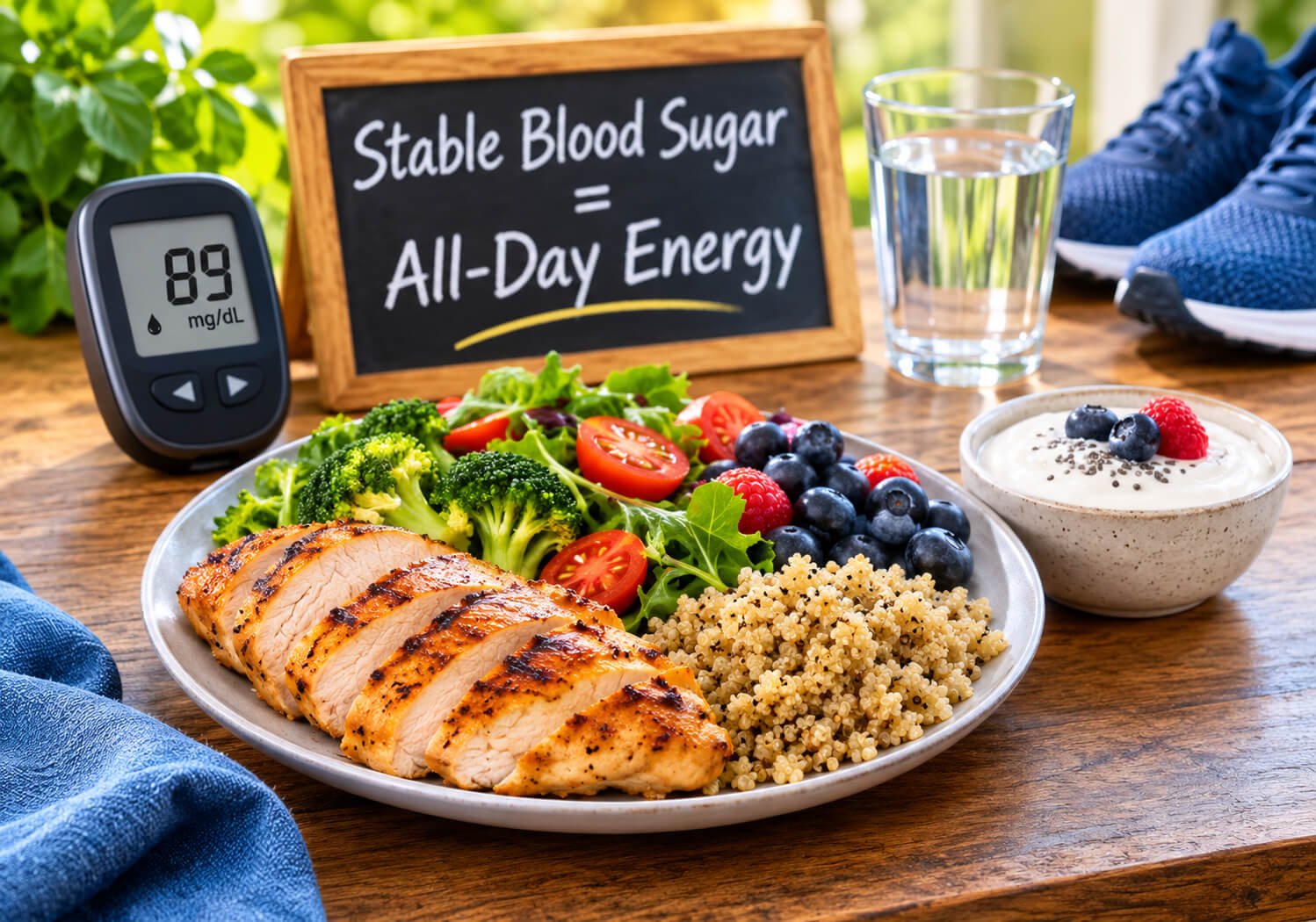
You eat a solid breakfast, feel fine by 10 a.m., and then hit a wall by mid-afternoon. Your brain fogs up, your motivation drops, and you reach for coffee or a candy bar just to get through the next few hours. If that sounds familiar, the root cause is often a pattern of blood sugar spikes and crashes that your diet and activity level are reinforcing. Learning how to stabilize blood sugar levels naturally for consistent energy throughout the day is not about eliminating carbs or counting every gram. It is about pairing the right foods with the right movement, protecting your sleep, and building the muscle mass that acts as a glucose sink.
As a strength and conditioning coach, I work with clients every week who describe the same “roller-coaster” feeling. The good news is that small, repeatable changes in meal composition, post-meal movement, and weekly training volume can flatten that curve noticeably within two to four weeks. Below is the practical, evidence-based playbook I use with clients who want steady, all-day energy without medication.
Quick Answer: To stabilize blood sugar naturally, pair every meal with lean protein and fiber, take a 10-minute walk after your largest meals, build muscle through regular resistance training (2–3 sessions per week), protect 7–9 hours of sleep, and swap refined carbs for low-glycemic options like legumes, berries, and whole grains. These steps work together to blunt glucose spikes and keep insulin responding smoothly.

What’s Happening When Your Blood Sugar Spikes and Crashes
When you eat carbohydrates, your digestive system breaks them down into glucose, which enters the bloodstream. Your pancreas releases insulin to help cells absorb that glucose. If the meal is heavy in refined or high-glycemic carbs (white bread, sugary cereal, a large bowl of rice), glucose floods in quickly, insulin surges, and your cells take up more glucose than they need. The excess is stored as glycogen in the liver and muscles, and the rest is converted to fat.
Within 60 to 90 minutes, that insulin surge can overshoot, pulling glucose below the level your brain and muscles need. The result is the familiar crash: shakiness, brain fog, irritability, and a strong pull toward more sugar. Research published in the Journal of Clinical Endocrinology & Metabolism has shown that repeated postprandial glucose excursions are linked to declining insulin sensitivity over time [.
The fix is not to avoid carbohydrates. It is to slow the rate at which glucose enters your blood and to give your muscles a reason to use it. That is where food pairing, movement, and training come in.
How to Stabilize Blood Sugar Levels Naturally: The 5 Pillars
Pillar 1: Eat Protein and Fiber With Every Meal
Protein and fiber slow gastric emptying, which means glucose trickles into the bloodstream more gradually instead of flooding in all at once. A practical rule I give clients: every plate should include a palm-sized portion of lean protein (chicken, fish, eggs, tofu, Greek yogurt) and at least two to three tablespoons of fiber (vegetables, legumes, berries, whole grains).
Studies from the American Journal of Clinical Nutrition have demonstrated that adding protein to a carbohydrate-containing meal reduces the postprandial glucose peak by 20 to 30 percent compared to eating the carbs alone . Soluble fiber works similarly by forming a gel in the gut that slows carbohydrate digestion. If you want a deeper dive into how fiber supports appetite and metabolic health, see our guide on dietary fiber and weight management.
For protein specifically, aim for 0.6 to 0.8 grams per pound of body weight (0.7 to 0.9 g/kg) spread across three to four meals. This range supports both glucose handling and muscle maintenance. Our article on protein intake and metabolism breaks down portion sizes and timing in more detail.
Practical meal examples:
- Breakfast: 3 scrambled eggs + ½ cup steel-cut oats + ¼ cup blueberries + 1 tbsp chia seeds
- Lunch: Grilled chicken breast + ½ cup black beans + mixed greens + 1 tbsp olive oil
- Snack: ¾ cup plain Greek yogurt + 1 tbsp ground flaxseed + a few walnuts
- Dinner: Baked salmon + ¾ cup quinoa + roasted broccoli + 1 small sweet potato

Pillar 2: Move Your Muscles After Eating
This is the single most underused tool in blood sugar management, and it requires zero equipment. A short walk after a meal activates skeletal muscle contractions, which pull glucose out of the bloodstream through a mechanism that does not depend on insulin. The GLUT4 transporters on muscle cell membranes open in response to contraction, giving glucose a direct entry route.
Research from the British Journal of Sports Medicine has found that a 10- to 15-minute walk taken within 30 minutes of finishing a meal can reduce the postprandial glucose peak by 20 to 30 percent compared to sitting still ]. You do not need to power through a full workout. A brisk 10-minute stroll around your neighborhood (about 0.6 miles or 1 km) is enough to make a measurable difference.
Coach’s Tip: Set a phone reminder for 10 minutes after you finish lunch and dinner. Put on your shoes, step outside, and walk at a pace where you can talk but not sing. You do not need to break a sweat. The goal is to get your leg muscles contracting rhythmically. Over time, this becomes a habit that your body associates with “I just ate, now I move.”
If you are desk-bound for most of the day, break up sitting with a 2- to 3-minute stand-and-walk every 30 to 45 minutes. Even light activity—carrying groceries, taking the stairs, doing a few bodyweight squats—keeps glucose moving through your muscles.
Pillar 3: Build Muscle Mass for Better Glucose Uptake
Skeletal muscle is the largest consumer of glucose in your body. More muscle mass means more GLUT4 transporters, more mitochondria for glucose oxidation, and a larger glycogen storage capacity. In practical terms, a person with 15 percent more lean muscle has a significantly larger “glucose sink” to absorb post-meal spikes.
Resistance training two to three times per week is the most efficient way to build that capacity. You do not need a commercial gym. A pair of adjustable dumbbells (start with 10–20 lb / 4.5–9 kg for most beginners) and a sturdy chair or bench cover the major movement patterns.
Minimum effective resistance session (30 minutes, 2× per week):
| Exercise | Sets × Reps | Rest | Tempo |
| Goblet squat (dumbbell at chest) | 3 × 10–12 | 60 s | 2-1-2 (down-hold-up) |
| Dumbbell bench press or push-up | 3 × 10–12 | 60 s | 2-1-2 |
| Single-arm dumbbell row | 3 × 10–12 each side | 60 s | 2-1-2 |
| Romanian deadlift (light dumbbells) | 3 × 10–12 | 60 s | 3-1-2 |
| Plank | 3 × 30–45 s | 45 s | Hold steady |
Progress by adding 2.5 lb (1.1 kg) to the dumbbells or one extra rep per set every two weeks. If 10 lb feels too heavy for clean form, drop to 5 lb (2.3 kg) and focus on the tempo. If 20 lb feels easy, move to 25 lb (11.3 kg) or add a fourth set.
Common Mistake: Rushing through reps to “get it over with.” The eccentric (lowering) phase is where you build the most muscle and create the most metabolic demand. If you are dropping the weight in a quarter-second, you are missing the stimulus. Count a full two seconds down, pause one second at the bottom, then drive up in two seconds.

Pillar 4: Manage Stress and Protect Sleep
Cortisol, the primary stress hormone, raises blood glucose by signaling the liver to release stored glycogen. Chronic stress keeps cortisol elevated, which means your baseline glucose runs higher and your insulin has to work harder to compensate. Over months and years, this pattern is linked to declining insulin sensitivity, according to research summarized by the NIH National Institute of Diabetes and Digestive and Kidney Diseases.
Sleep compounds the problem. Even one night of poor sleep (five or six hours) can reduce insulin sensitivity by 20 to 30 percent the following day, as shown in studies from the Journal of Clinical Investigation []. The practical takeaway: protect 7 to 9 hours of quality sleep as a non-negotiable part of your energy strategy. Our article on how sleep affects metabolism and weight management covers the hormonal cascade in more detail.
Stress-management steps that fit into a busy day:
- Morning (2 min): Box breathing—inhale 4 counts, hold 4, exhale 4, hold 4. Repeat six cycles before your first coffee.
- Midday (5 min): A short walk outside, even in a parking lot or around the office. Change of scenery lowers perceived stress.
- Evening (10 min): A gentle stretch or a few rounds of diaphragmatic breathing before screens go off. Aim to be in bed 30 minutes before your target sleep time.
Pillar 5: Choose Low-Glycemic Carbs Over Refined Sugars
Not all carbohydrates create the same glucose curve. Refined white flour, sugary drinks, and heavily processed snack foods spike blood sugar within 15 to 20 minutes. Whole, minimally processed carbohydrates—legumes, oats, sweet potatoes, berries, whole-wheat pasta—release glucose more slowly because their fiber and cellular structure take longer to break down.
A simple swap list:
| Swap out | Swap in | Why |
| White bread toast | ½ cup steel-cut or rolled oats | Lower glycemic index; more fiber |
| Sugary cereal | Greek yogurt + berries + nuts | Protein + fat slow glucose absorption |
| White rice (1 cup) | Quinoa or brown rice (1 cup) | Higher fiber, slower digestion |
| Fruit juice (8 oz) | Whole fruit (1 medium apple) | Fiber keeps glucose release gradual |
| White potato | Sweet potato or roasted cauliflower | Lower glycemic load |
You do not have to eliminate all carbs. The goal is to make the quality of your carbs work for you rather than against you. If you are dealing with frequent sugar cravings that undermine your energy, our guide on stopping sugar cravings naturally offers a step-by-step approach.
A Practical Daily Routine for Steady Energy
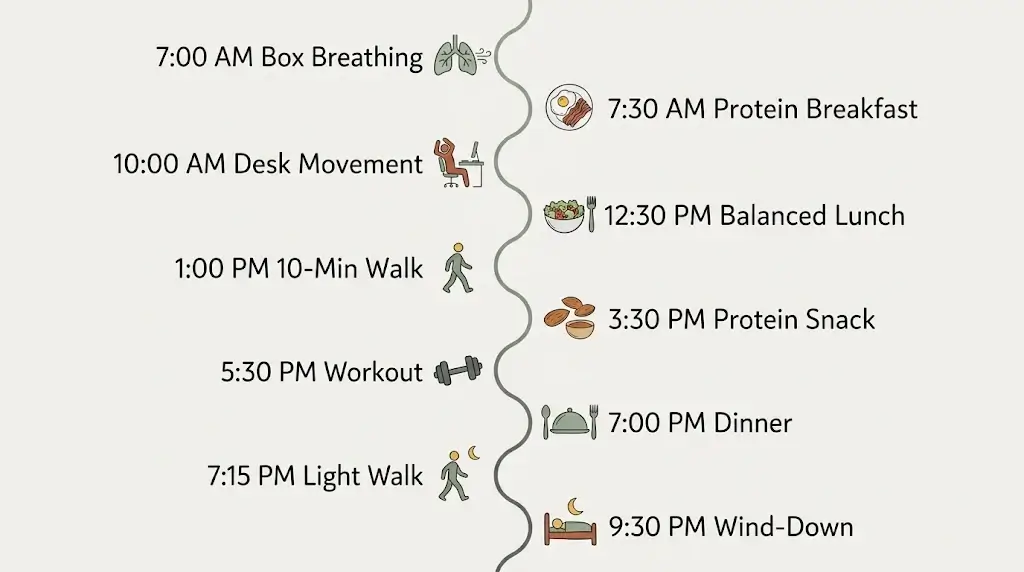
Here is how the five pillars look in a realistic day. Adjust the timing to fit your schedule.
| Time | Action | Why It Works |
| 7:00 a.m. | 2-min box breathing + 8 oz water | Lowers morning cortisol; rehydrates |
| 7:30 a.m. | Protein + fiber breakfast (eggs, oats, berries) | Slows glucose absorption; fuels brain |
| 10:00 a.m. | 3-min walk or 10 bodyweight squats at desk | Keeps glucose moving; breaks sedentary stretch |
| 12:30 p.m. | Balanced lunch (protein, fiber, healthy fat) | Prevents the mid-afternoon crash |
| 1:00 p.m. | 10-minute brisk walk (≈0.6 mi / 1 km) | Activates GLUT4; blunts post-lunch spike |
| 3:30 p.m. | Small protein snack (yogurt, nuts, hard-boiled egg) | Maintains blood sugar; avoids overeating dinner |
| 5:30 p.m. | Resistance or aerobic workout (30–45 min) | Builds glucose sink; improves insulin sensitivity |
| 7:00 p.m. | Dinner (protein, fiber, moderate carbs) | Last major glucose load of the day |
| 7:15 p.m. | 10-minute easy walk or light stretch | Aids digestion; prevents nighttime glucose drift |
| 9:30 p.m. | Screens off; 10-min breathing or gentle stretch | Prepares for 7–9 hrs of quality sleep |
What the Research Says About Exercise Timing and Glucose
The timing of your workout relative to meals matters more than most people realize. Two patterns stand out in the literature:
- Post-meal walking (10–15 min within 30 min of eating): Multiple studies in the Diabetes Care journal have shown this reduces the postprandial glucose peak without lowering blood sugar too far. It is the safest and easiest intervention for most people [].
- Resistance or aerobic training in a fasted or low-carb state (e.g., early morning before breakfast): This can improve insulin sensitivity for 24 to 48 hours afterward because your muscles are already glycogen-depleted and more eager to take up glucose from the next meal. However, if you feel lightheaded or fatigued, do not force a fasted workout. Eat a small protein snack (a handful of nuts, a piece of cheese) 30 minutes before training.
The HHS 2018 Physical Activity Guidelines for Americans recommend at least 150 minutes of moderate aerobic activity plus two days of muscle-strengthening work per week for adults. For blood sugar management specifically, spreading that activity across more days (e.g., five 30-minute walks plus two 30-minute strength sessions) tends to produce smoother glucose curves than doing all your exercise on one weekend day.
If you want a broader framework for training that supports metabolic health beyond just glucose, our guide on boosting metabolic flexibility without crash dieting walks through periodized training and nutrition timing.
Safety Notes and When to See a Doctor
Stabilizing blood sugar through diet and exercise is appropriate for most healthy adults and for people with prediabetes (fasting glucose 100–125 mg/dL or HbA1c 5.7–6.4 percent). However, if you have been diagnosed with type 1 or type 2 diabetes, are on insulin or sulfonylureas, or experience symptoms of hypoglycemia (shaking, confusion, rapid heartbeat, sweating), talk to your doctor or endocrinologist before changing your diet or exercise routine. Medication doses may need adjustment when you increase activity or change your carb intake.
Other reasons to check in with a healthcare provider:
- Fasting glucose consistently above 126 mg/dL or HbA1c above 6.5 percent
- Unexplained weight loss, excessive thirst, or frequent urination
- You are pregnant or postpartum (gestational diabetes changes the equation)
- You are on medications that affect glucose (corticosteroids, certain antipsychotics)
This article is for general information and is not a substitute for advice from a doctor or physical therapist.
Related Tips for Long-Term Metabolic Health
A few additional levers that support stable energy over months and years:
- Prioritize nutrient-dense foods. Micronutrients like magnesium, chromium, and B vitamins play supporting roles in glucose metabolism. Our article on nutrients that support normal energy metabolism lists the key ones and food sources.
- Limit liquid calories. Sugary sodas, fruit juices, and sweetened coffee drinks deliver glucose with no fiber or protein to slow absorption. Swap for water, sparkling water, or unsweetened herbal tea.
- Keep a simple log for two weeks. You do not need a continuous glucose monitor. Just note what you ate, when you moved, how you slept, and how your energy felt at 10 a.m., 2 p.m., and 5 p.m. Patterns will emerge quickly.
- Be consistent, not perfect. One off-day with a large pasta plate and no walk will not undo weeks of good habits. Aim for 80 percent adherence and let the rest go.
- Reduce reliance on caffeine as an energy crutch. If you are running on three or four coffees a day, your adenosine receptors are adapting, and the “energy” you feel is partly a rebound from withdrawal. Our guide on improving daily energy without caffeine offers a tapering plan.

How long does it take to stabilize blood sugar naturally?
Most people notice smoother energy within 10 to 14 days of consistently pairing meals with protein and fiber, adding post-meal walks, and training two to three times per week. Full insulin sensitivity improvements, as measured by an HbA1c test, typically take 6 to 12 weeks of sustained habit change.
Does a 10-minute walk after meals really lower blood sugar?
Yes. Multiple peer-reviewed studies have shown that a 10- to 15-minute walk taken within 30 minutes of a meal reduces the postprandial glucose peak by roughly 20 to 30 percent compared to remaining seated. The effect comes from muscle contractions activating insulin-independent glucose uptake pathways.
Can I eat carbohydrates and still keep my blood sugar stable?
Absolutely. The key is the type of carbohydrate and what you pair it with. Whole grains, legumes, and berries have a lower glycemic impact than refined sugars. Adding protein, fiber, and a small amount of healthy fat to any carb-containing meal slows glucose absorption and flattens the curve.
What is the best time of day to exercise for blood sugar control?
Both morning and post-meal exercise are effective. Morning resistance training can improve insulin sensitivity for the rest of the day. A short walk after your largest meal directly blunts that meal’s glucose spike. Ideally, combine both: a strength or aerobic session in the morning and a 10-minute walk after lunch or dinner.
Do I need to track my blood sugar to know if my changes are working?
You do not need a continuous glucose monitor to see results. Pay attention to how you feel at 10 a.m., 2 p.m., and 5 p.m. If the mid-afternoon fog is fading and you are not reaching for snacks to “get through” the afternoon, your glucose curve is likely smoothing out. An annual HbA1c blood test from your doctor confirms the trend.
Will these changes help if I am prediabetic?
Yes. Lifestyle intervention—diet, regular physical activity, and weight management if applicable—is the first-line recommendation for prediabetes, according to the CDC National Diabetes Prevention Program. A 150-minute-per-week activity target combined with a 5–7 percent body-weight reduction (if overweight) has been shown to reduce progression to type 2 diabetes by about 58 percent in the landmark Diabetes Prevention Program trial [].
Conclusion: Steady Energy Is a System, Not a Single Fix
Learning how to stabilize blood sugar levels naturally for consistent energy throughout the day is not about finding one magic food or one perfect workout. It is about stacking small, repeatable habits: protein and fiber on every plate, a short walk after your biggest meals, two to three strength sessions per week to build your glucose sink, seven to nine hours of protected sleep, and low-glycemic carbs in place of refined sugars. None of these steps is difficult in isolation. Together, they create a metabolic environment where glucose rises gently, insulin responds smoothly, and your energy stays even from your first coffee to your evening wind-down.
Start with one pillar this week. Add the next pillar the following week. In a month, the roller-coaster will feel like a flat road, and the 3 p.m. crash will be a memory.