Postbiotics for Skin Glow: What the Research Says and How to Use Them Right
Glowing skin is usually sold as a bottle of serum. A quieter player is showing up in that conversation: postbiotics for skin glow, the non-living compounds that probiotic bacteria leave behind when they ferment. Dermatology journals have turned serious attention to them in the last few years, and skin-care brands have followed. The question worth answering honestly is what the evidence supports, what it does not, and how a realistic routine looks if you want to try this from the inside out.
This guide breaks the topic down the way I would with a client: what postbiotics actually are, how they reach your skin through the gut-skin axis, what the trials show for hydration, acne, and skin aging, and how to use food and supplements without overspending or overpromising.
Quick Answer: Postbiotics are health-benefiting compounds made by probiotic bacteria, including cell fragments and metabolites like short-chain fatty acids. Research suggests they may support skin glow by strengthening the skin barrier, calming inflammation, and improving hydration, with the strongest evidence in atopic dermatitis and acne. They are a support tool, not a replacement for sunscreen or a good cleanser.
What Are Postbiotics, Exactly?
A postbiotic is formally defined as “a preparation of inanimate microorganisms and/or their components that confers a health benefit on the host,” a definition set by an expert panel from the International Scientific Association for Probiotics and Prebiotics (ISAPP) [1].
In plain terms: probiotics are live bacteria, prebiotics are the fibers that feed them, and postbiotics are what they produce, plus the harmless cell fragments left after the bacteria are inactivated. Think of a batch of yogurt. The live cultures are probiotics, the lactose they fermented is the prebiotic story, and the peptides, cell-wall pieces, and acids left in the finished product are the postbiotic fraction.
The chemical families that matter for skin include short-chain fatty acids such as butyrate, acetate, and propionate; bacteriocins (bacterial antimicrobial peptides); cell-wall fragments such as peptidoglycan; and exopolysaccharides [2]. Because the microbes are dead or removed, postbiotics do not need refrigeration the way live probiotics do, which is one reason formulators like them [3].
There is one catch every label reader should know: “postbiotic” on a box is not a regulated, standardized term the way “drug” is. The ISAPP panel set a scientific definition precisely because commercial use of the word was inconsistent [1]. Two products labeled “postbiotic” can contain completely different compounds at completely different amounts.
How Postbiotics Reach Your Skin: The Gut-Skin Axis
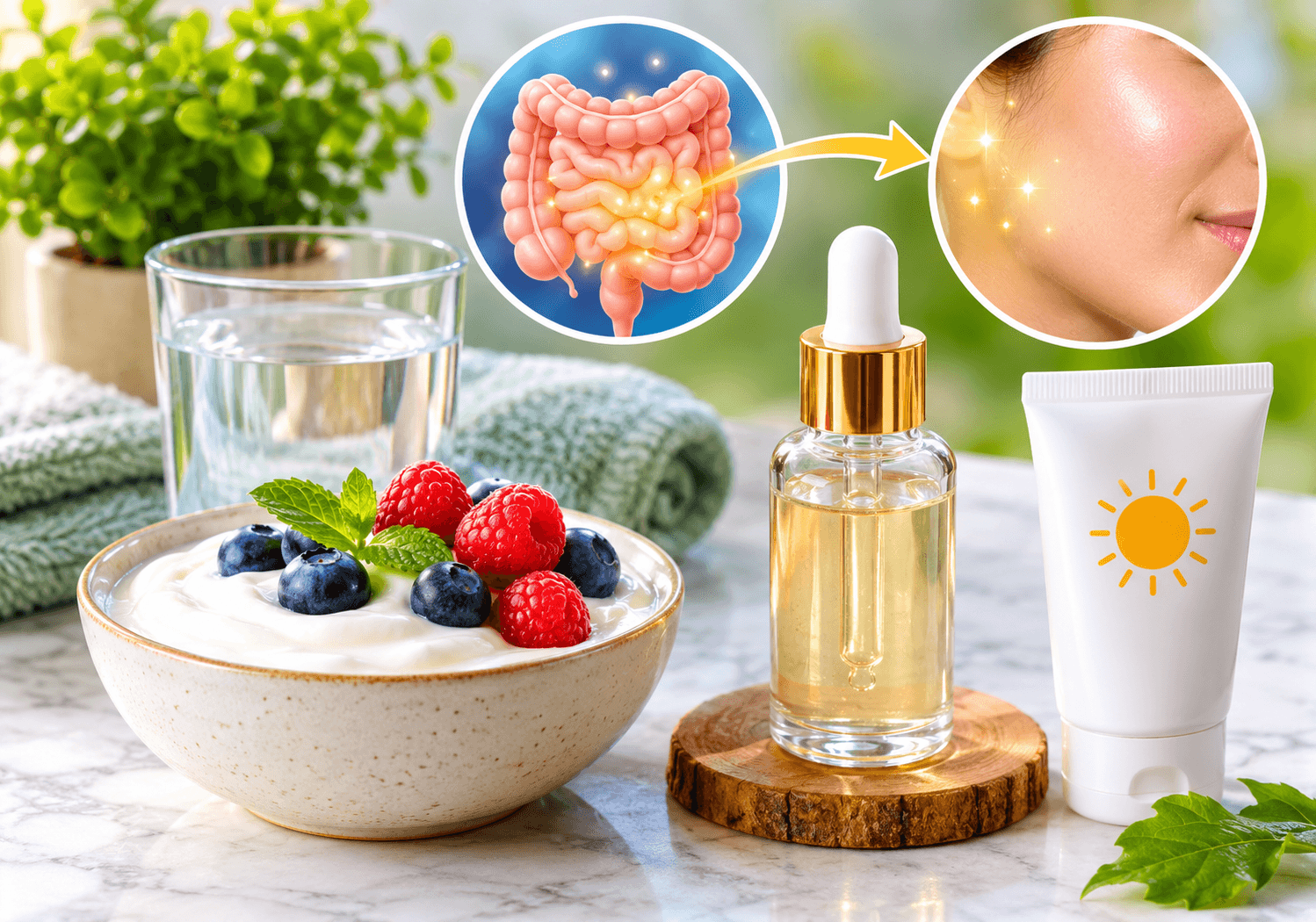
Your gut and your skin talk to each other constantly, through immune signaling, microbial metabolites, and the nervous system. Researchers call this the gut-skin axis, and reviews now treat it as a clinically meaningful regulatory system rather than a trendy phrase [4].
When the gut microbiome is out of balance, from poor diet, chronic stress, or antibiotics, skin conditions can follow [5]. Reviews link that dysbiosis to psoriasis, atopic dermatitis, acne, rosacea, and other inflammatory skin problems [6].
The best-mapped pathway runs through short-chain fatty acids. When gut bacteria ferment dietary fiber, they produce butyrate and related SCFAs, and animal research shows those metabolites strengthen the skin barrier by changing how keratinocytes, the main cells of the epidermis, metabolize fat and build ceramides, the lipids that hold water in your skin [7]. That is a plausible chain from “eat more fermentable fiber” to “skin holds moisture better.”
Postbiotics also act directly on skin. In test systems and animal studies, postbiotic compounds have been shown to reduce inflammatory signaling, promote collagen and elastin synthesis, stimulate the production of skin-barrier components, and inhibit the growth of harmful bacteria on the skin surface [8].
What the Research Actually Shows
Here is the honest scoreboard. The evidence is promising and strain-specific, not miraculous and not uniform.
Skin barrier and hydration
The clearest human signal comes from the barrier side of the ledger. A 2026 Cureus review of 16 studies found that topical postbiotic preparations produced significant reductions in atopic dermatitis severity (SCORAD scores) and itching, improved barrier function, and led to longer remissions compared with conventional emollients, with reduced transepidermal water loss and better stratum corneum hydration as the measurable markers [9].
Orally, a randomized, double-blind, placebo-controlled trial of the probiotic strain Lactobacillus plantarum HY7714, a related but live organism, is instructive for what “glow” research measures. One hundred ten adults aged 41 to 59 with dry skin took 10 billion CFU per day for 12 weeks. Face and hand skin water content rose significantly in the probiotic group, wrinkle depth dropped, skin gloss improved, and skin elasticity improved by 13.17% at 4 weeks and 21.73% at 12 weeks versus controls [10].
A 2026 meta-analysis of 15 randomized controlled trials in healthy adults found oral probiotic supplementation significantly improved skin hydration and reduced transepidermal water loss, with the hydration benefit appearing strongest at 8 weeks or longer, though the authors flagged high heterogeneity and industry sponsorship as reasons for caution [11].
Not every trial lands positive. A well-run triple-blind trial of Bifidobacterium animalis subsp. lactis Bl-04 in 148 women found significant wrinkle improvement at 4 weeks, but no differences at 8 or 12 weeks once seasonal conditions improved, and no hydration benefit at all [12]. Skin responds to environment, season, and individual biology; no single strain is a lock.
Acne and blemishes
For acne, topical postbiotics look genuinely useful as adjuncts. The Cureus review reported that postbiotic preparations decreased inflammatory acne lesions by 50% to 70%, suppressed sebum secretion by 42% to 72%, and stopped the growth of Cutibacterium acnes, the bacterium implicated in breakouts, with favorable safety profiles [13].
On the oral side, an 8-week study of spore-based probiotic supplementation in 25 participants showed preliminary improvements in acne lesion counts and markers of gut permeability in the subgroup with acne, along with shifts in circulating short-chain fatty acids [14]. Small sample, early signal, worth more trials, and that is exactly how to read it.
Fine lines and visible aging
The mechanism story here is the strongest part: postbiotics can stimulate collagen and elastin synthesis and reduce oxidative stress in laboratory models [15]. The human evidence is thinner and slower-moving, which is what you would expect for anything acting on wrinkles.
One small clinical trial is worth mentioning because it combined multiple glow markers: a postbiotic lotion built from three probiotic strains improved skin moisture scores, inflammation index, and brightening scores in volunteers with atopic dermatitis, and reduced facial speckles and wrinkles [16]. A brighter appearance in an inflamed-skin population does not automatically transfer to healthy skin, so treat it as a data point, not proof.
Where the evidence is weak
The same Cureus review found no interventional trials at all for rosacea, and modern reviews consistently note that clinical evidence for biotics in cosmetic use remains limited, with researchers calling for large standardized trials before firm claims [13] [17]. If a marketing page tells you a postbiotic will erase wrinkles in 14 days, the studies do not back that.
Oral vs. Topical Postbiotics: Which Route?
You will meet postbiotics in two places: capsules and creams. They work through different doors.
Table
| Factor | Oral postbiotics | Topical postbiotics |
| Main pathway | Gut-skin axis via metabolites and immune signaling | Direct action on skin cells and skin microbiome |
| Best-studied targets | Skin hydration, TEWL, eczema flares | Atopic dermatitis, acne, wound healing |
| Stability | Stable, no live strains needed | Stable in cream base |
| Speed of visible change | Typically 8-12 weeks in trials | 2-8 weeks in eczema and acne studies |
| Biggest limitation | Strain- and dose-specific; limited RCTs | Effects localized; product quality varies |
Reviews of both routes conclude that probiotic and postbiotic formulations improve skin barrier function, reduce inflammation, and show effectiveness for acne and eczema, while also noting small sample sizes and limited dose-response data across the field [18]. My coaching advice: topical products are the more direct, better-evidenced route for a specific skin complaint; oral products make sense as part of a broader gut-health routine, not as a standalone glow hack.
How to Add Postbiotics to Your Routine
Here is the sequence I give clients who want to try this in a structured way.
Step 1: Fix the substrate first. Postbiotic compounds are fermentation products, and your own gut bacteria make them when you feed them fermentable fiber. Before buying anything, make sure fiber is actually on your plate. Our guide to what dietary fiber does for appetite and weight management covers the daily habits that feed SCFA production. The animal work linking fiber-derived SCFAs to stronger skin barrier function [7] makes this step non-optional.
Step 2: Pick a topical product for a specific complaint. If acne or rough, itchy patches are the issue, look for moisturizers or serums that name a specific strain or lysate, such as Lactobacillus lysates or Vitreoscilla filiformis extracts, rather than a vague “biome blend.” Products pairing postbiotics with ceramides have a sensible logic, since ceramides are the barrier lipids the SCFA pathway supports.
Step 3: If you go oral, check the label like a coach. Look for a named strain or inactivated strain designation, a stated amount (usually milligrams of inactivated cells, since postbiotics are measured by weight, not CFU), and a manufactured date. Avoid products that hide behind proprietary blends.
Step 4: Run an honest trial. Give any oral product 8 to 12 weeks, aligned with the trial timelines above, and keep everything else constant so you can judge.
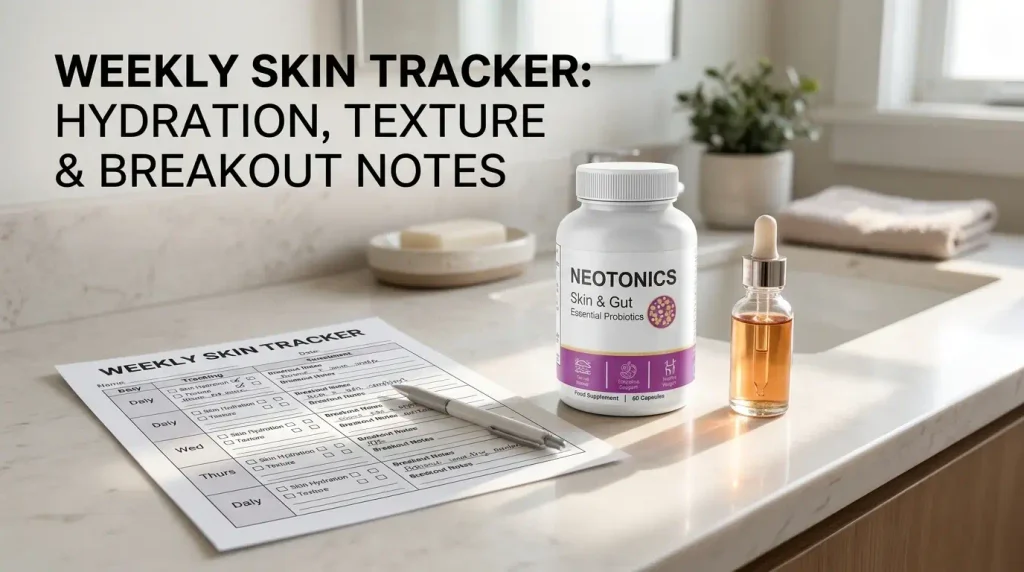
Coach’s Tip: Take a bare-faced photo in the same bathroom light on day 1, week 4, and week 8, holding the same phone distance. Skin changes slowly and memory lies. Without consistent photos, most people either quit a working product at week 3 or credit a dud at week 6.
Common Mistake: Stacking five “microbiome” products at once, a postbiotic capsule, a probiotic powder, a prebiotic gummy, and two serums, then having no idea which one did anything. Introduce one product at a time and hold it for at least 4 weeks before adding another.
Foods That Naturally Deliver Postbiotic-Like Compounds
Supplements are not the only route. Fermented foods carry the same families of compounds, cell fragments, organic acids, and peptides, produced during fermentation.
- Yogurt and kefir: fermented dairy carries bacterial metabolites and has trial support for skin outcomes; a double-blind trial of fermented milk with Bifidobacterium breve and galacto-oligosaccharides preserved stratum corneum hydration in healthy adult women over 4 weeks while the placebo group’s hydration dropped [19].
- Kimchi, sauerkraut, miso, tempeh: fermented vegetables and soy deliver organic acids and bacterial cell-wall components, though no skin-specific trials have measured them head-to-head with supplements.
- Fiber-rich plant foods: not postbiotics themselves, but the fuel your gut flora uses to manufacture butyrate and propionate on site. Onion, garlic, oats, barley, apples, and legumes all pull weight here.
Realistic daily target: two servings of fermented food and a fiber source at every meal. It is cheaper than any capsule and it stacks with everything else in this article.
Supporting the Glow Beyond Postbiotics
No internal compound outworks the basics. In coaching order of importance:
- Sleep. Poor sleep shows up on faces before it shows up anywhere else, and our guide to how sleep affects metabolism and weight management explains the hormonal side of overnight recovery.
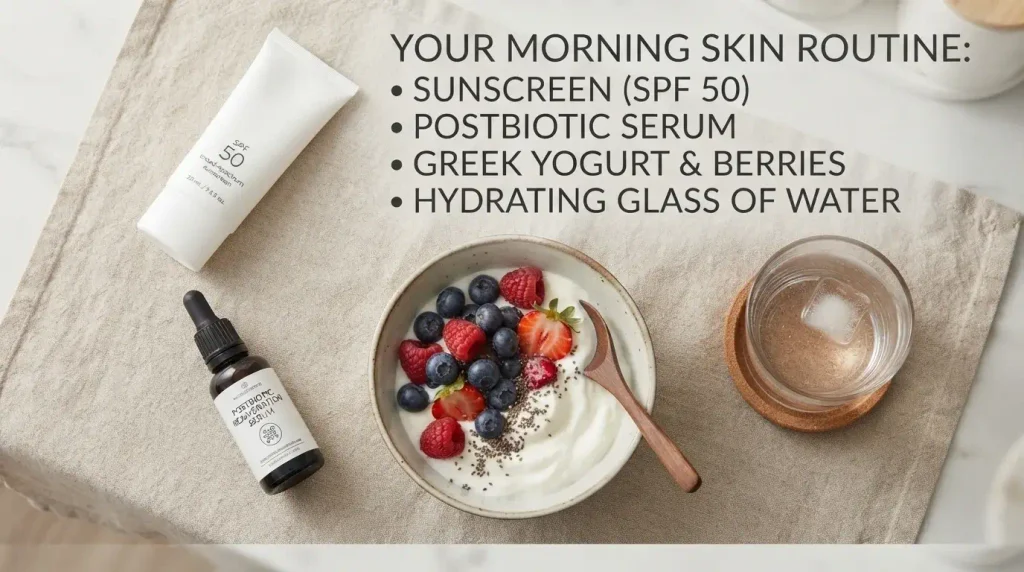
- Sun protection. Every “glow” mechanism discussed here is undermined by UV damage; sunscreen is still the highest-yield skin investment.
- Omega-3 intake. Fatty acids matter for skin hydration and inflammation, which our omega-3 and skin hydration guide covers in depth.
- A calm gut. Fiber, fermented foods, and our piece on probiotics, appetite, and weight management overlap heavily with the gut-skin axis work above.
- Layered actives, not miracle stacking. Astaxanthin is another internal compound studied for skin appearance; our reviews of astaxanthin for skin glow and anti-aging and collagen powder timing for absorption slot neatly alongside a postbiotic routine.
Who Should Be Careful
Postbiotics carry a better safety profile than live probiotics because there are no live organisms to translocate or infect, one reason dermatology reviewers consider them suitable for topical and long-term use [20].
Even so:
- If you have a diagnosed skin condition (eczema, psoriasis, rosacea, active acne), treat postbiotics as a possible adjunct and loop in your dermatologist, especially before adding a topical to a prescription regimen.
- If you are immunocompromised, pregnant, or managing a chronic illness, check with your doctor before starting any microbiome-related supplement.
- Postbiotic products are not drugs. They do not treat disease, and no brand should tell you otherwise.
This article is for general information and is not a substitute for advice from a doctor or physical therapist.
FAQ
1. What are postbiotics for skin glow, in one sentence?
They are beneficial compounds, cell fragments and metabolites such as short-chain fatty acids, produced by probiotic bacteria, which research suggests may support skin glow by strengthening the barrier, calming inflammation, and improving hydration.
2. Postbiotics vs. probiotics for skin: which is better?
They differ, not compete. Probiotics are live organisms; postbiotics are the stable, non-living compounds they produce. Reviews show both routes improve barrier function and reduce inflammation, with postbiotics favored where stability and safety matter most [21].
3. How long do postbiotics take to work on skin?
Plan on 8 to 12 weeks for oral routines, based on the trial timelines for hydration and elasticity outcomes [10]. Topical effects in acne and eczema studies have shown up within 2 to 8 weeks.
4. Can postbiotics help with acne?
Topical postbiotics are the best-supported route here, with reported reductions in inflammatory lesions of 50% to 70% and suppression of sebum in reviewed studies [13]. Small oral probiotic trials also show preliminary lesion improvements.
5. Are postbiotics safe?
Yes, they are generally well tolerated, and their non-living nature removes infection risk tied to live probiotics. People with immune conditions, pregnancy, or chronic illness should still check with a doctor first.
6. Do I need a supplement, or can food do it?
Food covers a lot of the mechanism, especially fiber plus fermented dairy and vegetables, and a fermented-milk trial preserved skin hydration in 4 weeks [19]. A supplement makes sense when you want a standardized, strain-specified dose on top of a solid diet.
Conclusion
Postbiotics for skin glow sit in the sensible middle of the supplement world: real mechanisms, early but legitimate clinical support, and no shortcut promises. The strongest evidence points to barrier repair, hydration, and acne support, particularly through topical products and a fiber-fed gut. Set your timeline at 8 to 12 weeks, change one variable at a time, photograph your baseline, and keep sunscreen, sleep, and fiber doing the heavy lifting underneath. Glow is earned in layers, and postbiotics can be one of them.