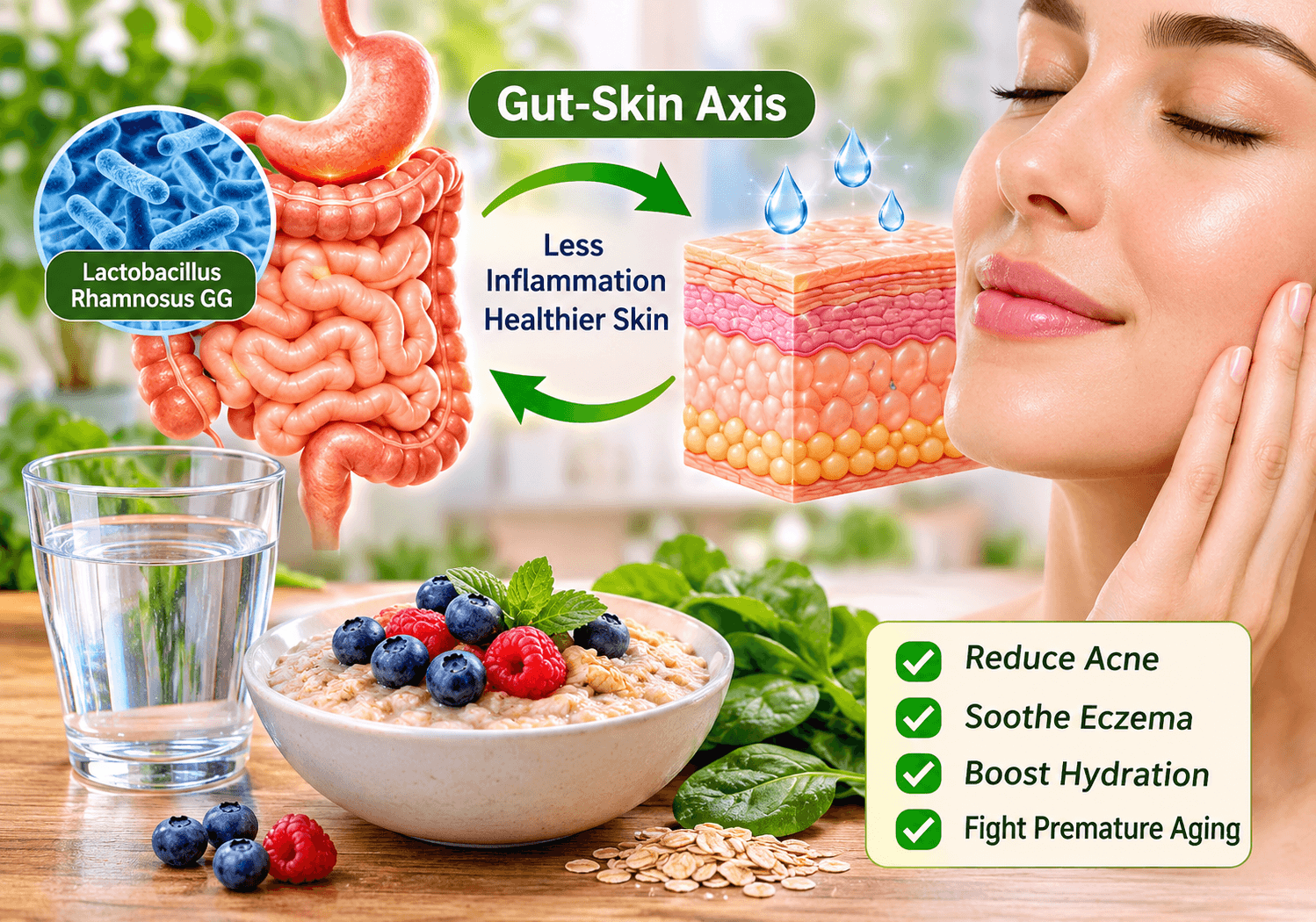
Understanding the lactobacillus rhamnosus gg skin benefits is essential for anyone looking to improve their complexion from the inside out. As a certified strength and conditioning coach and nutrition specialist, I often see clients spend hundreds of dollars on topical creams while ignoring the root cause of their skin issues: gut health. The gut-skin axis is a well-documented biological pathway. What happens in your digestive tract directly influences the health, clarity, and resilience of your skin. By introducing specific, research-backed strains like Lactobacillus rhamnosus GG (LGG), you can modulate systemic inflammation, support your skin barrier, and achieve a healthier glow without relying solely on harsh topical treatments.
Quick Answer
Lactobacillus rhamnosus GG (LGG) provides notable skin benefits by balancing the gut microbiome, reducing systemic inflammation, and strengthening the skin barrier. Clinical research suggests it can help manage acne, soothe eczema, and improve overall skin hydration. For optimal results, combine a daily dose of 1 to 10 billion CFU with a fiber-rich diet and consistent hydration.
What the Research Says: The Gut-Skin Axis Explained
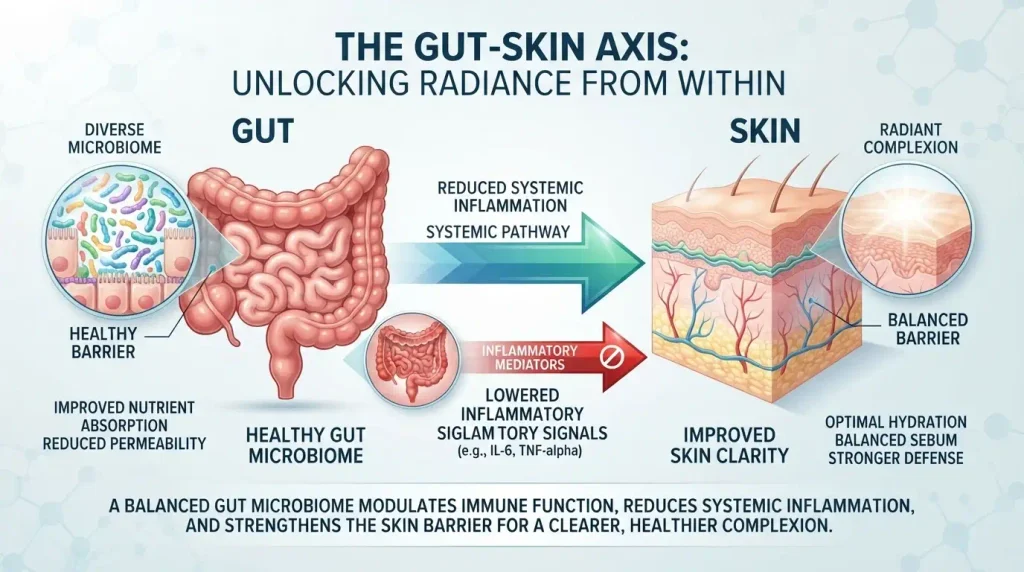
Your skin and your gut are in constant communication. This bidirectional relationship is known as the gut-skin axis. When your gut microbiome is balanced, it supports a strong intestinal barrier. This barrier prevents harmful substances, such as lipopolysaccharides (LPS) from bad bacteria, from leaking into your bloodstream.
When dysbiosis (an imbalance of gut bacteria) occurs, the intestinal barrier becomes permeable. This condition, often called “leaky gut,” allows inflammatory markers to circulate systemically. According to research published in the journal Gut Pathogens, this systemic inflammation frequently manifests on the skin as acne, rosacea, psoriasis, or premature aging [1].
Lactobacillus rhamnosus GG is one of the most extensively studied probiotic strains in the world. It is uniquely resilient, surviving stomach acid to reach the intestines alive. Once there, LGG adheres to the intestinal mucosa, produces lactic acid to lower gut pH, and stimulates the production of secretory IgA, an antibody that strengthens mucosal immunity. By calming gut inflammation, LGG indirectly reduces the inflammatory signals that trigger skin breakouts and irritation.
Top Lactobacillus Rhamnosus GG Skin Benefits
The dermatological advantages of this specific probiotic strain are backed by growing clinical evidence. Here is a detailed breakdown of how LGG supports your skin.
Reducing Acne and Regulating Sebum Production
Acne is not just a surface-level issue; it is heavily influenced by internal inflammation and hormonal fluctuations. Studies indicate that individuals with acne often have altered gut microbiomes compared to those with clear skin. Lactobacillus rhamnosus GG helps restore this balance. A study published in Beneficial Microbes demonstrated that oral supplementation with LGG significantly reduced the severity of acne lesions over a 12-week period [2].
LGG works by lowering systemic inflammation, which in turn can help regulate sebum (oil) production. Excess sebum is a primary driver of clogged pores. Furthermore, by improving insulin sensitivity and gut health, LGG may indirectly help stabilize the hormonal spikes that trigger acne flare-ups.
Soothing Eczema and Atopic Dermatitis
Atopic dermatitis, commonly known as eczema, is characterized by dry, itchy, and inflamed skin. It is strongly linked to immune system dysregulation and gut dysbiosis, especially in early life. Research in the British Journal of Dermatology has shown that maternal and infant supplementation with Lactobacillus rhamnosus GG can significantly reduce the incidence and severity of eczema [3].
For adults, LGG continues to offer relief. It modulates the immune response by shifting the balance away from pro-inflammatory cytokines (like IL-4 and IL-5) toward a more regulated, anti-inflammatory state. This helps calm the hyperactive immune response that causes eczema flare-ups.

Enhancing Skin Hydration and Barrier Function
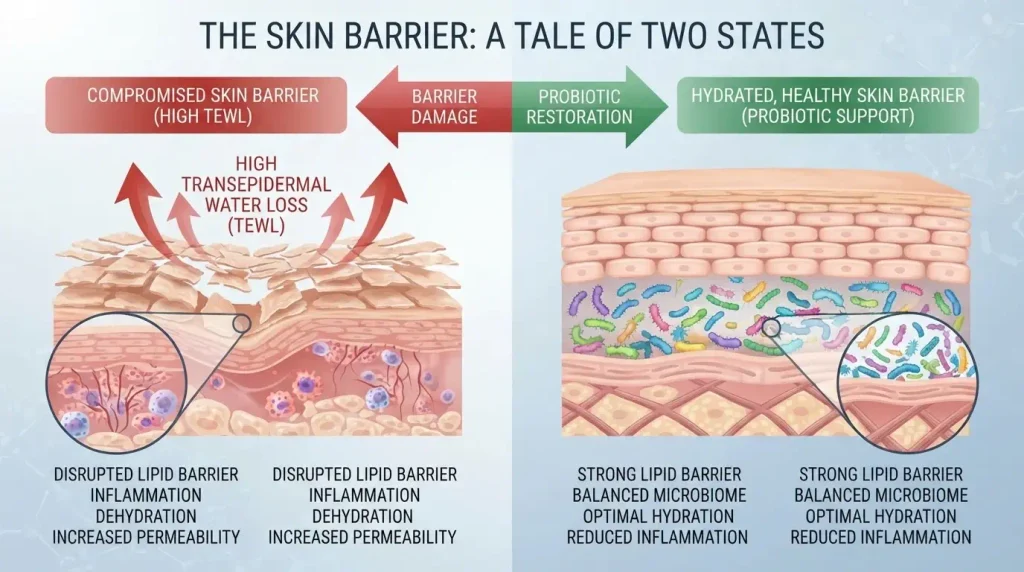
Healthy skin retains moisture effectively. A compromised skin barrier leads to transepidermal water loss (TEWL), resulting in dry, flaky, and sensitive skin. Emerging research suggests that oral probiotics, including LGG, can improve skin hydration.
A clinical trial featured in Skin Pharmacology and Physiology found that women who consumed a probiotic blend containing Lactobacillus strains experienced a significant improvement in skin hydration and a reduction in TEWL after eight weeks [4]. LGG supports the production of ceramides and hyaluronic acid, which are critical molecules for holding water in the skin layers. A strong, hydrated barrier is also better equipped to defend against environmental pollutants and irritants.
Anti-Aging and Oxidative Stress Reduction
Premature aging is accelerated by oxidative stress and chronic, low-grade inflammation (often termed “inflammaging”). Lactobacillus rhamnosus GG produces antioxidants and short-chain fatty acids (SCFAs) like butyrate. These compounds help neutralize free radicals and protect skin cells from oxidative damage.
While no probiotic can replace sunscreen, supporting your internal antioxidant defense system with LGG can complement your topical anti-aging routine. It helps maintain collagen synthesis and prevents the breakdown of existing collagen fibers, keeping the skin firm and resilient.
How to Choose the Right LGG Supplement
Not all probiotics are created equal. To experience the lactobacillus rhamnosus gg skin benefits, you must choose a high-quality supplement. Use this checklist when evaluating products.
| Feature | What to Look For | Why It Matters |
| Strain Specificity | Must explicitly state “Lactobacillus rhamnosus GG” or “LGG” (ATCC 53103). | Other L. rhamnosus strains do not have the same clinical data supporting skin and gut health. |
| CFU Count | 1 billion to 10 billion CFU per serving. | Higher is not always better. This range is clinically effective and minimizes digestive upset. |
| Third-Party Testing | NSF, USP, or ConsumerLab certification. | Guarantees the product contains the stated amount of live bacteria at the time of expiration, not just at manufacturing. |
| Prebiotic Inclusion | Contains inulin, FOS, or GOS (synbiotic formula). | Prebiotics are the “food” for probiotics, enhancing their survival and colonization in the gut. |
| Storage Requirements | Shelf-stable or clearly marked refrigeration. | Heat and moisture kill live bacteria. Follow the manufacturer’s storage instructions precisely. |
Practical Application: Dosage, Timing, and Pairing
Knowing what to buy is only half the battle. How you take your probiotic determines its effectiveness. As a coach, I recommend a structured, consistent approach to supplementation.
Recommended Dosage: Start with 1 to 5 billion CFU daily. If your digestive system tolerates it well after two weeks, you can increase to 10 billion CFU daily for enhanced skin and immune support.
Optimal Timing: Take your LGG supplement on an empty stomach, ideally 30 minutes before breakfast, or right before bed. Stomach acid is lowest during these times, giving the bacteria a better chance of surviving the journey to your intestines.
Hydration and Dimensions: A standard probiotic capsule is about 0.8 inches (2 cm) long and 0.3 inches (0.76 cm) in diameter. Always swallow it with at least 8 ounces (240 ml) of filtered water. To support overall skin hydration and microbiome health, aim to drink 80–100 ounces (2.3–3 liters) of water daily.
Coach’s Tip
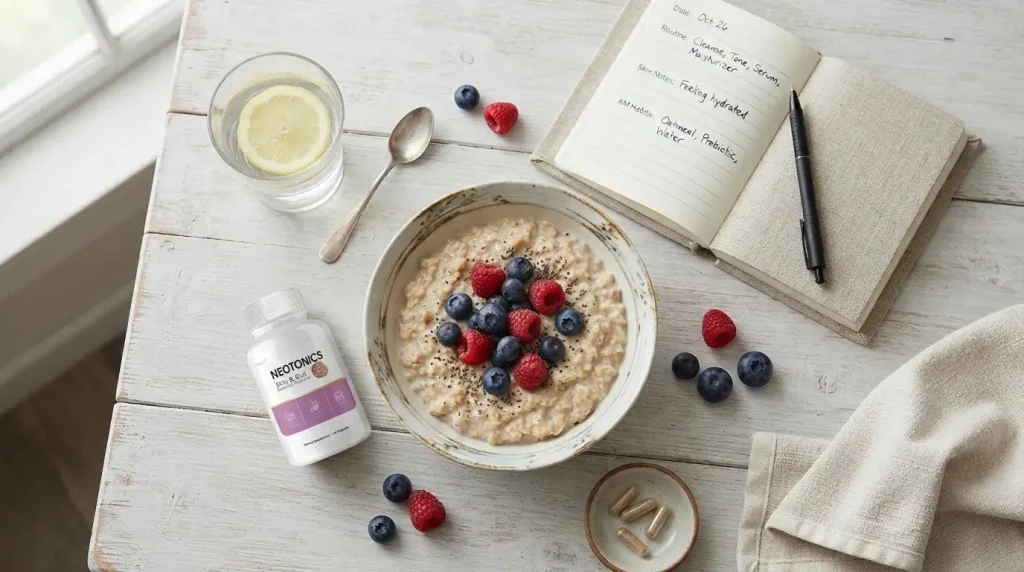
Pair your LGG supplement with a source of soluble fiber. Foods like oats, apples, or a high-quality fiber supplement act as prebiotics, feeding the LGG bacteria and helping them colonize your gut more effectively. Learn more about how soluble fiber helps control appetite and supports weight loss while simultaneously nourishing your microbiome.
Common Mistake
Taking your probiotic with hot coffee or tea. Temperatures above 120°F (49°C) can kill the live bacteria, rendering the supplement useless. Always use cool or room-temperature water.
Sample Daily Protocol for Gut-Skin Health
- Morning (7:00 AM): Wake up and drink 16 oz (470 ml) of room-temperature water. Take your LGG probiotic (5 billion CFU). Wait 30 minutes before eating.
- Breakfast (7:30 AM): Eat a meal containing protein and fiber. Research shows that adequate protein intake affects hunger and fullness hormones, which stabilizes blood sugar and reduces inflammatory skin triggers.
- Midday (12:00 PM): Drink another 24 oz (700 ml) of water. Consider a green tea, as studies suggest green tea extract can increase metabolism and provides polyphenols that further combat skin oxidative stress.
- Evening (8:00 PM): Wind down. Poor rest disrupts the gut microbiome. Understanding how sleep affects metabolism and weight management is equally vital for skin repair, as cellular regeneration peaks during deep sleep.
Lifestyle Factors That Amplify LGG Results
Supplements are not magic pills. They work best when integrated into a holistic lifestyle. To maximize your lactobacillus rhamnosus gg skin benefits, address these foundational pillars:
- Manage Stress: Chronic stress elevates cortisol, which increases sebum production and degrades the gut barrier. Practice 10 minutes of daily deep breathing or walking. If stress leads to poor dietary choices, explore evidence-based methods to manage food cravings without supplements.
- Eat a Diverse, Whole-Food Diet: A diverse microbiome requires diverse plant foods. Aim for 30 different plant-based foods per week. This diversity directly correlates with a stronger gut barrier and clearer skin.
- Support Overall Metabolic Health: Your skin is a reflection of your metabolic state. Ensuring you have no underlying deficiencies is crucial. Check out this guide on which vitamins support metabolism when you’re deficient to ensure your skin has the micronutrients it needs to heal.
- Consider Synbiotic Support: For comprehensive gut health, some individuals benefit from broader microbiome support. Research into probiotics for appetite and weight management highlights how a balanced gut improves overall systemic health, which naturally radiates to the skin.
Safety Notes and Who Should Be Careful
Lactobacillus rhamnosus GG is generally recognized as safe (GRAS) by the FDA and has an excellent safety profile in healthy adults and children. However, certain populations should exercise caution or consult a healthcare provider before starting supplementation:
- Immunocompromised Individuals: Those with HIV/AIDS, undergoing chemotherapy, or taking immunosuppressant drugs should avoid probiotics unless explicitly directed by a doctor, due to a rare risk of bacteremia.
- Short Bowel Syndrome or Central Venous Catheters: There is a documented, albeit rare, risk of probiotic-related bloodstream infections in patients with compromised intestinal integrity or indwelling catheters.
- Small Intestinal Bacterial Overgrowth (SIBO): If you have SIBO, adding more bacteria (even good bacteria) can temporarily worsen bloating and gas. Work with a gastroenterologist to address the overgrowth first.
- Histamine Intolerance: While LGG is generally considered a low-histamine-producing strain, some highly sensitive individuals may react to any fermented or bacterial product. Start with a half-dose to assess tolerance.
Disclaimer: This article is for general information and is not a substitute for advice from a doctor or physical therapist. Always consult with a healthcare provider before starting any new supplement regimen, especially if you have a pre-existing medical condition.
FAQ
Does Lactobacillus rhamnosus GG help with acne?
Yes, research suggests it can help. By reducing systemic inflammation and balancing the gut microbiome, LGG may decrease the severity of acne lesions and help regulate sebum production over a period of 8 to 12 weeks of consistent use.
How long does it take for LGG to improve skin?
Skin cell turnover takes about 28 days. Most clinical studies showing visible improvements in skin hydration, acne, or eczema measure results at the 8- to 12-week mark. Consistency is key; do not expect overnight results.
What is the best dosage of Lactobacillus rhamnosus GG for skin?
A daily dose of 1 billion to 10 billion CFU (colony-forming units) is generally recommended. Starting at the lower end allows your digestive system to adjust, minimizing potential initial bloating.
Can probiotics replace my topical skincare routine?
No. Oral probiotics work from the inside out to reduce inflammation and support the skin barrier, but they do not replace the need for basic topical care. You still need a gentle cleanser, moisturizer, and daily broad-spectrum sunscreen to protect your skin.
Are there any side effects of Lactobacillus rhamnosus GG?
Side effects are rare and usually mild. Some people experience temporary gas, bloating, or changes in bowel habits during the first few days as their gut microbiome adjusts. These symptoms typically resolve on their own.
Can I take LGG with other supplements?
Yes, LGG can be safely paired with most vitamins, minerals, and omega-3 fatty acids. In fact, taking it with a prebiotic fiber or a healthy meal can enhance its effectiveness. Avoid taking it simultaneously with antibiotics; space them apart by at least two hours.
Conclusion
Achieving clear, resilient skin requires more than just expensive topical creams. By understanding and leveraging the lactobacillus rhamnosus gg skin benefits, you can address the root cause of many dermatological issues: gut inflammation. Lactobacillus rhamnosus GG is a heavily researched, safe, and effective strain that supports the gut-skin axis, reduces acne and eczema symptoms, and enhances overall skin hydration.
Remember to pair your daily LGG supplement with a fiber-rich diet, adequate hydration, and quality sleep. Consistency is your most powerful tool. Give your body 8 to 12 weeks to adjust and heal from the inside out, and you will likely see a noticeable, healthy glow reflecting your improved internal health.