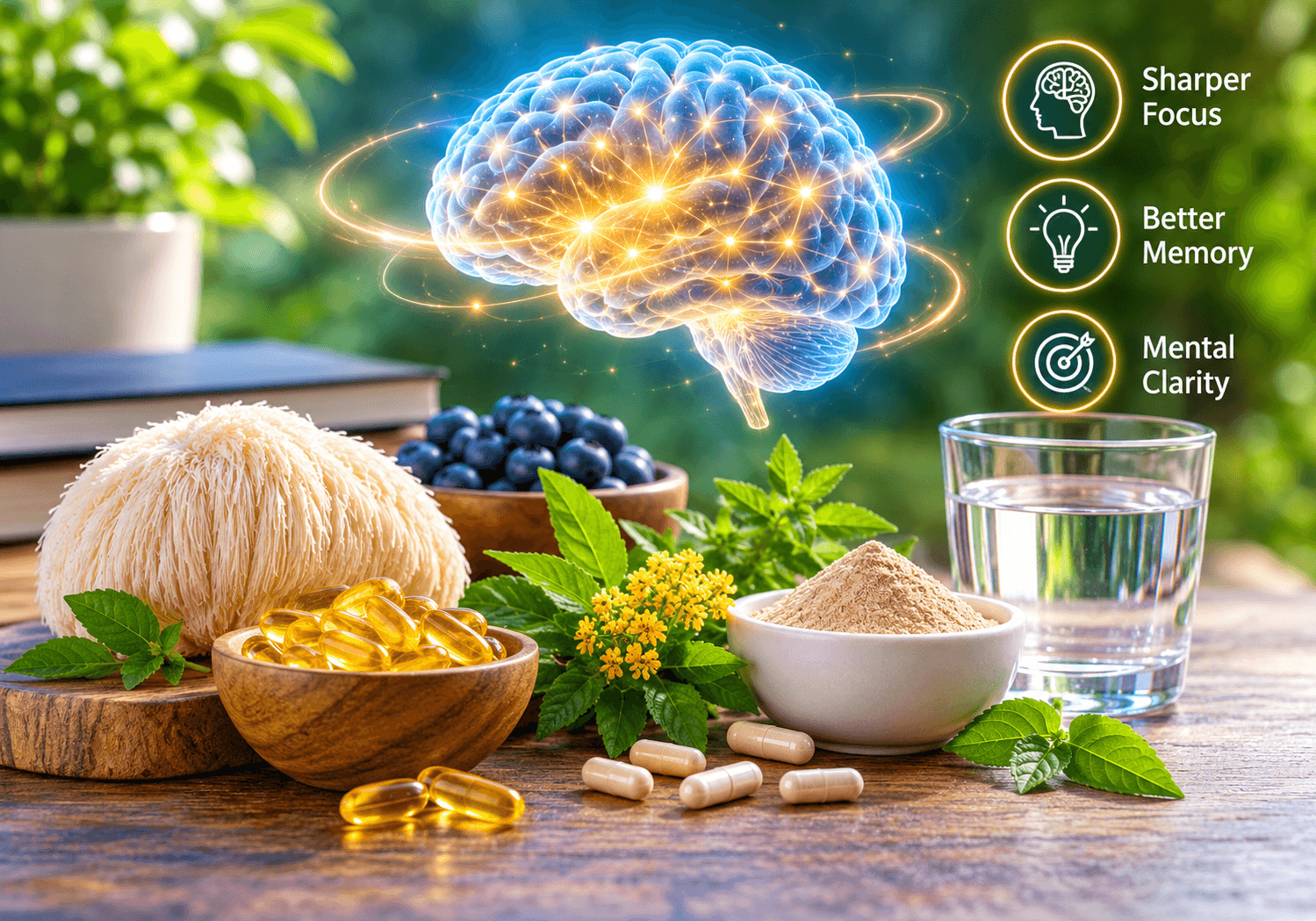
Brain fog is not a medical diagnosis, but it is a very real experience. It feels like walking through mud mentally. You might struggle to recall a simple word, lose your train of thought mid-sentence, or feel exhausted after a short workout. As a strength and conditioning coach, I see this frequently in clients balancing demanding jobs, intense training, and poor recovery.
Finding the best natural supplements for brain fog and mental clarity requires looking past flashy marketing. You need ingredients backed by clinical research, proper dosing, and third-party testing. This guide breaks down the top evidence-based cognitive support supplements, how to choose them, and exactly how to use them to reclaim your focus.
Quick Answer
Top Pick: Lion’s Mane Mushroom (500–1000 mg/day) for neuroplasticity and long-term focus.
Budget Pick: Vitamin B-Complex (with active B12 and Folate) for foundational cellular energy.
Upgrade Pick: High-EPA Omega-3 Fish Oil (1,000+ mg EPA/day) to reduce neuroinflammation and support memory retention.
Always choose products with third-party testing (NSF or Informed Choice) and consult your doctor before starting, especially if you take prescription medications.
Comparison Table: Top Cognitive Support Supplements
| Supplement | Key Spec / Active Dose | Best For | Price Range |
| Lion’s Mane Mushroom | 500–1,000 mg fruiting body extract | Long-term neuroplasticity and daily focus | 20–40 / month |
| Omega-3 (High EPA) | 1,000+ mg EPA per serving | Reducing neuroinflammation and memory support | 25–50 / month |
| Rhodiola Rosea | 3% Rosavins, 1% Salidroside (200–400 mg) | Mental fatigue and stress-induced brain fog | 15–30 / month |
| Bacopa Monnieri | 300 mg (50% bacosides) | Memory retention and learning speed | 20–35 / month |
| Active B-Complex | Methylcobalamin (B12) + Methylfolate (B9) | Foundational energy and nervous system health | 10–25 / month |
| Phosphatidylserine | 100–300 mg per serving | Cortisol management and post-workout recovery | 25–45 / month |
1. Lion’s Mane Mushroom: The Neuroplasticity Builder
Who it’s for: Adults over 40, students, and professionals needing sustained daily focus without jitters.
Key Features: Look for extracts specifying the “fruiting body” (not mycelium on grain) with at least 30% beta-glucans. The standard clinical dose is 500 to 1,000 mg daily.
Pros: Stimulates nerve growth factor (NGF) production, non-stimulating, well-tolerated.
Cons: Takes 2 to 4 weeks of consistent use to notice significant cognitive improvements.
Lion’s Mane is a standout among natural nootropics for focus. Research indicates that its active compounds, hericenones and erinacines, cross the blood-brain barrier to stimulate the synthesis of nerve growth factor. This supports neuroplasticity, helping your brain form new connections. A randomized, double-blind, placebo-controlled trial showed significant improvement in cognitive function scores in older adults with mild cognitive impairment after 16 weeks of Lion’s Mane supplementation (PMC Journal).
Coach’s Tip: Take Lion’s Mane with your morning coffee or pre-workout meal. Pairing it with a daily 2-mile (3.2-km) brisk walk enhances cerebral blood flow, compounding the supplement’s benefits.
2. Omega-3 Fatty Acids (High EPA): The Inflammation Fighter
Who it’s for: Individuals experiencing brain fog linked to poor diet, systemic inflammation, or mood fluctuations.
Key Features: A minimum of 1,000 mg of EPA (eicosapentaenoic acid) per serving. Total combined EPA and DHA should exceed 1,500 mg.
Pros: Strong evidence for brain health, supports joint recovery, benefits cardiovascular health.
Cons: Low-quality versions can cause fishy burps; requires taking multiple large softgels daily.
Your brain is nearly 60% fat, and omega-3 fatty acids are its primary structural building blocks. High-EPA fish oil is particularly effective at reducing neuroinflammation, a known driver of mental fatigue. Studies show that omega-3 supplementation can improve cognitive function and mood regulation, making it a foundational pillar for anyone seeking vitamins for brain fog and fatigue (NIH Office of Dietary Supplements).
Common Mistake: Buying cheap fish oil with high DHA but low EPA. For brain fog and mental clarity, EPA is the critical component for managing inflammation. Always check the supplement facts panel, not just the front label.
3. Rhodiola Rosea: The Anti-Fatigue Adaptogen
Who it’s for: Busy professionals, gym-goers, and parents dealing with stress-induced mental exhaustion.
Key Features: Standardized to 3% rosavins and 1% salidroside. Typical dose is 200 to 400 mg taken in the morning.
Pros: Works quickly (often within days), reduces perceived effort during physical and mental tasks.
Cons: Can be overstimulating if taken late in the day or combined with high doses of caffeine.
Rhodiola is a premier adaptogenic herb for focus. It works by modulating the hypothalamic-pituitary-adrenal (HPA) axis, helping your body manage cortisol levels. When you learn how to improve daily energy without caffeine, adaptogens like Rhodiola are often the first line of defense. Clinical trials demonstrate that Rhodiola significantly reduces mental fatigue and improves performance during stressful, cognitively demanding tasks (PubMed).
Regression/Progression:
Regression: Start with 100 mg to assess tolerance and avoid mild jitteriness.
Progression: Stack 200 mg of Rhodiola with 200 mg of L-theanine to smooth out the energy curve and promote calm, sustained concentration.
4. Bacopa Monnieri: The Memory Enhancer
Who it’s for: Individuals struggling with memory retention, learning new skills, or recovering from prolonged mental burnout.
Key Features: Standardized to 50% bacosides. The researched dose is 300 mg daily.
Pros: Robust long-term data supporting memory and information processing speed.
Cons: Can cause mild gastrointestinal discomfort or nausea if taken on an empty stomach.
Bacopa monnieri is an ancient Ayurvedic herb with modern scientific backing. It enhances communication between neurons by promoting dendritic branching. A systematic review of randomized controlled trials concluded that Bacopa significantly improves memory acquisition and retention, though it requires consistent use for 8 to 12 weeks to reach full efficacy (NCBI).
Coach’s Tip: Always take Bacopa with a meal containing dietary fat (like 20g of protein and a tablespoon of olive oil) to maximize absorption and prevent stomach upset.
5. Active B-Complex Vitamins: The Cellular Energy Foundation
Who it’s for: Vegans, vegetarians, older adults, or anyone with a history of poor dietary intake experiencing chronic sluggishness.
Key Features: Must contain methylcobalamin (active B12) and methylfolate (active B9), not cyanocobalamin or folic acid.
Pros: Addresses foundational deficiencies, inexpensive, supports overall metabolic health.
Cons: Will not provide a “boost” if you are not actually deficient in B vitamins.
B vitamins are essential coenzymes in mitochondrial energy production. If your cells cannot produce ATP efficiently, your brain will feel sluggish. Understanding which vitamins support metabolism when you’re deficient is critical, as B12 and folate deficiencies directly mimic severe brain fog. The Mayo Clinic notes that B12 deficiency can cause memory problems and cognitive decline, which are often reversible with proper supplementation.
6. Phosphatidylserine: The Cortisol Modulator
Who it’s for: Athletes and highly stressed individuals whose brain fog peaks in the late afternoon or after intense evening workouts.
Key Features: 100 to 300 mg per serving, derived from sunflower lecithin (soy-free options are preferable).
Pros: Clinically shown to blunt excessive cortisol spikes, supports memory in aging populations.
Cons: More expensive than basic vitamins; effects are subtle and build over time.
Phosphatidylserine (PS) is a phospholipid that is a key component of cell membranes, particularly in the brain. It helps maintain cellular fluidity and facilitates neurotransmitter release. Research indicates that PS supplementation can attenuate the physical and mental stress response, making it an excellent tool for those whose mental clarity is hijacked by high cortisol levels (Journal of the International Society of Sports Nutrition).
How to Choose: Your Buyer’s Checklist
The supplement industry is notoriously under-regulated. To ensure you are getting the best natural supplements for brain fog and mental clarity, run every product through this checklist before buying:
- Third-Party Testing: Look for seals from NSF Certified for Sport, Informed Choice, or USP. This guarantees the product contains what the label claims and is free from heavy metals or banned substances.
- Active Ingredient Dosage: Do not buy “proprietary blends.” The label must explicitly state the milligram (mg) amount of the active compound (e.g., “300 mg Bacopa monnieri extract standardized to 50% bacosides”).
- Bioavailability: Choose active forms of vitamins. For example, methylcobalamin is far more bioavailable than cyanocobalamin for Vitamin B12.
- Allergen and Filler Transparency: Avoid products loaded with artificial colors, excessive magnesium stearate, or common allergens if you have sensitivities. Sunflower lecithin is a cleaner emulsifier than soy.
- Budget vs. Value: A $15 bottle that requires you to take 6 pills a day is more expensive than a $30 bottle requiring only 1 pill. Calculate the cost per effective dose.
How We Picked: Our Evaluation Criteria
As evidence-based coaches, we do not rely on influencer testimonials or marketing hype. Our selections are based on:
- Clinical Evidence: Ingredients must have at least two randomized, double-blind, placebo-controlled human trials supporting their use for cognitive function or mental fatigue.
- Safety Profile: We prioritized ingredients with a long history of safe use and minimal adverse effects.
- Practicality: Supplements must be reasonably priced, easy to source, and simple to integrate into a daily routine without complex cycling protocols.
Setup and Usage Tips for Maximum Mental Clarity
Taking a pill is only 10% of the solution. How you integrate these supplements into your lifestyle determines their effectiveness.
Timing Matters:
- Take stimulating adaptogens like Rhodiola Rosea 30 to 45 minutes before your most demanding mental or physical task, such as a 45-minute strength session lifting 25-lb (11.3-kg) dumbbells or a deep-work block at your desk.
- Take calming or foundational supplements like Magnesium, Phosphatidylserine, or Omega-3s with your largest meal or before bed to support overnight neurological recovery.
Pair with Lifestyle Foundations:
Supplements cannot outwork a poor lifestyle. If you are sleeping 5 hours a night, no herb will fix your brain fog. Prioritize 7 to 9 hours of quality sleep, as research clearly shows how sleep affects metabolism and weight management, including cognitive recovery. Furthermore, regular physical activity, even a daily 30-minute walk, increases brain-derived neurotrophic factor (BDNF), naturally amplifying the effects of your nootropic stack.
Stacking Strategy:
Do not start all six supplements at once. Introduce one new supplement every two weeks. This allows you to monitor how your body reacts and identify exactly which ingredient is driving your improved mental clarity. A foundational stack might include a High-EPA Omega-3, an Active B-Complex, and Lion’s Mane.

FAQ: Natural Supplements for Brain Fog
What is the best natural supplement for brain fog?
Lion’s Mane mushroom and high-EPA Omega-3 fish oil are widely considered the best natural supplements for brain fog. They support neuroplasticity and reduce neuroinflammation, addressing two root causes of mental fatigue without the crash associated with stimulants.
How long does it take for brain fog supplements to work?
It depends on the ingredient. Adaptogens like Rhodiola may show effects within a few days to a week. However, ingredients that support structural brain health, like Lion’s Mane or Bacopa monnieri, typically require 4 to 8 weeks of consistent daily use to produce noticeable improvements in memory and focus.
Are natural nootropics safe for daily use?
Most evidence-based natural nootropics, such as those listed in this guide, are safe for daily use when taken at recommended clinical dosages. However, you should always consult a healthcare provider before starting any new regimen, especially if you are pregnant, nursing, or taking prescription medications.
Can adaptogens improve focus and concentration?
Yes. Adaptogens like Rhodiola rosea and Ashwagandha help regulate the body’s stress response by modulating cortisol. By preventing stress-induced mental exhaustion, they indirectly but powerfully improve your ability to maintain focus and concentration throughout a demanding day.
What vitamins are good for brain fog and fatigue?
B-complex vitamins, particularly active B12 (methylcobalamin) and B9 (methylfolate), are essential for cellular energy production. Vitamin D and Magnesium are also critical, as deficiencies in these nutrients are strongly linked to cognitive sluggishness and mental fatigue.
Do I need to cycle cognitive support supplements?
It depends. Stimulating adaptogens like Rhodiola may benefit from a 5-days-on, 2-days-off cycle to prevent tolerance. However, foundational nutrients like Omega-3s, B-vitamins, and Lion’s Mane mushroom are generally safe and most effective when taken consistently every day without cycling.
Conclusion
Clearing brain fog requires a strategic, evidence-based approach. The best natural supplements for brain fog and mental clarity are not magic pills, but rather powerful tools that support your brain’s underlying biology. By prioritizing high-quality, third-party tested ingredients like Lion’s Mane, high-EPA Omega-3s, and active B-vitamins, you can build a foundation for sustained focus and mental endurance.
Remember to pair your supplementation with adequate sleep, proper hydration, and regular physical activity. Start with one or two foundational supplements, track your progress, and adjust as needed. Your brain is your most valuable asset; invest in its health wisely.