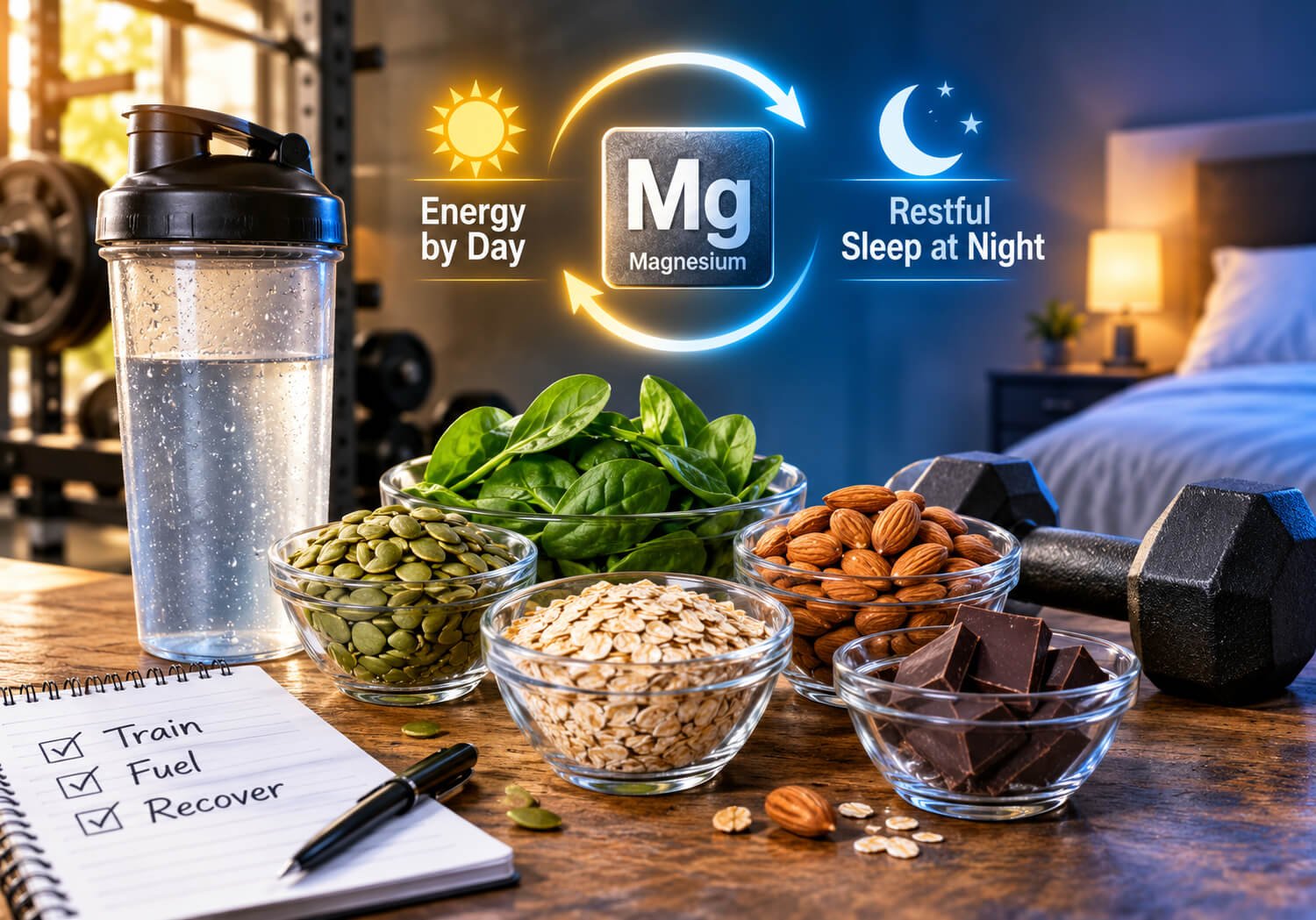
If you train hard, work long hours, and still wake up feeling like you ran a marathon in your sleep, your mineral timing might be working against you. Many active men grab a generic multivitamin at breakfast and wonder why their afternoon energy crashes and their legs feel restless at midnight. Finding the best time to take magnesium for men’s energy and sleep requires matching the right chemical form of the mineral to your body’s natural daily rhythm.
As a strength and conditioning coach, I see lifters obsess over pre-workout stimulants and post-workout protein shakes while completely ignoring basic micronutrient timing. Magnesium drives over 300 enzymatic reactions in the human body, including how your cells create fuel and how your brain powers down at night. When you understand how different forms behave in your digestive tract and nervous system, you can schedule your intake to fuel heavy training sessions by day and deepen your recovery by night.
Quick Answer: For most men, the best time to take magnesium for men’s energy and sleep is a split-dosing strategy—or a single evening dose taken 30 to 60 minutes before bed. Take energizing magnesium malate with breakfast to support daytime cellular energy, and take calming magnesium glycinate before sleep to relax muscles and support deeper rest.
Before starting any new supplement regimen, check with your doctor or a qualified healthcare provider, especially if you take prescription medications or have kidney concerns.
Why Magnesium Timing Matters for Men’s Energy and Sleep
Most men think of supplements as having one single effect—caffeine wakes you up, and melatonin makes you drowsy. Magnesium works differently because it acts as a foundational cofactor in two opposite halves of your daily cycle: energy production and nervous system recovery.
During the day, your muscles and brain rely on a molecule called adenosine triphosphate (ATP) for every contraction and thought. According to the NIH Office of Dietary Supplements, magnesium is required for cellular energy production, oxidative phosphorylation, and glycolysis. In plain terms, ATP cannot become biologically active inside your cells unless it binds to a magnesium ion. Without enough available magnesium, your cellular engines sputter, leading to early fatigue during workouts and sluggishness at your desk.
At night, that same mineral shifts roles to help your body downshift from sympathetic (“fight or flight”) drive to parasympathetic (“rest and digest”) recovery. Research indexed in PubMed Central notes that magnesium binds to and stimulates gamma-aminobutyric acid (GABA) receptors in the brain, which quiets nerve firing and prepares the body for sleep. It also regulates calcium flow inside muscle fibers, allowing tight, worked muscles to physically release tension after heavy training.
The Role of the Carrier Molecule
Pure elemental magnesium is unstable on its own, so supplement manufacturers bind it to another molecule—such as an amino acid or an organic acid. That carrier molecule dictates two critical things:
- Absorption rate (bioavailability): How much magnesium actually enters your bloodstream versus passing through your digestive tract.
- Physiological effect: Whether the compound leans toward daytime energy metabolism or evening relaxation.
Because different forms interact with your body in distinct ways, timing your dose around the specific form you buy is just as important as the total milligram count on the bottle.

Morning vs. Night: Comparing Magnesium Timing for Men
Deciding when to swallow your capsules depends on your primary bottleneck. Some men drag through their 6:00 AM barbell sessions with zero drive, while others have plenty of daytime stamina but stare at the ceiling until 2:00 AM.
| Timing Strategy | Best Form to Use | Primary Benefit for Men | Ideal Candidate |
| Morning (With Breakfast) | Magnesium Malate or Magnesium Citrate | Supports ATP energy production, glucose metabolism, and hydration | Men with low morning energy, brain fog, or early-morning training sessions |
| Pre-Workout (60–90 Mins Prior) | Magnesium Malate or Electrolyte Blend | Aids muscle contraction efficiency and electrolyte balance during sweat loss | Men doing heavy strength training, endurance running, or hot-weather sports |
| Evening (30–60 Mins Before Bed) | Magnesium Glycinate or Magnesium L-Threonate | Promotes GABA activity, muscle relaxation, and deeper slow-wave sleep | Men struggling to fall asleep, stay asleep, or calm down after evening workouts |
| Split Dosing (AM + PM) | Malate in AM + Glycinate in PM | Covers both daytime cellular energy and nighttime nervous system recovery | Hard-training men seeking comprehensive 24-hour energy and sleep support |
When Morning Dosing Makes Sense
Taking magnesium in the morning works best when your goal is steady daytime energy and metabolic support. When paired with a balanced breakfast containing protein and complex carbohydrates, magnesium helps your body convert food into usable fuel.
If you train in the morning—say, hitting heavy sets of back squats at 7:00 AM—taking an energizing form like magnesium malate with your pre-training meal supports muscle function without the jitters of high-dose caffeine. Morning dosing is also practical for men who notice that taking supplements late at night triggers vivid dreams or mild digestive rumbling that interrupts their first sleep cycle.
When Nighttime Dosing Makes Sense
For the majority of men asking about the best time to take magnesium for men’s energy and sleep, evening dosing delivers the most noticeable return on investment. Sleep is when men produce the bulk of their daily growth hormone and repair micro-tears created during resistance training.
Research published in the Journal of Research in Medical Sciences found that magnesium supplementation improved subjective measures of insomnia, sleep efficiency, and sleep onset latency in older adults. When you take magnesium 30 to 60 minutes before lights out, you give your digestive tract time to absorb the mineral so peak blood levels coincide with your wind-down routine. Better sleep quality at night directly translates into higher natural energy the next morning—without needing extra stimulants.
Coach’s Tip: If you train late in the evening (after 6:00 PM), your central nervous system stays elevated for hours afterward. Taking 200 mg to 300 mg of magnesium glycinate right after your post-workout meal helps lower your post-training stress response so you can fall asleep on schedule.
Best Forms of Magnesium for Men’s Energy and Sleep
Walking down the supplement aisle can feel like reading a chemistry textbook. Not every bottle on the shelf will help your energy or your sleep, and choosing the wrong form can leave you sprinting to the bathroom mid-workout.
1. Magnesium Glycinate (Best for Sleep and Muscle Relaxation)
Magnesium glycinate binds elemental magnesium to glycine, a calming amino acid. Glycine itself acts as an inhibitory neurotransmitter in the central nervous system and has been studied for its ability to lower core body temperature—a key biological trigger for falling asleep.
- Best time to take: 30 to 60 minutes before bed.
- Absorption and gut tolerance: Very high bioavailability with minimal risk of loose stools.
- Coaching verdict: This is my first recommendation for men whose daytime fatigue stems from fragmented, shallow sleep or post-training muscle tightness.
2. Magnesium Malate (Best for Daytime Energy and Training Stamina)
Magnesium malate pairs magnesium with malic acid, a natural compound found in fruits like apples. Malic acid is a direct intermediate in the Krebs cycle (citric acid cycle), the primary biochemical pathway your mitochondria use to generate ATP energy.
- Best time to take: With breakfast or 60 minutes before a daytime workout.
- Absorption and gut tolerance: Well absorbed and gentle on the stomach for most men.
- Coaching verdict: Ideal for men looking for clean, non-stimulant energy support during heavy lifting blocks or demanding workdays. Learning which nutrients support normal energy metabolism can help you pair malate with B-vitamins for even steadier stamina.
3. Magnesium Citrate (Best for General Replenishment and Digestion)
Magnesium citrate binds magnesium to citric acid. It absorbs well in the digestive tract, though it draws water into the intestines in higher doses.
- Best time to take: Morning or early afternoon with food and plenty of water.
- Absorption and gut tolerance: Good bioavailability, but doses above 300 mg can cause a mild laxative effect.
- Coaching verdict: A solid, budget-friendly all-rounder for men who also tend toward sluggish digestion, though less targeted for sleep than glycinate.

4. Magnesium L-Threonate (Best for Cognitive Focus and Evening Wind-Down)
Magnesium L-threonate was developed specifically to cross the blood-brain barrier more effectively than standard mineral salts. While it contains less elemental magnesium per gram than glycinate or malate, it specifically targets brain magnesium levels.
- Best time to take: Afternoon for mental clarity, or 60 minutes before bed to quiet a racing mind.
- Absorption and gut tolerance: High brain bioavailability and very gentle on the gut.
- Coaching verdict: Useful for men whose sleep struggles come from mental overstimulation and work stress rather than physical restlessness, though it carries a higher price tag.
5. Magnesium Oxide (Form to Skip for Energy and Sleep)
Magnesium oxide is cheap and packs a high percentage of elemental magnesium into a small pill, which is why it dominates drugstore shelves. However, clinical studies show its intestinal absorption rate is notoriously poor compared to organic forms like citrate and glycinate.
- Best time to take: Generally not recommended for correcting deficiency, energy, or sleep.
- Coaching verdict: Most of it stays in your gut and acts as an osmotic laxative. Save your money for chelated or organic acid forms.
How Much Magnesium Do Men Need Daily?
Before tweaking your schedule, make sure your daily baseline intake actually covers what an active male body burns through. According to the NIH Office of Dietary Supplements, the Recommended Dietary Allowance (RDA) for adult men is:
- Men ages 19–30: 400 mg of elemental magnesium per day (from food and supplements combined).
- Men ages 31 and older: 420 mg of elemental magnesium per day (from food and supplements combined).
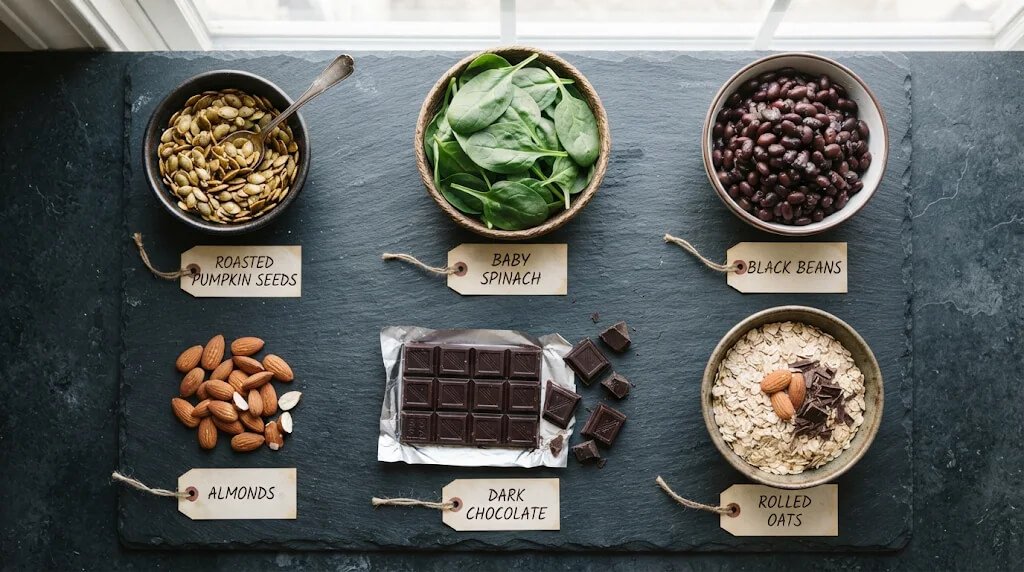
For supplemental magnesium specifically, the National Institutes of Health sets the Tolerable Upper Intake Level (UL) at 350 mg per day for adults. This upper limit applies only to supplements and medications—not magnesium found naturally in whole foods like spinach, pumpkin seeds, black beans, almonds, and oats.
Why Active Men Often Fall Short
National dietary surveys consistently show that roughly half of American adults consume less than the recommended amount of magnesium from food alone. For men who lift weights, run, or play recreational sports, the gap widens even further.
Intense exercise increases magnesium loss through sweat and urine while simultaneously increasing cellular demand for energy turnover and protein synthesis. Even a marginal shortfall can show up as stubborn fatigue, slower recovery between sets, calf cramps at night, or trouble staying asleep. Understanding how sleep affects metabolism and weight management makes it clear why fixing a small micronutrient gap pays off across your entire fitness routine.
Step-by-Step Protocol: How to Schedule Magnesium for Peak Energy and Sleep
If you want to dial in the best time to take magnesium for men’s energy and sleep, follow this practical, step-by-step protocol over the next 14 days.
Step 1: Audit Your Current Diet and Multivitamin
Check the Supplement Facts panel on any multivitamin, electrolyte powder, or pre-workout you already take. Look specifically for the line listing elemental magnesium (not just total compound weight, such as “1,000 mg magnesium glycinate,” which usually yields around 140 mg to 200 mg of actual elemental magnesium). Tally your current supplemental intake so you stay safely at or below the 350 mg daily supplemental upper limit unless a physician advises otherwise.
Step 2: Choose Your Dosing Schedule Based on Your Goal
Pick one of these three practical setups based on where your energy or sleep breaks down:
- The Split-Dose Performance Schedule (Best Overall): Take 100 mg to 150 mg of magnesium malate with breakfast at 7:30 AM, and 200 mg of magnesium glycinate 45 minutes before bed at 9:45 PM. This keeps blood levels steady across 24 hours and targets both daytime ATP output and nighttime recovery.
- The Single Evening Recovery Schedule (Simplest): Take 200 mg to 300 mg of magnesium glycinate 30 to 60 minutes before bed with a small splash of water. Choose this if you prefer taking pills once a day and want maximum sleep depth.
- The Morning Training Schedule: If you lift weights or run early in the morning and already sleep deeply, take 200 mg of magnesium malate with your pre- or post-workout breakfast.
Step 3: Pair With Food (Especially Early in the Day)
While magnesium glycinate is gentle enough for many men to take on an empty stomach before bed, taking magnesium with a meal slows transit time through the small intestine. Slower transit gives your gut transporters more time to absorb the mineral and prevents nausea or stomach cramps.
Step 4: Separate Magnesium From Competing Minerals and Medications
High doses of certain minerals compete for the exact same absorption pathways in your small intestine.
- Zinc: If you take a standalone zinc supplement (common among men looking at whether zinc supports healthy testosterone levels), avoid taking more than 30 mg to 40 mg of zinc at the exact same time as your magnesium. Take zinc with lunch and magnesium before bed.
- Calcium and Iron: High-dose calcium or iron supplements can reduce magnesium uptake when swallowed together. Space them at least two hours apart.
- Antibiotics and Blood Pressure Drugs: Magnesium can bind to certain antibiotics (like tetracyclines and fluoroquinolones) and interact with blood pressure medications. Always space them by at least two to four hours and confirm timing with your pharmacist.
Step 5: Track Your Energy and Sleep for Two Weeks
Unlike caffeine, which hits your bloodstream in 20 minutes, rebuilding intracellular magnesium stores takes consistency. Keep a simple 1-to-5 score in your training journal each morning for two weeks tracking:
- How quickly you fell asleep.
- How many times you woke up during the night.
- Your mid-afternoon energy level without extra coffee.
Common Mistake: Taking a massive 500 mg single dose of cheap magnesium oxide or citrate right before bed thinking “more is better.” Your gut can only absorb a limited percentage at once; excess unabsorbed magnesium pulls water into your colon, waking you up at 3:00 AM with stomach cramps instead of helping you sleep.
How Magnesium Supports Men’s Workouts, Hormones, and Recovery
When men clean up their sleep and cellular energy, the benefits carry straight onto the gym floor. Here is how consistent magnesium timing connects to physical performance.
Stronger Muscle Contractions and Fewer Cramps
Every time you pull a heavy barbell off the floor—say, 225 lb (102 kg) for sets of 5 reps—calcium floods into your muscle fibers to trigger contraction. Magnesium acts as calcium’s natural counterweight, pumping calcium back out so the muscle fiber can relax before the next rep. When magnesium runs low, muscles stay hyper-excitable, increasing the risk of painful calf or hamstring spasms both mid-set and while lying in bed.
Indirect Support for Healthy Testosterone and Cortisol Balance
Magnesium is not a magic testosterone booster, and any supplement label claiming otherwise is overpromising. However, research indexed by the National Library of Medicine shows a positive association between adequate magnesium status, physical activity, and healthy free and total testosterone levels in men.
Even more importantly, poor sleep and chronic stress drive up cortisol, which directly suppresses natural testosterone production. By improving sleep architecture and calming evening nervous system stress, evening magnesium creates the hormonal environment your body needs to recover. If you are looking at broader ways to protect male vitality, exploring how stress and poor sleep lower male libido highlights just how tightly sleep quality and hormone balance are linked.
Steadier Daytime Energy Without Caffeine Overload
Many men rely on 300 mg to 400 mg of caffeine just to survive afternoon meetings, which then lingers in their system and ruins that night’s deep sleep—creating a vicious cycle. Optimizing cellular ATP production with daytime magnesium and B-vitamins helps smooth out afternoon energy dips so you can cut off caffeine 8 to 10 hours before bedtime. For more ways to break the stimulant dependence cycle, check out our guide on how to improve daily energy without caffeine.

Safety Notes and Who Should Be Careful
Magnesium from food carries virtually no risk for healthy adults because your kidneys efficiently filter out any excess. Supplemental magnesium, however, requires sensible boundaries.
- Watch the 350 mg Supplemental Limit: Staying at or below 350 mg of supplemental elemental magnesium per day prevents common side effects like diarrhea, nausea, and abdominal cramping.
- Kidney Function Matters: Men with impaired kidney function or chronic kidney disease cannot clear excess magnesium properly, which can lead to dangerous buildup in the blood (hypermagnesemia). If you have any history of kidney issues, do not take magnesium supplements without medical supervision.
- Check Medication Interactions: Beyond antibiotics, magnesium can interact with bisphosphonates (used for bone density), diuretics, and proton pump inhibitors (acid reflux medications).
- Prioritize Food First: Supplements fill gaps; they do not replace a nutrient-dense diet. Building meals around leafy greens, nuts, seeds, legumes, and whole grains provides magnesium alongside fiber, potassium, and antioxidants.
Practical Tips to Maximize Your Results
Getting the timing right works best when paired with simple daily habits that reinforce your circadian rhythm and energy systems:
- Anchor your dose to an existing habit: Keep your evening magnesium bottle right next to your toothbrush or water glass so you never miss a dose.
- Keep bedroom temperatures cool: Pair your evening magnesium glycinate with a cool room—around 65°F (18°C)—to accelerate the natural drop in core temperature required for deep sleep.
- Hydrate with electrolytes after heavy sweat sessions: If you lose 2 lb (0.9 kg) or more of sweat during intense cardio or outdoor sports, replenish sodium, potassium, and magnesium together rather than chugging plain water alone.
- Look for third-party testing: Choose supplements verified by independent organizations like USP, NSF International, or ConsumerLab so you know the capsule actually contains the exact form and milligram dose printed on the label.
Frequently Asked Questions (FAQ)
Should men take magnesium in the morning or at night?
Most men benefit most from taking magnesium at night, roughly 30 to 60 minutes before bed, to support muscle relaxation and deeper sleep. However, if you use magnesium malate for daytime cellular energy, taking it with breakfast—or splitting your dose between morning and night—works even better.
Does magnesium give you energy or make you sleepy?
Magnesium does not act like a stimulant or a sleeping pill. During the day, it helps your cells convert food into ATP energy so you feel less fatigued. At night, it supports calming GABA neurotransmitters and relaxes tight muscles, helping your body transition naturally into restorative sleep.
What is the best form of magnesium for men’s energy and sleep?
Magnesium glycinate is the top choice for sleep and nighttime muscle recovery because glycine calms the nervous system and absorbs without stomach upset. For daytime energy and workout stamina, magnesium malate is preferred because malic acid directly fuels cellular energy production inside your mitochondria.
How long before bed should men take magnesium?
Take your evening magnesium supplement 30 to 60 minutes before you plan to fall asleep. This window gives the capsule time to dissolve and absorb through your small intestine so peak blood levels align with your natural wind-down routine and initial sleep cycles.
Can men take magnesium every day?
Yes, healthy adult men can safely take a daily magnesium supplement as long as supplemental intake stays at or below the 350 mg tolerable upper limit set by the NIH. Consistent daily use is necessary because rebuilding intracellular magnesium stores takes several weeks rather than a single dose.
Can taking magnesium on an empty stomach cause side effects?
Taking magnesium—especially citrate or oxide—on an empty stomach can draw water into the digestive tract, causing loose stools, bloating, or mild nausea. Taking your dose with a meal, or choosing a gentle chelated form like magnesium glycinate, dramatically reduces the chance of stomach discomfort.
Conclusion
Finding the best time to take magnesium for men’s energy and sleep comes down to matching the right form to the right window of your day. If your main struggle is restless nights, tight muscles, or waking up groggy, take 200 mg to 300 mg of magnesium glycinate 30 to 60 minutes before bed. If you also want steady, stimulant-free fuel for heavy training and busy workdays, split your intake by pairing 100 mg to 150 mg of magnesium malate with breakfast and saving your glycinate for bedtime.
Stay consistent for at least two weeks, keep your supplemental intake within safe daily limits, and pair your routine with whole, magnesium-rich foods. When your cells have the minerals they need to produce energy by day and power down at night, both your gym performance and your recovery move forward together.