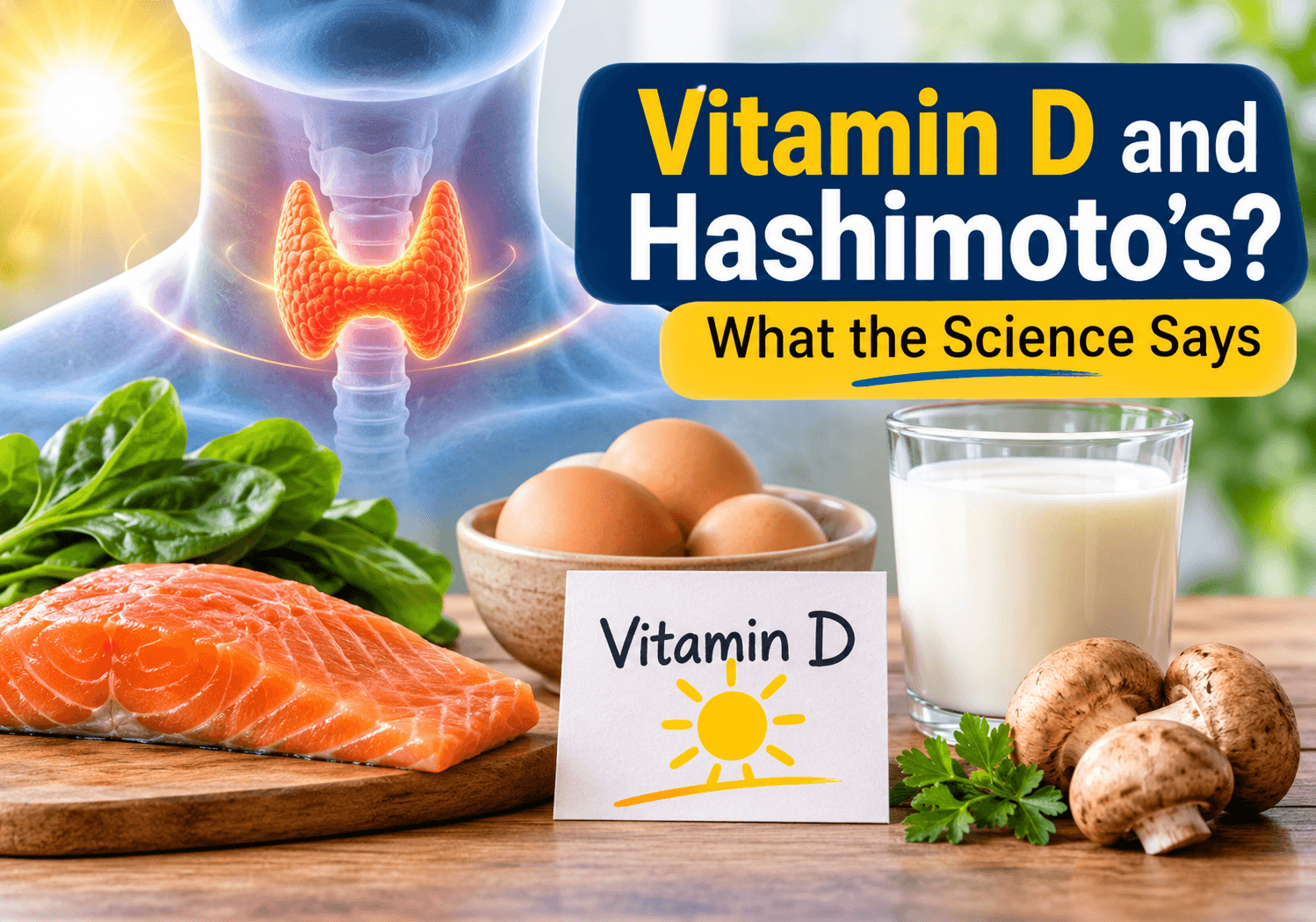
If you have been diagnosed with Hashimoto’s thyroiditis, you might be asking a critical question: what is the relationship between vitamin D and Hashimoto’s? As a certified strength and conditioning coach, I frequently work with clients managing autoimmune conditions who struggle with unexplained fatigue, joint discomfort, and metabolic slowdown. While thyroid medication is the cornerstone of treatment, optimizing your nutritional foundation is equally vital. Research consistently shows that vitamin D plays a profound role in immune system regulation, and a deficiency is heavily linked to increased thyroid antibodies. Understanding this connection can empower you to take practical, evidence-based steps toward better health.
Quick Answer
Research shows a strong, evidence-based link between low vitamin D levels and Hashimoto’s thyroiditis. Vitamin D acts as an immune system modulator, and deficiency is frequently associated with higher thyroid peroxidase (TPO) antibodies. While it is not a cure, optimizing vitamin D levels through safe sunlight exposure, diet, or targeted supplementation may support thyroid health, reduce systemic inflammation, and improve overall energy levels.
Understanding Hashimoto’s Thyroiditis
Hashimoto’s thyroiditis is the most common cause of hypothyroidism in regions with sufficient iodine intake. It is an autoimmune disorder where the body’s immune system mistakenly attacks the thyroid gland. This chronic inflammation gradually impairs the gland’s ability to produce essential thyroid hormones, namely thyroxine (T4) and triiodothyronine (T3).
The hallmark of this condition is the presence of specific autoantibodies in the blood, primarily thyroid peroxidase (TPO) antibodies and thyroglobulin (TgAb) antibodies. When these antibodies are elevated, they signal ongoing immune activity against thyroid tissue. Symptoms often develop slowly and can include profound fatigue, weight gain, cold intolerance, muscle aches, and brain fog. Managing Hashimoto’s requires a dual approach: medical intervention to replace missing hormones and lifestyle strategies to calm the overactive immune response.
The Biological Role of Vitamin D in Immunity
To understand what is the relationship between vitamin D and Hashimoto’s, we must first look at how vitamin D functions in the human body. Unlike typical vitamins, vitamin D acts more like a pro-hormone. When your skin is exposed to ultraviolet B (UVB) radiation from sunlight, it synthesizes cholecalciferol (vitamin D3). This is then processed by the liver into calcifediol (25-hydroxyvitamin D), which is the primary marker measured in blood tests to assess your vitamin D status.
The active form of vitamin D, calcitriol, binds to vitamin D receptors (VDRs) found in nearly every cell in the body, including immune cells like macrophages, dendritic cells, and T-lymphocytes. According to the National Institutes of Health (NIH) Vitamin D Fact Sheet, vitamin D is crucial for promoting calcium absorption in the gut and maintaining adequate serum calcium and phosphate concentrations. However, its role in immune modulation is equally critical. Vitamin D helps shift the immune system away from a pro-inflammatory state and promotes immune tolerance, which is the exact mechanism that is dysfunctional in autoimmune diseases like Hashimoto’s.
What the Clinical Research Says
The scientific community has extensively investigated the link between vitamin D status and autoimmune thyroid disease. A landmark study published in the Journal of Clinical Endocrinology & Metabolism found that patients with Hashimoto’s thyroiditis have a significantly higher prevalence of vitamin D deficiency compared to healthy controls (Kivity et al., 2011).
Furthermore, research indicates an inverse relationship between serum 25-hydroxyvitamin D levels and TPO antibody titers. This means that as vitamin D levels drop, thyroid antibody levels tend to rise, indicating more aggressive autoimmune activity. A comprehensive review in Endocrine journal concluded that vitamin D supplementation in deficient patients with Hashimoto’s may lead to a reduction in TPO antibodies and an improvement in thyroid ultrasound echogenicity (Muscogiuri et al., 2018).
While these findings are promising, it is important to maintain realistic expectations. Vitamin D is not a standalone cure for Hashimoto’s. Instead, it is a powerful supportive nutrient that helps create a physiological environment where the immune system is less likely to attack the thyroid gland.

Interpreting Your Blood Work
If you suspect a deficiency, you must request a specific blood test: the 25-hydroxyvitamin D [25(OH)D] test. The Endocrine Society defines vitamin D status as follows:
- Deficiency: Less than 20 ng/mL (50 nmol/L)
- Insufficiency: 21 to 29 ng/mL (52.5 to 72.5 nmol/L)
- Sufficiency: 30 to 100 ng/mL (75 to 250 nmol/L)
Many functional medicine practitioners and endocrinologists recommend aiming for the higher end of the sufficient range (40–60 ng/mL) for patients with autoimmune conditions, as this level appears to offer optimal immune-modulating benefits. Always discuss your target range with your healthcare provider, as individual needs vary based on body weight, skin pigmentation, geographic location, and baseline health.
Vitamin D Sources and Exercise Parameters for Hashimoto’s
Managing Hashimoto’s requires a holistic approach. Below are two tables to guide your nutritional and physical activity strategies.
Table 1: Dietary and Environmental Sources of Vitamin D
| Source Type | Specific Example | Approximate Vitamin D Content | Notes |
| Sunlight | Midday sun exposure | 1,000–3,000 IU per 15-30 mins | Varies by latitude, skin tone, and season. |
| Fatty Fish | Wild-caught salmon (3.5 oz / 100 g) | 400–600 IU | Also provides anti-inflammatory omega-3s. |
| Fortified Dairy | Cow’s milk (1 cup / 240 ml) | 100–120 IU | Check labels, as plant milks vary widely. |
| Egg Yolks | One large whole egg | 40–50 IU | A modest contribution, but nutrient-dense. |
| Supplements | Vitamin D3 (cholecalciferol) | 1,000–5,000 IU per capsule | Often paired with vitamin K2 for bone health. |
Table 2: Recommended Exercise Parameters for Hashimoto’s Management
As a coach, I prescribe these parameters to avoid cortisol spikes while promoting metabolic health and muscle preservation.
| Goal | Exercise Type | Sets | Reps | Rest | Tempo |
| Mobility | Yoga or dynamic stretching | 1-2 | 8-10 per side | 30 sec | Slow, controlled |
| Endurance | Brisk walking or cycling | N/A | 20-30 mins | N/A | Moderate pace (Zone 2) |
| Strength | Resistance training (full body) | 2-3 | 10-12 | 60-90 sec | 3-1-1 (3s down, 1s pause, 1s up) |

How to Apply It: A Coach’s Practical Protocol
Understanding the science is only half the battle. To truly support your thyroid and overall metabolism, you must translate this knowledge into daily action. As a strength and conditioning coach, I recommend combining targeted nutrient support with a gentle, sustainable movement routine. High-intensity workouts can sometimes exacerbate fatigue and adrenal stress in Hashimoto’s patients, so we focus on controlled, moderate-intensity resistance training and steady-state cardio.
Here is a practical, 3-day-per-week foundational routine designed for individuals managing Hashimoto’s.
The Warm-Up (5-7 Minutes)
Never skip your warm-up. Cold muscles and stiff joints are more prone to injury.
- Neck and Shoulder Rolls: 10 repetitions each direction to release upper body tension.
- Cat-Cow Stretch: 10 repetitions on hands and knees to mobilize the spine.
- Bodyweight Glute Bridges: 2 sets of 10 reps to activate the posterior chain.
The Main Workout
Perform this routine 2 to 3 times per week, ensuring at least one rest day between sessions.
1. Box Squat (or Sit-to-Stand)
- Target: Quadriceps, glutes, core.
- Sets/Reps: 3 sets of 10-12 reps.
- Rest: 60-90 seconds.
- Tempo: 3-1-1 (3 seconds lowering, 1 second pause on the box, 1 second standing).
- Weight Guidance: Start with bodyweight. Progress to holding a 10 lb (4.5 kg) dumbbell at chest height (goblet style).
- Form Cue: Keep your chest proud and push your knees outward as you stand. Do not let your knees cave inward.
- Regression: Use a higher surface, like a 20-inch (50 cm) chair, to reduce the depth and strain on the knees.
- Progression: Lower the box height to parallel or hold a 20 lb (9 kg) kettlebell.

2. Incline Push-Up
- Target: Chest, shoulders, triceps, core.
- Sets/Reps: 3 sets of 8-10 reps.
- Rest: 60 seconds.
- Tempo: 2-1-1.
- Weight Guidance: Bodyweight only. The incline reduces the load.
- Form Cue: Keep your body in a straight line from your head to your heels. Brace your core as if preparing for a light punch to the stomach.
- Regression: Perform the push-up against a wall at a 45-degree angle.
- Progression: Lower the incline to a sturdy bench or step (approximately 18 inches / 45 cm high).
3. Seated Resistance Band Row
- Target: Upper back, rhomboids, rear deltoids.
- Sets/Reps: 3 sets of 12-15 reps.
- Rest: 60 seconds.
- Tempo: 2-1-1.
- Weight Guidance: Use a light to medium resistance band (typically 15-25 lbs / 7-11 kg of resistance).
- Form Cue: Sit tall with legs slightly bent. Pull the band toward your lower ribs, squeezing your shoulder blades together at the peak of the movement.
- Regression: Use a lighter resistance band or shorten the range of motion.
- Progression: Use a heavier resistance band or perform a bent-over dumbbell row with 15 lb (6.8 kg) dumbbells.

Coach’s Tip: When managing Hashimoto’s, consistency beats intensity. A daily 20-minute walk covering 1 mile (1.6 km) is often more sustainable and beneficial for your thyroid and metabolic health than sporadic, high-intensity workouts that can spike cortisol and trigger fatigue.
Common Mistake: Taking vitamin D supplements at the exact same time as levothyroxine (thyroid hormone replacement). Calcium and high-dose vitamin formulations can interfere with thyroid medication absorption in the gut. Always separate your thyroid medication and vitamin D supplements by at least 4 hours.
Safety Notes and Medical Considerations
While optimizing vitamin D is highly beneficial, safety must come first. Always consult with your endocrinologist or primary care physician before starting any new supplement regimen, especially when managing an autoimmune condition.
- Medication Interactions: As mentioned, separate levothyroxine from calcium and vitamin D supplements by a minimum of 4 hours to ensure proper absorption of your thyroid medication.
- Risk of Toxicity: Vitamin D is fat-soluble, meaning it can accumulate in the body. Excessive intake (typically over 10,000 IU daily for extended periods without medical supervision) can lead to hypercalcemia, a condition characterized by nausea, weakness, and kidney stones.
- Cofactor Importance: Vitamin D works synergistically with other nutrients. Magnesium is required to convert vitamin D into its active form, and vitamin K2 helps direct calcium to the bones rather than the arteries. Discuss with your doctor whether a combined D3/K2 supplement is appropriate for you.
- Listen to Your Body: Hashimoto’s symptoms can fluctuate. On days when your fatigue is severe, honor your body’s need for rest. Swap a strength training day for gentle yoga or a leisurely walk.
Related Tips for Holistic Thyroid Management
Optimizing vitamin D is just one piece of the puzzle. To truly support your body, consider these interconnected lifestyle factors:
- Address Nutritional Deficiencies: If you are deficient in vitamin D, you may also be lacking in other critical micronutrients. Understanding which vitamins support metabolism when you’re deficient can help you build a comprehensive nutritional strategy alongside your doctor.
- Manage Daily Fatigue: Hashimoto’s often causes profound exhaustion. Learning how to increase energy and stamina naturally through pacing, hydration, and balanced macronutrients is essential for maintaining your exercise routine.
- Optimize Your Rest: Poor sleep severely disrupts hormonal balance and immune function. Research shows that understanding how sleep affects metabolism and weight management is critical for anyone with an endocrine disorder. Aim for 7-9 hours of quality sleep per night.
- Support Baseline Metabolism: Hypothyroidism naturally slows your metabolic rate. Implementing gentle, consistent habits is the best way to counteract this. Our guide on how to support metabolism naturally for weight management offers practical, non-restrictive strategies.
- Evaluate Your Overall Nutrient Intake: Beyond vitamin D, ensuring you get adequate B vitamins, selenium, and zinc is vital. Explore which nutrients support normal energy metabolism to ensure your diet is fully supporting your thyroid.
- Consider Your Broader Health Picture: Many factors influence how your body processes energy and maintains weight. Reading about what affects metabolism and body weight can help you avoid fad diets and focus on sustainable, evidence-based health practices.
- Smart Supplementation Choices: If you are trying to manage your weight while dealing with Hashimoto’s, it is important to choose supplements wisely. Discover the best vitamins for energy while dieting to ensure you are not exacerbating nutrient deficiencies during a calorie deficit.
Frequently Asked Questions (FAQ)
1. Does vitamin D help Hashimoto’s? Yes, research suggests that optimizing vitamin D levels can help modulate the immune system in Hashimoto’s patients. While it does not cure the disease, adequate vitamin D is associated with lower thyroid peroxidase (TPO) antibody levels and reduced systemic inflammation, supporting overall thyroid health.
2. Can low vitamin D cause Hashimoto’s flare-ups? Low vitamin D does not directly “cause” Hashimoto’s, as the disease has genetic and environmental triggers. However, a deficiency can impair immune regulation, potentially creating an environment where autoimmune activity and symptom flare-ups, such as severe fatigue and joint pain, are more likely to occur.
3. How much vitamin D should I take for Hashimoto’s? The correct dosage varies based on your baseline blood levels, body weight, and sun exposure. Many healthcare providers recommend 1,000 to 5,000 IU of vitamin D3 daily for deficient adults, but you must get a 25-hydroxyvitamin D blood test and consult your doctor to determine your specific, safe dosage.
4. What are the symptoms of vitamin D deficiency in Hashimoto’s patients? Symptoms of deficiency often overlap with Hashimoto’s symptoms, making it tricky to identify. They include profound fatigue, muscle weakness, bone or back pain, frequent infections, and depressed mood. If your thyroid levels are optimized but you still feel exhausted, ask your doctor to check your vitamin D.
5. Is it safe to take vitamin D with thyroid medication? It is safe to take both, but timing is critical. High doses of vitamin D, especially when combined with calcium, can interfere with the absorption of levothyroxine. You should take your thyroid medication on an empty stomach and wait at least 4 hours before taking your vitamin D supplement.
6. Does vitamin D lower TPO antibodies? Several clinical studies indicate that vitamin D supplementation in deficient patients with Hashimoto’s can lead to a modest but statistically significant reduction in TPO antibody titers over several months. This suggests a calming effect on the autoimmune response, though results vary by individual.
Conclusion
So, what is the relationship between vitamin D and Hashimoto’s? The evidence is clear: vitamin D is a crucial immune modulator, and deficiency is strongly linked to higher thyroid antibodies and more severe autoimmune activity in Hashimoto’s thyroiditis. While it is not a magic bullet or a replacement for prescribed thyroid medication, optimizing your vitamin D levels through sensible sun exposure, nutrient-dense foods, and targeted supplementation is a powerful, evidence-based strategy.
Pair this nutritional focus with a gentle, consistent exercise routine, adequate sleep, and stress management. By taking a holistic, coach-guided approach to your health, you can better manage your symptoms, protect your metabolic health, and improve your quality of life.