
Walking into the gym with a tight, distended stomach makes every movement harder. When you cannot properly brace your core for a heavy squat or a deadlift because of trapped air, your performance drops and your lower back takes unnecessary stress. Finding the best probiotic for bloating and gas is not about grabbing the flashiest bottle on the pharmacy shelf; it is about matching specific, clinically studied bacterial strains to your digestive mechanics.
Most active adults assume their post-meal puffiness comes solely from eating too many calories or drinking carbonated pre-workouts. In reality, the trillions of bacteria living in your digestive tract dictate how efficiently you break down carbohydrates, proteins, and fibers. When that microbial balance shifts, fermentation spikes, and uncomfortable gas builds up right behind your abdominal wall.
Quick Answer: The best probiotic for bloating and gas contains clinically studied single or multi-strain formulas featuring Bifidobacterium infantis 35624, Lactobacillus acidophilus, or Bacillus coagulans at a daily dose of 10 to 50 billion CFU. Look for delayed-release, acid-resistant capsules without added prebiotic fibers like inulin, which can temporarily worsen gas in sensitive stomachs.
Medical Disclaimer: Always consult a doctor, registered dietitian, or gastroenterologist before starting a new supplement, especially if you experience severe abdominal pain, unexplained weight loss, or chronic digestive conditions.
Top Probiotic Categories Compared for Bloating and Gas
Different probiotic formulations target different digestive bottlenecks. Rather than relying on brand hype, evaluate supplements by their primary bacterial strains, delivery mechanism, and active colony-forming units (CFU).
| Probiotic Category / Primary Strain | Key Spec (CFU & Delivery) | Best For | Typical Price Range |
| 1. Bifidobacterium infantis 35624 Formula | 1 to 4 Billion CFU; standard or delayed capsule | Overall abdominal distension and bowel irregularity | $30 – $45 / month |
| 2. Multi-Strain Lactobacillus & Bifidobacterium Blend | 25 to 50 Billion CFU; enteric-coated capsule | General daily digestive maintenance and post-antibiotic recovery | $35 – $55 / month |
| 3. Bacillus coagulans (Spore-Based) | 2 to 15 Billion CFU; shelf-stable spore shell | High-protein diets and protein-shake bloating | $25 – $40 / month |
| 4. Saccharomyces boulardii (Beneficial Yeast) | 5 to 10 Billion CFU; lyophilized capsule | Travel-related digestive upset and loose stools | $20 – $35 / month |
| 5. Synbiotic (Low-FODMAP Prebiotic + Probiotic) | 15 to 30 Billion CFU; delayed-release capsule | Long-term microbiome diversity without heavy fermentation | $40 – $60 / month |
| 6. Liquid / Refrigerated Live Culture Suspension | 10 to 30 Billion CFU; temperature-controlled bottle | Individuals who struggle to swallow capsules | $45 – $65 / month |
6 Best Probiotic Types for Bloating and Gas (Detailed Breakdown)
1. Bifidobacterium infantis 35624 Single-Strain Formulas
- Who It’s For: Lifters, runners, and everyday adults dealing with predictable afternoon bloating, trapped gas, and sluggish bowel movements.
- Key Features: This specific strain has been extensively researched for its ability to survive stomach acid and calm localized gut irritation. Clinical trials indexed by the National Center for Biotechnology Information (NCBI) indicate that B. infantis 35624 helps normalize bowel habits and reduce abdominal distension without requiring massive, triple-digit CFU counts.
- Pros:
- Backed by strong human clinical data specifically targeting bloating.
- Low risk of initial adjustment gas compared to heavy multi-strain blends.
- Usually requires only one small capsule per day.
- Cons:
- Does not provide broad-spectrum microbial diversity.
- Premium single-strain products often carry a higher price per billion CFU.
2. High-Potency Multi-Strain Lactobacillus and Bifidobacterium Blends
- Who It’s For: Active individuals recovering from a round of antibiotics, high stress, or drastic dietary shifts who need broad-spectrum gut reinforcement.
- Key Features: These formulas combine heavy-hitting strains like Lactobacillus acidophilus NCFM, Lactobacillus plantarum 299v, and Bifidobacterium lactis HN019 inside a delayed-release vegetable capsule. Combining species allows the bacteria to colonize both the small intestine and the colon simultaneously.
- Pros:
- Addresses multiple digestive pathways at once.
- Supports healthy transit time, preventing food from sitting and fermenting too long.
- Widely available in shelf-stable, blister-packed formats.
- Cons:
- Higher CFU counts (50 billion+) can trigger mild gas during the first 3 to 5 days.
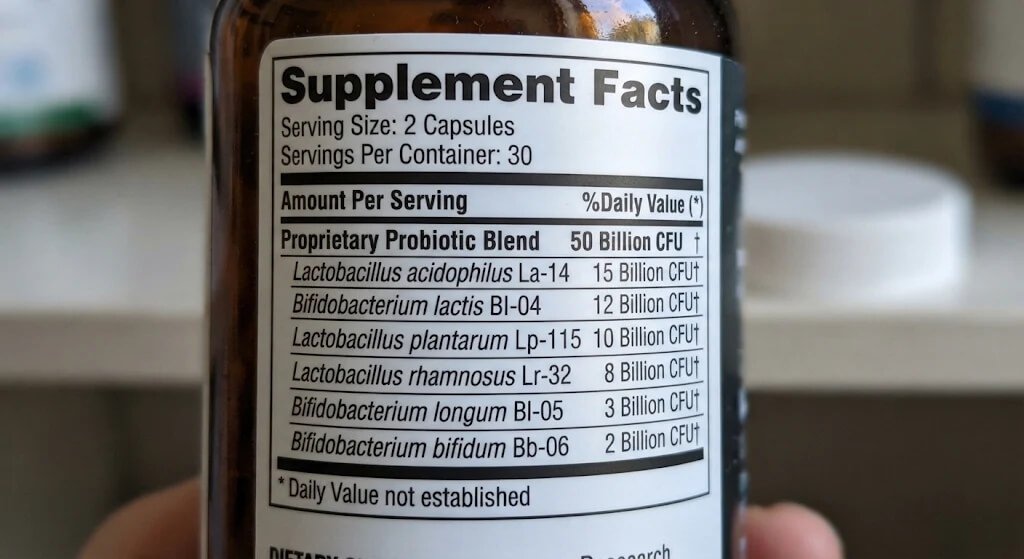
- Ingredient labels sometimes hide exact strain numbers behind proprietary blends [VERIFY].
3. Spore-Based Bacillus coagulans Supplements
- Who It’s For: Strength athletes, bodybuilders, and fitness enthusiasts consuming 1.6 to 2.2 grams of protein per kilogram of body weight daily.
- Key Features: Unlike fragile vegetative bacteria, Bacillus coagulans forms a natural protective endospore shell. This armor allows it to survive extreme heat and stomach acidity before germinating in the small intestine, where it assists in breaking down stubborn peptides and carbohydrates.
- Pros:
- Completely shelf-stable; requires zero refrigeration in hot gym bags.
- Research suggests it supports amino acid absorption and reduces protein-induced gas.
- Survives stomach acid at nearly 100% efficiency without synthetic coatings.
- Cons:
- Fewer total strains per capsule compared to traditional multi-blends.
- Not ideal for individuals seeking high-dose Bifidobacterium replenishment.
4. Saccharomyces boulardii Beneficial Yeast Probiotics
- Who It’s For: Frequent travelers, competitors eating unfamiliar foods on the road, and anyone experiencing gas paired with occasional loose stools.
- Key Features: Saccharomyces boulardii is a non-pathogenic tropical yeast rather than a bacterium. Because it is a yeast, it is naturally resistant to antibiotics and helps flush out unwanted microbes while reinforcing the intestinal mucosal barrier.
- Pros:
- Can be taken alongside antibiotic prescriptions without being destroyed.
- Rapidly calms acute digestive turbulence caused by travel or diet changes.
- Does not colonize permanently, acting as a temporary protective shield.
- Cons:
- Not suitable for individuals with severe yeast allergies or compromised immune systems.
- Less effective for slow-motility constipation bloating.
5. Low-FODMAP Synbiotic Formulas (Probiotic + Gentle Prebiotic)
- Who It’s For: Health-conscious trainees who want a comprehensive daily gut supplement but react poorly to standard chicory root or inulin fibers.
- Key Features: A synbiotic pairs live bacteria with a prebiotic fuel source. Low-FODMAP versions utilize gentle, slow-fermenting fibers like partially hydrolyzed guar gum (PHGG) or kiwi powder instead of rapid-fermenting fructooligosaccharides (FOS), feeding good bacteria without inflating your midsection like a balloon.
- Pros:
- Provides built-in nutrition so the probiotic strains thrive once they reach the colon.
- Minimizes the rapid gas spikes caused by traditional prebiotic fillers.
- Convenient two-in-one daily dosing.
- Cons:
- Slightly larger capsule size or requires two capsules per serving.
- More expensive than standalone probiotic supplements.
6. Refrigerated Liquid Multi-Strain Suspensions
- Who It’s For: People who dislike swallowing pills or want immediate contact between live cultures and the upper digestive tract.
- Key Features: Suspended in a water-based or fermented botanical medium, these live cultures remain metabolically active rather than freeze-dried. They begin interacting with your digestive environment as soon as you swallow your morning dose.
- Pros:
- Zero capsule binders, flow agents, or cellulose shells.
- Easy to adjust dosing incrementally (e.g., starting with a half-teaspoon).
- High bioavailability for individuals with sluggish stomach emptying.
- Cons:
- Must stay refrigerated at all times, making travel inconvenient.
- Distinct tart or earthy taste that some users dislike.
Why Bloating and Gas Sabotage Your Training
When clients tell me their core feels “disconnected” during heavy compound lifts, digestive distension is often the hidden culprit. Your transverse abdominis—the deep, corset-like muscle that wraps around your spine—relies on clean intra-abdominal pressure to stabilize your lumbar vertebrae.
When trapped gas pushes outward against your abdominal wall, it stretches those deep core fibers and inhibits proper neuromuscular firing. Instead of creating a rigid, protective cylinder around your spine, your core feels soft and distended.
Furthermore, persistent gut fermentation drains your daily energy and disrupts sleep quality. Understanding how dietary fiber affects appetite and weight management alongside microbial balance helps you fuel hard workouts without feeling weighed down.
Coach’s Tip: Never test a brand-new probiotic or high-fiber supplement on the morning of a heavy squat session, a race, or a long hike. Introduce any new gut supplement on a rest day or light upper-body training day so you can gauge how your stomach responds before demanding heavy core bracing.
How to Choose the Best Probiotic for Bloating and Gas (Buyer’s Checklist)
Walking down the supplement aisle without a checklist leads to wasted money. Use these five non-negotiable standards before buying any bottle.
1. Strain Specificity Over Genus Names
A label that only says “Lactobacillus acidophilus” is incomplete. You want to see the three-part name: Genus, species, and strain designation (for example, Lactobacillus plantarum 299v or Bifidobacterium lactis HN019). Different strains within the exact same species perform completely different jobs in the gut, as highlighted by the National Institutes of Health (NIH) Office of Dietary Supplements.

2. Clinically Relevant CFU Counts (10 to 50 Billion)
More is not always better. While 100-billion-CFU mega-doses look impressive on a label, flooding a sensitive digestive tract with massive bacterial loads frequently triggers acute cramping and gas. For daily bloating relief, a targeted dose between 10 billion and 50 billion CFU (or 1 to 10 billion for specialized spore and single-strain formulas) hits the sweet spot.
3. Acid-Resistant or Delayed-Release Delivery
Your stomach is an acid bath designed to destroy incoming microbes. Standard gelatin or cheap vegetable capsules dissolve within 10 to 15 minutes in stomach acid, killing a huge percentage of freeze-dried bacteria before they ever reach your small intestine. Always verify that the bottle specifies delayed-release capsules, enteric coating, or spore-forming strains.
4. Absence of High-FODMAP Prebiotic Fillers
Many manufacturers pack cheap prebiotic fibers—like inulin, chicory root, or fructooligosaccharides (FOS)—into their probiotic capsules to pad the ingredient list. While prebiotics feed gut bacteria, rapid fermentation of inulin is one of the fastest ways to cause painful trapped gas. If you are already bloated, choose a clean probiotic free of added FODMAP fibers.
5. Viability Guarantee Through Expiration Date
Check the fine print near the Supplement Facts panel. Reputable manufacturers guarantee CFU potency “through the expiration date” rather than “at the time of manufacture.” Heat, humidity, and light steadily degrade live bacteria during warehouse storage, so third-party testing and opaque, moisture-sealed bottles matter.
Common Mistakes When Taking Probiotics for Gas
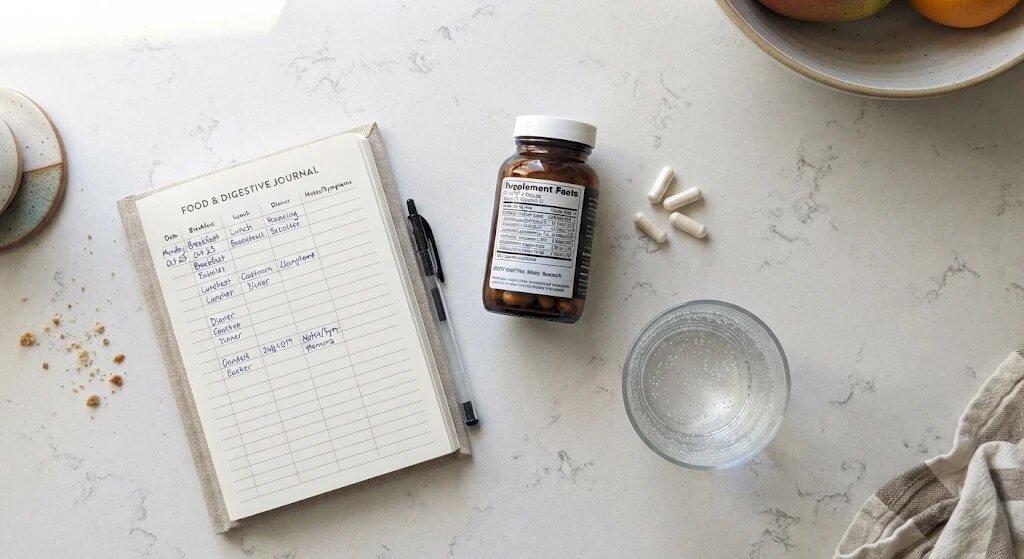
Common Mistake: Quitting your probiotic after 48 hours because you feel slightly gassier than usual, or doubling your dose thinking it will clear the bloating faster.
When you introduce beneficial bacteria into an imbalanced gut, a brief turf war occurs. As new microbes settle in and begin breaking down residual carbohydrates, a temporary uptick in mild gas during the first 3 to 7 days is completely normal.
Avoid these four errors to keep your adjustment smooth:
- Taking High Doses on Day One: If you have a reactive stomach, open the capsule and mix half the powder into cool water for the first four days, or take one capsule every other day during week one.
- Swallowing Capsules with Hot Coffee: Water or coffee warmer than 115°F (46°C) can kill live freeze-dried cultures before they even reach your stomach. Always use cool or room-temperature water.
- Ignoring Protein Powder Additives: Many whey concentrates and plant-based protein powders contain sugar alcohols (erythritol, sorbitol) or thickeners (xanthan gum) that cause severe bloating. Choosing the right probiotic works best when you also evaluate how protein powder affects digestion and hunger and swap out irritating sweeteners.
- Expecting Instant Overnight Fixes: Probiotics are not fast-acting antacids or simethicone gas pills. Meaningful shifts in your gut microbiome take consistent daily intake over 2 to 4 weeks.
How We Evaluated and Selected These Categories
To build a practical, evidence-driven guide rather than a sponsored ranking, every probiotic category in this article was evaluated against four strict standards:
- Human Clinical Backing: Priority was given to strains studied in randomized, placebo-controlled human trials specifically measuring abdominal distension, flatulence frequency, and stool consistency, as documented in peer-reviewed journals indexed on PubMed.
- Survivability Metrics: Formulations must demonstrate proven resistance to gastric acid (pH 1.5–3.5) and bile salts so live organisms actually arrive intact in the ileum and colon.
- Label Transparency: Products must disclose exact alphanumeric strain IDs, avoid proprietary blends that mask under-dosed strains, and utilize third-party quality verification (such as USP, NSF, or ConsumerLab).
- Tolerability for Active Lifestyles: Supplements were screened to exclude unnecessary sugar alcohols, artificial dyes, and high-FODMAP fillers that interfere with workout comfort and supporting metabolism naturally.
Practical Routine: How to Take Probiotics and Reduce Bloating Daily
Supplements work best when paired with simple mechanical habits that keep your digestive tract moving smoothly. Follow this step-by-step daily protocol for four weeks.
Step 1: Time Your Dose Consistently
Take your probiotic 15 to 30 minutes before breakfast with a full 8 to 12 oz (240 to 350 ml) glass of cool water. Before a meal, stomach acid dilution is optimal, and incoming food helps buffer the capsule as it moves quickly into the small intestine.
Step 2: Pair with Proper Hydration and Soluble Fiber
Beneficial bacteria need hydration to regulate stool bulk and transit time. Drink at least half your body weight in ounces of water daily (for example, a 160 lb [72.5 kg] person should aim for 80 oz [2.4 liters] of water). Once your bloating subsides in week two, gradually add gentle sources of soluble fiber for fullness and digestive regularity.
Step 3: Use a 10-Minute Post-Meal Walk
After your largest meal of the day, take a brisk 10-minute walk (roughly 0.5 miles [0.8 km]). Gentle rhythmic movement stimulates peristalsis—the wave-like muscle contractions that move gas and food smoothly through your intestines—far better than sitting on the couch.
Step 4: Practice Diaphragmatic Core Release After Training
Heavy lifting keeps your nervous system in a sympathetic (“fight-or-flight”) state, which temporarily slows down gut motility. After your cooldown, lie on your back with your feet elevated on a bench at 90 degrees and take 10 slow diaphragmatic breaths (4-second inhale through the nose, 6-second exhale through the mouth) to switch your body back into “rest-and-digest” mode.

Supporting Gut Health Alongside Weight and Metabolic Goals
Your gut microbiome does far more than control whether your waistband feels tight after lunch. Research from the Harvard T.H. Chan School of Public Health highlights that gut bacteria produce short-chain fatty acids (like butyrate) that help regulate inflammation, insulin sensitivity, and appetite signaling.
When your digestion runs smoothly, you absorb micronutrients more efficiently and experience fewer energy crashes between meals. If you are currently managing your weight or tracking macros, understanding how probiotics influence appetite and weight management as well as how psyllium husk supports pre-meal fullness can help you build a sustainable nutrition routine without digestive distress.
Even foundational habits like getting enough rest play a direct role; poor recovery alters gut motility and hormone balance, which is why learning how sleep affects metabolism and weight management is just as important as picking the right supplement bottle.
Frequently Asked Questions (FAQ)
What is the best probiotic for bloating and gas?
The best probiotic for bloating and gas features clinically studied strains like Bifidobacterium infantis 35624, Lactobacillus acidophilus NCFM, or Bacillus coagulans at 10 to 50 billion CFU. Choose a delayed-release, acid-resistant capsule without added prebiotic fillers like inulin, which can trigger extra fermentation and abdominal pressure.
How long does it take for probiotics to stop bloating?
Most people notice initial reductions in trapped gas and abdominal tightness within 1 to 2 weeks of consistent daily use. However, meaningful rebalancing of your gut microbiome typically requires 3 to 4 weeks. Give a new formula a full 30-day trial before deciding whether to switch strains.
Can probiotics cause gas and bloating at first?
Yes, starting a probiotic can cause mild, temporary gas or rumbling during the first 3 to 7 days. As new beneficial bacteria colonize your intestines and begin breaking down carbohydrates, gas output may briefly shift. Starting with a half-dose every other day helps minimize this adjustment period.
Should I take probiotics before or after a workout?
Take your probiotic 15 to 30 minutes before breakfast rather than immediately before an intense workout. Heavy exercise redirects blood flow away from your digestive tract toward working muscles, which slows stomach emptying. Taking your dose well before training ensures smooth transit into the small intestine.
What CFU count is best for bloating and sensitive stomachs?
For bloating and sensitive stomachs, aim for 10 to 30 billion CFU for multi-strain blends, or 1 to 10 billion CFU for specialized single-strain and spore-based formulas. Ultra-high doses above 100 billion CFU are rarely necessary for everyday bloating and often cause unnecessary cramping in reactive digestive tracts.
Do probiotics help with protein shake bloating?
Yes, spore-based probiotics like Bacillus coagulans and multi-strain Lactobacillus formulas can reduce protein shake bloating by assisting with peptide breakdown and calming gut inflammation. For best results, pair your probiotic with a clean whey isolate or low-FODMAP plant protein free from sugar alcohols and heavy gums.
Conclusion
Selecting the best probiotic for bloating and gas comes down to precision over hype. Instead of grabbing the highest CFU count on the shelf, look for transparent strain designations—such as Bifidobacterium infantis 35624, Lactobacillus plantarum 299v, or Bacillus coagulans—housed in an acid-resistant capsule without irritating prebiotic fillers.
Pair your daily capsule with smart mechanical habits: stay hydrated, take a 10-minute walk after big meals, and give your gut three to four weeks of consistent dosing to adapt. When your digestion runs quietly in the background, you can brace harder, recover faster, and train with full confidence.