
When clients walk into my coaching practice with a new diagnosis of an underactive thyroid, their first question is almost always rooted in frustration. They feel exhausted, their weight is creeping up despite eating clean, and they feel like their body has hit the brakes. Does hypothyroidism slow down metabolism? The short answer is yes: an underactive thyroid directly depresses your basal metabolic rate, altering how your cells convert nutrients into usable energy. However, understanding the exact cellular mechanics changes how you approach exercise and nutrition so you can take back control.
Understanding the Thyroid-Metabolism Connection
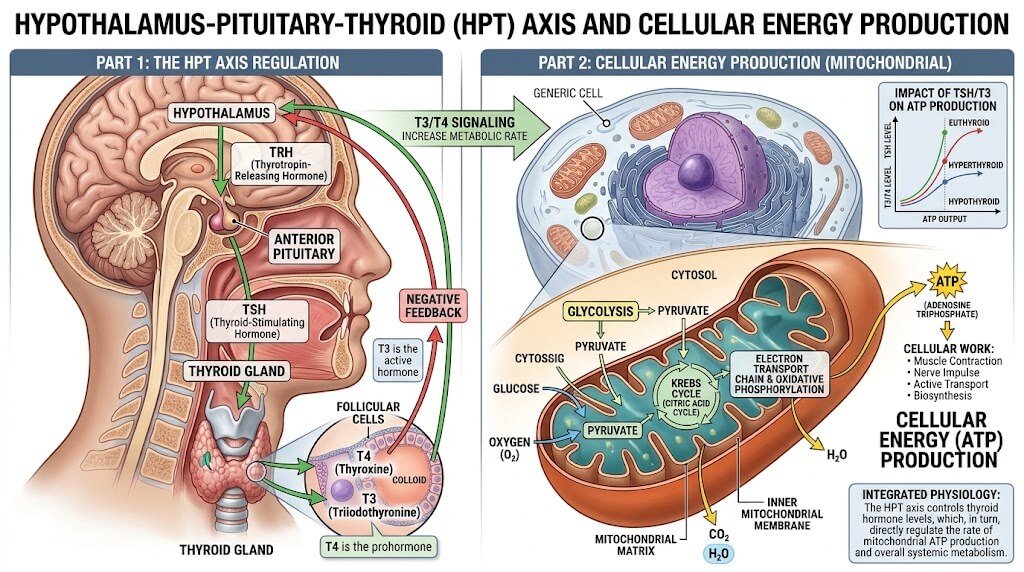
To understand how an underactive thyroid impacts your daily energy expenditure, we have to look inside your cells. Your thyroid gland, a small butterfly-shaped organ located at the base of your neck, produces two primary hormones: thyroxine (T4) and triiodothyronine (T3). According to research published by the National Institutes of Health (NIH), these hormones travel through your bloodstream to virtually every tissue and organ in your body, acting as the master thermostat for cellular metabolism.
When your thyroid gland fails to produce sufficient levels of T4 and T3—a condition known clinically as primary hypothyroidism—the hormonal signal commanding your cells to burn energy weakens. At the cellular level, thyroid hormones stimulate the activity of sodium-potassium pumps (Na+/K+ ATPase pumps), which consume a massive amount of your body’s baseline energy. When hormone levels are low, pump activity drops, heat production (thermogenesis) declines, and mitochondrial respiration slows down.
For a deeper look at how energy regulation works across different physiological states, check out this guide on what affects metabolism and body weight.

What the Research Says: Quantifying the Metabolic Slowdown
Clinical studies demonstrate a clear, measurable reduction in resting energy expenditure (REE) among individuals with untreated or undertreated hypothyroidism. A landmark review in the Journal of Clinical Endocrinology & Metabolism notes that basal metabolic rates can decline by anywhere from 10% to 30% depending on the severity of the hormone deficiency.
This means that if your body naturally required 1,800 calories at rest prior to your thyroid condition developing, a significant drop in thyroid hormone output can reduce your baseline energy needs to roughly 1,400 to 1,600 calories. If your dietary intake remains unchanged, that invisible caloric surplus accumulates over weeks and months, resulting in steady fat accumulation even when dietary portions are moderate.
Furthermore, hypothyroidism frequently alters body composition by promoting water retention (myxedema) and reducing lean muscle tissue turnover. Because skeletal muscle is metabolically active tissue that burns more calories at rest than adipose tissue, any loss of lean mass further depresses overall energy expenditure. For practical steps on protecting your metabolic tissue as you age, review this guide on how to increase metabolism naturally after 40 a coach’s practical guide.
Metabolic Impact Comparison: Normal vs. Hypothyroid State
| Physiological Marker | Euthyroid (Normal Thyroid Function) | Hypothyroid (Underactive Thyroid) |
| Resting Metabolic Rate (RMR) | Baseline normal for age, sex, and mass | Reduced by 10% to 30% |
| Mitochondrial Respiration | Optimal ATP production and electron transport | Impaired oxidative phosphorylation |
| Thermogenesis (Heat Production) | Normal adaptive and obligatory thermogenesis | Decreased body temperature and cold intolerance |
| NEAT (Daily Movement) | High spontaneous physical activity output | Reduced spontaneity, fatigue-driven lethargy |
| Cardiovascular Response | Normal resting heart rate and cardiac output | Bradycardia (lower heart rate) and reduced output |
How to Apply It: Practical Strategies for Managing Hypothyroid Metabolism
Knowing that does hypothyroidism slow down metabolism is only half the battle; the more critical question is what you can do about it. As a strength coach, I tell my clients that you cannot out-train a poorly managed hormone deficiency, but you can optimize your lifestyle to counteract the metabolic drag. Medical management with a physician using synthetic levothyroxine is always the foundational first step. Once your hormone levels are stabilized, structured lifestyle interventions can rebuild your metabolic engine.
1. Prioritize Progressive Resistance Training
Aerobic exercise is great for cardiovascular health, but heavy resistance training is your best defense against metabolic slowdown. Lifting weights preserves and builds lean muscle mass, which directly elevates your resting metabolic rate.
- Sets & Reps: Aim for 3 to 4 strength training sessions per week, focusing on multi-joint compound movements (squats, deadlifts, overhead presses, rows). Perform 3 to 4 sets of 8 to 12 repetitions per exercise.
- Rest Periods: Rest 90 seconds to 2 minutes between sets to allow full ATP replenishment and maintain high force output.
- Weight Guidance: Choose a weight where the final 2 reps feel challenging yet maintainable with pristine form (RPE 7-8).
2. Optimize Protein Intake
Protein has a high thermic effect of food (TEF), meaning your body burns roughly 20% to 30% of the calories consumed from protein just digesting and metabolizing it. Furthermore, adequate amino acids protect muscle tissue during fat-loss phases. For more insights on this macronutrient, read protein intake metabolism weight loss.
- Aim for 0.8 to 1.0 grams of protein per pound of target body weight [1.7 to 2.2g per kg].
- Distribute protein evenly across 4 daily meals to stimulate muscle protein synthesis.
3. Combat Fatigue and Protect NEAT
Non-Exercise Activity Thermogenesis (NEAT)—the calories you burn doing daily chores, walking, fidgeting, and standing—often plummets when thyroid levels drop because fatigue makes you want to sit. Consciously track your daily step count, aiming for a minimum baseline of 7,500 to 10,000 steps [12 km to 16 km] per day.
Coach’s Tip: Do not fall into the trap of aggressive crash dieting. Dropping your calories too low in an attempt to offset a slow metabolism will only trigger further down-regulation of thyroid hormone conversion (specifically suppressing active T3) and cause you to lose precious muscle tissue. Focus on gentle, sustainable caloric deficits paired with heavy lifting.
Sample Weekly Hypothyroid-Friendly Training Schedule
Here is how a balanced weekly routine looks when designed to protect lean mass, boost daily calorie expenditure, and support metabolic health without overtaxing your central nervous system.
| Day | Workout Focus | Duration | Intensity |
| Monday | Lower Body Strength (Squat & Hinge focus) | 45-50 min | Moderate-High |
| Tuesday | Low-Intensity Steady State (LISS) Walk & Mobility | 30-45 min | Low |
| Wednesday | Upper Body Strength (Push & Pull focus) | 45-50 min | Moderate-High |
| Thursday | Active Recovery / Stretching / Yoga | 30 min | Low |
| Friday | Full Body Hypertrophy & Core Conditioning | 45 min | Moderate |
| Saturday | Outdoor Hike or Recreational Activity | 60 min | Moderate |
| Sunday | Complete Rest | 0 min | Rest |
Common Mistake and How to Fix It

Safety Notes and Medical Considerations
Managing hypothyroidism requires a collaborative approach between you and a licensed healthcare professional, such as an endocrinologist or primary care physician. Synthetic thyroid hormone replacement (such as levothyroxine) must be taken consistently, typically on an empty stomach with water, at least 30 to 60 minutes before breakfast or coffee, as calcium, iron, and fiber supplements can impair its absorption.
Never alter your medication dosage or attempt to treat hypothyroid symptoms with over-the-counter metabolism boosters or stimulants without medical supervision. Stimulants can place undue stress on a cardiovascular system already sensitive to thyroid fluctuations.
Related Lifestyle Tips for Metabolic Support
Beyond exercise and medication timing, several daily habits influence how your body handles energy expenditure when dealing with an underactive thyroid:
- Manage Stress & Cortisol: Chronic high stress elevates cortisol, which interferes with the peripheral conversion of inactive T4 into active T3. Incorporate breathwork or short daily meditation sessions.
- Prioritize Sleep Quality: Poor sleep disrupts ghrelin and leptin, intensifying hunger cravings while lowering metabolic efficiency. Learn more through this resource on how does sleep affect metabolism and weight management the hormonal connection.
- Incorporate Soluble Fiber: To manage appetite and support digestive regularity—which can be sluggish with hypothyroidism—explore options like those detailed in does soluble fiber help control appetite for weight loss a coach’s guide.
Frequently Asked Questions
Does hypothyroidism slow down metabolism permanently?
No, hypothyroidism does not permanently lock your metabolism at a permanently reduced rate. Once your thyroid hormone levels are properly optimized through medical treatment and you engage in regular resistance training and adequate protein intake, your metabolic rate can stabilize significantly.
Can I lose weight if my thyroid is underactive?
Yes, you can lose weight with hypothyroidism, but it requires precise caloric management and patience. Because your resting energy expenditure is lower, your margin for error in a caloric deficit is narrower. Combining medical hormone replacement with strength training makes fat loss entirely achievable.
Why do I feel cold all the time with hypothyroidism?
Thyroid hormones regulate obligatory thermogenesis, the process by which your cells generate body heat. When T3 and T4 levels drop, cellular heat production decreases, leading to cold intolerance, especially in your hands and feet.
Does exercise boost thyroid hormone levels?
Acute exercise causes minor temporary increases in hormone circulation, but physical activity primarily improves metabolic health by enhancing insulin sensitivity, building calorie-burning muscle mass, and increasing daily energy expenditure rather than directly curing the underlying thyroid deficiency.
Which foods should I avoid with hypothyroidism?
While extreme elimination diets are rarely necessary, individuals with autoimmune thyroiditis (Hashimoto’s) sometimes monitor goitrogens found in raw cruciferous vegetables like broccoli and kale. However, cooking these vegetables neutralizes goitrogens, and moderate consumption poses no risk for most people.
Conclusion
Understanding the reality behind does hypothyroidism slow down metabolism empowers you to stop fighting your body and start working with it. While an underactive thyroid undeniably reduces resting energy expenditure and complicates weight management, it is a manageable condition. By partnering with your physician for proper hormone replacement, prioritizing heavy resistance training, eating adequate protein, and maintaining your daily movement, you can successfully protect your lean mass and support a healthy metabolic rate.