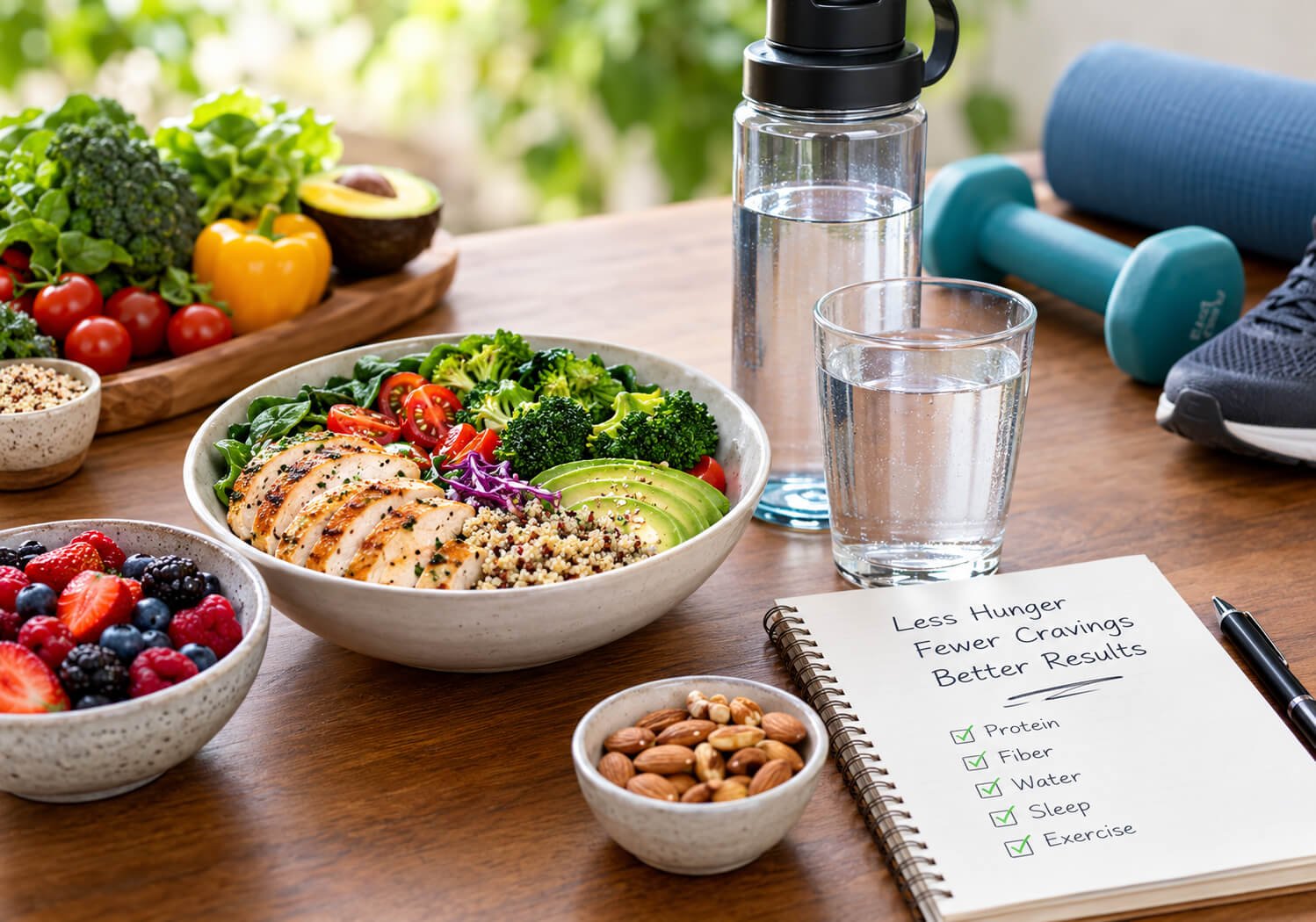
You start a weight loss journey with great momentum. You set your daily intake, prepare your meals, and hit your workouts. But three weeks into a calorie deficit, it strikes. Your stomach feels like a bottomless pit, and late-night cravings for sweet or salty snacks suddenly dominate your thoughts.
Hunger is not a failure of willpower; it is a primal biological response. When you drop calories to lose fat, your body activates protective pathways designed to keep your body weight stable. Understanding how to control hunger and cravings during weight loss comes down to managing physiological signals and psychological triggers through practical, evidence-based habits.
As a certified strength and conditioning coach, I have walked hundreds of clients through this exact hurdle. Hunger is an inevitable side effect of burning fat, but crippling appetite and unstoppable cravings are completely manageable. This guide provides actionable, science-backed strategies to suppress biological hunger, eliminate mental food urges, and maintain a sustainable calorie deficit without constant discomfort.
Quick Answer
To learn how to control hunger and cravings during weight loss, focus on eating 0.7–1.0 grams of protein per pound of body weight, prioritizing high-volume fiber-rich foods, sleeping 7–9 hours nightly, and practicing resistance training. Combining physical satiety strategies with stress management helps stabilize ghrelin (the hunger hormone) and keep appetite predictable throughout a calorie deficit.
Physical Hunger vs. Psychological Cravings: Knowing the Difference
Before you can tackle appetite challenges, you must identify what type of urge you are experiencing. The human brain processes physical needs and emotional desires through entirely distinct pathways.
Homeostatic Hunger (Physical Need)
Physical hunger, known in scientific terms as homeostatic hunger, is driven by energy depletion. When your blood glucose drops and your stomach empties, your gastrointestinal tract releases the hormone ghrelin. Ghrelin sends signals directly to the hypothalamus in the brain, alerting you that your body needs calories to sustain physiological function.
Physical hunger comes on gradually. It accepts a wide variety of nutritious options—like chicken, broccoli, or rice—and stops once your stomach stretches and gut hormones like Peptide YY (PYY) signal fullness.
Hedonic Hunger (Psychological Cravings)
Cravings are driven by hedonic hunger. This pathway is centered around pleasure and reward rather than energy needs. Hedonic hunger is governed by dopamine and neural reward circuits.
It appears suddenly and demands a specific hyper-palatable food, usually a combination of high fats and refined carbohydrates. A craving does not care if your stomach is physically full; it wants the sensory reward.
The Hormones Behind Appetite and Fat Loss
Successful weight management relies on balancing key hormones that dictate appetite, metabolic rate, and fat oxidation.
1. Ghrelin: The Hunger Hormone
Ghrelin is produced primarily in the stomach. When calories drop and stomach stretch decreases, ghrelin levels rise. Research indexed in PubMed shows that circulating ghrelin spikes before meals and drops significantly after food intake. During an extended calorie deficit, baseline ghrelin rises naturally as an evolutionary mechanism to protect against starvation.
2. Leptin: The Satiety Master
Leptin is secreted by fat cells (adipocytes) and communicates directly with the brain regarding your long-term energy stores. High leptin levels signal that you have ample stored energy, suppressing appetite.
As you lose body fat, total leptin levels drop. This drop signals energy deficiency to the brain, which increases hunger and slightly slows non-exercise physical activity.
3. Gut Peptides: PYY and GLP-1
Peptide YY (PYY) and Glucagon-like peptide-1 (GLP-1) are produced in the intestines when food arrives. These hormones slow gastric emptying, meaning food remains in your stomach longer, sending continuous fullness signals to the brain.
7 Science-Backed Strategies to Control Hunger and Cravings
Knowing how to control hunger and cravings during weight loss requires combining dietary structures, lifestyle habits, and targeted physical training.

Strategy 1: Prioritize Protein at Every Meal
Protein is the single most satiating macronutrient. Digesting protein requires significant energy through the thermic effect of food (TEF), and it stimulates the release of fullness hormones like PYY and GLP-1 while reducing ghrelin levels.
To maximize fullness during a diet, aim for 0.7 to 1.0 grams of protein per pound of body weight daily (1.5 to 2.2 grams per kilogram). For a 160 lb (72.5 kg) individual, this equals roughly 112 to 160 grams per day distributed across 3–4 meals.
For a deeper dive into protein’s appetite-suppressing mechanics, read our guide on how protein helps control hunger during weight loss.

Strategy 2: Leverage High-Volume, Fiber-Rich Foods
Volumetrics is a proven strategy for weight loss hunger management. By choosing low-calorie density, high-water, high-fiber foods, you physical fill the stomach without exceeding your target calorie limit. This physical stretch triggers mechanoreceptors in the stomach wall, signaling the vagus nerve to reduce appetite.
Soluble fiber absorbs water and forms a gel-like substance in the digestive tract, significantly slowing stomach emptying. You can explore the detailed science in our article on whether soluble fiber helps control appetite. Additionally, using natural dietary fibers like psyllium husk to feel full before meals can reduce pre-meal appetite.
Strategy 3: Drink Water Strategically Before Meals
Dehydration is often mistaken for hunger because the signals originate in similar brain regions. Drinking 16 to 20 oz (470 to 590 ml) of water roughly 20 to 30 minutes before a meal expands stomach volume and reduces total meal calorie intake.
Coach’s Tip: When a sudden craving hits, drink a 16 oz (470 ml) glass of cold water or plain green tea, and set a timer for 15 minutes. In more than half of all cases, the psychological urge fades once you get hydrated and shift your attention.
Strategy 4: Protect Your Sleep Architecture
Sleep loss wrecks metabolic and appetite regulation. Studies reviewed by Harvard Health demonstrate that sleeping fewer than 7 hours per night increases ghrelin secretion while reducing leptin sensitivity. This imbalance increases cravings for high-carbohydrate, energy-dense foods the following day.
To learn more about how sleep loss disrupts metabolic rate and appetite hormones, consult our comprehensive analysis on how sleep affects metabolism and weight management.
Strategy 5: Manage Chronic Stress and Cortisol
Chronic stress elevates cortisol, a hormone that promotes fuel intake and alters brain circuitry toward reward-seeking behavior. Elevated cortisol combined with a calorie deficit makes psychological cravings far harder to resist.

Strategy 6: Mindful Eating and Meal Pacing
Eating rapidly prevents gut hormones from signaling fullness to the brain, a process that takes roughly 15 to 20 minutes.
- Put your fork down between bites.
- Chew every bite 15 to 20 times.
- Remove screens, phones, and distracting media while eating.
- Rate your physical hunger on a scale of 1 to 10 before and halfway through meals.
Strategy 7: Smart Meal Timing and Consistency
Irregular eating patterns can cause unpredictable spikes in ghrelin. Eating at relatively consistent times conditions your body’s hormonal rhythm, establishing predictable hunger signals instead of random cravings throughout the afternoon.
Exercise Interventions: How Movement Suppresses Cravings
Exercise is often viewed solely as a tool for burning calories, but structured exercise plays a crucial role in appetite regulation.
Acute Exercise-Induced Anorexia
High-intensity interval training (HIIT) and moderate-to-heavy resistance training trigger a temporary reduction in hunger known as acute exercise-induced anorexia. During intense exercise, blood flow redirects from the gastrointestinal tract to working skeletal muscles. This temporarily suppresses circulating ghrelin while boosting gut hormones like PYY and GLP-1.
According to research from the American College of Sports Medicine (ACSM), incorporating structured resistance training preserves lean muscle tissue during weight loss, keeping your resting metabolic rate higher over time.
Weight Loss Exercise Guidelines
Sample Full-Body Workout Routine for Appetite Control
Here is a full-body strength program designed to preserve muscle, improve metabolic health, and help regulate appetite hormones.
Warm-Up (5–8 Minutes)
Perform each movement for 45 seconds:
- Bodyweight Squats
- Arm Circles & Torso Twists
- Mountain Climbers
- Banded Glute Bridges
The Workout Matrix
| Exercise | Sets | Reps | Rest Time | Focus Cue / Tempo |
| Dumbbell Goblet Squat | 3 | 8–12 | 90 sec | Chest high, knee tracking over 2nd toe. 3-sec lowering. |
| Dumbbell Romanian Deadlift | 3 | 10–12 | 90 sec | Hinge at hips, flat back, push glutes back. |
| Push-Ups (or Incline Push-Ups) | 3 | 8–15 | 60 sec | Core braced, elbows at 45-degree angle. |
| Single-Arm Dumbbell Row | 3 | 10–12 / side | 60 sec | Pull dumbbell toward hip, squeeze shoulder blade. |
| Plank Hold | 3 | 30–45 sec | 45 sec | Squeeze glutes, push floor away through forearms. |

Exercise Guide & Cues
1. Dumbbell Goblet Squat
- How to do it: Hold a dumbbell or kettlebell vertically against your upper chest. Stand with feet slightly wider than shoulder-width. Lower your hips back and down as if sitting into a chair until thighs are parallel to the floor. Drive through your midfoot to return to standing.
- Regression (Easier): Bodyweight Box Squat to a bench or chair.
- Progression (Harder): Increase weight or add a 2-second pause at the bottom of each rep.
2. Dumbbell Romanian Deadlift (RDL)
- How to do it: Stand tall holding a pair of dumbbells in front of your thighs, palm facing in. Keep your knees soft with a slight bend. Push your hips back while keeping the weights close to your legs. Lower until you feel a deep stretch in your hamstrings, then drive hips forward to stand.
- Regression (Easier): Single-dumbbell RDL or Glute Bridges on the floor.
- Progression (Harder): Single-leg Romanian Deadlift using one dumbbell.
Common Mistake: Avoid rounding your lower back during deadlifts or squatting your RDLs. The movement is a hip hinge, not a vertical squat. Rounding your spine transfers tension away from the hamstrings and glutes, raising your risk of lower back strain.
Troubleshooting Common Hunger & Craving Scenarios
Scenario 1: Late-Night Sweets Cravings
- The Root Cause: High stress, under-eating carbohydrates early in the day, or habituated reward behavior.
- The Solution: Save 150–200 calories from your daily target for a high-protein, pre-planned evening snack. Greek yogurt mixed with protein powder or a bowl of berries with cottage cheese hits the reward pathway while keeping blood sugar stable.
Scenario 2: Afternoon Energy Slump and Snacking
- The Root Cause: Blood sugar drops caused by ultra-processed, high-carbohydrate lunches lacking sufficient fiber and protein.
- The Solution: Build lunches around lean protein (at least 30–40g) and rich fiber sources like leafy greens or lentils. Swap refined grains for complex choices.
Scenario 3: Post-Workout Intense Hunger
- The Root Cause: Inadequate intra-workout hydration or waiting too long to eat post-exercise.
- The Solution: Sip water with electrolytes during training. Consume a balanced protein-and-carbohydrate meal within 60 minutes after finishing your session.
Nutritional Satiety Cheat Sheet
When structuring your daily meal plan, use satiety rankings to get the most fullness from your food choices. The Satiety Index, originally evaluated in clinical nutrition research published by PubMed Central, rates foods based on how full they keep subjects over a two-hour period per calorie consumed.
Frequently Asked Questions
Why am I hungrier on rest days than on workout days?
On rest days, your body is actively repairing muscle tissue broken down during exercise, a process that requires steady energy. Additionally, acute exercise suppresses ghrelin on training days. To prevent rest-day overeating, keep your protein intake consistent every day, regardless of your activity level.
Is it normal to feel hungry while losing weight?
Yes. A mild, predictable level of hunger is a natural sign that your body is in an energy deficit. However, severe hunger that disrupts sleep, focus, or mood usually means your calorie drop is too aggressive or your dietary fiber and protein intakes are too low.
How do I stop sugar cravings immediately?
When a sudden sugar craving strikes, eat a high-protein snack, drink a large glass of water, or step outside for a 10-minute walk. Removing yourself from the immediate environment breaks the habit loop and lowers the dopamine drive behind hedonic cravings.
Does drinking coffee suppress appetite?
Coffee can act as a mild, temporary appetite suppressant due to its caffeine content and impact on gut hormones. However, avoid relying on caffeine as a meal replacement, and stop consuming it 6 to 8 hours before bed so it doesn’t disrupt sleep and trigger stronger cravings the next day.
Should I eat when I have a strong craving?
If you suspect the craving is purely psychological, wait 15 to 20 minutes and drink water first. If it persists and turns into physical hunger, choose a balanced meal rich in protein and fiber. If you decide to enjoy a treat, portion out a small serving rather than eating directly from the package.
Conclusion
Mastering how to control hunger and cravings during weight loss is about working with your biology, not fighting it. By prioritizing protein at every meal, filling your plate with high-volume fiber, drinking water strategically, protecting your sleep, and managing daily stress, you can stabilize your appetite hormones and make your calorie deficit comfortable and sustainable.
Weight loss requires consistency over time. Use these evidence-based techniques to build a structured routine, keep hunger predictable, and reach your body composition goals without constant diet fatigue.