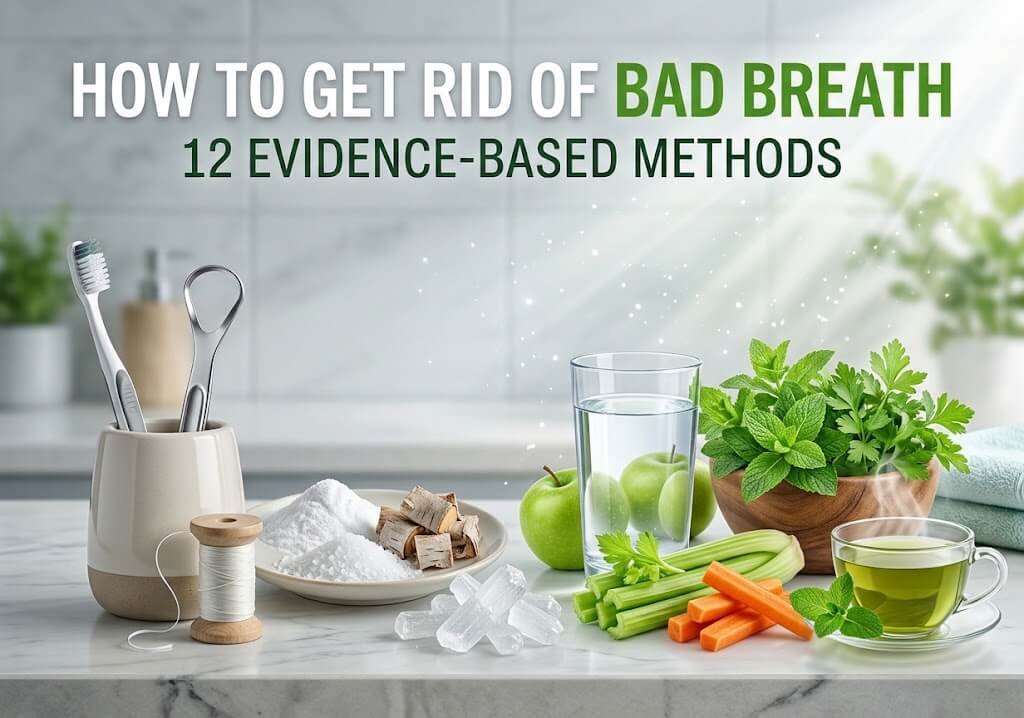
You brush your teeth, floss, maybe even use mouthwash—and yet that faint sulfur smell lingers. You’re not imagining it, and you’re not alone. Roughly 50% of adults report experiencing halitosis (the clinical term for chronic bad breath) at some point, according to the National Institute of Dental and Craniofacial Research (NIDCR). The good news: in most cases, the fix is straightforward, inexpensive, and lives in your daily routine rather than a fancy product aisle.
This guide walks you through exactly how to get rid of bad breath—starting with what’s actually happening in your mouth, moving through quick fixes you can use today, and ending with the longer-term habits that keep your breath fresh for good. No fluff, no 17-step routines. Just what works, backed by dental and medical research.
Quick Answer: To get rid of bad breath, brush your teeth and tongue twice daily for two minutes, floss once a day, stay hydrated to keep saliva flowing, and see a dentist for a cleaning if the smell persists. For immediate relief, chew sugar-free xylitol gum or rinse with an alcohol-free mouthwash. If bad breath continues despite good hygiene, see a doctor to rule out gum disease, acid reflux, or a respiratory issue.
What’s Actually Causing Your Bad Breath
Before you can fix the problem, you need to know where it’s coming from. In about 80–90% of cases, bad breath originates in the mouth itself, per research published in the Journal of Clinical Periodontology. Here’s the breakdown:
Primary (Oral) Causes
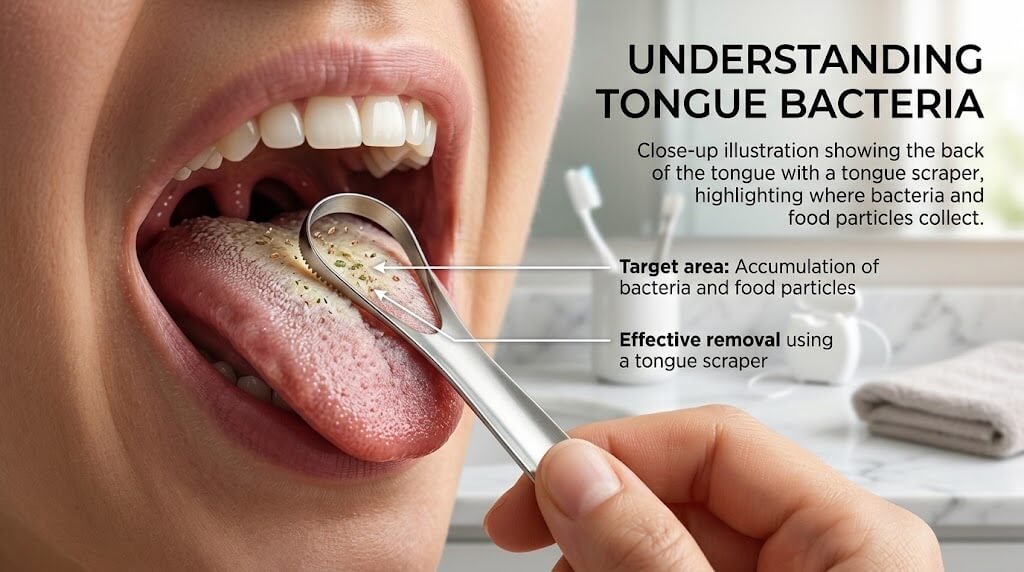
- Anaerobic bacteria on the tongue. The back of your tongue is a rough, bumpy surface where food particles and dead cells collect. Bacteria break these down and release volatile sulfur compounds (VSCs)—hydrogen sulfide and methyl mercaptan—that smell like rotten eggs or garbage.
- Dental plaque and gum disease. If plaque builds up along the gumline, it inflames the tissue. Periodontal (gum) disease creates tiny pockets where bacteria thrive and produce foul-smelling byproducts, according to the American Dental Association.
- Dry mouth (xerostomia). Saliva is your mouth’s natural cleaning system. When it dries out—overnight, from certain medications, or from breathing through your mouth—bacteria multiply faster and VSCs accumulate.
- Food particles stuck between teeth. A single piece of onion or garlic lodged between your molars can keep producing odor for hours.
Secondary (Non-Oral) Causes
- Post-nasal drip or sinus infections. Mucus dripping down the back of your throat feeds bacteria in the throat and tonsil area.
- Tonsil stones (tonsilloliths). Small, calcified deposits in the tonsil crypts that smell intensely bad.
- Gastroesophageal reflux disease (GERD). Stomach acid and partially digested food can travel up the esophagus, though this is a less common cause than people think.
- Medications. Drugs that reduce saliva (antihistamines, some blood-pressure meds, antidepressants) contribute to dry mouth.
- Systemic conditions. Uncontrolled diabetes, liver disease, or kidney disease can produce distinctive breath odors. If your breath smells sweet/fruity or ammonia-like, that warrants a doctor’s visit.
Immediate Fixes: How to Get Rid of Bad Breath Right Now
If you need fresh breath in the next five minutes—before a meeting, a date, or a phone call—here’s the sequence that actually works:
- Rinse with water or a baking-soda solution. Mix ½ teaspoon of baking soda in 4 oz (120 ml) of warm water and swish for 30 seconds. Baking soda raises the pH in your mouth, making it harder for acid-producing bacteria to survive.
- Scrape your tongue. Use a dedicated tongue scraper (or the back of a spoon) and pull from the back of the tongue forward, 3–5 passes. This physically removes the biofilm where most VSC-producing bacteria live.
- Chew sugar-free gum with xylitol. Xylitol has been shown to reduce oral bacteria and stimulate saliva flow, which washes away odor compounds, according to research in the Journal of the American Dental Association.
- Use an alcohol-free mouthwash. Alcohol-based rinses can dry the mouth further, making the problem worse within an hour. Look for a rinse with cetylpyridinium chloride (CPC) or zinc ions, which neutralize VSCs.
- Drink a full glass of water (8 oz / 240 ml). This rehydrates the oral cavity and dilutes concentrated odor compounds.
These steps buy you a few hours. For a lasting fix, you need the daily routine below.
Your Daily Oral Hygiene Routine (The Real Fix)
This is where most people fall short. The CDC’s oral health guidance emphasizes that brushing and flossing are the foundation of preventing bad breath. Here’s exactly how to do it:
Brushing (Twice Daily, 2 Minutes Each Time)
- Use a soft-bristle toothbrush. Hard bristles damage gums and don’t clean better.
- Angle the brush at 45° to the gumline and use short, gentle back-and-forth strokes.
- Don’t forget the chewing surfaces and the inside of your front teeth.
- Brush the back of your tongue for 10–15 seconds. This single step removes up to 70% of the bacteria responsible for odor, per a study in the Journal of Clinical Periodontology.
Flossing (Once Daily, Ideally Before Bed)
- Use 18 inches (45 cm) of floss. Wind most of it around your middle fingers.
- Gently slide the floss between teeth in a C-shape around each tooth.
- Go below the gumline—this is where trapped food and plaque produce odor.
- If you find flossing painful or your gums bleed consistently, that’s a sign of early gum inflammation. See your dentist.
Tongue Scraping (Once Daily, Morning)
- A dedicated tongue scraper (metal or plastic) outperforms brushing the tongue with a toothbrush.
- Start at the back (where the coating is thickest) and pull forward. Rinse the scraper between passes.
- Do 3–5 passes. You’ll notice a white/yellow coating coming off—that’s the bacterial biofilm.
Coach’s Tip: Think of your mouth like a gym floor. You wouldn’t just wipe the surface and call it clean; you’d scrub the grout, the corners, the drains. Your tongue’s back surface is the “grout” of your oral cavity. Most people skip it, and that’s exactly where the odor lives.
Hydration and Saliva Support
- Aim for at least 64 oz (1.9 L) of water daily. More if you exercise, live in a dry climate, or take medications that dry you out.
- Chew sugar-free xylitol gum after meals if you can’t brush. It stimulates saliva for 30–40 minutes.
- Avoid alcohol-based mouthwashes and excessive coffee, both of which reduce saliva.
Dietary and Lifestyle Changes That Reduce Bad Breath
What you eat and how you live directly affect your oral environment. These aren’t “nice-to-haves”—they’re the difference between a one-day fix and a permanent solution.
Foods and Habits to Limit
- Garlic, onions, and strong spices. The sulfur compounds are absorbed into your bloodstream and exhaled through your lungs, so brushing won’t fully mask them for 24–48 hours.
- Highly processed, sugary snacks. Sugar feeds the bacteria that produce VSCs. If you’re managing cravings, check out our guide on how to stop sugar cravings naturally for practical strategies that also protect your teeth.
- Alcohol and excessive coffee. Both dehydrate the mouth and reduce saliva.
- Smoking and vaping. Tobacco dries the mouth, inflames gums, and adds its own chemical odor. It also increases the risk of periodontal disease, which is a major bad-breath driver.
Foods That Help
- Crunchy fruits and vegetables (apples, celery, carrots). The mechanical action cleans tooth surfaces and stimulates saliva.
- Dairy products (cheese, yogurt). Casein in cheese helps form a protective film on teeth and reduces sulfur compounds.
- Green tea. Contains catechins with mild antibacterial properties. If you’re already using green tea for other health goals, our article on whether green tea extract boosts metabolism or suppresses appetite covers the research.
- Parsley, mint, and fennel seeds. Chewing a small sprig after a meal provides a temporary freshening effect and mild antibacterial action.
Lifestyle Factors
- Sleep position. Sleeping with your mouth open (common if you have nasal congestion) dries the oral cavity overnight. This is why “morning breath” is so intense. Using a humidifier in a dry bedroom can help.
- Stress and anxiety. Stress reduces saliva flow and can lead to “mouth breathing” or grinding teeth. If you notice bad breath flaring during high-stress periods, that’s a real physiological link, not just perception.
- Medication review. If you take multiple drugs that cause dry mouth, ask your pharmacist whether alternatives exist or whether a saliva-substitute product (like Biotene) would help.
When to See a Dentist or Doctor
Most bad breath is manageable at home. But you should book an appointment if:
- You’ve maintained the routine above for two weeks and the odor hasn’t improved.
- Your gums bleed easily, are red/swollen, or receding (signs of periodontal disease).
- You have persistent dry mouth despite drinking enough water.
- You notice white patches, sores, or lumps in your mouth that don’t heal within two weeks.
- Your breath smells distinctly sweet (possible uncontrolled diabetes), fishy (possible liver or kidney issue), or ammonia-like.
- You have chronic sinus congestion, post-nasal drip, or frequent acid reflux.
A dentist can identify plaque buildup, gum disease, or a cracked filling that’s trapping food. If the mouth checks out, your primary care doctor or an ENT specialist can look at the sinuses, tonsils, and esophagus.
Common Mistake: People assume bad breath is “just a mouth problem” and keep buying stronger mouthwashes or more mints. In reality, if the source is gum disease, a sinus infection, or acid reflux, no amount of mint will fix it. The right fix depends on the right diagnosis. See a professional before escalating to more products.
What Doesn’t Work (And Why)
- Alcohol-based mouthwashes as a primary strategy. They kill surface bacteria for 30 minutes but dry the mouth, creating a rebound effect where bacteria repopulate faster.
- Breath mints and sprays alone. They mask odor for 15–30 minutes but don’t reduce the bacterial load.
- Over-brushing or aggressive flossing. This irritates gums, increases bleeding, and can actually make odor worse by introducing more blood (a protein source for bacteria).
- Skipping the dentist for years. Tartar (calcified plaque) cannot be removed by brushing. Only a professional cleaning can remove it. If tartar is present, it harbors bacteria that produce odor no matter how well you brush at home.
- Relying on a single “miracle” supplement or spray. There is no pill that eliminates bad breath. The solution is mechanical (removing bacteria) and environmental (keeping the mouth moist and pH-balanced).
12 Methods Summarized: Your Action Checklist
| # | Method | Frequency | What It Does |
| 1 | Brush teeth (soft brush, 2 min) | 2×/day | Removes plaque and food debris |
| 2 | Brush/scrape tongue | 1×/day (AM) | Removes VSC-producing biofilm |
| 3 | Floss | 1×/day (PM) | Clears trapped particles below gumline |
| 4 | Rinse with alcohol-free mouthwash (CPC or zinc) | 1–2×/day | Neutralizes VSCs, reduces bacteria |
| 5 | Drink 64+ oz water daily | Ongoing | Maintains saliva flow |
| 6 | Chew xylitol gum after meals | 1–3×/day | Stimulates saliva, reduces bacteria |
| 7 | Limit garlic, onion, sugar, alcohol | Ongoing | Reduces odor-producing substrates |
| 8 | Eat crunchy produce (apples, celery) | Daily | Mechanical cleaning + saliva |
| 9 | Quit smoking/vaping | Ongoing | Reduces gum disease risk and dryness |
| 10 | Use a humidifier if sleeping with mouth open | Nightly | Prevents overnight dry mouth |
| 11 | See a dentist for cleaning/exam | Every 6 months | Removes tartar, catches gum disease early |
| 12 | See a doctor if odor persists >2 weeks | As needed | Rules out sinus, reflux, or systemic causes |

A Sample “Reset Week” for Stubborn Bad Breath
If your breath has been off for weeks and you want a structured plan, here’s a one-week protocol:
- Start the full routine (brush, floss, tongue scrape, water).
- Note what you eat, how much you drink, and whether you take any new medications.
- Book a dental cleaning if your last one was over 6 months ago.
- Introduce xylitol gum after lunch and dinner.
- Switch to an alcohol-free, zinc-based mouthwash.
- Add a glass of water between meals (aim for 6–8 glasses total).
- Is the odor noticeably reduced? If yes, maintain the routine.
- If no, bring your notes to your dentist or doctor. Mention the specific smell (sulfur, metallic, sweet, etc.), timing (worse in morning? after meals?), and any medications.
Who Should Be Extra Cautious
- Pregnant or postpartum individuals. Hormonal shifts increase gum inflammation (“pregnancy gingivitis”), which can worsen odor. Use a soft brush and see your dentist—routine cleanings are safe during pregnancy.
- People with diabetes. High blood sugar reduces saliva and increases infection risk. Uncontrolled diabetes can produce a fruity breath odor. Manage blood sugar with your care team.
- Polypharmacy is a leading cause of dry mouth. Talk to your pharmacist about a saliva-substitute or sugar-free lozenges.
- Anyone with a history of oral cancer or unexplained mouth sores. Persistent bad breath combined with a non-healing sore warrants prompt dental evaluation.
If you have any of the above conditions, check with your doctor or dentist before starting new products or routines.

FAQ
What causes bad breath that won’t go away despite brushing?
Persistent halitosis is most often caused by gum disease, a thick tongue coating, or a non-oral source like sinus infection or acid reflux. If two weeks of thorough brushing, flossing, and tongue scraping don’t help, see a dentist to rule out periodontal disease, then a doctor to check your sinuses and GI tract.
Does bad breath mean something is seriously wrong?
Usually, no. The vast majority of cases are linked to oral bacteria and dry mouth. However, a distinct sweet, fishy, or ammonia-like odor can signal diabetes, liver, or kidney issues. If the smell is unusual or accompanied by other symptoms, see a doctor.
How do I stop bad breath in the morning?
Morning breath is caused by reduced saliva flow during sleep. Brush and scrape your tongue right after waking, drink a full glass of water, and chew xylitol gum. If you sleep with your mouth open, a bedside humidifier and treating any nasal congestion can reduce the effect.
What foods cause the worst bad breath?
Garlic, onions, and cruciferous vegetables (broccoli, cauliflower) contain sulfur compounds that enter your bloodstream and are exhaled for up to 48 hours. Highly sugary and processed foods feed odor-producing bacteria. Alcohol and coffee dehydrate the mouth.
Can anxiety or stress cause bad breath?
Yes, indirectly. Stress reduces saliva production and can lead to mouth breathing or teeth grinding, both of which dry the oral cavity and allow bacteria to multiply. Managing stress through breathing exercises, adequate sleep, and regular physical activity can help.
Is mouthwash necessary if I brush and floss well?
It’s helpful but not strictly essential. An alcohol-free rinse with CPC or zinc adds a short-term VSC-neutralizing effect. However, it cannot replace mechanical cleaning (brushing, flossing, tongue scraping). If your routine is thorough, a rinse is a bonus, not a requirement.
Conclusion: How to Get Rid of Bad Breath for Good
Getting rid of bad breath isn’t about finding the right mint or the strongest mouthwash. It’s about removing the bacteria that produce sulfur compounds, keeping your mouth moist, and catching any underlying dental or medical issue early. The core routine—brush twice, floss once, scrape your tongue, drink water, see your dentist every six months—takes about seven minutes a day and addresses the root cause in the overwhelming majority of cases.
Start today. Buy a tongue scraper if you don’t have one, switch to an alcohol-free rinse, and book that dental cleaning you’ve been putting off. Give it two consistent weeks. If the smell is still there, that’s your signal to dig deeper with a professional, not to buy another product.
Your breath is a small thing, but it affects your confidence, your relationships, and your daily comfort. The fix is simple, it’s free or nearly free, and it’s entirely within your control.