
Blood flow is the engine behind nearly every function your body performs, and for men, healthy circulation directly affects energy, stamina, and sexual wellness. If you’ve been searching for how to improve male blood flow naturally without medication, you’re in the right place. You don’t need a prescription to get your arteries working better. What you do need is a consistent plan built on movement, nutrition, and lifestyle habits that support your vascular system from the inside out.
As a strength and conditioning coach, I work with men in their 30s, 40s, and 50s who want to feel more alive in the gym and outside it. The good news: your blood vessels respond to training. The endothelium—the thin inner lining of your arteries—produces nitric oxide, a molecule that tells your blood vessels to relax and widen. Regular exercise, the right foods, and smart daily habits all feed that pathway. This guide breaks down exactly what to do, how often, and what to expect.
Quick Answer: The most effective natural ways to improve male blood flow include 150+ minutes of moderate cardio per week (brisk walking, cycling, swimming), 2–3 sessions of compound resistance training, daily pelvic floor exercises, a diet rich in nitrates and omega-3s, quality sleep, and stress management. Most men notice improved circulation within 4–8 weeks of consistent training.

Why Blood Flow Matters for Men
Your cardiovascular system delivers oxygen and nutrients to every tissue in your body. The penile arteries, in particular, are narrow—about 1 to 2 millimeters (roughly 0.04 to 0.08 inches) in diameter. That means even a small amount of plaque buildup or reduced nitric oxide production can noticeably affect blood flow there before it shows up in larger vessels like the aorta.
Research published in the Journal of Sexual Medicine has linked poor endothelial function to erectile difficulties, often appearing years before a cardiac event. In other words, your blood flow is a window into your overall vascular health. Improving it isn’t just about one area of your body; it’s about keeping your entire circulatory system flexible and responsive.
The encouraging part: the endothelium is highly trainable. Studies in Medicine & Science in Sports & Exercise show that just 8 to 12 weeks of regular aerobic and resistance training can increase nitric oxide availability and reduce arterial stiffness in previously sedentary men. You don’t need to run marathons. You need consistency.
The 7 Natural Methods to Improve Blood Flow
1. Zone 2 Cardiovascular Training
Zone 2 cardio is the single most effective way to boost your body’s nitric oxide production over time. It means exercising at a pace where you can hold a conversation but you’re clearly working—roughly 60 to 70% of your maximum heart rate. For most men between 35 and 55, that lands around 110 to 135 beats per minute, but the best gauge is the “talk test.”
What to do:
- Brisk walking on a slight incline: 30 to 45 minutes, 4 to 5 days per week
- Cycling at a steady, conversational pace: 40 to 60 minutes, 3 to 4 days per week
- Swimming at a moderate pace: 30 to 45 minutes, 2 to 3 days per week
The U.S. Department of Health and Human Services recommends at least 150 minutes of moderate-intensity aerobic activity per week for adults, per the 2018 Physical Activity Guidelines for Americans. Zone 2 work hits that target while keeping joint stress low.
Easier version: Walk 20 minutes at a comfortable pace on flat ground. Focus on steady breathing through your nose.
Harder version: Add 2 to 3 intervals of 3 minutes at a “hard but sustainable” pace (about 85% max HR) within a 45-minute session.
Coach’s Tip: Don’t skip the easy days. The adaptation in your blood vessels happens during the recovery between sessions. If you go all-out every workout, your body spends more energy repairing muscle than building vascular capacity.
2. Resistance Training with Compound Movements
Lifting weights isn’t just about building muscle. When you perform large compound movements—squats, deadlifts, hip thrusts, rows—you create significant pressure changes in your torso and legs that “pump” blood through your vascular system. The repeated expansion and compression of large muscle groups acts like a second heart, pushing deoxygenated blood back toward the heart and pulling fresh oxygenated blood into working tissue.
The NSCA’s guidelines on resistance training recommend 2 to 3 full-body sessions per week for general health, with 8 to 12 exercises targeting major muscle groups. For blood flow specifically, prioritize movements that load the glutes, hamstrings, and quads, since the iliac and femoral arteries run directly through those regions.
Sample compound movements:
- Barbell back squat: 3 sets × 8–12 reps, 90–150 lb (41–68 kg), 90-second rest
- Romanian deadlift: 3 sets × 10–12 reps, 135–225 lb (61–102 kg), 90-second rest
- Barbell hip thrust: 3 sets × 10–15 reps, 135–225 lb (61–102 kg), 60-second rest
- Bent-over barbell row: 3 sets × 10–12 reps, 95–155 lb (43–70 kg), 60-second rest
- Walking lunges: 3 sets × 12 steps per leg, 45–70 lb (20–32 kg) dumbbells, 60-second rest

Easier version: Replace the barbell squat with a goblet squat using a 25–35 lb (11–16 kg) dumbbell held at your chest. Replace the Romanian deadlift with a bodyweight glute bridge.
Harder version: Add a 5-second pause at the bottom of the squat (5-1-X tempo) and increase load by 5–10% per week.
Common Mistake: Grinding out reps with poor form. If your lower back rounds during a deadlift or your knees cave inward during a squat, you’re not building healthy circulation—you’re creating shear stress on your joints. Drop the weight, reset your form, and go lighter. Your arteries will thank you.
3. Pelvic Floor (Kegel) Exercises
This is the step most men skip, and it’s arguably the most directly relevant to penile blood flow. The pelvic floor muscles—specifically the bulbocavernosus and ischiocavernosus—help trap blood in the erectile chambers. Weak pelvic floor muscles mean blood leaks out faster than it fills in, making it harder to maintain a firm erection.
A 2015 study in Urology found that men who performed structured pelvic floor training reported significant improvements in erectile function compared to a control group.
How to do a male Kegel correctly:
- Sit on the edge of a chair, feet flat on the floor.
- Identify the muscles you’d use to stop urination mid-stream. (Do this once to locate them; don’t make it a habit during urination.)
- Contract those muscles and hold for 5 seconds.
- Relax completely for 5 seconds.
- That’s one rep.
Prescription: 3 sets of 10 reps, 3 times per day (morning, midday, evening). Total: 90 contractions per day. Keep it consistent for at least 6 weeks before expecting noticeable changes.
Easier version: Hold for 3 seconds, relax for 5. Start with 2 sets of 5 reps per day.
Harder version: Hold for 10 seconds, relax for 5. Add a “quick flick” at the end of each hold—a rapid 1-second squeeze and release.
4. Dynamic Warm-Ups and Mobility Work
Before any cardio or lifting session, spend 5 to 10 minutes on dynamic movements that increase core temperature and open up the hip and thoracic spine. This primes your blood vessels for dilation and reduces the risk of a sudden blood pressure spike when you start lifting.
A 7-minute warm-up routine:
- Leg swings (front-to-back and side-to-side): 10 per leg
- Hip circles: 10 each direction
- World’s greatest stretch: 5 per side
- Cat-cow on all fours: 10 reps
- Inchworms (walk hands out to plank): 5 reps
- Bodyweight squat to calf raise: 10 reps
This routine gets blood moving through the iliac, femoral, and popliteal arteries before you load them with weight.
5. Nutrition That Supports Vascular Health
You can’t out-train a diet that clogs your arteries. Two nutrients deserve special attention for blood flow:
Dietary nitrates. Leafy greens like spinach, arugula, and romaine are rich in nitrate, which your gut bacteria convert to nitric oxide. A 2011 study in The American Journal of Clinical Nutrition showed that a nitrate-rich beet juice drink lowered blood pressure and improved exercise efficiency in healthy adults. Aim for a serving of dark leafy greens at lunch or dinner most days.
Omega-3 fatty acids. Fatty fish (salmon, mackerel, sardines) 2 to 3 times per week provides EPA and DHA, which support endothelial function and reduce low-grade inflammation. If you don’t eat fish regularly, a quality fish oil supplement providing 1,000 to 2,000 mg of combined EPA/DHA daily is a reasonable alternative.
Other dietary priorities:
- Berries (blueberries, strawberries) for antioxidant protection of the endothelium
- Garlic and onions for their sulfur compounds, which support nitric oxide synthesis
- Dark chocolate (70%+ cacao) in moderation—about 1 ounce (28 g) daily
- Limit processed meats, excess sodium, and refined sugars, which promote arterial stiffness
If you’re considering adding a targeted supplement to your routine, it’s worth understanding what the research actually says about ingredients like L-arginine and its role in blood flow and erectile function.
6. Stress Management and Quality Sleep
Chronic stress keeps your sympathetic nervous system in “fight or flight” mode. That means your blood vessels stay constricted, your blood pressure runs higher, and your nitric oxide gets broken down faster by oxidative stress. Over time, this accelerates arterial stiffening.
The CDC’s physical activity and health guidelines emphasize that reducing sedentary time and managing stress are both critical components of cardiovascular health.
Practical stress-reduction habits:
- 10 minutes of box breathing (inhale 4 sec, hold 4, exhale 4, hold 4) before bed
- A 15-minute walk after dinner, no phone
- Limit alcohol to 2 or fewer drinks on any given day
- Get 7 to 9 hours of sleep per night. Poor sleep is linked to higher blood pressure and reduced endothelial function.
If you’ve noticed that stress or poor sleep is also affecting your libido or energy, it’s worth reading about how stress and poor sleep can lower male libido to understand the full picture.
7. Hydration and Daily Movement Habits
Dehydration thickens your blood, making it harder for your heart to push it through narrow vessels. Aim for at least 64 to 96 ounces (1.9 to 2.8 liters) of water daily, more on training days or in hot weather.
Beyond your structured workouts, reduce prolonged sitting. If your job keeps you at a desk, stand up and walk for 2 to 3 minutes every 45 to 60 minutes. A 2020 review in British Journal of Sports Medicine highlighted that even 2 to 3 minutes of light walking after sitting can improve blood flow in the lower extremities and reduce the metabolic effects of prolonged inactivity.

A Sample Weekly Routine for Better Circulation
Here’s a practical 7-day plan you can start this week. No gym membership required, though a few dumbbells or a barbell make the resistance days easier.
| Day | Activity | Duration | Notes |
| Monday | Zone 2 brisk walk or cycling | 40 min | Conversational pace |
| Tuesday | Full-body resistance (squats, RDLs, rows, hip thrusts) | 45 min | 3×8–12, 90-sec rest |
| Wednesday | Zone 2 swimming or cycling | 35 min | Steady, easy |
| Thursday | Pelvic floor + dynamic mobility + light walk | 30 min | Kegels 3×10, warm-up routine |
| Friday | Full-body resistance (lunges, deadlifts, rows, hip thrusts) | 45 min | 3×10–12, 60-sec rest |
| Saturday | Longer Zone 2 walk or hike | 60 min | Outdoor, varied terrain |
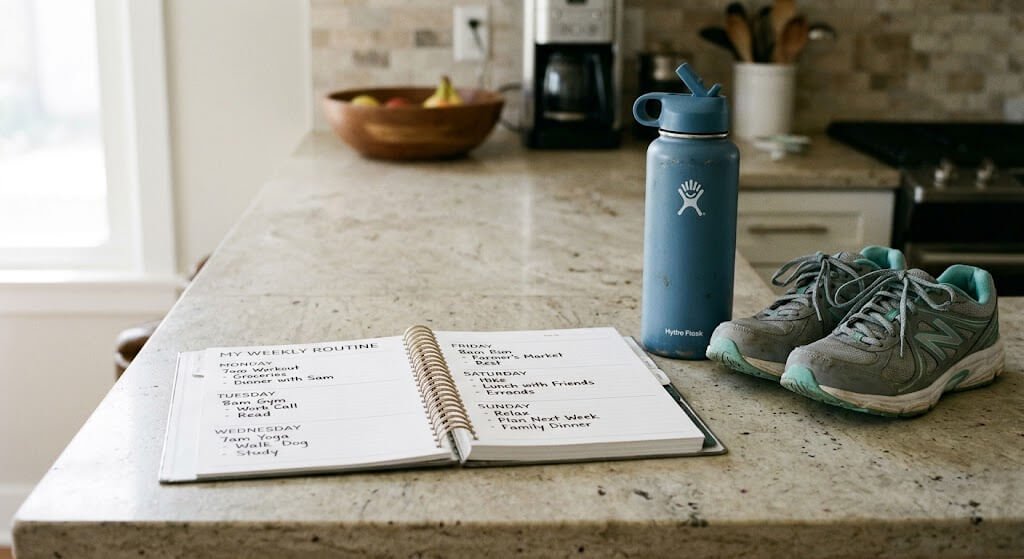
| Sunday | Rest, 10-min box breathing, gentle stretching | 20 min | Full recovery |
Progression plan:
- Weeks 1–4: Focus on consistency. Hit every session. Keep weights moderate.
- Weeks 5–8: Add 5–10% to your barbell lifts. Extend your Zone 2 walks by 5 minutes.
- Weeks 9–12: Introduce 2 short HIIT intervals (30 seconds hard, 90 seconds easy) into one cardio session per week.
If you want to pair this routine with broader energy and stamina strategies, check out this guide on how to increase energy and stamina naturally.
What to Avoid
A few habits actively work against your blood flow:
- Sedentary stretches longer than 30 minutes. Sitting for hours compresses the iliac veins and reduces venous return. Break it up.
- Excess alcohol. More than 2 drinks a day raises blood pressure and impairs endothelial function.
- Smoking or vaping. Nicotine and combustion byproducts directly damage the endothelium and reduce nitric oxide. This is the single worst habit you can have for circulation.
- Chronic overtraining without recovery. More isn’t better. If you’re sore for 5 days straight, you’re not building vascular capacity—you’re accumulating inflammatory stress.
- Highly processed, sodium-heavy diets. Excess sodium raises blood pressure and makes your arteries stiffer over time.
Safety Notes and When to See a Doctor
This guide covers general, low-risk strategies for healthy adults. If you experience chest pain, dizziness, sudden swelling in one leg, or a noticeable drop in blood pressure, stop exercising and see a doctor. If you have a diagnosed cardiovascular condition, are on blood-thinning medication, or are over 65 and new to exercise, get clearance from your physician before starting a new training program.
If you’re a man over 40 noticing changes in your energy, libido, or overall vitality, it’s worth understanding what causes low libido in men after 40 so you can address the root cause rather than just the symptom.
This article is for general information and is not a substitute for advice from a doctor or physical therapist.
FAQ
How long does it take to see improved blood flow from exercise?
Most men notice a subjective improvement in energy and circulation within 2 to 4 weeks of consistent Zone 2 cardio and resistance training. Measurable changes in endothelial function (nitric oxide availability, arterial stiffness) typically appear on the order of 8 to 12 weeks, according to research in Medicine & Science in Sports & Exercise.
Can walking alone improve male blood flow enough?
Yes, brisk walking at a Zone 2 pace for 30 to 45 minutes, 5 days a week, is sufficient to improve cardiovascular fitness and endothelial function in previously sedentary men. It’s the most accessible form of training. Adding resistance work 2 days per week will accelerate results, particularly for pelvic and lower-body circulation.
What is the best time of day to exercise for blood flow?
There’s no single “best” time. Morning exercise may help lower blood pressure for the rest of the day, while evening exercise can reduce stress. The most important factor is consistency. Pick the time you’ll actually stick with, and train then.
Do pelvic floor exercises really help with erections?
Yes. Structured pelvic floor training (3 sets of 10 reps, 3 times daily) has been shown in peer-reviewed urology research to improve erectile function in men with mild to moderate erectile difficulties. The muscles help maintain the blood “lock” in the erectile chambers.
Should I take a nitric oxide supplement instead of exercising?
Supplements like L-citrulline or L-arginine may provide a small, short-term boost to nitric oxide, but they don’t replicate the long-term structural and functional adaptations that regular exercise produces. Exercise changes your endothelium; a pill doesn’t. If you do consider a supplement, understand the evidence behind L-arginine for blood flow before spending your money.
Is it safe to combine this routine with a weight-loss plan?
Yes. In fact, moderate caloric restriction combined with regular exercise tends to improve blood flow more than either alone, because it reduces visceral fat and systemic inflammation. Just make sure you’re eating enough protein (about 0.7 to 1 gram per pound of body weight) to preserve muscle during a deficit.
Conclusion: Your Blood Vessels Are Trainable
How to improve male blood flow naturally without medication comes down to a simple truth: your vascular system responds to the demands you place on it. Consistent Zone 2 cardio keeps your endothelium producing nitric oxide. Compound resistance training pumps blood through your lower-body arteries. Pelvic floor work strengthens the muscles that trap blood where you need it. Good nutrition, sleep, and stress management protect the gains you make in the gym.
You don’t need a pill, a procedure, or a $200 supplement stack. You need 30 to 45 minutes a day, five or six days a week, and a few weeks of patience. Start with the walking. Add the lifts. Do the Kegels. Eat the greens. Sleep well. In 8 to 12 weeks, you’ll feel the difference in your energy, your stamina, and your overall sense of being alive.