
A weak or slow urine stream is one of the most common complaints men bring to a urologist, and it’s usually tied to benign prostatic hyperplasia (BPH)—a non-cancerous enlargement of the prostate gland that presses on the urethra. Before reaching for a bottle of pills, it’s worth understanding what’s happening in the body and which natural supplements for weak urine stream in men have any real research behind them.
This guide walks through the most studied herbal and nutritional options, what the evidence does and doesn’t support, practical dosing guidance, and the safety considerations you need before adding anything new to your routine. The goal is to give you a clear, honest picture so you can make an informed conversation with your doctor.
Quick Answer: The most studied natural supplement for a weak urine stream is saw palmetto (Serenoa repens), with pygeum africanum and pumpkin seed oil as secondary options. Evidence is mixed: some small trials show modest improvements in flow rate and symptom scores, while larger meta-analyses find effects similar to placebo. No supplement replaces medical evaluation. See a urologist to rule out infection, strictures, or other causes before starting any supplement regimen.
Why Men Experience a Weak Urine Stream
As men age, the prostate gland can gradually enlarge. The prostate sits just below the bladder and wraps around the urethra—the tube that carries urine out of the body. When the gland grows, it narrows the urethral passage, creating resistance. The result: a thin, slow, or “sputtering” stream, difficulty starting urination (hesitancy), a feeling of incomplete emptying, and waking up multiple times at night to go (nocturia).
The American Urological Association estimates that BPH affects roughly half of men by age 60 and about 90% by age 85, though not all men develop noticeable symptoms. A CDC fact sheet on common health conditions in older adults notes that lower urinary tract symptoms (LUTS) are among the top reasons men over 50 visit a primary care provider.
A weak stream is not always BPH. Urethral strictures, bladder outlet obstruction from other causes, neurological issues, or (less commonly) prostate cancer can produce similar symptoms. That’s why a urologist will typically order a urinalysis, a digital rectal exam, and sometimes an ultrasound or uroflowmetry test before recommending any treatment—natural or otherwise.
The Evidence at a Glance
Below is a summary of the most frequently discussed natural supplements for weak urine stream in men and where the research stands.
| Supplement | Mechanism (proposed) | Evidence Strength | Typical Dose Studied |
| Saw palmetto | Inhibits 5-alpha reductase; anti-inflammatory | Mixed; meta-analyses lean toward no significant benefit over placebo | 320 mg/day (160 mg × 2) |
| Pygeum africanum | Anti-inflammatory; may reduce prostate swelling | Modest; small trials show symptom improvement | 50–200 mg/day (standardized extract) |
| Pumpkin seed oil | May relax smooth muscle; anti-androgenic | Limited; small open-label studies | 1–2 tablespoons (15–30 mL) or 500 mg capsules |
| Stinging nettle root | May bind sex-hormone-binding globulin (SHBG) | Very limited; mostly combined with saw palmetto | 100–160 mg/day (extract) |
| Beta-sitosterol | Anti-inflammatory; may reduce LUTS scores | Small positive trials; not well-replicated | 60–130 mg/day |
| Lycopene | Antioxidant; may support prostate cell health | Observational only; no RCTs for LUTS | 15–30 mg/day (from tomatoes or supplement) |
| Zinc | Cofactor in prostate tissue; antioxidant | Indirect; deficiency linked to prostate issues | 15–30 mg/day |
| Vitamin D | Receptor present in prostate tissue | Observational; deficiency associated with higher BPH risk | 1,000–2,000 IU/day |
The table above reflects what published research has examined. “Mixed” or “limited” does not mean “useless”—it means the data is not strong enough to make a firm recommendation. More and better-designed trials are needed.
The Most Studied Options, in Detail
Saw Palmetto (Serenoa repens)
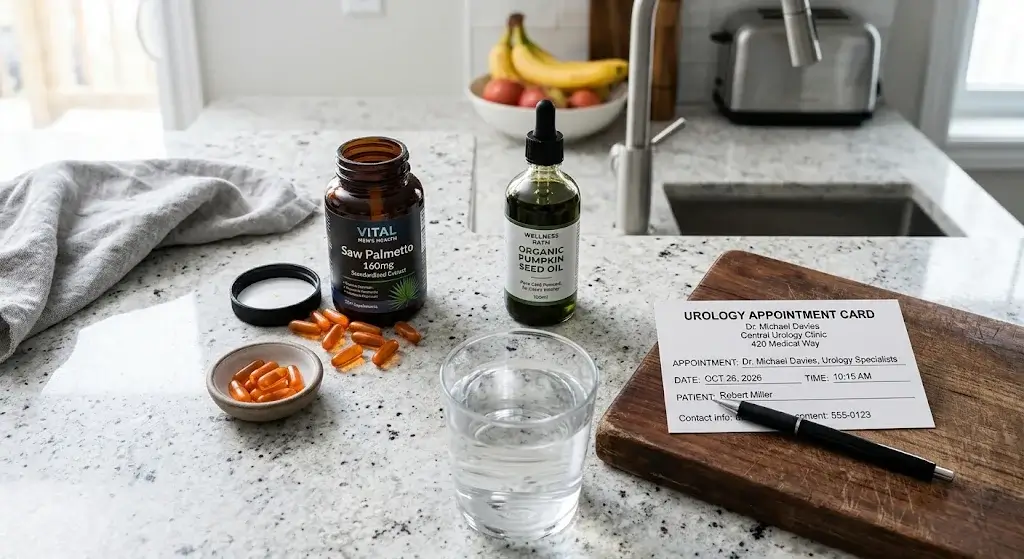
Saw palmetto is the herbal supplement most often recommended for BPH-related urinary symptoms. The theory is that it inhibits the enzyme 5-alpha reductase, which converts testosterone to dihydrotestosterone (DHT). Less DHT may mean less prostate growth over time. It also has anti-inflammatory properties that could reduce swelling around the urethra.
The National Center for Complementary and Integrative Health (NCCIH), part of the NIH, notes that saw palmetto research for BPH has produced conflicting results. A 2013 Cochrane systematic review of 16 randomized controlled trials found no significant difference between saw palmetto and placebo for symptom scores, maximum urine flow rate, or prostate size. However, some individual trials—particularly smaller ones using whole-fruit extract rather than isolated compounds—reported modest improvements in the International Prostate Symptom Score (IPSS).
Practical note: If you and your doctor decide to try saw palmetto, the most studied dose is 320 mg per day of a standardized whole-fruit extract (160 mg twice with meals). Give it 4–8 weeks before judging whether you notice a change in stream strength or frequency.
Pygeum Africanum
Pygeum is the bark extract of the African plum tree. Its proposed mechanism is anti-inflammatory: it may reduce the edema (swelling) in the prostate stroma that contributes to urethral compression. A 2012 meta-analysis in the Journal of Urology found that pygeum produced small but statistically significant improvements in IPSS scores and nocturia frequency compared to placebo, though the absolute benefit was modest.
The NCCIH lists pygeum as having “insufficient evidence” for BPH but acknowledges that several small European trials showed benefit. Typical studied doses range from 50 to 200 mg per day of a standardized extract (usually 70% pygeum triterpenes).
Pumpkin Seed Oil
Pumpkin seed oil (from Cucurbita pepo) has a different angle. It may relax the smooth muscle of the bladder neck and prostate capsule, reducing the “grip” on the urethra. A small 2014 trial in Urology found that 1.3 tablespoons (20 mL) of pumpkin seed oil daily for 4 weeks improved IPSS scores in men with mild-to-moderate BPH. The sample was small (40 men), so the finding needs replication.
You can take it as a tablespoon of cold-pressed oil with food or in 500 mg capsule form. It’s generally well-tolerated, with occasional mild GI upset.
Stinging Nettle Root (Urtica dioica)
Stinging nettle root is rarely studied alone for BPH. Most trials pair it with saw palmetto in a combination formula. The proposed mechanism involves binding to sex-hormone-binding globulin (SHBG), which could theoretically alter the local hormone environment in prostate tissue. The evidence is too thin to draw conclusions. If you choose a combination product, look for one that lists both ingredients with standardized doses.
Beta-Sitosterol
Beta-sitosterol is a plant sterol found in many fruits, vegetables, and nuts. A 2010 trial published in Urology found that 130 mg three times daily for 90 days improved IPSS scores and maximum flow rate in men with BPH. The mechanism is thought to be anti-inflammatory rather than anti-androgenic. The trial was small (100 men), and the long-term safety data is limited.
Lycopene, Zinc, and Vitamin D
These three are less about directly improving urine flow and more about supporting overall prostate health.
- Lycopene (the red pigment in tomatoes) is a potent antioxidant. Observational studies have linked higher lycopene intake to a lower risk of BPH and prostate cancer, but no randomized trial has tested it specifically for urinary flow.
- Zinc is concentrated in prostate tissue and acts as an antioxidant. Deficiency is uncommon in men eating a varied diet, but a review in the Journal of Nutritional Biochemistry notes that adequate zinc status supports normal prostate cell function.
- Vitamin D receptors are present in prostate tissue. Several cross-sectional studies have found that men with vitamin D deficiency have a higher prevalence of BPH. Correcting a documented deficiency (via blood test) is reasonable; megadosing without a deficiency is not supported.
How to Apply This: A Practical Framework
If your urologist has confirmed mild-to-moderate BPH and you’d like to try a natural approach before or alongside medication, here’s a sensible sequence:
- Get a baseline. Ask your doctor for a uroflowmetry test (measures stream speed), a post-void residual ultrasound (how much urine is left after you go), and a PSA blood test. This gives you objective numbers to track.
- Start with one supplement. Pick the one with the strongest evidence for your specific symptom. For a weak stream, saw palmetto or pygeum are the most studied. Take it consistently for at least 6–8 weeks.
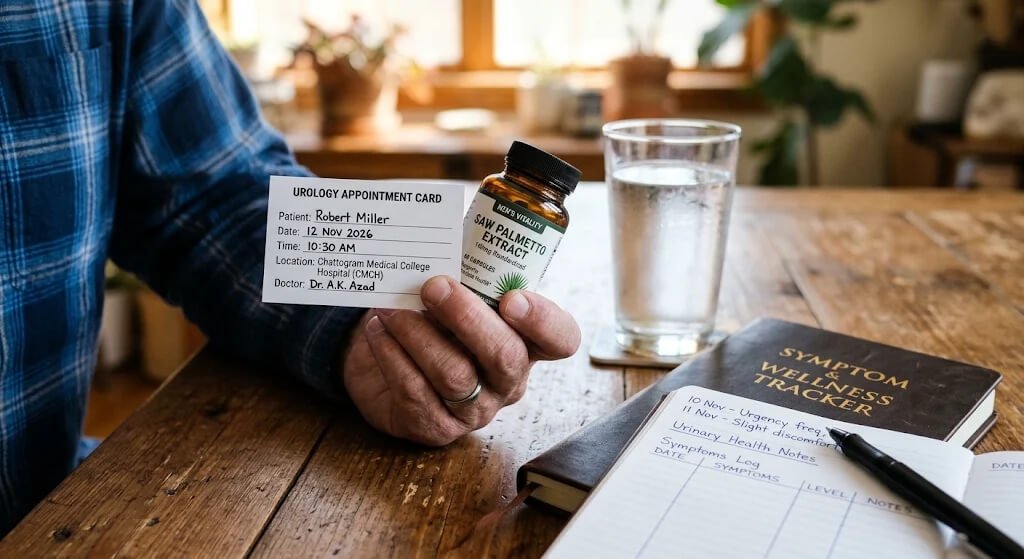
- Track your symptoms. Use a simple log: stream strength (1–5), time to start urinating, number of nighttime trips, and any dribbling. The IPSS questionnaire (available online) is a good structured tool.
- Reassess at 8–12 weeks. Repeat the uroflowmetry and post-void residual. If there’s no measurable change, the supplement is unlikely to help you further.
- Add a second option only if needed. Some men combine saw palmetto with pumpkin seed oil. Avoid stacking five or six “prostate blends” at once—it makes it impossible to know what’s working and increases the chance of interactions.
- Revisit your doctor every 6–12 months. BPH is progressive. A supplement that helps at 55 may not be enough at 62.
Coach’s Tip: Think of supplements the way you’d think of a new accessory in your gym bag. They can add a small edge, but they won’t replace the fundamentals—in this case, a proper diagnosis, regular urological check-ups, and (if symptoms worsen) evidence-based medication or procedures. Don’t skip your annual PSA and digital rectal exam because you’re “taking saw palmetto.”
Safety and Drug Interactions
Natural does not automatically mean safe, especially when combined with prescription medications.
- Saw palmetto may interact with blood thinners (warfarin, apixaban) and hormonal contraceptives. It can also lower blood pressure slightly. Tell your pharmacist if you take any of these.
- Pygeum can increase the risk of bleeding when combined with NSAIDs (ibuprofen, naproxen) or anticoagulants.
- Beta-sitosterol can interfere with the absorption of fat-soluble vitamins (A, D, E, K) and some cholesterol-lowering drugs (cholestyramine).
- Zinc above 40 mg/day long-term can deplete copper. If you supplement zinc, keep it at 15–30 mg and don’t exceed 40 mg without medical supervision.
- Vitamin D in very high doses (above 4,000 IU/day without monitoring) can raise blood calcium to dangerous levels.
If you are on finasteride, dutasteride, tamsulosin, or any other BPH medication, talk to your urologist before adding herbal supplements. The combination effects are not well-studied.
Common Mistake: Buying a “prostate health” gummy or multi-ingredient blend that lists 10 herbs at sub-therapeutic doses (e.g., 50 mg of saw palmetto instead of the studied 320 mg). You’re paying for marketing, not for a dose that has any evidence behind it. Read the label, check the mg per serving, and compare it to the doses used in the clinical trials.
Lifestyle Factors That Support Urinary Flow
Supplements are one small lever. The bigger levers are lifestyle habits that reduce bladder and prostate irritation:
- Pelvic floor exercises (Kegels). Contrary to what you might expect, weak pelvic floor muscles can contribute to incomplete bladder emptying. A 2016 systematic review in BJU International found that pelvic floor muscle training improved LUTS scores in men with BPH. Do 3 sets of 10 slow contractions (hold 5 seconds, relax 5 seconds) twice daily.
- Limit evening fluid intake. Cut back on fluids 2–3 hours before bed to reduce nocturia.
- Moderate caffeine and alcohol. Both irritate the bladder and can worsen frequency and urgency.
- Stay physically active. The HHS 2018 Physical Activity Guidelines for Americans recommend at least 150 minutes of moderate aerobic activity per week. Regular movement supports circulation, reduces inflammation, and helps maintain a healthy weight—excess abdominal fat is linked to worse LUTS.
- Avoid prolonged sitting. If your job keeps you in a chair for 8+ hours, stand and walk for 2–3 minutes every 45 minutes to reduce pelvic congestion.
- Don’t “hold it” for long periods. Regular, timely urination keeps the bladder muscle healthy.

When to See a Doctor (Not Just a Supplement Shelf)
A weak urine stream is usually BPH, but it can also signal:
- Urinary tract infection
- Urethral stricture (scar tissue narrowing the urethra)
- Bladder stones
- Neurological conditions (diabetic neuropathy, multiple sclerosis, spinal cord injury)
- Prostate cancer (less common, but must be ruled out)
Red flags that warrant an urgent urology visit:
- Sudden inability to urinate (acute urinary retention)
- Blood in the urine (hematuria)
- Unexplained weight loss or bone pain
- A stream that has changed dramatically over a few weeks
- Fever, chills, or pain with urination
If any of these are present, skip the supplement aisle and call your doctor.
Does saw palmetto actually help with a weak urine stream?
The evidence is mixed. A 2013 Cochrane review of 16 trials found no significant benefit over placebo for flow rate or symptom scores. However, some smaller studies using whole-fruit extract reported modest improvements. If you try it, use 320 mg/day for at least 8 weeks and track your symptoms objectively.
Can natural supplements replace prescription BPH medication?
For mild symptoms, some men prefer to try supplements first under a doctor’s guidance. For moderate-to-severe BPH, or when post-void residual is high, prescription alpha-blockers (tamsulosin) or 5-alpha reductase inhibitors (finasteride) have far stronger evidence. Supplements should not replace proven medication without a urologist’s approval.
How long do BPH supplements take to work?
Most trials use 8–12 weeks as the assessment window. You’re unlikely to notice a meaningful change in stream strength after 2–3 days. Give a supplement a full 6–8 weeks before deciding it “doesn’t work.”
Are natural BPH supplements safe to take long-term?
Saw palmetto and pygeum have been used for decades with generally good tolerability. Long-term safety data beyond 1–2 years is limited. The main concerns are drug interactions (blood thinners, hormonal medications) and the lack of standardized manufacturing quality. Choose a product that’s been third-party tested (USP, NSF, or ConsumerLab verified).
What is the best natural remedy for a weak urine stream in men over 50?
There is no single “best” remedy. Saw palmetto and pygeum have the most clinical data. Pumpkin seed oil and beta-sitosterol show promise in small trials. The most effective approach combines one or two well-dosed supplements with pelvic floor exercises, regular urological check-ups, and lifestyle changes (weight management, limiting evening fluids, regular exercise).
Can I take zinc and vitamin D for prostate health even if I don’t have a deficiency?
If your blood work shows normal levels, megadosing zinc or vitamin D offers no proven additional benefit and carries risks (copper depletion, hypercalcemia). Get a simple blood test first. Supplement only to correct a documented deficiency, at the dose your doctor recommends.
Conclusion
A weak urine stream is a common, manageable issue, and the search for natural supplements for weak urine stream in men is understandable—many men want to avoid medication if they can. The honest summary from the research: saw palmetto, pygeum, and pumpkin seed oil have the most (though still modest) evidence behind them. They may provide a small improvement in symptom scores for some men with mild BPH, but they are not cures, and they are not substitutes for a proper urological evaluation.
Start with a diagnosis, not a supplement. Then, if your urologist agrees that your BPH is mild, you can try a well-dosed supplement for 8 weeks while tracking your symptoms. Pair it with pelvic floor exercises, regular movement, and smart fluid habits. Recheck in at 3–6 months. If your stream worsens, your nighttime trips increase, or you develop any red-flag symptoms, go back to the doctor.
No bottle on the shelf can replace a good urologist. Use the supplements as a small supporting tool, not a standalone solution.