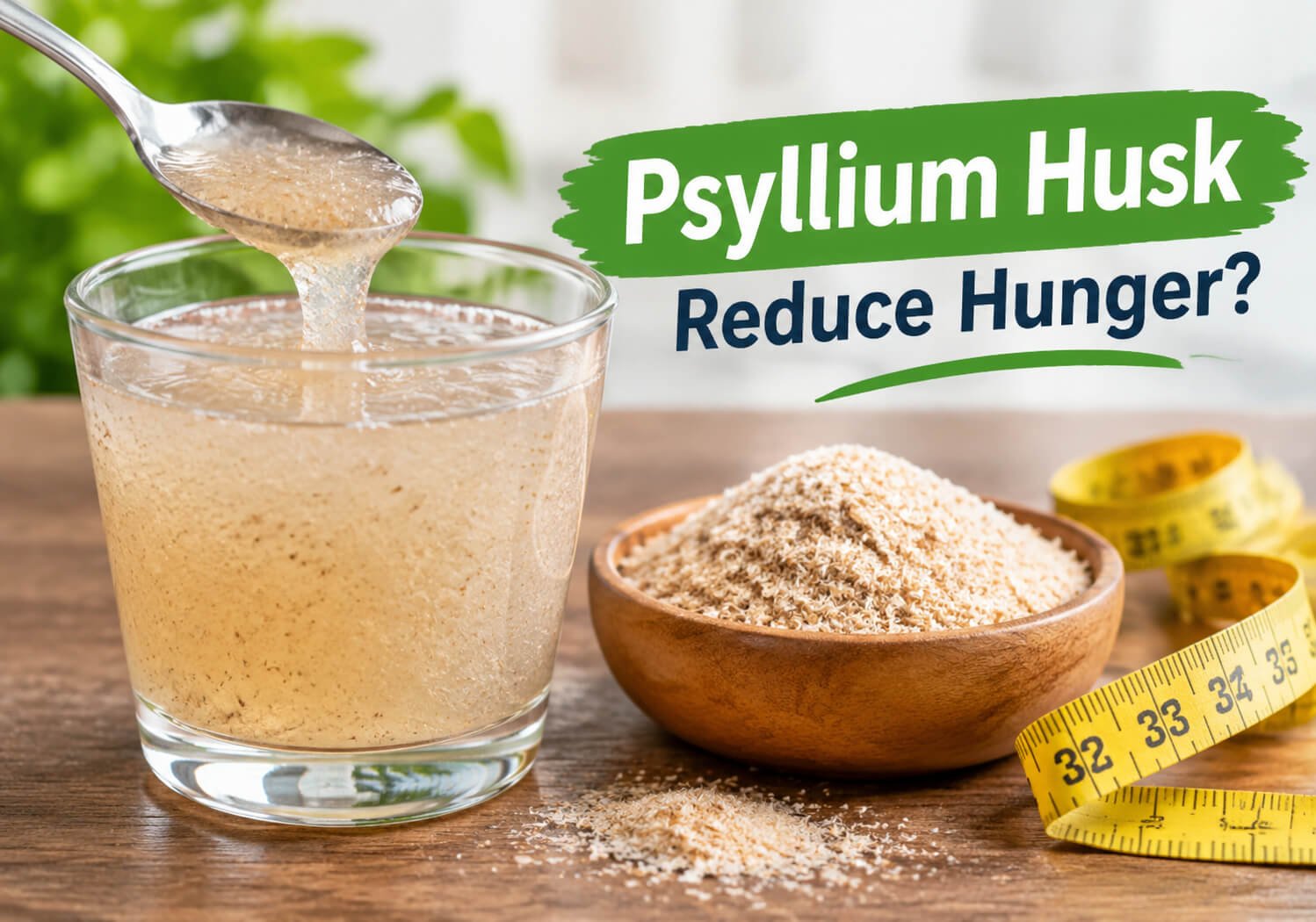
If you’ve ever felt hungry an hour after a meal and wondered if there’s a simple fix, psyllium husk is one of the most studied options out there. Can psyllium husk reduce hunger and support weight management? The short answer is yes, there’s real clinical evidence behind it, but it works through a specific mechanism and has real limits worth understanding before you rely on it.
Quick Answer
Yes. Clinical trials show psyllium husk, a soluble fiber, forms a gel in the stomach that slows digestion and reduces hunger and desire to eat between meals. It’s linked to modest weight loss when combined with diet changes, but it’s a supporting tool, not a stand-alone solution.
What the Research Actually Says About Psyllium Husk and Hunger
Psyllium husk comes from the seed coat of the Plantago ovata plant. It’s mostly soluble fiber, and when it meets water it swells into a thick gel. This single property explains almost everything researchers have found about its effect on appetite.
How Psyllium Husk Slows Digestion

In a controlled crossover trial, researchers used ultrasound to track stomach emptying after participants drank either psyllium or a placebo. The gel significantly delayed gastric emptying starting around the third hour after a meal, and participants reported more fullness and less hunger at the six-hour mark. Scientists describe this as the “ileal brake” effect: nutrients move more slowly into the lower small intestine, which triggers feedback signals that tell the brain you’re still full.
Coach’s Tip: Think of psyllium husk like a sponge that expands in your stomach before you even eat. Taking it 20-30 minutes before a meal gives it time to start gelling, so it’s already working by the time you sit down to eat.
What the Satiety Trials Found
The most detailed human data comes from a two-part randomized, double-blind, placebo-controlled study. In the first trial, doses of 3.4 g, 6.8 g, and 10.2 g were taken before breakfast and lunch for three days. The 6.8 g dose produced the most consistent reduction in hunger and desire to eat compared with placebo. A second trial repeated the test with an energy-restricted breakfast and found the same pattern: less hunger, less desire to eat, and more fullness between meals, even when the meal itself was smaller than usual.
This matters because it shows the effect isn’t just “fiber fills you up temporarily.” The benefit held up across a multi-hour window and even when calories were cut, which is closer to how most people would actually use it while trying to manage their weight.

Does Psyllium Husk Translate Into Weight Loss?
This is where the evidence gets more nuanced. A dose-response meta-analysis of randomized controlled trials looked specifically at psyllium’s effect on body weight, BMI, and waist circumference in adults, pooling data across multiple studies rather than relying on any single trial. Across the research base, the direction of effect leans toward modest reductions in weight and waist circumference, particularly at higher daily doses and with longer use, though individual trial results vary and some studies found a smaller effect than others.
A separate meta-analysis focused on people with type 2 diabetes found that psyllium supplementation improved fasting blood sugar, HbA1c, and insulin resistance markers, which matters for weight management because better blood sugar control can reduce the hunger spikes that come with glucose crashes.
A narrative review summarizing the broader literature on psyllium’s health effects noted that its gel-forming action increases chyme viscosity and feelings of satiety, reinforcing the same mechanism seen in the smaller mechanistic trials.
Common Mistake: Expecting psyllium husk to work like a weight-loss drug on its own. The research consistently frames it as an adjunct, something that works alongside a lower-calorie eating pattern and regular physical activity, not a replacement for either.
How Psyllium Husk Compares to GLP-1 Medications
Because psyllium husk and drugs like semaglutide both reduce appetite, people sometimes assume they’re interchangeable. They are not. GLP-1 medications work through hormone receptor signaling in the brain and gut and have been shown in clinical trials to produce significant weight loss. Psyllium husk works mechanically, by physically slowing digestion. A review of viscous fibers and the gut-incretin axis noted that fiber-based strategies may help support bowel function and metabolic stability alongside GLP-1 therapy rather than replace it. If you’re on a GLP-1 medication and want to add fiber, loop in your prescribing doctor first, since both can slow digestion and combining them without guidance isn’t well studied.
Satiety and Weight Research at a Glance
| Study Focus | Design | Key Finding |
| Gastric emptying & appetite | Randomized, double-blind, crossover; 12 healthy adults | Psyllium delayed stomach emptying and reduced hunger by the 6th hour post-meal |
| Satiety in healthy adults | 2 randomized, double-blind, placebo-controlled trials | 6.8 g before breakfast and lunch gave the most consistent drop in hunger and desire to eat |
| Weight, BMI, waist circumference | Dose-response meta-analysis of RCTs | Modest reductions trending with higher doses; effect size varies across trials |
| Blood sugar in type 2 diabetes | Systematic review and meta-analysis | Improved fasting glucose, HbA1c, and insulin resistance markers |
How to Use Psyllium Husk for Hunger Control
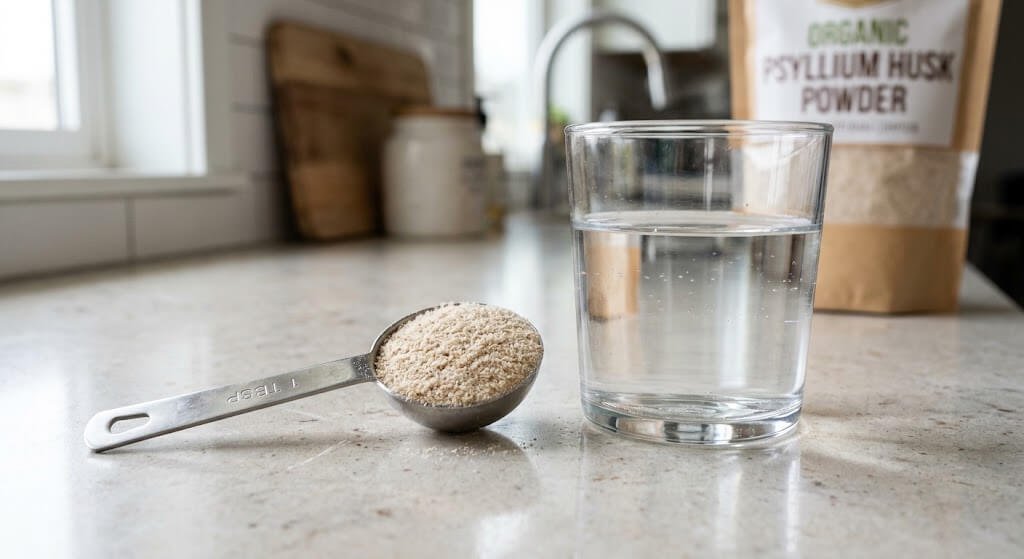
The trials that showed the clearest appetite effects used doses in the 6.8 g to 10.8 g per meal range, taken before food. Here’s a practical way to apply that:
- Start low. Begin with about 3-5 grams (roughly 1 teaspoon) mixed into a full glass of water, once a day.
- Time it right. Take it 20-30 minutes before your largest meal of the day, when hunger tends to be strongest.
- Build up gradually. Over one to two weeks, work up to 5-7 grams before one or two meals if your digestion tolerates it well.
- Drink enough water. Psyllium needs liquid to form its gel properly; take it with at least 8 ounces of water, and keep drinking fluids through the day.
- Track your hunger, not just the scale. Note whether you feel fuller between meals and whether you’re naturally eating a bit less, since that’s the mechanism doing the work.
- Give it two to four weeks. The satiety trials saw effects within days, but noticing a real change in your eating pattern and the scale takes longer.
A Simple Sample Routine
- Morning: Skip it with breakfast if mornings are already light on hunger for you.
- Midday: 5 g psyllium husk in water, 20-30 minutes before lunch.
- Evening: 5 g psyllium husk in water, 20-30 minutes before dinner, if dinner is your biggest meal or the one where you tend to overeat.
- Total: Roughly 10 g per day, within the range used in the clinical trials, without exceeding what your gut tolerates comfortably.
Safety Notes
If you’re using psyllium husk as part of a weight management plan, or if you have a health condition such as diabetes, it’s a good idea to check with a doctor or registered dietitian before adding a new fiber supplement to your routine, especially if you take other medications.
- GI side effects are common early on. Gas, bloating, and cramping are the most frequently reported issues, especially if you increase your dose too quickly.
- It can affect how medications absorb. Take other oral medications at least one to two hours before or after your psyllium dose, since the gel can slow or reduce their absorption.
- Choking and blockage risk exist if it’s taken dry or without enough water. Always mix it into a full glass of liquid and drink it right away.
- Not a fit for everyone. People with a history of bowel obstruction, difficulty swallowing, or certain GI surgeries should talk to a doctor before using bulk-forming fiber supplements.
- It’s not a quick fix for overeating in the moment. It works best as a steady daily habit, not a one-time tool before a big meal you’re worried about.
This article is for general information and is not a substitute for advice from a doctor or physical therapist.
Related Tips for Making Fiber Work for Hunger Control
- Pair psyllium husk with protein at your main meals; protein and viscous fiber both slow digestion and tend to extend fullness longer than either alone.
- Most adults fall well short of the fiber they need from food alone, so psyllium can help close that gap, but whole foods like beans, oats, and vegetables should still be your foundation.
- If bloating shows up, cut your dose in half for a few days before building back up, rather than stopping altogether.
- Keep a consistent time of day for taking it. The trials that showed the clearest results used a steady pre-meal routine, not occasional use.
FAQ
Does psyllium husk really suppress appetite?
Yes, within limits. Controlled trials show it reduces hunger and desire to eat between meals, largely by slowing gastric emptying. It works best as a steady habit rather than a one-off before a meal.
How much psyllium husk should I take to reduce hunger?
Trials showing consistent satiety benefits used around 6.8 grams before breakfast and lunch. Starting at 3-5 grams and building up gradually, with plenty of water, is a reasonable approach for most adults.
Can psyllium husk help me lose weight?
It may contribute to modest weight loss when paired with a reduced-calorie diet, mainly by helping you feel fuller and eat less. Research shows the effect is real but moderate, not dramatic on its own.
Is psyllium husk safe to use with GLP-1 medications like Wegovy?
Possibly, but both slow digestion, so combining them should be discussed with your prescribing doctor first rather than tried on your own.
Does psyllium husk have side effects?
The most common are gas, bloating, and cramping, especially when starting too high too fast. Drinking enough water and increasing the dose gradually helps minimize these.
Can I take psyllium husk every day for weight management?
Many of the clinical trials used daily dosing for several days to weeks without major issues, but check with a doctor before making it a long-term daily habit, especially if you take other medications.
Conclusion
So, can psyllium husk reduce hunger and support weight management? The clinical research says yes, through a straightforward mechanism: it gels in your stomach, slows digestion, and keeps you fuller for longer between meals. That translates into modest support for weight management when it’s used consistently and paired with a sensible diet, not as a stand-alone fix. If you’re considering adding it, start low, build up slowly, drink plenty of water, and check with a doctor if you have a health condition or take other medications.