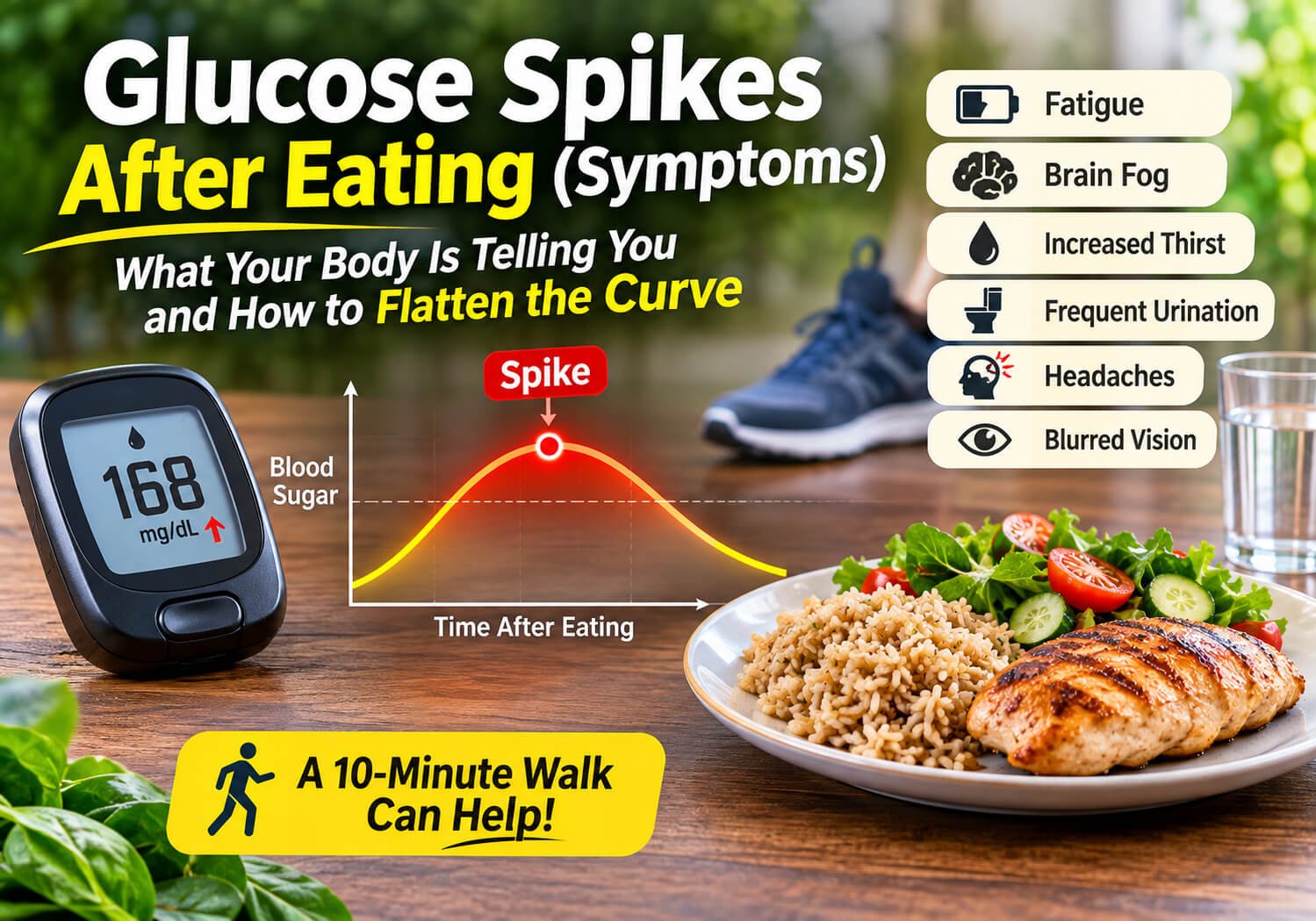
Feeling wiped out, foggy-headed, or weirdly thirsty thirty minutes after lunch isn’t just a “food coma.” It is often a classic sign of a sharp rise in blood sugar. Learning to spot glucose spikes after eating (symptoms) gives you real-time feedback on how your body handles carbohydrates and energy.
As a strength and conditioning coach, I see active people blame poor sleep or overtraining when the real culprit is wild swings in their post-meal blood glucose. When you eat, carbohydrates break down into glucose and enter your bloodstream. If that glucose floods in faster than your body can clear it, you feel the fallout—both immediately and over the long haul.
Before making major changes to your diet, supplements, or exercise routine—especially if you suspect prediabetes or diabetes—check with a doctor or qualified healthcare provider.
Quick Answer
Common glucose spikes after eating (symptoms) include sudden fatigue, brain fog, increased thirst, frequent urination, headaches, and blurred vision within 30 to 90 minutes of a meal. These signs occur when blood sugar rises rapidly and outpaces insulin clearance. A 10-to-15-minute brisk walk or light resistance exercise right after eating helps muscles absorb excess glucose quickly.
What Happens Inside Your Body During a Glucose Spike?
Every time you eat carbohydrates—whether from oatmeal, white rice, or a sports drink—your digestive system breaks them down into simple sugars. These sugars cross your gut lining and enter your bloodstream as glucose.
In response, your pancreas releases insulin. Think of insulin as the key that unlocks your muscle, fat, and liver cells so they can pull glucose out of the blood and use it for fuel or store it as glycogen.
A problem arises when you eat a large load of fast-digesting carbohydrates, especially on an empty stomach or after sitting at a desk all day. Blood glucose surges higher and faster than your insulin response can match. Doctors call this postprandial hyperglycemia, or high blood sugar after a meal.
According to the American Diabetes Association, a healthy blood sugar reading two hours after the start of a meal is generally below 140 mg/dL for people without diabetes, and below 180 mg/dL for most adults managing diabetes. When levels shoot well past those thresholds, osmotic shifts and cellular stress trigger noticeable physical symptoms.
Common Glucose Spikes After Eating (Symptoms) to Watch For
Not everyone feels a blood sugar surge the exact same way. Some people notice subtle mental sluggishness, while others experience unmistakable physical warning signs. Below are the most frequent glucose spikes after eating (symptoms) broken down by how quickly they typically appear.
1. Sudden Fatigue and Heavy Eyelids (“Food Coma”)
Feeling an overwhelming urge to nap 30 to 60 minutes after a meal is the most common complaint I hear from clients. Rapidly rising glucose suppresses orexin, a brain chemical that keeps you alert and awake. Instead of feeling energized by your food, your nervous system shifts into a sluggish, low-drive state.
2. Brain Fog and Trouble Concentrating
Your brain relies heavily on steady glucose delivery, but extreme highs disrupt neurotransmitter balance and cause mild, temporary inflammation in blood vessels. You might find yourself rereading the same email three times or struggling to focus during an afternoon meeting.
3. Increased Thirst (Polydipsia)
When excess glucose builds up in your bloodstream, it draws water out of your surrounding tissues to dilute the sugar concentration. Your brain registers this fluid shift as dehydration, triggering sudden, persistent thirst even if you drank water with your meal.
4. Frequent Urination (Polyuria)
Your kidneys act as filtration units for your blood. When blood glucose climbs past the renal threshold—typically around 180 mg/dL—your kidneys cannot reabsorb all the sugar, as noted by the National Institute of Diabetes and Digestive and Kidney Diseases. They dump the excess glucose into your urine, pulling extra water along with it and sending you to the bathroom repeatedly.
5. Mild Headaches and Irritability
Rapid shifts in blood volume, hydration status, and cerebral blood flow often show up as a dull, throbbing headache behind the eyes or across the forehead. Paired with disrupted brain energy, many people become short-tempered or anxious for no obvious reason.
6. Temporary Blurred Vision
High blood sugar pulls fluid into the lens of your eye, causing it to swell slightly and change shape. This temporary swelling makes it harder to focus on screens or fine print until your glucose levels drift back down to baseline.
7. The Follow-Up Crash (Reactive Hypoglycemia)
What goes up sharply often comes crashing down. To deal with a massive glucose spike, your pancreas sometimes overcompensates by pumping out a flood of insulin. Two to three hours after eating, your blood sugar can plummet below baseline—a dip known as reactive hypoglycemia.
When that crash hits, a different wave of symptoms takes over:
- Shaky hands or internal jitteriness
- Sudden, intense sugar or carb cravings
- Cold sweats or clammy skin
- A racing heartbeat
- Dizziness or lightheadedness
Common Mistake: Treating a post-meal sugar crash with candy, juice, or another pastry. While fast sugar relieves the shakes in 10 minutes, it restarts the exact same spike-and-crash rollercoaster all over again. Pair a small carb source with protein and fiber instead, or wait it out with water and light movement.
Timeline of a Post-Meal Blood Sugar Spike and Crash
Understanding when symptoms happen helps you separate a true glucose swing from simple dehydration, poor sleep, or digestive issues like food intolerances.
| Time After Eating | What Is Happening Biologically | Typical Symptoms You Might Feel |
| 0–15 Minutes | Digestion begins; simple starches and sugars start entering the bloodstream. | Normal fullness; energy still feels steady. |
| 30–60 Minutes | Blood glucose reaches peak concentration; insulin surges to clear excess sugar. | Sudden drowsiness, brain fog, heavy limbs, increased thirst, flushed skin. |
| 60–90 Minutes | Kidneys filter spillover glucose if levels exceed ~180 mg/dL; fluid shifts occur. | Frequent trips to the bathroom, mild headache, temporary blurred vision. |
| 2–3 Hours | High insulin drives glucose rapidly into tissues, occasionally overshooting baseline. | Shakiness, sudden irritability, cold sweats, intense cravings for sweets (reactive crash). |
Why Active People Still Get Post-Meal Glucose Spikes
You might assume that lifting weights four days a week or running 15 miles (24 km) makes you immune to blood sugar spikes. Regular training dramatically improves long-term metabolic flexibility, yet even lean athletes experience sharp post-meal surges.
Several everyday triggers push postprandial glucose higher than expected:
- Sitting immediately after eating: Skeletal muscle is your body’s largest glucose sink. When you sit still after lunch, your muscles require minimal fuel, leaving glucose circulating in the blood for much longer.
- “Naked” carbohydrates: Eating refined carbs alone—like a bagel, a bowl of cereal, or white pasta without protein, fat, or fiber—removes the natural speed bumps that slow stomach emptying.
- Poor sleep the night before: Even a single night of short sleep reduces insulin sensitivity the next day, according to research indexed by the National Heart, Lung, and Blood Institute. Understanding how sleep affects metabolism explains why your usual breakfast suddenly causes brain fog after a rough night.
- High stress and elevated cortisol: Stress hormones signal your liver to release stored glucose into your bloodstream so you can “fight or flee.” If you eat a carb-heavy meal while stressed at your desk, your blood sugar gets hit from both your plate and your liver.
- Training fasted vs. fed timing: Intense resistance training temporarily raises stress hormones like adrenaline and cortisol. Eating a huge simple-carb meal immediately after a brutal leg workout is great for glycogen replenishment, but eating that same meal on a rest day while sitting on the couch often triggers a sluggish spike.
How Exercise Flattens Glucose Spikes (The Muscle Sponge Effect)
Here is why strength and conditioning coaches care so much about blood sugar: contracting muscles do not need insulin to absorb glucose.
Normally, insulin acts as the gatekeeper to move glucose into muscle cells. However, when your muscles contract during walking, squatting, or cycling, a specialized transporter protein called GLUT4 moves straight to the surface of the muscle cell membrane. It opens a direct doorway for blood glucose to pour into the muscle and be burned for fuel—no insulin required.
Research published in Sports Medicine shows that even short bouts of light-intensity walking right after a meal significantly blunt post-meal glucose and insulin spikes compared to sitting continuously.

Why Timing Matters More Than Intensity
You do not need an exhausting HIIT session after dinner to tame your blood sugar. In fact, all-out sprinting right after eating can upset your stomach and temporarily raise blood glucose via adrenaline.
Light-to-moderate movement started within 10 to 30 minutes of finishing your meal works best because it intercepts glucose right as it enters your bloodstream from your digestive tract.
The 10-Minute Post-Meal Glucose-Clearing Routine
When you notice early glucose spikes after eating (symptoms)—or want to prevent them after a carb-rich meal—use this simple, zero-equipment protocol. It targets your largest lower-body muscle groups (quadriceps, glutes, hamstrings, and calves) to soak up circulating sugar fast.
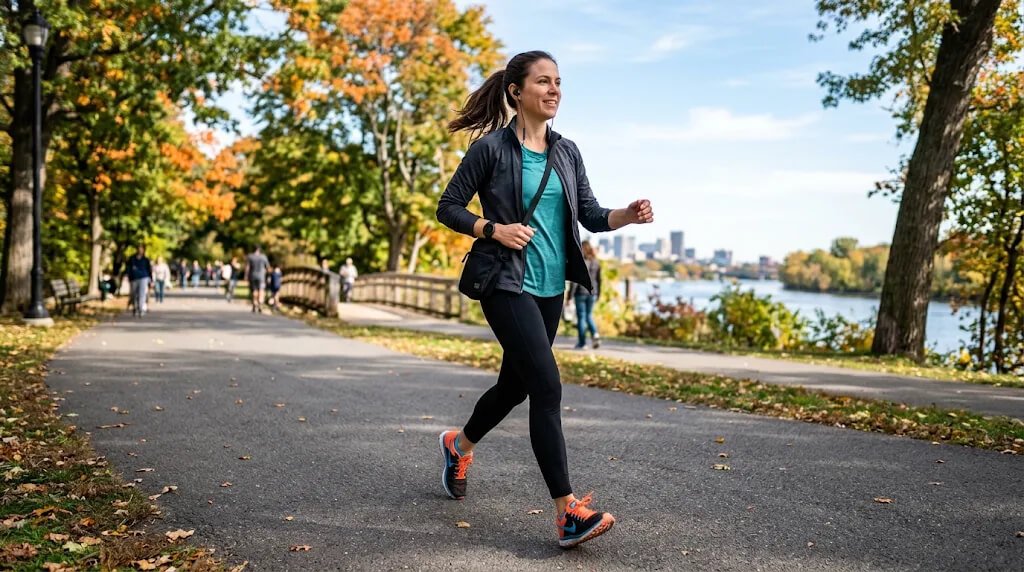
Option A: The Brisk Post-Meal Walk (Best Overall)
- Duration: 10 to 15 minutes
- Distance: Roughly 0.5 to 0.8 miles (0.8 to 1.3 km)
- Pace: Brisk enough that you feel warm and breathe slightly deeper, yet still able to speak in full sentences (Zone 2 effort, around 3.0–3.5 mph or 4.8–5.6 km/h).
- Equipment: Supportive walking shoes, or an under-desk walking pad if you work from home.
Option B: The Living Room / Office “Glucose Sponge” Circuit
If bad weather, back-to-back meetings, or childcare keeps you indoors, perform this 8-to-10-minute bodyweight circuit 15 minutes after eating.
| Exercise | Sets | Reps / Time | Tempo | Rest | Primary Muscles Worked |
| 1. Bodyweight Box Squats | 3 | 12–15 reps | 2 sec down, 1 sec up | 30 sec | Quadriceps, glutes, hamstrings |
| 2. Standing Calf Raises | 3 | 20 reps | 1 sec up, 1 sec pause, 2 sec down | 30 sec | Gastrocnemius, soleus |
| 3. Reverse Lunges (Alternating) | 2 | 10 reps per leg | Controlled 2-sec descent | 30 sec | Glutes, quads, hip stabilizers |
| 4. Seated Soleus Pushups | 2 | 60 seconds continuous | Smooth rhythmic pulses | 30 sec | Soleus (deep calf muscle) |
Form Cues for Each Movement
- Bodyweight Box Squats: Stand with your feet shoulder-width apart and toes turned out slightly. Push your hips back first, bend your knees, and lightly tap your glutes to a chair or couch behind you without collapsing onto it. Drive through your whole foot to stand tall.
- Standing Calf Raises: Hold onto a wall, desk, or kitchen counter for balance. Rise up onto the balls of your feet as high as possible, pause for one full second at the top, and lower your heels slowly to the floor.
- Reverse Lunges: Step one foot straight back about 24 to 30 inches (60 to 75 cm), keeping your torso upright. Lower your back knee toward the floor until both knees form roughly 90-degree angles, then push through your front heel to return to standing.
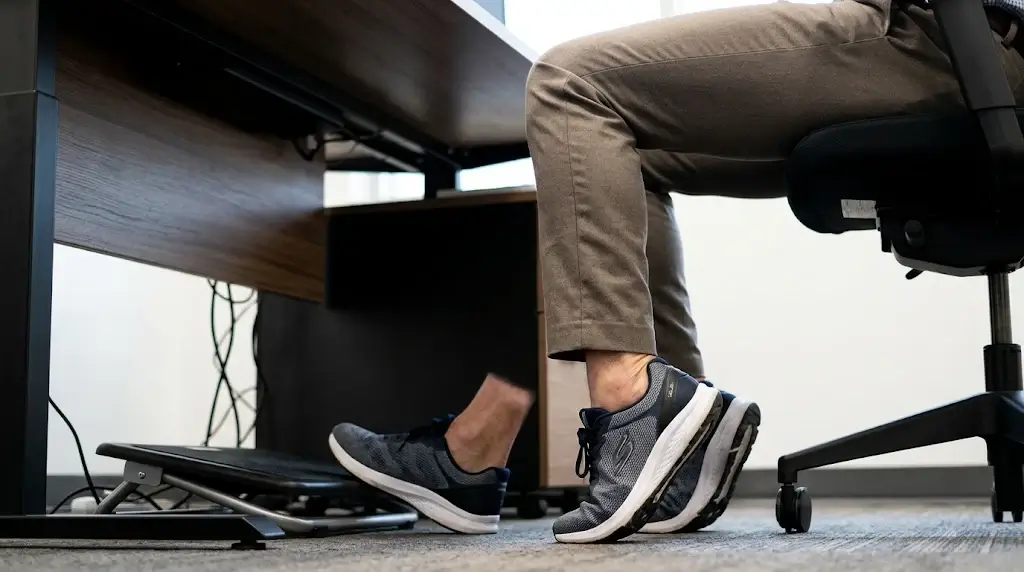
- Seated Soleus Pushups: Sit tall with your feet flat on the floor and knees bent at 90 degrees. Keep the balls of your feet planted and lift your heels as high as possible, then lower them smoothly. Research from the University of Houston (iScience) highlights that sustained soleus contractions maintain high local oxidative metabolism without causing systemic fatigue, making them ideal right at your desk.
Coach’s Tip: Keep your effort at a 4 or 5 out of 10—brisk and purposeful, never breathless. Pushing to failure right after a big meal diverts blood flow away from your stomach and can trigger cramping or nausea.
Regressions and Progressions
- Easier Version (Regression): Cut the circuit to 2 rounds, use a higher chair (18–20 inches / 45–50 cm) for shallow sit-to-stands, and hold a countertop during split squats instead of stepping back into reverse lunges.
- Harder Version (Progression): Add a pair of 10 to 15 lb (4.5 to 7 kg) dumbbells held at your sides during the squats and lunges, or take your 15-minute post-meal walk up a 4% to 6% treadmill incline.
Nutrition Tweaks That Stop Spikes Before They Start
Movement clears glucose once it is in your blood, while smart meal structure slows down how fast that glucose enters in the first place. Combining both gives you steady, all-day energy.
1. Change the Order You Eat Your Food
You do not necessarily have to give up rice, potatoes, or pasta—just eat them last. Clinical research published in Diabetes Care found that eating vegetables and protein before carbohydrates significantly lowers post-meal glucose and insulin peaks compared to eating carbs first.
Follow this simple plate order:
- Fiber first: Eat your non-starchy vegetables (broccoli, salad greens, asparagus, bell peppers) first.
- Protein and healthy fats second: Eat your chicken, fish, eggs, tofu, or Greek yogurt next.
- Starches and sugars last: Finish with your rice, bread, potatoes, or fruit.
2. Anchor Every Meal With Protein and Soluble Fiber
Protein and viscous fiber form a physical gel in your digestive tract that slows stomach emptying and flattens the glucose curve. Aim for 25 to 40 grams of protein and 8 to 12 grams of fiber at main meals.
If your meals run low on roughage, adding soluble fiber for appetite and blood sugar control—such as oats, chia seeds, beans, or psyllium—helps blunt post-meal surges while keeping you full for hours. Understanding how protein intake affects hunger hormones also shows why high-protein lunches eliminate afternoon vending-machine cravings.
3. Build Long-Term Muscle Mass
Think of skeletal muscle as your body’s glucose storage warehouse. The more lean muscle mass you carry, the more glycogen storage capacity you have.
Lifting weights 3 to 4 times per week using compound movements—squats, deadlifts, presses, and rows—upgrades your baseline insulin sensitivity around the clock, even on days you don’t train.

When to Talk to a Doctor About Post-Meal Symptoms
Occasional drowsiness after a giant holiday dinner is normal. However, recurring glucose spikes after eating (symptoms) after standard, everyday meals deserve a closer look from a medical professional.
Schedule an appointment with your doctor if you notice:
- Extreme thirst and frequent urination happening daily after normal meals
- Unexplained weight loss despite eating your usual calorie intake
- Persistent blurred vision, tingling in your hands or feet, or slow-healing cuts
- Severe post-meal shakiness, sweating, or dizziness that disrupts your work or workouts
- A family history of Type 2 diabetes or gestational diabetes paired with afternoon fatigue
Your doctor can run simple blood panels—such as a fasting glucose test, an HbA1c test (which measures your 3-month average blood sugar), or an oral glucose tolerance test—to see where your baseline stands.
Frequently Asked Questions (FAQ)
What are the most common symptoms of glucose spikes after eating?
The most common symptoms include sudden fatigue or drowsiness, brain fog, increased thirst, frequent urination, mild headaches, and temporary blurred vision within 30 to 90 minutes of eating. Two to three hours later, an insulin overshoot can trigger a reactive crash with shakiness, irritability, and intense sugar cravings.
How long after eating does blood sugar usually peak?
For most people, blood glucose peaks between 30 and 60 minutes after the first bite of a meal, depending on what and how much was eaten. Liquid sugars and refined starches peak closer to 30 minutes, whereas mixed meals rich in protein, fiber, and healthy fats produce a lower, slower peak around 60 to 90 minutes.
Does walking after eating really stop a blood sugar spike?
Yes. Walking for just 10 to 15 minutes right after a meal activates your leg muscles, which pull glucose directly from your bloodstream for fuel without needing large amounts of insulin. Clinical studies show that short post-meal walks significantly reduce both peak blood sugar levels and subsequent energy crashes.
Why do I feel sleepy right after eating carbs?
A rapid influx of glucose temporarily suppresses orexin, a brain neurotransmitter responsible for alertness and wakefulness. High carbohydrate meals also increase tryptophan availability in the brain, boosting serotonin and melatonin production, which together create that heavy-eyed, sluggish “food coma” sensation.
What is a normal blood sugar spike after eating?
According to the American Diabetes Association, healthy blood sugar two hours after starting a meal is typically below 140 mg/dL in adults without diabetes, and below 180 mg/dL for most adults managing diabetes. A gentle rise of 30 to 40 mg/dL above your pre-meal baseline that returns smoothly within two hours is considered normal.
Can lifting weights help prevent glucose spikes after meals?
Yes, both immediately and long-term. Performing light resistance exercises like bodyweight squats right after eating immediately absorbs circulating glucose into muscle cells. Over months, building more lean muscle mass expands your body’s glycogen storage capacity and improves baseline insulin sensitivity.
Putting It All Together
Recognizing glucose spikes after eating (symptoms) turns vague afternoon sluggishness into actionable feedback. When you feel heavy-eyed, unusually thirsty, or foggy an hour after eating, your body is telling you that incoming glucose outpaced your immediate fuel demand.
Start with two high-leverage habits this week: eat your vegetables and protein before your starches, and take a brisk 10-minute walk or run through a quick bodyweight squat circuit right after your biggest meal. Small, repeatable daily actions keep your blood sugar steady, your workouts strong, and your afternoon energy locked in.