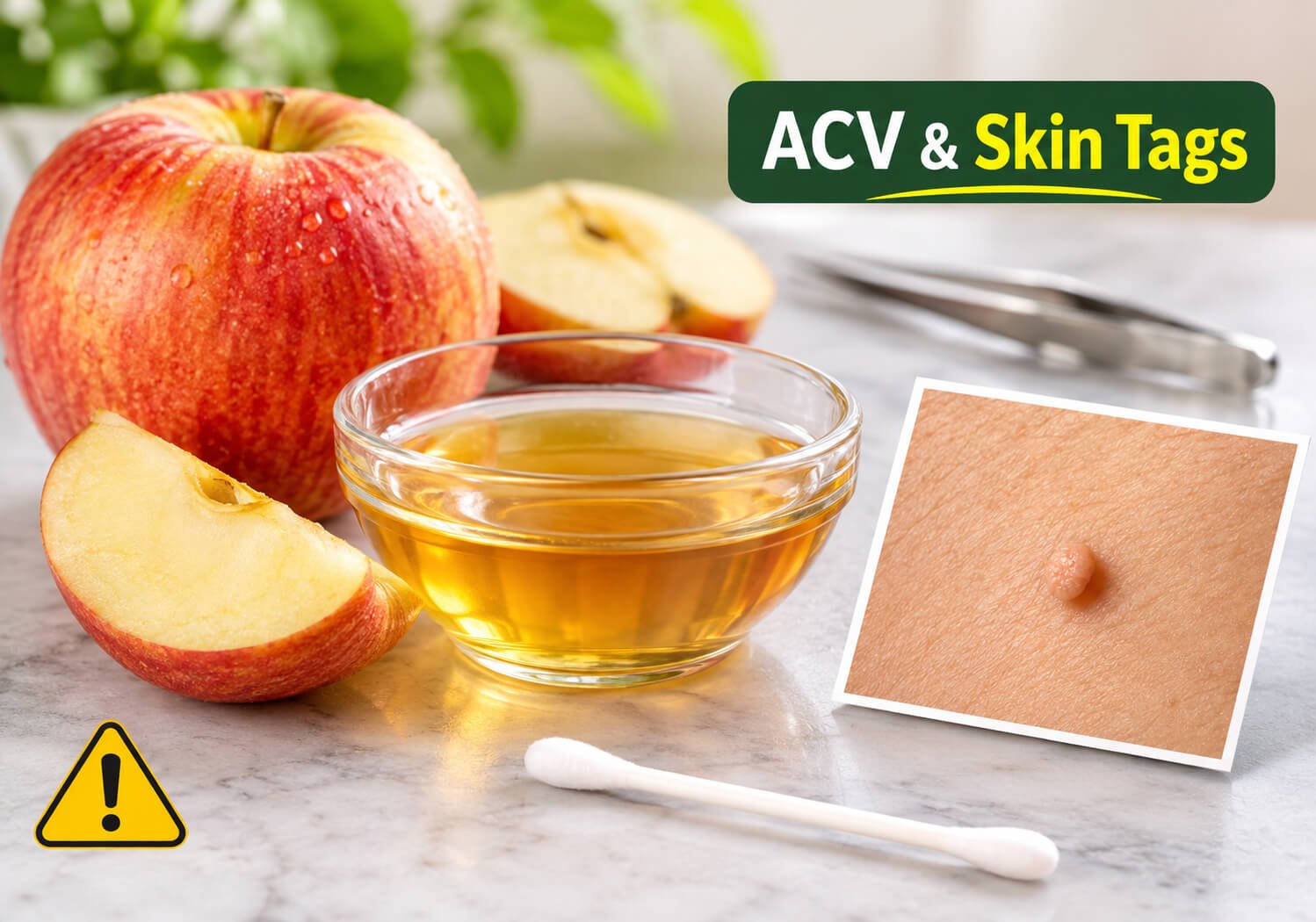
You might have a small, fleshy bump on your neck, armpit, or eyelid, and the internet is full of claims that a pantry staple can make it disappear. As a health and wellness coach, I often see clients looking for quick, natural fixes for everyday health issues. While I specialize in fitness and metabolic health, I also emphasize evidence-based safety. When it comes to apple cider vinegar skin tag removal (does it work?), my job is to give you the unvarnished truth based on clinical research, not internet myths. Let us break down the science, the risks, and the safest ways to handle benign skin growths.
Quick Answer
No strong scientific evidence supports apple cider vinegar skin tag removal (does it work?). While the acetic acid in vinegar may dry out a skin tag over time, it carries a high risk of chemical burns, severe skin irritation, and infection. Board-certified dermatologists recommend professional removal methods like cryotherapy or minor excision for safe, effective results.
Detailed Explanation: What the Research Says
To understand if apple cider vinegar skin tag removal (does it work?), we first need to understand what a skin tag is. Medically known as an acrochordon or fibroepithelial polyp, a skin tag is a benign (non-cancerous) overgrowth of skin. They typically range from 0.08 to 0.2 inches (2 to 5 mm) in diameter, though some can grow up to 0.4 inches (1 cm) or larger. They most commonly appear in areas where skin rubs against skin or clothing, such as the neck, armpits, groin, and eyelids.
The theory behind using apple cider vinegar (ACV) for skin tags relies on its primary active compound: acetic acid. Household ACV usually contains 4% to 8% acetic acid. Proponents of this home remedy claim that the acid breaks down the tissue surrounding the skin tag, eventually causing it to dry up, turn black, and fall off within one to two weeks.
However, when we look at peer-reviewed medical literature, the data does not support this practice. A review of dermatological guidelines from institutions like the Mayo Clinic and the Cleveland Clinic shows no clinical trials validating ACV as a safe or effective treatment for acrochordons.
Instead, dermatological research highlights the dangers of applying unregulated acids to the skin. The skin surrounding a skin tag is healthy, living tissue. Applying 5% acetic acid without medical supervision can easily cause a chemical burn. A study published in the Journal of Clinical and Aesthetic Dermatology notes that unregulated home remedies for skin lesions frequently result in contact dermatitis, hyperpigmentation, and permanent scarring. Furthermore, if the “skin tag” is actually a different type of lesion, such as a mole or a early-stage skin cancer, delaying professional evaluation to try a home remedy can have serious health consequences.

Comparison Chart: ACV vs. Professional Removal
If you are weighing apple cider vinegar skin tag removal (does it work?) against professional options, this table breaks down the key differences in safety, effectiveness, and recovery.
| Removal Method | How It Works | Effectiveness | Pain Level | Risk of Scarring/Infection | Typical Cost |
| Apple Cider Vinegar | Acetic acid attempts to dry out tissue over 1–2 weeks. | Low / Unproven | Moderate to High (burning) | High (chemical burns, infection) | Low (pantry item) |
| Cryotherapy | Liquid nitrogen freezes the tag, causing it to blister and fall off in days. | Very High | Mild (brief stinging) | Low (when done by a pro) | Moderate (insurance may cover) |
| Surgical Excision | A doctor numbs the area and snips the tag with sterile surgical scissors. | Immediate / 100% | Minimal (due to local anesthetic) | Very Low | Moderate to High |
| Electrosurgery | A high-frequency electrical current burns and cuts the tag off simultaneously. | Immediate / 100% | Minimal (numbed area) | Low | Moderate to High |
Professional methods are performed in a sterile environment. A dermatologist can also send the removed tissue for a biopsy if there is any doubt about the growth’s benign nature, a critical safety step that home remedies cannot provide.
How to Apply It: A Harm-Reduction Protocol
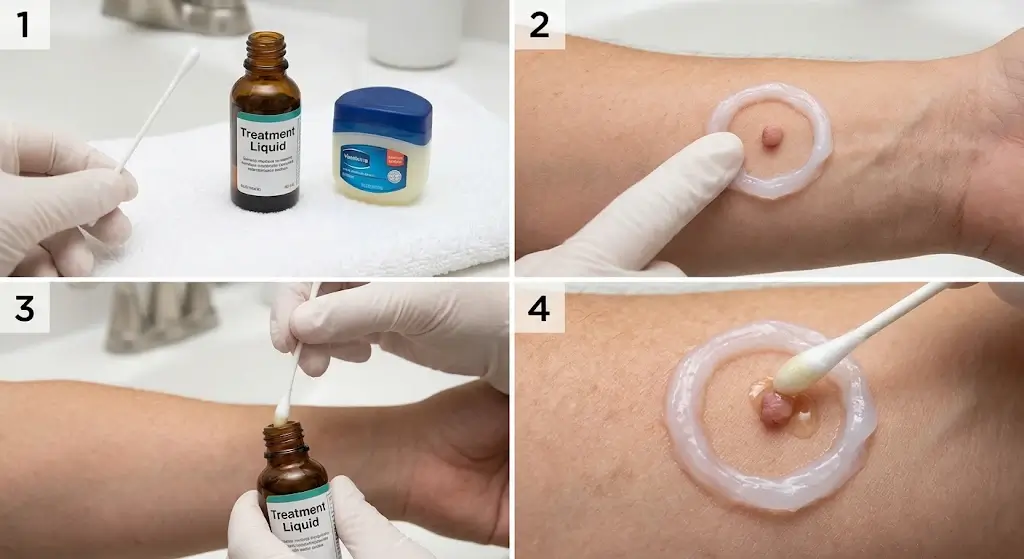
As a coach, my primary directive is “first, do no harm.” I strongly advise against apple cider vinegar skin tag removal (does it work?) due to the lack of evidence and high risk of injury. However, if you choose to attempt this at home despite medical advice, you must follow a strict harm-reduction protocol to minimize the chance of a chemical burn.
Step 1: Confirm It Is a Skin Tag
Ensure the growth is soft, fleshy, and attached by a small stalk. If it is hard, irregularly shaped, bleeding, or rapidly changing color, do not touch it. See a doctor immediately.
Step 2: Cleanse the Area
Wash the area and your hands thoroughly with mild soap and warm water. Pat dry with a clean towel.
Step 3: Protect the Surrounding Skin
This is the most critical step. Apply a thick layer of petroleum jelly (like Vaseline) to the healthy skin immediately surrounding the base of the skin tag. This creates a barrier against the acetic acid.
Step 4: Apply the Vinegar
Soak a small piece of cotton ball or a cotton swab in raw, unfiltered apple cider vinegar. Squeeze out the excess liquid so it is damp, not dripping. Place it directly on the skin tag.
Step 5: Secure and Time
Secure the cotton with a small bandage or medical tape. Leave it in place for no more than 10 to 15 minutes. Do not leave it on overnight.
Step 6: Remove and Wash
Take off the bandage, remove the cotton, and immediately wash the area with cool water to neutralize the acid. Pat dry.
Step 7: Monitor and Repeat (With Caution)

You may repeat this process once daily. If you experience intense burning, redness spreading beyond the tag, or blistering, stop immediately.
Coach’s Tip: Always use raw, unfiltered apple cider vinegar with the “mother” for this process, as it is less processed. However, remember that the “mother” does not make the acetic acid any safer for your skin. Diluting the vinegar with an equal part of water can reduce the burning sensation, though it may also reduce its (already unproven) efficacy.
Common Mistake: The most frequent error people make is soaking a large cotton ball and wrapping it tightly around the tag, leaving it on for hours. This floods the surrounding healthy skin with acid, guaranteeing a chemical burn, severe redness, and potential scarring. Less is more.
Safety Notes: Who Should Be Careful
Certain individuals should absolutely avoid apple cider vinegar skin tag removal (does it work?) and seek professional care instead. The risks far outweigh any potential benefits for the following groups:
- Individuals with Diabetes: Poor circulation and delayed wound healing are common in diabetes. A minor chemical burn from ACV can quickly escalate into a serious, non-healing ulcer or infection.
- People with Sensitive Skin or Eczema: If you have a history of contact dermatitis or sensitive skin, acetic acid will likely trigger a severe inflammatory response.
- Tags Near Sensitive Areas: Never use ACV on skin tags located on the eyelids, genitals, or mucous membranes. The skin here is exceptionally thin, and acid exposure can cause permanent damage or vision issues.
- Pregnant or Postpartum Women: Hormonal changes can cause new skin tags to form. While generally harmless, introducing unnecessary chemical irritants during this time is not recommended.
- Signs of Infection: If the skin tag is already painful, warm to the touch, oozing pus, or surrounded by red streaks, do not apply vinegar. Seek medical attention immediately.
If you have multiple skin tags appearing suddenly, this can sometimes be a marker of underlying metabolic issues, which brings us to how we can support your body from the inside out.
Related Tips: Supporting Skin Health and Metabolic Function
While topical treatments focus on the surface, a core principle of health coaching is that the skin often reflects internal metabolic health. Research shows a strong correlation between the sudden appearance of multiple skin tags and insulin resistance or metabolic syndrome.
A study published in the Journal of the American Academy of Dermatology found that patients with multiple skin tags had a significantly higher prevalence of impaired glucose tolerance and obesity. When your body struggles to manage blood sugar effectively, it can trigger changes in skin cell growth factors, leading to these benign growths.
Therefore, instead of focusing solely on burning off a skin tag, consider evaluating your overall metabolic health. Supporting your metabolism naturally can improve your body’s systemic function, which may help prevent new tags from forming.
For instance, learning how to boost metabolic flexibility without crash dieting can help your body switch efficiently between burning carbs and fats, stabilizing blood sugar levels. Additionally, certain nutrients play a vital role in maintaining healthy skin structure and reducing systemic inflammation. Incorporating omega-3 fatty acids for skin hydration and inflammation can support the skin barrier, making it more resilient.
If you are managing your weight, understanding what helps control hunger during weight loss through evidence-based methods can prevent the blood sugar spikes that contribute to metabolic stress. Furthermore, specific compounds like berberine have been studied for their ability to support metabolic health and improve insulin sensitivity, which addresses the root cause of many skin-related metabolic markers.
Do not forget the foundational elements of skin repair. Ensuring you get adequate vitamins that support metabolism when you’re deficient is crucial. For targeted skin support, many clients find value in learning about collagen powder for skin absorption to maintain tissue elasticity. Finally, powerful antioxidants like astaxanthin for skin glow and anti-aging can help protect skin cells from oxidative stress, promoting a healthier overall complexion.

FAQ
How long does it take for apple cider vinegar to remove a skin tag?
Anecdotally, proponents claim it takes one to two weeks of daily application for a skin tag to dry up and fall off. However, there is no clinical timeline because this method is not scientifically proven. It may simply irritate the skin without removing the tag.
Is apple cider vinegar safe for skin tag removal?
No, it is not considered medically safe. The acetic acid can easily cause chemical burns, severe irritation, and scarring on the healthy skin surrounding the tag. Dermatologists strongly advise against using it.
What are the risks of using ACV on skin tags?
The primary risks include contact dermatitis, chemical burns, hyperpigmentation (darkening of the skin), permanent scarring, and secondary bacterial infections if the skin barrier is broken and not properly cared for.
Can you put apple cider vinegar on open skin?
No. You should never apply apple cider vinegar to open wounds, broken skin, or bleeding areas. It will cause intense stinging, delay the natural healing process, and increase the risk of tissue damage and infection.
Does insurance cover skin tag removal?
Generally, no. Because skin tags are benign and considered a cosmetic concern, most health insurance plans do not cover their removal. However, if a tag is constantly bleeding, irritated, or suspicious, a doctor may code the removal as medically necessary, which could be covered.
Can skin tags be a sign of a serious health condition?
Skin tags themselves are harmless. However, the sudden eruption of many skin tags can sometimes be associated with insulin resistance, type 2 diabetes, or metabolic syndrome. It is wise to discuss this with your primary care physician.
Conclusion
When evaluating apple cider vinegar skin tag removal (does it work?), the evidence is clear: it is an unproven home remedy with a high potential for harm. While the acetic acid in vinegar might eventually dry out a tag, the risk of chemical burns, scarring, and infection makes it a poor choice compared to modern medical alternatives.
As a health coach, I encourage you to prioritize safe, evidence-based practices. If a skin tag bothers you cosmetically or catches on your clothing, schedule a brief visit with a board-certified dermatologist. They can remove it safely, quickly, and with minimal discomfort. Simultaneously, remember that your skin is a reflection of your internal health. Focusing on metabolic flexibility, balanced nutrition, and evidence-based wellness strategies will always yield better long-term results than risky pantry hacks.