Your body is constantly burning calories to keep you alive, even when you are sitting completely still. This baseline energy burn is your metabolism. For some people, this engine runs a little hotter than average. Recognizing the signs of high metabolism can help you understand your body’s unique energy needs, optimize your nutrition, and tailor your fitness routine for the best results.
If you frequently find yourself hungry, running warm, or struggling to add muscle mass despite heavy lifting, your metabolic rate might be higher than average. This guide breaks down the science behind a fast metabolism, the most common indicators, and practical, evidence-based steps to support your health.
Quick Answer
What are the most common signs of high metabolism?
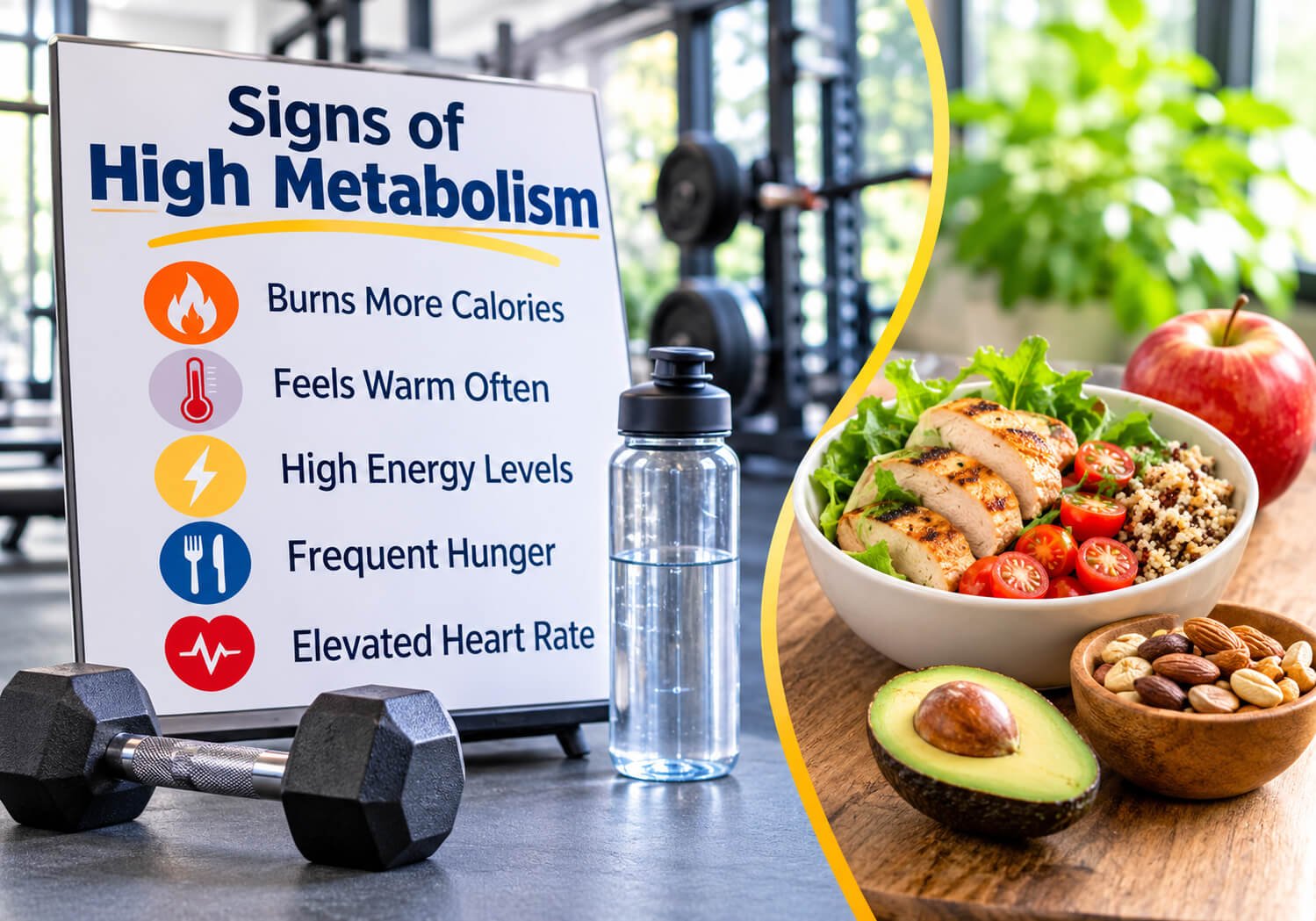
The most common indicators include effortless weight maintenance despite high calorie intake, frequent feelings of warmth or sweating, high natural energy levels, frequent hunger, rapid digestion, an elevated resting heart rate, difficulty gaining weight, frequent fidgeting, quick recovery from exercise, and consistent morning energy. These signs reflect a higher resting energy expenditure and active thermogenesis.
What Is Metabolism and Resting Metabolic Rate?
Metabolism refers to all the chemical processes in your body that convert food and drink into energy. This energy keeps your heart beating, your lungs breathing, and your brain functioning. The largest portion of this energy burn is your Basal Metabolic Rate (BMR) or Resting Metabolic Rate (RMR). According to the Mayo Clinic, RMR accounts for about 60% to 75% of the total calories you burn each day.
Several factors dictate your baseline metabolic rate. Genetics play a major role, but so does body composition. Muscle tissue is more metabolically active than fat tissue, meaning individuals with higher muscle mass naturally burn more calories at rest. Age, sex, and hormonal balance (particularly thyroid hormones) also heavily influence your metabolic speed. Understanding what affects metabolism and body weight is the first step in managing your health effectively.

10 Common Signs of High Metabolism
If you suspect your metabolic engine runs fast, look for these evidence-based indicators. Keep in mind that experiencing one or two of these does not guarantee a high metabolic rate, but a combination of several is a strong clue.
1. Effortless Weight Maintenance Despite High Calorie Intake
What it feels like: You can eat large portions or frequent meals without seeing the scale move upward.
The Science: Individuals with a high RMR burn more calories at baseline. A study published in the American Journal of Clinical Nutrition notes that RMR can vary by up to 20% between individuals of the same size and body composition due to genetic and physiological differences.
Coach’s Observation: If you eat 3,000 calories a day and maintain a 150 lb (68 kg) body weight, your body is likely oxidizing those calories rapidly for heat and baseline function rather than storing them as adipose tissue.
2. Frequent Feelings of Warmth or Sweating
What it feels like: You often feel hot when others are comfortable, or you sweat easily during mild activity or in warm rooms.
The Science: This is a direct result of diet-induced thermogenesis and baseline heat production. As your body breaks down macronutrients, it generates heat. Understanding what is thermogenesis and how does it affect metabolism explains why some people naturally run hotter. Brown adipose tissue (brown fat) also generates heat to maintain body temperature, burning calories in the process.
Coach’s Observation: Dress in layers. If you are constantly the first person to take off a jacket in a group, your internal furnace is likely working overtime.
3. High Natural Energy Levels and Restlessness
What it feels like: You wake up ready to go and find it hard to sit still for long periods.
The Science: A fast metabolism is often linked to a highly active sympathetic nervous system. This drives Non-Exercise Activity Thermogenesis (NEAT). The American Council on Exercise (ACE) highlights that NEAT can account for 15% to 30% of total daily energy expenditure.
Coach’s Observation: You might be the person who paces while on the phone or taps your foot during meetings. This unconscious movement significantly boosts daily calorie burn.
4. Frequent Hunger and Strong Appetite
What it feels like: You get hungry every 2 to 3 hours and experience strong cravings if you skip a meal.
The Science: Your body is highly efficient at signaling energy depletion. When your metabolic rate is high, your body burns through glycogen stores quickly, triggering the release of ghrelin (the hunger hormone) to prompt you to refuel.
Coach’s Observation: Do not ignore this hunger. Fueling adequately is critical. Prioritize protein intake and metabolism to stay satiated, as protein has the highest thermic effect of food (TEF), requiring more energy to digest.
5. Rapid Digestion and Regular Bowel Movements
What it feels like: You process food quickly and have very regular, frequent bowel movements.
The Science: Metabolic rate influences gastrointestinal motility. Thyroid hormones, which regulate metabolism, also stimulate the digestive tract. Higher levels of these hormones speed up the transit time of food through the intestines.
Coach’s Observation: While regular digestion is a sign of a healthy gut, excessively rapid digestion that leads to nutrient malabsorption should be evaluated by a doctor.
6. Elevated Resting Heart Rate (RHR)
What it feels like: Your heart beats a bit faster than average when you are completely relaxed.
The Science: A normal resting heart rate ranges from 60 to 100 beats per minute (bpm). However, individuals with a naturally high metabolism often sit in the 75 to 90 bpm range at rest. The heart must pump more blood to deliver oxygen and nutrients to support a higher baseline energy turnover.
Coach’s Observation: Track your morning RHR using a wearable device. A consistent RHR in the higher end of the normal range, without cardiovascular disease, can be a metabolic indicator.
7. Difficulty Gaining Weight or Muscle Mass
What it feels like: You lift heavy weights and eat in a surplus, but the scale barely moves.
The Science: To gain 1 lb (0.45 kg) of body weight, you need a surplus of roughly 3,500 calories. For someone with a high metabolism, their elevated RMR and NEAT automatically burn off this surplus, making weight gain a mathematical challenge.
Coach’s Observation: You may need to add liquid calories, like a shake with 2 cups (473 ml) of whole milk, 2 scoops of protein powder, and 2 tablespoons (32 g) of peanut butter, to reach a surplus without feeling overly stuffed.

8. Frequent Fidgeting and Unconscious Movement
What it feels like: You constantly shift your weight, gesture with your hands, or bounce your leg.
The Science: As mentioned with NEAT, fidgeting is a major calorie burner. Research cited by the National Institutes of Health (NIH) shows that spontaneous physical activity can vary by up to 2,000 calories per day between individuals, largely driven by fidgeting and posture maintenance.
Coach’s Observation: Do not try to suppress this. Let your body move. It is a natural, healthy mechanism that supports metabolic health.
9. Quick Recovery from Physical Exertion
What it feels like: You bounce back rapidly after a hard workout, with minimal delayed onset muscle soreness (DOMS).
The Science: A robust metabolic system efficiently clears metabolic byproducts like lactate and rapidly replenishes ATP (cellular energy) and muscle glycogen. High mitochondrial density in muscle cells facilitates this quick turnaround.
Coach’s Observation: You might be able to train the same muscle groups more frequently (e.g., every 48 hours) without overtraining, provided your nutrition supports the recovery.
10. Consistent Sleep Patterns but High Morning Energy
What it feels like: You sleep 7 to 8 hours and wake up feeling fully recharged, ready to tackle the day immediately.
The Science: While sleep is restorative for everyone, those with balanced, high-functioning metabolisms often experience efficient cellular repair during deep sleep stages. Learning how sleep affects metabolism weight management shows that quality sleep regulates the hormones that keep your metabolic engine running smoothly.
Coach’s Observation: If you wake up refreshed without needing multiple alarms or caffeine immediately, your endocrine system is likely in a healthy, balanced state.
How to Know If You Have a Fast Metabolism: Testing and Metrics
While signs and symptoms are helpful clues, objective data provides certainty. If you want to know your exact metabolic rate, consider these methods:
- Indirect Calorimetry: This is the gold standard. You breathe into a mask while resting, and a machine measures your oxygen consumption and carbon dioxide production to calculate your exact RMR. Many sports performance clinics and registered dietitians offer this test.
- Predictive Equations: Formulas like the Mifflin-St Jeor equation estimate your RMR based on age, sex, weight, and height. While less accurate than indirect calorimetry, they provide a solid baseline.
- Wearable Technology: Modern fitness trackers estimate total daily energy expenditure (TDEE) by combining your heart rate data with movement metrics. While not perfectly precise, they are excellent for tracking trends over time.
Practical Application: How to Support a Healthy Metabolic Rate
Whether your metabolism is fast, slow, or average, your goal should be metabolic health and flexibility. Metabolic flexibility is your body’s ability to efficiently switch between burning carbohydrates and fats for fuel. Here is how to optimize it.
Coach’s Tip: Prioritize Protein and Strength Training
To support a healthy metabolic rate, focus on building and maintaining skeletal muscle. Muscle tissue is metabolically expensive. Aim for 0.8 to 1 gram of protein per pound (1.6 to 2.2 g per kg) of body weight daily. Pair this with resistance training 3 to 4 days per week. This combination ensures your body has the building blocks to maintain muscle, which in turn keeps your RMR elevated. Learn more about how to support metabolism naturally through consistent habits.
Common Mistake: Undereating to “Fix” a Fast Metabolism
Some people with fast metabolisms who want to gain weight mistakenly eat junk food to hit calorie goals. This leads to poor body composition (gaining fat instead of muscle) and sluggish energy crashes. Instead, focus on nutrient-dense, calorie-rich foods like nuts, avocados, olive oil, and whole grains.
Regression and Progression for Metabolic Conditioning
If you are designing a workout to support metabolic health, adjust the intensity to match your current fitness level.
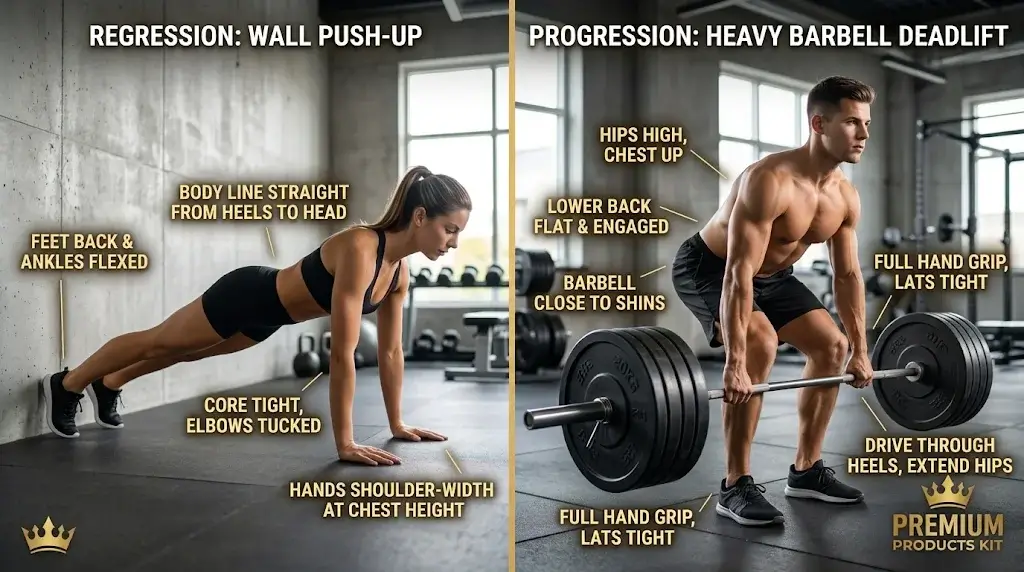
- Regression (Easier): Focus on low-impact, steady-state movement. Try a 30-minute brisk walk (3 miles or 4.8 km) followed by bodyweight squats (2 sets of 10 reps) and wall push-ups (2 sets of 8 reps). Rest for 60 seconds between sets. This builds a baseline without overstressing the central nervous system.
- Progression (Harder): Implement high-intensity interval training (HIIT) to challenge metabolic flexibility. Perform 4 rounds of: 45 seconds of kettlebell swings (using a 35 lb / 16 kg bell for men, 26 lb / 12 kg for women), followed by 15 seconds of rest. Follow this with 3 sets of 8 heavy barbell deadlifts. Rest for 2 minutes between heavy sets.

Safety Notes and When to See a Doctor
While a high metabolism is often a genetic gift, a suddenly elevated metabolic rate can be a red flag. Unexplained weight loss, a racing heart, tremors, anxiety, or heat intolerance can be symptoms of hyperthyroidism (an overactive thyroid).
If you experience these symptoms, or if your high metabolism is accompanied by chronic fatigue or digestive distress, consult a healthcare provider. A simple blood test measuring Thyroid Stimulating Hormone (TSH), T3, and T4 can rule out endocrine disorders. Always prioritize medical advice over internet research when dealing with sudden physiological changes.
Furthermore, if you are intentionally trying to alter your metabolic rate for weight management, ensure you are getting adequate nutrients that support energy metabolism, such as B-vitamins, iron, and magnesium, to prevent deficiencies.
Frequently Asked Questions (FAQ)
What are the signs of a high metabolism in females?
Women with a high metabolism often experience frequent hunger, difficulty gaining weight despite eating large portions, feeling warm frequently, and having high daily energy levels. Hormonal fluctuations can affect this, but consistent signs point to an elevated resting metabolic rate.
Can you have a high metabolism and still gain weight?
Yes. Weight gain is ultimately determined by a sustained calorie surplus. Even with a high metabolism, consistently consuming more calories than your elevated Total Daily Energy Expenditure (TDEE) will result in weight gain over time.
How do I know if my metabolism is fast or slow?
Look for clusters of symptoms: fast metabolism includes frequent hunger, warmth, and high energy; slow metabolism may include fatigue, cold intolerance, and easy weight gain. For an exact answer, request an indirect calorimetry test from a sports dietitian.
Does a fast metabolism make you hungry all the time?
Often, yes. Because your body burns through energy stores more quickly, it sends stronger and more frequent hunger signals (via the hormone ghrelin) to prompt you to replenish those calories.
What causes a suddenly high metabolism?
A sudden increase can be caused by medical conditions like hyperthyroidism, certain medications, severe stress, or a significant increase in muscle mass and physical activity. Sudden changes should always be evaluated by a doctor.
Is having a high metabolism always healthy?
Generally, yes, as it indicates efficient energy processing. However, if it is driven by an underlying thyroid issue or causes unhealthy weight loss and nutrient deficiencies, it requires medical attention.
Conclusion
Recognizing the signs of high metabolism empowers you to work with your body, not against it. Whether you are trying to maintain your lean physique, gain muscle mass, or simply understand why you always run hot, the key is to fuel your body adequately and train intelligently. Focus on nutrient-dense foods, prioritize strength training to build metabolically active muscle, and listen to your body’s hunger and recovery cues.
If you suspect your metabolic rate is unusually high or has changed suddenly, do not hesitate to seek professional medical advice. For most people, however, a fast metabolism is a natural trait that, when supported with proper nutrition and exercise, leads to vibrant, sustained energy and long-term health.