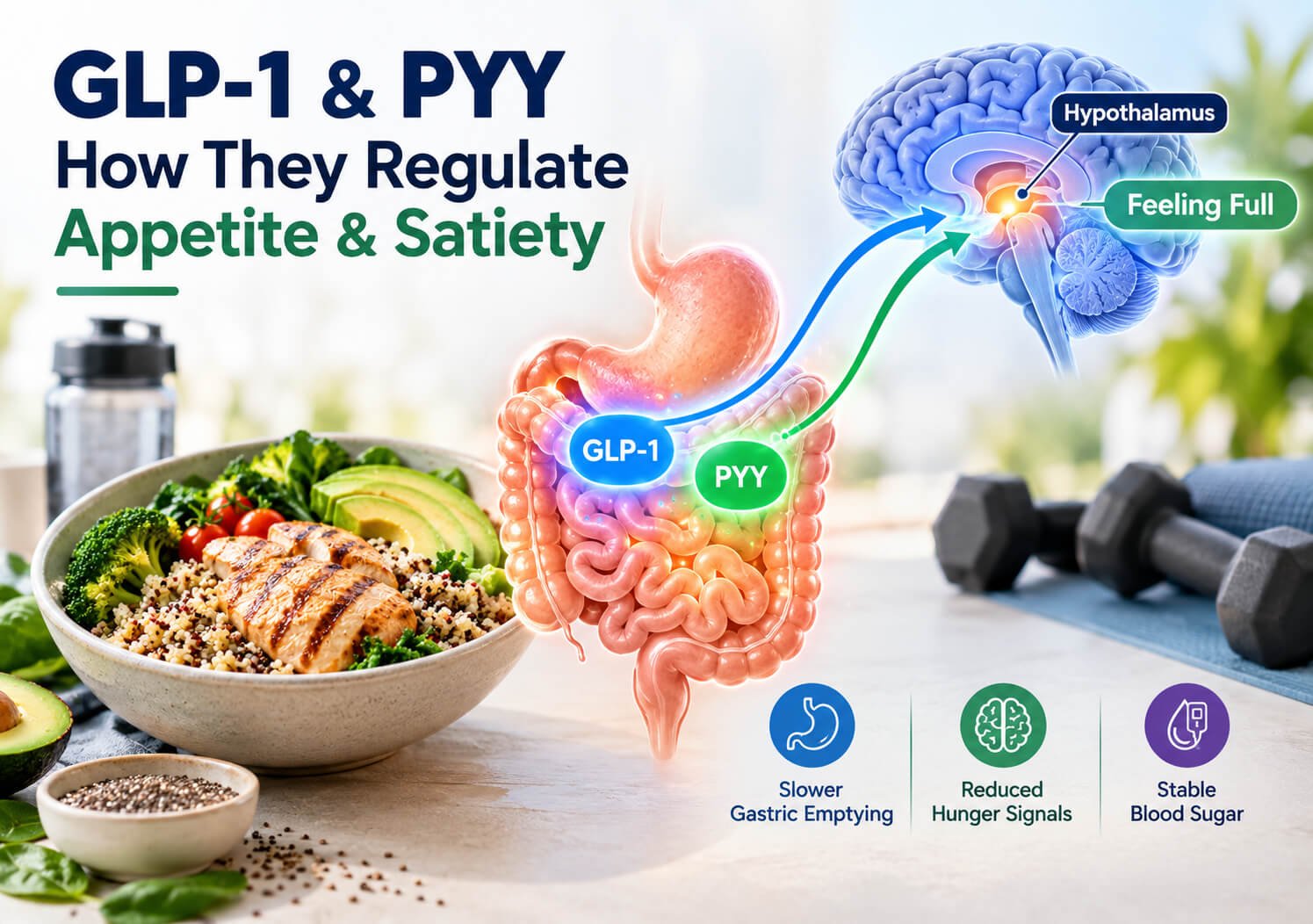
Understanding your body’s internal chemistry is the secret to sustainable fitness. If you have ever wondered why you feel ravenous after some workouts but completely satisfied after others, the answer lies in your gut hormones. Specifically, you need to know how do GLP-1 and PYY regulate appetite and satiety? These two powerful peptides act as your body’s natural communication system, sending “I’m full” signals from your digestive tract directly to your brain. As a strength and conditioning coach, I teach my clients that harnessing these hormones through targeted exercise and nutrition is far more effective than relying on willpower alone.
Quick Answer
GLP-1 (Glucagon-like peptide-1) and PYY (Peptide YY) regulate appetite and satiety by acting as chemical messengers. Released by L-cells in your intestines after eating, they travel to the hypothalamus in your brain. There, they slow down gastric emptying and activate specific neurons that suppress hunger, helping you feel full longer and naturally reducing calorie intake.
The Science: How Do GLP-1 and PYY Regulate Appetite and Satiety?
To control your hunger, you first need to understand the machinery. Your digestive system is not just a food processor; it is a highly sophisticated endocrine organ. Deep within the lining of your ileum and colon live specialized endocrine cells called L-cells. When food—especially protein and fiber—enters your lower digestive tract, these L-cells spring into action.
The Role of GLP-1
GLP-1 stands for Glucagon-like peptide-1. It is famous in the medical world because synthetic versions are used in weight management medications. However, your body produces it naturally. According to research published by the National Institutes of Health (NIH), GLP-1 has three primary jobs. First, it slows gastric emptying, meaning food stays in your stomach longer, physically keeping you full. Second, it enhances insulin secretion, which helps stabilize blood sugar and prevents the sharp crashes that trigger cravings. Third, it crosses the blood-brain barrier to bind with receptors in the hypothalamus, directly turning down the volume on hunger signals.
The Role of PYY
Peptide YY (PYY) works right alongside GLP-1. The most active form, PYY(3-36), is released in proportion to the calories consumed, particularly from protein and fat. PYY travels through the bloodstream to the arcuate nucleus of the hypothalamus. Here, it binds to Y2 receptors. This binding action does two critical things: it inhibits NPY/AgRP neurons (the neurons that make you feel hungry) and stimulates POMC/CART neurons (the neurons that make you feel satisfied). Think of PYY as the brake pedal for your appetite.
| Hormone | Primary Source | Main Trigger | Primary Action in the Brain | Exercise Impact |
| GLP-1 | L-cells (ileum/colon) | Carbs, protein, fiber | Slows gastric emptying, boosts insulin, signals satiety | Moderate-to-vigorous exercise amplifies post-meal release |
| PYY | L-cells (ileum/colon) | Protein, fat, total calories | Inhibits hunger neurons, activates fullness neurons | Acute aerobic and resistance training elevates postprandial levels |
How Exercise Influences GLP-1 and PYY Levels
You might be thinking, “I can’t control my L-cells directly.” While that is true, you absolutely can control the environment they operate in. Exercise is one of the most potent, natural modulators of the gut-brain axis.
Research highlighted by the American College of Sports Medicine (ACSM) shows that physical activity does more than burn calories; it fundamentally alters your hormonal appetite profile.
Acute vs. Chronic Exercise Effects
An acute bout of exercise (a single workout session) has been shown to temporarily suppress appetite. Studies indicate that moderate-to-vigorous intensity exercise, such as brisk walking or cycling, increases the postprandial (after-meal) release of both PYY and GLP-1. This means if you eat a meal and then go for a workout, your body is primed to release more of these satiety hormones than if you had remained sedentary.
Chronically, regular exercise improves your body’s sensitivity to these hormones. Just like insulin resistance makes it hard for your body to use insulin, a sedentary lifestyle can blunt your brain’s response to GLP-1 and PYY. Consistent training restores this sensitivity, meaning your brain hears the “I’m full” signal louder and clearer over time.
Resistance Training vs. Aerobic Exercise
Both modalities are valuable, but they work slightly differently. Aerobic exercise (like jogging or cycling for 30–45 minutes) is highly effective at acutely elevating PYY levels immediately post-workout. Resistance training, on the other hand, builds lean muscle mass. More muscle mass improves overall metabolic health and insulin sensitivity, which works synergistically with GLP-1 to keep blood sugar stable and cravings at bay. For optimal appetite regulation, a combination of both is ideal.
How to Apply It: Practical Steps for Natural Appetite Regulation
Knowing the science is only half the battle. As a coach, my job is to translate this into actionable steps you can use in your daily life. Here is how you can structure your training and nutrition to naturally boost GLP-1 and PYY.
Step 1: Time Your Movement Strategically
You do not need to run a marathon to get hormonal benefits. A 15- to 20-minute brisk walk (about 1 to 1.5 miles or 1.6 to 2.4 km) after a meal can significantly enhance the release of satiety hormones. This light activity aids digestion and amplifies the natural GLP-1 response to the food you just ate.
Step 2: The Satiety-Boosting Strength Circuit
Resistance training is non-negotiable for long-term metabolic health. This full-body circuit is designed to be efficient, safe, and highly effective for stimulating metabolic adaptation.
Warm-up (5 minutes):
- Arm circles (10 forward, 10 backward)
- Bodyweight squats (10 reps, focusing on depth and knee alignment)
- Cat-cow stretches (10 reps to mobilize the spine)
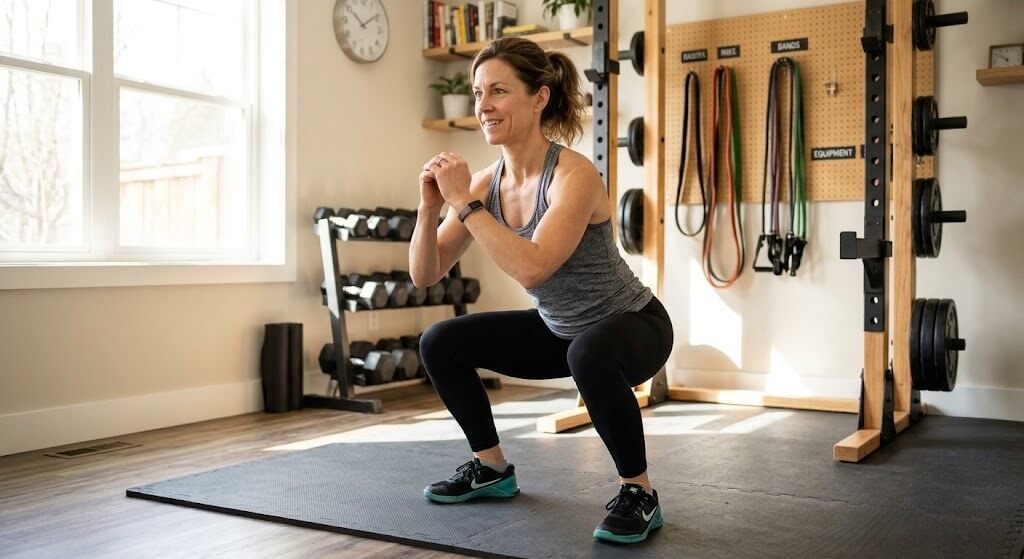
The Workout: Perform this circuit 2 to 3 times per week, with at least one rest day between sessions. Complete 3 rounds of the following exercises. Rest for 60–90 seconds between rounds.
- Goblet Squat
- Weight: 15–25 lb (7–11 kg) dumbbell or kettlebell.
- Reps: 10–12
- Tempo: 3 seconds down, 1 second pause, 1 second up.
- Form Cue: Hold the weight at your chest. Push your hips back as if sitting in a chair. Keep your chest proud.
- How it should feel: A deep burn in your quads and glutes, with no sharp pain in your knees. Protecting your joints during squats is critical, so never let your knees cave inward.
- Dumbbell Romanian Deadlift (RDL)
- Weight: 20–30 lb (9–14 kg) dumbbells (one in each hand).
- Reps: 10–12
- Tempo: 2 seconds down, 1 second squeeze, 2 seconds up.
- Form Cue: Hinge at the hips, keeping a slight bend in your knees. Push your hips back toward the wall behind you. Feel the stretch in your hamstrings.
- How it should feel: A strong pulling sensation in the back of your thighs, not your lower back.
- Incline Push-Up
- Equipment: Sturdy chair, bench, or countertop (about 30–36 inches or 76–91 cm high).
- Reps: 8–12
- Tempo: 2 seconds down, 1 second up.
- Form Cue: Keep your body in a straight line from head to heels. Engage your core tightly. Lower your chest to the edge of the surface.
- How it should feel: Tension in your chest, shoulders, and the back of your arms.
COACH’S TIP: Focus on the mind-muscle connection. Rushing through reps reduces the metabolic demand. Controlling the eccentric (lowering) phase of each lift increases muscle time-under-tension, which improves long-term metabolic health and supports better insulin sensitivity over time.
COMMON MISTAKE: Holding your breath during exertion. This spikes blood pressure unnecessarily. Always exhale on the effort (the push or pull) and inhale on the release (the lowering phase).
Regression (Easier Version): If the goblet squat is too challenging, perform a seated box squat, lightly tapping a chair behind you before standing. For push-ups, use a higher surface, like a kitchen counter, to reduce the load.
Progression (Harder Version): Increase the weight by 5 lb (2.2 kg) once you can complete all 3 rounds with perfect form. For push-ups, move to the floor.
Step 3: Nutritional Synergy for L-Cells
Exercise sets the stage, but nutrition provides the trigger. To maximize GLP-1 and PYY release, your meals need specific macronutrients.
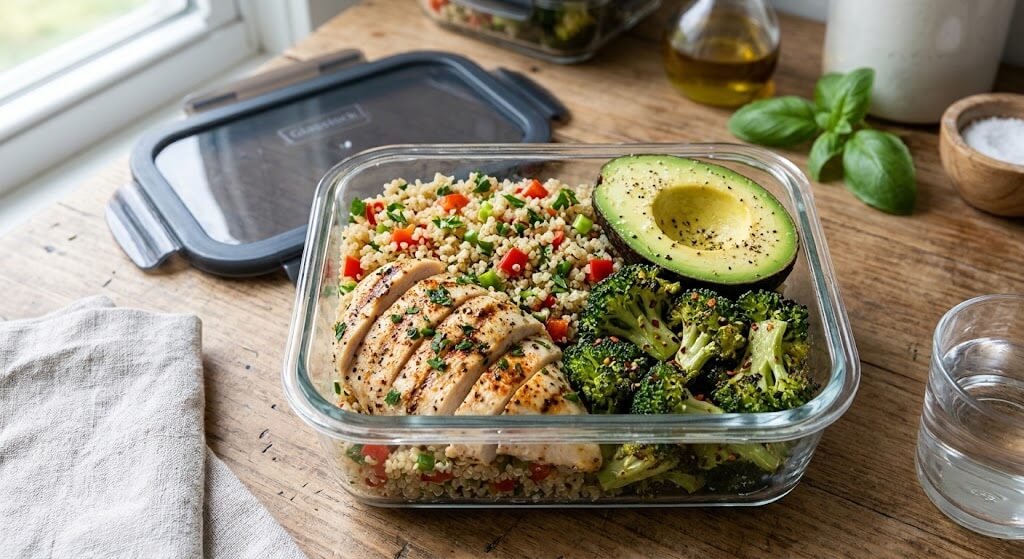
- Protein: Aim for 20–30 grams of high-quality protein per meal. Protein is the most potent macronutrient for stimulating PYY release. Examples include Greek yogurt, chicken breast, tofu, or lentils.
- Fiber: Soluble fiber slows digestion, giving L-cells more time to detect nutrients and release GLP-1. Aim for 8–10 grams of fiber per meal from sources like oats, chia seeds, berries, and broccoli.
- Healthy Fats: Moderate amounts of fat (like avocado or olive oil) also delay gastric emptying, prolonging the satiety signal.
Step 4: Optimize Circulation and Recovery
Muscle repair and hormonal balance require excellent blood flow. Ensuring your vascular system is healthy supports the delivery of these hormones and nutrients. Incorporating compounds or foods that support healthy blood vessel function can enhance your overall recovery. Staying hydrated is also critical; even mild dehydration can mask itself as hunger, confusing your brain’s satiety signals.
Safety Notes and Who Should Be Careful
While exercise and dietary fiber are safe for most people, there are important precautions to keep in mind.
If you have a history of gastrointestinal issues, such as irritable bowel syndrome (IBS) or gastroparesis, suddenly increasing fiber intake or engaging in vigorous post-meal exercise can cause discomfort. Introduce fiber gradually, adding just 3–5 grams per day, and drink plenty of water.
Individuals with diabetes or those taking blood sugar-lowering medications should monitor their glucose levels closely. Because GLP-1 naturally enhances insulin secretion, combining intense exercise with medication can occasionally lead to hypoglycemia (low blood sugar). Always keep a fast-acting carbohydrate on hand during workouts.
Furthermore, if you are experiencing unexplained weight loss, chronic fatigue, or severe digestive pain, consult a healthcare provider before starting any new exercise or nutrition program.
Related Tips for Holistic Metabolic Health
Regulating appetite is not just about what you do in the gym. It is a 24-hour lifestyle endeavor.
Prioritize Sleep: Poor sleep disrupts the entire endocrine system. Studies show that sleep deprivation lowers PYY and GLP-1 levels while simultaneously spiking ghrelin (the hunger hormone). Aim for 7–9 hours of quality sleep per night to keep your hormonal baseline stable.
Manage Stress: Chronic stress elevates cortisol, which can override satiety signals and drive cravings for high-sugar, high-fat foods. Incorporate 5–10 minutes of daily deep breathing or meditation to keep your nervous system balanced.
Support Vascular Health: Good circulation ensures that hormones and nutrients reach their target tissues efficiently. Understanding how certain amino acids, like learning how L-citrulline helps produce nitric oxide, can be a valuable piece of the puzzle for athletes looking to optimize blood flow and recovery. Similarly, evaluating whether L-arginine vs L-citrulline for blood flow is better for your specific needs can help fine-tune your supplement strategy, always under professional guidance.
Frequently Asked Questions
1. How does exercise affect GLP-1 levels? Moderate-to-vigorous exercise has been shown to amplify the post-meal release of GLP-1. A single bout of activity can enhance this effect, while chronic, regular training improves your brain’s overall sensitivity to the hormone, making you feel satisfied with less food.
2. What foods increase PYY naturally? Protein and dietary fiber are the most potent natural triggers for PYY release. Meals containing 20–30 grams of lean protein (like chicken, fish, or legumes) combined with soluble fiber (like oats, beans, or vegetables) stimulate the L-cells in your gut to secrete maximum amounts of PYY.
3. Do GLP-1 and PYY work together for weight loss? Yes, they work synergistically. GLP-1 primarily slows gastric emptying and stabilizes blood sugar, while PYY directly targets the hypothalamus to inhibit hunger neurons. Together, they create a powerful, natural appetite-suppressing effect that supports sustainable weight management.
4. Can strength training boost satiety hormones? Absolutely. While aerobic exercise is famous for acute hormone spikes, strength training builds lean muscle mass. More muscle improves your baseline metabolic rate and insulin sensitivity, which creates a hormonal environment where GLP-1 and PYY can function more effectively over the long term.
5. How long does it take for PYY to signal fullness? PYY levels typically begin to rise within 15 to 30 minutes after you start eating, peaking around 1 to 2 hours post-meal. This is why eating slowly and taking 20 minutes to finish a meal allows your brain enough time to receive and process the PYY satiety signal.
6. Can poor circulation affect how these hormones work? Yes. Efficient hormonal signaling relies on healthy blood flow to transport peptides from the gut to the brain. Addressing factors that cause poor blood circulation through regular movement, hydration, and cardiovascular exercise ensures your endocrine system functions optimally.
Conclusion
So, how do GLP-1 and PYY regulate appetite and satiety? They act as your body’s built-in, highly sophisticated communication network, translating the food you eat into clear “fullness” signals for your brain. As a coach, I want you to know that you are not powerless against hunger. By combining strategic resistance training, post-meal movement, and meals rich in protein and fiber, you can naturally amplify these hormones.
Forget about extreme restriction or relying solely on willpower. Work with your biology, not against it. Build your muscle, fuel your body wisely, and let your natural gut hormones do the heavy lifting for your appetite regulation.