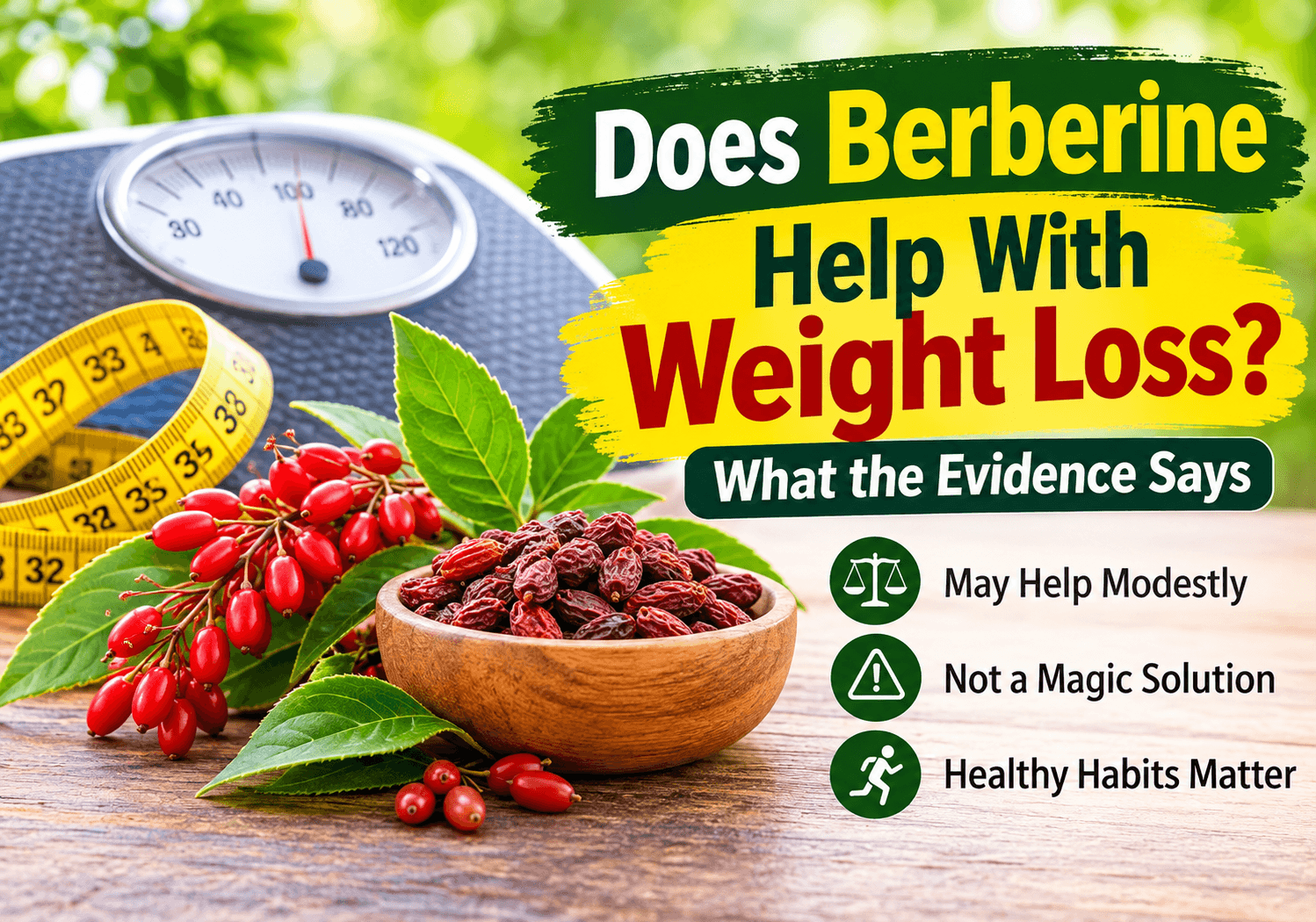
Berberine is a plant compound sold in capsules and other supplements. It is often promoted for blood sugar, metabolism, and weight loss—but those claims can sound stronger than the evidence. If you’re asking, “does berberine help with weight loss,” the careful answer is that some research suggests a modest benefit, but the studies have important limits and the supplement is not a reliable shortcut.
A coach’s practical view: focus first on habits you can measure and maintain—regular meals, enough protein and fiber, strength training, and walking. If you’re considering berberine, discuss it with a clinician or pharmacist, especially if you take medication or have a health condition.
Quick Answer: Berberine may help some people lose a small amount of weight, but current research does not show that it works reliably or replaces nutrition and activity habits. Studies vary in quality, dose, and duration. It can also cause side effects and interact with medicines, so check with a health professional before using it.
Does berberine help with weight loss?
Berberine may be associated with modest reductions in body weight or waist measurements in some clinical studies, particularly among people with metabolic conditions. But that is not the same as proving that it causes meaningful, lasting weight loss for everyone. Research differs in participant health, supplement dose, study length, and the other care participants receive.
A systematic review and meta-analysis of berberine trials reported improvements in some metabolic measures, including body weight and body mass index. However, the studies were not all alike, and a pooled result cannot tell you exactly what will happen to one person. The authors also noted limitations in the underlying evidence.
This is why it is better to say “may help modestly” than “burns fat” or “causes weight loss.” A supplement’s effects can look different in a small, short study than they do in day-to-day life over months or years.
Also, “weight loss” can mean different things. A change on the scale might reflect water, digestive contents, or lean tissue as well as body fat. Most berberine studies do not establish that taking the supplement specifically reduces belly fat or preserves muscle during weight loss.
If you want a broader overview of the supplement’s proposed role in metabolism, see our guide to berberine and metabolic health. It’s useful to keep metabolic markers and body-weight changes separate: improving one does not guarantee a particular result in the other.
What is berberine?
Berberine is a naturally occurring compound found in several plants, including some species in the Berberis genus. Supplements commonly contain berberine hydrochloride, though product ingredients and amounts can vary. “Natural” does not automatically mean safe, standardized, or appropriate for every person.
Researchers study berberine for possible effects on glucose and other metabolic pathways. One proposed mechanism involves AMPK, a cellular enzyme involved in energy regulation. That mechanism is scientifically interesting, but it does not prove that a supplement will cause substantial fat loss in a person.
A mechanism is an explanation of how something might work in cells or the body. It is not a result in itself. For a weight-loss claim, the more useful evidence comes from well-designed human trials that measure changes in weight, waist size, health outcomes, and side effects over time.
What research says—and what it doesn’t
The best answer to “does berberine help with weight loss?” depends on what you mean by “help.” Some trials and reviews report small average changes in weight or related measures. The evidence is not strong enough to promise a specific number of pounds, a predictable timeline, or a lasting result.
For example, the National Center for Complementary and Integrative Health (NCCIH) describes berberine as a compound studied for several health uses and notes that more high-quality research is needed. That caution matters: a body of early or mixed evidence should not be treated as a settled treatment recommendation.
Study results can be difficult to compare for several reasons:
- Different participants: Some studies focus on people with specific metabolic conditions, not adults seeking general weight loss.
- Different protocols: Researchers may use different amounts, formulations, and study durations.
- Small or short trials: Limited follow-up makes it hard to know whether changes continue after the study ends.
- Different outcomes: A study may focus on glucose or cholesterol rather than weight as its main outcome.
- Other changes: Diet, activity, or medical care may also affect results.
- Product differences: Findings from a study product may not apply to every retail supplement.
A review can combine the results of several trials, but it cannot correct every weakness in those trials. If studies are small, differ substantially, or have a risk of bias, the combined estimate still needs careful interpretation.
What the studies cannot promise
Research does not let us confidently say that berberine will:
- Cause a specific amount of weight loss.
- Target abdominal or “belly” fat.
- Work without changes to eating or activity.
- Prevent weight regain after a diet.
- Work equally well for everyone.
- Replace prescribed treatment for diabetes or another medical condition.
- Produce the same effects as a prescription weight-management medicine.
Weight management is shaped by many factors, including food intake, activity, sleep, stress, health conditions, medication use, and environment. Berberine is not a substitute for understanding those factors or getting clinical care when needed.
If your main goal is lasting weight management, review practical strategies for supporting metabolism naturally. That approach should still be personalized—especially if you have a medical condition, take medication, or have a history of disordered eating.
How might berberine affect body weight?
Researchers have studied several possible ways berberine could influence metabolic health. These possibilities are not proof that it acts as a fat burner, and no single mechanism explains what every person experiences.
Blood glucose and insulin-related pathways
Berberine may affect how the body handles glucose. This is one reason it is studied in people with metabolic health concerns. But an effect on a blood marker does not automatically lead to a noticeable drop in body weight.
If you take medication that affects blood sugar, combining it with a supplement that may also affect glucose could require professional oversight. Do not change your prescribed treatment or use berberine as a replacement without speaking with your clinician.
Appetite and eating patterns
Some people wonder whether berberine reduces hunger or cravings. Evidence for appetite effects is not strong enough to assume that it will reliably make you eat less. Individual experiences and study results can differ, and appetite can change for many reasons.
For strategies that do not depend on a supplement, see our guide to protein and hunger control. Planning filling meals and noticing when hunger occurs can be more practical than expecting a capsule to control appetite.
Gut and digestive effects
Berberine can affect the digestive system, including by causing nausea, constipation, diarrhea, or abdominal discomfort. Those effects are not a safe or useful way to lose weight. If a supplement makes it difficult to eat or drink normally, stop and seek medical advice.
Researchers also study how berberine may interact with the gut microbiome. This area is still developing. It is too early to translate early or indirect findings into a simple promise that berberine changes gut bacteria in a way that causes weight loss.
Physical activity still matters
Berberine is not a workout aid with established weight-loss benefits. It does not replace moving regularly, building strength, or choosing an eating pattern that fits your needs.
As a coach, I recommend starting with a realistic activity baseline rather than adding a supplement and hoping for a dramatic change. For example, you could take a brisk walk for 20–30 minutes on several days each week and do two full-body strength sessions. If you are new to exercise, begin with shorter walks and light resistance, then build gradually.
A simple strength session can include:
- Chair squats or sit-to-stands.
- Incline push-ups against a sturdy counter.
- Hip hinges with a light dumbbell or no weight.
- Rows with a resistance band.
- Step-ups on a low, stable step, if comfortable.
Use a controlled pace, keep a few repetitions “in reserve,” and rest about 60–90 seconds between sets. These are general training examples, not a treatment for weight loss or a substitute for an individualized exercise plan.

What kind of weight change is realistic?
There is no dependable personal forecast for how much weight you might lose with berberine. Study averages do not predict an individual outcome, and a reported change may not last once the study or supplement use ends.
| Question | Evidence-aware answer |
| How much weight might I lose? | No reliable amount can be promised. Research reports vary, and average study results are not a personal prediction. |
| Will it reduce belly fat? | There is not enough evidence to claim that berberine specifically targets belly fat. |
| How soon will I notice a change? | No proven timeline applies to everyone. Many studies are limited in duration, and weight can fluctuate for reasons unrelated to fat loss. |
| Can I use it without changing habits? | Research does not establish berberine as a stand-alone, reliable weight-loss method. |
| Will it protect muscle? | Do not assume it preserves muscle. Strength training and adequate nutrition are practical priorities during weight loss. |
| Is a small scale change proof it works? | No. Short-term weight can shift with hydration, food volume, and other factors. |
For a fair assessment, track more than the scale. You might record how often you exercise, how your clothes fit, your energy, and any changes in appetite or digestion. If you track body weight, use consistent conditions and focus on the longer-term trend rather than one reading.
Avoid setting a target based on a supplement advertisement. A sensible plan should fit your health, schedule, food preferences, budget, and ability to maintain it.
How to approach weight management practically
If you are considering berberine, first decide what you want it to do. Are you hoping to improve a lab value, reduce hunger, or see a lower number on the scale? Those are different goals and may need different kinds of support.
1. Check with a health professional first
Ask a doctor, pharmacist, or registered dietitian whether berberine is appropriate for you. Bring the product label or a clear photo of it, plus a list of prescriptions and other supplements. This is especially important if you have a health condition or take medication.
2. Set a habit goal you can repeat
Pick one or two actions that are concrete and manageable. For example, plan a 15-minute walk after lunch on three days this week, or add a protein source and a fruit or vegetable to one meal each day.
A goal such as “be healthier” is hard to measure. A specific action gives you a clear way to see whether your plan fits your real life.
3. Build a simple movement routine
A beginner-friendly week could look like this:
| Day | Activity |
| Monday | 20-minute walk |
| Tuesday | Full-body strength training |
| Wednesday | Rest or an easy walk |
| Thursday | 20-minute walk |
| Friday | Full-body strength training |
| Saturday | Optional enjoyable activity |
| Sunday | Rest |
For strength training, start with one or two sets of 8–12 comfortable repetitions per movement. Choose a resistance that lets you keep good form; the final repetitions should feel challenging but controlled. Rest 60–90 seconds, or longer if you need it.
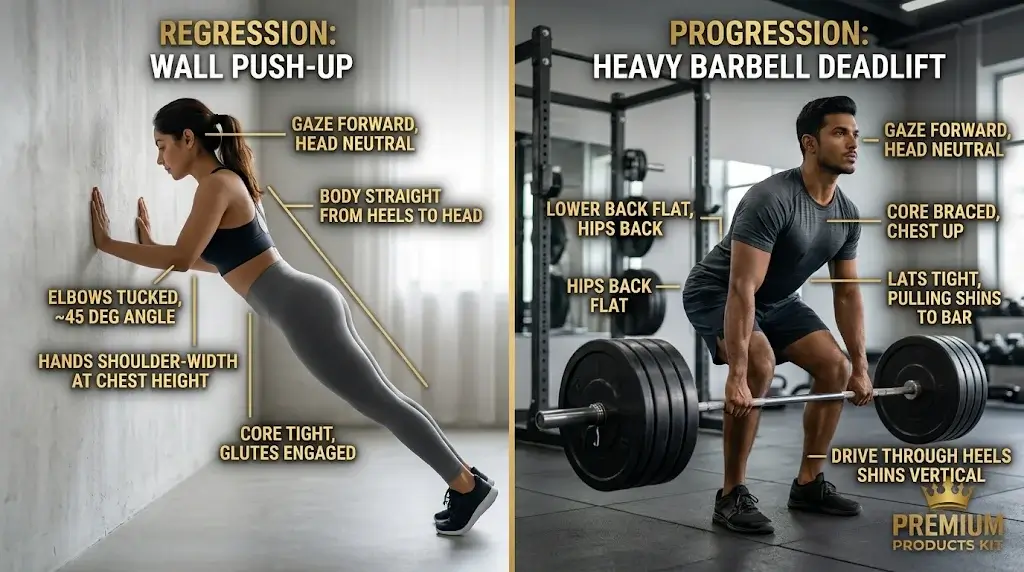
Easier version: Use body-weight movements, a higher chair for sit-to-stands, wall push-ups, and shorter walks. Keep the sessions brief enough that you can return to them.
Harder version: When the current routine feels manageable and your form stays steady, add a small amount of resistance, a few repetitions, or a little time. Change one variable at a time rather than increasing everything at once.
Coach’s Tip: Set a “minimum session” you can do on a busy day. Ten minutes of walking or one set of each strength exercise keeps the routine approachable. You can do more when you have time, but the minimum makes it easier to stay consistent.
4. Make meals satisfying, not punishing
You do not need to adopt a strict diet because you are considering a supplement. Aim for meals that help you feel satisfied and fit your preferences. A simple starting point is to include a protein-rich food, a source of fiber, and foods you enjoy.
A sudden, extreme calorie cut can be hard to sustain and may leave you feeling low on energy. If you have a history of disordered eating, are pregnant, or have a medical condition that affects nutrition, ask a qualified professional for individualized guidance.
5. Review progress without chasing quick changes
Check in every few weeks rather than judging the plan day by day. Ask:
- Am I completing the activity I planned?
- Do I have enough energy for daily tasks?
- Are the food habits practical for my schedule?
- Have I noticed side effects or medication changes?
- Do I need support from a clinician or dietitian?
If progress is not happening, that does not mean you need a higher supplement dose. It may be a reason to review the plan with a qualified professional.

Berberine dosage and timing
There is no established, universally recommended berberine dose for weight loss. Doses used in studies vary, and a research protocol is not automatically a safe or appropriate instruction for an individual. Do not use a study dose as a reason to self-prescribe.
The NCCIH’s berberine overview discusses potential uses and safety considerations, but it does not endorse berberine as a standard weight-loss treatment. If a clinician advises you to consider it for a specific reason, ask them to confirm the product, dose, timing, duration, and monitoring plan.
Timing also depends on the product and the person’s circumstances. Be wary of online instructions claiming that taking berberine at a particular time “maximizes fat burning” unless they provide strong human evidence. A supplement schedule should not be improvised around medication.
Supplement labels and quality
Dietary supplements are not interchangeable. Check the label for the exact ingredient, amount per serving, serving directions, other active ingredients, and warnings. A product that includes several substances may raise additional safety questions.
Quality testing can help confirm that a product contains what its label says and is not contaminated, but it does not prove that the supplement is effective or safe for you. Ask a pharmacist or clinician about how to assess the specific product you are considering.
Side effects, interactions, and who should avoid it
Berberine can cause side effects, especially digestive symptoms. Reported issues include nausea, diarrhea, constipation, abdominal discomfort, and vomiting. Side effects may vary by person and product.
More importantly, berberine can interact with medicines. Its potential effects on blood glucose and how the body processes certain drugs make it important to check with a clinician or pharmacist before combining it with prescriptions or other supplements. Do not stop or reduce a prescribed medication to take berberine.
The NCCIH safety information warns that berberine may interact with medicines and should not be used by pregnant or breastfeeding people or infants. Get professional advice before taking it if you have a medical condition, are planning a procedure, or use any ongoing medication.
Talk to a clinician before taking berberine if you:
- Take medicine for diabetes or blood sugar.
- Use prescription medication or multiple supplements.
- Are pregnant, breastfeeding, or trying to become pregnant.
- Have a chronic health condition.
- Have had a previous reaction to a supplement.
- Are considering it for a child or teenager.
- Have symptoms or abnormal test results that need medical evaluation.
Do not use berberine to diagnose or treat diabetes, high cholesterol, or another condition without medical care. If you experience a concerning reaction, stop taking the supplement and contact a health professional. Seek urgent care for severe symptoms such as trouble breathing, fainting, or swelling of the face or throat.
Common Mistake: Treating “plant-based” or “natural” as proof that a supplement is harmless. Plant compounds can still affect the body and interact with medicines. Check the exact product with a qualified professional rather than relying on a seller’s safety claims.
Frequently asked questions
Does berberine help with weight loss?
It may help modestly in some people, but the evidence is limited and does not show that everyone will lose weight. Studies vary in quality, dose, and length. Berberine should not replace medical care, a sustainable nutrition plan, or regular physical activity.
How much weight can you lose with berberine?
There is no reliable amount to promise. Study averages cannot predict an individual result, and the research has limitations. A supplement’s effect can also differ from person to person, so avoid claims that guarantee a certain number of pounds or inches.
How long does berberine take to work for weight loss?
There is no established timeline for weight loss with berberine. Research studies use different durations and do not establish when an individual should expect a change. If you are taking it for a health reason, ask your clinician what outcomes to monitor and when to review them.
What is the best time to take berberine?
There is no proven best time for weight loss. Follow the product instructions only if a clinician has confirmed that the product is appropriate for you. Ask a pharmacist about timing if you take prescription medicine or other supplements.
Does berberine reduce belly fat?
There is not enough evidence to say that berberine specifically reduces belly fat. A change in overall body weight does not prove that a supplement targets a particular area. Be cautious of products or ads promising spot reduction.
Is berberine safe to take with metformin?
Do not combine berberine with metformin without medical guidance. Both may affect blood glucose, and combining supplements with medication can raise safety concerns. Ask the prescribing clinician or pharmacist to review the dose, health history, and other medicines before taking berberine.
Conclusion
So, does berberine help with weight loss? It may contribute to modest changes for some people, but the evidence is not strong enough to make it a dependable or predictable weight-loss tool. It does not target belly fat, replace healthy habits, or guarantee a particular result.
Prioritize consistent movement, strength training, satisfying meals, and a plan you can maintain. If you are considering berberine, get advice from a doctor or pharmacist first—especially if you take medication or have a medical condition. This article is for general information and is not a substitute for advice from a doctor or physical therapist.