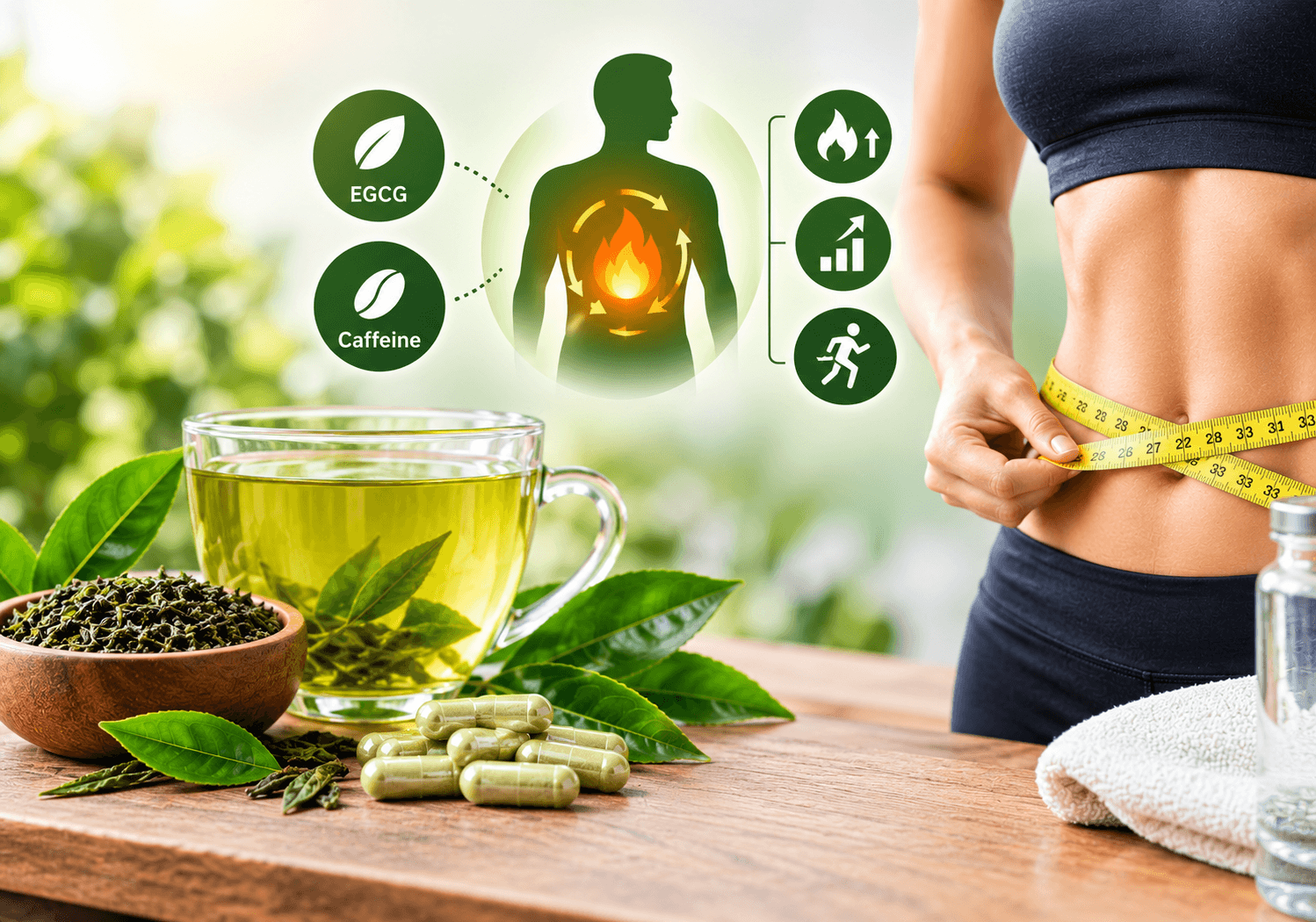
If you are navigating the crowded world of dietary supplements, you have likely encountered bold claims about fat burners. One of the most researched and frequently discussed supplements is green tea extract. But does green tea extract increase metabolism for weight loss? The short answer is yes, but with important caveats. Scientific evidence shows that the active compounds in green tea extract, specifically epigallocatechin gallate (EGCG) and caffeine, can produce a modest thermogenic effect, increasing resting energy expenditure and enhancing fat oxidation. However, it is not a magic pill. It works best as a supportive tool alongside a structured caloric deficit, consistent resistance training, and adequate protein intake. As a strength and conditioning coach, I help clients separate marketing hype from physiological reality, and this guide will break down exactly how green tea extract interacts with your metabolism, what the clinical research says, and how to use it safely and effectively.
Quick Answer
Does green tea extract increase metabolism for weight loss? Yes, research indicates that green tea extract can modestly increase resting metabolic rate by 3–4% and enhance fat oxidation, primarily due to the synergistic effects of EGCG and caffeine. However, the actual weight loss impact is small (typically 1–3 lbs over 12 weeks) and only effective when combined with a caloric deficit and regular exercise. It is not a standalone solution for weight loss.
The Biochemistry of Green Tea Extract: What Are You Actually Taking?
To understand how this supplement affects your body, we must first look at its chemical composition. Green tea extract is a concentrated form of the compounds found in Camellia sinensis leaves. Unlike brewed green tea, which contains mostly water and a small percentage of active compounds, extracts are standardized to deliver high, consistent doses of specific molecules.
The two primary active ingredients responsible for metabolic effects are:
- Epigallocatechin Gallate (EGCG): This is the most abundant and potent catechin (a type of natural phenol and antioxidant) in green tea. EGCG is the primary driver of the thermogenic (heat-producing) and fat-oxidizing effects attributed to green tea.
- Caffeine: A well-known central nervous system stimulant. Caffeine independently increases metabolic rate and promotes lipolysis (the breakdown of fat stores into free fatty acids).
The magic of green tea extract lies in the synergy between these two compounds. Caffeine stimulates the release of norepinephrine, a hormone that signals fat cells to break down fat. Normally, an enzyme called catechol-O-methyltransferase (COMT) quickly degrades norepinephrine, limiting its fat-burning effect. EGCG inhibits COMT, thereby prolonging the presence and activity of norepinephrine in the bloodstream. This extended activity leads to a sustained increase in metabolic rate and fat oxidation.
Additionally, high-quality green tea extracts often contain L-theanine, an amino acid that promotes relaxation without drowsiness. L-theanine helps smooth out the jittery side effects of caffeine, providing a more stable, focused energy boost that can enhance workout performance.
Metabolism Decoded: How Green Tea Extract Influences Energy Expenditure
Metabolism is not a single switch you can flip; it is the sum of several distinct components of daily energy expenditure. Understanding these components clarifies exactly where green tea extract fits into your weight loss strategy.
- Basal Metabolic Rate (BMR) / Resting Metabolic Rate (RMR): This is the energy your body burns at complete rest to maintain vital functions like breathing, circulation, and cell production. It accounts for 60–75% of total daily energy expenditure. Clinical studies show that green tea extract can increase RMR by approximately 3–4% over a 24-hour period. While this sounds small, over a year, a 4% increase could theoretically equate to several pounds of additional fat burned, assuming all other variables remain constant.
- Thermic Effect of Food (TEF): This is the energy required to digest, absorb, and process nutrients. Protein has the highest TEF (20–30%), while carbohydrates and fats are lower. Green tea extract does not significantly alter TEF, though some minor evidence suggests it may slightly improve postprandial (after-meal) fat oxidation.
- Non-Exercise Activity Thermogenesis (NEAT): This includes all movement outside of formal exercise, such as fidgeting, walking, and standing. The mild stimulant effect of the caffeine in green tea extract may subtly increase NEAT by reducing perceived fatigue, encouraging you to move more throughout the day.
- Exercise Activity Thermogenesis (EAT): This is the calories burned during structured workouts. Green tea extract can enhance EAT by improving endurance, increasing the mobilization of free fatty acids for fuel during cardiovascular exercise, and allowing you to maintain higher training volumes.
What the Clinical Research Says: A Deep Dive into the Studies
To answer the question, “does green tea extract increase metabolism for weight loss?” we must look at peer-reviewed, randomized controlled trials (RCTs). Let us examine the methodology and findings of key studies conducted by reputable institutions.
Study 1: The Foundational Thermogenesis Trial
A landmark study published in the American Journal of Clinical Nutrition investigated the effects of green tea extract on 24-hour energy expenditure in healthy men. Participants were given either a placebo, caffeine alone, or green tea extract containing 90 mg of EGCG and 50 mg of caffeine. The results showed that the green tea extract group experienced a significantly greater increase in 24-hour energy expenditure (4.3%) compared to the caffeine-only group (1.3%). This study provided the first robust evidence that EGCG and caffeine work synergistically to boost metabolism beyond what caffeine can achieve alone.
Study 2: Long-Term Weight Loss and Fat Mass
A 12-week randomized, double-blind, placebo-controlled trial published in the International Journal of Obesity examined the effects of green tea extract on weight loss and weight maintenance in a moderately obese population. Participants consumed a capsule containing 375 mg of catechins (including 270 mg of EGCG) daily. The green tea extract group lost an average of 2.9 lbs (1.3 kg) more than the placebo group over the 12-week period. More importantly, the extract group showed a significant reduction in waist circumference, indicating a loss of visceral adipose tissue (belly fat), which is strongly linked to metabolic disease.
Study 3: Fat Oxidation During Exercise
Research published in Medicine & Science in Sports & Exercise explored whether green tea extract ingestion increases fat oxidation during moderate-intensity cycling. Male participants ingested green tea extract or a placebo 60 minutes before a 30-minute cycling session at 60% of their VO2 max. The green tea extract group demonstrated a 17% increase in fat oxidation rates compared to the placebo group. This suggests that timing your green tea extract intake before a workout can shift your body’s fuel preference toward stored fat.
Study 4: The Limits of Efficacy
It is equally important to review studies that show limited effects. A systematic review and meta-analysis published in the Journal of the American College of Nutrition analyzed multiple trials and concluded that while green tea preparations produce a small, non-significant weight loss in overweight and obese adults, the effect size is clinically modest. The researchers noted that studies showing significant results often used higher doses of EGCG and were of shorter duration, highlighting that green tea extract is a minor adjunct, not a primary driver, of weight loss.
Practical Application: Dosage, Timing, and Synergy
Knowing the science is only half the battle. As a coach, I am frequently asked how to actually implement this information. Here is the practical, evidence-based protocol for using green tea extract to support your metabolism and weight loss goals.
Optimal Dosage
The clinical literature suggests that the effective dose of EGCG for metabolic benefits ranges from 270 mg to 500 mg per day. Most high-quality green tea extract supplements are standardized to contain 50% EGCG. Therefore, a daily dose of 500 mg to 1,000 mg of green tea extract will typically provide the required amount of EGCG.
- Do not exceed 800 mg of EGCG per day from supplements without direct medical supervision, as higher doses are associated with an increased risk of liver toxicity.
Timing for Maximum Benefit
- Pre-Workout: Taking your dose 45–60 minutes before a training session can maximize the fat-oxidizing effects during exercise and provide a clean energy boost from the caffeine and L-theanine.
- With Meals: If you are not working out, taking green tea extract with a meal can help mitigate any potential stomach upset and may slightly enhance postprandial metabolic rate. Avoid taking it on a completely empty stomach if you are sensitive to caffeine or experience nausea.
Synergy with Training and Nutrition
Green tea extract cannot out-train or out-supplement a poor diet. To maximize its metabolic effects, pair it with:
- A Moderate Caloric Deficit: Aim for a 300–500 calorie deficit per day. This creates the necessary energy imbalance for fat loss while preserving muscle mass.
- High Protein Intake: Consume 0.8–1.0 grams of protein per pound (1.8–2.2 g per kg) of body weight daily to support muscle retention and leverage the high thermic effect of protein.
- Resistance Training: Lifting weights 3–4 times per week maintains lean muscle mass, which is the primary determinant of your resting metabolic rate.
- Supporting Metabolic Health: For comprehensive metabolic support, some individuals also explore nutrients that support glucose metabolism or focus on improving insulin sensitivity through dietary fiber and consistent meal timing.

Coaching Perspective: Integrating GTE with Your Workout
Supplements work best when they amplify a solid training foundation. If you are taking green tea extract to enhance fat oxidation during exercise, your workout structure matters. Here is how to build a session that leverages the supplement’s effects.
The Pre-Workout Warm-Up (10 Minutes)
Proper warm-ups increase core body temperature and prime the nervous system, complementing the thermogenic effect of green tea extract.
- 5 minutes of light cardiovascular activity (e.g., brisk walking or cycling at a conversational pace).
- 5 minutes of dynamic stretching: leg swings, arm circles, bodyweight squats, and inchworms.
The Workout Structure
To maximize fat utilization, combine resistance training with moderate-intensity steady-state (MISS) or high-intensity interval training (HIIT).
- Phase 1: Resistance Training (30–40 minutes): Focus on compound movements (squats, deadlifts, push-ups, rows). Perform 3 sets of 8–12 repetitions with a weight that leaves 1–2 reps in reserve (RIR). Rest 60–90 seconds between sets.
- Phase 2: Metabolic Finisher (10–15 minutes): Perform 10–15 minutes of incline treadmill walking (e.g., 3.0 miles per hour (4.8 km/h) at a 10–12% incline) or stationary cycling. The green tea extract you took 45 minutes ago will now be peaking in your bloodstream, enhancing the mobilization of free fatty acids during this steady-state cardio.
COACH’S TIP: Track your resting heart rate (RHR) and perceived exertion. If you notice your RHR is elevated by more than 10 beats per minute upon waking, or you feel unusually jittery, you may be sensitive to the caffeine in the extract. Consider switching to a decaffeinated green tea extract or reducing your dose by half.
COMMON MISTAKE: Relying on green tea extract to “burn off” a poor diet. Many clients assume that because they took a fat burner, they can eat in a caloric surplus. This is physiologically impossible. The thermogenic effect of green tea extract burns perhaps 50–100 extra calories a day. One large sugary coffee or extra serving of fries will completely erase that deficit. Always prioritize whole foods and portion control first.
Regression and Progression
- Regression (Easier): If you are new to exercise or sensitive to stimulants, start with half a capsule (or brewed green tea) and perform only the resistance training phase without the metabolic finisher. Focus on mastering form and building a consistent habit.
- Progression (Harder): For advanced trainees, increase the metabolic finisher to 20 minutes of HIIT (e.g., 30 seconds sprinting, 60 seconds walking) or add a second, lighter resistance session later in the day, ensuring total daily EGCG does not exceed safe limits.

Safety, Side Effects, and Liver Health
While green tea extract is generally recognized as safe for most healthy adults when used at recommended doses, it is not without risks. The most critical safety consideration involves liver health.
Hepatotoxicity Concerns
There have been rare but documented cases of liver injury (hepatotoxicity) associated with high-dose green tea extract supplements. The European Food Safety Authority (EFSA) conducted a comprehensive safety assessment and concluded that daily intakes of EGCG from supplements at or above 800 mg per day may raise safety concerns. Liver injury typically presents as elevated liver enzymes (ALT and AST), jaundice, dark urine, or abdominal pain.
- Actionable Advice: Never exceed 500 mg of EGCG daily from supplements. If you have a pre-existing liver condition, avoid green tea extract entirely. Discontinue use immediately and consult a physician if you experience any signs of liver distress.
Caffeine Sensitivity and Interactions
Even “moderate” caffeine doses can cause insomnia, anxiety, rapid heartbeat, or gastrointestinal distress in sensitive individuals. Furthermore, green tea extract can interact with certain medications:
- Stimulants: Combining GTE with prescription ADHD medications or other fat burners can lead to dangerous spikes in blood pressure and heart rate.
- Blood Thinners: The vitamin K content and other compounds in green tea may interfere with anticoagulant medications like warfarin.
- Iron Absorption: Catechins can bind to non-heme iron (from plant sources), reducing its absorption. If you have iron-deficiency anemia, take your supplement at least two hours away from iron-rich meals or iron supplements.
For individuals focused on comprehensive cardiovascular and metabolic health, maintaining healthy blood vessel function through diet and exercise remains a safer, more foundational strategy than relying solely on stimulant-based supplements.
Who Should Be Careful or Avoid Green Tea Extract?
Certain populations should exercise extreme caution or avoid green tea extract altogether:
- Pregnant or Breastfeeding Women: High doses of caffeine and concentrated EGCG are not recommended during pregnancy due to potential risks to fetal development and nutrient absorption.
- Individuals with Liver Disease: As noted, the risk of hepatotoxicity makes this supplement unsafe for those with hepatitis, fatty liver disease, or a history of liver injury.
- People with Anxiety or Panic Disorders: The stimulant effect of caffeine can exacerbate symptoms of anxiety.
- Those with Gastrointestinal Issues: Green tea extract can cause stomach upset, nausea, or acid reflux, particularly when taken on an empty stomach.
- Children and Adolescents: Metabolic supplements are not appropriate for developing bodies.
How to Choose a Quality Green Tea Extract Supplement
The supplement industry is notoriously under-regulated. Not all green tea extracts are created equal. If you decide to add this to your regimen, use this buyer’s checklist to ensure you are getting a safe, effective product.
| Buying Criteria | What to Look For | Why It Matters |
| Standardization | Label must state “Standardized to 50% EGCG” (or similar). | Guarantees you are getting the active compound responsible for metabolic benefits, not just ground-up tea leaves. |
| Third-Party Testing | NSF Certified for Sport, Informed Choice, or USP verified seals. | Confirms the product contains what the label claims and is free from heavy metals, pesticides, and banned substances. |
| Caffeine Content | Clearly listed on the label (ideally 20–50 mg per serving). | Allows you to manage your total daily caffeine intake and avoid overstimulation. |
| Transparent Labeling | No “proprietary blends.” | Proprietary blends hide the exact amounts of each ingredient, making it impossible to know if you are getting an effective dose of EGCG. |
| Form | Capsules or tablets (avoid liquid extracts with high sugar/alcohol content). | Provides precise, consistent dosing without unnecessary additives. |
When evaluating supplements, remember that foundational health strategies, such as ensuring adequate intake of compounds that help produce nitric oxide for better workout pumps and recovery, often yield more reliable long-term results than isolated fat burners.
Sample Weekly Protocol: Integrating GTE, Diet, and Exercise
To visualize how this all comes together, here is a sample weekly protocol for an adult seeking sustainable fat loss while preserving muscle mass. This assumes a baseline of good health and no contraindications.
Daily Baseline:
- Caloric Intake: 300–500 calorie deficit below maintenance.
- Protein: 1.0 g per lb (2.2 g per kg) of target body weight.
- Supplement: 500 mg green tea extract (providing ~250 mg EGCG and ~25 mg caffeine) taken 45 minutes before workouts, or with breakfast on rest days.
Weekly Schedule:
- Monday: Lower Body Resistance Training (Squats, Romanian Deadlifts, Lunges) + 15 min incline walk.
- Tuesday: Upper Body Resistance Training (Push-ups, Rows, Overhead Press) + 15 min incline walk.
- Wednesday: Active Recovery (30-minute brisk walk, mobility work, stretching). No green tea extract needed unless desired for morning alertness.
- Thursday: Full Body Resistance Training (Goblet Squats, Dumbbell Bench Press, Kettlebell Swings).
- Friday: High-Intensity Interval Training (HIIT) – 20 minutes (e.g., assault bike or rowing machine: 30 sec hard, 60 sec easy).
- Saturday: Outdoor Activity (Hiking, cycling, or sports for 45–60 minutes).
- Sunday: Complete Rest and Meal Prep.
Note: Enhancing your daily movement and circulation can also be supported by understanding what causes poor blood circulation in men and addressing it through consistent, low-impact daily activity, which complements the metabolic goals of this protocol.

Frequently Asked Questions (FAQ)
1. How much green tea extract is needed for weight loss? Clinical studies suggest that a daily dose providing 270 mg to 500 mg of EGCG is effective for modest metabolic enhancement. This typically translates to 500 mg to 1,000 mg of a green tea extract standardized to 50% EGCG. Do not exceed 800 mg of EGCG daily due to liver safety concerns.
2. Is green tea extract safe for the liver? For most healthy adults taking recommended doses (under 800 mg of EGCG daily), it is safe. However, there are documented cases of liver injury linked to high-dose green tea extract supplements. If you have a history of liver issues, avoid it. Discontinue use and see a doctor if you experience jaundice, dark urine, or abdominal pain.
3. What is the best time to take green tea extract for metabolism? The optimal time is 45 to 60 minutes before a workout. This allows the caffeine and EGCG to peak in your bloodstream during exercise, maximizing fat oxidation and energy levels. On rest days, take it with your first meal to prevent stomach upset.
4. Does decaffeinated green tea extract work for weight loss? Decaffeinated green tea extract retains its EGCG content, so it still offers antioxidant benefits and some metabolic support. However, because the thermogenic effect relies heavily on the synergy between EGCG and caffeine, decaffeinated versions are significantly less effective for boosting metabolic rate and fat burning than caffeinated versions.
5. Can green tea extract replace exercise for fat loss? No. The metabolic boost from green tea extract is very small (roughly 50–100 extra calories burned per day). It cannot compensate for a poor diet or a sedentary lifestyle. It should only be used as a minor adjunct to a structured caloric deficit and regular resistance and cardiovascular training.
6. What are the common side effects of green tea extract pills? The most common side effects are mild and related to caffeine, including jitteriness, insomnia, headache, or stomach upset. Taking the supplement with food can mitigate gastrointestinal issues. If you experience rapid heartbeat or severe anxiety, reduce the dose or discontinue use.
Conclusion
So, does green tea extract increase metabolism for weight loss? The scientific evidence confirms that it does, but the effect is modest. The synergistic combination of EGCG and caffeine can increase resting energy expenditure by 3–4% and enhance fat oxidation, particularly when timed correctly before exercise. However, it is crucial to maintain realistic expectations. Green tea extract will not melt fat away on its own. It is a small tool in a large toolbox.
Sustainable weight loss and metabolic health are built on a foundation of a moderate caloric deficit, adequate protein intake, consistent resistance training, and quality sleep. If you choose to use green tea extract, prioritize quality by selecting a third-party tested product, strictly adhere to the recommended dosage to protect your liver, and listen to your body’s response. For comprehensive metabolic support, always remember that foundational lifestyle habits, including strategies that promote healthy blood flow, will always outperform any isolated supplement.