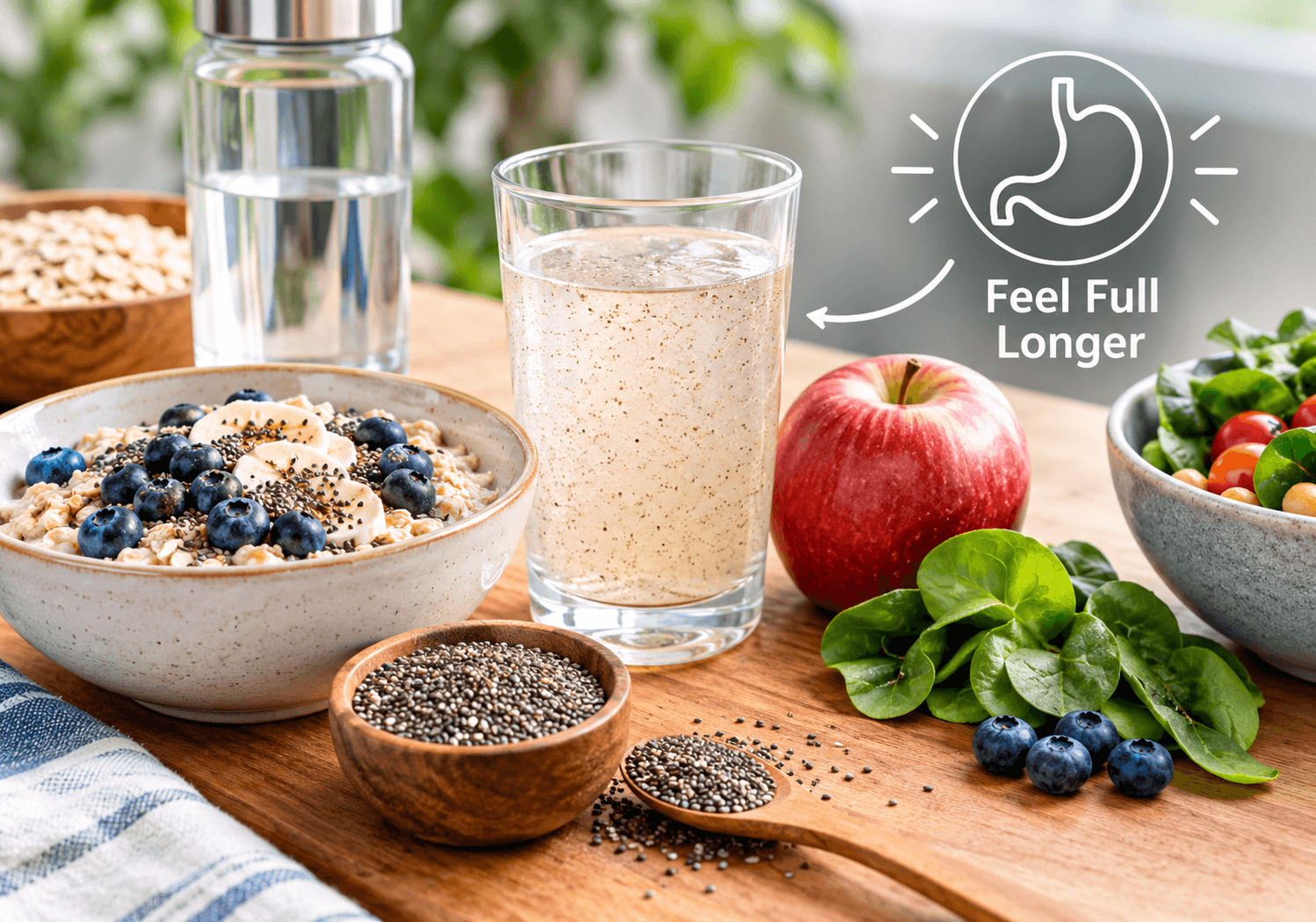
Managing hunger is often the hardest part of any health, fitness, or weight management journey. When your stomach constantly growls, sticking to a healthy eating plan feels like an uphill battle. You might be asking yourself, does soluble fiber help you feel full longer? The short answer is a resounding yes, and the science behind how it works in your digestive tract is both fascinating and highly practical. As a certified strength and conditioning coach, I regularly help clients navigate hunger cues while they build strength and improve their body composition. Understanding how to strategically use soluble fiber can transform your ability to maintain a calorie deficit without feeling deprived. This guide breaks down the exact mechanisms, the best food and supplement sources, and a practical routine to help you stay full, energized, and focused on your goals.
Quick Answer:
Yes, soluble fiber helps you feel full longer by absorbing water in your digestive tract to form a thick, viscous gel. This gel slows down gastric emptying, physically stretches the stomach to trigger fullness signals to the brain, and stabilizes blood sugar levels, which prevents the sharp crashes that lead to intense hunger and cravings.
Detailed Explanation: What the Research Says
To truly understand why soluble fiber is such a powerful tool for appetite control, we have to look at what happens inside your digestive system. Unlike insoluble fiber, which mostly adds bulk to your stool and helps food pass through your gut quickly, soluble fiber dissolves in water.
When you consume soluble fiber, it travels to your stomach and intestines, where it absorbs water and forms a thick, gel-like substance. This process is known as increasing the “viscosity” of your digestive contents. This viscous gel does three critical things to help you feel full longer:
- Slows Gastric Emptying: The thick gel physically slows down the rate at which your stomach empties its contents into the small intestine. Because food stays in your stomach longer, the stomach walls remain stretched. This stretching activates mechanoreceptors that send signals via the vagus nerve to your brain, telling it that you are still full.
- Regulates Satiety Hormones: Research shows that the fermentation of soluble fiber by gut bacteria produces short-chain fatty acids (SCFAs). These SCFAs stimulate the release of peptide YY (PYY) and glucagon-like peptide-1 (GLP-1), both of which are powerful satiety hormones that reduce appetite. At the same time, soluble fiber helps suppress ghrelin, the primary “hunger hormone.”
- Stabilizes Blood Sugar: By slowing down digestion, soluble fiber also slows the absorption of carbohydrates into your bloodstream. This prevents rapid spikes and subsequent crashes in blood glucose. A stable blood sugar level is crucial because a sudden drop in glucose is a primary biological trigger for intense cravings and sudden hunger pangs.
A comprehensive review published in the American Journal of Clinical Nutrition confirmed that higher intake of viscous, soluble fiber is consistently linked to increased satiety and reduced hunger ratings between meals. Furthermore, the National Institutes of Health (NIH) highlights that supplements like glucomannan, a highly viscous soluble fiber, significantly promote fullness and support weight management when paired with a balanced diet.
Top Soluble Fiber Sources: Food vs. Supplements
Not all fiber is created equal. To get the fullness benefits, you need sources high in soluble fiber. Below is a comparison of the most effective natural food sources and supplements, including their typical serving sizes and soluble fiber content.
| Source Type | Specific Source | Serving Size | Soluble Fiber (approx.) | Calories | Satiety Rating (1-10) |
| Supplement | Psyllium Husk Powder | 1 tbsp (5 grams) | 4 grams | 15 | 9 |
| Supplement | Glucomannan (Konjac) | 1 gram (capsule/powder) | 1 gram (highly viscous) | 2 | 10 |
| Food | Oats (Beta-glucan) | 1/2 cup dry (40 grams) | 2 grams | 150 | 8 |
| Food | Chia Seeds | 2 tbsp (28 grams) | 5 grams | 138 | 9 |
| Food | Flaxseeds (ground) | 2 tbsp (14 grams) | 2.5 grams | 75 | 8 |
| Food | Apples (with skin) | 1 medium apple | 1.5 grams | 95 | 7 |
| Food | Black Beans | 1/2 cup cooked | 3.5 grams | 110 | 9 |
| Food | Brussels Sprouts | 1 cup cooked | 2 grams | 56 | 8 |
Breaking Down the Top Contenders
- Psyllium Husk: This is the gold standard for accessible soluble fiber. It absorbs up to 10 times its weight in water. It is highly effective for creating a physical feeling of fullness.
- Glucomannan: Derived from the konjac root, this is one of the most viscous dietary fibers known. It is so effective at expanding that it must be taken with a large glass of water to prevent it from swelling in the esophagus.
- Chia and Flaxseeds: These are excellent whole-food options. They provide soluble fiber alongside healthy omega-3 fatty acids, which further support joint health and reduce inflammation.
How to Apply It: Practical Steps and a Sample Routine
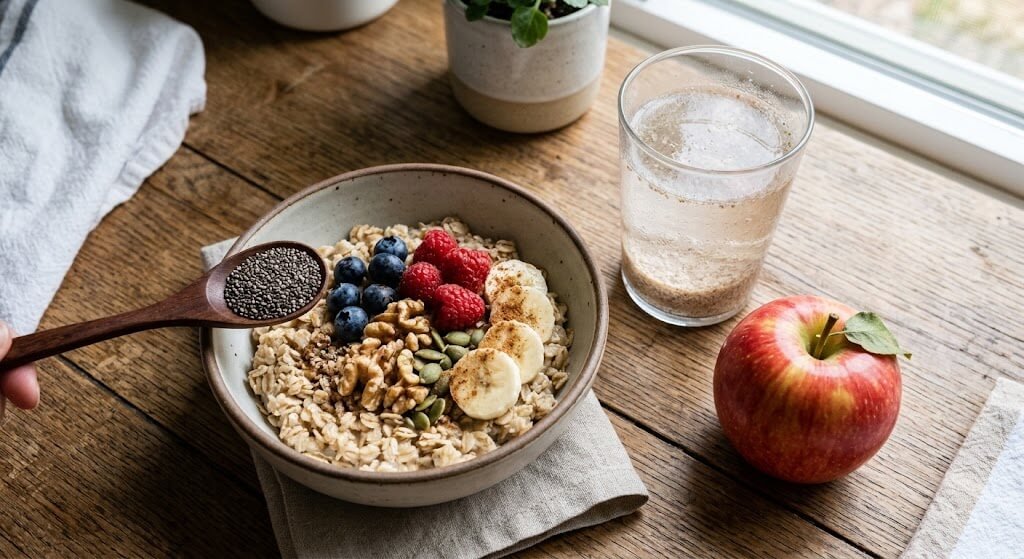
Knowing the science is only half the battle. As a coach, I know that you need a practical, actionable plan to integrate soluble fiber into your daily life and fitness routine. Below is a step-by-step guide on how to dose fiber, followed by a sample workout routine designed to complement a high-fiber, appetite-control lifestyle.
Step-by-Step Fiber Implementation Plan
- Start Low and Go Slow: Begin with just 1 teaspoon (about 2.5 grams) of a soluble fiber supplement or one extra serving of high-fiber food per day.
- Hydrate Aggressively: Soluble fiber requires water to form its gel. For every 5 grams of fiber you add, drink an additional 16 ounces (about 473 ml) of water.
- Time It Right: Take your soluble fiber supplement or eat your high-fiber meal 30 to 45 minutes before your largest meal of the day. This gives the fiber time to absorb water and begin slowing gastric emptying before you eat.
- Titrate Up: After 5 to 7 days, if you experience no digestive discomfort, increase the dose to 1 tablespoon (about 5 grams) or add a second high-fiber serving later in the day.

The “Fiber-Fueled” Strength Routine
Pairing soluble fiber with resistance training is the ultimate strategy for body composition. Muscle tissue burns more calories at rest, and strength training improves insulin sensitivity, which works synergistically with fiber to keep blood sugar stable.
Here is a full-body workout you can do at home or in the gym. Perform this routine 3 times per week, with at least one rest day between sessions.
Warm-up (5-7 minutes):
- Arm circles: 15 forward, 15 backward.
- Bodyweight squats: 2 sets of 10 reps (tempo: 2-1-1).
- Cat-cow stretch: 10 slow repetitions to mobilize the spine.
The Workout:
1. Goblet Squat
- Target: Quads, glutes, core.
- Sets/Reps: 3 sets of 8-10 reps.
- Rest: 90 seconds between sets.
- Tempo: 3-1-1 (3 seconds lowering, 1 second pause at the bottom, 1 second pushing up).
- Weight Guidance: Start with a 15 lb (6.8 kg) dumbbell or kettlebell. Progress to 25 lb (11.3 kg) or 35 lb (15.8 kg) as form allows.
- Form Cues: Hold the weight close to your chest. Keep your chest up and brace your core as if you are about to be punched in the stomach. Push your knees slightly outward as you descend.
- Regression: Bodyweight box squat to a chair (18 inches / 45 cm high).
- Progression: Pause for 3 seconds at the very bottom of the squat before driving up.
2. Single-Arm Dumbbell Row
- Target: Latissimus dorsi, rhomboids, biceps.
- Sets/Reps: 3 sets of 10-12 reps per arm.
- Rest: 60 seconds per arm.
- Tempo: 2-1-1.
- Weight Guidance: 10 lb (4.5 kg) to 20 lb (9 kg) dumbbell.
- Form Cues: Place one knee and hand on a flat bench. Keep your back completely flat, parallel to the floor. Pull the dumbbell toward your hip pocket, squeezing your shoulder blade at the top.
- Regression: Seated cable row with light weight, focusing purely on the mind-muscle connection.
- Progression: Incline dumbbell row on a 45-degree bench to increase the range of motion.
3. Plank with Shoulder Taps
- Target: Core stabilizers, shoulders.
- Sets/Reps: 3 sets of 10 taps per side (20 total).
- Rest: 60 seconds between sets.
- Tempo: Slow and controlled (2 seconds per tap).
- Form Cues: Start in a high plank position with hands directly under shoulders (about 18 inches / 45 cm apart). Keep your hips perfectly still; imagine balancing a glass of water on your lower back. Tap your left shoulder with your right hand, then switch.
- Regression: Perform the plank from your knees or with hands elevated on a sturdy surface (like a countertop, about 36 inches / 91 cm high).
- Progression: Widen your foot stance to make balancing harder, or add a light 5 lb (2.2 kg) weight plate to your upper back.
4. Glute Bridge
- Target: Glutes, hamstrings, lower back.
- Sets/Reps: 3 sets of 15 reps.
- Rest: 60 seconds between sets.
- Tempo: 2-1-2 (2 seconds up, 1 second squeeze, 2 seconds down).
- Weight Guidance: Bodyweight, progressing to a 20 lb (9 kg) dumbbell resting on the hips.
- Form Cues: Lie on your back with knees bent and feet flat on the floor, about hip-width apart. Drive through your heels to lift your hips until your body forms a straight line from shoulders to knees. Squeeze your glutes hard at the top.
- Regression: Standard two-legged glute bridge without weight.
- Progression: Single-leg glute bridge, extending one leg straight out while lifting with the other.

Coach’s Tip:
Never take a concentrated soluble fiber supplement immediately before a high-intensity workout. Because it slows gastric emptying, having a thick gel in your stomach while jumping or lifting heavy can cause nausea or cramping. Take your fiber 30 to 45 minutes after your workout, or with a meal that is at least 2 hours removed from your training session.
Common Mistake:
Taking fiber without enough water.
The Fix: Soluble fiber is like a sponge. If you do not provide enough water, it cannot expand properly. Worse, it can pull water from your colon, leading to severe constipation and bloating. Always mix fiber powders in at least 12 to 16 ounces (350 to 473 ml) of water, and drink another full glass immediately after.
Safety Notes and Who Should Be Careful
While soluble fiber is a natural and highly beneficial component of a healthy diet, it is not without precautions. Increasing your fiber intake too quickly or without proper medical guidance can cause issues for certain populations.
- Digestive Disorders: Individuals with Irritable Bowel Syndrome (IBS), Small Intestinal Bacterial Overgrowth (SIBO), Crohn’s disease, or a history of bowel obstructions should be extremely cautious. The fermentation of soluble fiber can produce gas, leading to severe bloating and pain in sensitive individuals.
- Medication Interactions: Because soluble fiber slows digestion and binds to substances in the gut, it can interfere with the absorption of certain prescription medications, including thyroid medications, diabetes drugs, and some antidepressants. Always take medications at least 2 hours before or 4 hours after consuming a high dose of soluble fiber.
- Swallowing Difficulties: Concentrated supplements like glucomannan capsules can expand in the esophagus if not swallowed with enough water, posing a choking hazard. Powder forms mixed thoroughly in liquid are generally safer.
- Hydration Status: If you struggle to drink at least 80 to 100 ounces (2.3 to 3 liters) of water daily, do not start a high-fiber supplement regimen.
If you have any pre-existing medical conditions, are pregnant, or are taking prescription medications, consult a doctor or a registered dietitian before adding concentrated fiber supplements to your routine.
Related Tips for Maximizing Satiety and Health
To get the most out of your soluble fiber intake, pair it with other evidence-based health strategies.
First, combine soluble fiber with a high-quality protein source. Protein is the most satiating macronutrient. When you combine the gastric-slowing effects of soluble fiber with the hormone-regulating effects of protein, you create a powerful synergy that keeps hunger at bay for hours.
Second, consider your overall metabolic and vascular health. A diet rich in fiber supports healthy cholesterol levels and cardiovascular function. Just as understanding how L-citrulline helps produce nitric oxide can optimize your workout blood flow, understanding how fiber supports healthy digestion ensures your body efficiently partitions nutrients. Furthermore, research into inositol and insulin sensitivity studies shows that combining fiber with insulin-sensitizing compounds can dramatically reduce the sugar cravings that often derail weight management efforts.
For those specifically looking to support metabolic processes, it is also worth noting how chromium picolinate supports glucose metabolism, working alongside fiber to keep your energy levels steady throughout the day.
Additionally, maintaining an active lifestyle is crucial. Sedentary behavior is one of the primary factors in what causes poor blood circulation in men and women alike. Regular movement, like the strength routine provided above, keeps your digestive tract moving and supports overall vascular health. In fact, the long-term nitric oxide benefits for men’s health and blood flow are closely tied to the cardiovascular improvements seen in individuals who maintain a high-fiber, whole-food diet.
If you are carrying excess weight, protecting your joints during exercise is paramount. Knowing how many joints are in the human body and their functions can help you choose low-impact, joint-friendly movements that support your weight management goals without causing injury. Over time, a high-fiber diet contributes to better blood vessel health and overall cardiovascular resilience, which is a critical component of sustainable, long-term fitness. Finally, optimizing your pre-workout nutrition by understanding L-arginine vs L-citrulline for blood flow can help you train harder without relying on sugary, hunger-inducing energy drinks.

Frequently Asked Questions (FAQ)
How long does it take for soluble fiber to make you full?
Soluble fiber typically begins to absorb water and form a gel within 15 to 30 minutes of consumption. For the best appetite-suppressing effects, consume it about 30 to 45 minutes before a meal so it is already expanding in your stomach when you begin eating.
What is the best soluble fiber supplement for weight loss?
Psyllium husk and glucomannan are widely considered the best soluble fiber supplements for weight loss. Glucomannan is the most viscous and expands the most, while psyllium husk is highly accessible, well-researched, and effective at promoting regular bowel movements alongside satiety.
Does fiber powder actually stop hunger?
Yes, fiber powder can significantly reduce hunger. By physically stretching the stomach and slowing the release of food into the intestines, it triggers mechanical and hormonal fullness signals. However, it works best as a tool to support a balanced diet, not as a total meal replacement.
Can you eat too much soluble fiber?
Yes. Consuming too much soluble fiber too quickly can cause severe bloating, gas, abdominal cramping, and constipation. The recommended daily limit for total fiber is about 25 grams for women and 38 grams for men. Increase your intake gradually over several weeks.
How much soluble fiber do I need per day to feel full?
Aim for at least 5 to 10 grams of soluble fiber per day specifically targeted at appetite control. This can be achieved through one serving of chia seeds, a bowl of oatmeal, or a 1-tablespoon serving of psyllium husk powder, alongside your regular dietary fiber intake.
Does soluble fiber block calorie absorption?
To a small extent, yes. The viscous gel formed by soluble fiber can trap small amounts of dietary fat and carbohydrates, preventing them from being fully absorbed in the small intestine. However, this effect is modest and should not be relied upon as a primary method for calorie reduction.
Conclusion
So, does soluble fiber help you feel full longer? The evidence is clear and compelling. By absorbing water to form a viscous gel, soluble fiber slows gastric emptying, regulates appetite hormones like ghrelin and leptin, and stabilizes blood sugar levels. Whether you choose to get your soluble fiber from whole foods like oats, chia seeds, and beans, or from targeted supplements like psyllium husk and glucomannan, the key to success is consistency, proper hydration, and gradual implementation.
Pair your fiber intake with a solid strength training routine, adequate protein, and a focus on overall metabolic health. Remember to support your body’s vascular and digestive systems holistically. For instance, maintaining good circulation is vital, and exploring how nitric oxide for healthy blood vessel function plays a role in your overall wellness can complement your dietary efforts. Listen to your body, start with small doses, and give your digestive system time to adapt.